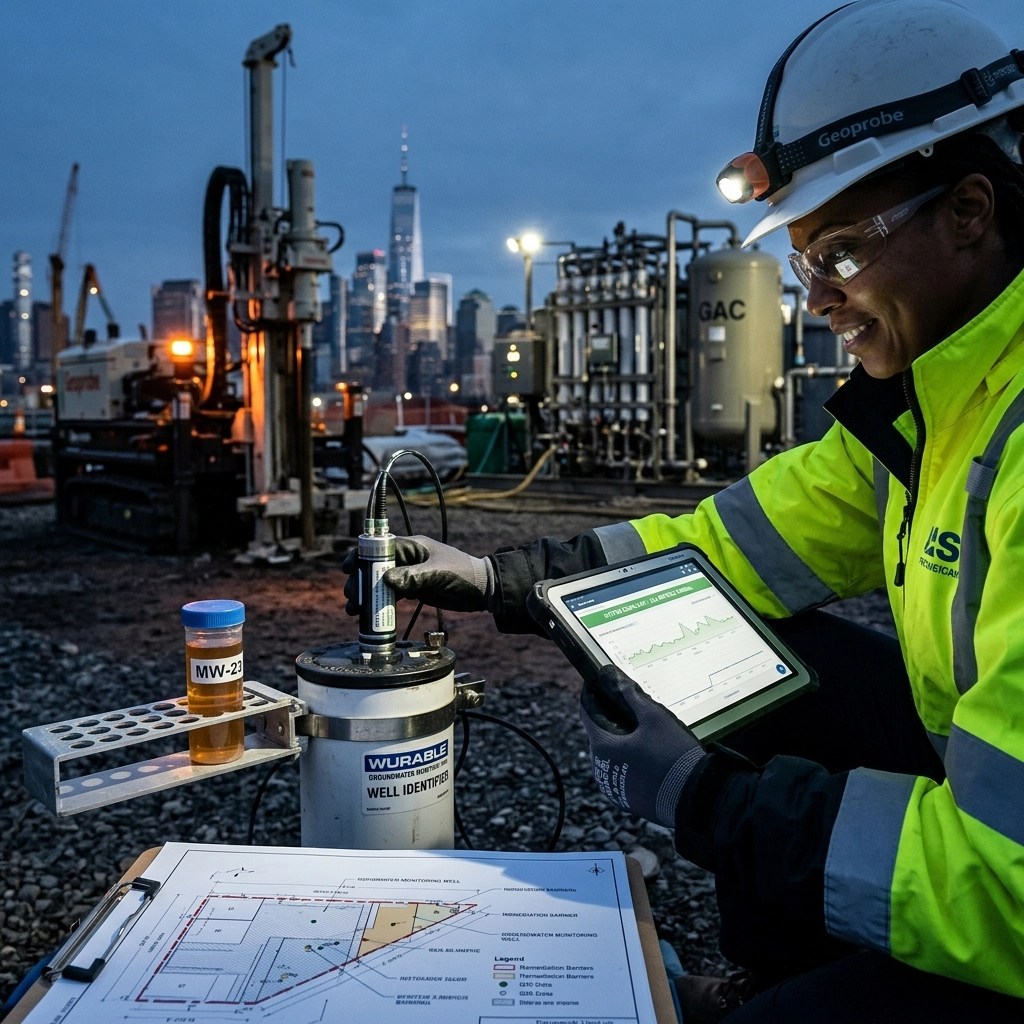
If you’re developing in New York City, you already know that the city never sleeps. Unfortunately, neither do the regulations. Between the NYC Office of Environmental Remediation (OER) requirements and NYSDEC oversight, the compliance burden on a high-stakes construction site is enough to keep any developer or construction manager up at night.
The old way of doing things: relying on a junior technician with a hand-held meter who might miss a spike in dust or a VOC vapor excursion: is a recipe for a Stop Work Order. In a city where every hour of delay costs thousands in carry costs and labor, you can’t afford to be reactive.
At Envicon Group, we believe that the best way to manage environmental risk isn't just through better reports, but through better technology. Tech-enabled field monitoring is changing the game, providing a 24/7 digital "eye" on your site that ensures you stay compliant while you focus on the build.
The High Stakes of Construction Oversight in NYC
In the dense urban fabric of the five boroughs, your project is always under a microscope. Whether you are navigating a Brownfield Cleanup Program or managing a site under an "E" Designation, the Community Air Monitoring Plan (CAMP) is your bible.
The standard CAMP requires continuous monitoring for volatile organic compounds (VOCs) and particulate matter (PM-10) at the upwind and downwind boundaries of the exclusion zone. If those levels cross a certain threshold, work must stop. If you don't have the data to prove you took action, you're looking at heavy fines and a tarnished reputation with the regulators.
We’ve seen it happen too often: a large national firm sends out a trainee who isn't familiar with the nuances of a PID (Photoionization Detector) or the specific telemetry of the site. A spike occurs, the alarm doesn't trigger correctly, and by the time anyone notices, the neighbors have already called 311.
Real-Time Data: The New Standard for Environmental Monitoring
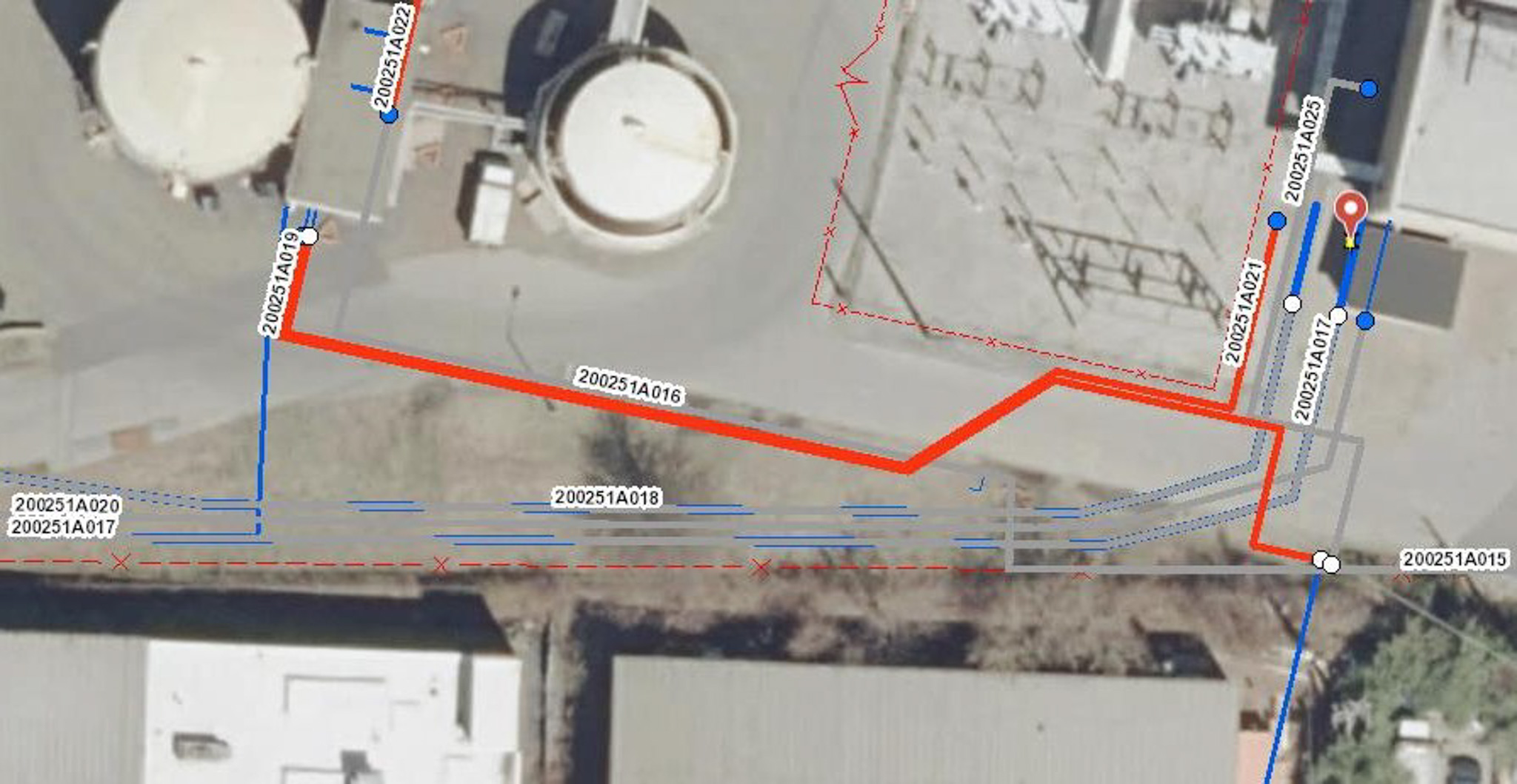
The shift toward tech-enabled monitoring is about moving from "snapshots" to "streams." Instead of a technician taking a reading every 15 minutes, we deploy integrated sensor arrays that collect data every second.
1. Automated Perimeter Monitoring
Modern solutions, like those provided by Specto Technology or BettAir, allow us to set up rugged, weather-proof stations around the site. these stations track:
- Particulate Matter (PM10/PM2.5): Essential for dust control during excavation.
- VOCs and Hazardous Gases: Vital for sites with legacy petroleum or chemical contamination.
- Meteorological Data: Wind speed and direction are critical for determining whether a spike is coming from your site or a neighbor’s.
When these sensors hit a pre-set "action level," the system doesn't just beep. It sends an instant SMS or email alert to the site superintendent and our project managers. This allows for immediate mitigation: wetting down the soil or adjusting the excavation pace: before it becomes a regulatory violation.
2. Remote Noise and Vibration Oversight
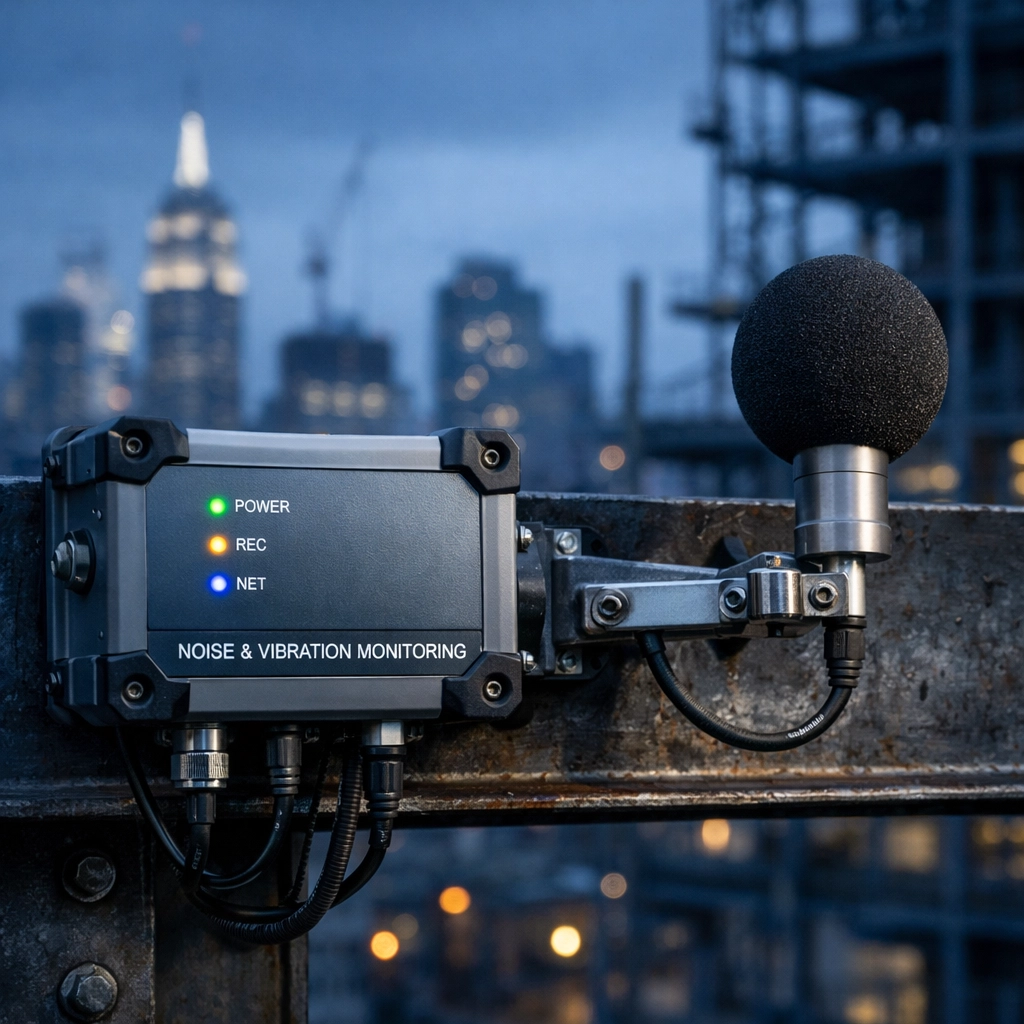
NYC is loud, but the NYC Noise Code is incredibly specific. Intelligent monitoring devices can now differentiate between the ambient hum of the BQE and the specific impact of your pile driver. Research suggests that high-quality remote audio samples and real-time data can reduce unnecessary inspections by up to 80%. If a neighbor complains, we have the timestamped data to show exactly what the decibel level was at that moment.
Why "Big Box" Consulting Fails the Tech Test
You’ve probably seen the pitch from the massive national firms. They have 10,000 employees and a glossy brochure, but when it comes to construction oversight in NYC, they often fall short.
Why? Because they apply a cookie-cutter playbook to a city that demands local fluency. At a national firm, the partner you met during the RFP process is nowhere to be found once the sensors are deployed. You’re left with a junior staffer who is more focused on their billable hours than your project’s timeline.
At Envicon, we operate differently. We are family-owned and PE-led. When we deploy a tech-enabled monitoring system, our senior leadership is looking at the dashboard alongside you. We don't just hand you a raw data dump at the end of the month; we provide actionable insights. If the data shows a recurring issue with dust at 10:00 AM every Tuesday, we don't just report it: we sit down with your site-civil team and solve it.
The Digital Paper Trail: Peace of Mind for Developers
One of the biggest headaches for any developer is the final closure report. Whether it’s a Remedial Closure Report (RCR) for the OER or a Final Engineering Report (FER) for the DEC, the regulators want to see every scrap of data.
Tech-enabled monitoring automates this documentation. Every alert, every mitigation action, and every hour of "clean" air is logged in a cloud-based dashboard.
- Instant Transparency: Access your site data from your phone anywhere in the world.
- Automated Reporting: Reduce the time spent on manual data entry, which cuts down on human error and reporting delays.
- Regulatory Credibility: When you submit a report backed by continuous, tamper-proof digital logs, the regulators take notice. It shows you are proactive, not just compliant.

Integrating AI and Computer Vision
We are moving toward a future where AI-driven construction management, like the platforms offered by viAct, uses computer vision to track site safety and environmental hazards in real-time. By integrating these AI layers with our traditional environmental monitoring, we can spot potential issues before they even register on a sensor.
For example, if an AI camera detects a truck leaving the site without being properly hosed down in the tracking pad, an alert can be sent immediately. This isn't just about "watching" the site; it's about using technology to enforce the high standards that keep a project moving toward completion.
The Envicon Approach: Precision, Speed, and Trust
We know that a project sitting in a regulatory queue is a project losing money. Our mission is to remove the obstacles between you and a buildable site. We don't just deliver services; we help transform underused and contaminated properties into thriving assets.
We’ve spent 20 years building relationships with the reviewers at the OER, NYSDEC, and NYC Parks. They know that when Envicon Group is providing the oversight, the data is accurate and the management is rigorous. That trust is something a national firm simply cannot replicate with a satellite office.
"Collaboration is not a buzzword: it’s how we work. We sit at the table with architects, engineers, and attorneys to ensure everyone is aligned on the path to closure." : Jason Pancoast, CEO.
Takeaways for Your Next Project
If you are planning a development in NYC or NJ, consider the following when setting up your field monitoring:
- Demand Real-Time Alerts: Do not settle for manual readings that only happen once an hour.
- Ensure Local Fluency: Make sure your consultant knows the specific reporting formats required by NYC OER.
- Verify Equipment Calibration: Tech is only as good as the maintenance behind it. We ensure our sensors are calibrated and field-ready every day.
- Focus on the Path to Closure: Monitoring is a means to an end. Ensure your data is being compiled into a format that will actually get your remedial closure report approved.
Let’s Clear the Path Together
Your project is too important to leave to chance. Tech-enabled field monitoring provides the technical confidence you need to sleep soundly, knowing that your site is compliant and your investment is protected.
At Envicon Group, we don’t just write reports. We solve problems. Whether you’re dealing with complex soil management, groundwater issues, or the intricacies of NYC air monitoring, we have the field-first expertise to get you to the finish line.
Ready to see how real-time monitoring can streamline your next project? Contact us today to speak with a specialist who understands the NYC dirt as well as the NYC regulations.
Leave a Reply