For nearly two decades, the 2005 Field Sampling Procedures Manual (FSPM) was the bible for environmental consultants in New Jersey. If you were a developer or an attorney, you likely assumed your consultant knew it by heart. But as of early 2024, that bible has been rewritten.
The NJDEP field sampling procedures manual 2024 updates represent more than just a technical refresh; they are a direct response to the "forever chemicals" (PFAS) crisis and a push for higher data integrity. For developers, these changes mean that the "old way" of sampling: the way your big-box firm’s junior staff might still be doing it: is a fast track to rejected submittals, expensive re-mobilizations, and project delays.
At Envicon, we don't just read the manual; we live it. Here is the technical breakdown of what has actually changed and why it matters for your bottom line.
The Death of Field Filtration: A PFAS Necessity
The most significant shift in the 2024 FSPM involves how we handle groundwater. For years, consultants dealing with "cloudy" or turbid samples would simply filter them in the field to get a "clean" reading.
Under the 2024 framework, field filtration is explicitly disallowed for PFAS.
PFAS compounds have a nasty habit of adsorbing to filter membranes. If your consultant filters the sample, they aren't just removing sediment; they are likely removing the very contaminants they are supposed to be measuring. This results in false negatives that will eventually be caught by the NJDEP or a future buyer’s due diligence.
The Business Impact
If you have a site with high turbidity, you can no longer "filter your way to compliance." You need a team that understands how to achieve a turbidity of <10 NTU through superior well construction and advanced low-flow purging techniques. Anything else is just bad data that won't hold up under LSRP scrutiny.

Groundwater Sampling: Low-Flow is No Longer Optional

While the 2005 manual allowed for various purging methods, the 2024 update makes low-flow or passive sampling the preferred default for PFAS and other sensitive parameters.
The NJDEP has clarified that the "volume-average" sampling policy: the old method of pumping out three well volumes: does not apply when sampling for Contaminants of Emerging Concern (CEC) like PFAS.
Why this matters for your schedule:
- Precision over Speed: Low-flow sampling takes longer per well than traditional purging. If your consultant hasn't updated their bid to reflect these 2024 realities, expect a "change order" midway through the project.
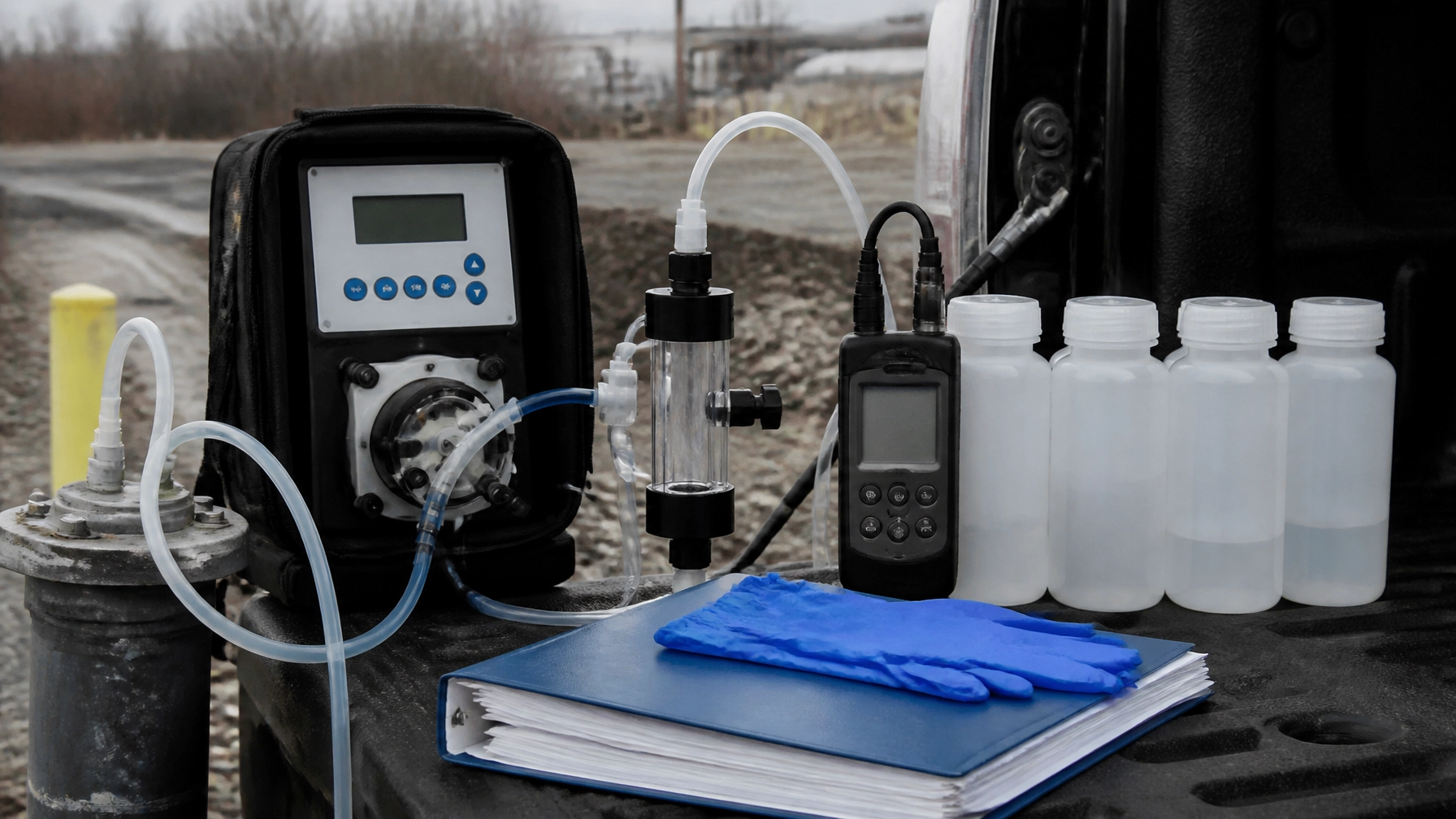
- No Exceptions for Bad Tech: The department expects methods that reduce turbidity at any time. If your consultant isn't bringing a properly calibrated flow-through cell and digital turbidity meter to the field, they aren't following the manual.
Soil Sampling and the "Vertical Migration" Mandate
The 2024 update places a much heavier emphasis on the conceptual site model (CSM), specifically regarding how PFAS leaches through the soil column.
Previously, a "surface sample" might have sufficed for certain investigations. Now, the Fact Sheet (supplementing the FSPM) explicitly states that soil samples may need to be collected from multiple depth intervals to account for vertical migration to groundwater.
At Envicon, we integrate this into our Site Investigation and Characterization process from day one. We don't just poke holes; we map the risk. For a developer, this means more upfront sampling, but it prevents the "missing data" trap that stalls NJDEP approvals for months.

The "PFAS-Free" Field Reality
The 2024 manual formalizes the logistical nightmare of PFAS cross-contamination. It isn't just about the sample bottles; it's about everything on the site.
- Sampling Sequence: Potable water samples must be collected first, and they must be physically segregated from soil, sludge, or non-potable water samples.
- Equipment Decon: You can no longer use just any detergent. The SDS (Safety Data Sheet) for every soap used on-site must be reviewed to ensure it contains no fluorosurfactants.
- The "Blue Pen" Rule: While not explicitly in the text, the industry standard enforced by the 2024 update means no Sharpies, no waterproof notebooks, and no specialized "outdoor" gear that might contain Teflon or Gore-Tex near the sampling point.
When you hire a large national firm, a partner sells the project, but a junior staffer: who might not have been briefed on these 2024 nuances: is the one actually holding the bottle. At Envicon, our leadership is in the field, ensuring the "PFAS-free" protocol isn't just a line in a report, but a field reality.
Full List Reporting: No More Hiding the Ball
NJDEP now expects LSRPs and PRCRs (Persons Responsible for Conducting Remediation) to report the full list of PFAS compounds analyzed by the lab, not just the three regulated ones (PFOA, PFOS, PFNA).
This is a massive shift in liability. If your lab runs a method that identifies 40 different PFAS compounds, you have to report all 40. Even if they aren't currently "hazardous substances" under NJ law, the NJDEP can require investigation if they believe those compounds pose a risk.
This is where you need a consultant who acts as a Regulatory Compliance and Permitting expert. You need a strategy for what happens after the data comes back, not just a firm that drops a 500-page lab report on your desk and walks away.

The Envicon Difference: Speed through Tech
The 2024 FSPM updates require more documentation, more blanks (Field Reagent Blanks), and more meticulous field notes. Large firms handle this by increasing their billable hours and slowing down their turnaround.
We do it differently. We’ve built proprietary project management infrastructure that gives our clients real-time dashboards. While a national firm is still transcribing field notes from a soggy notebook, our data is already being QA/QC'd and uploaded.
We don't sell "compliance"; we sell a cleared path. In the world of NJDEP remediation, compliance is the baseline. The real value is getting to your Response Action Outcome (RAO) without the regulatory "ping-pong" caused by bad field data.
Summary Checklist for Developers and Attorneys
To ensure your project remains compliant with the 2024 NJDEP Field Sampling Procedures Manual, verify that your consultant is:
- Defaulting to Low-Flow Sampling: If they are "slugging" wells with bailers, your data is at risk.
- Using PFAS-Free Water: Are they documenting the source of their field blank water?
- Eliminating Field Filtration: If they suggest filtering for PFAS, fire them.
- Segregating Samples: Potable water and highly contaminated soil should never share a cooler.
- Reporting Full Suites: Are they prepared for the liability of the full PFAS analyte list?
Ready to Clear Your Path?
Don't let 2005-era field practices stall your 2026 development. Whether you're navigating an NJDEP LSRP Guide requirement or a complex brownfield, you need field-first leadership.
Stop paying for junior-staff mistakes. Contact Envicon Group today to ensure your field data is bulletproof.
Leave a Reply