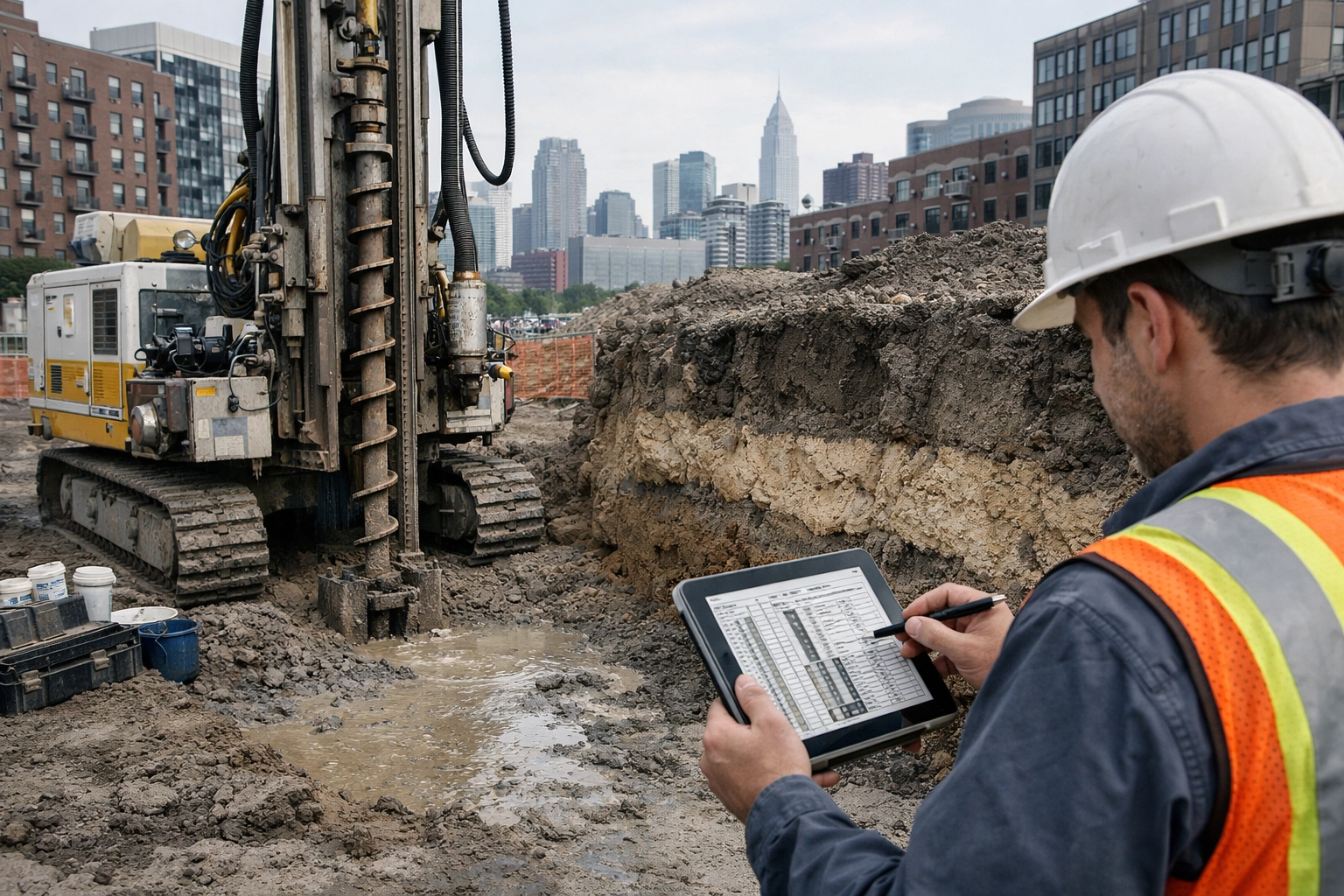
You’re sitting at your desk, looking at three bids for a geotechnical investigation on your next New Jersey development project. Two are in the same ballpark, and one is significantly lower: maybe 30% or 40% below the others.
In the high-stakes world of NJ real estate, that "savings" looks like an easy win for your budget. But here’s the reality we see far too often at Envicon: that cheap bid is almost always the most expensive mistake you’ll make.
If you're searching for NJ geotechnical investigation costs, soil engineering costs in New Jersey, or the real price of a soil boring program for development sites, the answer is simple: the lowest proposal usually leaves out the field data that protects your schedule and budget.
In geotechnical engineering, you aren't just buying a PDF report with some boring logs. You are buying a risk mitigation strategy. When a firm underbids a project, they aren't finding "efficiencies" that others missed; they are cutting corners on the very data that dictates whether your building stays standing or your budget bleeds out in change orders.
The NJ Subsurface: A High-Stakes Lottery
New Jersey has some of the most complex and varied geology in the country. From the soft, organic silts of the Meadowlands and the variable fill of the Hudson River waterfront to the hard trap rock of the Palisades and the shifting sands of the Coastal Plain, there is no such thing as a "standard" site.
When geotechnical investigation costs in NJ are slashed, the first thing to go is the density of the data. A low-cost provider might suggest four borings when the site’s complexity clearly demands eight. They might stop drilling at 20 feet because "that's what the last guy did nearby," completely missing a layer of compressible peat at 25 feet that will eventually cause your foundation to settle and crack.
That’s why soil engineering in NJ starts with enough borings, enough depth, and enough lab data to support real design decisions. The New Jersey Geological and Water Survey also documents how varied subsurface conditions are across the state, which is exactly why one-size-fits-all scopes fall apart fast on real projects (NJDEP/NJGWS).
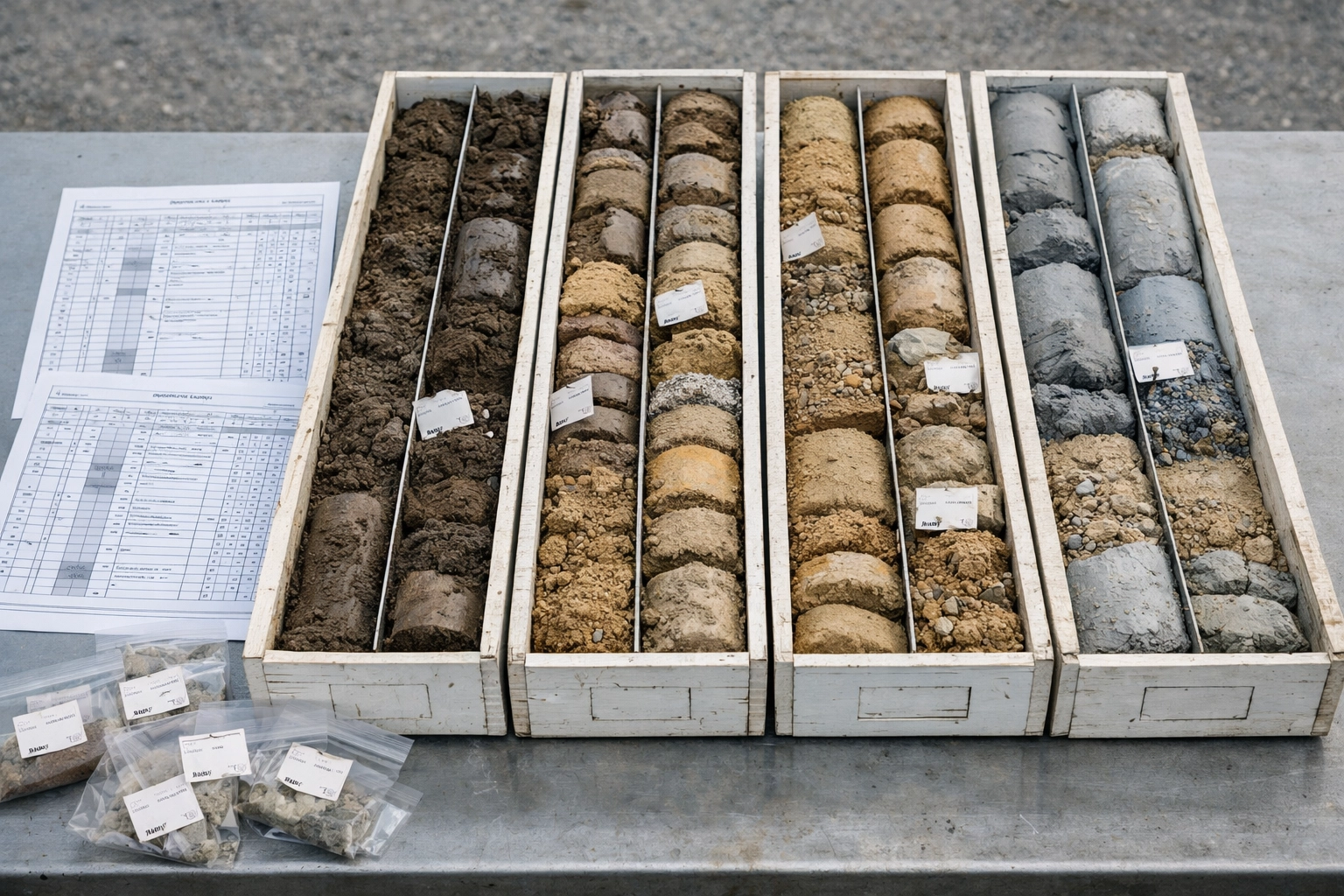
A realistic layout of soil cores and boring logs used to price and design a geotechnical program correctly.
How the "Cheap" Bid Actually Works
To hit those rock-bottom prices, budget firms rely on a high-volume, low-effort business model. This creates a ripple effect of risk for you:
- Junior Staff Oversight: The "engineer" on-site is often a fresh graduate with little field experience. They might misidentify soil types or fail to notice critical indicators like high groundwater levels or evidence of historic fill that requires remediation.
- Insufficient Lab Testing: Borings are only half the battle. You need laboratory analysis to determine the actual load-bearing capacity and shear strength of the soil. Cheap bids often skip the lab work, relying instead on "visual-manual" estimates which are notoriously conservative: and expensive for your foundation design.
- The "Copy-Paste" Report: We’ve seen reports that look like they were written for a project three towns over. They offer generic recommendations that don’t account for the specific structural loads of your planned building or the local NJDEP regulations that might apply if contamination is found during the geotechnical work.
If you want a more accurate read on geotechnical drilling costs in NJ, soil boring costs for commercial development, or foundation investigation pricing, you need to ask what is actually included:
- Number of borings
- Target depths
- Lab testing scope
- Groundwater observations
- Engineering recommendations tied to your building type
- Turnaround time for lender, design, and permit needs
As we often tell clients, "A low geotech fee can hide a very expensive foundation assumption."
The "Conservative Design" Tax
This is where the real money is lost. When a geotechnical engineer doesn't have enough data to be confident, they have to protect themselves. How do they do that? They over-engineer.
If the data is "thin," the engineer will recommend a foundation system that is far more robust (and expensive) than necessary. Instead of a standard spread footing, they might tell you that you need expensive deep piles or ground improvement.
We recently reviewed a project where a budget geotech report led to a foundation design that cost the developer an extra $450,000 in unnecessary concrete and steel. The developer "saved" $5,000 on the initial investigation but paid nearly half a million dollars in "Conservative Design Tax." At Envicon, we believe that precision in the field leads to economy in the foundation.
That’s the real conversation behind NJ soil engineering costs. The upfront proposal is only one number. The bigger number is what your structural engineer, contractor, and lender do with weak subsurface data.
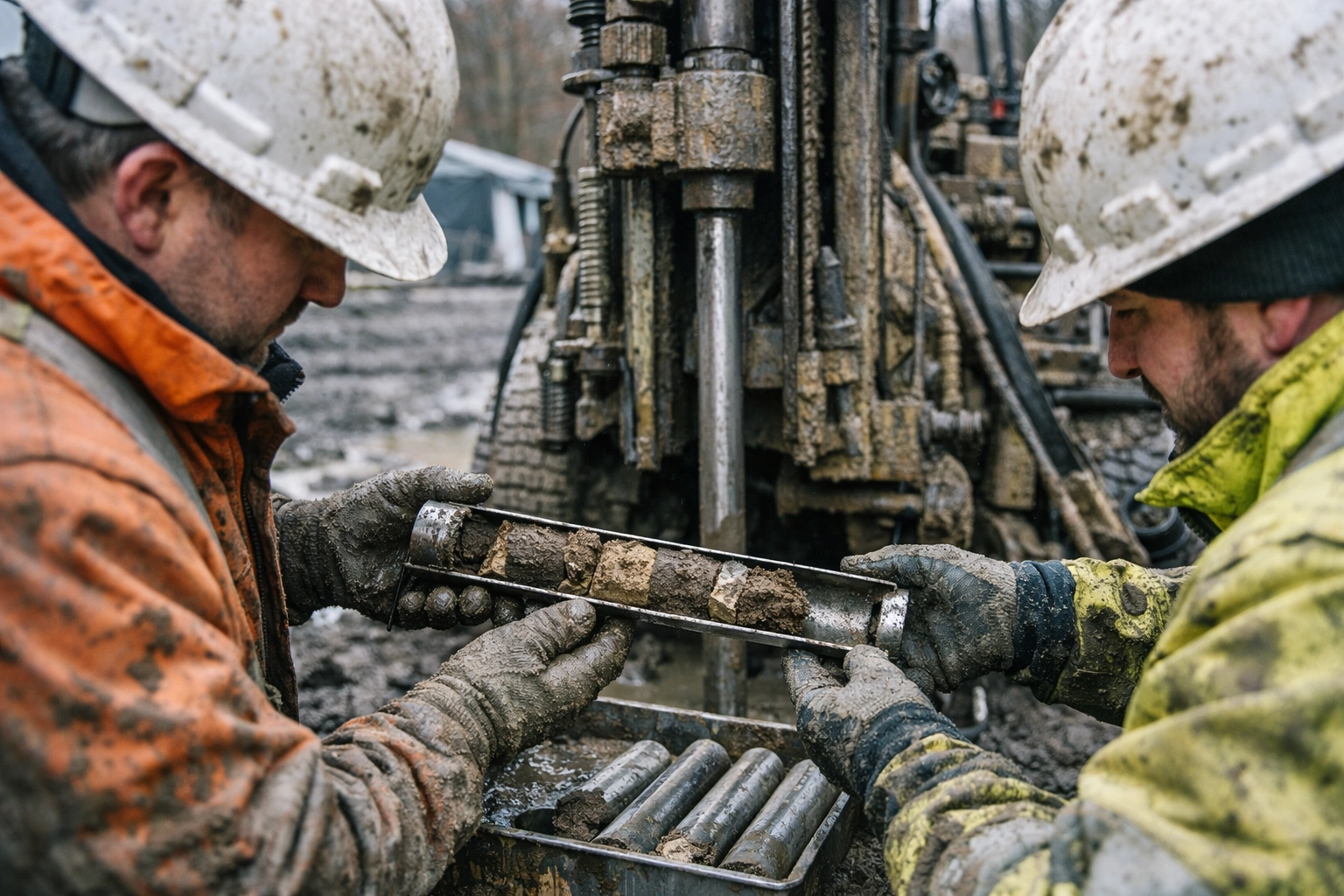
Field sampling is where good soil engineering starts: with direct, usable data from the ground.
Change Orders: The Silent Profit Killer
Construction is the most expensive time to find out your geotechnical report was wrong. Once the excavators are on-site and the shoring is being installed, any "unforeseen condition" becomes a massive headache.
If your cheap geotech report missed a high water table or a layer of boulders, the contractor is going to hit you with a change order immediately. These delays can cost tens of thousands of dollars per day in idle equipment and labor. In many cases, these "unforeseen" conditions were perfectly foreseeable: if the initial investigation had been done correctly.
We focus on helping our clients in Architectural and Energy sectors avoid these traps by providing a visionary approach to site assessment. We don't just look at what's in the ground; we look at how that ground impacts your entire project timeline and ROI.
That’s also why soil engineering for NJ redevelopment sites needs to be tied to business outcomes, not just field notes. If the report does not help you price earthwork, evaluate foundation options, and reduce change-order exposure, it is incomplete.
The Envicon Difference: Engineering Trust
The industry is full of "big consultants" who treat every project like a transaction. They send out a crew, punch some holes, and send you a bill. At Envicon, we operate as your strategic partner.
Why do clients switch to us?
- Accountability: We don't hide behind "standard of care" disclaimers. We provide actionable data that we stand behind.
- Adaptability: If we hit a weird soil layer at 15 feet, we don't just stop because the contract said 20. We call you, explain the risk, and adjust the scope in real-time to ensure the data is complete.
- Technology Integration: We use advanced GIS mapping and subsurface modeling to visualize your site before the first drill rig even arrives. Check out our resources to see how we leverage data for better outcomes.
Clients also switch to us because we move faster and think more practically than the typical big consultant:
- We scope investigations around your actual development risk
- We explain what is driving geotechnical investigation cost in NJ
- We give you usable recommendations, not vague disclaimers
- We stay responsive when field conditions change
As Jason Pancoast puts it, "Good geotechnical work doesn't just describe the ground. It gives the project team confidence to move."
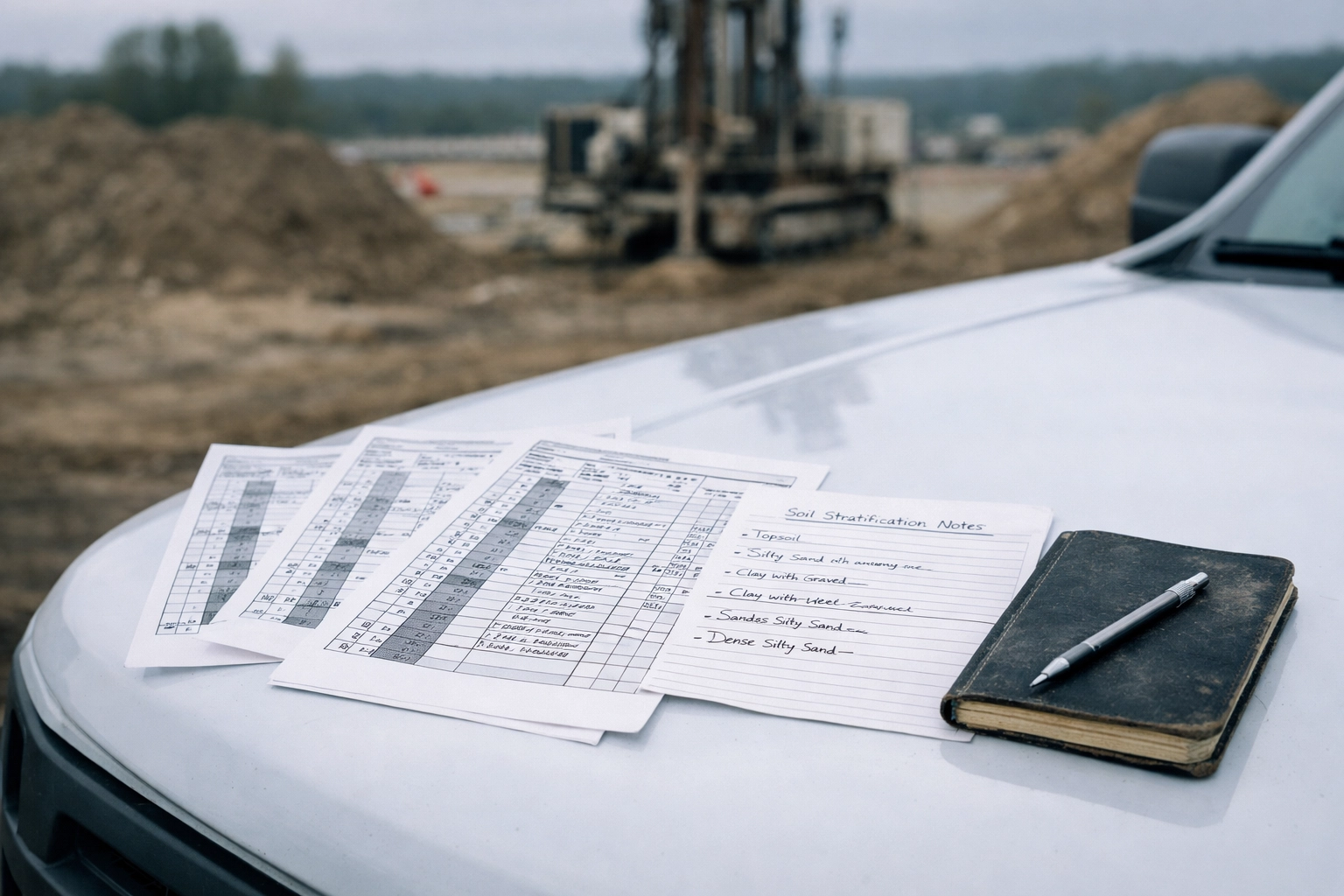
Clear boring logs and field documentation help turn drilling data into real design and pricing decisions.
Why it Matters in Hudson County and Beyond
If you’re developing in high-density areas like Jersey City, Hoboken, or Newark, the stakes are even higher. You’re dealing with historic fill, complex utility grids, and adjacent structures that can be affected by your foundation work.
A cut-rate geotechnical investigation in these areas isn't just a budget risk; it's a legal and structural liability. If your excavation causes settlement in a neighboring building because your geotech firm didn't properly assess the soil's lateral pressure, you’re looking at years of litigation. We work closely with Environmental Law professionals to ensure our reports provide the technical defense our clients need.
This is especially true when clients ask us about Hudson County geotechnical investigation costs, Jersey City soil boring programs, or Newark foundation investigation pricing. Dense urban sites need tighter planning, not thinner scopes.
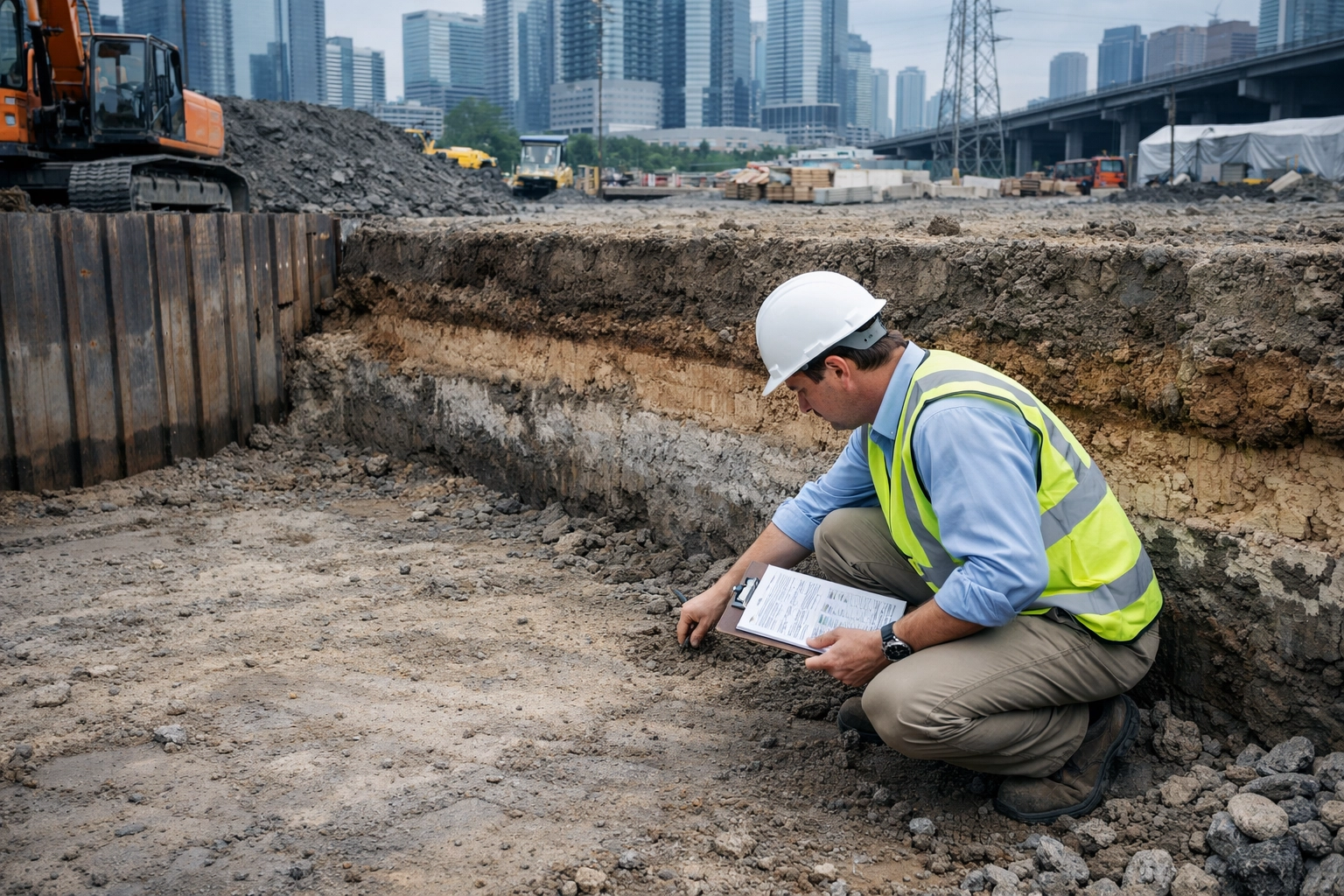
Urban foundation work depends on matching excavation conditions to the boring data before surprises turn into claims.
The ROI of a Thorough Investigation
When you invest in a comprehensive geotechnical investigation, you are buying:
- Design Optimization: The ability to use the most cost-effective foundation system possible.
- Bidding Accuracy: Contractors can give you "hard" numbers because they know exactly what they are digging into.
- Peace of Mind: Knowing that your project won't be derailed by a $200,000 change order three weeks into excavation.
As our CEO, Jason Pancoast, often says: "We aren't in the business of drilling holes; we're in the business of removing uncertainty."
In the long run, geotechnical investigation costs in NJ are a tiny fraction of your total project cost: usually less than 1%. Trying to save 20% on that 1% is the definition of "penny wise and pound foolish."
If you're comparing proposals, the better question is not, "Who is cheapest?" It is, "Who is giving us enough soil engineering data to make the right call the first time?"
Summary & Takeaways
Before you sign that low-bid contract, ask yourself if you can afford the consequences of bad data.
- Cheap bids often lead to over-engineering, costing you 10x more in construction materials.
- NJ's geology is unforgiving; generic investigations miss local complexities like organic silts or variable fill.
- Data density matters. Cutting the number of borings increases the statistical likelihood of hitting a "surprise" during construction.
- Partner with experts who understand the local landscape and the strategic implications of subsurface data.
- Look past the fee and focus on the full cost of soil engineering decisions, foundation design, and construction risk.
At Envicon, we help visionary developers build with confidence. If you're ready to compare NJ geotechnical investigation costs the smart way and want a practical scope for your site, contact us today. Let’s look at your project through a lens of strategy, not just a price tag.
Contact Envicon Group
If you want a geotechnical scope that keeps your project moving (and keeps surprises out of your excavation), we’ll sanity-check your plan and tell you what we’d do differently.
- Envicon Group
- Web: https://wp.envicongroup.com/
- Contact: https://wp.envicongroup.com/contact
- Services: https://wp.envicongroup.com/services

Leave a Reply