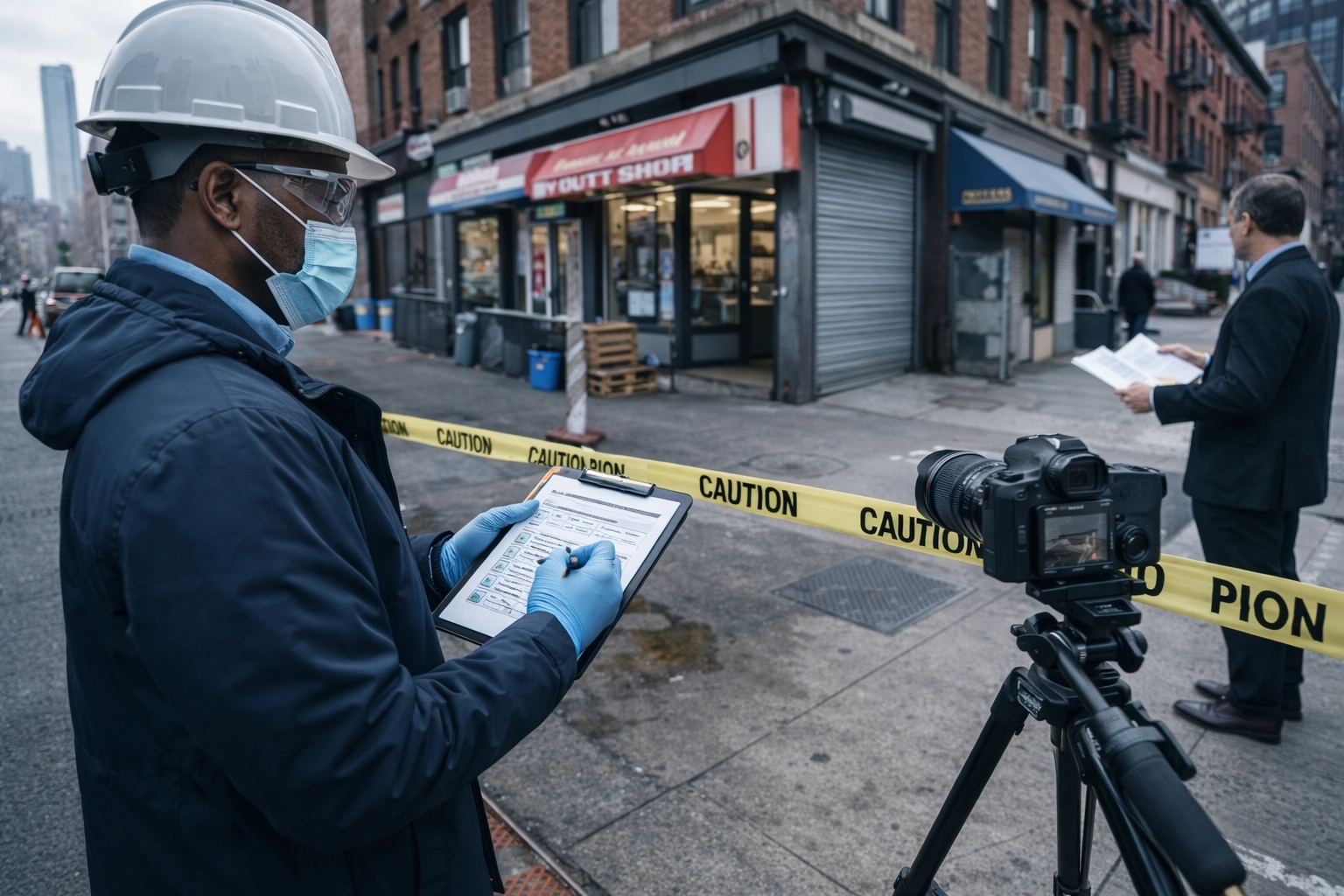
If you’re moving dirt or closing a deal in New York City right now, you’ve probably heard your attorney or lender mention "the new ASTM standard."
Maybe you shrugged it off as another layer of bureaucratic paint. But here’s the reality: if your Phase I Environmental Site Assessment (ESA) doesn't strictly adhere to ASTM E1527-21, you aren’t just skipping a technicality: you’re likely flushing your CERCLA liability protection down the East River.
In a city where every square foot is a puzzle of historical manufacturing, dry cleaners, and buried tanks, a Phase I is more than a checklist item. It’s your shield. As of February 13, 2024, the EPA has officially adopted ASTM E1527-21 as the gold standard for All Appropriate Inquiry (AAI). If your consultant is still using the old -13 standard, your report is essentially a paperweight in the eyes of a sophisticated lender.
At Envicon Group, we’ve seen how "cheap" reports from national big-box firms lead to six-figure delays. We don't just write reports; we clear paths to closing.
The Real Cost of a Phase I ESA in NYC
Let’s talk numbers. When people search for "Phase I ESA cost NYC," they often find quotes ranging from $2,000 to $5,000.
If you get a quote on the lower end of that spectrum for a complex NYC property, you should be worried. Why? Because the updated E1527-21 standard is significantly more labor-intensive. It requires a deeper dive into the "Big Four" historical sources (sanborn maps, aerial photos, city directories, and topographic maps) not just for your site, but for adjoining properties.
In a dense environment like Brooklyn or Queens, "adjoining" now includes the property across the street or the alleyway. If your consultant isn’t looking at the dry cleaner across the street because they’re trying to save time on a low-fee report, your lender is going to flag it.
The "cheaper" report ends up costing more because:
- Lender Rejection: The bank’s environmental risk officer sends it back, demanding a rewrite or additional historical research.
- Missed RECs: A junior staffer at a big-box firm misses a "Recognized Environmental Condition" (REC) that turns up later during construction, halting your excavators at $20,000 a day.
- Shelf-Life Issues: The new standard is strict about the 180-day shelf life. If your consultant drags their feet, you’re paying for an update before you even hit the closing table.

Suggested prompt: A professional environmental engineer in a New York City office reviewing complex historical Sanborn maps and modern digital site data, illustrating the depth of research required for ASTM E1527-21 compliance.
Why ASTM E1527-21 is Different (And Why It Matters for You)
The update isn’t just a font change. It’s a complete overhaul of how we look at site history and risk. Here’s what changed and why it affects your bottom line:
1. The Definition of "Adjoining"
Under the old rules, some consultants only looked at properties physically touching yours. Now, we have to look at properties across the street or alley. In NYC, a gas station across a narrow street is a major risk factor. Ignoring it isn't an option anymore.
2. The "Big Four" Requirement
Environmental Professionals (EPs) must now review the "Big Four" historical sources for the subject property and all adjoining properties. If these sources aren't available, we have to explain why. This prevents the "I couldn't find the records" excuse that weak consultants used to use to skip work.
3. Emerging Contaminants (PFAS)
While not technically a REC under the federal definition yet, the new standard encourages the discussion of "Non-Scope Considerations" like PFAS. In New York, where the NYSDEC is aggressive about "forever chemicals," ignoring this can kill a redevelopment project before it starts.
4. Logic and Rationale
The new standard requires the EP to explain why something is or isn't a REC. We can't just say "it's fine." We have to prove it with data and professional judgment. This is where Envicon’s PE-led team excels. We don't give you "maybe"; we give you a path forward.
100% Lender Approval: Why Our Reports Hold Water
We’ve seen the "Big-Box" pain firsthand. You hire a national firm because you recognize the name. You talk to a senior partner during the pitch, but then a junior staffer with six months of experience is the one actually walking your site and writing your report.
When that report gets to a lender like JPMorgan, Wells Fargo, or a local NYC credit union, their reviewers see the holes. They see a "defensive" report written to protect the consultant’s liability rather than to inform your deal.
Envicon Group has a 100% lender approval rate.
We achieve this because we treat every Phase I as the foundation for the entire project. Whether you're working with architects or energy developers, our reports are designed to be bulletproof. We know exactly what the risk officers are looking for because we’ve been sitting across the table from them for 20 years.
The Envicon Difference: Speed Without Shortcuts
In the NYC real estate market, speed is the only currency that matters. A 30-day turnaround for a Phase I is a death sentence for a fast-moving deal.
We’ve optimized our workflow to deliver lender-ready reports in as little as 72 hours when the situation demands it. But "fast" doesn't mean "thin." We use advanced digital analytics to pull historical data faster than the big firms, allowing our senior engineers to spend their time on the analysis rather than the data collection.
"We don’t sell reports. We sell cleared paths. A Phase I is only useful if it lets you close the deal and start construction with confidence." : Jason Pancoast, CEO, Envicon Group.
When you work with us, you’re not getting a cookie-cutter document from a regional satellite office. You’re getting 20 years of NYC/NJ experience. We know the NYC OER reviewers by name. We know which blocks in Brooklyn had heavy industrial plating shops in the 1940s. That local fluency is the difference between a project that sails through and one that gets stuck in a regulatory black hole.

Suggested prompt: A high-resolution split screen showing a 1920s historical NYC map on one side and a modern 3D site model on the other, highlighting the bridge between historical due diligence and modern engineering.
Don't Let a $3,000 Report Kill a $30 Million Deal
If you’re looking at a site in the five boroughs or across the river in Jersey City, the environmental due diligence is the most volatile part of your pre-development.
The ASTM E1527-21 standard is a higher bar, but it's one we clear every day. Hiring a firm that "specializes" in everything usually means they specialize in nothing. You need a team that is field-first and regulator-facing.
When you’re ready to move beyond the big-firm fluff and get a report that actually moves your project forward, reach out to us. We’ll give you the truth about your site, a clear path to compliance, and the confidence to close.
Key Takeaways for Your Next Deal:
- Check the Date: Ensure your consultant is using ASTM E1527-21. Anything else is obsolete for CERCLA protection.
- Look Beyond the Fee: A cheap report that gets rejected by your lender costs you thousands in carry costs and delays.
- Demand Senior Oversight: Ensure a Professional Engineer (PE) is actually reviewing the findings, not just signing the cover page.
- Mind the Shelf Life: You have 180 days. If your deal is dragging, plan for an update early to avoid a last-minute closing crisis.
Ready to clear the path for your next project? Check out our environmental services or browse our recent projects to see how we handle complex NYC redevelopments.
Summary: ASTM E1527-21 is the mandatory new standard for Phase I ESAs, requiring more rigorous historical research and broader site definitions. While it may increase initial costs, it provides the essential legal protections needed for NYC deals. Envicon Group combines this technical rigor with 20 years of local agency expertise to deliver a 100% lender approval rate and keep your project on schedule.
Leave a Reply