On July 1, 2026, the New York State Department of Environmental Conservation (NYSDEC) dropped a regulatory bombshell that will fundamentally reshape the landscape of solid waste management and environmental remediation across the state. The proposed amendments to 6 NYCRR Parts 360 and 363 are not just minor tweaks; they represent a landmark shift in how New York handles landfill leachate.
For decades, the industry standard for managing leachate: the contaminated liquid that drains from landfills: was a relatively straightforward "collect and haul" model. Landfill operators captured the liquid and sent it to municipal Water Resource Recovery Facilities (WRRFs). However, as our understanding of "forever chemicals" like per- and polyfluoroalkyl substances (PFAS) has evolved, the NYSDEC has determined that this cycle is no longer viable. WRRFs were never designed to handle PFAS, meaning these contaminants have been passing through municipal systems and straight back into New York’s waterways.
The new proposal changes everything. It mandates a performance-based standard requiring an unprecedented 99.9% removal of specified contaminants, including PFAS and 1,4-dioxane, before leachate can be discharged.
The Core Mandate: 99.9% Removal
The centerpiece of the July 2026 proposal is the introduction of a quantitative performance standard. Under the new Subpart 363-12, active Municipal Solid Waste (MSW) landfills and certain Construction and Demolition (C&D) debris landfills must treat their leachate to achieve a 99.9% reduction of contaminants listed in regulatory Tables 3A and 3B.
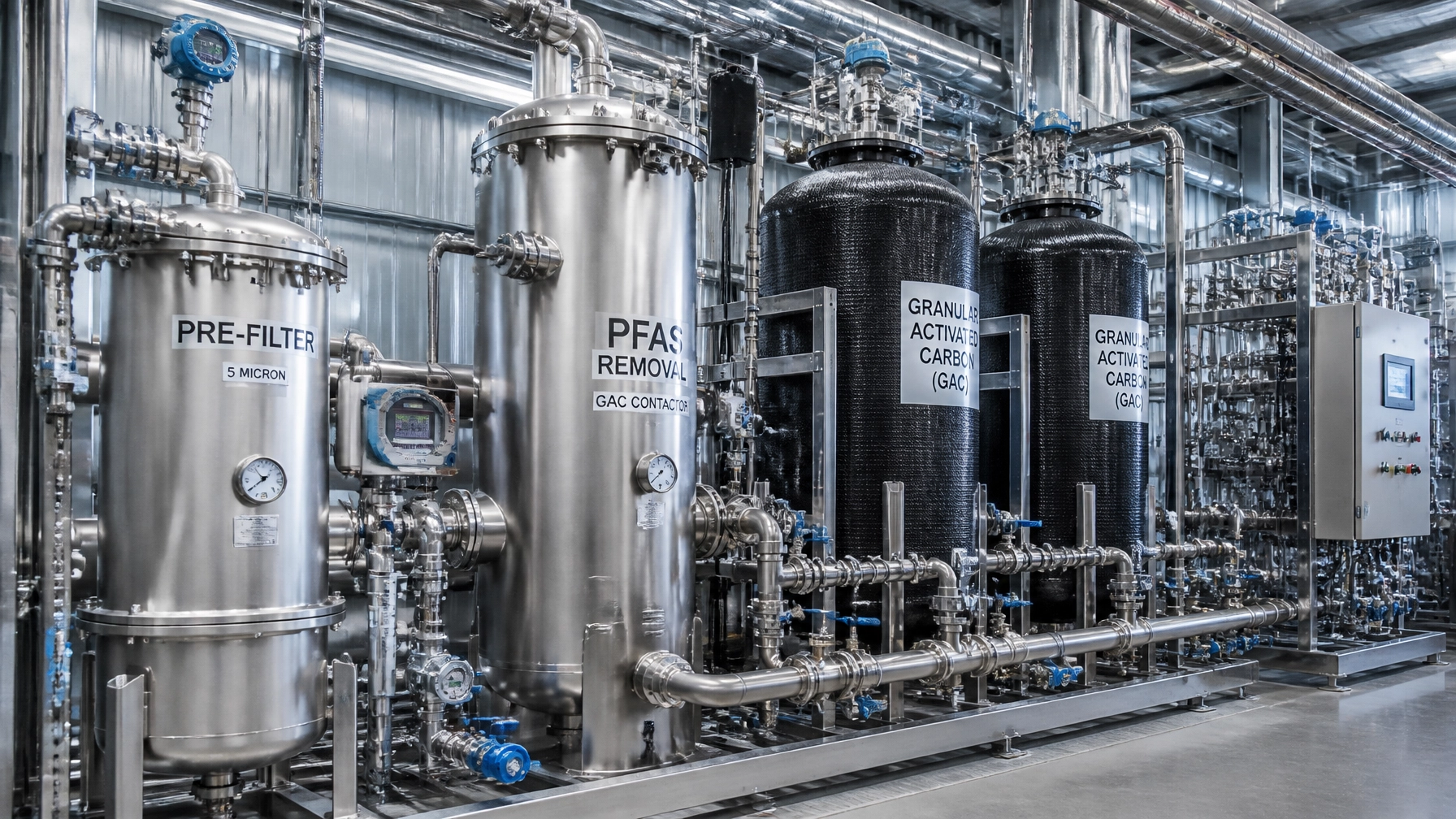
This is a technology-neutral mandate. The NYSDEC isn't telling you how to do it; they are telling you what the result must be. While the regulation doesn't prescribe specific equipment, the technical reality for achieving 99.9% removal for PFAS compounds like PFOA and PFOS usually involves a complex "treatment train." This typically includes:
- Multi-stage Reverse Osmosis (RO): To concentrate the contaminants.
- Granular Activated Carbon (GAC): To polish the RO permeate.
- Evaporation and Solidification: To manage the concentrated waste streams.
- Thermal Oxidation: For managing vapor effluents.
For many operators, this means moving from a simple storage tank to a full-scale industrial chemical treatment plant on-site.

Why the NYSDEC is Closing the Loop
Historically, landfill leachate was excluded from certain treatment requirements if it was sent to a permitted wastewater facility. The 2026 proposal eliminates these exclusions. NYSDEC's logic is clear: the reintroduction of emerging contaminants into the environment via municipal biosolids and effluent must stop.
By regulating leachate at the source, the state is effectively treating landfills as industrial point-source dischargers rather than just storage sites. This evolution in landfill regulation is designed to protect New York's drinking water and ecosystems from the long-term accumulation of 1,4-dioxane and PFAS, which do not break down through conventional biological treatment processes.
Timeline for Compliance
The clock is already ticking. If the proposal is adopted following the public comment period (which ends September 9, 2026), the implementation schedule is aggressive:
- One Year: Landfills must submit conceptual leachate treatment plans within 12 months of the effective date.
- Two Years: Final engineering plans must be submitted within 24 months.
Compliance can be achieved through on-site treatment systems or by contracting with authorized third-party facilities. However, the capital costs are staggering: estimated between $3 million and $50 million per site, with annual operating costs ranging from $1.5 million to $8 million.
For many smaller municipalities and private operators, these costs will necessitate a complete re-evaluation of their compliance and permitting matrix.

The Technical and Financial Reality
Let’s be direct: most "big-box" environmental firms are going to hand you a 500-page report explaining why this is expensive and then wait for you to ask what to do next. At Envicon Group, we view this differently. Every week your conceptual plan sits in a queue is another week of carrying costs and regulatory exposure.
The 99.9% removal threshold is a high bar. Standard GAC systems might hit it under perfect conditions, but real-world leachate is a complex cocktail of organic matter, salts, and heavy metals that can quickly foul sensitive membranes. Achieving "three nines" (99.9%) consistently requires not just equipment, but a level of construction oversight and environmental monitoring that ensures field-level QA/QC isn't just a checkbox, but a operational reality.
"Improved management of landfill leachate has become the next major evolution in landfill regulation." : NYSDEC Regulatory Analysis
Closure and Post-Closure: The Long Game
The proposal doesn't stop once the landfill is full. It expands closure and post-closure obligations significantly. Landfill owners will be required to maintain and operate these treatment systems long after the last truck has tipped.
This means financial assurance obligations will need to be adjusted to cover the massive operating expenses of high-tech PFAS treatment for decades. If you are involved in the redevelopment of underutilized properties that include legacy landfill cells, your risk profile just shifted.
How Envicon Group Clears the Path
When regulations this significant hit, the difference between a project that moves and a project that stalls is the team sitting at the table with the regulators.
Large national firms often treat NYC and NJ projects with a cookie-cutter playbook. They talk to you at the pitch and then hand your project to a junior staffer who hasn't been to a site in months. Envicon is different. We are PE-led and field-first. We know the reviewers at the NYSDEC because we work with them daily.
We provide more than just a report on the 99.9% mandate; we provide:
- Direct Regulatory Coordination: We don't hide behind a black box. We work directly with the agencies to ensure your conceptual and final plans are not just compliant, but buildable.
- Technological Transparency: Our digital solutions and real-time dashboards give you full visibility into your project's schedule and budget. You’ll know exactly where your submittal stands before the regulator even calls.
- Actionable Outcomes: We don't sell "CYA" reports. We sell cleared paths to site compliance and long-term growth.
The NYSDEC proposal is a challenge, but it’s also an opportunity to modernize New York’s waste infrastructure. Whether you are looking at on-site treatment or regional third-party options, you need an engineering partner who understands the technical nuances of PFAS removal and the local regulatory climate.

Summary and Takeaways
The landscape for New York landfills changed on July 1, 2026. Here is what you need to know:
- The Standard: 99.9% removal of PFAS and 1,4-dioxane is the new benchmark for leachate discharge.
- The Deadline: You have one year for conceptual plans and two years for final plans once the rule is finalized.
- The Cost: Expect significant capital and O&M expenditures, potentially reaching the tens of millions.
- The Solution: Success requires a shift from "disposal" to "treatment," requiring sophisticated engineering and direct regulatory engagement.
Don't wait for the comment period to end to start planning. The firms that move now will secure the equipment and the regional capacity they need before the 2027-2028 rush.
Envicon Group is here to help you navigate these hurdles and turn a complex regulatory challenge into a compliant, buildable asset.
Next Steps for Your Site:
- Cost estimator tool: Calculate potential remediation impacts
- Risk screener tool: Check your site's regulatory exposure
- Book a free consultation: Speak with an Envicon professional
Leave a Reply