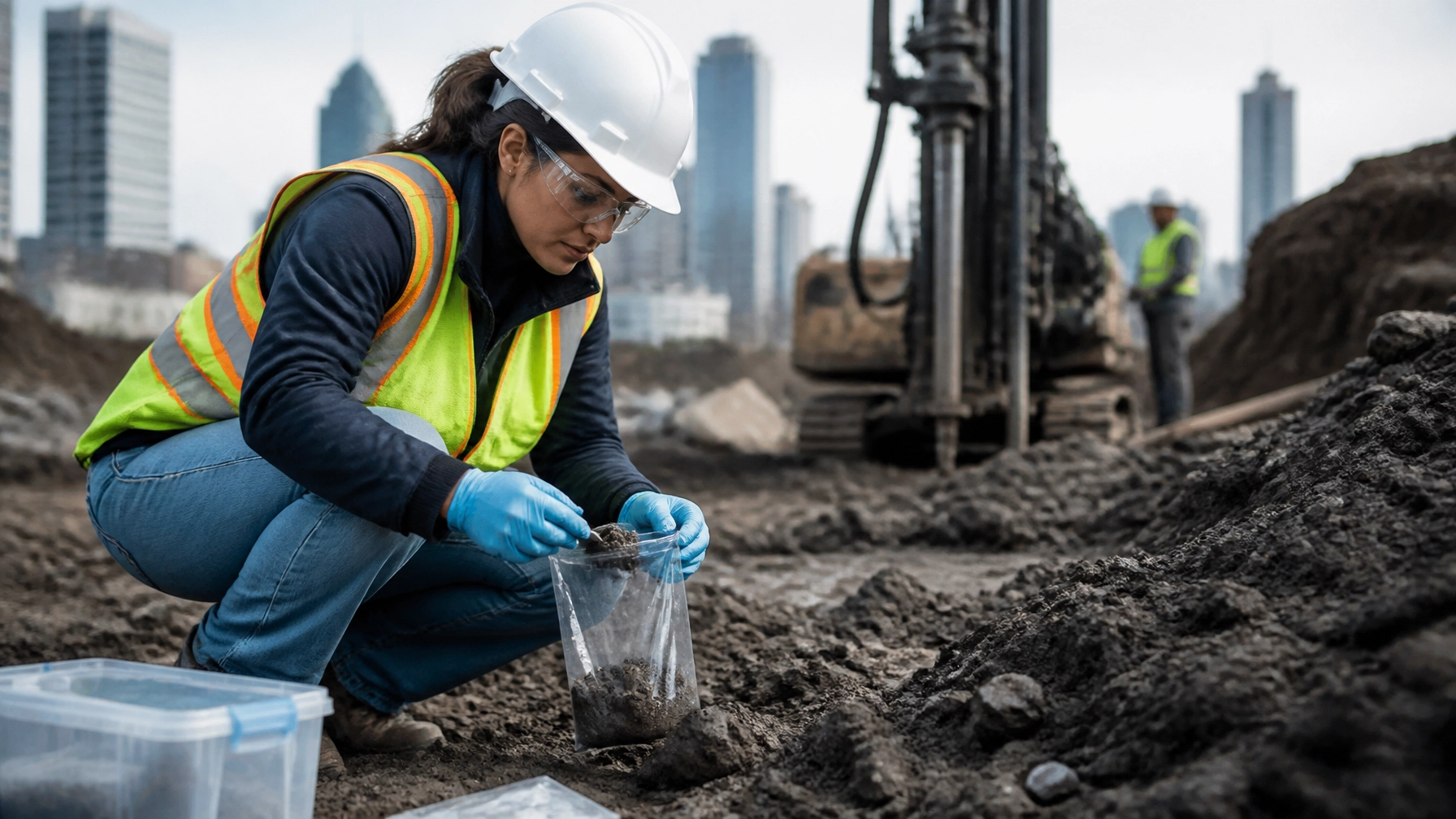
The regulatory landscape in New Jersey just shifted, and if you are sitting on a stalled Phase II or a complex brownfield, the clock started ticking on June 15, 2026.
For years, GenX chemicals (PFAS) and methanol existed in a grey area of "interim criteria" and guidance. That era is over. As of June 15, 2026, the New Jersey Department of Environmental Protection (NJDEP) formally adopted amendments to the Remediation Standards (N.J.A.C. 7:26D) and the Technical Requirements for Site Remediation (N.J.A.C. 7:26E).
What was once advisory is now mandatory. If your consultant is still treating GenX and methanol as "potential future concerns," your project is already behind the curve. We don’t sell reports that guess at the future; we sell cleared paths based on the regulations in force today. Here is what you need to know about the 2026 standards and how they impact your site’s path to a Response Action Outcome (RAO).
The June 15, 2026 Deadline: From Interim to Enforceable
On June 15, 2026, the NJDEP officially promulgated soil and soil leachate remediation standards for GenX (HFPO-DA) and methanol. This move converts the interim standards issued over the last few years into binding regulatory requirements.
This isn't just a paperwork change. It means these contaminants are now part of the formal analyte list required by N.J.A.C. 7:26E whenever hazardous substances in an Area of Concern (AOC) are unknown or poorly documented. In plain English: if you are sampling a site for due diligence or remediation, you are likely now required to test for these compounds.
GenX (HFPO-DA) Standards: The New Baseline
GenX is a specific type of PFAS that has become a major focus for the NJDEP. The 2026 standards for the ingestion-dermal pathway are particularly stringent, especially for residential redevelopments.
- Residential Ingestion-Dermal Standard: 0.23 mg/kg
- Non-Residential Ingestion-Dermal Standard: 3.9 mg/kg
- Soil Leachate (Migration to Groundwater) Standard: 0.4 µg/L
For developers, the 0.23 mg/kg residential threshold is the critical number. If you are converting an old industrial site into multi-family housing in Hudson County or Newark, this standard applies to you. GenX is highly mobile and persistent. If it’s in your soil, it’s likely in your groundwater too, where the standard is a razor-thin 0.02 µg/L (20 parts per trillion).

Methanol: Formalizing the Requirement
Methanol has long been a contaminant of concern, but the June 15 adoption brings it formally into the N.J.A.C. 7:26D tables. While the numeric values largely mirror the previous interim criteria, their codification means lenders and regulators (like the NJDEP and the NYC OER) will be looking for them in your Site Investigation (SI) and Remedial Investigation (RI) reports with renewed scrutiny.
The impact of methanol often comes down to the Soil Leachate pathway. Because methanol is highly soluble, its potential to migrate to groundwater often drives the cleanup strategy. Under the new rules, failing to address methanol properly during the initial characterization can lead to rejected submittals and costly re-sampling mobilizations.
The Ingestion-Dermal Residential Pathway Impact
The most significant impact of these new standards is on the ingestion-dermal residential pathway. This pathway accounts for the risk of direct contact with soil: children playing in a yard, gardeners, or residents in a townhome development.
When a standard like GenX is set at 0.23 mg/kg, there is almost no room for error. A single hot spot can trigger a site-wide remedial action. Large national firms often respond to these findings by recommending massive "defensive" excavations to protect their own liability.
At Envicon, we look at the data differently. We leverage real-time project reporting dashboards to give you full visibility into the horizontal and vertical extent of contamination. We don't just tell you there's a problem; we use precision sampling to narrow the scope of remediation, saving you on disposal costs and keeping your construction schedule on track.

Why Your Current Consultant Might Be Failing You
If you are working with a "big-box" national firm, you might be feeling the "black box" effect of the 2026 standards.
- The "CYA" Report: Large firms often write reports to protect themselves, not to move your project. They might flag GenX or methanol as a "significant risk" without providing a clear, cost-effective path to closure.
- Junior Staff, Senior Rates: You paid for a partner’s expertise, but a junior staffer who has never met your NJDEP reviewer is the one interpreting your data.
- Slow Turnarounds: Every week your Phase II sits in a queue is a week of carrying costs. The 2026 standards demand urgency, not bureaucracy.
Envicon is family-owned and operated. We've spent 20 years building direct relationships with reviewers at the NJDEP and NYC OER. We know the people behind the desk, and we know how they want the data presented. We don't just deliver a report; we deliver a cleared path.
Solving Challenges with Precision and Speed
The introduction of these standards isn't just a hurdle; it's an opportunity to ensure your site is truly clean and compliant for its final use. Our approach combines civil engineering and environmental expertise to integrate remediation into your site plan.
Whether it’s designing a remedial cap that doubles as a parking sub-base or using advanced soil management plans to reuse material onsite, we focus on the bottom line.
"Collaboration is not a buzzword: it's how we work. We sit at the table with regulators to ensure your project doesn't get stuck in the queue." : Jason Pancoast, CEO.

Summary: What You Need to Do Now
The June 15, 2026 standards for GenX and methanol are now the law in New Jersey. To keep your project moving, you must:
- Update Your Analyte Lists: Ensure all new sampling events include the required PFAS and methanol parameters.
- Re-evaluate Existing Data: If you have "interim" data, check it against the new 0.23 mg/kg residential standard for GenX.
- Demand Transparency: Use tools like our Risk Screener to understand your exposure before the regulator flags it.
- Engage Local Expertise: Work with a firm that understands the New Jersey landscape and the specific nuances of N.J.A.C. 7:26D.
Don't let a new regulation become a permanent obstacle. At Envicon, we help you transform contaminated properties into thriving assets by navigating these hurdles with precision and integrity.
Take Control of Your Site's Future
Ready to see how the 2026 standards impact your project's budget and schedule?
- Risk screener tool: https://envicongroup.com/risk-screener
- Cost estimator tool: https://envicongroup.com/cost-estimator
- General website: https://envicongroup.com
Leave a Reply