If you are operating in the New York real estate market, the regulatory landscape just shifted beneath your feet. As of June 12, 2026, the New York State Department of Environmental Conservation (NYSDEC) has officially enacted sweeping amendments to 6 NYCRR Part 617, better known as the State Environmental Quality Review (SEQR) regulations.
This is not a minor administrative update. It is a fundamental rewriting of how project impacts are measured, particularly concerning Environmental Justice (EJ) and Physical Climate Risk. For developers, property investors, and attorneys, this means the "business as usual" approach to Environmental Assessment Forms (EAFs) is dead. If your consultant is still using last year's playbook, your project is already at risk of a "Positive Declaration" and the costly, multi-year delays that come with a full Environmental Impact Statement (EIS).
The New Standard: Disproportionate Pollution Burden
The headline change in the 2026 amendments is the mandatory evaluation of an action’s impact on Disadvantaged Communities (DACs). Under the updated 6 NYCRR § 617.7(c), lead agencies must now explicitly determine whether a proposed action may cause or increase a "disproportionate pollution burden" on these communities.
In the past, environmental justice was often a secondary consideration or a checkbox. Now, it is a primary criterion for determining significance. The regulations define "pollution burden" and "disproportionate pollution burden" with technical specificity, requiring a deep dive into existing local conditions before a single shovel hits the ground.
What is a Disadvantaged Community (DAC)?
A DAC is a geographic area identified by the Climate Justice Working Group based on criteria including income, pollution exposure, and systemic vulnerabilities. The updated EAFs now require you to disclose:
- Whether your project site is located within a DAC.
- Whether your project is within a 0.5-mile radius of a DAC.
- Potential impacts from noise, air emissions, and waste generation that could affect these populations.

The Tool You Can’t Ignore: DACAT
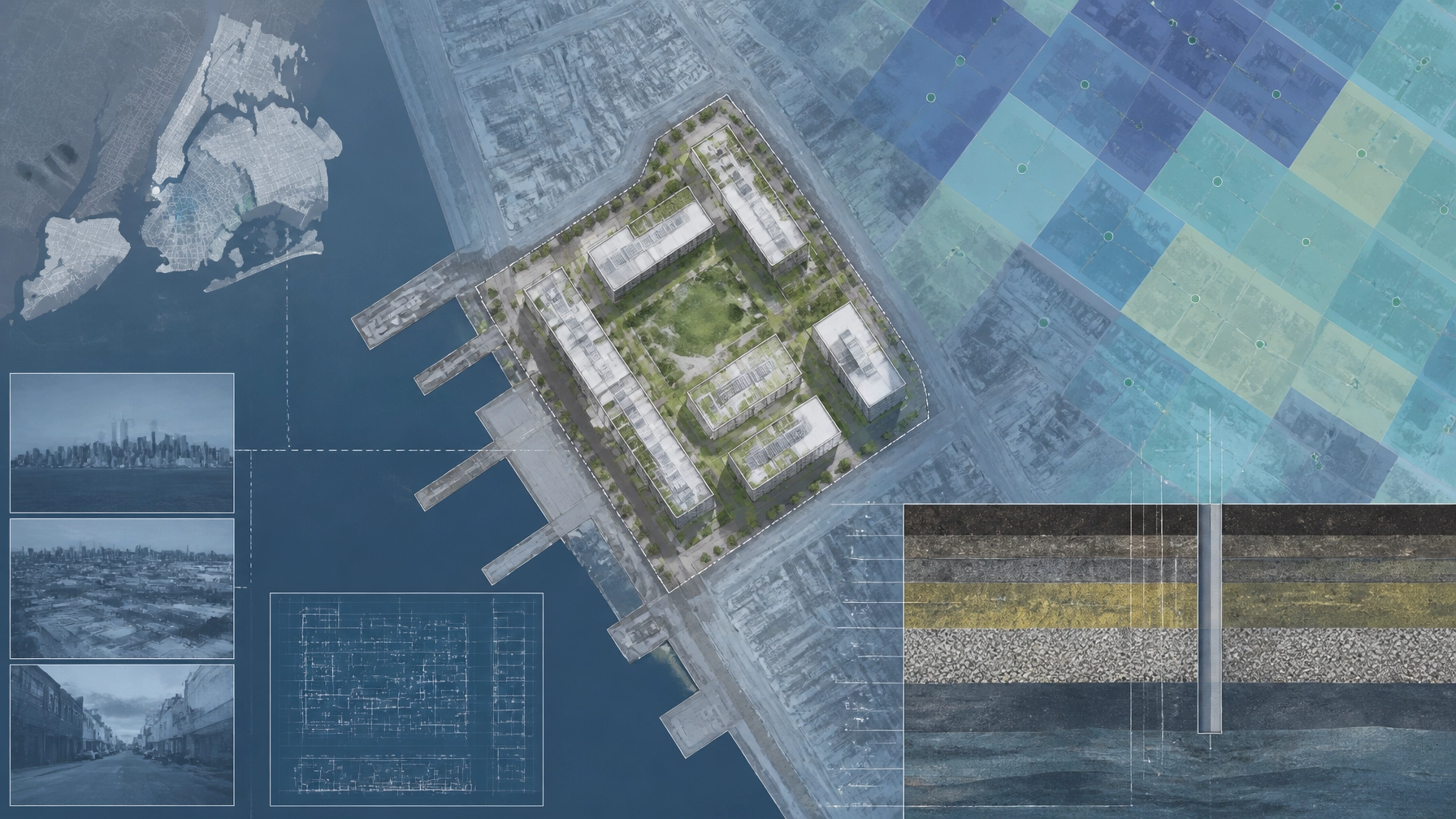
To navigate these new requirements, the NYSDEC has introduced the Disadvantaged Community Assessment Tool (DACAT). This GIS-based screening tool is now the gold standard for project planning. It maps every census tract in the state, flagging those with high vulnerability.
At Envicon, we don’t just "run a search" on DACAT. we integrate this data into our site development planning from day one. If your project sits near a DAC, the lead agency: whether it’s the NYC OER, NYSDEC, or a local planning board: will be looking for a proactive mitigation strategy. Waiting for them to flag the issue during the comment period is a recipe for a project-killing delay.
Climate Risk: Resiliency is No Longer Optional
The 2026 overhaul also operationalizes the Community Risk and Resiliency Act (CRRA) within the SEQR framework. The updated Full EAF now demands hard data on physical climate risks. This includes:
- Flood Vulnerability: You must assess the project’s exposure to 100-year and 500-year flood events.
- Sea-Level Rise: For coastal projects, projections for sea-level rise must be factored into the design and the environmental review.
- GHG Emissions: Mandatory disclosure of annual direct and indirect greenhouse gas emissions.
The goal is clear: the state wants to ensure that new developments do not increase the vulnerability of human or ecological communities to climate-driven hazards. This requires more than a standard Phase I or Phase II ESA; it requires integrated civil engineering and environmental foresight.

The Cost of the "Big Firm" Approach
Many developers rely on large, national consulting firms for their SEQR filings. Under these new rules, that approach is a liability.
National firms often apply a "cookie-cutter" playbook designed for a generic market. They hand off the complex DACAT analysis and climate risk modeling to junior staff who have never set foot on a New York City job site. The result? Bloated, defensive reports that are written to protect the consultant’s liability rather than move your project forward.
"The firm you hired doesn't know your regulator's reviewer by name. They are writing a report for CYA, not for a path to closure. You’re paying big-firm overhead for junior-staff execution."
When a lead agency sees a generic EJ analysis that misses the nuances of a specific Brooklyn or Hudson County neighborhood, they don't just ask questions: they issue a Positive Declaration. That triggers the EIS process, adding hundreds of thousands of dollars in carrying costs and years to your timeline.
How Envicon Clears the Path
At Envicon Group, we operate differently. We are a PE-led, field-first firm. When you call us, you aren't talking to a project manager who is reading notes from a technician; you are talking to the engineers who are designing your stormwater management systems and navigating the NYSDEC regulatory hurdles.
For the new Part 617 requirements, we provide:
- Precision Screening: We use DACAT and proprietary GIS layers to identify EJ risks before you even close on a property.
- Integrated Engineering: We don't just report on flood risks; we design the civil solutions: grading, drainage, and barriers: that mitigate those risks and satisfy the lead agency.
- Regulator Fluency: We sit at the table with NYC OER, NYSDEC, and NJ DEP every day. We know how they interpret "disproportionate burden" because we speak their language.

Takeaway: Don’t Get Caught in the Transition
The NYSDEC statewide notice of adoption is clear: these rules are now the law of the land. If your project has not yet received a determination of significance and an accepted DEIS, you are subject to the new Part 617 standards.
Every week of delay in your environmental review incurs carrying costs and reduces lender patience. In a high-stakes market like NY/NJ, you cannot afford a consultant who is learning these rules on your dime.
We don't sell reports. We sell cleared paths.
Summary Checklist for Developers:
- Verify your EAF version: Ensure your team is using the post-June 2026 forms.
- Run DACAT early: Identify proximity to Disadvantaged Communities before finalizing your site plan.
- Quantify GHG and Climate Risk: Move beyond qualitative descriptions to hard data on emissions and flood resiliency.
- Audit your consultant: Are you getting a senior-level strategy or a junior-level template?

Ready to Navigate the New SEQR Requirements?
Don't let regulatory updates stall your development. Get the precision and urgency your project deserves.
- Book a free consultation: https://envicongroup.com/contact
- Try our Risk Screener Tool: https://envicongroup.com/risk-screener
- Call us directly: tel:9177642171
Leave a Reply