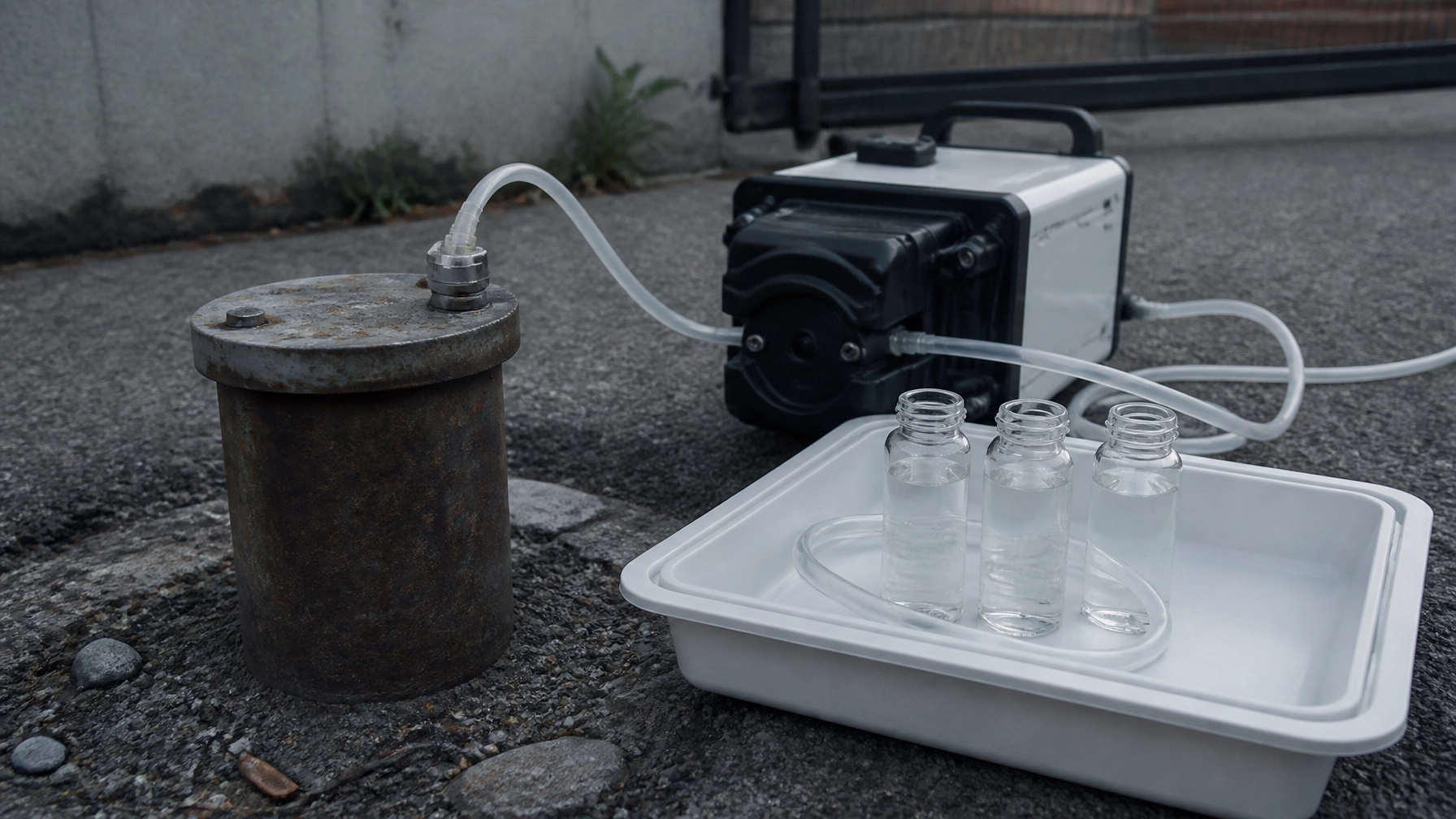
The regulatory window for "voluntary" GenX assessment has officially closed. On June 15, 2026, the New Jersey Department of Environmental Protection (NJDEP) finalized the groundwater quality criterion for GenX: technically known as hexafluoropropylene oxide dimer acid (HFPO-DA) and its ammonium salt: at 0.02 µg/L.
This is no longer an interim suggestion or a "to-watch" contaminant. It is an enforceable remediation standard. For developers, property owners, and lenders in the New Jersey market, this adoption triggers immediate shifts in how site investigations are conducted and how closure is achieved. If you are sitting on a project with "emerging contaminant" questions, the answers just became a lot more expensive and technically demanding.
The New Metric: 20 Parts Per Trillion
The finalized standard of 0.02 µg/L (20 parts per trillion) is exceptionally low. To put this in perspective, New Jersey’s standards for PFOA and PFOS are 0.014 µg/L and 0.013 µg/L, respectively. GenX is now in that same ultra-trace league.
Accompanying this criterion is a Practical Quantitation Level (PQL) of 0.0075 µg/L. Because the PQL is lower than the 0.02 µg/L standard, the NJDEP expects laboratories to reliably detect and quantify GenX well below the cleanup threshold. This leaves zero margin for error in field sampling or laboratory selection.
"The finalization of the 0.02 µg/L GenX standard moves New Jersey to the forefront of PFAS regulation, requiring a level of technical precision in the field that many national firms are simply not equipped to handle at scale."
N.J.A.C. 7:26E: GenX as a "Standard" Analyte
The most significant operational change comes through amendments to the Technical Requirements for Site Remediation (N.J.A.C. 7:26E).
Previously, GenX was often treated as an elective analyte unless a specific industrial source was known. As of June 15, 2026, GenX is explicitly integrated into the mandatory quality assurance and contaminant testing requirements.
Under N.J.A.C. 7:26E, GenX must now be evaluated and sampled at any site where contaminants are unknown or not well-documented. This means your Phase II Environmental Site Assessment (ESA) just got a new mandatory line item. If you are working through a Phase I ESA checklist, GenX is no longer a footnote; it is a primary concern for any site with a history of manufacturing, plastic processing, or fire-fighting foam use.

N.J.A.C. 7:26D: The Enforceable Remediation Standard
While 7:26E dictates when you must look for it, N.J.A.C. 7:26D (Remediation Standards) dictates what you must do if you find it.
By establishing the GenX Ground Water Quality Standard (GWQS) under N.J.A.C. 7:9C, the NJDEP has automatically made 0.02 µg/L the numeric cleanup level for Class II-A groundwater. If your site investigation reveals GenX at 0.021 µg/L, you have a triggered discharge that must be remediated.
For developers, this impacts:
- Soil Management: While GenX is a groundwater standard, its presence in soil can lead to "migration to groundwater" concerns that require soil remediation to protect the 0.02 µg/L threshold.
- Permitting: Any dewatering activities during construction must now account for GenX levels to ensure compliance with discharge permits.
- Lender Approval: Financing is increasingly contingent on "clean" PFAS results. A 100% lender approval rate: something we pride ourselves on: now requires navigating these specific GenX hurdles.
The Practical Impact on Your Site Strategy
If you are currently in the due diligence or remediation phase, you cannot afford to wait for the NJDEP to flag your submittal. The "wait and see" approach often results in re-mobilization, re-sampling, and months of carrying costs.
- Update Your Sampling Plans: If your current consultant is using a standard 8260/8270 scan, they are missing GenX. You need specialized PFAS sampling protocols: using PFAS-free materials: to avoid false positives that can stall a project for months.
- LSRP Coordination: Your Licensed Site Remediation Professional (LSRP) must now include GenX in the Receptor Evaluation and the overall Remedial Action Workplan (RAW).
- Risk Assessment: At 20 parts per trillion, background levels and cross-contamination are real risks. You need a team that understands the NJDEP's specific reviewer preferences to navigate these detections.

Why Envicon Group vs. The Big-Box Firms
When a regulation like the June 15 GenX adoption hits, large national firms usually send out a generic PDF alert three weeks late. By then, your project might already have a non-compliant sampling plan in the field.
At Envicon, we don't just read the regulations; we work directly with the reviewers at the NJDEP. We understand that GenX remediation isn't just about a report: it's about a buildable site.
- No Black Boxes: In a large firm, regulatory coordination is a mystery. At Envicon, we pick up the phone. We know who is reviewing your project and what they expect to see regarding GenX.
- Field-First Precision: We don't send junior staff to learn on your dime. Our team uses proprietary technology and field-tested protocols to ensure that 20 ppt doesn't become a multi-million dollar mistake.
- Actionable Outcomes: We don't sell "Emerging Contaminant Studies." We sell cleared paths. If GenX is present, we provide the remedial design and cost estimation to fix it, not just a report that says you have a problem.
Summary and Key Takeaways
The June 15, 2026 adoption of the 0.02 µg/L GenX standard is a milestone in New Jersey's environmental landscape.
- The Number: 0.02 µg/L (20 ppt) is the new enforceable ceiling for groundwater.
- The Requirement: GenX is now a standard analyte for investigations under N.J.A.C. 7:26E.
- The Risk: Even trace amounts can trigger mandatory remediation and stall financing.
- The Solution: Proactive sampling, expert LSRP guidance, and a firm that knows the NJDEP landscape inside and out.
Don't let a "forever chemical" create a forever delay on your project. Whether you are navigating a complex brownfield or conducting routine due diligence, you need a partner that treats your schedule with the same urgency you do.

Next Steps for Your Project
If you suspect GenX or other PFAS are a factor on your site, or if you need to update a pending investigation, contact us today.
- Call now: (917) 764-2171
- Book a free consultation: https://envicongroup.com/contact
- Cost estimator tool: https://envicongroup.com/cost-estimator
Leave a Reply