The New York State Environmental Quality Review Act (SEQRA) has long been the "speed bump" of development in the Empire State. For decades, even projects with clear public benefits: like community parks or critical water main replacements: could get mired in months of environmental impact studies, public hearings, and administrative red tape.
That changed this month. As of June 12, 2026, the NY FY27 budget amendments have officially introduced a new regulatory category known as "Qualified Actions."
This isn't just another layer of bureaucracy. It’s a statutory shortcut. By classifying specific types of infrastructure and park projects as "Qualified Actions," the state has effectively exempted them from the traditional SEQRA review process. If your project fits the criteria, you aren't just saving time; you're removing the biggest obstacle between your vision and a buildable site.
At Envicon Group, we don’t just fill out forms; we clear paths. Here is how you can leverage these 2026 exemptions to keep your project moving at the speed of business.
What Exactly is a "Qualified Action"?
In the engineering and environmental world, we used to rely on "Type II" actions for projects that didn't need SEQRA. But the new "Qualified Action" designation is a statutory powerhouse created by the state budget to tackle the housing and infrastructure crisis.
A Qualified Action is a project that is legally deemed not to have a significant adverse environmental impact. Once a project is identified as such, the lead agency: whether it’s the NYC OER, NYSDEC, or a local municipality: can issue a determination that the project is exempt.
The beauty of this new rule is the bundling effect. If the main action is qualified, all related approvals: building permits, zoning variances, site plan approvals, and even financial assistance: are swept into the exemption. You no longer have to fight the SEQRA battle on five different fronts.
The Parks and Trails Shortcut: Turning "Disturbed" into "Developed"
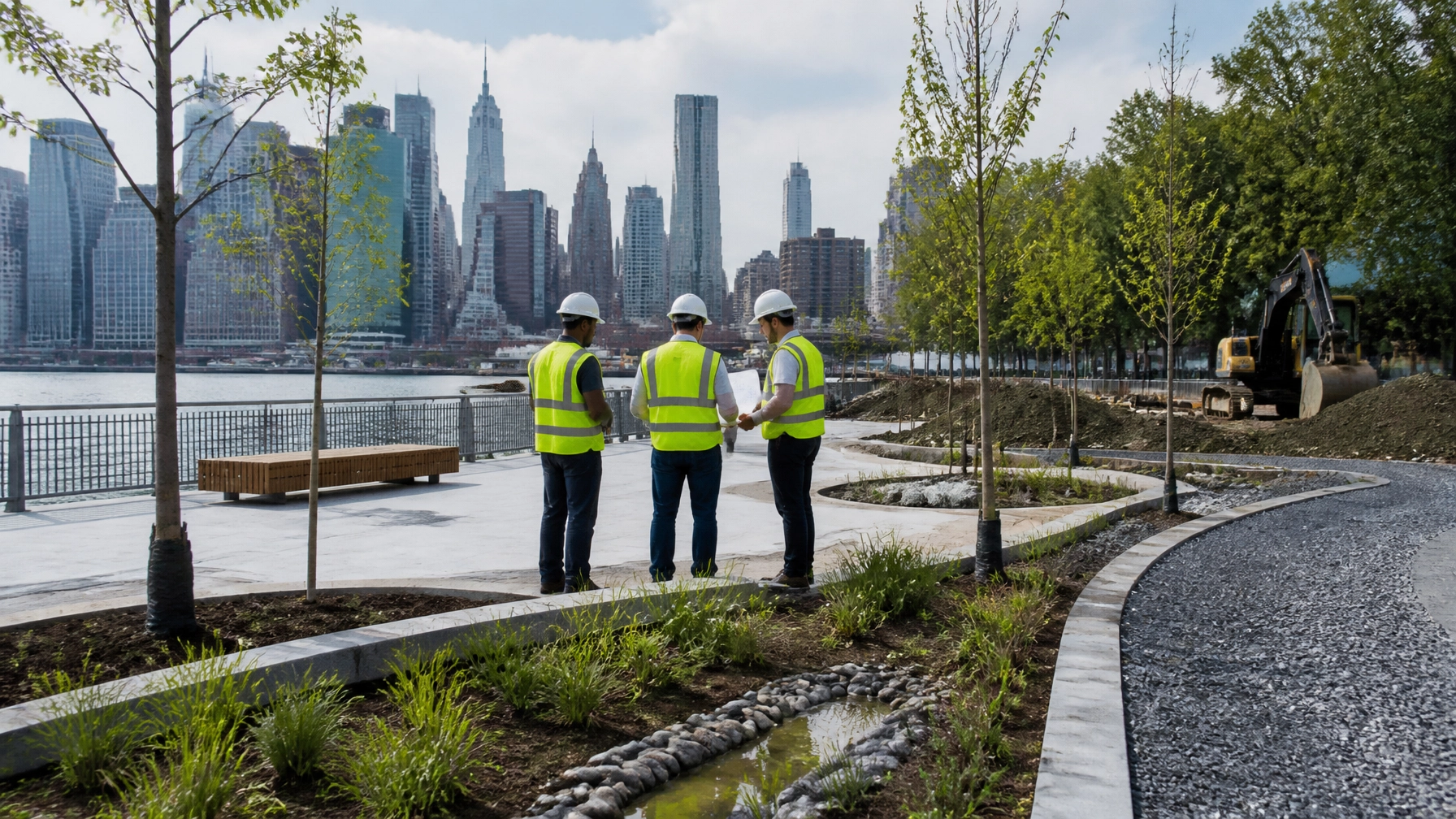
The biggest win in the FY27 budget is for public recreation. If you are developing a park or a multi-use trail, you may no longer need a full environmental impact statement.
The catch? The project must be on a "previously disturbed site."
New York law defines a disturbed site as land that was developed at least two years prior and has been "substantially altered" by that development. Think of abandoned industrial lots, parking facilities, or decommissioned utility sites. These are the perfect candidates for the "Qualified Action" exemption, provided they don't include mass-gathering venues like 50,000-seat stadiums.
How Envicon Unlocks the Park Exemption
Proving a site is "previously disturbed" sounds simple, but it requires technical precision. We use 20 years of historical data, Phase I Environmental Site Assessments, and subsurface investigations to document the prior alteration of the land.
While a big-box firm might spend six weeks writing a defensive report about "potential impacts," we focus on the facts that satisfy the regulator’s reviewer. We sit at the table with NYC Parks and the DEC to ensure they see the site the way we do: as a cleared path for a new community asset.

Infrastructure Without the Interruption: Water, Sewer, and Green Tech
Infrastructure projects are the backbone of any development. In the past, upgrading a sewer line or adding green infrastructure to a building could trigger a "Negative Declaration" process that added months to the schedule.
Under the 2026 rules, the following infrastructure projects are now Qualified Actions:
- In-kind replacement or rehab of municipal water and wastewater systems.
- Green infrastructure retrofits (think bioswales, permeable pavement, and green roofs) on existing structures.
- Sewer extensions to disadvantaged communities (provided they don't require new DEC permits).
- NYC Public Schools built by the School Construction Authority that connect to existing systems.
This shift moves the focus from "Will this hurt the environment?" to "How fast can we improve the environment?" It’s a visionary approach that matches Envicon’s philosophy: resolve the challenge with precision and move on.
Why the "Big-Box" Firms Will Cost You Time
When a new law like the FY27 budget hits, the large national firms usually have a 6-to-12-month lag. Their legal departments have to "vet" the language, their junior staff has to be trained on the new forms, and their project managers will likely tell you to play it safe and do the full SEQRA review anyway "just in case."
That "just in case" costs you money in carrying costs, lender patience, and market timing.
"Every week of delay is a week of lost revenue. If your consultant is writing a report for CYA instead of a path to closure, you're working with the wrong firm." : Jason Pancoast, CEO of Envicon Group.
Envicon is field-first and regulator-facing. We don't wait for a "corporate bulletin" to tell us how to handle the new SEQRA rules. We are already talking to the reviewers at the NYSDEC and NYC OER about these "Qualified Actions." We know which reviewers are open to the exemption and what specific data points they need to see on a site investigation to sign off on that 120-day determination.

Action Plan: Navigating the 120-Day Window
The new law gives agencies 120 days to decide if your project is a Qualified Action. If you don't provide the right data on Day 1, that clock resets. Here is how we ensure you don't lose time:
- Threshold Determination: We conduct a rapid screening of your site’s history. If it was developed more than two years ago, we build the case for a "Previously Disturbed" status immediately.
- Agency Coordination: We don’t hide behind an email queue. We work directly with architects and local officials to align the project description with the statutory criteria for Qualified Actions.
- Clean Documentation: Our reports are designed to be read, not just filed. We produce high-quality, technically sound deliverables that give the lead agency the confidence to issue an exemption.
Summary: A New Era for NY Development
The 2026 SEQRA amendments are a gift to those who know how to use them. By categorizing parks, trails, and green infrastructure as "Qualified Actions," New York is finally acknowledging that beneficial projects shouldn't be taxed by endless reviews.
- Parks on disturbed sites are now exempt.
- Water/Sewer rehab is fast-tracked.
- Green retrofits avoid the red tape.
- Envicon Group provides the technical muscle to prove your project qualifies.
Don't let your project sit in someone’s queue. The path is cleared: you just need the right team to walk it with you.
Ready to see if your project is a Qualified Action?
- Call now: tel:9177642171 764-2171
- Book a free consultation: https://envicongroup.com/contact
- Use our Cost Estimator Tool: https://envicongroup.com/cost-estimator?utm_source=website&utm_medium=nav_megamenu&utm_campaign=resources&utm_content=cost-estimator
Leave a Reply