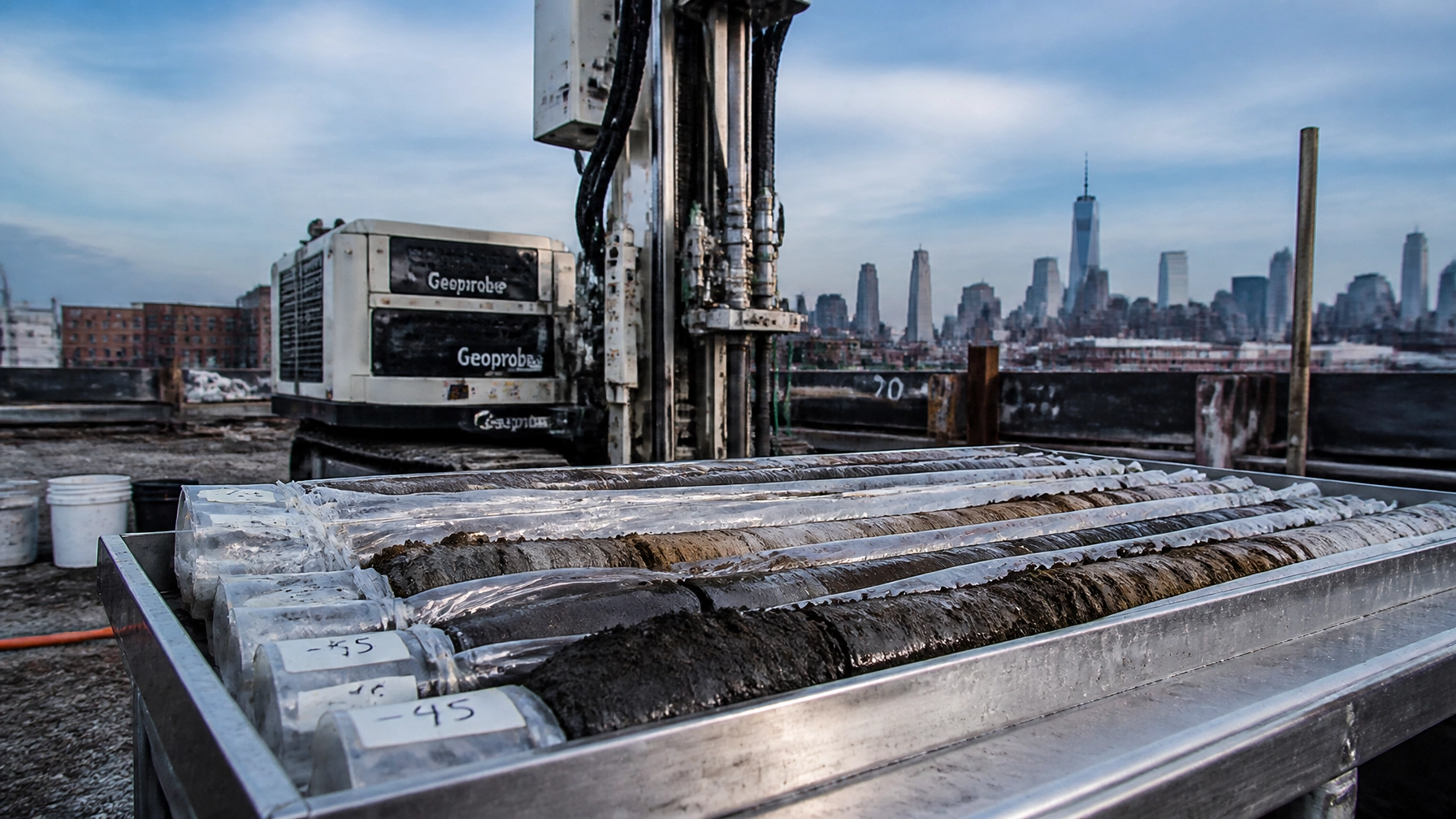
For over five years, New York’s remediation community has been operating in a state of "regulatory limbo" regarding Per- and Polyfluoroalkyl Substances (PFAS). We’ve navigated a thicket of interim guidance documents, draft policies, and sampling protocols, all while waiting for the New York State Department of Environmental Conservation (NYSDEC) to codify formal Soil Cleanup Objectives (SCOs) into 6 NYCRR Part 375.
As of July 2026, the wait is nearing its end, but the technical landscape remains complex. NYSDEC’s 2026 Regulatory Agenda has explicitly prioritized the amendment of Part 375-6.8 to include SCOs for Perfluorooctanoic acid (PFOA) and Perfluorooctane sulfonate (PFOS). Simultaneously, the Department is moving to overhaul lead SCOs to align with more stringent federal benchmarks.
For developers, attorneys, and engineers, understanding the delta between current guidance and the looming regulations is the difference between a project that closes and one that stalls indefinitely. At Envicon, we don't just wait for the PDF to drop; we track the data that builds the rule. Here is where the rulemaking stands and what it means for your site.
The 2026 Regulatory Agenda: Codifying the "Forever" Chemicals
The most significant update in the 2026 agenda is the formal move to add PFOA and PFOS to the contaminant tables in Part 375-6.8. Since 2020, remediation in New York has relied on the Sampling, Analysis, and Assessment of PFAS guidance document. While technically "guidance," NYSDEC reviewers have treated these values as de facto standards for years.
The transition from guidance to regulation is not merely a formality. Codification gives these numbers the force of law, reducing the "gray area" during negotiation with regulators but also hardening the thresholds for cleanup. The 2026 agenda indicates that these SCOs will be derived from a combination of toxicological data and the recently completed statewide rural soil background study.
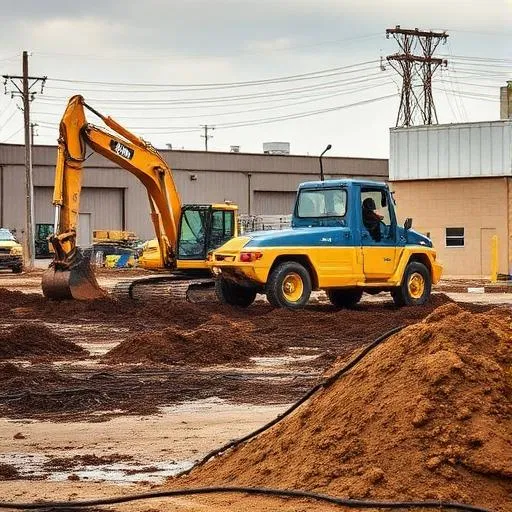
The Interim Guidance Trap: CP-51 and the "Lower Of" Rule
Until the new rulemaking is finalized, we continue to operate under the draft revisions to Commissioner’s Policy CP-51 (Soil Cleanup Guidance). Under this framework, remediation targets are moving targets.
For PFOA and PFOS, results must be compared to the lower of two values:
- The Protection of Groundwater Guidance Value
- The Anticipated Site-Use Guidance Value
For many sites, the "Protection of Groundwater" value effectively serves as the floor. Current guidance sets these at 0.8 ppb (parts per billion) for PFOA and 1.0 ppb for PFOS. When you consider that Unrestricted Use guidance values are even lower: 0.66 ppb for PFOA and 0.88 ppb for PFOS: the margin for error in the field is non-existent.
If you are managing a Brownfield Cleanup Program (BCP) site or a high-stakes transaction, these fractions of a part-per-billion matter. A single stray detection can trigger additional vertical and horizontal delineation, adding weeks of delay and thousands in laboratory and mobilization costs.
The Rural Soil Background Study: A Reality Check for Regulators
One of the primary reasons formal SCOs have taken so long is the "background problem." PFAS are ubiquitous. To address this, NYSDEC completed a statewide rural soil background study to determine what "natural" levels look like in soils unaffected by known point sources.
The findings, released in 2025 and 2026, were telling:
- PFOS was detected in over 97% of rural soil samples.
- PFOA was detected in approximately 76.5% of samples.
More importantly, the study proposed background concentrations that are actually higher than the current interim guidance values. For example, the rural background for surface soil PFOA is approximately 1.5 ppb, and for PFOS it is 3.0 ppb.
"Collaboration is not a buzzword: it's how we work. In the case of PFAS, collaboration means sitting with the DEC reviewers and using their own background data to argue for realistic cleanup endpoints that don't ignore the ambient reality of New York's soil." : Jason Pancoast, CEO of Envicon Group.
This creates a technical paradox: If the "natural" background is 1.5 ppb, but the guidance value for groundwater protection is 0.8 ppb, you could technically be cleaning up a site to a level cleaner than the pristine forest next door. Envicon’s team uses this data to advocate for our clients, ensuring that remediation targets are technically defensible and not based on aspirational numbers that ignore regional background conditions.

The Lead SCO Revisions: Aligning with EPA 2023
While PFAS grabs the headlines, the planned update to lead SCOs will likely have a broader impact on urban redevelopment. For decades, the residential SCO for lead in New York has been 400 ppm (parts per million). However, the U.S. EPA updated its residential lead soil guidance in January 2023, lowering the benchmark significantly to account for updated blood-lead level modeling.
The NYSDEC 2026 Regulatory Agenda explicitly states that Part 375 will be amended to "revise the soil cleanup objectives for lead to coincide with U.S. EPA values."
What this means for you:
- Residential Targets: Expect the 400 ppm residential SCO to drop, potentially to 200 ppm or lower depending on the final rulemaking.
- Unrestricted Use: The current 63 ppm threshold may see further scrutiny.
- Project Feasibility: Sites that were "clean" or "restricted-residential" under the old rules may suddenly require significant soil removal or engineering controls under the new ones.
At Envicon, we are already screening our current project portfolios against these anticipated lower lead targets. We don’t wait for a change order; we build the contingency into the design phase.
Navigating Remediation Projects in the "Interim"
Operating in a transition year like 2026 requires a strategy that balances current compliance with future-proofing. Large national firms often deliver "defensive" reports that stick strictly to the guidance but offer no path forward when the guidance conflicts with background data.
Envicon takes a different approach:
- Site-Specific Background Analysis: We utilize the NYSDEC rural background study data to contextalize detections. If your PFOA is 1.2 ppb, we can demonstrate that this is consistent with ambient rural levels, potentially avoiding unnecessary remedial actions.
- Strategic Soil Management: With lead and PFAS targets in flux, soil disposal is the largest variable cost. We develop robust soil management plans that categorize material based on both current and proposed SCOs to minimize "surprise" disposal fees at the end of a project.
- Digital Precision: We use GIS-integrated modeling to visualize contamination plumes in 3D. This allows for precision excavation: removing only what is necessary and leaving what is compliant.

Why Envicon? The Direct Path to Closure
When you hire a "big-box" firm, your project often gets handed to a junior staffer who is learning the regulations on your dime. Regulatory coordination becomes a black box. You don't know who is talking to your reviewer or what they are saying.
At Envicon, we sit at the table with NYC OER, NYSDEC, and NJ DEP. We know the reviewers by name, and we understand the nuances of their specific regions. We don't sell reports that sit in a queue; we sell cleared paths to a buildable site.
Our use of proprietary project management technology means you have a real-time dashboard of your site’s status. You see the data as we see it. No monthly PDF surprises. Just precision, urgency, and the truth.
Key Takeaways for 2026:
- PFAS SCOs are coming: PFOA and PFOS will be codified in Part 375 soon.
- Background is your best defense: Use the rural soil study to challenge overly stringent interim guidance.
- Lead is the sleeper issue: Watch for a significant drop in lead SCOs to match EPA's 2023 values.
- Get a field-first partner: Choose a firm that understands the New York regulatory climate from the ground up, not from a satellite office.
Take Action Today
The regulatory landscape is shifting beneath your site. Don't let an "interim" guidance value turn into a permanent project delay.
- Risk screener tool: Assess your site’s potential environmental hurdles
- Cost estimator tool: Get a realistic look at your remediation budget
- Call now: Speak directly with a Licensed Professional: (917) 764-2171
Leave a Reply