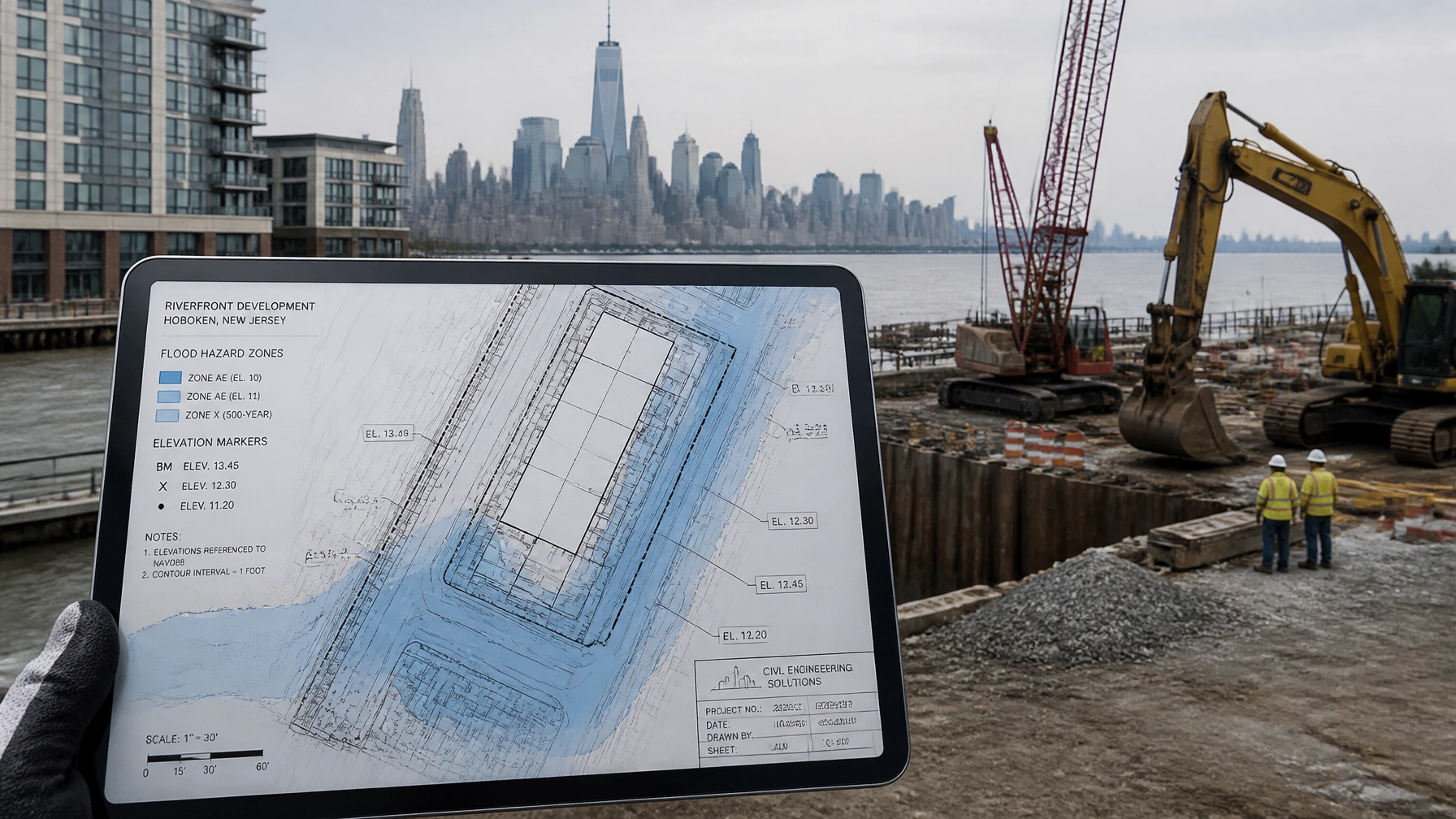
The New Jersey Department of Environmental Protection (NJDEP) recently issued a proposal that has sent ripples through the development community: a one-year extension of the "legacy period" for the Resilient Environments and Landscapes (REAL) rules. Originally slated to expire on July 20, 2026, the NJDEP is now proposing to move that finish line to July 20, 2027.
For developers, engineers, and municipal planners operating in the New Jersey market, this isn’t just a administrative adjustment: it’s a tactical reprieve. The REAL rules represent the most significant overhaul of land use regulations in a generation, fundamentally shifting how we calculate flood hazards, manage stormwater, and assess sea-level rise. This proposed extension buys time, but it also demands a strategic pivot.
If your project is currently navigating the "legacy" window, you have a 12-month window to lock in pre-REAL standards. But the clock is ticking, and the rules of engagement are specific.
What is the Legacy Period?
The REAL rules were officially adopted on January 20, 2026. Recognizing that projects already in the design or financing phase could be derailed by a sudden shift in standards, the NJDEP included a "legacy" provision. This provision allows certain permit applications to be reviewed under the regulations in effect prior to January 20, 2026.
The most critical difference lies in elevation standards. Under the legacy rules, projects typically adhere to FEMA’s Base Flood Elevation (BFE) plus one foot. Under the full weight of the REAL rules, that standard jumps significantly: often requiring an additional four to five feet of elevation to account for projected sea-level rise.
The proposed extension to July 20, 2027, means that if you can get a "qualifying" application in before that date, you may be able to build under the older, less restrictive standards.
The "In-Group": Which Permits Qualify?
Not every submittal to the NJDEP counts as a ticket into the legacy period. The Department has drawn a clear line between discretionary reviews and automated certifications. To benefit from the extension, your project must involve one of the following "qualifying" applications:
- Individual Permits (IPs): Complex projects requiring site-specific environmental review.
- General Permits (GPs): Standardized permits for activities with minimal environmental impact.
- Verifications: Flood Hazard Area (FHA) verifications that establish the limits of flood plains and floodways.
- Letters of Interpretation (LOIs): Freshwater wetlands boundary determinations.
- Transition Area Waivers (TAWs): Permits allowing activity within the "buffer" zones of protected wetlands.
- Water Quality Certificates: Section 401 approvals required for federal licenses or permits.
These permits require a level of technical scrutiny that the NJDEP views as substantive. At Envicon, we see these not just as forms to be filled, but as the legal foundation of your project’s value. A compliance and permit matrix is essential here to ensure no deadlines are missed across multiple disciplines.

The "Out-Group": What Doesn't Qualify?
This is where many developers get burned by "big-box" consulting firms that treat all permits as equal. The NJDEP has explicitly excluded certain "automated" or "registration-based" permits from the legacy extension.
Permits-by-Registration (PBR) and General-Permits-by-Certification (GP-by-Cert) do not qualify for the legacy period. These are typically processed through the NJDEP’s online portal and are issued nearly instantaneously without a case manager's review. Because these permits are intended to be "current" at the time of issuance, the NJDEP requires them to meet whatever standards are in effect on the day of registration.
If your strategy relies on a PBR or GP-by-Cert, you will be subject to the full REAL rule standards, regardless of when you started your design. This distinction is critical for project budgeting; an unexpected four-foot increase in site grading because a consultant relied on the wrong permit type can decimate a project's ROI.
The July 31, 2026 Deadline: Your Voice Matters
The one-year extension is currently a proposal, not a final law. The NJDEP is holding a public comment period that closes on July 31, 2026.
In our experience, the developers who win are the ones who stay ahead of the regulatory curve. Providing technical comments on how the REAL rules impact project feasibility isn’t just a civic duty: it’s a business necessity. A virtual public hearing was held on July 7, 2026, but written comments remain the most effective way to get your specific site challenges into the official record.
The NJDEP is looking for data on how the transition period affects the "pipeline" of development in New Jersey. If your project faces unique hardship due to the REAL standards, this is the window to speak up.

Strategic Implications: Buy Time or Push Now?
A common mistake we see is the "wait and see" approach. Many developers see the July 2027 extension and think they have plenty of time. They don't.
- The Queue Phenomenon: As the July 2027 deadline approaches, the NJDEP will be flooded with applications. Large national firms often submit "bloated" reports that end up in the back of the queue because they require multiple rounds of clarification.
- Lender Scrutiny: Banks and investors are already pricing in REAL rule risks. They want to see a cleared path to a buildable site, not a "maybe" on a legacy permit. Having a Phase I ESA and a clear permitting roadmap is more critical now than ever.
- The Design Pivot: If you cannot meet the July 2027 deadline, your design team needs to pivot now to accommodate the 5-foot elevation increase. Waiting until 2027 to find out you need a massive redesign is a million-dollar mistake.
"We don’t sell reports. We sell cleared paths. In the world of REAL rules, a 'cleared path' means knowing exactly which day your submittal hits the desk of the regulator you know by name." : Jason Pancoast, CEO of Envicon Group
The Envicon Difference: Why Speed and Local Fluency Matter
At Envicon, we don't treat the NJDEP as a "black box." We know the reviewers at the NJ DEP and the Land Use Regulation Program because we work with them daily. While national firms are applying a cookie-cutter playbook designed for Texas or California to your Jersey City waterfront project, we are leveraging 20 years of regional fluency.
When you hire Envicon, you aren't just getting an engineer; you're getting a PE-led team that understands the "field-first" reality of remediation and civil design. We utilize real-time project reporting dashboards that give you full visibility into your permit status. You’ll never wonder if your LOI or FHA verification is sitting in someone's queue.

Summary of Key Takeaways
The proposed extension to July 20, 2027, is a significant opportunity for New Jersey developers, but it requires precise execution.
- Deadline: The extension is proposed for July 20, 2027.
- Qualifying: Individual Permits, General Permits, Verifications, LOIs, TAWs.
- Non-Qualifying: PBRs and GPs-by-Certification (these must meet REAL standards immediately).
- Urgency: The public comment deadline is July 31, 2026.
- Strategy: Don't wait. Use the extra year to finalize designs and secure legacy status before the NJDEP system becomes overloaded.
Navigating the REAL rules requires more than just technical knowledge; it requires a partner who takes ownership of the outcome. We understand that every week of delay incurs carrying costs and affects your market timing. We are here to remove the obstacles between you and a buildable, compliant, and profitable asset.
Ready to secure your project's legacy status?
Don't let your project get stalled in a regulatory queue. Whether you need a rapid site characterization or a comprehensive permitting strategy, our team is ready to move.
- Risk screener tool: Evaluate your site's risk profile
- Cost estimator tool: Get a transparent pricing estimate
- Book a free consultation: Speak with an expert today
Leave a Reply