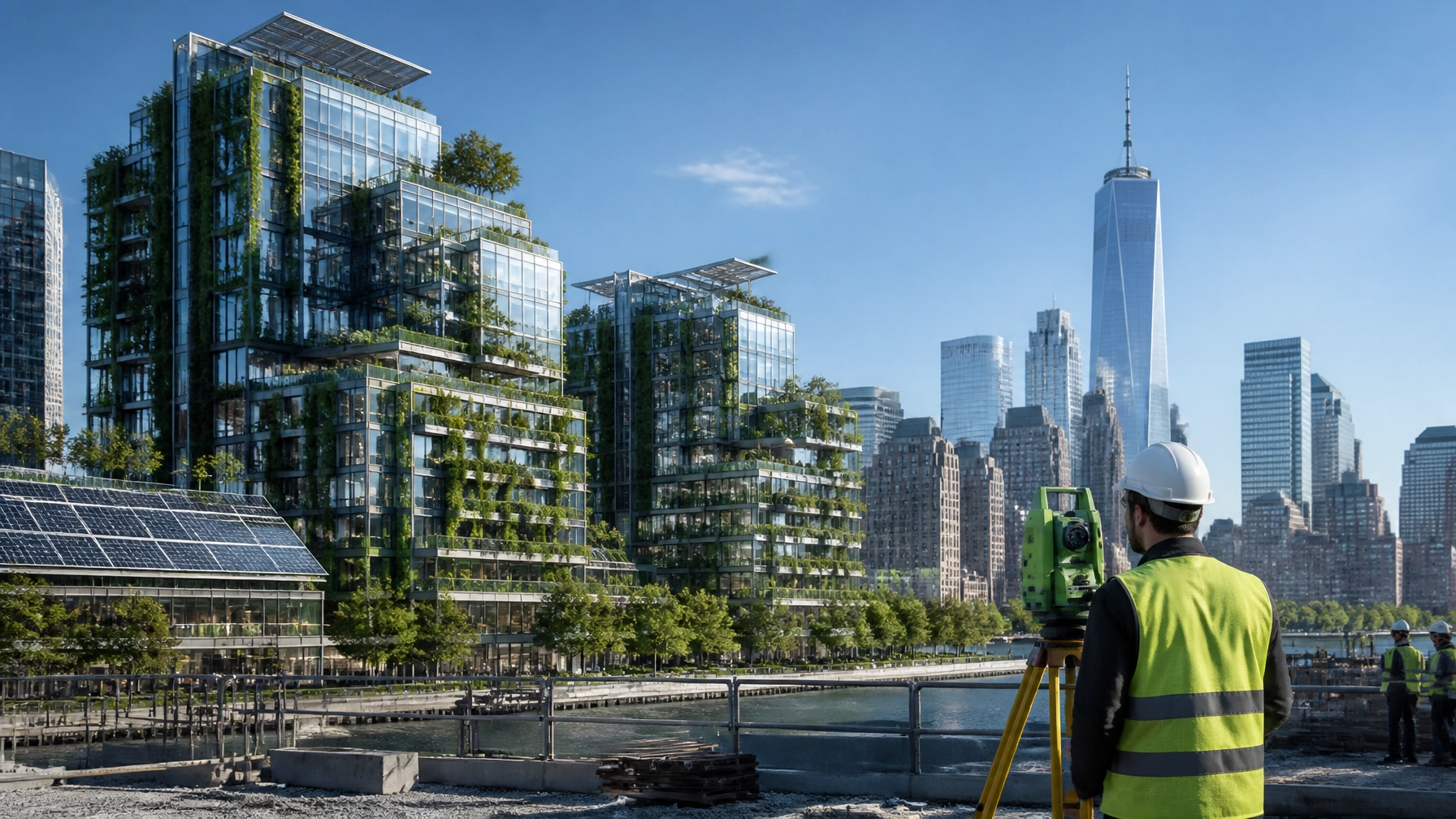
For developers and property owners in the New York and New Jersey metro, regulatory goalposts aren’t just lines in a report: they are the constraints that define project feasibility and asset value.
Recent legislative updates have fundamentally reshaped New York’s climate roadmap. The original 2030 target of a 40% reduction in greenhouse gas (GHG) emissions has been replaced by a new, more aggressive interim target: a 60% reduction by 2040.
While 2040 might feel like a distant horizon, the "quiet period" for planning is effectively over. The New York Department of Environmental Conservation (DEC) now has a hard deadline of December 31, 2028, to adopt the implementing regulations that will make this target a reality. For a high-stakes development project entering the pipeline today, 2028 is essentially next week.
At Envicon Group, we don’t just track these changes; we help our clients build through them. This isn't about "synergy" or "green-washing": it’s about understanding the technical thresholds that will determine if your site is buildable, compliant, and profitable in the next decade.
The 2040 Reset: Why the Goalposts Moved
The shift from a 2030 to a 2040 target is not a reprieve; it is a recalibration. New York is moving toward a more realistic, but technically rigorous, path toward the 85% reduction required by 2050 under the Climate Leadership and Community Protection Act (CLCPA).
The state is also modernizing how it counts emissions. By moving from a 20-year Global Warming Potential (GWP-20) to a 100-year standard (GWP-100), New York is aligning with federal and international inventories. For developers, this accounting shift is critical. It changes the way short-lived pollutants: like methane from legacy sites or certain industrial processes: are weighted in your site's carbon footprint.
If you are managing a brownfield redevelopment or a site with legacy contamination, how these pollutants are accounted for will directly impact your remedial design and long-term liability.

The 2028 Deadline: The Calm Before the Regulatory Storm
The DEC’s mandate to issue regulations by the end of 2028 means that the next four years are the window for strategic positioning. These regulations will likely include:
- Sector-specific emission limits: Direct mandates on building performance and industrial output.
- Operationalizing Cap-and-Invest: A program designed to place a ceiling on emissions while requiring large-scale emitters to purchase "allowances."
- Stricter Permitting requirements: New hurdles for air quality and stormwater management that tie back to the 60% reduction goal.
When you hire a big-box firm, you might get a generic report that acknowledges these deadlines. At Envicon, we’re already looking at the 2028 landscape to see how it affects your current site investigation and due diligence. We don't want you to build a project today that becomes a non-compliant liability tomorrow.
Cap-and-Invest: The New Financial Reality
The feasibility of "cap-and-invest" models is a central pillar of the new strategy. The state is required to consider a program that caps statewide GHG emissions and uses the revenue from allowance sales to fund climate initiatives.
For developers, this introduces a new line item in the pro-forma. If your project involves significant energy use or large-scale construction oversight, you need to understand the potential costs of compliance under a cap-and-invest framework.
"Collaboration is not a buzzword: it's how we work. We sit at the table with NYC OER, NYSDEC, and NJ DEP to ensure our clients aren't blindsided by regulatory shifts."
The reality is that many national firms are reactive. They wait for the rule to be published before they tell you how it affects your project. Envicon’s leadership is field-first and regulator-facing; we’re monitoring the draft regulations and agency discussions in real-time to provide actionable outcomes, not just warnings.

Strategic Planning: How to Stay Ahead
Navigating the next wave of GHG regulations requires a "cleared path" approach. You need more than a report; you need a strategy that covers:
- Future-Proofed Due Diligence: Assessing sites not just for existing contamination, but for future carbon liability and energy efficiency requirements.
- Integrated Civil Engineering: Designing site grading and utility infrastructure that anticipates the shift toward zero-emissions electricity by 2040.
- Regulatory Coordination: Maintaining direct lines of communication with reviewers at the DEC and local agencies to ensure your submittals align with the evolving CLCPA framework.
Most consultants hand you a report and leave you to figure out what it means. We believe in taking ownership of the outcome. Whether it's securing SWPPP permits or managing complex remediation, we handle the regulatory hurdles so you can focus on building.
The Envicon Difference: Speed, Precision, and Trust
In a market where every week of delay incurs massive carrying costs, you can’t afford a firm that treats your project as a number in a queue.
Big-box firms often staff projects with junior technicians who have never met the regulator reviewing their report. At Envicon, the engineer who picks up the phone is the same person standing on your site at 7:00 AM. We’ve built proprietary project management technology that gives our clients real-time visibility into their project's status: no more waiting for a monthly PDF that’s already out of date.

Summary and Key Takeaways
New York’s 2040 target isn't just an environmental goal; it’s a business reality that will define the next decade of development.
- The Target: 60% reduction in GHG emissions by 2040.
- The Deadline: Implementing regulations must be adopted by Dec 31, 2028.
- The Mechanism: A cap-and-invest program is on the table and will likely influence project costs and permitting.
- The Action: Developers must begin incorporating these long-term targets into their current site assessments and engineering plans.
Don’t wait for 2028 to realize your project is behind the curve. We’re here to help you unlock the full potential of your site by navigating these hurdles with precision and urgency.
Ready to navigate the new regulatory landscape?
Take the next step in securing your project's future:
- Book a free consultation: https://envicongroup.com/contact
- Call now: (917) 764-2171
- Read more on the blog homepage: https://envicongroup.com/blog
Leave a Reply