The landscape of site remediation in New Jersey just underwent its most significant regulatory modernization in years. As of February 2026, the New Jersey Department of Environmental Protection (NJDEP) has officially restructured the Remedial Action Permit (RAP) program, fundamentally changing how vapor intrusion and indoor air are managed.
For years, the industry operated under a binary system: Soil RAPs and Ground Water RAPs. If you had a vapor intrusion (VI) issue, it was often handled as a subset of groundwater remediation or via separate Vapor Intrusion Monitoring Plans. That era is over. Indoor air is now the third formal media component, standing on equal footing with soil and groundwater.
At Envicon Group, we’ve been tracking these changes since they were first proposed. This isn't just a paperwork update; it’s a shift in how long-term stewardship is enforced, how institutional controls are mapped, and how much "carry" cost a project might incur due to regulatory review times.
The Three-Media Pillar: Indoor Air Joins the Rank
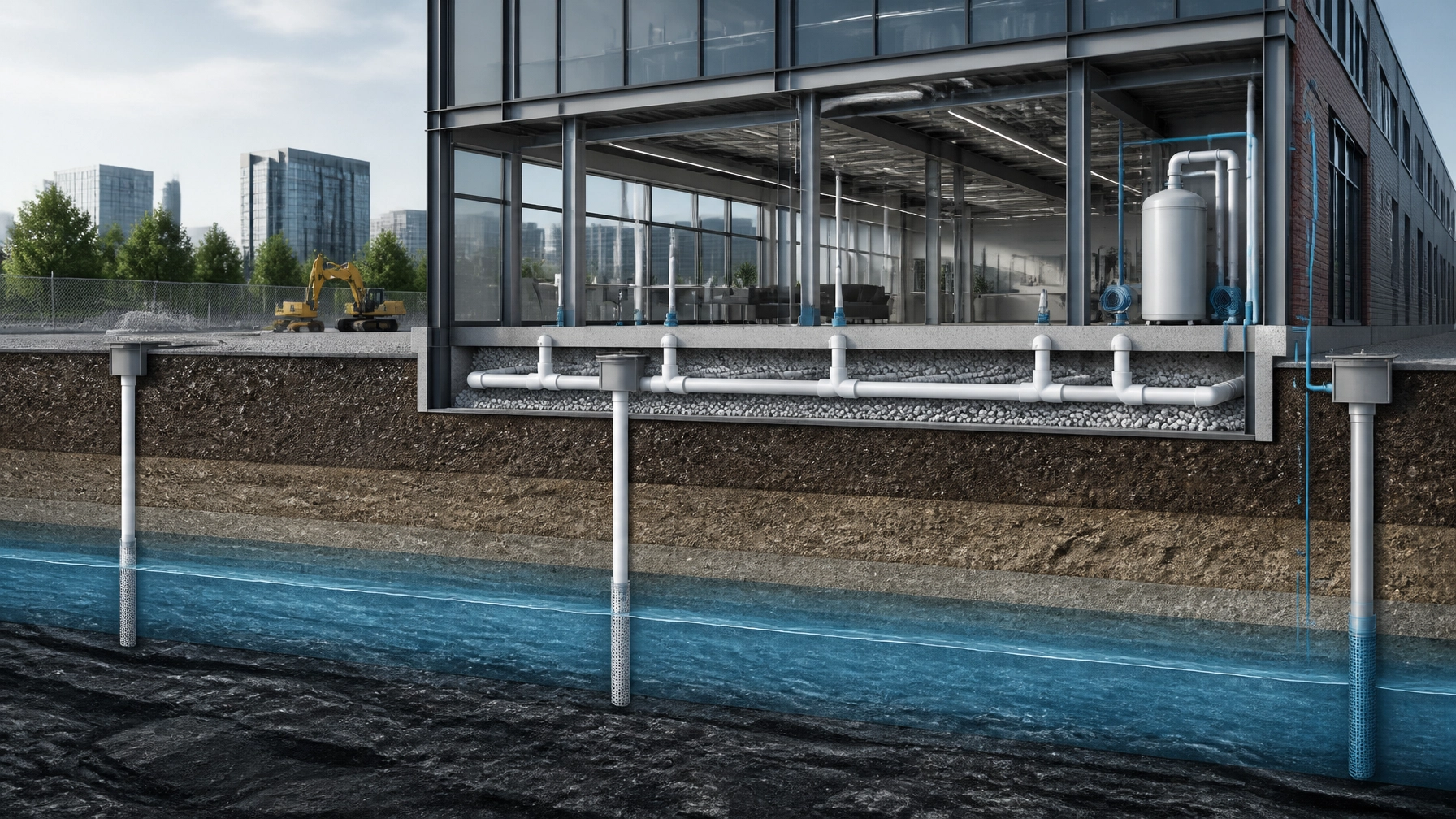
The NJDEP’s modernization initiative recognizes that vapor intrusion is not just a secondary symptom of groundwater contamination: it is a primary exposure pathway that requires its own dedicated regulatory framework. By elevating indoor air to a standalone media component, the NJDEP is bringing heightened scrutiny to engineering controls like Sub-Slab Depressurization Systems (SSDS) and vapor barriers.
What does this mean for your project?
- Consolidated Permits: A single RAP application can now cover soil, groundwater, and indoor air. This "all-media" approach is designed to reduce administrative bloat, but it requires much tighter technical coordination during the application phase.
- Financial Assurance: If your remedial action includes a vapor mitigation system, you are now likely subject to financial assurance (FA) requirements specifically for the operation and maintenance of that system, mirroring the long-standing requirements for groundwater and soil engineering controls.
- Color-Coded Compliance: To simplify the process, the NJDEP has introduced new, color-coded forms. Yellow sections denote soil, blue for groundwater, and a new green section specifically for indoor air. This isn't just for aesthetics; it’s a field-ready organizational tool to ensure LSRPs and reviewers are looking at the right data sets.

Decoding the Indoor Air Notification Area (IANA)
Perhaps the most significant change for developers and property owners is the introduction of the Indoor Air Notification Area (IANA). If you are familiar with a groundwater Classification Exception Area (CEA), you already understand the concept of the IANA.
Codified under N.J.A.C. 7:26C-7.5, the IANA is a new institutional control specifically for the vapor intrusion pathway. It identifies areas where indoor air concentrations exceed applicable standards, necessitating long-term mitigation and monitoring.
The Notification Burden
The "N" in IANA is there for a reason: Notification. The requirements for an IANA are extensive and immediate:
- GIS Mapping: Every IANA must be mapped using GIS-compatible data and submitted to the NJDEP for inclusion on their public-facing "Data Miner" platform.
- Stakeholder Alerts: You are now required to provide formal notification to municipalities, local health departments, and county planning boards.
- Occupant Transparency: Crucially, nearby property owners, tenants, and building occupants within the designated area must be notified of the IANA’s existence and any revisions to it.
This level of transparency is a double-edged sword. While it ensures public safety, it also means that your project’s environmental status is more visible than ever. You need a team that doesn't just "fill out the forms" but understands how to communicate these risks to stakeholders without triggering unnecessary alarm.

Focused RAPs: A Path to Expedited Review
To offset the increased complexity of the three-media system, the NJDEP has introduced five new "Focused RAP" categories (Permit I through Permit V). These are designed to fast-track common, straightforward remedial scenarios.
- Permit I: Restricted-use soil remedial actions without engineering controls (e.g., contamination above residential standards but below non-residential/migration-to-groundwater standards).
- Permit II: Voluntary use of Presumptive Remedies at non-sensitive sites (i.e., not a school or childcare center).
- Permit III: Pre-approved Alternative Presumptive Remedies where an NJDEP approval letter is already in hand.
- Permits IV & V: Designed for other common scenarios that meet strict, pre-defined criteria to allow for "over-the-counter" style processing.
The goal here is speed. If your site fits into one of these buckets, your LSRP can move the project forward much faster. However, if your site has any unique complexities: such as co-mingled plumes or non-standard engineering controls: you’ll be routed through the standard RAP track, which remains a more intensive review process.
Practical Implications: New Forms and Higher Stakes
The NJDEP didn't just change the rules; they overhauled the entire toolkit. The new forms include:
- RAP Initial/New Media Component Application: Used when adding indoor air to an existing site.
- RAP Technical Modification Application: Now covers soil, groundwater, and indoor air in one sweep.
- RAP Application to Administratively Combine RAPs: A vital tool for legacy sites with multiple aging permits.
These changes come with new fee structures and a heightened reliance on LSRP judgment. The NJDEP training materials emphasize that while the LSRP issues the Response Action Outcome (RAO), the IANA obligations are hard-coded into the site's long-term stewardship. There is no "walking away" from a VI system anymore without a clear, permitted path to termination.

The Envicon Advantage: Moving Beyond the Report
Large national firms often treat these regulatory shifts as a reason to issue "change orders" and write defensive, 500-page reports that protect their own liability more than your project timeline. They hand you a report and leave you to figure out why your project is suddenly stalled at the NJDEP.
At Envicon Group, we view the February 2026 modernization as an opportunity for precision. We don't just see a "Green Section" on a form; we see a path to clearing your site's obstacles.
- Direct Agency Relationships: We sit at the table with NJDEP reviewers. We know the people behind the IANA GIS requirements. We don't wait in a queue; we drive the conversation.
- Field-First Tech: Our proprietary project management dashboards give you real-time visibility into your RAP status. You’ll know exactly when a notification was sent and when the next monitoring event is scheduled: long before a monthly PDF report hits your inbox.
- Regional Fluency: We’ve been operating in the NJ/NY metro for 20 years. We understand the specific soil strata and vapor dynamics of Hudson, Essex, and Bergen counties. We don’t apply a "national playbook" to your Jersey City redevelopment.
Summary: What You Need to Do Now
The NJDEP’s RAP overhaul is a clear signal that vapor intrusion is no longer an "extra" consideration: it is central to site closure.
- Audit Your Assets: Review your current soil and groundwater permits. Determine if an indoor air component needs to be added to remain compliant.
- Map Your IANA: If you have an active VI mitigation system, ensure your GIS data is up to spec for the new notification requirements.
- Screen for Focused RAPs: Work with your LSRP to see if your site qualifies for Permits I–V to save time and money.
"Collaboration is not a buzzword: it's how we work." Whether you are navigating a complex brownfield or a time-sensitive property transaction, Envicon Group is here to turn these regulatory hurdles into buildable assets. We don’t sell reports; we sell cleared paths.

Ready to Navigate the New RAP Standards?
Don’t let your project get stuck in the new NJDEP queue. Let’s get your site cleared for the next phase.
- Book a free consultation: https://envicongroup.com/contact
- Use our Risk Screener Tool: https://envicongroup.com/risk-screener?utm_source=website&utm_medium=nav_megamenu&utm_campaign=resources&utm_content=risk-screener
- Call our NJ office directly: tel:9177642171
Leave a Reply