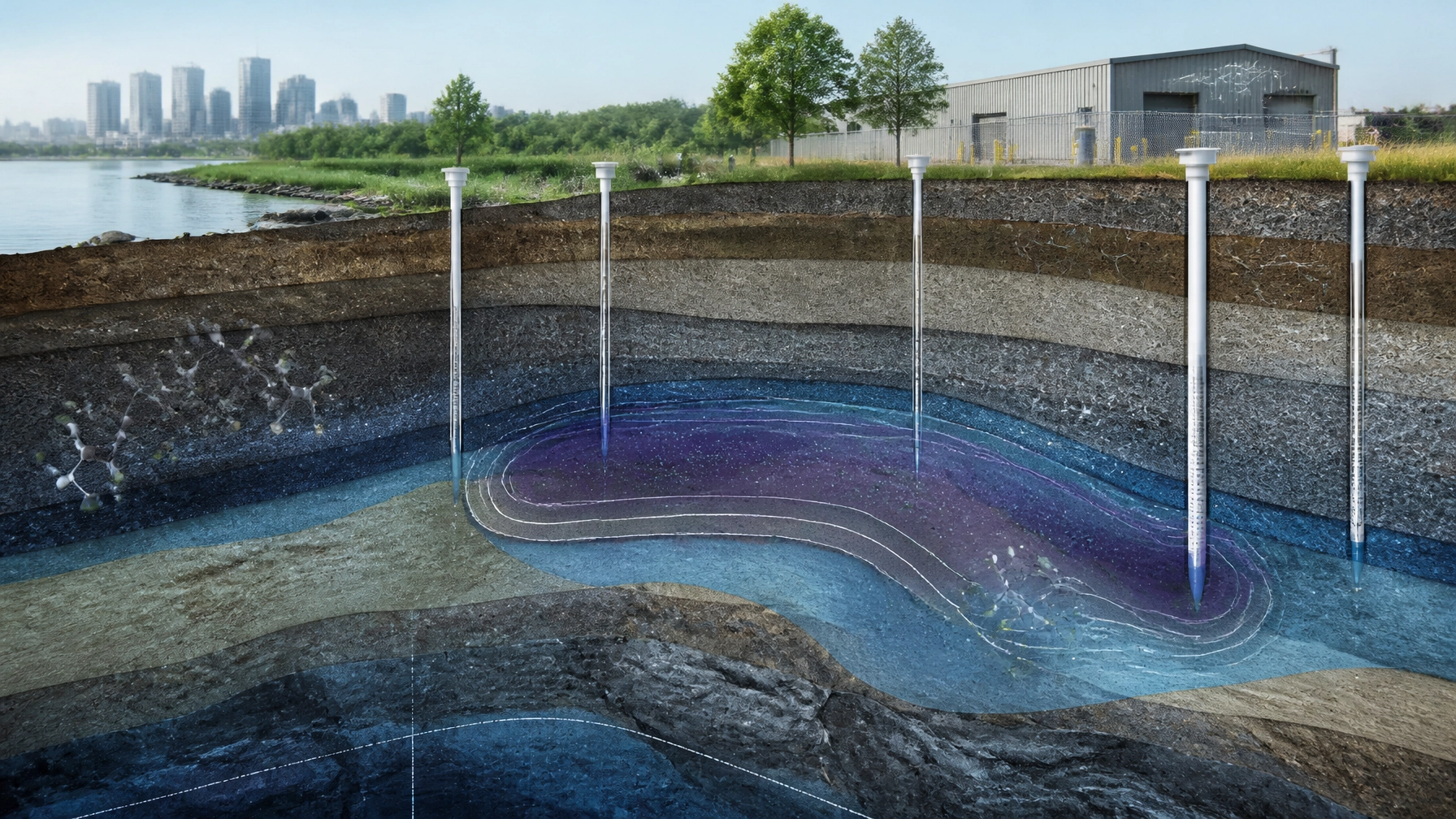
On June 15, 2026, the regulatory landscape for New Jersey developers and property owners underwent a fundamental shift. The New Jersey Department of Environmental Protection (NJDEP) officially adopted the final PFAS Remediation Standards, moving “forever chemicals” from the realm of interim guidance to fully codified, enforceable law.
If you’ve been managing a project in New Jersey over the last few years, you’ve likely been operating under the 2022 and 2023 interim criteria. While the numerical thresholds for major compounds like PFOA and PFOS remain largely consistent, the legal weight behind them has changed. For Licensed Site Remediation Professionals (LSRPs) and developers, this isn’t just a paperwork update: it’s a change in the burden of proof and the certainty of closure.
At Envicon Group, we’ve been tracking these amendments since their inception. We don’t just read the reports; we’re at the table with the NJDEP ensuring our clients’ projects don’t get sidelined by shifting goalposts. Here is exactly what the June 2026 Final Rule means for your site.
The Shift: From Interim Guidance to Final Rule
For years, NJDEP regulated PFAS through "interim generic remediation standards." These were placeholders: administratively easier to issue than a full rule but functionally "softer" in court and during certain phases of due diligence.
The June 15, 2026 adoption integrates these standards into N.J.A.C. 7:26D (Remediation Standards) and N.J.A.C. 7:9C (Ground Water Quality Standards).
Why this matters to you:
- Lender Certainty: Lenders who were hesitant to finance sites with "interim" exceedances now have a hard line to follow.
- Enforcement: Exceeding these numbers is now a direct violation of the Ground Water Quality Standards (GWQS), triggering mandatory remediation timelines under the Technical Requirements for Site Remediation (N.J.A.C. 7:26E).
- GenX Codification: GenX (HFPO-DA) now has its own formal groundwater quality standard, moving it into the same "tier" of concern as the more well-known PFOA and PFOS.
Side-by-Side: 2026 Final Standards vs. Previous Interim Criteria
The following table compares the standards adopted on June 15, 2026, against the previous interim guidance that most LSRPs used for screening over the past 24 months.
| Compound | Medium | 2026 Final Standard | Previous Interim Guidance |
|---|---|---|---|
| PFNA | Groundwater (GWQS) | 13 ppt (0.013 µg/L) | 13 ppt |
| Soil (Residential) | 0.047 mg/kg | 0.047 mg/kg | |
| PFOA | Groundwater (GWQS) | 14 ppt (0.014 µg/L) | 14 ppt |
| Soil (Residential) | 0.13 mg/kg | 0.13 mg/kg | |
| PFOS | Groundwater (GWQS) | 13 ppt (0.013 µg/L) | 13 ppt |
| Soil (Residential) | 0.11 mg/kg | 0.11 mg/kg | |
| GenX | Groundwater (GWQS) | 20 ppt (0.02 µg/L) | 20 ppt (Interim) |
| Soil (Residential) | 0.23 mg/kg | 0.23 mg/kg |
Note: Soil migration-to-groundwater (mP) standards remain site-specific, calculated using the NJDEP PFAS SPLP Calculator.

Deep Dive: PFNA, PFOA, PFOS, and GenX
The "Big Three": PFOA, PFOS, and PFNA
For these three compounds, the numeric values didn't change, but the "Mandatory Evaluation" clause did. Under the new rule, if your site has "unknown" historical contaminants or you are conducting a site-wide investigation, the NJDEP now expects a proactive screen for these compounds. You can no longer rely on the absence of a specific "PFAS-using" industry to skip the sampling; if the data is thin, the regulator wants the lab results.
The GenX (HFPO-DA) Factor
GenX is often used as a replacement for PFOA in manufacturing. Because it was a "replacement," it flew under the radar for years. The June 15, 2026 rule officially brings GenX into the light with a formal 20 ppt (0.02 µg/L) groundwater standard. If your project involves historical manufacturing, chemical storage, or even high-volume commercial laundry operations, GenX is now a standard line item on your lab chain of custody.
What This Means for LSRPs and Ongoing Projects
If you are an LSRP of Record for an active New Jersey site, the "grandfathering" clock has started.
1. Mandatory Screenings
If you haven't screened for PFAS yet because your Phase I Environmental Site Assessment was done before these chemicals were "Standard Environmental Additives," you may be at risk. The final rule clarifies that for any site without a Response Action Outcome (RAO), the new standards apply immediately.
2. Remediation Strategy Changes
Because the soil standards are now codified, your "Pathway to Closure" must be more robust. We are seeing a move away from simple capping and toward more aggressive source-area treatment or removal, especially where migration-to-groundwater is a risk.
3. The SPLP Requirement
The NJDEP has doubled down on Synthetic Precipitation Leaching Procedure (SPLP) testing. You cannot simply use a generic soil number and walk away. To get a site-specific "Migration to Ground Water" (mGW) standard, you must run the SPLP analysis. This is where many "big-box" firms fail: they deliver a report with generic exceedances that stall your project, rather than doing the site-specific math that clears the path.
The Envicon Difference: Speed and Regulatory Fluency
When a rule change this significant hits, most national firms go into "defensive mode." They’ll send you a three-page memo full of "maybes" and "potentials" that ends with a request for more budget to "study the implications."
At Envicon, we do the opposite. We’ve already integrated the June 15, 2026 standards into our Digital Solutions and real-time project dashboards.
- We don't sell reports, we sell cleared paths: While others are figuring out what the GenX standard means, our team is already in the field with the right sampling equipment and a direct line to our reviewers at the NJDEP.
- Direct Coordination: We don’t wait in a queue. We work directly with architects, attorneys, and the NJDEP to ensure that your remediation strategy is aligned with your construction schedule.
- PE-Led, Field-First: The engineer who designs your remediation plan is the same person who stands on-site during the soil excavation. There is no "black box" of junior staff execution.
The goal isn't just to be "compliant": it's to be done. Every week your project sits in an LSRP’s queue because of a "PFAS question" is a week of carrying costs and lost market timing.
Summary and Takeaways
The NJDEP's June 15, 2026 Final Rule on PFAS is a call to action for the New Jersey development community. The transition from interim guidance to codified law removes ambiguity but increases the stakes for non-compliance.
- PFNA, PFOA, and PFOS remain at their previous numerical thresholds but are now enforceable Ground Water Quality Standards.
- GenX is officially codified at 20 ppt for groundwater.
- LSRPs must now proactively evaluate PFAS in a wider range of site investigations.
- Site-specific calculations (SPLP) are the only reliable way to manage soil-to-groundwater migration pathways without over-remediating.
Don't let a "forever chemical" create a forever delay on your site. If your current consultant is giving you "wait and see" answers regarding the 2026 standards, it’s time for a firm that knows the reviewer by name and the regulations by heart.
Take Action on Your NJ Site
Navigate the new NJDEP PFAS landscape with precision. Choose the tool or contact method that fits your project stage:
- Assess your property risk: Risk Screener Tool
- Calculate potential remediation costs: Cost Estimator Tool
- Talk to a Principal Engineer today: tel:9177642171
Leave a Reply