On July 1, 2026, the New York State Department of Environmental Conservation (NYSDEC) published a sweeping Notice of Proposed Rulemaking in the State Register that fundamentally alters how solid waste management facilities handle leachate. Targeting 6 NYCRR Parts 360 and 363, the proposed amendments establish first-in-nation pretreatment standards specifically designed to eliminate per- and polyfluoroalkyl substances (PFAS) and 1,4-dioxane before leachate enters Water Resource Recovery Facilities (WRRFs) or other discharge outlets.
For municipal solid waste (MSW) and construction and demolition (C&D) debris landfill owners, operators, and solid waste managers across New York, this is not a routine administrative update. It is a technical and financial inflection point. The new framework introduces strict contaminant removal requirements: effectively demanding up to 99.9% removal efficacy for target compounds: and institutes a rigid compliance timeline that will require immediate engineering foresight.
With the public comment period open through September 9, 2026, and virtual public hearings scheduled for September 2, 2026, facility operators must move beyond passive observation. Understanding the technical scope, compliance milestones, and operational impacts of proposed Subpart 363-12 is critical to protecting your operational license and capital budget.
The Regulatory Scope: Who Is Affected and What Is Changing?
The proposed revisions dismantle long-standing regulatory exemptions. Previously, landfill leachate routed to municipal WRRFs or discharged under a State Pollutant Discharge Elimination System (SPDES) permit enjoyed certain regulatory carve-outs from rigorous on-site treatment mandates. The new rules eliminate these exclusions, pulling all discharging facilities directly into the Part 360/363 regulatory umbrella.
According to NYSDEC’s supporting technical analyses, the rule directly impacts:
- 25 Active Municipal Solid Waste (MSW) Landfills across New York State.
- 7 Active Construction & Demolition (C&D) Debris Landfills equipped with active leachate collection systems.
- Off-Site Leachate Treatment Facilities that receive and process high-strength wastewater from external generation points.
Exemptions are narrowly tailored: facilities that do not accept MSW or C&D debris, C&D landfills lacking leachate collection systems, and sites that permanently ceased waste acceptance prior to the effective date are excluded. However, for operating facilities, leachate is officially classified as a high-strength industrial waste stream requiring dedicated, performance-based pretreatment.

Performance Standards and Technical Realities
The proposed rules under Part 363-4.6(h) (including Tables 3A and 3B) are performance-based rather than technology-prescriptive. DEC does not mandate a specific brand or singular treatment apparatus; instead, it establishes strict numerical effluent limitations for PFAS (including PFOA and PFOS) and 1,4-dioxane.
However, achieving these stringent reduction thresholds in the field is an immense engineering hurdle. Landfill leachate is notoriously complex: a variable chemical brew of dissolved organics, heavy metals, high biological oxygen demand (BOD), and recalcitrant micro-pollutants. Standard biological wastewater treatment alone cannot destroy carbon-fluorine bonds.
To meet proposed discharge limits, facility operators will likely need to design and deploy sophisticated, multi-stage treatment trains, such as:
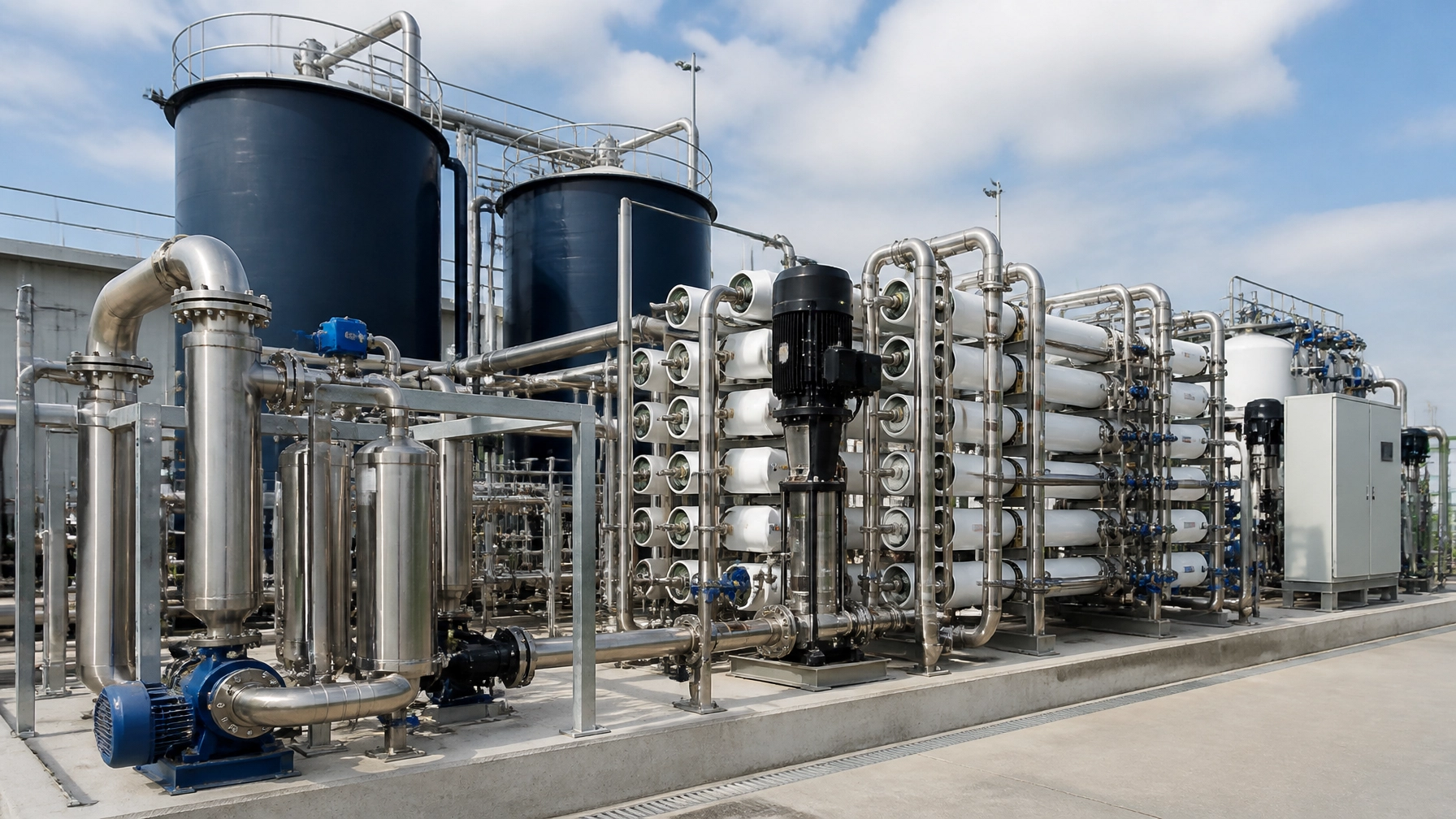
- Multi-Stage Reverse Osmosis (RO): Providing bulk dissolved solids rejection and primary contaminant separation.
- Granular Activated Carbon (GAC) or Ion Exchange Resins: Deployed as polishing steps on RO permeate to capture short-chain PFAS compounds.
- Advanced Oxidation Processes (AOP) or Thermal Destruction: Targeting 1,4-dioxane oxidation and managing concentrated residual waste streams.
- Evaporation and Solidification: Managing high-strength RO concentrates to ensure PFAS-bearing residuals are securely immobilized and legally disposed of without re-entering the environment.
The Phased Compliance Timeline: What to Expect
While the regulations are currently in their proposed stage with comments closing on September 9, 2026, facility operators cannot afford to wait for final adoption. The state has outlined an aggressive transition schedule tied directly to the future effective date of the final rule:
- Within One Year of the Effective Date: Owners and operators must submit a formal Conceptual Leachate Treatment Plan to NYSDEC. Alternatively, facilities must file official notification if they intend to alter operations: such as ending external discharges to WRRFs or routing leachate to zero-liquid-discharge systems: to exempt themselves from the pretreatment mandate.
- Within Two Years of the Effective Date: A comprehensive Final Leachate Treatment Plan, complete with engineering designs, pilot testing data, and permit modification applications, must be submitted for agency review and approval.
- Permit Integration and Construction: Subsequent milestones will dictate capital construction, equipment commissioning, and ongoing effluent monitoring under a revised Part 360/363 operating permit.
Navigating Regulatory Shifts Without Falling Into Big-Box Traps
When complex, capital-intensive environmental regulations hit the market, major national engineering firms often respond with predictable playbooks: bloated, defensive reports written more to protect the consultant from liability than to move your project forward, paired with junior-staff execution and skyrocketing change orders.
At Envicon Group, we believe facility operators deserve better. We don’t sell generic reports or cookie-cutter templates; we sell cleared paths. As a PE-led, field-first, and regulator-facing team with 20 years of direct experience across New York and New Jersey, we sit at the table with NYSDEC and NYC OER regulators: not behind a queue.
When you partner with Envicon for your Part 363 compliance strategy, you get:
- Hands-on Leadership: Direct senior engineering oversight from our first site visit through agency approval and construction oversight.
- Transparent Execution: Real-time project reporting dashboards and predictable, upfront pricing with zero scope creep.
- Deep Regional Fluency: Practical, battle-tested familiarity with NYSDEC reviewers, local infrastructure constraints, and the realities of solid waste management operations.

Actionable Steps for Landfill Owners and Solid Waste Managers
To stay ahead of the September 9, 2026 public comment deadline and prepare for the one-year conceptual plan mandate, facility operators should take immediate action:
- Audit Current Leachate Quality: Conduct comprehensive analytical testing for an expanded suite of PFAS compounds and 1,4-dioxane across all leachate generation points.
- Evaluate Discharge Pathways: Review existing WRRF agreements, SPDES permit limits, and hauling contracts to determine vulnerability to upcoming pretreatment mandates.
- Engage Regulatory Experts Early: Partner with experienced environmental engineers who understand Subpart 363-12 requirements and can help formulate cost-effective pilot testing and conceptual design strategies.
- Participate in the Rulemaking Process: Submit constructive technical comments during the ongoing NYSDEC rulemaking window to ensure operational realities are accounted for in the final adoption.
Summary and Takeaway
NYSDEC’s proposed amendments to Parts 360 and 363 represent a permanent shift in solid waste compliance across New York. Managing PFAS and 1,4-dioxane in landfill leachate requires rigorous engineering, proactive capital planning, and deep regulatory fluency. By partnering with a field-tested, PE-led team that takes full ownership of your project outcomes, you can transform regulatory obligations into operational certainty.
Ready to Secure Your Facility's Compliance Path?
Don't let complex PFAS regulations stall your solid waste operations. Contact our engineering team today to discuss your site's leachate treatment strategy.
Leave a Reply