Blog

  • Beyond the Core Sample: What Geotechnical Costs Actually Tell You

    Beyond the Core Sample: What Geotechnical Costs Actually Tell You

    In the high-stakes world of New Jersey real estate development, the geotechnical report is often viewed as a "check-the-box" line item, a necessary evil required by the lender or the building department before the real work begins.

    When the quotes come in, the instinct is to look at the bottom line. You see $5,000 from one firm and $15,000 from another. On paper, they both promise "borings and a report." But if you’re only looking at the price, you’re missing the most important data point the investigation has to offer.

    At Envicon Strategic Solutions, we’ve seen how "cheap" dirt leads to expensive foundations. In New Jersey’s complex landscape, from the shifting sands of the Shore to the trap rock of the Palisades and the unpredictable "urban fill" of Jersey City, geotechnical costs aren't just an expense. They are a diagnostic tool that tells you exactly how much risk is buried beneath your boots.

    The Price of Uncertainty

    Geotechnical costs reveal the hidden complexity of your project long before a shovel hits the ground. When an engineer looks at a site in, say, the Hackensack Meadowlands, and quotes a high fee, they aren’t just padding their margins. They are signaling that your site has a "memory": and it’s likely a memory of compressible peat and high groundwater that will swallow a standard foundation whole.

    According to industry research, geotechnical investigations for simple residential projects might range from $2,000 to $3,500. However, commercial or industrial projects in our region frequently scale from $10,000 to $50,000 or more.

    Why the delta? Because every dollar in that quote represents a degree of risk mitigation. A $700 classification report tells you what the soil is. A $20,000 comprehensive investigation tells you how the soil will behave when you put a five-story steel structure on top of it.

    Active construction site showing excavation support and foundation stability

    Decoding the Quote: What Are You Actually Buying?

    When we provide a proposal at Envicon, we break it down so you understand the ROI of every boring. Here is what those costs are actually communicating:

    1. Investigation Depth and Quantity: If your quote is low, your consultant is likely betting on "best-case" scenarios. In NJ, "best-case" is a rare bird. More borings and deeper samples mean we are looking for the "refusal" point: the bedrock or stable strata that will actually support your building.
    2. Laboratory Testing: Standard soil classification is one thing. Testing for moisture-density relationships, shear strength, and consolidation is another. If you’re building in an area with heavy clays or organic soils, skipping these tests to save $2,000 today can lead to a $200,000 change order when your floor slabs start cracking two years from now.
    3. Engineering Analysis: This is the most undervalued part of the cost. You aren't paying for someone to look at dirt; you're paying for a civil engineering expert to translate data into a foundation design that won't fail.

    "A geotechnical report is the only insurance policy that actually prevents the disaster instead of just paying for the wreckage." : Jason Pancoast, CEO, Envicon Strategic Solutions.

    The "New Jersey" Factor: Why Local Expertise Matters

    You can’t apply a "national" standard to a site in Newark or Elizabeth. Our region’s geological history is a mess of glacial retreats and 300 years of industrial activity.

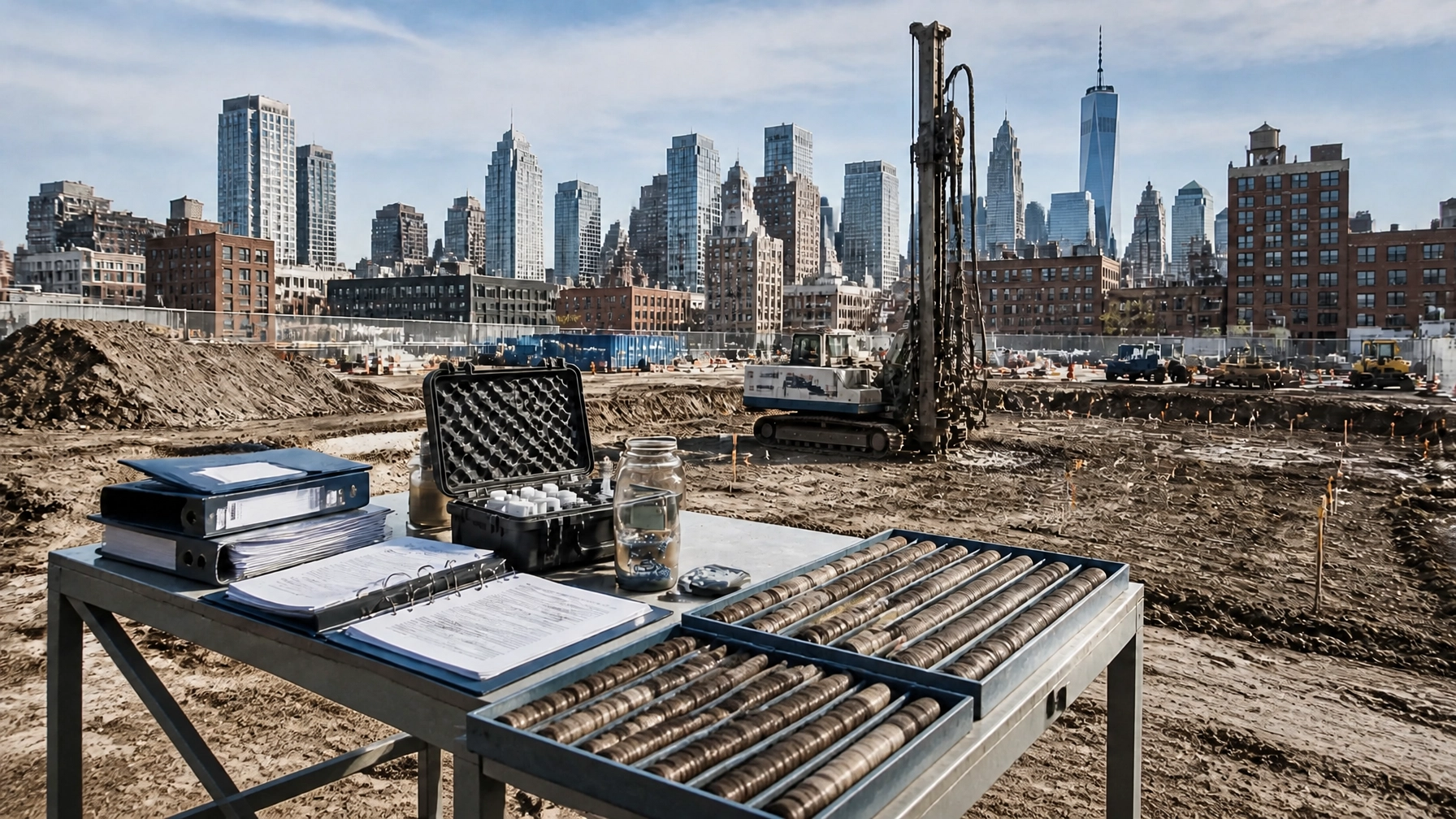
    Geotechnical engineers analyzing a soil core sample for urban fill at a New Jersey redevelopment site.

    Higher geotechnical costs in urban New Jersey often reflect the reality of Urban Fill. This is the mix of brick, ash, and debris that was used to "reclaim" land over the last century. If your geotechnical consultant doesn't account for the variability of urban fill, your project is built on a foundation of guesswork.

    In places like Hudson County, the cost of an investigation also signals the difficulty of Access and Permitting. Navigating NYC OER requirements or NJDEP regulations requires a level of precision that a "budget" firm simply won't provide. They’ll give you a report that checks the box but leaves you exposed to regulatory delays that can cost $5,000 a day in carrying costs.

    The Math of Risk: 0.1% vs. 20%

    Let’s put the cost into perspective. A comprehensive geotechnical investigation typically represents less than 0.1% of a total project budget. On an $8 million development, that’s about $8,000.

    Now, consider the alternative. If that $8,000 investigation was "too expensive" and you opted for a $3,000 bare-minimum report, you might miss a pocket of unstable soil. The resulting structural failure or the need for emergency deep foundations (like piles or caissons) during construction can easily add 20% or more to your total budget.

    We aren't just selling a service; we’re selling the ability to sleep at night. We’re selling the certainty that your building will stand for the next 100 years.

    Concrete building foundation under construction showing site grading and foundation walls

    Why Envicon is Different: Beyond the Big Box Consultant

    Many of our clients come to us because they are tired of the "Big Box" consulting firms. You know the ones: they have a massive office in another state, they send a junior technician to your site who has never seen Jersey City silt, and they deliver a 100-page report that says "more study is needed."

    At Envicon, we do things differently:

    • Accountability: We don't just hand you a report and vanish. We partner with your architects and structural engineers to ensure the recommendations are practical and cost-effective.
    • Visionary Approach: We look at your project through the lens of community and legacy. We aren't just building a warehouse; we're revitalizing a piece of New Jersey.
    • Responsiveness: In development, time is the only thing you can't buy back. We move at the speed of your project, not the speed of a corporate bureaucracy.
    • Authority: We know the NJDEP and local municipal boards. We don't just provide data; we provide the narrative that gets your project approved.

    Practical Takeaways for Your Next Project

    If you are evaluating geotechnical proposals today, ask yourself these three questions:

    • Does this price account for the "worst-case" soil in this specific zip code? If the price is the same for a site in Cherry Hill as it is for a site in the Meadowlands, run.
    • Is the engineer providing "Ground Improvement" options? A good report shouldn't just tell you the soil is bad; it should tell you how to fix it: whether through dynamic compaction, surcharge loading, or stone columns: to save on foundation costs.
    • Does the firm understand the regulatory landscape? In NJ, geotechnical and environmental issues are often linked. Choosing a firm like Envicon that handles both ensures nothing falls through the cracks.

    Structural view of concrete foundations at the water’s edge

    Summary: Invest in the Data, Not Just the Dirt

    Geotechnical costs are a window into the soul of your project. A higher initial investment in a thorough investigation is almost always offset by the savings found in a more efficient foundation design and the avoidance of "unforeseen site conditions."

    Don't let a $5,000 savings today become a $500,000 liability tomorrow. You deserve a partner who understands that the core sample is just the beginning of the story.

    Ready to de-risk your next NJ development? Contact the team at Envicon Strategic Solutions today. Let’s build something that lasts.

  • NYSDEC’s New Stormwater Rules Explained in Under 5 Minutes: What Developers Need to Know

    NYSDEC’s New Stormwater Rules Explained in Under 5 Minutes: What Developers Need to Know

    New York's environmental landscape just shifted significantly. On January 29, 2025, the New York State Department of Environmental Conservation (NYSDEC) implemented its updated Construction General Permit (GP-0-25-001), replacing the 2020 version that developers have been working under for the past five years.

    If you're planning construction projects in New York or New Jersey, these changes aren't just regulatory updates: they're immediate business considerations that could impact your project timeline, budget, and compliance strategy.

    What Changed and Why It Matters

    The new permit brings New York's stormwater regulations into closer alignment with federal EPA standards, but it also introduces stricter requirements that directly affect how you plan and execute development projects. The most significant change? Electronic filing is now mandatory, and the eligibility thresholds have become more restrictive, especially in New York City.

    "The 2025 permit provides clearer guidance on complex situations that developers frequently encounter," notes a recent analysis from environmental engineering firms tracking the regulatory shift. "But it also adds new compliance layers that require early planning."

    image_1

    These aren't minor adjustments. The new rules affect everything from your initial permit application to how you handle climate risk assessments on-site. For developers working in NYC, the threshold changes alone could bring projects under permit coverage that previously flew under the regulatory radar.

    Key Changes Every Developer Must Know

    Electronic Filing Is Now Required

    Gone are the days of paper submissions. All permit applications must now be filed electronically through NYSDEC's online system. This includes any required Municipal Separate Storm Sewer System (MS4) acceptance forms when your project falls within their jurisdiction.

    Stricter NYC Thresholds

    In New York City specifically, the permit now covers:

    • Soil disturbances between 20,000 square feet and one acre
    • Creation of 5,000 square feet or more of impervious surface area

    This represents a significant expansion of permit coverage in the five boroughs. Projects that previously required only local permits may now need state-level stormwater authorization.

    Five-Acre Disturbance Authorization

    The 2025 permit finally standardizes the process for projects needing to disturb more than five acres of soil simultaneously. Previous permit versions left this process unclear, creating compliance confusion for larger developments. Now there's a defined pathway for obtaining this authorization.

    Climate Risk Assessment Requirements

    New projects must identify and address significant climate-related risks including:

    • Temperature extremes
    • Changing precipitation patterns
    • Rising sea levels
    • Storm surge potential

    You'll need to propose specific mitigation measures as part of your permit application. This isn't just a checkbox exercise: NYSDEC expects substantive analysis and actionable responses.

    image_2

    What This Means for Current Projects

    If you have an active project currently operating under the 2020 permit (GP-0-20-001), you needed to submit a "Request to Continue Coverage" form by February 28, 2025. Projects that successfully continued coverage are protected by interim coverage provisions and don't need to redesign existing stormwater practices or immediately address the new climate change requirements.

    However, all non-design related requirements from the new permit still apply. This means updated record-keeping, new inspection protocols, and revised reporting procedures are now in effect for continuing projects.

    Implementation Timeline and Critical Deadlines

    The regulatory timeline created some immediate pressure points:

    • January 29, 2025: New permit took effect
    • February 28, 2025: Deadline for continuing coverage requests (already passed)
    • Ongoing: All new applications must use the 2025 permit requirements

    For developers who missed the continuation deadline, any ongoing projects now fall under the full requirements of the new permit, including climate risk assessments and updated stormwater designs.

    Practical Next Steps for Compliance

    For New Projects

    Start your environmental planning early. The electronic filing requirement and expanded documentation needs mean longer lead times for permit approval. Factor in additional time for:

    • Climate risk assessment preparation
    • Electronic system navigation and submission
    • Potential MS4 coordination requirements
    • Enhanced stormwater design documentation

    For Continuing Projects

    Review your current compliance status immediately. Even with continued coverage, you'll need to update:

    • Inspection and monitoring protocols
    • Record-keeping systems
    • Incident response procedures
    • Corrective action timeframes

    image_3

    Navigating the Electronic Filing System

    The transition to mandatory electronic filing represents both an efficiency improvement and a potential bottleneck. The system requires detailed project information upfront, including:

    • Precise soil disturbance calculations
    • Detailed site maps and boundary delineations
    • Comprehensive stormwater management plans
    • Climate risk assessment documentation

    Early preparation of these materials prevents delays during the submission process. Consider having your environmental consultant pre-populate application templates with standard project information to streamline future submissions.

    Regional Considerations: NYC vs. Statewide Requirements

    While the permit applies statewide, New York City projects face additional complexity. The lower thresholds mean more projects require coverage, and the interaction between state permits and local requirements creates layered compliance obligations.

    Projects in NYC must also coordinate with:

    • New York City Department of Environmental Protection requirements
    • Local MS4 programs
    • Borough-specific stormwater management protocols

    Outside NYC, the permit requirements are more straightforward, but the climate risk assessment requirements apply universally across New York State.

    image_4

    Cost and Schedule Implications

    Budget for additional professional services time. The climate risk assessment requirement alone typically adds 15-20 hours of consultant time for standard projects, more for complex sites. Electronic filing preparation can add another 8-10 hours compared to previous paper submissions.

    Schedule-wise, permit processing times haven't officially changed, but the increased documentation requirements may extend review periods. Plan for 4-6 weeks for straightforward projects, longer for complex sites or those requiring five-acre disturbance authorization.

    Best Practices for Staying Ahead

    Successful developers are already adapting their project planning workflows:

    Early Engagement: Involve environmental consultants during site selection and preliminary design phases, not just before permit submission.

    Documentation Systems: Implement digital record-keeping systems that align with the electronic filing requirements from day one.

    Climate Integration: Build climate risk considerations into site selection criteria and preliminary design development.

    Regulatory Monitoring: Subscribe to NYSDEC updates and maintain relationships with consultants who track regulatory changes proactively.

    Long-Term Strategic Considerations

    The 2025 permit represents New York's continuing evolution toward more stringent environmental oversight. Future updates will likely bring even stricter requirements, particularly around climate resilience and water quality protection.

    Smart developers are viewing these requirements not as obstacles but as opportunities to future-proof their projects. Early adoption of climate-resilient design practices and robust stormwater management creates competitive advantages in an increasingly regulation-conscious market.

    image_5

    Taking Action: Your Next Steps

    The regulatory landscape has shifted, and adaptation isn't optional. Here's your immediate action plan:

    This Week: Review any current projects for compliance with new requirements. Identify gaps in documentation or procedures.

    This Month: Update your standard project planning templates to include climate risk assessment and electronic filing preparation timelines.

    Moving Forward: Integrate these requirements into your standard development process. Train your team on the new electronic filing system and establish relationships with environmental consultants who understand the nuanced requirements.

    The developers who thrive under these new regulations won't be those who simply comply: they'll be those who integrate compliance into competitive advantage. The 2025 stormwater permit requirements represent the new baseline for environmental responsibility in New York development.

    Understanding these rules isn't just about avoiding penalties; it's about positioning your projects for success in an evolving regulatory environment where environmental excellence directly correlates with project viability and profitability.

    Ready to ensure your next project navigates these requirements smoothly? The key lies in early planning, expert guidance, and systems that turn regulatory compliance into operational efficiency. Because in today's development climate, environmental excellence isn't just good stewardship; it's good business.

  • 7 Mistakes You’re Making with NJDEP LSRP Rules (and How to Protect Your ROI)

    7 Mistakes You’re Making with NJDEP LSRP Rules (and How to Protect Your ROI)

    In the high-stakes world of New Jersey real estate development, the Licensed Site Remediation Professional (LSRP) program was designed to move projects faster by shifting oversight from the state to the private sector. But here’s the reality: while the program offers speed, it also places the burden of liability and regulatory precision squarely on your shoulders.

    If you are developing in Jersey City, Newark, or anywhere across the Garden State, "compliance" isn't just a legal requirement: it’s a financial variable. One missed deadline or a misunderstood notification requirement can stall a closing, trigger NJDEP enforcement, and bleed your ROI dry.

    At Envicon, we see these hurdles every day. We don't just see dirt and groundwater; we see the pro forma. We see the community legacy you’re trying to build. To protect that vision, you need to avoid these seven common mistakes that catch even seasoned developers off guard.

    1. The 45-Day Retention Death Trap

    When an LSRP leaves a project: whether they retire, change firms, or you decide to part ways: the clock starts ticking immediately. Under current NJDEP LSRP rules, you have exactly 45 days to retain a replacement.

    If you miss this window, you aren't just "behind schedule." You are officially out of compliance. This triggers automatic enforcement actions and can freeze your ability to submit permits or certifications. We’ve seen deals grind to a halt because a developer waited 50 days to sign a new contract, only to find their Remedial Action Permit (RAP) application rejected.

    The ROI Protection: Always have a succession plan. If your relationship with your current consultant is rocky, start interviewing your next partner before the 45-day clock begins.

    2. Ignoring the "Third Media": Indoor Air Notification Areas (IANA)

    Historically, remediation focused on soil and groundwater. Today, the NJDEP has shifted massive focus toward indoor air as the "third media." The new Indoor Air Notification Area (IANA) requirements are a logistical minefield.

    LSRPs are now responsible for submitting detailed maps, GIS deliverables, and: most importantly: direct notifications to municipalities, counties, and building occupants within an IANA. If you’re developing a multi-family unit or a commercial space near a legacy plume, failing to manage these notifications properly can lead to public relations nightmares and legal liabilities that no insurance policy wants to touch.

    Industrial Port Facility Near NY/NJ Metro Area

    3. Treating the LSRP as a "Vendor" Instead of a Strategic Partner

    The biggest mistake we see is developers treating their LSRP like a plumber or an electrician: someone you call only when something breaks. In the NJDEP ecosystem, your LSRP is actually a quasi-regulator. They have a fiduciary duty to the state's environment, but they also have the power to exercise "Professional Judgment."

    When you keep your LSRP at arm's length, they can’t help you optimize the remediation strategy for your specific redevelopment goals. A strategic partner looks at the site and asks, "How can we use engineering controls to cap this in place and save $500k in soil disposal?" A "vendor" just follows the book and sends you the bill for the excavation.

    4. Mismanaging RAP Modifications vs. New Applications

    The NJDEP has recently streamlined how they handle Remedial Action Permits (RAPs), preferring modifications over entirely new applications. However, many consultants still default to the old way of doing things, leading to redundant fees and months of unnecessary review time.

    Knowing when a change in site use or a minor adjustment in monitoring requires a full permit overhaul versus a simple modification is key to maintaining your timeline. At Envicon, we prioritize the most efficient regulatory path because we know that every month of "review time" is a month of interest payments on your construction loan.

    NJDEP LSRP consultants analyzing a digital subsurface model to protect developer ROI through strategic site remediation.

    5. Falling Behind on Biennial Certifications

    Once a site is "done" and you have your Response Action Outcome (RAO), the work doesn't actually stop. If your site has engineering or institutional controls (like a cap or a Deed Notice), you must file a Biennial Certification every two years.

    The requirements for these submissions have become significantly more rigorous. You now need updated documentation of operation, maintenance, and monitoring (OM&M) plans, as well as any additional sampling data from the prior two years. If you miss a filing, the NJDEP can rescind your RAO. Imagine trying to sell a "clean" property only to find out your RAO was pulled because someone forgot to file a report three years ago.

    "In the NY/NJ metro area, the most expensive mistake isn't the cleanup itself: it's the time lost to regulatory circularity." : Jason Pancoast, CEO of Envicon Strategic Solutions.

    6. Underestimating the ASTM E1527-21 Standard

    While NJDEP rules are the state's law, the ASTM E1527-21 standard is the bank’s law. This updated standard for Phase I Environmental Site Assessments (ESAs) changed how we look at "Recognized Environmental Conditions" (RECs) and put a much heavier emphasis on emerging contaminants like PFAS.

    If your LSRP isn't looking at your site through the lens of the 2021 update, your lender might reject your due diligence right before closing. This is especially critical in industrial waterfront properties where historical use almost guarantees some level of PFAS or vapor intrusion concern.

    7. The "Big Box" Consultant Pitfall

    Many developers believe that hiring a massive, national engineering firm provides a "shield" of credibility. In reality, NJ remediation is hyper-local. A "Big Box" firm often assigns junior staff in a different time zone to manage your NJDEP filings. They don't know the case managers in Trenton, and they don't understand the nuances of Hudson County soil.

    These firms are often slow to respond, bill for every five-minute phone call, and lack the agility to pivot when a project hits a snag. You end up paying for their massive overhead while your project sits at the bottom of a pile.

    How to Protect Your ROI: The Envicon Advantage

    At Envicon Strategic Solutions, we offer a different path. We aren't just consultants; we are site-reimagination experts. We help our clients navigate NJ Brownfield Tax Credits and OER requirements to turn liabilities into assets.

    Why do developers switch to Envicon?

    • Accountability: You get direct access to senior leadership. We don’t hide behind "project coordinators."
    • Speed: We understand that in New Jersey, time is literally money. Our reports are lender-ready and NJDEP-compliant the first time.
    • Visionary Strategy: We don't just tell you what's wrong with the dirt. We tell you how to fix it in a way that aligns with your architectural and financial goals.
    • Local Mastery: From Manhattan OER to the NJDEP, we know the people and the processes that move the needle.

    Envicon Strategic Solutions LLC Professional Portrait

    Summary Takeaways

    To keep your project on track and your ROI protected, remember:

    • Never miss the 45-day LSRP retention window.
    • Budget for Indoor Air (IANA) notifications early.
    • Use RAP modifications whenever possible to save time and money.
    • Keep your Biennial Certifications current to protect your RAO.
    • Choose a local, agile partner who values your project as much as you do.

    The remediation process shouldn't be a black hole for your capital. It should be a controlled, strategic step toward a successful development.

    Ready to see what others miss? Contact Envicon today for a consultation on your next project. Let’s turn that "hazard" into a home, and that complexity into a competitive advantage.

    Envicon Strategic Solutions Logo

  • EPIC Portal 2.0: How to Get Your NYC OER Notice to Proceed in Half the Time

    EPIC Portal 2.0: How to Get Your NYC OER Notice to Proceed in Half the Time

    If you're a developer or project manager waiting on NYC's Office of Environmental Remediation (OER) to issue your Notice to Proceed, you already know the pain. Weeks turn into months. Your construction schedule slips. Holding costs pile up. And all because someone at OER flagged your E-Designation filing for "additional review."

    Here's the reality: speed isn't luck: it's strategy. And in 2026, with the rollout of EPIC Portal 2.0, there's a clear playbook for cutting your approval timeline in half. We've been navigating this system since day one, and the firms that master the digital workflow are getting their NTPs while competitors are still stuck in the queue.

    Let's break down exactly how to do it.

    Why EPIC Portal 2.0 Changes Everything

    NYC OER's EPIC Environment portal has been the gatekeeper for E-Designation compliance, Remedial Action Plans (RAPs), and Brownfield Cleanup Program submissions for years. But the 2026 upgrade fundamentally changed how applications are triaged, reviewed, and approved.

    The big shift: OER now uses automated pre-screening for completeness before a human reviewer even touches your file. If your submission triggers any of the portal's red flags: missing attachments, incomplete forms, incorrect file naming conventions: your application gets kicked to the bottom of the pile. Automatically.

    Translation? The firms that understand the digital checklist are bypassing weeks of back-and-forth revisions. The ones that don't are learning the hard way.

    NYC OER EPIC Portal dashboard showing approved project workflow with green checkmarks

    The Four Delays That Are Killing Your Timeline

    Before we get into the solutions, let's talk about where projects actually get stuck. Based on our work with dozens of NYC redevelopment projects, here are the recurring bottlenecks:

    1. Incomplete or Inconsistent Documentation

    OER's automated system checks for specific document types: Site Management Plans, Construction Health and Safety Plans (CHASPs), institutional control language. If your file names don't match their naming protocol or you're missing even one supplemental form, you're flagged for manual review. That's an immediate 2-3 week delay.

    2. Cross-Referencing Errors Between Portal Sections

    EPIC Portal 2.0 requires consistency across multiple data entry fields. If your Block and Lot numbers don't match exactly between your cover form and your engineering report, the system assumes there's a discrepancy. Another flag. Another delay.

    3. Outdated Templates or Forms

    OER updates their templates quarterly, but most firms don't notice until they get rejection letters. Using last year's RAP template in 2026? You're starting over.

    4. Poor Quality Control on Uploaded PDFs

    This one sounds trivial, but it's everywhere. Blurry site maps, illegible lab reports, PDFs with security settings that prevent OER staff from copying text for their internal tracking. If a reviewer can't read it or extract data from it, your submission is incomplete.

    The Fast-Track Submission Checklist

    Here's what we do differently. Every submission goes through this pre-flight checklist before it ever touches the EPIC portal:

    Pre-Submission (48 Hours Before Filing):

    • Download fresh templates directly from the EPIC portal: not from saved files or bookmarks
    • Run a document inventory against OER's current checklist (posted in the "Resources" tab of EPIC)
    • Verify Block/Lot consistency across all forms using NYC's GOAT mapping tool
    • Test all PDFs for readability and searchability: if you can't Ctrl+F to find a keyword, OER can't either

    During Submission:

    • Follow the exact file naming convention: [BBL]_[Document Type]_[Date]_[Version] (e.g., 1234567890_SMP_20260209_v1.pdf)
    • Upload in the order listed in the portal : don't skip around or reorganize
    • Complete every "optional" field anyway: blank fields trigger manual review flags
    • Take screenshots of your confirmation pages for every upload step

    Post-Submission (Within 24 Hours):

    • Monitor your EPIC dashboard for automated messages: don't wait for emails
    • Respond to clarification requests within 24 hours: OER's queue system prioritizes responsive applicants
    • Keep your Project Manager's contact info current in the system: OER will call directly if there's a time-sensitive question

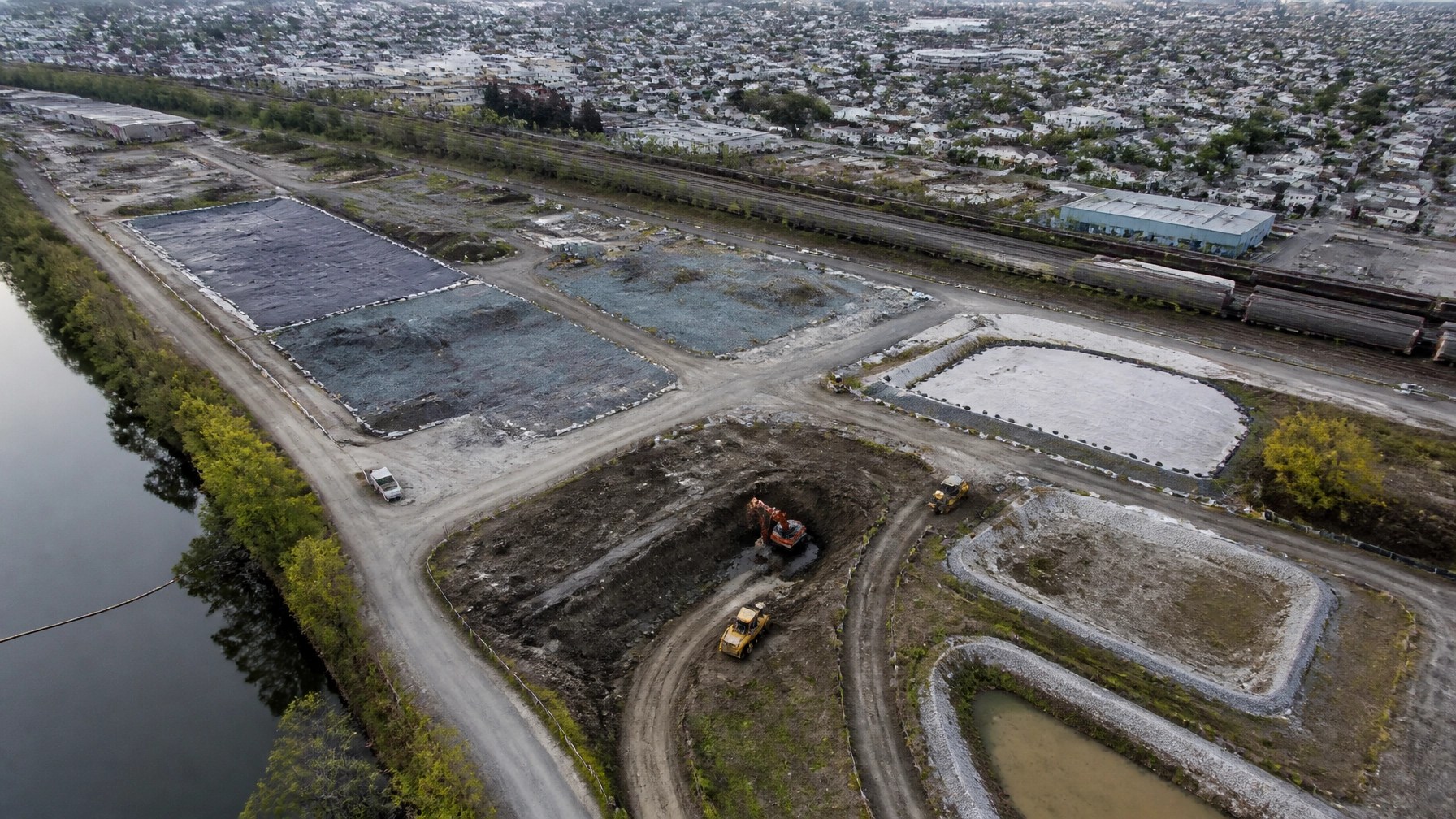
    Aerial Site Map with Utilities

    The "Speed Multiplier" Moves That Separate the Pros from the Amateurs

    Avoiding delays is table stakes. Getting to the front of the line requires a few insider moves:

    Leverage Pre-Submission Consultations

    EPIC Portal 2.0 introduced a "Pre-Submission Advisory" option buried in the project setup menu. Most firms ignore it. We use it religiously. It allows you to upload draft documents for OER staff to flag potential issues before you submit officially. The turnaround is 5-7 business days, and it eliminates 90% of the "we need revisions" emails that slow everyone else down.

    Master the "Phased Approval" Strategy

    For large sites with multiple E-Designations, you don't have to wait for full site approval. EPIC 2.0 allows you to request phased NTPs for specific parcels or work zones. If Phase 1 (demolition) is clean and ready, you can start breaking ground while Phase 2 (soil remediation) is still under review. Most developers don't know this option exists.

    Use OER's "Fast-Track Pilot" for Integrated Projects

    Starting in Q1 2026, OER launched a pilot program for projects that combine environmental and civil engineering in the same scope. If you're doing soil remediation and site grading under a unified plan, you're eligible for expedited review. The catch? You have to explicitly request it during submission and demonstrate that your engineering team has LSRP-level expertise in both disciplines.

    That's where integrated firms like Envicon have a structural advantage: we're already doing environmental and civil as one continuous workflow.

    What Happens When You Get It Right

    Let's put this in real numbers. The average NTP timeline for a standard E-Designation project in NYC is 12-16 weeks from initial submission to Notice to Proceed. Using the strategies above, we're consistently seeing 6-8 week approvals for the same project types.

    For a residential redevelopment project with a $2M construction budget, every week of delay costs roughly $15,000 in holding costs (financing, taxes, project management). Cutting 8 weeks off your timeline saves $120,000. That's not a marginal improvement: that's a line item that goes straight to your bottom line.

    And speed isn't just about cost. It's about certainty. When you know your NTP is coming in 6 weeks instead of 16, you can lock in contractor pricing, finalize lending terms, and hit your market window. In a city where zoning variances and approvals are already eating your schedule, OER compliance should be the easy part.

    Organized NYC OER compliance documents and digital checklist for clean submission

    Why OER Prioritizes Clean Submissions

    Here's the thing most people don't understand: OER isn't trying to slow you down. They're drowning in submissions. In 2025, NYC issued over 1,400 E-Designations, and OER's review staff hasn't grown proportionally. The automated screening in EPIC Portal 2.0 exists to help them triage the easy approvals from the complex ones.

    When your submission is clean, complete, and follows their format to the letter, OER's system flags it as "low risk" and pushes it to a faster review track. When it's messy, incomplete, or non-standard, it gets routed to a senior reviewer who has 200 other files on their desk.

    You're not gaming the system: you're just speaking their language.

    The Bottom Line: Speed as a Competitive Advantage

    In NYC's environmental compliance landscape, speed is the new differentiator. Brownfield sites and infill projects are only viable if you can move fast enough to capitalize on market conditions. A 16-week OER delay can be the difference between a profitable project and a missed opportunity.

    The firms that win in 2026 are the ones that treat EPIC Portal 2.0 like the strategic tool it is: not an administrative burden, but a competitive edge.

    If you're staring at an E-Designation project and need to compress your timeline, reach out to our team. We've been inside this workflow since EPIC launched, and we know exactly where the time traps are. More importantly, we know how to avoid them.

    Because in New York City, time isn't just money; it's everything.

  • Geotechnical Investigation Costs: Why Integrated Engineering Saves Your Budget

    Geotechnical Investigation Costs: Why Integrated Engineering Saves Your Budget

    If you’ve spent any time developing property in North Jersey or the five boroughs, you know the drill, literally. You hire an environmental firm to handle your Phase II and an engineering firm to handle your geotech. Then, you spend the next six weeks playing "telephone" between two consultants who aren’t talking to each other.

    The environmental guy is worried about NJDEP soil standards and PFAS levels. The geotech guy is focused on blow counts and bearing capacity. Meanwhile, you’re looking at two separate invoices for mobilization, two separate drill rigs taking up space on a tight urban site, and a "black box" of data that doesn't seem to line up.

    At Envicon Group, we see this as a massive, avoidable drain on your capital. When you break down geotechnical investigation costs in NJ and NY, the biggest line item isn't usually the lab fees or the drill rig: it’s the friction caused by fragmented engineering.

    Here’s why integrated engineering isn't just a "nice to have," but a tactical necessity for keeping your budget from spiraling.

    The High Cost of the "Silo" Mentality

    In the traditional model, environmental and geotechnical investigations are treated as two different animals. You hire a big-box environmental firm for your due diligence because your lender suggested them. Then, you hire a separate civil engineering firm for your site plan and foundation design.

    The result? Redundancy.

    We’ve seen sites where an environmental consultant drills ten holes on a Tuesday, and a geotech consultant drills eight more on a Thursday: often just feet away from each other. You just paid for mobilization twice. You paid for two field technicians to stand in the rain twice. And most importantly, you now have two sets of data that haven't been reconciled.

    When your geotech report says one thing and your environmental remediation plan says another, the person who pays for that gap is you. It usually shows up as a $50,000 change order during excavation because the "soil management plan" didn't account for the structural needs of the foundation.

    Why Integra

    ted Engineering Trims the Fat

    When we talk about integrated engineering, we’re talking about having one firm handle both the subsurface environmental hazards and the structural requirements of the earth. Here is how that actually saves you money:

    1. The "Single Mobilization" Advantage

    This is the low-hanging fruit. Drilling is expensive. Between the rig rate, the support truck, and the crew, mobilization can eat up a huge chunk of your initial budget. By combining geotech and environmental borings into one mobilization, we cut that cost in half. One rig, one crew, and a field technician trained to look for both contamination and soil classification.

    2. Unified Data Analysis

    Research shows that integrated engineering teams significantly reduce costs by identifying issues early. When our engineers look at a boring log, they aren't just looking for "is there oil in the dirt?" They are looking at the moisture content, the density, and the presence of historic fill.

    By analyzing this data through a single lens, we can tell you on Day One if your remediation strategy will conflict with your foundation design. This prevents the "Project Stall" that happens when a civil engineer realizes three months later that the soil they planned to build on is actually a regulated waste that needs to be hauled off-site.

    3. Ending the "Black Box" of Coordination

    As a developer, you shouldn't be the one explaining an environmental site assessment (ESA) to a civil engineer. When the coordination happens internally at a firm like Envicon, that "black box" disappears. We take ownership of the outcome, not just the report.

    "Collaboration is not a buzzword: it’s how we work. We don't just deliver services; we help transform underused properties into thriving assets by removing the obstacles between you and a buildable site."

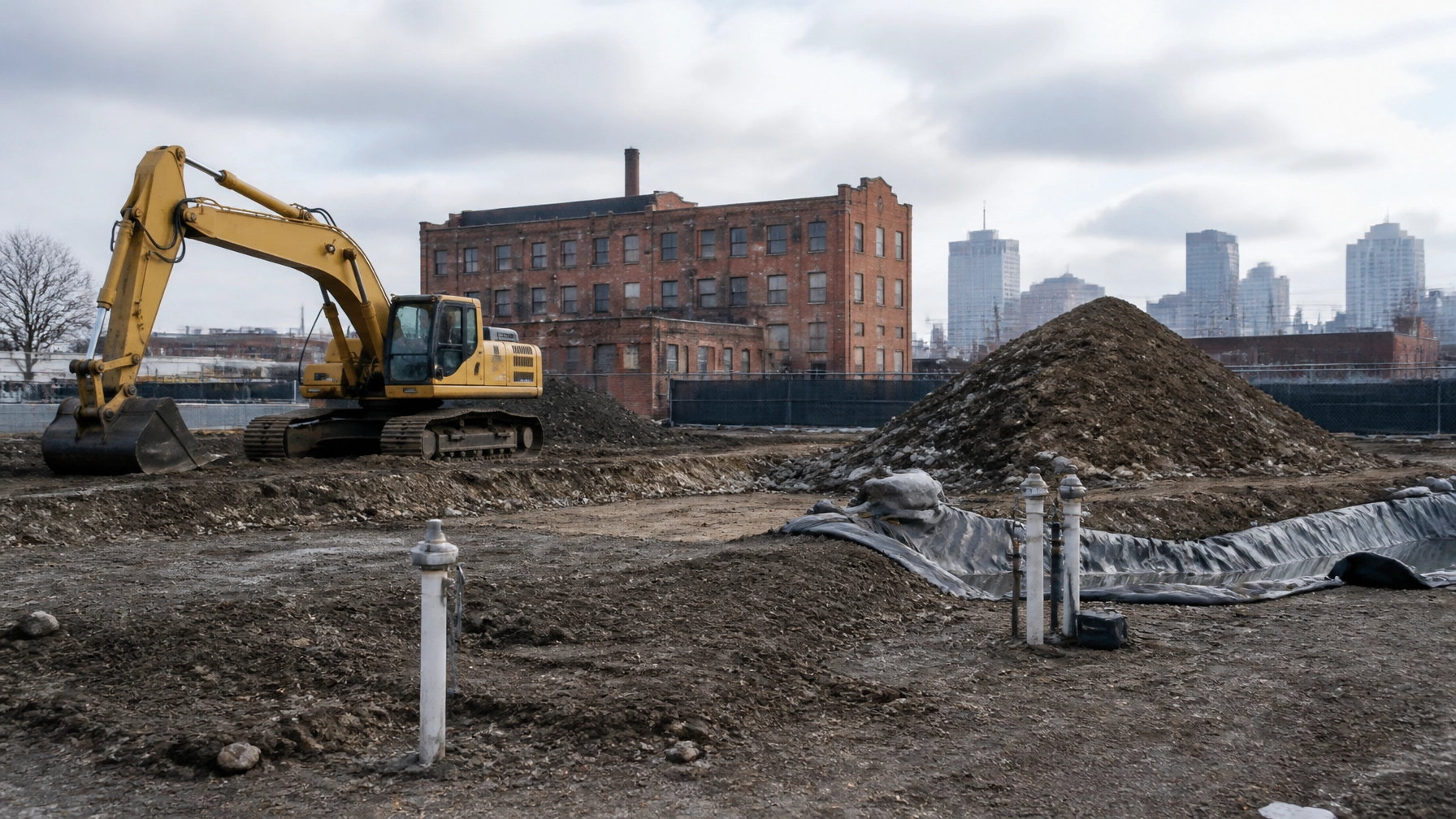
    Active construction site with excavation support

    Leveraging Technology to Lower Costs

    We don't just guess where the problems are. Advanced technology is the great equalizer when it comes to geotechnical investigation costs in NJ and NYC.

    By using GIS analysis and 3D modeling, we can visualize the subsurface conditions before the first boring is even drilled. We look at historical topographical maps, previous site uses, and regional geological data to pinpoint exactly where we need to sample.

    Digital soil strata mapping at an NJ construction site to optimize geotechnical investigation costs.

    According to industry data, AI-based platforms and advanced data management have helped some commercial projects achieve a 20-30% reduction in evaluation costs. At Envicon, we use these tools to ensure we aren't drilling unnecessary holes. We collect high-quality data once and use it throughout the entire project lifecycle: from Phase I ESA to the final Certificate of Occupancy.

    The Hidden Costs of "Cheap" Geotech

    We often see developers go with the lowest bidder for a geotech report, only to get a "cookie-cutter" document that is so vague it’s useless. A big national firm might send a junior staffer who’s never seen a NJDEP soil log to your site. They’ll give you a report that is written defensively: full of "maybes" and "further investigation required."

    That isn't a report; it's a liability.

    A "cheap" investigation that misses a pocket of peat or a layer of contaminated historic fill will cost you ten times the initial "savings" once the excavators are on-site. Every day your machine is sitting idle at $500 an hour because of an "unexpected subsurface condition," your ROI is bleeding out.

    At Envicon, we are PE-led and field-first. We know the regulators at the NJDEP and the NYC OER. We know what they are going to look for, and we make sure our geotechnical investigations are robust enough to stand up to their scrutiny while remaining focused on your bottom line.

    Widescreen monitor showing 3D GIS analysis

    Real-World Impact: The Developer’s Bottom Line

    Let's look at the numbers. On a typical mid-sized redevelopment project in Hudson County:

    • Traditional Approach: Environmental ($15k) + Geotech ($12k) + Coordination Friction/Delays ($10k+) = $37,000+
    • Envicon Integrated Approach: Combined Subsurface Investigation ($22k) + Streamlined Engineering ($5k) = $27,000

    You aren't just saving $10,000. You are gaining weeks of time. In the world of high-stakes development, time is the only commodity you can't buy back.

    Summary: How to Optimize Your Geotech Spend

    If you want to keep your geotechnical investigation costs under control, stop hiring consultants in a vacuum.

    • Integrated Teams: Hire a firm that understands both the civil and environmental side of the dirt.
    • Preliminary Research: Use historical data and GIS to narrow your scope before you mobilize.
    • Technology: Use firms that leverage digital modeling to predict risks.
    • Local Fluency: Work with people who know the local geology and the local regulators.

    At Envicon Group, we don’t sell reports. We sell cleared paths. We sit at the table with the architects and the contractors to ensure that what we find in the ground doesn't stop your project in its tracks.

    Ready to get a handle on your site's subsurface risks without the big-firm fluff? Contact us today and let’s talk about your next project.

    Takeaway Checklist for Developers:

    • Does my environmental consultant talk to my geotech engineer?
    • Am I paying for two mobilizations on the same site?
    • Is my soil management plan aligned with my foundation design?
    • Does my consultant have direct experience with NYC OER or NJDEP reviewers?
    • Is the data I'm paying for being used to move the project forward, or just to check a box for the lender?

    Excavator and crew at urban redevelopment site

    Whether you’re dealing with a complex brownfield redevelopment or a straightforward commercial build, the goal is the same: a clean, buildable site, delivered on time and on budget. That’s the Envicon differenceEnvicon Group Logo

  • Geotechnical Investigations in NJ: Why the Cheapest Bid Usually Costs the Most

    Geotechnical Investigations in NJ: Why the Cheapest Bid Usually Costs the Most

    You’re sitting at your desk, looking at three bids for a geotechnical investigation on your next New Jersey development project. Two are in the same ballpark, and one is significantly lower: maybe 30% or 40% below the others.

    In the high-stakes world of NJ real estate, that "savings" looks like an easy win for your budget. But here’s the reality we see far too often at Envicon: that cheap bid is almost always the most expensive mistake you’ll make.

    If you're searching for NJ geotechnical investigation costs, soil engineering costs in New Jersey, or the real price of a soil boring program for development sites, the answer is simple: the lowest proposal usually leaves out the field data that protects your schedule and budget.

    In geotechnical engineering, you aren't just buying a PDF report with some boring logs. You are buying a risk mitigation strategy. When a firm underbids a project, they aren't finding "efficiencies" that others missed; they are cutting corners on the very data that dictates whether your building stays standing or your budget bleeds out in change orders.

    The NJ Subsurface: A High-Stakes Lottery

    New Jersey has some of the most complex and varied geology in the country. From the soft, organic silts of the Meadowlands and the variable fill of the Hudson River waterfront to the hard trap rock of the Palisades and the shifting sands of the Coastal Plain, there is no such thing as a "standard" site.

    When geotechnical investigation costs in NJ are slashed, the first thing to go is the density of the data. A low-cost provider might suggest four borings when the site’s complexity clearly demands eight. They might stop drilling at 20 feet because "that's what the last guy did nearby," completely missing a layer of compressible peat at 25 feet that will eventually cause your foundation to settle and crack.

    That’s why soil engineering in NJ starts with enough borings, enough depth, and enough lab data to support real design decisions. The New Jersey Geological and Water Survey also documents how varied subsurface conditions are across the state, which is exactly why one-size-fits-all scopes fall apart fast on real projects (NJDEP/NJGWS).

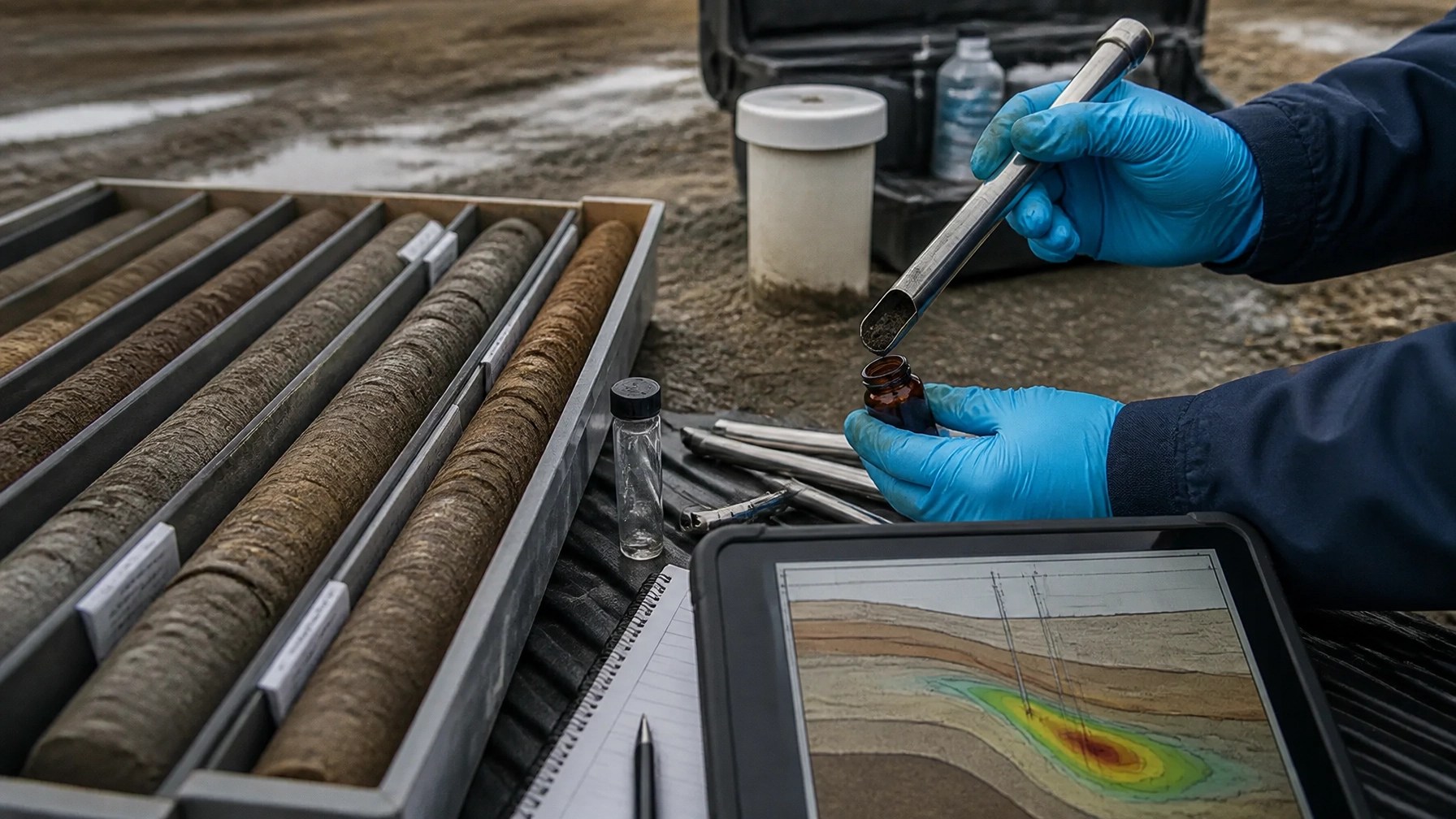
    NJ geotechnical soil cores and boring logs for soil engineering cost evaluation.
    A realistic layout of soil cores and boring logs used to price and design a geotechnical program correctly.

    How the "Cheap" Bid Actually Works

    To hit those rock-bottom prices, budget firms rely on a high-volume, low-effort business model. This creates a ripple effect of risk for you:

    1. Junior Staff Oversight: The "engineer" on-site is often a fresh graduate with little field experience. They might misidentify soil types or fail to notice critical indicators like high groundwater levels or evidence of historic fill that requires remediation.
    2. Insufficient Lab Testing: Borings are only half the battle. You need laboratory analysis to determine the actual load-bearing capacity and shear strength of the soil. Cheap bids often skip the lab work, relying instead on "visual-manual" estimates which are notoriously conservative: and expensive for your foundation design.
    3. The "Copy-Paste" Report: We’ve seen reports that look like they were written for a project three towns over. They offer generic recommendations that don’t account for the specific structural loads of your planned building or the local NJDEP regulations that might apply if contamination is found during the geotechnical work.

    If you want a more accurate read on geotechnical drilling costs in NJ, soil boring costs for commercial development, or foundation investigation pricing, you need to ask what is actually included:

    • Number of borings
    • Target depths
    • Lab testing scope
    • Groundwater observations
    • Engineering recommendations tied to your building type
    • Turnaround time for lender, design, and permit needs

    As we often tell clients, "A low geotech fee can hide a very expensive foundation assumption."

    The "Conservative Design" Tax

    This is where the real money is lost. When a geotechnical engineer doesn't have enough data to be confident, they have to protect themselves. How do they do that? They over-engineer.

    If the data is "thin," the engineer will recommend a foundation system that is far more robust (and expensive) than necessary. Instead of a standard spread footing, they might tell you that you need expensive deep piles or ground improvement.

    We recently reviewed a project where a budget geotech report led to a foundation design that cost the developer an extra $450,000 in unnecessary concrete and steel. The developer "saved" $5,000 on the initial investigation but paid nearly half a million dollars in "Conservative Design Tax." At Envicon, we believe that precision in the field leads to economy in the foundation.

    That’s the real conversation behind NJ soil engineering costs. The upfront proposal is only one number. The bigger number is what your structural engineer, contractor, and lender do with weak subsurface data.

    Geotechnical drilling crew collecting split-spoon soil samples at a New Jersey site.
    Field sampling is where good soil engineering starts: with direct, usable data from the ground.

    Change Orders: The Silent Profit Killer

    Construction is the most expensive time to find out your geotechnical report was wrong. Once the excavators are on-site and the shoring is being installed, any "unforeseen condition" becomes a massive headache.

    If your cheap geotech report missed a high water table or a layer of boulders, the contractor is going to hit you with a change order immediately. These delays can cost tens of thousands of dollars per day in idle equipment and labor. In many cases, these "unforeseen" conditions were perfectly foreseeable: if the initial investigation had been done correctly.

    We focus on helping our clients in Architectural and Energy sectors avoid these traps by providing a visionary approach to site assessment. We don't just look at what's in the ground; we look at how that ground impacts your entire project timeline and ROI.

    That’s also why soil engineering for NJ redevelopment sites needs to be tied to business outcomes, not just field notes. If the report does not help you price earthwork, evaluate foundation options, and reduce change-order exposure, it is incomplete.

    The Envicon Difference: Engineering Trust

    The industry is full of "big consultants" who treat every project like a transaction. They send out a crew, punch some holes, and send you a bill. At Envicon, we operate as your strategic partner.

    Why do clients switch to us?

    • Accountability: We don't hide behind "standard of care" disclaimers. We provide actionable data that we stand behind.
    • Adaptability: If we hit a weird soil layer at 15 feet, we don't just stop because the contract said 20. We call you, explain the risk, and adjust the scope in real-time to ensure the data is complete.
    • Technology Integration: We use advanced GIS mapping and subsurface modeling to visualize your site before the first drill rig even arrives. Check out our resources to see how we leverage data for better outcomes.

    Clients also switch to us because we move faster and think more practically than the typical big consultant:

    • We scope investigations around your actual development risk
    • We explain what is driving geotechnical investigation cost in NJ
    • We give you usable recommendations, not vague disclaimers
    • We stay responsive when field conditions change

    As Jason Pancoast puts it, "Good geotechnical work doesn't just describe the ground. It gives the project team confidence to move."

    Printed geotechnical boring logs and field notes at an active NJ development site.
    Clear boring logs and field documentation help turn drilling data into real design and pricing decisions.

    Why it Matters in Hudson County and Beyond

    If you’re developing in high-density areas like Jersey City, Hoboken, or Newark, the stakes are even higher. You’re dealing with historic fill, complex utility grids, and adjacent structures that can be affected by your foundation work.

    A cut-rate geotechnical investigation in these areas isn't just a budget risk; it's a legal and structural liability. If your excavation causes settlement in a neighboring building because your geotech firm didn't properly assess the soil's lateral pressure, you’re looking at years of litigation. We work closely with Environmental Law professionals to ensure our reports provide the technical defense our clients need.

    This is especially true when clients ask us about Hudson County geotechnical investigation costs, Jersey City soil boring programs, or Newark foundation investigation pricing. Dense urban sites need tighter planning, not thinner scopes.

    Foundation excavation with exposed soil layers and geotechnical inspection in NJ.
    Urban foundation work depends on matching excavation conditions to the boring data before surprises turn into claims.

    The ROI of a Thorough Investigation

    When you invest in a comprehensive geotechnical investigation, you are buying:

    • Design Optimization: The ability to use the most cost-effective foundation system possible.
    • Bidding Accuracy: Contractors can give you "hard" numbers because they know exactly what they are digging into.
    • Peace of Mind: Knowing that your project won't be derailed by a $200,000 change order three weeks into excavation.

    As our CEO, Jason Pancoast, often says: "We aren't in the business of drilling holes; we're in the business of removing uncertainty."

    In the long run, geotechnical investigation costs in NJ are a tiny fraction of your total project cost: usually less than 1%. Trying to save 20% on that 1% is the definition of "penny wise and pound foolish."

    If you're comparing proposals, the better question is not, "Who is cheapest?" It is, "Who is giving us enough soil engineering data to make the right call the first time?"

    Summary & Takeaways

    Before you sign that low-bid contract, ask yourself if you can afford the consequences of bad data.

    • Cheap bids often lead to over-engineering, costing you 10x more in construction materials.
    • NJ's geology is unforgiving; generic investigations miss local complexities like organic silts or variable fill.
    • Data density matters. Cutting the number of borings increases the statistical likelihood of hitting a "surprise" during construction.
    • Partner with experts who understand the local landscape and the strategic implications of subsurface data.
    • Look past the fee and focus on the full cost of soil engineering decisions, foundation design, and construction risk.

    At Envicon, we help visionary developers build with confidence. If you're ready to compare NJ geotechnical investigation costs the smart way and want a practical scope for your site, contact us today. Let’s look at your project through a lens of strategy, not just a price tag.


    Contact Envicon Group

    If you want a geotechnical scope that keeps your project moving (and keeps surprises out of your excavation), we’ll sanity-check your plan and tell you what we’d do differently.

    Envicon Group logo

  • The 72-Hour Phase I: How We Outpace the National Big-Box Firms

    The 72-Hour Phase I: How We Outpace the National Big-Box Firms

    The deal is on the table. The numbers work, the lender is interested, and the seller is motivated. In the world of NYC and NJ real estate development, this is the "golden hour": that critical window where momentum is everything. Then, you call a national engineering firm for a Phase I Environmental Site Assessment (ESA), and they tell you their lead time is three weeks.

    Three weeks. In that time, interest rates can shift, the seller can get cold feet, or another buyer can swoop in with a cleaner offer.

    At Envicon Group, we don’t believe your deal should be held hostage by a consultant’s internal bureaucracy. We operate at the speed of the deal, not the speed of a corporate queue. While the big-box firms are still assigning a junior staffer to look at your file, we’re already 48 hours into the investigation. We’ve built our reputation on the 72-hour Phase I, and it’s changing the way our clients close.

    Why Big Firms Take 21 Days (And Why We Take 3)

    If you’ve worked with the "Heavy Hitters" like Langan or Partner Engineering, you know the drill. You talk to a senior partner or a polished salesperson during the pitch. They look great. They have the pedigree. But the moment you sign the proposal, your project is handed down a chain of command to a junior associate who might have never stepped foot on a contaminated site in Long Island City or the Ironbound.

    That junior associate has a pile of thirty other reports on their desk. They are waiting for a sub-consultant to get back to them with records. They are waiting for a senior manager to find time to review their typos. That’s where your three weeks go. It’s not spent investigating; it’s spent waiting.

    Envicon does things differently. We are family-owned, PE-led, and field-first. When you call us, you’re talking to the people doing the work. Our 72-hour turnaround isn't a "rush fee" gimmick; it’s a structural advantage.

    1. Immediate Mobilization: We don't "schedule" an inspection for next Tuesday. We go now.
    2. In-House Data Streams: We maintain direct access to NJDEP and NYSDEC databases and have 20 years of historical site data in the NY/NJ corridor.
    3. Flat Hierarchy: The person doing the site visit is the same person writing the report and the same person talking to the lender. No hand-offs. No delays.

    stopwatch-on-engineering-blueprints-timely-delivery-envicon.webp

    The ROI of Speed: Beyond the Phase I ESA Cost NYC Baseline

    Let’s talk about the money. If you search for "Phase I ESA cost NYC," you’ll find a range of prices that usually fall within a predictable bracket. Some firms might underbid us by a few hundred dollars to get their foot in the door.

    But here is the reality: The cost of the report is irrelevant compared to the cost of a delayed closing.

    If you are sitting on a bridge loan or a construction loan with a ticking clock, every day of delay is costing you thousands in interest and carry costs. If your "cheap" consultant takes 21 days to tell you that you have a Recognized Environmental Condition (REC) that requires a Phase II, you’ve just lost three weeks of remediation time.

    When we deliver a report in 72 hours, we are giving you the gift of time. We are giving you the ability to negotiate with the seller based on real data before the exclusivity period ends. We don't sell PDF files; we sell cleared paths.

    "Collaboration is not a buzzword: it’s how we work. We don't just deliver services; we help transform underused and contaminated properties into thriving assets."

    Lender Approval: High Speed, Zero "Fluff"

    A common concern we hear is: "If you do it that fast, will the bank accept it?"

    The answer is a resounding yes. In fact, our lender approval rates are among the highest in the industry. Why? Because we don't write "defensive" reports.

    Large national firms often write reports designed to protect the firm from liability rather than to help the client understand the risk. They fill their ESAs with boilerplate language and "CYA" disclaimers that can actually scare off a lender’s risk department.

    Because we follow the ASTM E1527-21 standard to the letter: and because our PEs have two decades of skin in the game: banks trust our conclusions. We don't just point out a problem and walk away. We provide a clear, actionable path forward. If there’s an issue, we tell you exactly what it will take to fix it, how much it will cost, and how long it will take. Lenders love certainty. We provide it faster than anyone else.

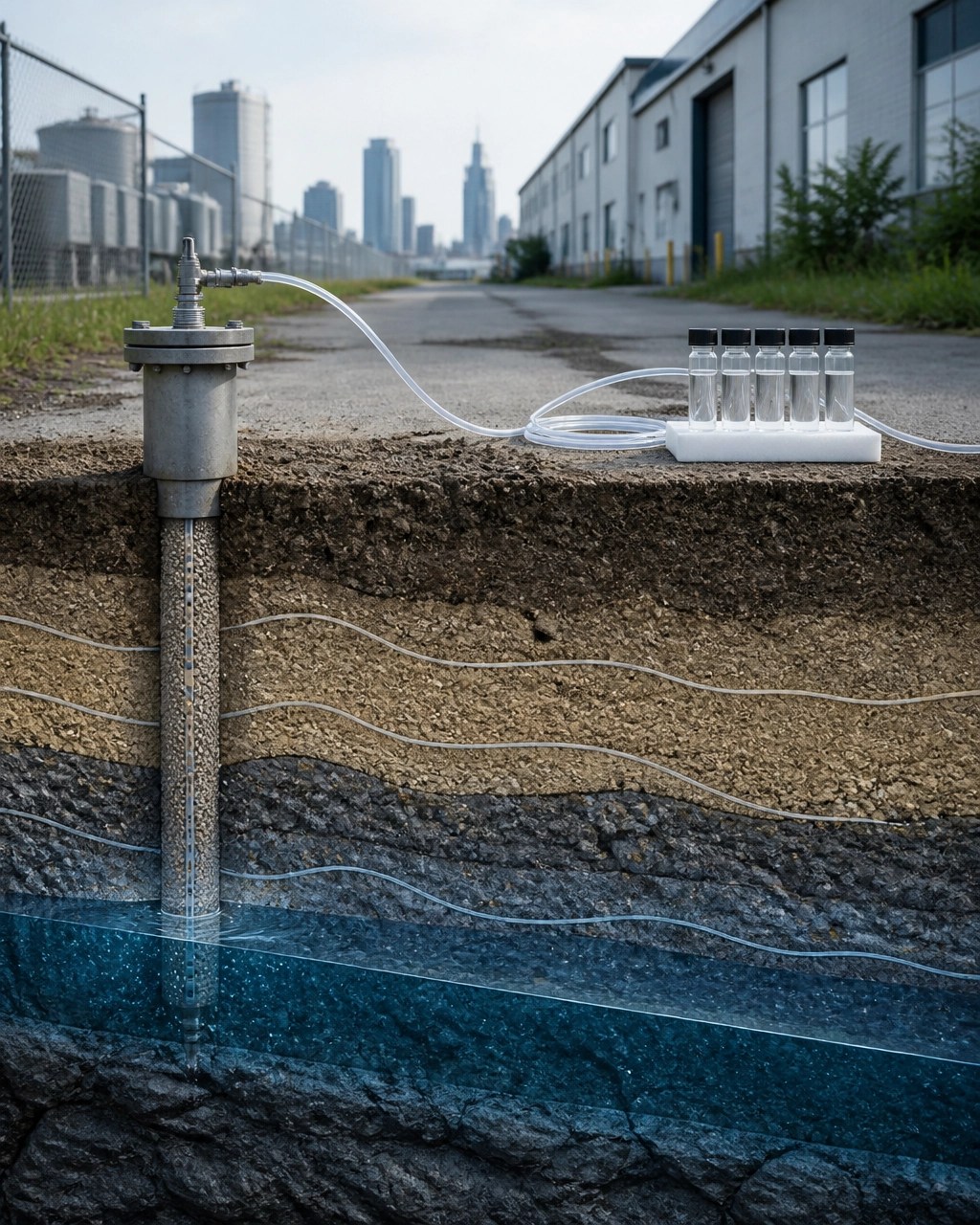
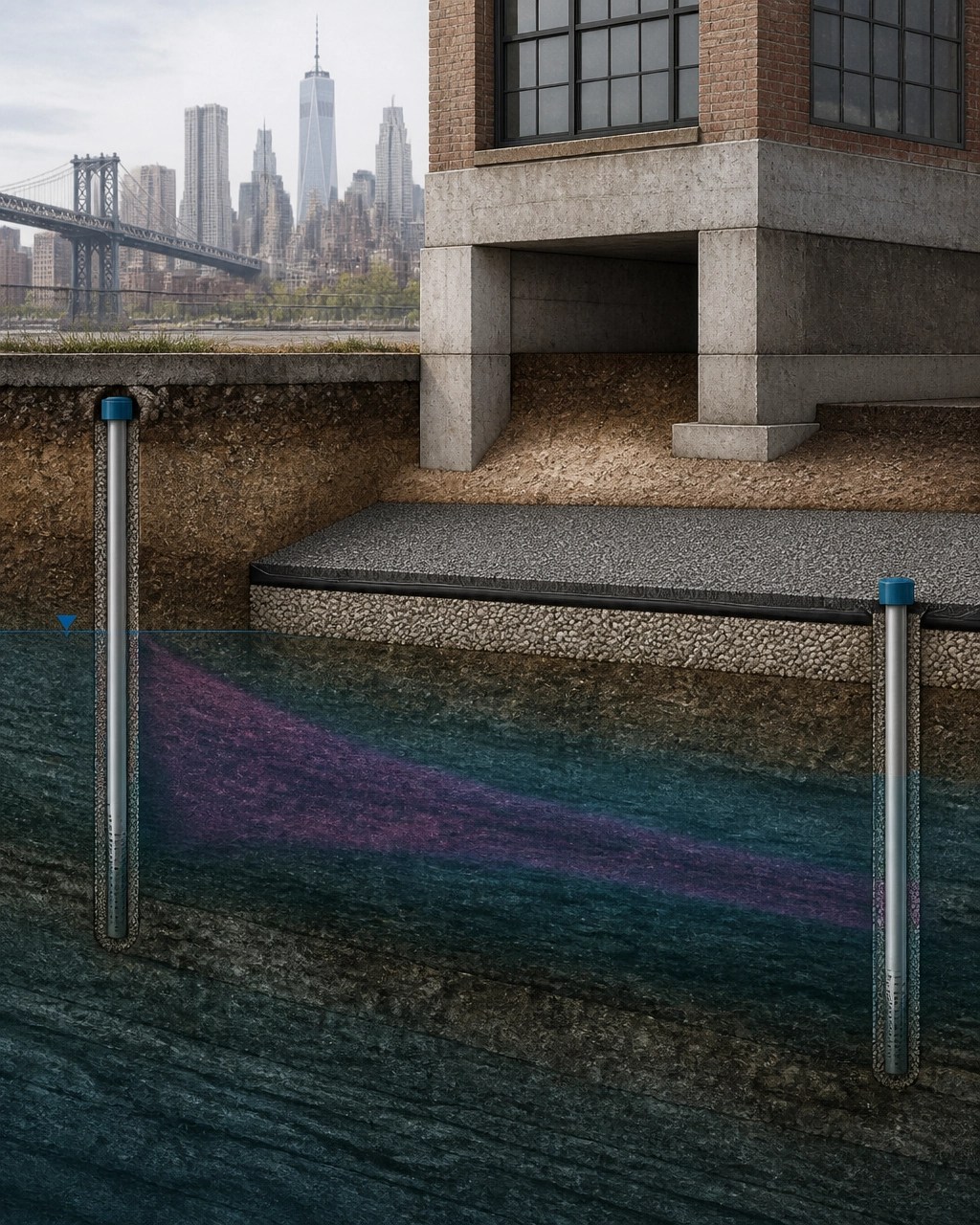
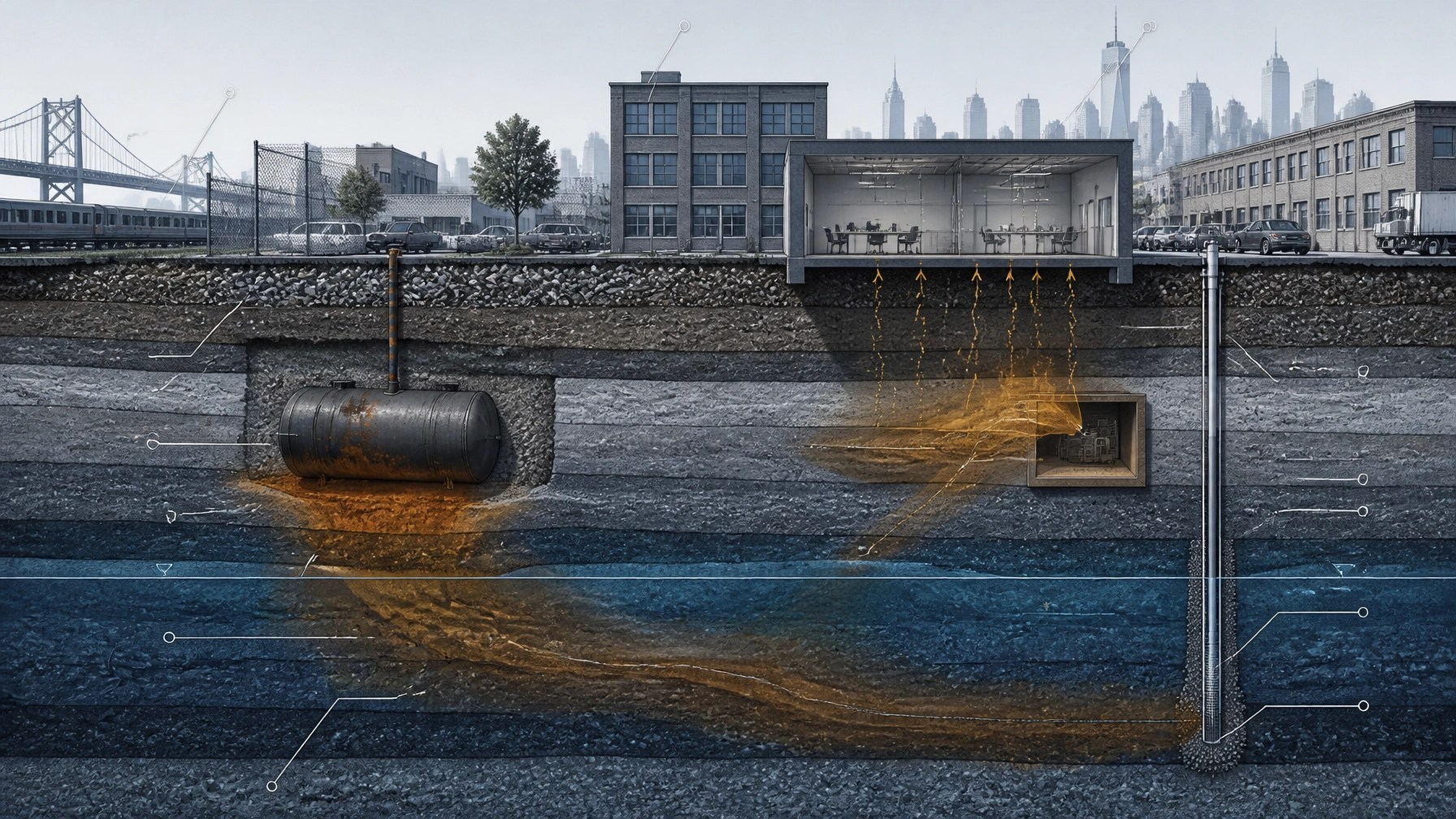
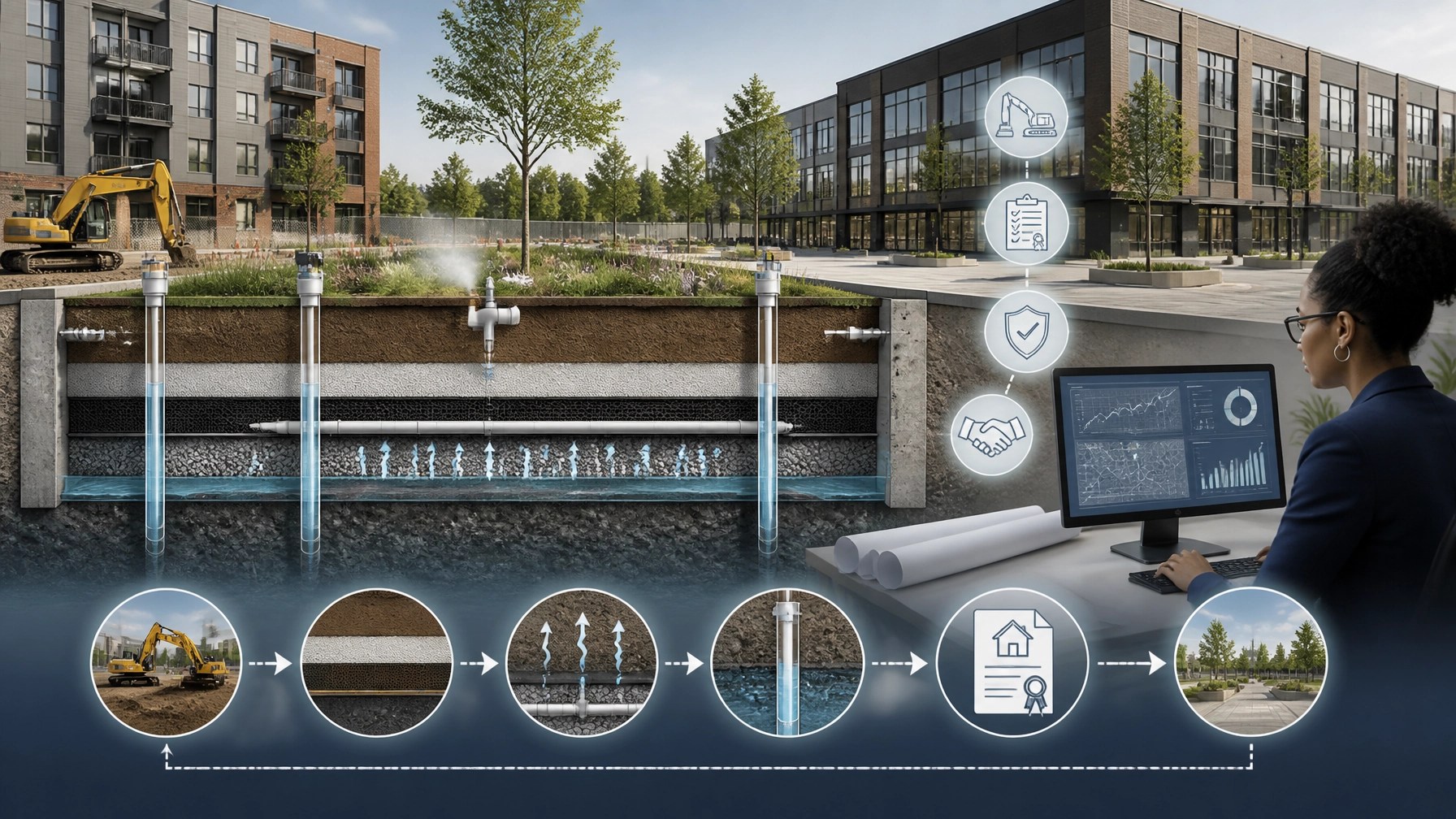
    Technical cross-section of NYC/NJ soil strata and monitoring wells for rapid Phase I environmental site characterization.

    Regional Fluency: The NYC and NJ Edge

    National firms apply a cookie-cutter playbook designed for any market: whether it’s a cornfield in Iowa or a former dry cleaner in Brooklyn. But NYC and NJ are different beasts. You have the NYC OER, the NYSDEC, and the complex NJDEP LSRP programs.

    If your consultant doesn't know the specific reviewer at the NYC Office of Environmental Remediation (OER), they are going to get stuck in the queue. We’ve spent 20 years building these relationships. We know what the regulators want to see before they even ask for it.

    For projects involving NYC E-Designations or NJ ISRA compliance, that 72-hour Phase I is the foundation of everything that follows. If the foundation is slow and shaky, the whole project is at risk.

    Technology as an Accelerator

    We aren't just fast because we work hard; we’re fast because we’re tech-forward. While the big-box firms are still using manual entry systems from 2005, we utilize integrated digital tools to streamline data collection.

    • AI-Assisted Data Mapping: We can cross-reference historic maps and spill records in minutes, not hours.
    • Digital Field Reporting: Our team uses tablets to sync site observations directly to the final report template while they are still on the property.
    • Direct Agency Integration: We stay ahead of the curve on regulatory changes, meaning we don't have to "research" the rules every time they change: we’re already implementing them.

    tablet-project-analytics-environmental-data-outdoor.webp

    The Choice: A Report or a Result?

    When you’re choosing a consultant for your next acquisition, ask yourself what you’re actually buying.

    Are you buying a 200-page document filled with fluff that will take three weeks to arrive? Or are you buying a partner who understands that in real estate, speed is the ultimate competitive advantage?

    We've seen too many developers get burned by the "Big Box" promise. They pay for the brand name, but they receive the junior-associate effort. At Envicon, we take ownership of the outcome. Whether we’re helping architects navigate site constraints or providing the energy sector with rapid due diligence, our mission remains the same: resolve the challenge with precision, urgency, and integrity.

    Summary & Key Takeaways

    • The 72-Hour Standard: Envicon delivers Phase I ESAs in a fraction of the time required by national firms (which typically take 3 weeks).
    • Speed is ROI: The carry costs and interest on a stalled deal far outweigh the nominal cost of a Phase I report.
    • Lender Confidence: Reports are written to the ASTM E1527-21 standard, ensuring high acceptance rates with major financial institutions.
    • Local Expertise: 20 years of experience with NYC OER, NYSDEC, and NJDEP ensures that we don't just find problems: we find paths to closure.
    • Relationship-Driven: You get direct access to PEs and senior leadership, not a rotating door of junior staff.

    Don't let your next deal get stuck in a corporate queue. Let's get to the field and get your project moving.

    Ready to clear your path? Contact us today to start your 72-hour Phase I.Envicon Strategic Solutions Logo

  • Site Civil & Environmental: Why a Unified Approach is the Secret to NJ Approvals

    Site Civil & Environmental: Why a Unified Approach is the Secret to NJ Approvals

    If you’ve spent any time developing in New Jersey, you know the drill. You find a strong site, the numbers work, and then the approval process starts pulling your schedule in three different directions. In NJ, that pressure usually comes from the NJDEP, local planning boards, stormwater rules, and legacy site conditions that don’t care about your closing date.

    For years, the standard setup has been split teams. One consultant handles grading, drainage, and utility design. Another handles the Phase I ESA, Phase II sampling, remediation, or LSRP coordination. On paper, that looks organized. In practice, it often creates delay.

    Here’s the issue: a siloed process is one of the biggest reasons projects stall during permitting, redesign, or construction.

    At Envicon, we take a different approach. We integrate site civil and environmental engineering in NJ from the start so your layout, due diligence, remediation strategy, and approval path work together. That matters when you need integrated site civil and environmental engineering NJ, NJ site development and environmental permitting support, and brownfield site civil engineering and remediation planning NJ under one roof.

    As we often tell clients, "The fastest approval path is usually the one that solves civil and environmental issues at the same time." When those disciplines stay aligned, you cut rework, protect your budget, and keep momentum.

    The Hidden Cost of the "Silo" Mentality

    In NJ, the environment and the infrastructure are inextricably linked. You can’t move a yard of dirt on a brownfield site without triggering a dozen environmental protocols. Conversely, you can’t design a remediation cap without knowing exactly how your stormwater management system is going to sit on top of it.

    When these teams work in isolation, the project suffers from "retrofitting." The civil team designs a beautiful site layout, only for the environmental team to realize three weeks later that a proposed bioswale sits right on top of a legacy plume. Now you’re back to the drawing board, your permit clock restarts, and your carrying costs are climbing.

    "A project's success in New Jersey isn't determined by how well you design a site, but by how well you integrate that design into the state's rigid regulatory framework from day one."

    By integrating civil and site engineering NJ expertise with environmental due diligence for developers NJ, we eliminate that friction. We also support clients looking for NJ environmental and civil engineering for commercial redevelopment, site planning and environmental compliance consulting NJ, and civil engineering and remediation coordination for NJ developers. We aren't just checking boxes; we're lining up design decisions with compliance decisions before they become expensive problems.

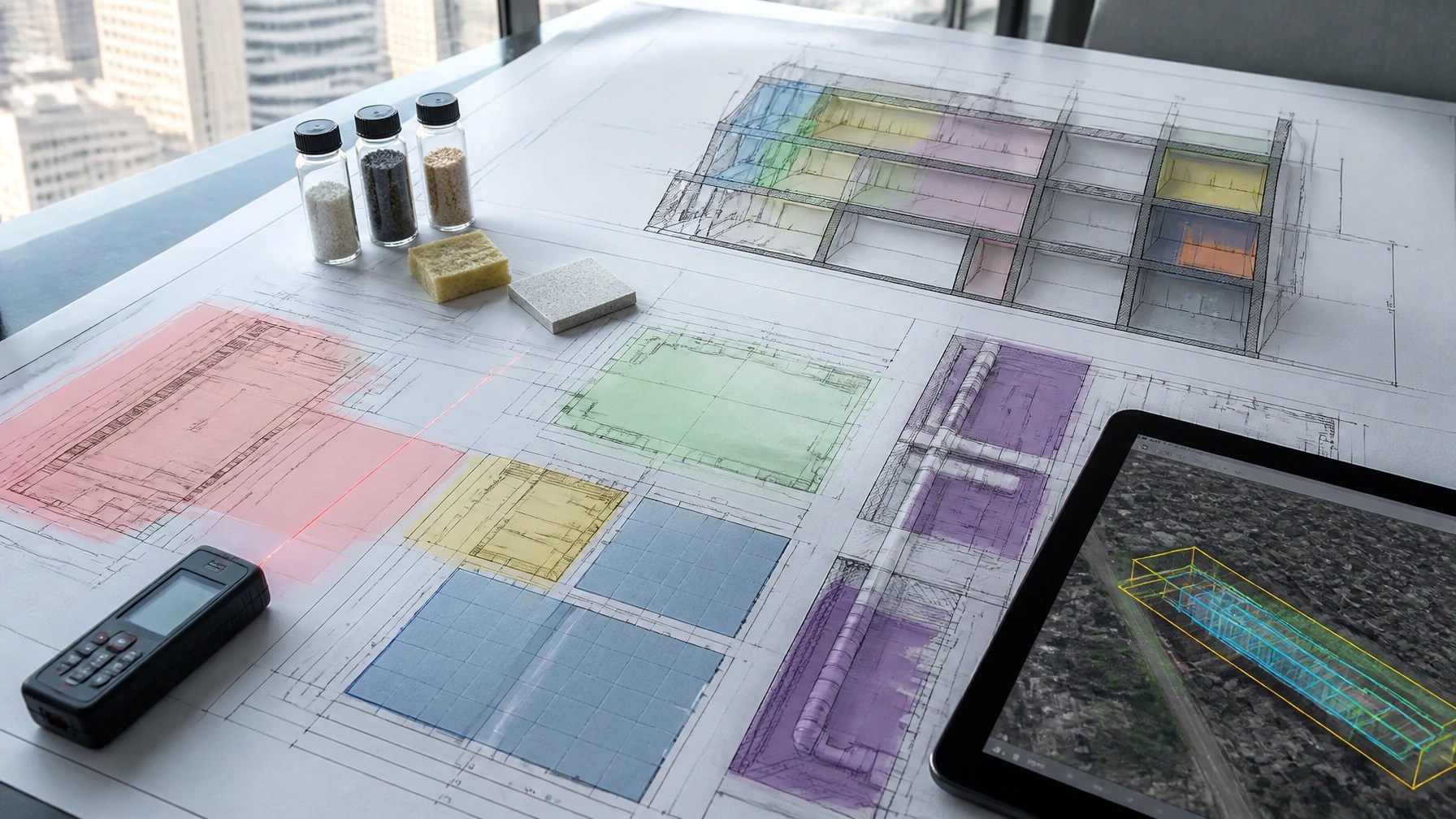
    Integrated NJ site plan showing coordinated civil grading, utility routing, drainage, and environmental remediation zones.

    Navigating the NJDEP Regulatory Maze

    New Jersey remains one of the toughest states for land use and redevelopment. Between the Flood Hazard Area Control Act rules, the Freshwater Wetlands Protection Act rules, and the state’s Stormwater Management rules, the margin for error stays small.

    A unified approach lets us run feasibility reviews that are actually useful. We don’t just study topography. We review soil conditions, groundwater constraints, historic fill, drainage impacts, and likely permitting triggers together.

    On a site in Newark, Jersey City, or anywhere in North Jersey, that matters. Utility trenching can affect vapor pathways. Stormwater features can conflict with capped areas. Grading changes can influence remedial design limits. If those issues get reviewed by separate teams at separate times, your project pays for it later.

    A simple rule we follow is this: "If the civil set and the environmental strategy don’t agree early, the field will force the conversation later." And field fixes are always more expensive.

    Environmental Justice: The New Frontier of NJ Approvals

    If you haven't been paying attention to New Jersey’s Environmental Justice (EJ) Law, you need to start. New Jersey was the first state in the nation to require the DEP to deny permits for certain facilities if they pose a disproportionate environmental or public health risk to "overburdened communities."

    This isn't just a "check the box" requirement. It requires a deep dive into environmental stressors: air quality, contaminated sites, and water pollution.

    When you have a unified team, the EJ impact statement isn't a separate, scary report that shows up at the end. It’s a design constraint that informs the site layout from the beginning. We help our clients choose materials, site layouts, and green infrastructure that actively mitigate these stressors, making the approval process much smoother when it reaches the state level.

    Blueprint-style engineering section showing coordination between stormwater design, utility infrastructure, and remediation elements on an NJ redevelopment site.
    Technical blueprint visual showing how stormwater controls, utility layouts, and remediation details need to work together on a New Jersey redevelopment site.

    Stormwater and Remediation: A Delicate Dance

    New Jersey’s recent shift toward mandatory Green Infrastructure (GI) has changed the game for site design. You can’t just dig a big hole and call it a detention basin anymore. You need pervious pavement, rain gardens, and bioretention systems.

    Now, imagine trying to install a bioretention system on a site that has a soil cap as part of a remediation plan. If the water infiltrates through the GI and hits the contaminated soil, you’ve just created a massive groundwater problem.

    This is where the unified approach shines. Our engineers and environmental specialists work together to design "lined" green infrastructure or strategically locate basins in clean zones. This level of coordination is something the "big box" consulting firms often struggle with because their departments are too far apart. At Envicon, we’re all at the same table.

    Aerial View with Monitoring Locations

    Why Envicon is the Alternative to the "Big Box" Consultant

    We know who the big players are. You’ve probably hired them before. They have 5,000 employees and a massive office in a skyscraper. But here is the question: when the NJDEP sends a deficiency letter on a Friday afternoon, who is actually looking at it? Is it a junior staffer who is juggling ten other projects, or is it a partner who understands your business goals?

    Our clients come to us because they are tired of being a number. They want:

    1. Accountability: When the civil and environmental teams are the same team, there is no finger-pointing. We own the project from start to finish.
    2. Responsiveness: In the NJ development world, a week’s delay can cost tens of thousands of dollars. We move at the speed of your project, not the speed of a corporate bureaucracy.
    3. Local Authority: We don't just know the regulations; we know the people who enforce them. We’ve built trust with regulators across New Jersey, and that trust translates into smoother approvals for you.
    4. Integrated Technology: We use advanced GIS mapping and 3D modeling to visualize how site engineering and environmental remediation intersect before a single shovel hits the ground.

    Summary: The Unified Path Forward

    The "New Jersey Tax": the cost of doing business in a high-regulation environment: is real. But it’s a tax you can minimize with the right strategy. By choosing a unified approach to site civil and environmental engineering, you are:

    • Reducing Redesign Costs: Catching conflicts during the concept phase, not the construction phase.
    • Accelerating Timelines: Concurrent permitting and data sharing mean faster submissions to the NJDEP and local boards.
    • Mitigating Risk: Ensuring that your civil design doesn't accidentally compromise your environmental compliance (and vice versa).
    • Building Community Trust: Utilizing Environmental Justice and Green Infrastructure as tools for project advocacy rather than hurdles to clear.

    At the end of the day, development is about vision. You see what a site could be. Our job is to give you a practical path to get there without unnecessary redesign, avoidable delays, or consultant handoffs that slow everything down.

    Stop managing two teams that only compare notes after a problem shows up. Switch to a partner that sees the whole site from day one. That’s how you move faster, respond better to NJDEP comments, and protect your timeline.

    Key takeaway: if you want smoother approvals, fewer surprises, and better coordination, integrated site-civil and environmental engineering in NJ is not a luxury. It’s the smarter operating model.

    Ready to streamline your next NJ project? Contact Envicon today and let’s discuss how our unified approach can shave months off your approval timeline.

    Explore our Services or check out our Projects to see how we’re changing the landscape of NJ development.


    Contact Envicon Group

    Envicon Group logo

  • What Your Environmental Attorney Won’t Tell You About “Standard” Due Diligence

    What Your Environmental Attorney Won’t Tell You About “Standard” Due Diligence

    Look, your environmental attorney is probably great at what they do. They know CERCLA inside and out. They've negotiated brilliant indemnification clauses. They can cite case law in their sleep.

    But here's the thing: most environmental attorneys aren't environmental consultants. And that gap, between legal theory and boots-on-the-ground reality, is where deals go sideways.

    After two decades of watching developers navigate due diligence in NYC and New Jersey, I've seen the same blind spots crop up again and again. Not because attorneys are incompetent, but because "standard" due diligence has some not-so-standard pitfalls that don't always make it into the pre-closing memo.

    Let's talk about what you're not hearing in those conference calls.

    The 180-Day Deadline That Nobody Mentions Until It's Too Late

    Here's a fun fact that should be tattooed on every acquisition proforma: to qualify for the "innocent purchaser defense" under CERCLA, certain components of your Phase I Environmental Site Assessment must be conducted or updated within 180 days prior to acquisition.

    Miss that window? You've just forfeited one of your most valuable liability shields.

    Field team inspecting underground storage tanks

    The entire Phase I ESA report must be less than one year old at closing. But that specific 180-day rule applies to critical components like interviews and site reconnaissance. If your deal drags out (and when don't they?), you might need to refresh portions of your assessment, and that's not always a rubber-stamp exercise.

    I've watched developers scramble to update reports in the eleventh hour, only to discover new information that changes the entire risk profile. Or worse, they close anyway, thinking the old report is "close enough," and later discover they've lost their liability protection because they didn't follow the exact protocol.

    Your attorney might tell you: "We need a Phase I ESA."

    What they might not emphasize: The precise timing requirements that can void your legal defenses if you're even one day off.

    Phase I Due Diligence is Basically a Surface-Level Scan

    Let's be crystal clear about what a Phase I ESA actually does: it's a historical and above-surface investigation. That's it.

    No soil samples. No groundwater testing. No subsurface investigation.

    Think of it like getting a home inspection that only looks at the outside of the house. Sure, you'll spot obvious issues: cracked foundation, peeling paint, questionable landscaping. But what's happening in the walls, under the floors, or in the basement? Total mystery.

    Aerial site map overlay

    Here's where this gets legally dicey: if contamination exists beneath your property: or if contaminated groundwater is migrating from an off-site source: your Phase I might completely miss it. Yet you, as the property owner, can still face significant liability.

    I recently worked with a developer who bought a former industrial property in Hudson County. Clean Phase I. No red flags. Six months after closing, the NJDEP contacted them about groundwater contamination migrating onto the site from an upgradient neighbor. The plume had been there for years, slowly moving through the aquifer, invisible to any historical records review or visual site inspection.

    Now they're on the hook for monitoring, potential remediation, and regulatory reporting: despite doing "standard" due diligence.

    Your attorney might tell you: "The Phase I came back clean."

    What they might not explain: A clean Phase I doesn't mean clean soil or groundwater: it means no red flags in the historical records or visual inspection.

    The "All Appropriate Inquiries" Compliance Minefield

    Want to claim the Bona Fide Prospective Purchaser (BFPP) defense? Better nail every single requirement of "all appropriate inquiries" (AAI).

    Not most of them. Not the important ones. All of them.

    This means following the complete ASTM E1527-21 protocol, reviewing specific records, conducting interviews with the right people, and adhering to those timing rules we already discussed. Non-compliance with any single requirement can eliminate your liability protections entirely.

    Legal documents and environmental field equipment showing due diligence integration needs

    The problem? The standard checklist approach that many attorneys use doesn't always capture site-specific nuances. Did your consultant interview current and past site tenants? Did they review the exact regulatory databases required? Did they physically inspect every accessible structure?

    I've reviewed Phase I ESAs from national firms where the site visit consisted of a drive-by and some photos from the sidewalk. Technically, that's an inspection. Legally, it might not satisfy AAI requirements if contamination is later discovered in an area that wasn't actually accessed.

    The devil isn't just in the details: it's in the literal interpretation of compliance requirements when you're facing a CERCLA enforcement action.

    The Post-Closing Obligations That Never Make It Into the Purchase Agreement

    Here's the plot twist: even if your due diligence comes back spotless and you check every AAI box perfectly, you're not off the hook.

    The BFPP defense comes with ongoing obligations:

    • Exercise "reasonable care" regarding any hazardous substances you discover after closing
    • Cooperate fully with regulatory authorities
    • Comply with all land use restrictions and institutional controls
    • Not impede response actions or natural resource restoration

    Active construction site

    What does "reasonable care" actually mean? Great question. It's one of those delightfully vague legal standards that gets defined through enforcement actions and case law. But generally, it means you can't ignore obvious problems, you need to prevent exposure pathways, and you should probably have some level of ongoing environmental oversight.

    I rarely see this addressed in closing documents beyond boilerplate language. Developers think they're buying a property and moving on. Instead, they're buying a property with a perpetual obligation to remain environmentally vigilant.

    Your attorney might tell you: "The liability protection looks solid."

    What they might not highlight: The ongoing compliance obligations that continue long after the closing dinner.

    Why You Need Technical Eyes on Legal Documents

    Here's where the disconnect between legal and technical perspectives becomes painfully obvious: environmental indemnifications, representations, and warranties.

    Attorneys draft these provisions thinking about legal liability. But environmental consultants read them thinking about actual site conditions and realistic remediation scenarios.

    Example: I reviewed a purchase agreement where the seller agreed to indemnify the buyer for "all environmental conditions existing as of the closing date." Sounds great, right?

    Except the Phase I noted the presence of aging underground storage tanks (USTs) that hadn't been properly closed or removed. The report recommended a Phase II investigation before closing. The buyer's attorney focused on getting strong indemnification language and moved forward without the Phase II.

    Post-closing, those USTs leaked. Thousands of gallons of heating oil in the soil. Cleanup costs pushed $800K. The seller fought the indemnification claim, arguing the tanks were disclosed and the buyer assumed the risk by not investigating further.

    A technical reviewer would have flagged that gap between the legal indemnification and the practical reality immediately. The attorneys were focused on contract language. The real issue was subsurface liability that was predictable but unquantified.

    The Real Standard: Integration, Not Separation

    Look, I'm not knocking environmental attorneys. We work with brilliant legal minds who protect our clients every single day.

    But the standard model: where legal counsel handles contracts and liability, while environmental consultants handle site assessments, and never the two shall meet until something goes wrong: is fundamentally broken.

    Environmental consultants collaborating on NYC site assessment and due diligence

    The best due diligence doesn't segment technical and legal reviews into separate silos. It integrates them from day one:

    • Your environmental consultant should be reviewing draft purchase agreements to identify technical gaps in environmental provisions
    • Your attorney should be on the phone with your consultant discussing realistic risk scenarios, not just legal theories
    • Your team should be stress-testing liability protections against actual site conditions, not generic templates

    At Envicon, we've built our entire practice around this integrated approach. We don't just deliver Phase I reports and disappear. We participate in deal negotiations. We help craft environmental provisions that actually align with subsurface conditions. We flag timing issues before they become compliance problems.

    Because here's the reality: in NYC and New Jersey, where virtually every property has some industrial history, where groundwater is shallow and interconnected, where regulators are sophisticated and aggressive: "standard" due diligence isn't good enough anymore.

    What You Should Actually Be Asking

    Next time you're looking at an acquisition, ask these questions before you execute the PSA:

    • What's the exact timeline for Phase I validity, and does it align with our projected closing date?
    • Are there site conditions that warrant Phase II investigation even if the Phase I comes back clean?
    • What ongoing environmental obligations come with BFPP status, and how do we budget for compliance?
    • Who's reviewing environmental contract provisions with technical expertise, not just legal expertise?
    • What's our plan if we discover contamination post-closing?

    These aren't theoretical concerns. They're the gaps between "standard" due diligence and actual environmental protection.

    The Bottom Line

    Standard due diligence checks boxes. Strategic due diligence manages risk.

    Your environmental attorney is an essential part of your team. But they're not environmental consultants, and they're not site-specific risk assessors. The magic happens when legal and technical expertise work together from the beginning: not when they're playing catch-up after closing.

    If you're acquiring property in the NYC metro area and your due diligence process feels like everyone's working in separate rooms, we should probably talk. Because the gaps in "standard" practice are where liability lives.

    And in 2026, with regulators tightening enforcement and PFAS contamination rewriting the playbook, those gaps just got a lot more expensive to ignore.


    Envicon Strategic Solutions logo

    Envicon Strategic Solutions
    Site-Civil • Geotechnical • Environmental Consulting (NY/NJ/NYC)
    Talk to our team
    View services

  • NJ Brownfield Tax Credits: Unlocking Capital in Contaminated Real Estate

    In New Jersey, land is limited, expensive, and often burdened by past industrial use. If you're underwriting a deal in Newark, Jersey City, Paterson, Elizabeth, or along the state’s older industrial corridors, you’re not just evaluating dirt. You’re evaluating environmental risk, timing risk, and access to capital.

    That’s exactly why NJ Brownfield Tax Credits for real estate development matter so much right now. For the right project, these credits can help bridge a financing gap, improve deal economics, and unlock capital that would otherwise stay tied up in remediation. Under the state’s brownfield incentive structure, eligible projects may recover a meaningful share of cleanup costs, which can directly change how a site pencils out. You can review the program framework through the New Jersey Economic Development Authority and redevelopment requirements through the NJDEP site remediation program.

    At Envicon, we help clients look at contaminated real estate the way lenders, investors, and public agencies do: through risk, documentation, and timing. When the environmental strategy is aligned with the capital strategy, a brownfield stops being a drag on value and starts becoming a path to redevelopment momentum.

    The New Math: Up to $12 Million in Recoverable Costs

    Let’s get straight to the numbers, because that’s what moves the needle for your investors. In September 2024, New Jersey upped the ante. The state recognized that if we want to solve the housing crisis and drive economic growth, we have to make it profitable to fix "broken" land.

    The annual cap for the Brownfield Tax Credit program is now a steady $50 million, but the individual project caps have seen a massive jump.

    • In Government-Restricted Municipalities (GRMs): You can now recover up to 80% of your remediation costs, with a cap of $12 million per project. This is a significant increase from the previous $8 million limit.
    • Solar on Landfills: If you are looking at a "Brightfield" project: putting solar arrays on closed sanitary landfills: the state will cover 100% of remediation costs, also capped at $12 million.
    • Other Areas: Even outside the high-priority zones, the cap has moved from $4 million to $8 million.

    For a developer, this isn't just a "nice to have" incentive. This is the difference between a project that pencils out and one that stays a vacant lot for another twenty years.

    Financial analysis and redevelopment capital planning for a New Jersey brownfield project

    Why Transferable Credits Matter to Real Estate Capital

    One of the biggest questions we hear is simple: What if I can’t use the tax credit myself?

    That’s where the structure matters. In many cases, NJ Brownfield tax credits are transferable, which means the credit may be sold instead of used directly against your own tax liability. For real estate developers, investors, and project sponsors, that can create a real source of liquidity rather than a benefit that sits idle on paper. The New Jersey Economic Development Authority provides current program details and eligibility guidance at njeda.gov.

    This matters because brownfield tax credits can support real estate capital stacks in a very practical way:

    • They can reduce the amount of equity your team needs to keep tied up in remediation.
    • They can improve lender confidence by showing a defined path to cost recovery.
    • They can create a future cash event if the credit is transferred after issuance.
    • They can help move funds back into hard costs, vertical construction, or carry costs.

    As we often tell clients, “a transferable credit isn’t just a tax benefit; it’s a capital planning tool.” If you structure the environmental work properly from the beginning, the cleanup strategy can support the financing strategy instead of fighting it.

    The Compliance Side That Protects Your Capital

    You don’t access brownfield incentive value just by identifying contamination. You access it by documenting the work correctly and closing out the remediation path under New Jersey rules. That’s where the NJDEP site remediation program and the LSRP process come into play. If you need the regulatory framework, start with the NJDEP Site Remediation Program.

    For owners and developers, this is not just an environmental box to check. It directly affects capital planning. If the remedial investigation, cost backup, and closeout documentation are weak, the tax credit side of the project gets weaker too.

    We look at this through a business lens:

    • Your remediation scope has to be defensible.
    • Your costs have to be documented in a way that stands up to review.
    • Your project schedule has to support both regulatory milestones and financing milestones.
    • Your environmental consultant, LSRP, legal team, and capital partners need to work from the same playbook.

    A lot of firms stop at technical compliance. We don’t. We build the environmental record in a way that helps support the larger redevelopment story. That’s a better approach for lenders, better for investors, and better for keeping your project moving.

    Institutional capital planning and transferable tax credit strategy for brownfield redevelopment

    What Developers Need to Underwrite Early

    If your goal is to use NJ Brownfield Tax Credits to support real estate capital, you need to underwrite the program early, not after design is underway. That’s where many deals lose time.

    The main issues usually come down to a few practical items:

    1. Financing gap support: Some projects need to show that the deal is not feasible without the incentive support. That means your numbers have to be organized early.
    2. Eligible cost tracking: Cleanup costs, investigation costs, and related documentation need to be tracked cleanly from the start.
    3. Schedule alignment: Environmental milestones, redevelopment approvals, and capital deadlines need to line up.
    4. Local support and project positioning: Municipal backing still matters. So does presenting the project as a real redevelopment win, not just a cleanup file.

    As we tell clients, “the best time to plan for a brownfield tax credit is before the first scope gets approved.” That’s how you avoid rework, protect your budget, and keep the project credible with capital partners.

    How Envicon Flips the Script on Traditional Consulting

    Most big-box environmental firms treat remediation as a slow, linear process: Sample. Report. Wait. Repeat. They get paid by the hour, so they aren't exactly incentivized to move at the speed of a real estate deal.

    Envicon is different. We operate at the intersection of Environmental Law and aggressive project management. Here is why our clients are ditching the "Big Consultants" for the Envicon approach:

    • We Understand the "Gap": We don't just give you a technical report. We help your team articulate the "financing gap" required for the tax credit application. We speak the language of IRR and NPV just as well as we speak the language of parts-per-billion.
    • Precision Remediation: We use advanced GIS mapping and site assessment to pinpoint contamination. Why remediate five acres when the data shows you only need to treat two? We save you money on the front end, which makes your tax credit application even more attractive.
    • LSRP Accountability: Our LSRPs are focused on the "Response Action Outcome" (RAO) from day one. We don't get bogged down in "analysis paralysis." We move toward closure so you can move toward your tax credit issuance.
    • Speed to Market: In New Jersey real estate, time is more than money: it's everything. Our team is structured to be responsive and adaptable. When a regulatory change happens (like the September 2024 update), we don't hold a committee meeting; we update our clients' strategies immediately.

    Advanced GIS mapping, remediation planning, and redevelopment financial modeling for a New Jersey brownfield project
    Integrated redevelopment planning image showing how environmental data, remediation strategy, and capital planning work together on brownfield sites.


    Summary: Your Competitive Advantage

    The New Jersey Brownfield Tax Credit program is a powerful tool, but it is not a "set it and forget it" solution. It requires a visionary approach to redevelopment: one that sees the hidden capital in contaminated soil.

    Key Takeaways for Developers:

    • Max Credits: Up to $12M or 80-100% of costs in key zones.
    • Liquidity: Credits are transferable and can be sold for cash.
    • Compliance: Strict adherence to NJDEP LSRP rules and green standards is non-negotiable.
    • Urgency: The $50M annual pool is competitive; early and accurate applications win.

    Don't let a "dirty" site scare you off a great deal. With the right strategy, those remediation costs aren't expenses: they are an investment in a future tax credit.

    If you are looking at a site in Hudson County, Newark, or any of New Jersey’s industrial corridors, let’s talk. We can help you navigate the due diligence and build a roadmap to unlocking that capital.

    Ready to turn your liability into an asset? Contact Envicon today and let’s look at the numbers together. Our team of experts is ready to help you navigate the complexities of NJ Brownfield Tax Credits and NJDEP compliance with precision and speed.


    Footer (Contact Envicon Group)

    Envicon Group
    Site-civil • Geotechnical • Environmental (NY/NJ)
    Web: https://wp.envicongroup.com/
    Contact: https://wp.envicongroup.com/contact

    Envicon Group logo