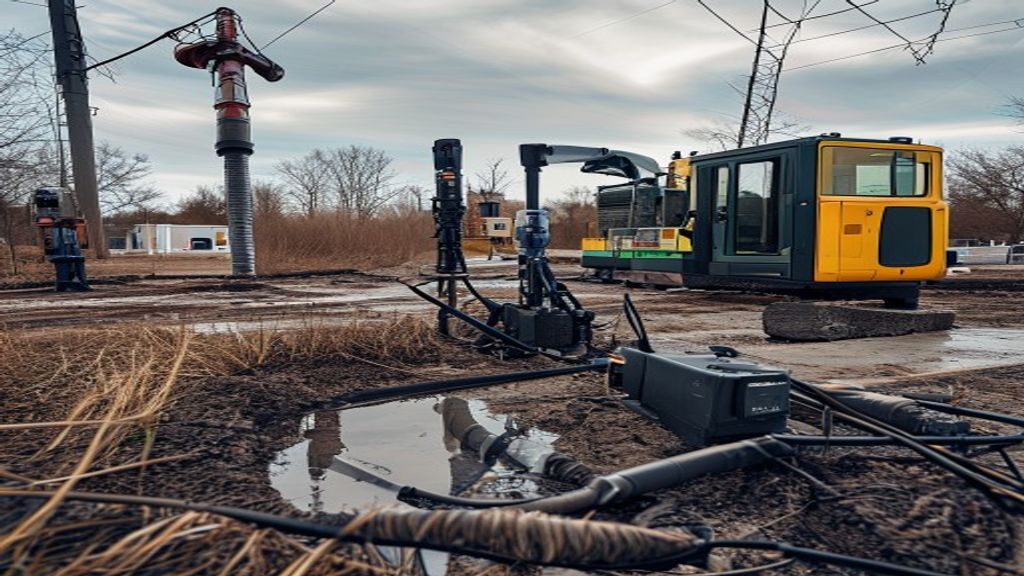
You just received your Phase I Environmental Site Assessment (ESA). The report identifies three Recognized Environmental Conditions (RECs): a former underground storage tank (UST), a historical floor drain in the warehouse, and some suspicious "historic fill" along the property line.
Now comes the fork in the road.
You can hire a big-box national firm that will send a junior staffer to "grid out" your site and punch twenty holes in the ground just to see what sticks. Or, you can hire a firm that treats your site like an engineering puzzle to be solved.
In the industry, we call the first option a "fishing expedition." It’s expensive, it’s defensive, and it usually ends with a report that asks for: you guessed it: more reports. At Envicon Group, we focus on targeted soil sampling and technical precision. We don't just "fish" for contamination; we map it, bound it, and give you a path to clear it.
The High Cost of "Drill and Hope"
A Phase II environmental site assessment NJ is not a generic service. It is a surgical strike.
When a consultant lacks a deep technical understanding of the NJDEP Technical Requirements for Site Remediation (N.J.A.C. 7:26E), they default to "the grid." They figure if they drill enough holes, they’ll eventually hit the plume.
Here’s the problem: every unnecessary boring is a line item on your invoice. Every "hit" that isn't properly characterized leads to broader (and often unnecessary) delineation. Worse, if they miss the source area because they weren't looking at the site’s specific hydrogeology, your lender is going to flag the report, and your project stalls.
Precision vs. Proximity: The Targeted Soil Sampling Approach
A "cleared path" starts with a Conceptual Site Model (CSM). Before a Geoprobe even touches the asphalt, we need to know:
- What are the Chemicals of Concern (COCs)? (Is it chlorinated solvents from an old dry cleaner or heavy metals in the fill?)
- Where is the "source" vs. the "migrated plume"?
- How does the soil strata: the sand, silt, and clay layers beneath your feet: dictate where that contamination lives?
By using High-Resolution Site Characterization (HRSC), we use real-time field data to adjust our borings on the fly. If we hit a lens of impacted soil at 8 feet, we don’t just stop and wait for lab results. We step out, we delineate, and we find the boundary right then and there. This is the difference between a one-and-done mobilization and a project that drags on for six months of "re-sampling."
The Tech Stack: GIS and 3D Plume Mapping
The "old way" of doing a Phase II involved a thick binder of black-and-white soil boring logs that only an engineer could love.
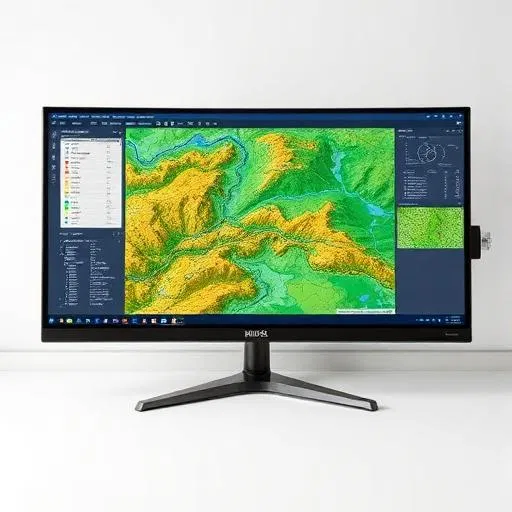
At Envicon, we integrate our field data into a digital infrastructure. We use GIS mapping and 3D modeling to visualize exactly where the impacts are.
- For the Developer: You can see exactly how much dirt needs to be moved.
- For the Attorney: You have a defensible, data-backed visual for liability discussions.
- For the Regulator: Whether it’s the NJDEP or NYC OER, a clear, technical visualization speeds up the review process.

Why NJDEP Requirements Demand Technical Depth
New Jersey is one of the most strictly regulated states in the country. If your site is subject to ISRA (Industrial Site Recovery Act) or you're working with an LSRP (Licensed Site Remediation Professional), a "fishing expedition" isn't just a waste of money: it's a regulatory risk.
The NJDEP doesn't want "maybe." They want a Remedial Investigation Report (RIR) that proves you have fully delineated the site. Big-box firms often deliver defensive, bloated reports written to protect the consultant's liability. We deliver documentation that holds up under scrutiny because it’s built on technical site characterization, not guesswork.
"Collaboration is not a buzzword: it's how we work. We don't just deliver a report and walk away; we give you the technical roadmap to get that 'No Further Action' letter." : Jason Pancoast, CEO, Envicon Group.
Beyond the Soil: Groundwater and Vapor Intrusion
A Phase II often expands into groundwater sampling and vapor intrusion (VI) testing. This is where the technical "wheat" is separated from the "chaff."
Groundwater doesn't just sit there; it flows. If your consultant doesn't understand the hydraulic gradient of your specific Hudson County or NYC lot, they’ll put your monitoring wells in the wrong place. You'll end up chasing a plume that isn't even yours, or missing a source area that will bite you during construction.

Summary: Precision Saves Projects
When you’re looking at a site for acquisition or redevelopment, the Phase II is your most critical piece of due diligence.
- Stop the "Fishing": Demand a scope that maps borings directly to Phase I RECs.
- Demand Data Transparency: Ask for real-time dashboards, not just monthly PDFs.
- Know Your Regulator: Hire a firm that knows the reviewer’s name and the specific quirks of the NJDEP LSRP Guide.
At Envicon, we believe integrity is about delivering the truth and never cutting corners. We use our 20 years of experience to solve the complex stuff so you can get back to building.
Takeaway Checklist for your Phase II:
- Targeted vs. Grid: Are the borings placed based on RECs or a random pattern?
- Field Screening: Is the consultant using PID or XRF tools to make real-time decisions?
- LSRP Involvement: Is a licensed professional overseeing the work plan, or a junior staffer?
- Tech Integration: Will you get a 3D model of the contamination or just a list of numbers?
Ready to clear the path for your next project? At Envicon Group, we don’t just deliver reports: we deliver outcomes. Contact us today to discuss your site’s specific challenges.
Leave a Reply