
Let’s be honest: hiring a "Big Box" consulting firm: one of those global monoliths with ten thousand employees and a shiny office in a city you’ve never visited: feels like buying insurance. You do it because the name on the report makes your lenders feel warm and fuzzy. You do it because you think size equals safety.
But if you’re developing property in the New York/New Jersey corridor, that "safety" is an expensive illusion.
In our market, generic advice doesn’t just slow you down; it kills deals. The NY/NJ regulatory landscape isn't a straight line; it's a labyrinth designed by people who love paperwork and hate shortcuts. When you hire a global firm, you aren't getting their "global expertise." You’re getting a junior associate in a cubicle three states away who is Googling "What is a NJDEP LSRP?" while billing you $350 an hour.
At Envicon Strategic Solutions, we’ve watched developers lose millions because their big-box consultant treated a complex NYC OER E-Designation like a standard checkbox. It’s time to talk about why the "safe" choice is actually the riskiest move you can make.
The NY/NJ Regulatory Gauntlet: You Can’t "Template" This
The tri-state area has some of the most stringent, nuanced, and frankly, exhausting environmental regulations in the world. Between the NJDEP’s LSRP program and the NYC Office of Environmental Remediation (OER), there is no room for "generalists."
Big Box firms love templates. They love standardized processes that allow them to scale. But you can’t template a Phase II Investigation on a 100-year-old industrial site in Jersey City. You can’t "standardize" a response to a surprise E-Designation during a mid-rise build in Brooklyn.
When these firms encounter a localized quirk: like the specific way NJDEP handles PFAS remediation or the hyper-local politics of NYC zoning: they stall. They have to "check with corporate" or "consult their internal experts." Meanwhile, your carry costs are ticking, your excavator is sitting idle, and your ROI is evaporating.

The "Junior Associate" Bait-and-Switch
We’ve all seen the pitch. Two senior partners with 30 years of experience show up to the meeting, dazzle you with a 50-page slide deck, and promise "unparalleled oversight."
Then the contract is signed.
Suddenly, those partners vanish into the ether, and your project is handed off to a kid who graduated six months ago. This isn't just an annoyance; it’s a liability. In environmental consulting, the person doing the work needs to have the "field eyes" to spot a hidden UST (Underground Storage Tank) or recognize a subtle soil discoloration that signals a much larger problem.
At Envicon, we don't believe in the "Bait-and-Switch." Our leadership: including our CEO, Jason Pancoast: stays in the weeds because that’s where the risk lives. We sell authority, not just expert knowledge. When you call us, you aren't talking to a project coordinator's assistant; you're talking to the people making the decisions.
Tech-Enabled vs. Spreadsheet-Bound
The "Big Box" world is surprisingly slow to adopt technology. They rely on legacy systems and massive, clunky reporting structures that take weeks to produce a single draft. In 2026, that’s unacceptable.
We built Envicon to be a tech-first firm. We use advanced data visualization and aerial site mapping to give our clients a real-time look at their liability. We don't just tell you there’s a problem; we show you exactly where it is, how deep it goes, and what the financial "exit ramp" looks like.

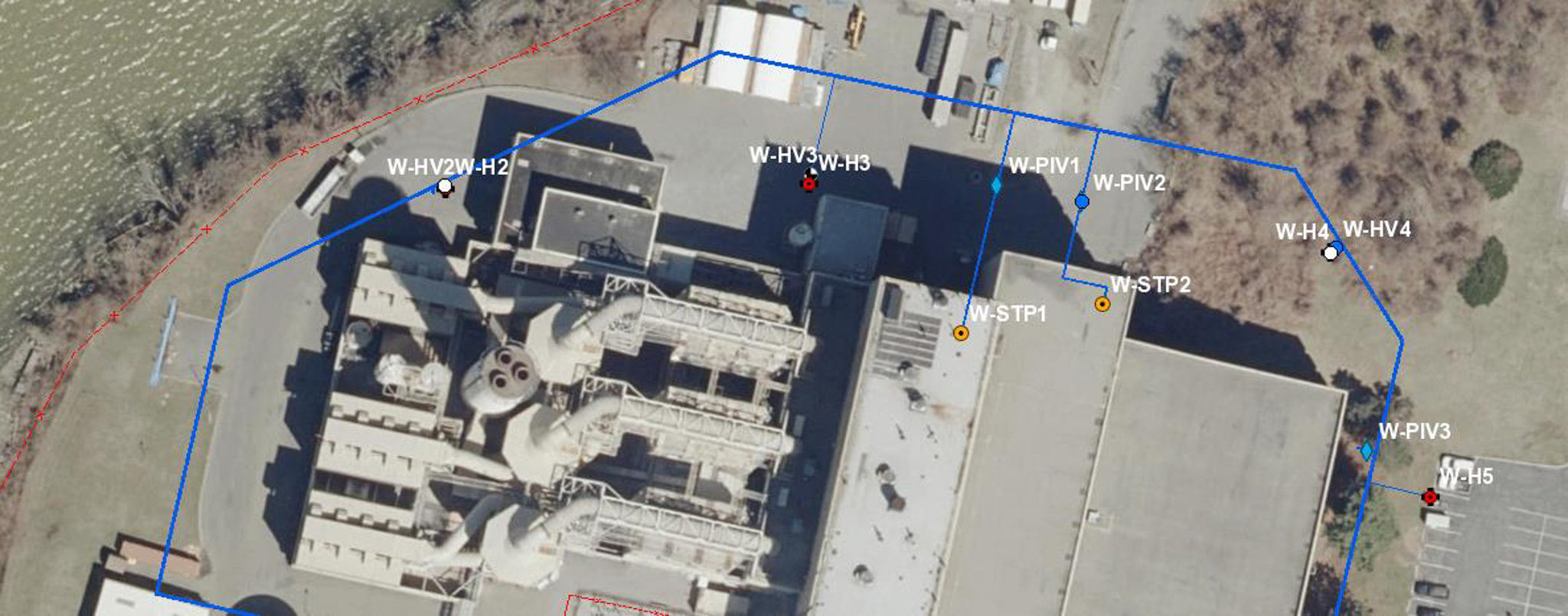
When we provide an aerial site map with monitoring points, it’s not just a pretty picture for a report. It’s a strategic tool used to value-engineer your remediation. While the Big Box guys are still formatting their Excel tables, we’re already moving the project toward closure.
The "Insurance" Fallacy
Many developers stick with big firms because of "vicarious credibility." They think, “If the EPA sues me, at least I can say I hired [Giant Global Firm].”
But here’s the truth: The EPA doesn't care who you hired. They care about the results. If your big-box consultant missed a REC (Recognized Environmental Condition) because they used a generic checklist instead of local historical knowledge, you are still the one holding the bag.
True de-risking comes from intimacy with the land and the law. It comes from knowing which NJDEP case manager is retiring and how the new one interprets soil standards. It comes from having a footprint in the locations where you actually build.
"In the NY/NJ market, your consultant’s local reputation is your greatest asset. A report from a firm that doesn't understand our dirt is just expensive wallpaper."
Why Envicon? The Strategic Pivot
If you’re tired of being "Client #8,402" and you’re ready for a partner who treats your capital like their own, it’s time to make a change. We aren't just consultants; we are strategists.
Here is why our clients are ditching the Big Box firms for Envicon:
- Responsiveness: We don't have "account managers." We have experts. When you call, we answer.
- Speed to Market: Because we know the NJDEP and NYC OER systems inside and out, we can often shave weeks (or months) off the approval process.
- Visionary Thinking: We don't just look at what’s in the dirt; we look at what’s going on top of it. We align our environmental strategy with your architectural goals and your exit strategy.
- Accountability: We live and work in the same communities we serve. Our legacy is tied to the success of your project.
The Bottom Line: Stop Paying for Overhead
When you pay a Big Box firm, a massive chunk of your fee goes toward their 50th-floor Midtown rent, their global marketing budget, and their fleet of middle managers.
Wouldn’t you rather pay for results?
The NY/NJ market is too complex for "good enough." It requires a sharp, localized, and tech-enabled approach that only a visionary boutique can provide. We’ve built our reputation on being the firm that cleans up the messes the big guys left behind.
Whether you’re dealing with a Phase I ESA that went sideways or a complex brownfield redevelopment, you need a partner who understands the pulse of the city.
Summary & Takeaway
- Big Box firms prioritize scale over specificity, which leads to missed risks in the complex NY/NJ regulatory environment.
- The "Junior Associate" model means your project is often a training ground for inexperienced staff.
- Envicon uses a tech-enabled, local-first approach to provide faster approvals and more accurate risk assessments.
- Authority and trust are built on local expertise, not global headcount.
Ready to de-risk your next acquisition? Don't settle for a generic report. Let’s build something that lasts. Contact Envicon Strategic Solutions today and see the difference that local authority makes.
Leave a Reply