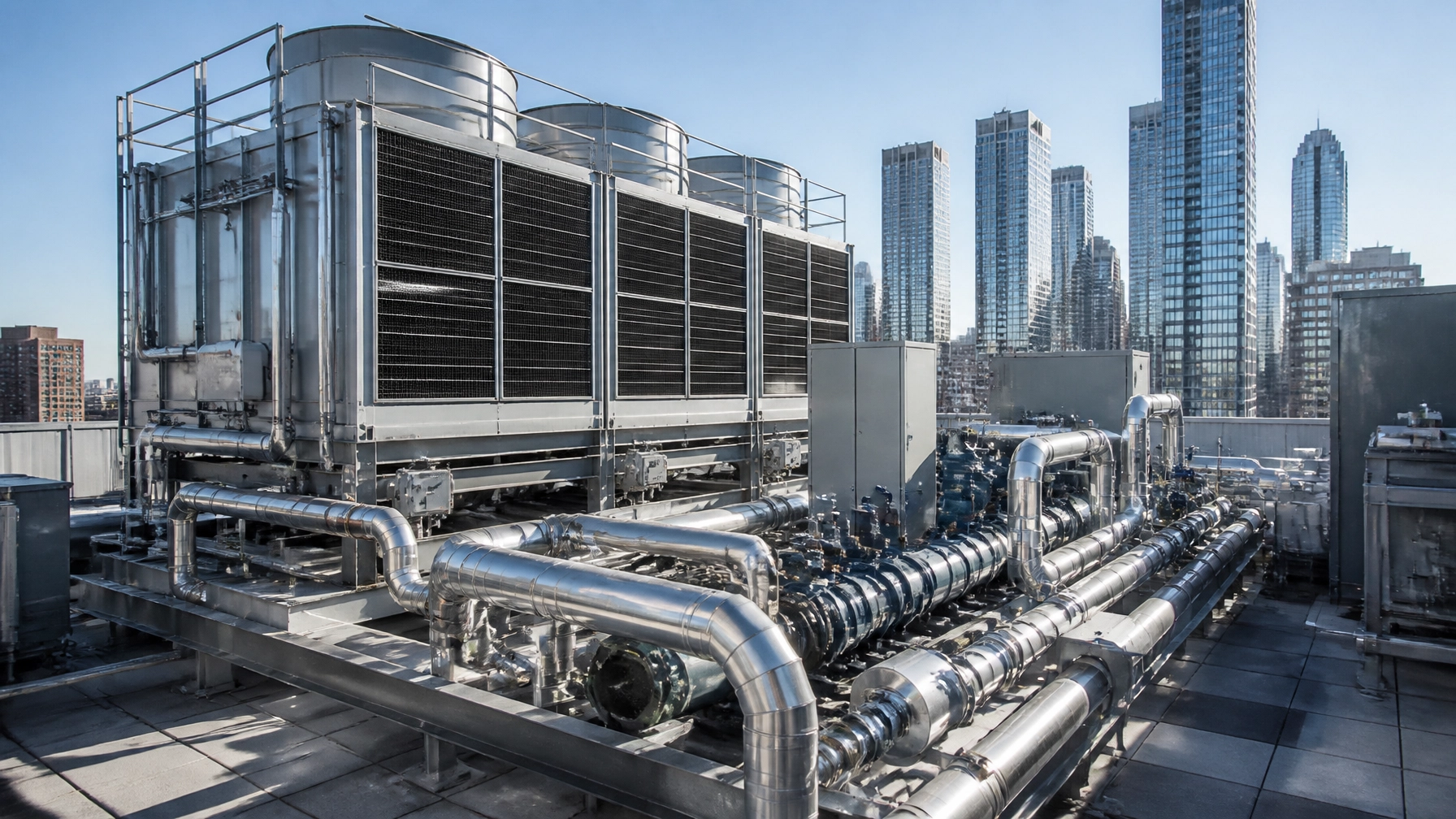
If you manage a cold-storage warehouse, a supermarket, or a large-scale commercial facility in New York, the regulatory landscape for your cooling systems has fundamentally shifted. As of July 2026, the grace period for the NYSDEC Part 494 amendments has ended. We are now in the first major "compliance year," where the difference between a compliant asset and a regulatory liability comes down to your inventory records and your reporting schedule.
At Envicon, we don’t just read the regulations; we live them on-site. While "big-box" consulting firms are still trying to figure out which of their junior staff can summarize the latest NYSDEC FAQ, our team has been helping clients navigate these specific GWP (Global Warming Potential) thresholds since the draft rules were first circulated.
The message for 2026 is simple: the NYSDEC is no longer just "encouraging" a phase-down of Hydrofluorocarbons (HFCs). They are enforcing it through mandatory registrations, strict equipment prohibitions, and an aggressive reporting framework.
The 2026 Regulatory Timeline: Where Do You Stand?
We are halfway through 2026, and several critical deadlines have already passed. If your facility hasn't checked these boxes, you are already operating outside of compliance.
- January 1, 2026 (Prohibitions): This was the hard start for new equipment prohibitions. Any new supermarket systems, remote condensing units, or cold-storage warehouses with a charge over 50 lbs must now use refrigerants with a GWP20 of 580 or less. For smaller systems under 50 lbs, the limit is a GWP20 of 943.
- March 31, 2026 (The First Report): Owners of "Large Equipment" (systems containing ≥ 1,500 lbs of refrigerant) were required to submit their first annual report to the NYSDEC. This wasn’t just a formality; it required detailed leak rate calculations and service records.
- June 1, 2026 (The Registration Wave): This was the deadline for "Medium Equipment" (200–1,499 lbs) to be labeled and registered with the State. If you missed this, your system is uncertified in the eyes of the regulator.
Navigating the GWP Thresholds
The technical core of Part 494 is the shift to GWP20 and GWP100 metrics. While most of the industry has focused on GWP100 (a 100-year lookback), New York is utilizing GWP20 for many categories: a much stricter 20-year horizon that captures the immediate atmospheric impact of HFCs.
For facility managers, this means your "standard" refrigerants like R-404A and R-507A are effectively being phased out of new installations. In fact, a planned prohibition on the sale of virgin R-404A in bulk containers was slated for early 2026. While court orders have temporarily stayed some of these sales restrictions, the writing is on the wall: reliance on virgin high-GWP refrigerants is a high-risk business strategy.
The Business Impact of "Wait and See"
Every week your facility operates with an unregistered or leaking system, you incur risk. It’s not just about the potential for NYSDEC fines. It’s about lender patience. We’ve seen property transactions stall because a Phase I ESA flagged "non-compliance with refrigerant management protocols" as a recognized environmental condition (REC) or a significant compliance gap.
In the NY/NJ market, where environmental due diligence is the gatekeeper for financing, being behind on Part 494 is a self-inflicted wound.
Leak Detection: ALDS or Quarterly Inspections?
One of the most misunderstood parts of the 2026 requirements is the Automatic Leak Detection System (ALDS) mandate. For large systems (≥ 1,500 lbs), an ALDS isn't just a good idea: it’s a requirement.
However, the NYSDEC has issued enforcement discretion for certain outdoor components where an ALDS might not be technically feasible. This is where a "checked-box" consultant fails you. They’ll tell you to install a system that might not work for your specific configuration. Envicon looks at the civil and site engineering reality of your facility. We help you determine if you qualify for that discretion or if a quarterly manual inspection routine is the smarter, more defensible path forward.
The Envicon Difference: Beyond the PDF Report
When you hire a national firm to handle your regulatory compliance and permitting, they send you a 100-page report written in defensive "CYA" language. You spend three days reading it only to realize you still don't know if your HVAC contractor is using the right gas.
Envicon works differently. We are "field-first." We talk to your mechanical contractors. We look at the nameplates on your condensing units. We handle the regulatory coordination directly with the reviewers at the NYSDEC because we know them by name.
We don't just tell you there's a problem; we provide the "cleared path" to solve it. Whether that’s managing the disposal of contaminated refrigerants or designing a remedial strategy for a site where a refrigerant leak has impacted soil or groundwater, we take ownership of the outcome.

Action Steps: What You Need to Do Now
If you are just catching up on Part 494, here is your immediate checklist:
- Inventory Your Charge Sizes: You cannot comply if you don't know your numbers. Categorize every system into Small (50-199 lbs), Medium (200-1,499 lbs), or Large (1,500+ lbs).
- Verify Registration Status: If you have Medium or Large equipment and haven't received a registration confirmation from the NYSDEC, you are in the red zone.
- Review Service Records: Under the 2026 rules, your recordkeeping must be impeccable. You need to track every ounce of refrigerant added or recovered.
- Audit Your New Procurement: If you are planning an HVAC or refrigeration upgrade, ensure your specs meet the 2026 GWP prohibitions. Don't let a contractor sell you "old" technology that will be obsolete before the warranty expires.
Summary: A Clearer Path to Compliance
The NYSDEC Part 494 regulations are complex, but they are manageable with the right partner. 2026 is the year where the "refrigerant management" folder in your filing cabinet becomes a primary focus for state regulators and savvy lenders alike.
Don't let a bloated, slow-moving consultancy leave your project sitting in a queue. You need a team that understands the New York market, the specific agency nuances, and the technical engineering required to keep your systems running within the law.
At Envicon, we turn environmental challenges into buildable, compliant assets. We’re ready to help you navigate the 2026 deadlines and beyond.

Resolve Your Compliance Challenges Today
- Book a free consultation: https://envicongroup.com/contact
- Use our Risk Screener Tool: https://envicongroup.com/risk-screener?utm_source=website&utm_medium=nav_megamenu&utm_campaign=resources&utm_content=risk-screener
- Explore our Cost Estimator: https://envicongroup.com/cost-estimator?utm_source=website&utm_medium=nav_megamenu&utm_campaign=resources&utm_content=cost-estimator
Leave a Reply