Author: jpancoas23

  • NJDEP’s Expanded 2026 PFAS Remediation Standards: What Developers and LSRPs Must Know

    NJDEP’s Expanded 2026 PFAS Remediation Standards: What Developers and LSRPs Must Know

    Published August 10, 2026 at 2:00 PM ET

    On June 15, 2026, the New Jersey Department of Environmental Protection (NJDEP) adopted amendments to N.J.A.C. 7:9C, 7:26D, and 7:26E. The rule converts interim remediation criteria for GenX, PFNA, PFOS, PFOA, and methanol into enforceable requirements and expands required analytical coverage when site contaminants are unknown or poorly documented.

    For developers, property investors, lenders, attorneys, and Licensed Site Remediation Professionals (LSRPs), the practical issue is straightforward: PFAS can no longer sit outside the initial site investigation simply because the historical file is incomplete.

    The amendment does not create entirely new cleanup obligations for every property. Most of the PFAS criteria existed on an interim basis. The change is that those criteria are now formally embedded in New Jersey’s remediation framework, with broader testing expectations that can affect scope, schedule, cost, and transaction risk.

    What NJDEP adopted on June 15, 2026

    The final rule addresses:

    • GenX chemicals, formally identified as hexafluoropropylene oxide dimer acid and its ammonium salt;
    • Perfluorononanoic acid (PFNA);
    • Perfluorooctane sulfonate (PFOS);
    • Perfluorooctanoic acid (PFOA);
    • Methanol; and
    • Expanded analyte requirements that also include 2,3,7,8-tetrachlorodibenzo-p-dioxin (2,3,7,8-TCDD) in certain investigation scenarios.

    NJDEP’s Ground Water Quality Standards, Remediation Standards, and Technical Requirements for Site Remediation now work together more explicitly. The result is a compliance framework that connects:

    1. Required analytical parameters;
    2. Soil, soil leachate, and groundwater standards;
    3. Site-specific migration-to-groundwater evaluations; and
    4. Remedial design and attainment decisions.

    The final numeric standards that matter

    The adopted standards are extremely low, particularly for groundwater. The following values come from the adopted N.J.A.C. 7:26D tables:

    Contaminant Groundwater standard (µg/L) Residential soil : ingestion/dermal (mg/kg) Nonresidential soil : ingestion/dermal (mg/kg) Soil leachate : migration to groundwater (µg/L)
    GenX 0.020 0.23 3.9 0.40
    PFNA 0.013 0.047 0.67 0.26
    PFOS 0.013 0.11 1.6 0.26
    PFOA 0.014 0.13 1.8 0.28

    For the soil migration-to-groundwater pathway, New Jersey does not provide a generic numeric soil standard for these four PFAS. The value is Area of Concern (AOC) or site-specific and must be calculated using the applicable NJDEP procedure.

    As the adopted rule states:

    “To be calculated using the synthetic precipitation leaching procedure (SPLP) and the Department’s PFAS SPLP calculator.”
    : N.J.A.C. 7:26D, Appendix 1, Table 5

    That distinction matters. A soil result below the residential direct-contact number does not automatically resolve the migration-to-groundwater pathway. PFAS mobility, soil conditions, leaching results, groundwater data, and the applicable AOC must be evaluated together.

    Methanol requires separate attention

    Methanol is included in the June 2026 adoption, but it is not a PFAS and it is not part of the new universal PFAS analyte list under N.J.A.C. 7:26E-2.1(c).

    NJDEP’s methanol standards sheet identifies, among other values:

    • Residential ingestion-dermal soil standard: 160,000 mg/kg;
    • Soil migration-to-groundwater standard: 12 mg/kg; and
    • Soil leachate migration-to-groundwater standard: 80,000 µg/L.

    The methanol fact sheet also identifies a groundwater quality standard of 13,000 µg/L. The adopted 7:26D migration table separately shows a groundwater remediation standard of 4,000 µg/L used in the migration calculations. Those are not interchangeable labels. An LSRP should confirm which standard and pathway apply to the site before making an attainment or transaction conclusion.

    Mandatory sampling: what changed for LSRPs

    The most important operational change appears in N.J.A.C. 7:26E-2.1(c)1ii.

    When hazardous substances at an AOC are unknown or not well documented, the investigator must now analyze for:

    • GenX chemicals;
    • PFNA;
    • PFOS;
    • PFOA; and
    • 2,3,7,8-TCDD.

    This is broader than simply adding a line item to a laboratory request. It affects the sampling plan, media selection, quality assurance and quality control, laboratory procurement, reporting limits, data validation, and investigation schedule.

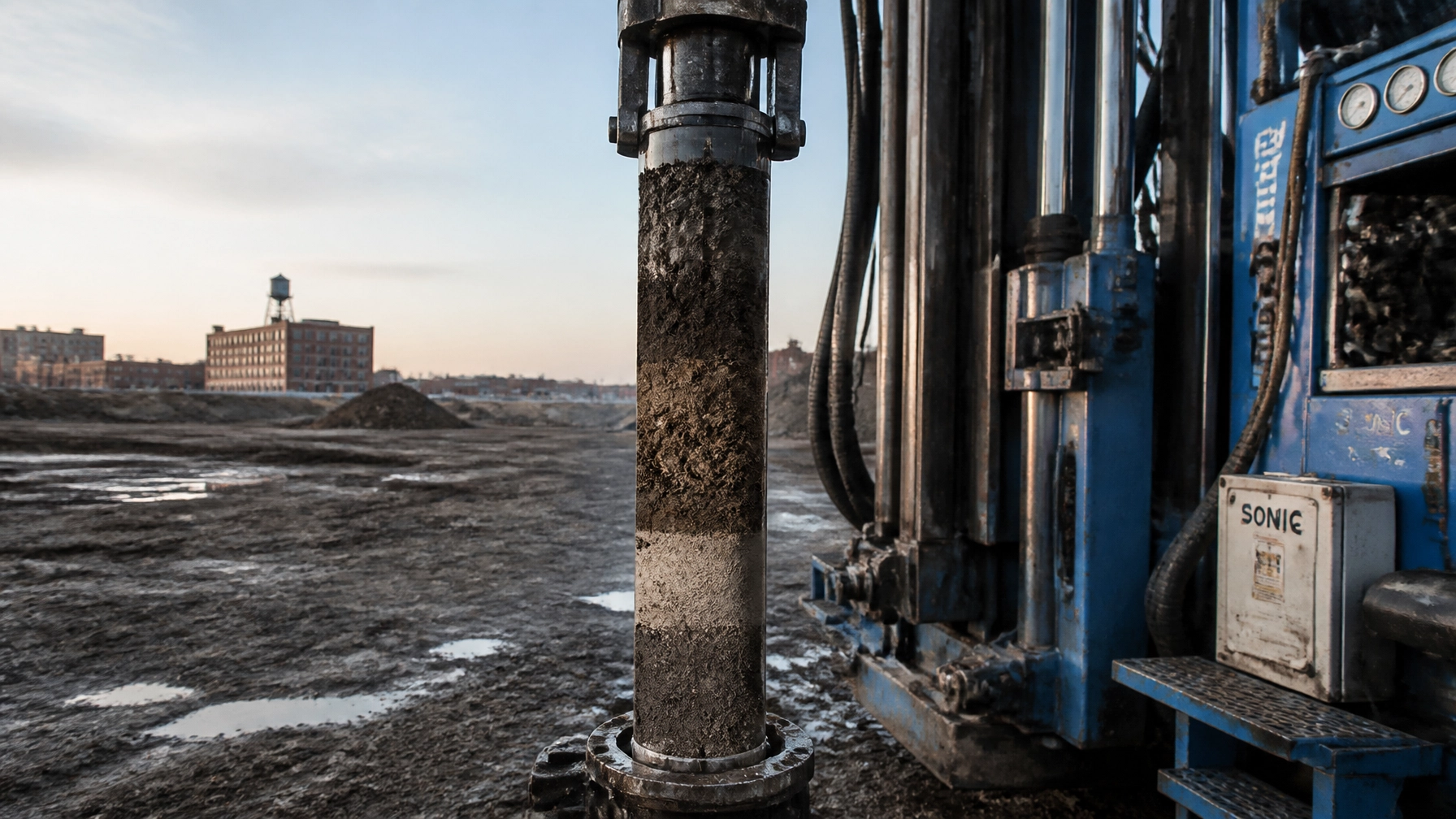
    PFAS groundwater sampling equipment, sealed laboratory vials, and field QA/QC materials at a New Jersey site

    “Mandatory QA sampling” does not mean one universal sample count

    The rule requires broader analyte coverage in qualifying circumstances. It does not establish one universal number of duplicate, matrix spike, blank, or confirmation samples for every property.

    The defensible approach is to build a site-specific QA/QC program that supports the required decision-making. At a minimum, the LSRP and project team should address:

    • Whether the site history is sufficiently documented to justify excluding PFAS;
    • Which media require analysis, including soil, groundwater, surface water, sediment, or other relevant media;
    • Whether the laboratory can achieve reporting limits below the applicable standards;
    • Field blanks, equipment blanks, trip blanks, duplicates, and matrix-specific quality controls;
    • Sample handling materials that minimize cross-contamination;
    • Chain-of-custody documentation; and
    • Data validation and usability criteria before the results drive a property decision.

    The adopted soil tables identify reporting limits of approximately 0.0016 mg/kg for GenX, 0.00038 mg/kg for PFNA and PFOS, and 0.00040 mg/kg for PFOA. Those limits are not administrative details. They influence whether a result is usable for regulatory comparison.

    NJDEP also recognized that an LSRP may rely on professional judgment and documented lines of evidence in determining whether PFAS analysis is necessary. That is not a shortcut. It means the rationale must be clear, technically supported, and durable under NJDEP review, lender diligence, and potential litigation.

    Why this matters in New Jersey real estate transactions

    PFAS now needs to be addressed earlier in the transaction: not after closing, not after demolition, and not after the lender asks why the Phase II did not include it.

    1. Phase I and Phase II scope may expand

    A Phase I Environmental Site Assessment may identify historical uses that do not conclusively prove PFAS contamination but still create a reasonable basis for testing. Examples include:

    • Metal plating and finishing;
    • Manufacturing and chemical processing;
    • Fire-training areas;
    • Airports and aviation facilities;
    • Textile and surface-treatment operations;
    • Landfills and waste handling areas;
    • Industrial wastewater operations; and
    • Properties with incomplete or conflicting historical records.

    Where the site history is incomplete, a Phase II scope that excludes PFAS without explanation can create a credibility problem. Our Phase I ESA checklist is a useful starting point, but PFAS decisions must still be made around the actual property and regulatory pathway.

    2. Closing schedules can move

    PFAS laboratory analysis, confirmation sampling, SPLP testing, groundwater delineation, and regulator coordination can add time to a transaction. If PFAS is detected, the project may also require:

    • Additional borings or monitoring wells;
    • A revised Remedial Investigation or Remedial Action Workplan;
    • Soil handling and disposal controls;
    • Groundwater treatment or monitoring;
    • Engineering or institutional controls;
    • Construction environmental oversight; or
    • Revised cost and schedule assumptions.

    A report that arrives quickly but omits a required analyte does not save time. It creates rework.

    3. Purchase agreements need better risk allocation

    Developers and counsel should consider whether the purchase agreement addresses:

    • PFAS sampling rights before closing;
    • Access to historical records and prior regulatory files;
    • Responsibility for pre-closing and post-closing remediation;
    • Environmental indemnities and exclusions;
    • Escrow or holdback requirements;
    • Cooperation with the LSRP and NJDEP; and
    • The consequences of a newly identified PFAS condition.

    A seller’s statement that “the property has an RAO” should not end the analysis. The project team needs to understand the RAO’s scope, date, contaminants addressed, land use assumptions, controls, and whether the current redevelopment plan changes the exposure scenario.

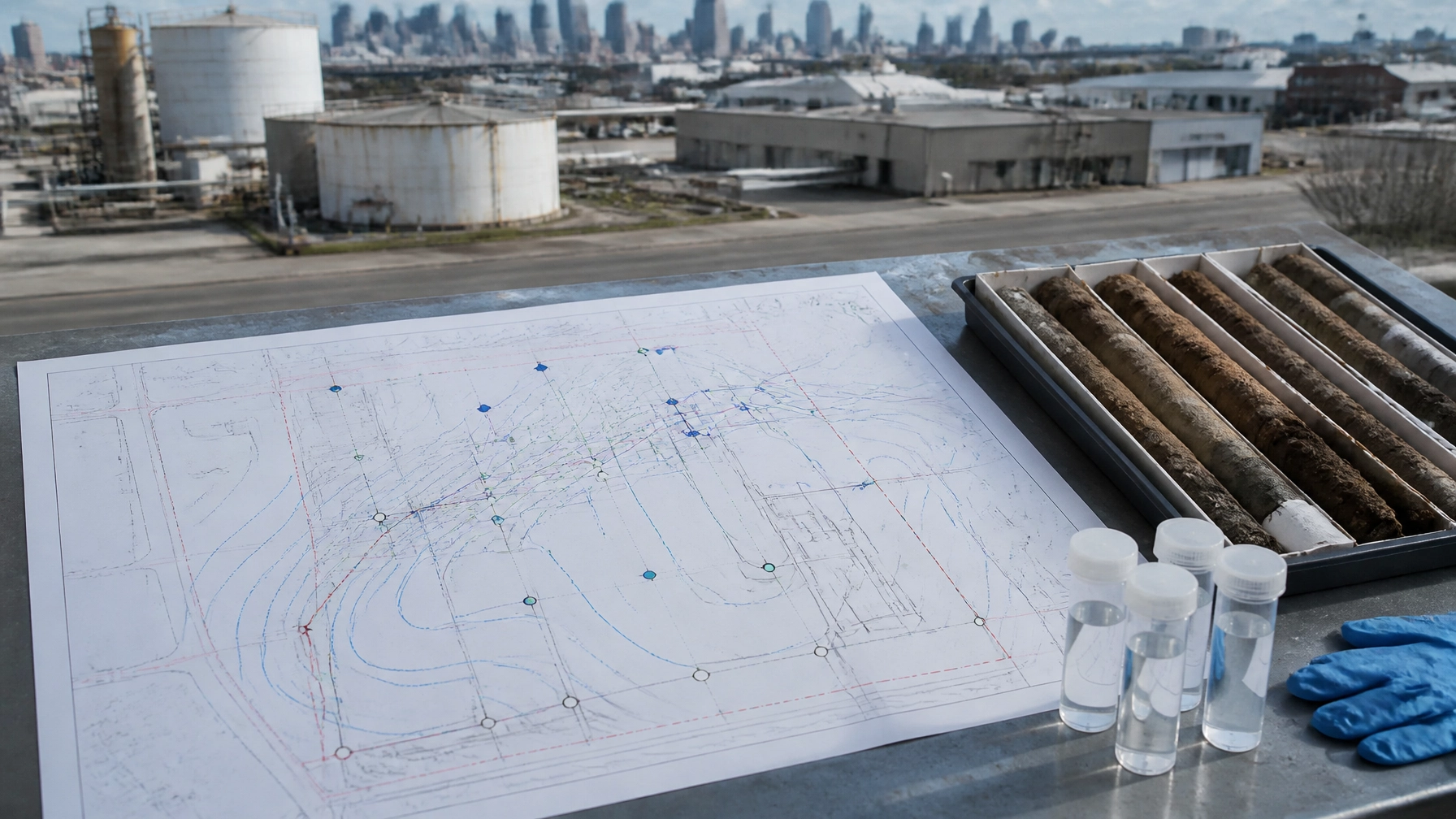
    Technical site investigation layout with soil cores, groundwater sample vials, and a site plan for a New Jersey redevelopment project

    What developers should do now

    For an acquisition or redevelopment project in New Jersey, we recommend the following:

    • Review the site history before finalizing the environmental scope. Do not treat incomplete records as a reason to test less.
    • Ask whether PFNA, PFOS, PFOA, GenX, and 2,3,7,8-TCDD are required analytes under the amended 7:26E provisions.
    • Confirm the laboratory’s certification, method capability, and reporting limits before mobilization.
    • Plan QA/QC before fieldwork begins. Retrofitting QA/QC after a failed data package is expensive.
    • Evaluate all relevant exposure pathways, including direct contact and migration to groundwater.
    • Budget for site-specific PFAS SPLP calculations where soil impacts require them.
    • Coordinate with the lender, attorney, architect, civil engineer, contractor, and LSRP early.
    • Document professional judgment whenever the team concludes that PFAS analysis is not necessary.
    • Use a live project dashboard to track sampling, laboratory status, regulatory submissions, cost, and next decisions. Envicon’s environmental dashboard blueprint reflects the level of visibility complex projects require.

    This is where the difference between a report provider and a project partner becomes clear. A large consultant may deliver a technically correct document weeks later and leave the transaction team to interpret it. Envicon works directly with the client, LSRP, counsel, regulator, contractor, and design team to turn data into the next decision.

    The practical takeaway

    NJDEP’s June 2026 rule makes PFAS a routine consideration for New Jersey site investigations when the contaminant history is unknown or poorly documented. It also codifies extremely low cleanup standards and preserves site-specific analysis for migration to groundwater.

    The right response is not panic. It is disciplined planning:

    • Scope the investigation around the regulatory requirements;
    • Use laboratories and QA/QC procedures that can support the standards;
    • Interpret soil, soil leachate, and groundwater results together;
    • Address PFAS risk before it reaches the closing table; and
    • Build the remediation path into the development schedule from the beginning.

    Envicon Group helps developers and LSRPs solve environmental and engineering challenges with precision, speed, and trust. We do not just deliver services: we help turn environmentally challenged properties into clean, compliant, buildable assets.

    Need to evaluate PFAS risk on a New Jersey property?
    Envicon Group logo

  • Capital Reserve Studies for NJ Condos, Co-ops, and HOAs Under S2760

    Capital Reserve Studies for NJ Condos, Co-ops, and HOAs Under S2760

    A reserve study is no longer a budgeting exercise that can wait until the roof leaks or the elevator fails. For most New Jersey condominiums, cooperatives, and homeowners associations, it is a statutory planning requirement tied directly to building maintenance, structural integrity, and long-term financial stability.

    One citation correction matters at the outset: the New Jersey Structural Integrity Law associated with Senate Bill S2760 was approved on January 8, 2024, as P.L. 2023, c.214: not P.L. 2024, c.7. P.L. 2024, c.7 addresses transportation infrastructure financing and is unrelated to condominium inspections or reserve studies.

    As of August 2026, New Jersey associations should evaluate their compliance under the original S2760 framework and subsequent amendments, including the 85% reserve-funding option created by P.L. 2025, c.132.

    What S2760 Requires From New Jersey Associations

    S2760 amended both New Jersey’s structural inspection requirements and the Planned Real Estate Development Full Disclosure Act, commonly called PREDFDA.

    The law creates two related but separate obligations:

    1. Structural integrity inspections for certain condominium and cooperative buildings.
    2. Capital reserve studies and 30-year funding plans for most planned real estate development associations.

    The New Jersey Department of Community Affairs makes the distinction clear: an association may not qualify as a “covered building” for structural inspection purposes and still remain subject to the capital reserve study requirements.

    “Any association of a planned real estate development shall undertake and fund a capital reserve study…”

    That means a townhome HOA may not need the S2760 structural inspection required for a concrete condominium tower, but it may still need a compliant NJ HOA reserve study covering roads, roofs, stormwater systems, retaining walls, pools, clubhouses, sidewalks, lighting, and other common-area assets.

    The principal exemption applies to associations with less than $25,000 in total common-area capital assets. That threshold should be documented, not assumed.

    Read the New Jersey DCA Structural Integrity and Capital Reserve FAQ

    Which Buildings Need a Structural Integrity Inspection?

    The structural inspection portion of S2760 applies to “covered buildings.” These are generally residential condominium or cooperative buildings with a primary load-bearing system made of:

    • Concrete
    • Masonry
    • Steel
    • Heavy timber
    • A hybrid structural system
    • A podium deck supporting a structure above

    The inspection evaluates the primary load-bearing system, including columns, beams, bracing, foundations, and connected or attached balconies. It is not a cosmetic building inspection. The focus is the structural path that transfers building loads to the foundation.

    A conventional wood-framed condominium or cooperative may fall within an excluded structure, but the association should confirm that determination with a qualified New Jersey structural engineer. Building height alone does not determine coverage.

    Inspection timing

    For newer covered buildings, the initial inspection must occur within the earlier of:

    • 15 years after the certificate of occupancy, or
    • 60 days after observable damage to the primary load-bearing system.

    For covered buildings that received their certificates of occupancy before January 8, 2024, the timing depends on the building’s age. Buildings that were at least 15 years old when the law took effect generally had to complete the initial inspection within two years of the effective date. That deadline reached January 8, 2026.

    After the initial inspection, the engineer issues a written report describing:

    • The condition of the primary load-bearing system
    • Required repairs or corrective maintenance
    • The recommended timing of the next inspection
    • Any monitoring or follow-up work
    • Information needed to maintain structural integrity

    The inspection report must follow an American Society of Civil Engineers protocol, or a similar protocol from another nationally recognized structural engineering organization. Subsequent inspections should be scheduled according to the engineer’s report and may not exceed the statutory interval.

    If observable damage appears, the association should not wait for the next routine cycle. Cracking, spalling concrete, exposed reinforcement, corrosion, settlement, deflection, water intrusion, or movement at balconies and podium decks should trigger prompt engineering review.

    Engineer documenting concrete condition with a crack comparator and field instruments

    What a Capital Reserve Study Must Include

    A compliant capital reserve study condo boards can rely on is more than a spreadsheet of estimated costs. It combines a physical assessment of common elements with a long-range financial model.

    Under N.J.S.A. 45:22A-44.2, the study must be prepared in conformity with the latest National Reserve Study Standards of the Community Associations Institute, or similar standards from another recognized national organization.

    The study must be performed or overseen by one of the following:

    • A reserve specialist credentialed through CAI
    • A New Jersey-licensed professional engineer
    • A New Jersey-licensed architect

    A complete study should address:

    • Current reserve fund balances
    • Anticipated association income and expenses
    • The physical condition of common-area components
    • Remaining useful life of major assets
    • Estimated repair and replacement costs
    • Future reserve study and update costs
    • Periodic structural inspection costs
    • Corrective maintenance costs
    • A proposed 30-year funding plan
    • The relationship between reserve funding and structural integrity

    Typical components include roofs, façades, balconies, garages, elevators, HVAC systems, electrical equipment, plumbing infrastructure, pavement, drainage systems, retaining walls, pools, fencing, site lighting, and recreational facilities.

    The association must update or review the study at least once every five years. A reserve study prepared six or seven years ago may still contain useful information, but it should not be treated as current compliance documentation.

    The 30-Year Funding Plan Is the Core Deliverable

    New Jersey requires a reserve study that includes a 30-year funding plan. The purpose is straightforward: identify when common assets will require major repair or replacement, estimate the cost, and establish a funding strategy before the association reaches a crisis point.

    A sound plan should show:

    • The starting reserve balance
    • Annual contributions
    • Component replacement dates
    • Inflation and escalation assumptions
    • Expected investment income, if used
    • Major repair and replacement expenditures
    • The projected reserve balance over 30 years
    • The effect of different contribution levels

    The plan should also account for the costs of structural inspections and corrective maintenance. Leaving those expenses out creates a false picture of adequacy.

    A reserve study is only useful if the board can connect it to the annual budget. The study should give directors a practical answer to three questions:

    1. What will fail or require major work?
    2. When will that happen?
    3. What must owners contribute now to address it without an emergency assessment?

    Reserve planning meeting with component inventory, lifecycle drawings, and a 30-year funding model

    Understanding the 85% Funding Option

    The 85% figure requires careful explanation.

    New Jersey law does not create a universal rule that every association is automatically “adequately funded” when it reaches 85%. Instead, current law allows an association existing as of January 8, 2024, to choose between:

    • Funding according to one of the plans in its most recent reserve study, or
    • Funding at 85% of one of those plans, subject to specific requirements

    The 85% option is temporary. It cannot be used for more than five fiscal years following the effective date of P.L. 2025, c.132.

    Before adopting an annual budget using the 85% option, the board must provide unit owners with a notice in 20-point bold font. The notice must explain:

    • That the association is funding reserves at 85% of the selected 30-year plan
    • The year in which a special assessment or loan is anticipated because of reduced funding
    • The anticipated amount of that assessment or loan

    The seller of a residential unit must also provide a buyer with the most recent notice before the purchase contract is executed.

    That last requirement has real market consequences. Underfunding reserves can affect buyer confidence, resale disclosures, lender review, and the perceived financial health of the community.

    Using 85% may provide short-term budget relief, but it does not eliminate the underlying cost. It can simply move that cost into a future special assessment, loan, or higher contribution requirement.

    How Boards Can Reduce the Risk of Special Assessments

    Special assessments are sometimes unavoidable. A component can fail earlier than predicted, construction costs can rise sharply, or hidden conditions can emerge during repair work.

    But many assessments result from predictable underfunding rather than unpredictable failure.

    A board can reduce that risk by:

    • Updating the reserve study every five years
    • Performing a physical inspection of common assets
    • Tracking actual maintenance history against the study
    • Including structural inspection costs in the funding model
    • Separating operating expenses from capital reserve expenses
    • Reviewing inflation and construction-cost assumptions
    • Maintaining a component inventory with useful-life dates
    • Funding according to a selected 30-year plan
    • Documenting decisions in board resolutions and meeting minutes
    • Coordinating reserve planning with structural, roofing, façade, and mechanical engineers

    A reserve study should also be coordinated with the association’s preventive maintenance program. The developer’s maintenance documents, warranties, construction records, prior inspection reports, and repair history can materially improve the quality of the funding plan.

    Engineer reviewing common-area mechanical equipment and building components on a New Jersey condominium rooftop

    Reserve Studies Are Not the Same as PCRs or Environmental Inspections

    For developers, investors, and association boards involved in a sale, refinance, or major capital project, a reserve study is only one part of the property review.

    A reserve study addresses long-term capital planning for common elements. It does not replace:

    • An ASTM E2018-compliant Property Condition Assessment or PCR
    • Structural engineering design or repair documents
    • New Jersey or New York asbestos inspections
    • Phase I or Phase II Environmental Site Assessments
    • Soil, groundwater, or vapor investigations
    • Regulatory permitting or construction oversight

    For portfolios spanning New Jersey and New York, the scopes should be coordinated early. A property condition review may identify façade or roof concerns that affect the reserve model. An asbestos inspection may affect renovation costs and schedules. An ASTM E2018-compliant assessment may identify deferred maintenance that should be incorporated into capital planning.

    Envicon Group helps clients connect those findings instead of delivering separate reports that leave the board or owner to reconcile the implications alone. Our approach is field-first, regulator-facing, and built around a clear path from condition assessment to action.

    A Practical NJ Reserve Study Checklist

    If you manage a New Jersey condo, co-op, or HOA, start with these steps:

    • Confirm whether the association is subject to PREDFDA reserve study requirements.
    • Document the value of common-area capital assets.
    • Confirm whether the building qualifies as a covered building under S2760.
    • Locate the certificate of occupancy and prior inspection reports.
    • Check whether the current reserve study is less than five years old.
    • Confirm that the professional meets New Jersey and CAI qualification requirements.
    • Require a 30-year funding plan.
    • Include structural inspections and corrective maintenance in the model.
    • Review whether the board is using the 85% option and whether required notices are complete.
    • Coordinate the reserve plan with preventive maintenance, capital projects, and owner communications.

    The Takeaway for NJ Condos, Co-ops, and HOAs

    S2760 changed reserve planning from a best practice into a formal responsibility for most New Jersey planned real estate development associations.

    The right reserve study does more than satisfy a mandate. It gives owners a defensible funding strategy, gives boards better information, and gives buyers and lenders greater confidence in the property.

    The objective is not to predict every failure. It is to identify the known risks, fund the predictable work, and avoid turning routine capital needs into an emergency.

    A well-built reserve plan protects the building, the budget, and the community.

    Work With Envicon Group

    Need a New Jersey reserve study, structural integrity inspection, or coordinated property condition review?

    Envicon Group logo

  • New Jersey Asbestos Inspection and Abatement Requirements for Municipal Building Permits

    New Jersey Asbestos Inspection and Abatement Requirements for Municipal Building Permits

    A municipal renovation or demolition project in New Jersey can be delayed before the first wall is opened if asbestos requirements are not addressed during design and permit coordination.

    For public buildings, educational facilities, daycare centers, and other properties subject to New Jersey’s Asbestos Hazard Abatement Subcode, the process involves more than ordering an asbestos test. Owners and project teams must coordinate:

    • A pre-renovation or pre-demolition asbestos assessment
    • Architect or engineer certification regarding potential asbestos disturbance
    • A construction permit for asbestos abatement
    • A licensed New Jersey asbestos contractor
    • An authorized Asbestos Safety Control Monitoring (ASCM) firm
    • A New Jersey Department of Community Affairs-certified Asbestos Safety Technician (AST)
    • Air monitoring, containment, waste handling, and final clearance
    • Separate demolition, structural, and other Uniform Construction Code permits

    The governing rule is N.J.A.C. 5:23-8, the New Jersey Asbestos Hazard Abatement Subcode. This article explains how it fits into the municipal building permit process.

    “It shall be unlawful to undertake an asbestos hazard abatement project” without first filing an application and obtaining the required permit. : N.J.A.C. 5:23-8.5

    Who must follow New Jersey’s asbestos subcode?

    N.J.A.C. 5:23-8 applies directly to asbestos abatement projects in:

    • Public buildings
    • Municipal facilities
    • County and state facilities
    • Educational facilities
    • Daycare centers and nurseries

    A municipal facility includes buildings under municipal ownership or control, such as:

    • City halls and municipal offices
    • Police and fire stations
    • Public works buildings and garages
    • Libraries and community centers
    • Maintenance facilities
    • Municipal housing or service buildings

    The subcode can also apply to common areas and building systems serving public employees in a building leased or managed by a public entity.

    The rule is not limited to interior rooms. Exterior hallways, porticos, cooling towers, mechanical insulation, tunnels, and service areas may also fall within the project scope when asbestos abatement occurs.

    For private commercial and residential properties, New Jersey Department of Labor asbestos licensing rules, New Jersey Department of Health requirements, federal NESHAP, OSHA standards, and NJDEP waste-management rules may still apply even when the project is outside the direct scope of N.J.A.C. 5:23-8.

    That distinction matters. A project team should not assume that a private building is exempt from an asbestos survey simply because it is not a municipal facility.

    The first step: asbestos inspection before renovation or demolition

    Before renovation or demolition, the owner must determine whether planned work could disturb asbestos-containing materials (ACM).

    Under N.J.A.C. 5:23-8.6, an architect or engineer must certify to the construction official whether asbestos will be disturbed and, if so, the extent of the disturbance. When the work does not require an architect or engineer, the contractor may provide the certification.

    If asbestos may be disturbed in a covered public or educational building, an asbestos assessment is required unless the New Jersey Department of Health waives the requirement in writing.

    Environmental inspector collecting a controlled asbestos bulk sample from old commercial flooring

    A proper asbestos inspection should identify suspect materials that may be impacted by the construction scope, including:

    • Thermal system insulation on pipes, boilers, and tanks
    • Sprayed or troweled surfacing materials
    • Vinyl asbestos tile and sheet flooring
    • Floor tile and mastic
    • Ceiling tile and acoustic plaster
    • Transite and asbestos cement products
    • Roofing, siding, flashing, and sealants
    • Fireproofing and fire-resistive materials
    • Gaskets, packing, caulking, and glazing compounds

    A visual walkthrough alone is not enough. The inspection should account for concealed conditions, phased construction, mechanical rooms, plenums, pipe chases, crawl spaces, and areas that will be accessed during demolition.

    For a commercial asbestos survey in New Jersey, the assessment should be performed by an appropriately accredited inspector. Bulk samples should be analyzed by a qualified laboratory using applicable EPA methods. The final report should connect each confirmed ACM location to the construction drawings and planned disturbance.

    That is the difference between a report that sits in a project file and an assessment that helps obtain a permit.

    What N.J.A.C. 5:23-8.6 requires for permit coordination

    N.J.A.C. 5:23-8.6 is often misunderstood. It does not eliminate the need for other construction permits. Instead, it coordinates asbestos review with the rest of the municipal permitting process.

    Before a repair, renovation, or demolition permit is issued for a covered building, the construction official must receive:

    1. An architect or engineer certification regarding asbestos disturbance, or contractor certification where applicable.
    2. An asbestos assessment when the certification indicates that asbestos may be disturbed.
    3. The resulting abatement requirements, if the assessment identifies an asbestos hazard.

    When abatement is required, the disturbance-causing work cannot proceed until the asbestos hazard is abated or the material no longer presents a hazard.

    The construction official may issue a partial permit for work that clearly will not disturb or interfere with the asbestos abatement work. This can help keep a project moving, but only when the scopes are genuinely separated.

    A municipal building permit package may therefore need to coordinate:

    • Asbestos abatement permit
    • Demolition permit
    • Structural permit
    • Building, electrical, plumbing, or mechanical permits
    • Approved abatement plans and specifications
    • Waste hauler and disposal facility information
    • NESHAP and state notifications, when applicable

    A separate demolition permit remains required under the Uniform Construction Code. The asbestos permit does not authorize the entire demolition or renovation project.

    Construction permit for asbestos abatement

    For a covered asbestos hazard abatement project, the owner or authorized representative must file a written application with the enforcing agency and obtain the permit before abatement begins.

    The application generally includes:

    • Licensed asbestos contractor name, address, and license number
    • Asbestos hazard assessment
    • Authorized ASCM firm information
    • Scope of work and asbestos quantities
    • Containment measures and work-area controls
    • Site and floor plans
    • Exit routes and waste travel routes
    • Waste hauler and disposal facility information
    • Scheduled start and completion dates
    • Final air-analysis method
    • Occupancy documentation, if the building will remain occupied

    The ASCM must review and release the plans and specifications in writing. The enforcing agency also reviews the submission to determine whether replacement materials are needed to maintain structural integrity or fire resistance.

    The permit authorizes preparation of the work area. It does not authorize actual asbestos removal until the AST completes and approves the pre-commencement inspection.

    The role of the ASCM firm and certified AST

    A covered project requires an authorized Asbestos Safety Control Monitoring firm. The ASCM works for the building owner and is responsible for monitoring and controlling the abatement work under N.J.A.C. 5:23-8.

    The ASCM must:

    • Review and release plans
    • Provide technical assistance during permit preparation
    • Schedule and perform required inspections
    • Coordinate air monitoring and laboratory analysis
    • Maintain inspection records and daily logs
    • Report deficiencies and project status
    • Issue required notices and certificates
    • Prepare the final comprehensive project report

    The field representative is the Asbestos Safety Technician. An AST is certified by the New Jersey Department of Community Affairs and must remain on site while abatement work is underway.

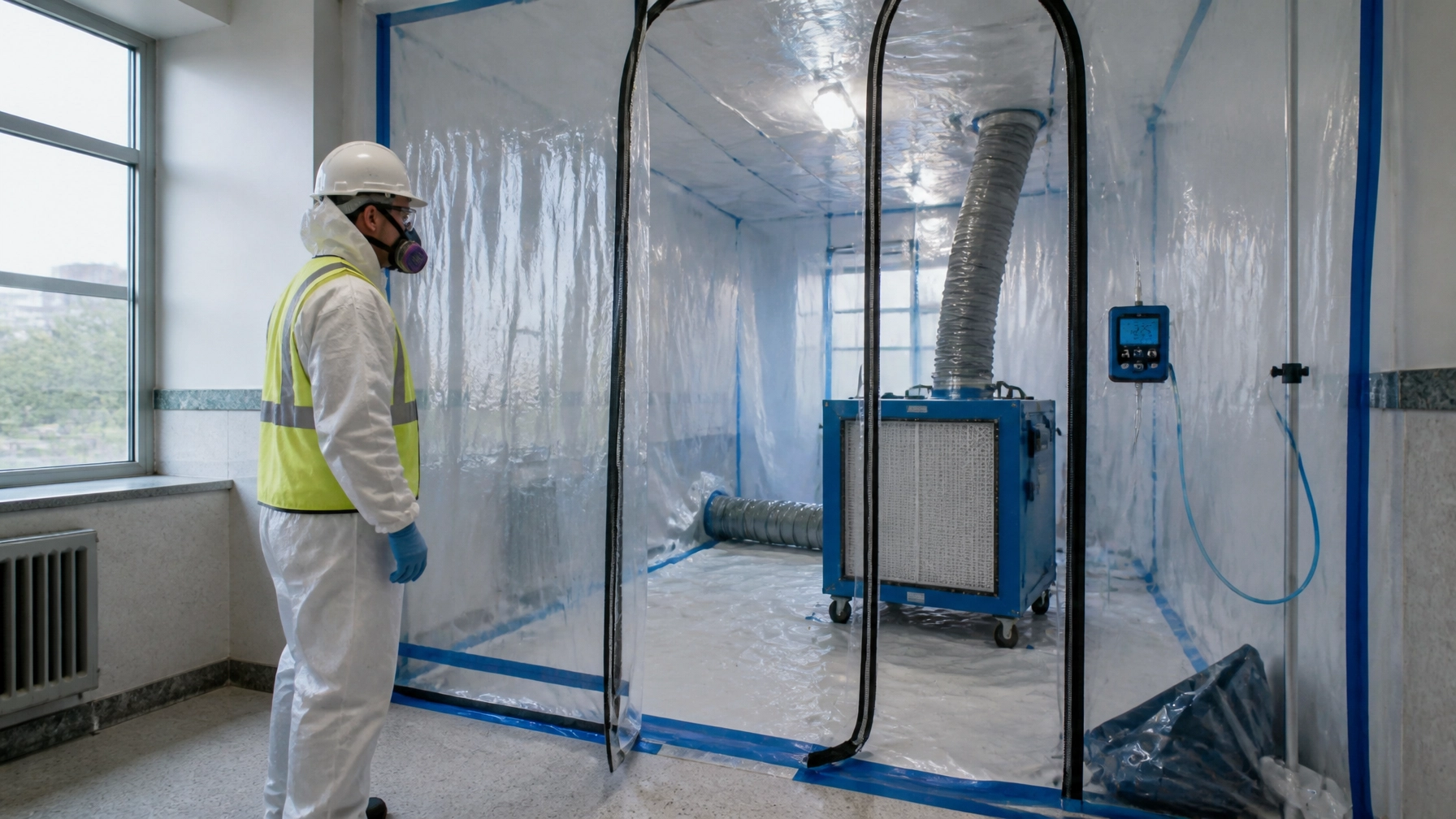
    Certified asbestos safety technician monitoring containment, HEPA filtration, and pressure controls

    The AST’s responsibilities include:

    • Observing work-area preparation
    • Confirming containment and decontamination controls
    • Verifying worker permits
    • Conducting pre-commencement inspections
    • Monitoring pressure differentials and engineering controls
    • Performing required air sampling
    • Inspecting progress and pre-sealant conditions
    • Directing corrective action
    • Conducting cleanup and final inspections
    • Maintaining daily logs and final reports

    No actual abatement work should begin until the AST issues written authorization to proceed.

    If the contractor fails to correct a violation, the AST can order the work stopped in writing. If the contractor does not comply, the enforcing agency can issue a stop-work order, secure the work area, and assess penalties.

    Air monitoring, containment, and clearance

    Asbestos safety control monitoring is not a paperwork exercise. It is an active field-control function.

    For a typical full-containment abatement project, the contractor may need to install:

    • Critical barriers
    • Separation barriers
    • Decontamination facilities
    • HEPA-filtered air filtration units
    • Negative-air systems
    • Digital manometers
    • Controlled waste routes
    • Emergency procedures and posted contact information

    For unoccupied buildings, N.J.A.C. 5:23-8.15 requires engineering controls capable of maintaining a pressure differential of at least 0.03 inches water column between the work area and adjacent spaces. Occupied-building projects generally require at least 0.05 inches water column, along with additional separation, occupancy, and air-monitoring controls.

    Air sampling must follow the applicable methods in N.J.A.C. 5:23-8.21, including NIOSH 7400 for PCM analysis and applicable TEM requirements for final clearance.

    The work area must pass:

    • Visual inspection
    • Cleanup inspection
    • Final air monitoring
    • Final inspection
    • Documentation review

    A building area cannot be reoccupied simply because the contractor says the work is complete. The owner must obtain the required Certificate of Completion, and the enforcing agency must issue the certificate of occupancy or other approval required for reoccupancy.

    Occupied buildings require additional planning

    N.J.A.C. 5:23-8 generally expects asbestos abatement to occur in unoccupied buildings. If portions of a building will remain occupied, the project must meet additional requirements.

    The owner must provide written occupant notification 20 business days before the project begins. The notice should address:

    • Relocation plans
    • Blocked entrances and alternate routes
    • Emergency contacts
    • Affected areas
    • Precautions and protective measures

    The ASCM must also provide a written statement identifying the occupied areas and confirming that required controls will remain in place.

    Occupied-building projects require tighter coordination between the owner, construction manager, contractor, building occupants, fire protection personnel, and municipal enforcing agency. A missed detail can shut down the work or create an unacceptable exposure pathway.

    State and federal notifications

    Depending on the building type, material, quantities, and planned disturbance, additional notifications may be required.

    Under federal 40 CFR Part 61, Subpart M, the asbestos NESHAP applies to demolition and renovation of most facilities, excluding residential buildings with four or fewer dwelling units. Notification requirements can apply when regulated asbestos-containing material exceeds applicable thresholds.

    NJDEP guidance identifies the common NESHAP thresholds as:

    • More than 260 linear feet on pipes
    • More than 160 square feet on other facility components
    • More than 35 cubic feet where the quantity cannot be measured before removal

    For regulated asbestos-containing material, written notification generally must be submitted at least 10 working days before demolition or renovation begins.

    NJDEP also regulates asbestos waste transportation and disposal under N.J.A.C. 7:26. Waste must be properly packaged, labeled, transported by an appropriate registered hauler, and disposed of at an authorized facility.

    New Jersey Department of Labor licensing and notification requirements may apply to asbestos work in public, commercial, and residential buildings. Contractors and workers must hold the required licenses and permits unless a specific exemption applies.

    Review the current requirements directly through:

    New Jersey asbestos inspection checklist

    Before submitting a municipal renovation or demolition permit, confirm that your project team has:

    • Defined the full construction disturbance area
    • Completed a pre-renovation or pre-demolition asbestos survey
    • Obtained the required architect, engineer, or contractor certification
    • Identified ACM, RACM, and suspect materials
    • Selected a licensed asbestos contractor
    • Selected an authorized ASCM firm
    • Confirmed AST coverage
    • Prepared abatement plans and containment details
    • Coordinated demolition and other UCC permits
    • Identified waste hauler and disposal facility
    • Submitted required state and federal notifications
    • Planned occupant relocation or protection
    • Established air-monitoring and clearance procedures
    • Built final reporting into the project schedule

    How Envicon keeps the permit path clear

    Asbestos coordination sits at the intersection of environmental compliance, construction sequencing, public safety, and municipal review. It should not be handed from one consultant to another with no single point of ownership.

    Envicon Group brings environmental assessment, regulatory coordination, construction oversight, and field-level documentation into one project workflow. Our team works directly with owners, architects, contractors, attorneys, code officials, and agency reviewers across New Jersey and New York.

    We do not just deliver an asbestos report. We help you understand what the findings mean, what must happen next, and how to keep unrelated portions of your project moving where the regulations allow it.

    That is how complex buildings become buildable projects.

    Summary

    For a New Jersey municipal building renovation or demolition, asbestos review must begin before permit submission: not after a contractor discovers suspect material in the field.

    The essential sequence is:

    1. Survey the building and planned disturbance areas.
    2. Certify whether asbestos may be disturbed.
    3. Complete the required assessment.
    4. Coordinate the asbestos abatement permit with other UCC permits.
    5. Use a licensed asbestos contractor and authorized ASCM firm.
    6. Maintain continuous AST oversight and required air monitoring.
    7. Complete clearance, reporting, and occupancy approvals before reentry.

    If your project involves a municipal building, public facility, school, daycare, commercial property, or older residential structure in New Jersey, early asbestos coordination can prevent permit rejection, stop-work orders, re-mobilization, and avoidable schedule loss.

    Plan your next step with Envicon

    Envicon Group logo

  • NJ Brownfield Tax Credits: Are You Leaving Money on the Table?

    NJ Brownfield Tax Credits: Are You Leaving Money on the Table?

    If you’re a developer in New Jersey, you know the drill: the best sites are rarely the cleanest. Those prime, transit-oriented acres in Jersey City, Newark, or Paterson almost always come with a "history."

    In the old days, that history was just a line item on your balance sheet: a massive cleanup cost that ate your margins. But today, brownfield redevelopment in NJ has shifted. Through the Brownfield Redevelopment Incentive Program (BRIP), the state is effectively offering to foot a massive portion of your remediation bill.

    We’re talking about tax credits that can cover up to 50%: and in some cases 60%: of your eligible remediation costs. On a $5 million cleanup, that’s up to $3 million back in your pocket.

    But here’s the catch: the NJEDA doesn't hand out million-dollar credits for "trying hard." This is a highly technical, competitive, and regulator-heavy process. If your consultant is just delivering "bloated reports" instead of a cleared path to NJEDA approval, you aren't just paying for bad advice: you’re leaving millions on the table.

    What is the NJ Brownfield Redevelopment Incentive Program (BRIP)?

    The BRIP is the flagship incentive under the NJ Economic Recovery Act. It was designed to turn "underused and contaminated properties into thriving assets": a phrase we live by here at Envicon.

    Unlike the old reimbursement programs that took a decade to pay out, the BRIP offers a one-time tax credit. It’s a game-changer for brownfield cleanup and redevelopment planning for NJ developers, but it requires a level of technical precision that most big-box firms simply aren't equipped to handle with their junior-staff models.

    The Numbers You Need to Know:

    • Standard Sites: Up to 50% of eligible remediation costs, capped at $4 million.
    • Government Restricted Municipalities (GRMs): Sites in Atlantic City, Paterson, or Trenton can get up to 60%, capped at $8 million.
    • Qualified Incentive Tracts: High-need areas also qualify for the 60% bump.

    Close-up of environmental soil sampling with a technical field tablet

    Navigating NJ Brownfield Tax Credit Eligibility

    The biggest mistake we see? Developers assuming they qualify just because their dirt is dirty. The NJ Brownfield Tax Credit eligibility criteria are rigid. If you trip over a single technicality during the application phase, your project is dead in the water for that funding round.

    1. The "Non-Liable" Party Rule

    You cannot be the party responsible for the contamination. If you (or an affiliate) spilled the chemicals, you’re paying for the cleanup yourself. This is why environmental due diligence and a clean chain of title are non-negotiable before you even think about applying.

    2. The Financing Gap

    For projects with remediation costs over $5 million (outside of the GRMs mentioned above), you have to prove that the project isn't economically feasible without the tax credit. This isn't just a letter from your accountant; it’s a rigorous financial modeling exercise that must align with your Remedial Investigation Report (RIR).

    3. Site Control and Municipal Support

    You need a letter of support from the local governing body. In the competitive landscape of brownfield redevelopment NJ, local alignment is everything. We work directly with local officials because we know that project movement depends on alignment, not just paperwork.

    4. Green Remediation Standards

    NJ is serious about sustainability. To qualify for the credit, your cleanup must comply with specific green remediation and building standards. This means your remedial action workplan preparation for NJ brownfield sites needs to integrate sustainable practices from day one: not as an afterthought.

    The LSRP’s Role: Precision Over "Fishing Expeditions"

    In New Jersey, the Licensed Site Remediation Professional (LSRP) is the gatekeeper. For BRIP, the NJEDA and NJDEP rely heavily on LSRP certifications to verify that your costs are "reasonable and appropriate."

    This is where the "Big Firm" model fails. At a national firm, you might have an LSRP signing off on a report written by a junior staffer who has never stood on your site. The result? Defensive, bloated reports designed to protect the consultant’s liability, not to secure your tax credit.

    At Envicon, our LSRP services for brownfield redevelopment in New Jersey are built on direct leadership. When the NJEDA looks at your "Total Cost of Remediation" budget, they are looking for precision. Our team uses high-resolution site characterization to map plumes with surgical accuracy. We don't guess; we model. This technical depth ensures that when we tell the state a cost is necessary, it sticks.

    Digital dashboard showing real-time remediation project metrics

    The Data Advantage: Transparency as a Strategy

    Most consultants treat the NJEDA coordination like a black box. You hand over the data and hope for the best. We think that’s a recipe for a $0 credit.

    Our clients use our proprietary digital solutions to stay ahead of the curve. Instead of waiting for a monthly PDF that’s already outdated, you get a real-time dashboard.

    When you’re applying for the NJ Brownfield Redevelopment Incentive Program, you need to prove every dollar spent. Our tech stack tracks:

    • Field-level QA/QC: Real-time data from the drill rig to the dashboard.
    • Soil Management: Precise tracking of "Clean Soil Bank" usage vs. private disposal: critical for eligible cost verification.
    • Milestone Tracking: Ensuring your remediation schedule aligns perfectly with the NJEDA's redevelopment agreement.

    This transparency isn't just a "nice to have." It’s how you win. When the state asks for a breakdown of your remedial costs, we don't have to scramble through paper files. We pull the data and deliver the truth.

    Preparing for 2026: Why the "Wait and See" Approach Fails

    The most recent BRIP application window has closed, and the NJEDA is currently refining the rules for the next round. Many developers will wait until the portal opens in 2026 to start their paperwork.

    That is a million-dollar mistake.

    To be competitive for nj brownfield remediation tax credits, you need to have your site investigation (SI) and remedial investigation (RI) locked down now. You need your LSRP to have established the remedial strategy, and you need your municipal support letter in progress.

    As contaminated site remediation consultants for nj brownfield projects, we’re already working with clients to position their 2026 applications. We are:

    1. Refining Cost Models: Using current market rates to ensure budgets are "reasonable" yet comprehensive.
    2. Structuring Ownership: Making sure the applicant entity is squeaky clean regarding liability.
    3. Green-Lighting the Design: Integrating NJ’s green building standards into the initial civil and site engineering.

    Technical 3D plume model vs. physical soil core extraction

    Summary: Stop Selling Reports, Start Clearing Paths

    The NJ Brownfield Tax Credit isn't just an "incentive": it’s a critical piece of the capital stack for complex NJ redevelopment. Navigating the NJ Brownfield Tax Credit eligibility and the competitive scoring system requires more than a consultant; it requires a partner who understands the regulator’s reviewer by name.

    At Envicon Group, we don’t sell you a 500-page report and wish you luck. We sell you a cleared path from a contaminated headache to a compliant, buildable asset.

    Key Takeaways for Developers:

    • Don't wait for the window: Preparation for the 2026 round starts with an SI/RI today.
    • Precision is profit: Accuracy in your remedial action workplan directly impacts your tax credit amount.
    • Tech matters: Use real-time data to prove your costs and defend your milestones.
    • LSRP leadership: Ensure your LSRP is a hands-on lead, not a remote signer.

    Ready to clear the path for your next project? At Envicon Group, we don’t just deliver reports: we deliver outcomes. Contact us today to discuss your site’s specific challenges.

    Envicon Strategic Solutions logo - MAIN

  • 10 Strategic SEO Posts for Envicon Group

    10 Strategic SEO Posts for Envicon Group

    To move from "Page 7" to "Page 1," we are deploying these 10 technical deep-dives over the next few weeks. Each post is engineered to target high-intent search terms that your ideal clients (developers, attorneys, and lenders) are searching for when they face a bottleneck.

    1. NYC OER vs. NYSDEC: The Strategic Choice for Brownfield Tax Credits
      Targeting: High-value keywords around NYC Brownfield incentives.
    2. Phase I ESA and ASTM E1527-21: Is Your Due Diligence 2026-Ready?
      Targeting: New ASTM standards and "stale" report risks.
    3. Soil Management Plans (SMP): The Developer’s Shield Against Disposal Surprises
      Targeting: Construction oversight and soil management cost-containment.
    4. Vapor Intrusion Mitigation in NJ: Passive vs. Active System ROI Analysis
      Targeting: Remedial design keywords and NJDEP technical compliance.
    5. LSRP Mandatory Timeframes: Navigating the NJDEP ‘Red Zone’
      Targeting: NJ regulatory compliance and project schedule management.
    6. Stormwater Management 2.0: Balancing Green Infrastructure and Buildability
      Targeting: Civil engineering, SWPPP, and NJ green infrastructure rules.
    7. NYC Parks Permits: Clearing the Path for Utility and Site Construction
      Targeting: Niche regulatory permitting that stalls NYC projects.
    8. Site Investigation ROI: Why Precision Sampling Saves Millions in Excavation
      Targeting: Geotechnical and site characterization efficiency.
    9. Lender-Ready Remediation: Securing Financing for Environmentally Challenged Assets
      Targeting: Environmental due diligence for financing and acquisition.
    10. The Technology Edge: Why Real-Time Dashboards Beat Monthly PDF Reports
      Targeting: Modern project management and transparency-seeking clients.

    2026 PFAS Remediation Costs in NJ: Budgeting for the Invisible Risk

    If you’re developing in New Jersey in 2026, the term "PFAS" has likely shifted from a vague regulatory buzzword to a line item that can break a project’s pro forma. Known as "forever chemicals," Per- and Polyfluoroalkyl Substances are no longer just an "emerging" concern: they are a central driver of remediation costs.

    At Envicon, we see the frustration daily. A developer picks up a prime industrial asset in Hudson or Middlesex County, runs their due diligence, and suddenly faces a NJDEP LSRP case that includes PFAS. The "invisible risk" becomes very visible when the first remediation bill arrives.

    The challenge isn't just the technical cleanup; it's the budgeting. In a landscape of fluctuating disposal rates and tightening NJDEP regulations, how do you predict the cost of something you can't even see?

    The 2026 NJ Regulatory Landscape: The ISRS Factor

    As of mid-2026, the NJDEP’s Interim Soil Remediation Standards (ISRS) for PFOA, PFOS, PFNA, and GenX are in full effect. These aren't just suggestions. If your site investigation identifies these compounds above the threshold: often as low as 0.047 ppm for PFNA: you are officially in the remediation game.

    The real budget-killer in 2026 isn't just the direct contact standards; it's the Migration to Groundwater (MGW) pathway. Under current rules, if PFAS is in your soil, you must prove it isn't leaching into the groundwater. This requires Synthetic Precipitation Leaching Procedure (SPLP) testing, a technical hurdle that most "big-box" firms use to justify months of additional, expensive reporting.

    At Envicon, we don't sell reports. We sell a cleared path. That means knowing exactly which site investigation tools to use early: so you aren't surprised by a leaching issue three months before your scheduled closing.

    Technical diagram of a PFAS pump-and-treat system showing soil strata and filtration vessels

    Groundwater Treatment: GAC vs. Ion Exchange Costs

    When PFAS hits the groundwater, the complexity: and the cost: scales exponentially. In 2026, the two primary heavy hitters for treatment are Granular Activated Carbon (GAC) and Ion Exchange (IX).

    If you are looking at a "Pump and Treat" scenario for a typical NJ redevelopment site, here is how the numbers are currently shaking out:

    • Operating Costs: Generally, you’re looking at $0.50 to $5.00 per 1,000 gallons treated.
    • Capital Costs: Installing a full-scale treatment train (vessels, pumps, piping) for a medium-sized site typically ranges from $500,000 to $5 million.
    • Annual O&M: Expect to budget $50,000 to $500,000 per year for media change-outs, power, and oversight.

    Why the Cost Variance?

    The $0.50 vs. $5.00 gap depends on water chemistry. If your site has high levels of "competing" organic matter or solids, your GAC media will "blind" or exhaust much faster. This is where a junior staffer at a national firm can cost you hundreds of thousands: they often fail to account for pre-filtration needs, leading to premature (and expensive) media replacements.

    GAC is the workhorse. It’s reliable and handles long-chain PFAS well. Ion Exchange is often more efficient for short-chain PFAS but carries a higher upfront media cost. The "Envicon Way" involves upfront bench-scale testing to determine which media actually moves the needle for your specific plume, rather than applying a cookie-cutter playbook.

    Soil Remediation: The Source Zone Headache

    If your project involves a "source zone": a concentrated area of PFAS-contaminated soil: the costs can jump into the $10 million to $30 million range for significant industrial sites.

    In 2026, your options are becoming more limited:

    1. Excavation & Disposal: This is the most certain path but the most expensive. With fewer landfills accepting PFAS-laden soil, transportation and disposal (T&D) rates are at an all-time high.
    2. On-site Stabilization: Using specialized reagents to "lock" the PFAS in place. This can be cheaper than T&D but requires rigorous NJDEP approval and long-term monitoring.
    3. Capping: If you can meet the engineering requirements, capping the site can mitigate the direct contact risk, but it doesn't always solve the migration-to-groundwater issue.

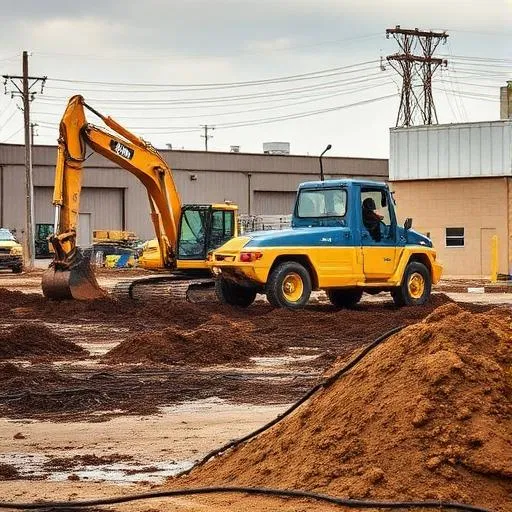
    Excavator performing soil remediation and excavation at an urban NJ redevelopment site

    Budget Predictability: Avoiding the "Consultant Black Box"

    The biggest complaint we hear from real estate investors who have been "burned" by national firms is the lack of transparency. You get a monthly PDF report that tells you what happened thirty days ago, usually accompanied by a change order for "unexpected site conditions."

    We’ve fixed that. Envicon provides real-time project dashboards that give you a live view of your remediation budget. You see the flow rates, you see the media saturation levels, and you see the schedule: in real-time.

    When a project is stalled, every week of delay incurs carrying costs and tests the patience of your lender. We focus on Actionable Outcomes. If the data shows GAC isn't performing, we don't write a 50-page memo; we talk to the contractor and pivot the strategy at 7:00 AM the next morning.

    "In 2026, the most expensive environmental report is the one that tells you there's a problem without offering a clear, budgeted path to the solution."

    Summary: Your 2026 PFAS Budgeting Checklist

    To keep your NJ project on track, your 2026 pro forma should account for:

    • Early Screening: Don't wait for the Phase II. Use high-resolution site characterization to find the "invisible" PFAS early.
    • Lifecycle Budgeting: If you need a pump-and-treat system, budget for at least 5-10 years of O&M, not just the capital install.
    • Regulatory Fluency: Ensure your consultant actually knows your NJDEP reviewer. Relationships matter when you're negotiating a site-specific soil standard.
    • Media Management: Account for the rising costs of "spent" media disposal, which is now treated with much higher scrutiny by waste facilities.

    Close-up technical visualization of environmental sampling equipment and well caps

    Moving Forward

    Navigating PFAS in New Jersey isn't about finding a firm that sells the most reports: it's about finding a team that takes ownership of the outcome. Whether you're managing a complex brownfield redevelopment or performing due diligence for an acquisition, you need precision and urgency.

    Don't let the "invisible risk" stall your next build. Contact Envicon Group today for a technically sharp, no-fluff assessment of your site's PFAS liability and a clear path to closure.

    Call to Action

    If you're budgeting for PFAS risk, here are three fast next steps:

    Envicon Strategic Solutions logo - MAIN

  • NY Wastewater Treatment Plants Now Required to Report Cybersecurity Incidents Within 24 Hours

    NY Wastewater Treatment Plants Now Required to Report Cybersecurity Incidents Within 24 Hours

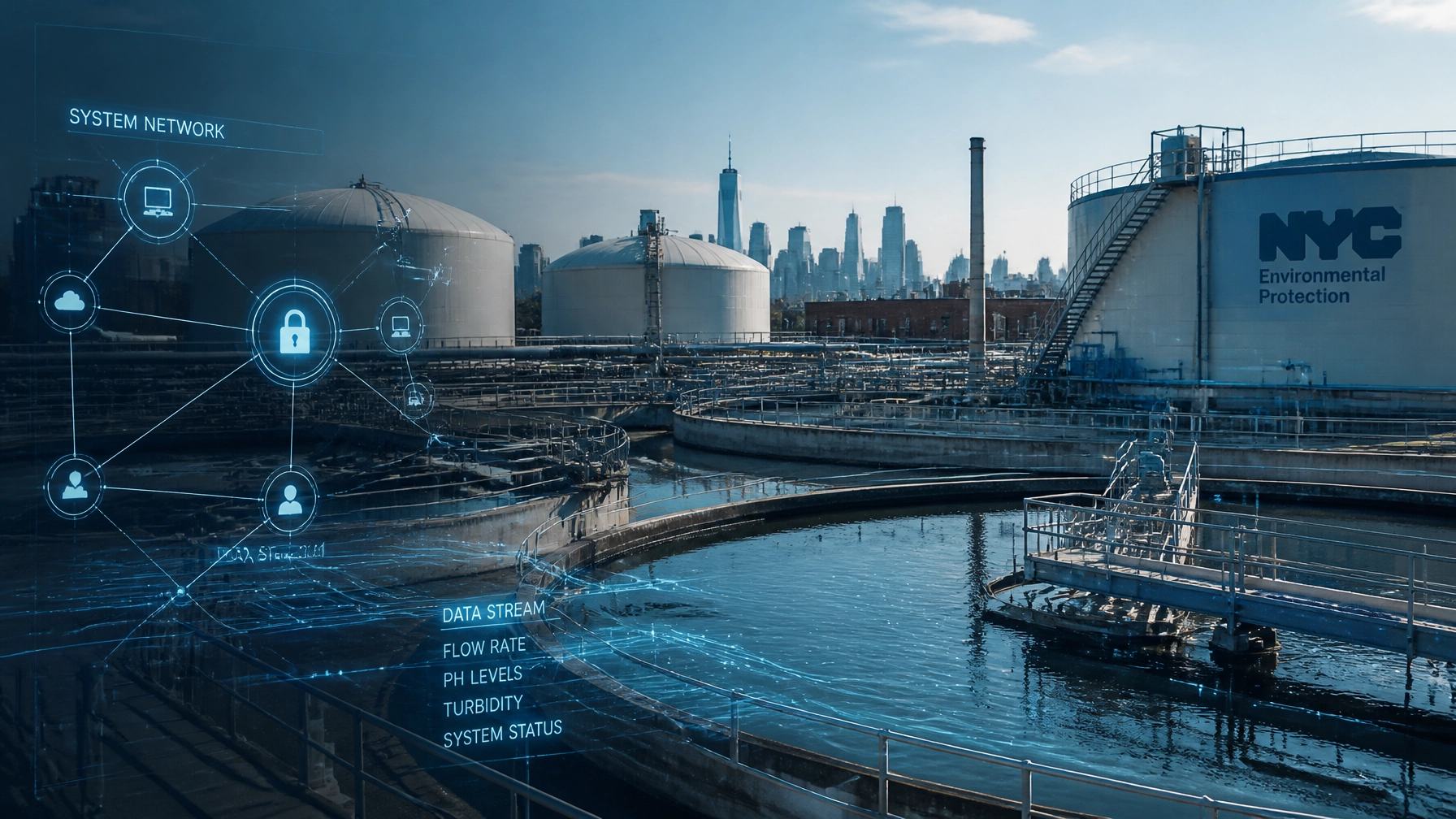
    For decades, the primary concern for New York wastewater treatment operators was physical: flow rates, nitrogen levels, and structural integrity. As of March 2026, the regulatory landscape has shifted. The New York State Department of Environmental Conservation (NYSDEC) has officially adopted amendments to 6 NYCRR Parts 616, 650, and 750, establishing the state’s first mandatory cybersecurity framework for wastewater facilities.

    The headline requirement is clear: if you experience a cybersecurity incident, you have 24 hours to report it.

    This is no longer a suggestion or a "best practice." It is a permit requirement. For utility providers, contractors, and engineers across New York, the clock is now ticking on compliance. At Envicon Group, we’ve spent 20 years navigating the intersection of infrastructure and regulation. We know that when the DEC moves this quickly, it’s because the risk to public health and site viability is immediate.

    The 24-Hour Rule: Rapid Incident Reporting (Part 750)

    Effective March 26, 2026, all State Pollutant Discharge Elimination System (SPDES) permittees: whether publicly or privately owned: must change how they handle digital disruptions.

    Under the new 6 NYCRR 750-2.7(h), any "cybersecurity incident" must be reported orally to your Regional Water Engineer (RWE) within 24 hours of discovery. This oral notification must then be followed by a comprehensive written report within 30 days.

    A "cybersecurity incident" isn't just a full-scale system lockout. According to the DEC, it includes any event that jeopardizes the integrity, confidentiality, or availability of your operational technology (OT) or information technology (IT) systems. If a breach affects your ability to monitor discharge or control treatment processes, the state needs to know: and they need to know now.

    "We remove the obstacles between you and a buildable, compliant site. In the new digital era, cybersecurity is the biggest obstacle most operators aren't seeing yet." : Jason Pancoast, CEO, Envicon Group.

    Why Your Big-Box Consultant Might Fail You Here

    When new regulations like this drop, large national firms often respond with a 200-page "defensive report" written by someone in a satellite office three states away. They’ll tell you what the law says, but they won't be on-site at 7:00 AM to help you map your SCADA network or talk to your Regional Water Engineer by name.

    At Envicon, we don’t just deliver reports; we deliver cleared paths. We understand the NYSDEC because we sit at the table with them daily. While a national firm might treat your cybersecurity compliance as a generic checklist, we treat it as a critical infrastructure requirement specific to the Hudson Valley, Long Island, or New York City regulatory environment.

    Industrial SCADA control panel showing digital security diagnostics

    Technical Controls and the March 2027 Deadline

    While the reporting requirements are immediate, the DEC has provided a lead-in period for the more structural changes. By March 11, 2027, all Publicly Owned Treatment Works (POTWs) must implement baseline cybersecurity controls aligned with the NIST Cybersecurity Framework (CSF) 2.0.

    These requirements include:

    • Emergency Response Plans (ERP): Every POTW must establish, maintain, and implement an ERP that specifically addresses cyber threats.
    • Access Controls: Mandatory multi-factor authentication (MFA) for any remote access to operational technology.
    • Network Segmentation: A written description of your network structure, showing how you separate critical treatment controls from the public internet.
    • Annual Certification: Starting in 2027, facilities must certify annually that they are in compliance with these Part 750 amendments.

    For facilities with a design flow of 10 million gallons per day (MGD) or greater, the rules are even stricter, requiring active network monitoring and logging unless your OT is entirely air-gapped from external networks.

    Mandatory Cybersecurity Training for Operators (Part 650)

    The regulation acknowledges that the strongest firewall is a trained workforce. 6 NYCRR Part 650 now mandates cybersecurity training for all NYS-certified wastewater operators.

    This isn't an obligation for the municipality to provide training: it is an individual requirement for credential maintenance. Operators must complete a minimum number of training hours on DEC-accepted topics. This ensures that the people on the ground: the ones Envicon works with every day: are the first line of defense against digital interference.

    Engineers collaborating in the field reviewing technical plans on a tablet

    Protecting Your Sensitive Information (Part 616)

    A common concern among utility providers is that by reporting vulnerabilities to the state, they are creating a roadmap for future attackers through the Freedom of Information Law (FOIL).

    NYSDEC addressed this by amending 6 NYCRR Part 616. Cybersecurity information is now explicitly recognized as "critical infrastructure" information. When you submit these details to the DEC, you can request an exception from disclosure. This protection is vital for maintaining the security of your facility while remaining transparent with your regulators.

    The Envicon Resolution: From Risk to Compliance

    Most consultants will hand you a list of problems and walk away. Envicon takes ownership. Whether we are conducting a Phase I or Phase II Environmental Site Assessment or managing a complex Brownfield Redevelopment, we focus on the actionable outcome.

    For wastewater facilities facing these new mandates, our approach is three-fold:

    1. Immediate Audit: We help you identify if your current "incident response" meets the 24-hour oral reporting threshold.
    2. Gap Analysis: We map your existing OT/IT infrastructure against the NIST-aligned requirements due in 2027.
    3. Regulatory Liaison: We leverage our 20 years of direct agency relationships to ensure your ERP and technical controls hold up under scrutiny.

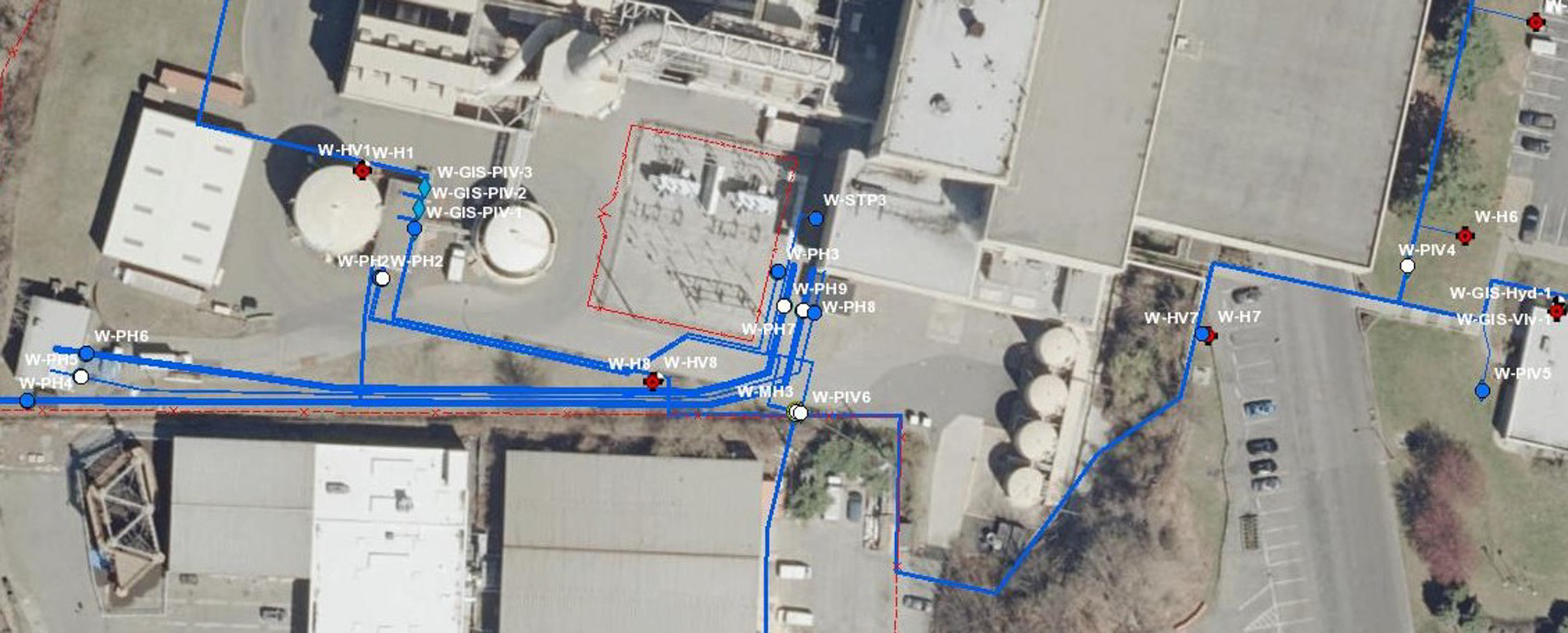
    Aerial utility infrastructure site map showing subsurface pipeline routes

    Summary: What You Need to Do Now

    The NYSDEC's adopted amendments represent a fundamental change in how wastewater infrastructure is managed in New York. You cannot afford to wait until a breach occurs to figure out who your Regional Water Engineer is or how to document a network map.

    • Update your internal SOPs to include oral reporting within 24 hours.
    • Verify that your certified operators are tracking their cybersecurity training credits.
    • Begin the "Identify and Protect" phase of your NIST alignment before the 2027 deadline.

    Don't let a "defensive report" from a national firm be the only thing standing between you and a regulatory violation. Work with a firm that is field-first and regulator-facing.

    Senior engineer and client reviewing a technical report with confidence

    Resolve Your Regulatory Challenges Today

    Envicon Group specializes in clearing the path for high-stakes development and infrastructure projects. Let’s ensure your wastewater facility is compliant, secure, and ready for the next 20 years.

    Envicon Group Logo

  • PFAS Soil Leachate Standards: The New Compliance Floor for NJ Remediation

    PFAS Soil Leachate Standards: The New Compliance Floor for NJ Remediation

    If you’ve been tracking environmental regulations in New Jersey, you know the "interim" grace period for PFAS is officially over. As of June 15, 2026, the New Jersey Department of Environmental Protection (NJDEP) has formally adopted numeric soil and soil leachate remediation standards for four major per- and polyfluoroalkyl substances (PFAS).

    This isn't just another layer of paperwork. This is a fundamental shift in the compliance floor for every developer, lender, and attorney operating in the NJ/NYC metro area. For years, PFAS was a "known unknown": something we knew was there, but without a codified standard, it was often left in the realm of "investigation only." That changed this month. These standards are now the mandatory cleanup criteria under the New Jersey Spill Compensation and Control Act.

    At Envicon, we don’t sell defensive, bloated reports designed to protect us. We sell cleared paths designed to move your project. If you’re sitting on a site with a history of industrial use, or if you’re in the middle of due diligence, the ground just shifted under your feet. Here is what you need to know about the new standards and how to navigate them without stalling your project.

    The Four Key Contaminants: PFNA, PFOA, PFOS, and GenX

    The NJDEP has focused its regulatory teeth on four specific PFAS compounds that have been linked to significant environmental and health risks:

    • Perfluorononanoic acid (PFNA)
    • Perfluorooctanoic acid (PFOA)
    • Perfluorooctanesulfonic acid (PFOS)
    • GenX (HFPO-DA)

    While these have been treated with "interim" standards since late 2022, their formal adoption into the Site Remediation Standards (SRS) at N.J.A.C. 7:26D means they are now as binding as Lead or Benzene. There is no longer a path to an Unrestricted Use Response Action Outcome (RAO) without addressing these four compounds if they are present on your site.

    Macro shot of laboratory equipment used for Synthetic Precipitation Leaching Procedure (SPLP) testing, showing the precision required for PFAS leachate analysis.

    Understanding the "Soil Leachate" Standard: The DAF 20 Rule

    The most technical: and often most frustrating: part of the new regulations is the Migration to Groundwater (MTGW) pathway. In New Jersey, we don't just care about what's in the soil; we care about what can wash out of the soil and into the aquifer.

    For PFAS, the NJDEP has set the soil leachate standard using a Dilution Attenuation Factor (DAF) of 20. This means the allowable concentration in the leachate (the liquid that filters through the soil) is tied directly to the state's stringent groundwater quality standards.

    • PFOA: 14 parts per trillion (ppt) in groundwater = ~280 ppt in soil leachate.
    • PFOS: 13 ppt in groundwater = ~260 ppt in soil leachate.
    • PFNA: 13 ppt in groundwater = ~260 ppt in soil leachate.

    If your soil fails the Synthetic Precipitation Leaching Procedure (SPLP) test at these incredibly low thresholds, you are looking at a remediation obligation. This is a "parts per trillion" game. To put that in perspective, one part per trillion is roughly equivalent to one drop of water in 20 Olympic-sized swimming pools. The margin for error is zero.

    The Spill Act Implications: Why You Can’t Wait

    Under the New Jersey Spill Act, liability is strict, joint, and several. If you own the property, you own the PFAS.

    The formal adoption of these standards means that Phase I and Phase II Environmental Site Assessments must now explicitly evaluate PFAS as a potential Contaminant of Concern (COC) based on historical site use. If your consultant isn't looking for it, your lender likely will be. We’ve seen projects stalled at the closing table because a "big-box" firm used a generic playbook and ignored the emerging PFAS risk, only for a lender's reviewer to flag it at the eleventh hour.

    At Envicon, we work directly with architects, attorneys, and construction managers to ensure alignment. We know the regulator's reviewers at NJDEP by name. We don't just hand you a report with an exceedance; we give you a strategy for the migration-to-groundwater pathway that keeps your construction schedule intact.

    Technical engineering diagram showing the migration of PFAS contaminants from soil through the vadose zone into the groundwater table, illustrating the MTGW pathway.

    Big-Box Friction vs. The Envicon Path

    When you hire a national firm with 10,000 employees, your project is a number. They’ll likely tell you that "PFAS is complicated" and suggest months of additional "characterization" before even talking about a remedy. That is a defensive strategy designed to maximize their billable hours while minimizing their risk.

    We take a different approach. Our field-first, PE-led model is built for speed and technical precision.

    1. Direct Principal Access: You aren't talking to a junior staffer. You're talking to a Professional Engineer who has been on your site at 7:00 AM and knows the soil strata.
    2. Proprietary Tech: We use real-time project reporting dashboards that give you full visibility into your sampling data, schedule, and budget. No more waiting for a PDF that’s already three weeks out of date.
    3. Actionable Outcomes: We don't sell "investigation." We sell "cleared paths." If we find PFAS, we’re already looking at the Remedial Design: whether that's a cap, a soil removal plan, or a more sophisticated remedial action.

    The Action Plan: What to Do Now

    If you are currently managing a site or looking at a new acquisition in New Jersey, here is your immediate checklist:

    • Audit Your Due Diligence: If your Phase I was completed more than six months ago, it likely didn't account for these formal standards. Re-evaluate the potential for PFAS based on historic site operations (firefighting foams, plating, textiles, electronics, etc.).
    • Run the SPLP: Don't just rely on "Total PFAS" in soil. The leachate (SPLP) result is what determines your migration-to-groundwater obligation. It’s often the difference between a minor issue and a major remediation project.
    • Consult Your LSRP: Your Licensed Site Remediation Professional is now legally obligated to use these adopted standards. Ensure they have a clear plan for evaluating PFAS that won't trigger unnecessary "scope creep."
    • Check Your Carry Costs: Every week of delay in NJ remediation is a week of carrying costs and lender pressure. Speed is your most valuable asset.

    A professional engineering dashboard on a widescreen monitor, displaying real-time remediation metrics and GIS mapping for a New Jersey development project.

    Summary: A New Era of NJ Compliance

    The June 2026 adoption of PFAS soil and leachate standards isn't a suggestion: it's the law. The NJDEP has set the bar high, and the technical requirements for leachate testing (DAF 20) mean that many sites previously thought to be "clean" may now require remediation.

    Key Takeaways:

    • PFNA, PFOA, PFOS, and GenX are now formally codified in the NJ SRS.
    • The migration-to-groundwater (leachate) threshold is incredibly low, tied to ppt groundwater standards.
    • Spill Act liability is immediate for owners and responsible parties.
    • Success requires a consultant who understands the local regulatory landscape and moves with urgency.

    We believe in doing the work right, standing behind our word, and keeping projects moving. Whether you’re dealing with a complex brownfield redevelopment or a time-sensitive transaction, Envicon is built to resolve these challenges with precision.

    Stop paying for bloated reports and start paying for cleared paths.

    Contact Envicon Group today to review your site data against the new June 2026 standards and ensure your project stays on track.

    Active remediation site in New Jersey with a focus on a professional groundwater monitoring well cap, showing engineering oversight in action.

    Ready to Move Your Project Forward?

    If your site is facing PFAS questions, lender pressure, or NJDEP compliance issues, we’re ready to help you get to a clear next step.

    Envicon Strategic Solutions logo - MAIN

  • The Inundation Risk Zone (IRZ): Understanding NJ’s Climate-Adjusted Flood Elevations

    The Inundation Risk Zone (IRZ): Understanding NJ’s Climate-Adjusted Flood Elevations

    The rules for building in New Jersey just changed, and if you’re reading this on June 22, 2026, you have exactly 28 days to decide how you’re going to handle it.

    On January 20, 2026, the NJDEP officially adopted the Resilient Environments and Landscapes (REAL) rules. This wasn't just another regulatory tweak; it was a fundamental shift in how tidal flood hazard areas are defined and managed. For developers, investors, and attorneys, the primary headlines are the Climate-Adjusted Flood Elevation (CAFE) and the Inundation Risk Zone (IRZ).

    At Envicon, we don’t sell bloated reports that sit on your desk. We sell cleared paths. Right now, that path is narrowing for anyone who hasn't secured their "legacy" status. Here is what you need to know about the new NJ flood elevations and why the current "one-year delay" is more of a countdown than a reprieve.

    The New Math: CAFE vs. FEMA BFE

    For years, the gold standard for flood elevation was the FEMA Base Flood Elevation (BFE). If FEMA said the 100-year flood was 10 feet, you built to that plus a little freeboard.

    Under the NJPACT REAL rules, that math is obsolete for tidal areas. The state has introduced the Climate-Adjusted Flood Elevation (CAFE), which is set at FEMA BFE + 4 feet.

    Technical diagram showing FEMA BFE vs NJ CAFE +4ft elevation

    This 4-foot jump is designed to account for sea-level rise projections through the year 2100. If your site has a BFE of 10 feet, your new design flood elevation for NJDEP permitting is 14 feet. This isn't a suggestion; it's a requirement for site engineering and habitable floor heights.

    Why this matters now:

    • Design Impact: Foundations, mechanical systems, and access points all have to move up. This changes your floor-area ratio (FAR) and your construction costs.
    • Financing Gap: Lenders are already looking at these rules. A project designed to old standards that doesn't meet CAFE might be viewed as a "stranded asset" before the first shovel hits the dirt.
    • Regulatory Friction: If your project isn't elevated to CAFE, you aren't getting an NJDEP permit: period: unless you fall under the legacy protections.

    Defining the Inundation Risk Zone (IRZ)

    Beyond the vertical elevation (CAFE), the NJDEP has introduced a horizontal boundary: the Inundation Risk Zone (IRZ). This zone identifies land that is currently above the mean high water line but is projected to be permanently inundated by the year 2100.

    Technically, the IRZ includes all land within five feet vertically of the current Mean Higher High Water (MHHW) elevation.

    GIS map showing the Inundation Risk Zone overlay in coastal NJ

    Contrary to some of the early panic in the industry, the IRZ is not a no-build zone. However, it is a "build-with-scrutiny" zone. If your project falls within the IRZ: especially residential developments or critical infrastructure: you are now required to submit:

    1. A Sea-Level Rise Impact Assessment: How will your site function when the surrounding streets are tidally flooded?
    2. An Alternatives Analysis: You must prove that you've tried to minimize the risk or that there is no feasible alternative to building in that zone.
    3. Risk Acknowledgement: Formal documentation that you recognize the long-term risk of the site becoming permanent water.

    The July 20th Deadline: The Legacy Window is Closing

    There has been a lot of talk about "delays" in the implementation of NJPACT. Let’s be direct: the delay is over. The rules are adopted.

    The only "delay" that matters right now is the 180-day legacy window. Projects that submit an administratively and technically complete application to the NJDEP by July 20, 2026, can still be reviewed under the old standards.

    If you miss that deadline by a single day, or if your application is deemed incomplete, you are subject to CAFE and IRZ requirements.

    "Waiting for the next regulatory delay is not a business strategy; it's a liability. The projects that move forward are the ones that treat these deadlines as hard stops." : Jason Pancoast, CEO of Envicon Group.

    The Envicon Edge: Moving Beyond the "Black Box"

    When you hire a national firm to handle your NJDEP permitting, your project often disappears into a black box. You don't know which junior staffer is writing your report or which reviewer they are (or aren't) talking to.

    Envicon works differently. We are a family-owned, PE-led firm that has spent 20 years building direct relationships with the NJDEP and local regulators. We don't just hand you a report and leave you to figure it out. We sit at the table with the reviewers to find the alignment that actually gets your project approved.

    Envicon engineer and developer collaborating on site plans

    Our proprietary project management infrastructure gives you real-time visibility. You’ll know exactly where your application stands as we race toward that July 20th deadline. We provide the technical precision of a large firm with the urgency and accountability of a partner who is on your site at 7:00 AM.

    Summary: Your 30-Day Action Plan

    The Inundation Risk Zone and Climate-Adjusted Flood Elevations are the new reality for New Jersey development. To keep your project on track, you need to act before the July 20th cutoff:

    • Confirm your Zone: Check if your site falls within the IRZ using the latest NJDEP mapping.
    • Audit your Elevations: Does your current design meet the BFE + 4ft standard? If not, do you have a plan to file for legacy status in the next three weeks?
    • Secure your Team: Ensure your consultants are not just aware of the rules, but are actively coordinating with the NJDEP to ensure your application is "technically complete" before the window shuts.

    We don't sell reports. We sell cleared paths. If your project is facing a regulatory hurdle, contact us today to ensure you aren't left underwater, literally or figuratively.

    Take the Next Step


    Envicon Strategic Solutions logo – MAIN
    Envicon Strategic Solutions logo - MAIN

  • NYSDEC’s New DACAT Tool: A Developer’s Guide to Environmental Justice Screening (June 2026)

    NYSDEC’s New DACAT Tool: A Developer’s Guide to Environmental Justice Screening (June 2026)

    As of June 12, 2026, the regulatory landscape for New York real estate development has fundamentally shifted. If you are a developer, property investor, or attorney operating in the five boroughs or upstate, the acronym DACAT is no longer a footnote: it is now a critical milestone in your project’s lifecycle.

    The New York State Department of Environmental Conservation (NYSDEC) has officially launched the Disadvantaged Community Assessment Tool (DACAT). This isn't just another mapping layer; it is a mandatory screening resource under the revised State Environmental Quality Review Act (SEQRA) regulations (6 NYCRR Part 617).

    At Envicon Group, we have been tracking the rollout of the Environmental Justice Siting Law (EJSL) since its inception. We know that for our clients, "compliance" isn't the goal: progress is. Here is what you need to know about DACAT and how to ensure it doesn't become the roadblock that stalls your next closing.

    What is DACAT?

    The Disadvantaged Community Assessment Tool is the operational arm of New York’s commitment to environmental justice. Built on data from the Climate Justice Working Group (CJWG), DACAT is designed to identify "disadvantaged communities" (DACs) that bear a disproportionate burden of negative public health effects, environmental pollution, and climate change impacts.

    The tool categorizes census tracts based on existing environmental stressors and socioeconomic vulnerabilities. In the June 2026 SEQRA framework, applicants must now use DACAT to answer specific questions on both Short and Full Environmental Assessment Forms (EAFs).

    Key Screening Criteria:

    • Location: Is the project located within a DAC?
    • Proximity: Is the project within a half-mile radius of a DAC?
    • Impact: Will the project increase "pollution burdens" (such as air emissions, noise, or waste) on these communities?

    A digital tablet displaying a technical GIS map of NY/NJ with color-coded DACAT census tracts

    Why Early Screening is Non-Negotiable

    In the "old" days of SEQRA, environmental justice was often a late-stage consideration. In 2026, waiting until your EAF is drafted to run a DACAT screen is a recipe for a project-killing delay.

    If DACAT flags your site as being in or near a "comparatively higher burden" area (often highlighted in orange or yellow on the DEC’s interface), the lead agency is now empowered: and often required: to demand a more detailed Environmental Justice (EJ) analysis.

    Every week of delay in identifying these triggers means increased carrying costs and potential friction with lenders who are increasingly sensitive to EJ risks. National "big-box" firms might hand you a DACAT report weeks after your request. At Envicon, we believe in speed and precision. We integrate this screening into the first 48 hours of our due diligence process.

    "We don’t sell reports. We sell cleared paths. If a site has an EJ hurdle, you need to know it before the ink is dry on the purchase agreement, not six months into the permitting process." : Jason Pancoast, CEO of Envicon Group.

    The Envicon Difference: Proprietary Tech Meets Local Fluency

    Most consultants are using the public DACAT tool as a standalone checkbox. They hand you a map and leave you to figure out what it means for your site plan.

    Envicon Group takes a different approach. We have built a proprietary project management infrastructure that integrates DACAT data with our internal site-civil and remediation databases.

    When we run a screen, we aren't just looking at the DEC’s map. We are looking at:

    1. Historical Site Data: How do the specific contaminants on your site interact with the "burden" factors identified by DACAT?
    2. Regulatory Sentiment: We sit at the table with NYC OER and NYSDEC daily. We know which reviewers prioritize specific EJ metrics and how to frame your remedial design to mitigate those concerns early.
    3. Real-Time Dashboards: Our clients get visibility into these risks through custom dashboards. You can see the EJ status, schedule impacts, and budget requirements in real-time: not in a monthly PDF that’s already outdated.

    Active New York construction site at dusk with heavy equipment and tower cranes, highlighting complex site development

    Integrating DACAT into the SEQRA Process

    Under the new rules effective June 12, 2026, the DACAT output informs the "Significance Determination." If the tool indicates your project may have a moderate to large impact on a DAC, the likelihood of being required to produce a full Environmental Impact Statement (EIS) increases significantly.

    Strategic Takeaways for Developers:

    • Site Selection: Use DACAT during the LOI phase. If a site is in a high-burden DAC, factor in the costs and time for community outreach and enhanced mitigation.
    • Design for Mitigation: If your project involves significant soil disturbance or heavy equipment use, build your Stormwater Pollution Prevention Plans (SWPPP) and air monitoring protocols with the DACAT results in mind. Proactive mitigation is cheaper than reactive legal defense.
    • Community Alignment: Collaboration isn't a buzzword; it's a permit strategy. Engaging with DAC stakeholders early: guided by DACAT’s socioeconomic data: can turn potential opponents into project partners.

    Don't Let a Tool Stop Your Project

    The DACAT tool is a powerful new variable in New York development. While large national firms might apply a cookie-cutter playbook to your NYC or NJ project, Envicon brings 20 years of direct agency relationships and field-first expertise.

    We understand that you are working against real deadlines: closings, permits, and construction starts. We don’t just provide a report; we provide the technical and regulatory path to get your site buildable and compliant.

    Field technicians performing site work with heavy equipment and protective gear

    Summary Checklist for June 2026:

    • Verify DAC status: Every new project must be screened using the official DACAT tool.
    • Check the 0.5-mile radius: Impact is no longer confined to your property line.
    • Update EAFs: Ensure you are using the revised forms (Part 617 amendments).
    • Partner with experts: Hire a firm that knows the reviewer by name, not just the regulation by number.

    Ready to screen your next site?

    Navigating the new NYSDEC requirements doesn't have to be a "black box" experience. Whether you're dealing with a complex brownfield or a time-sensitive transaction, our team is ready to move your project forward.

    Envicon Group

  • GHG Mandatory Reporting: Why NY Developers Need a Monitoring Plan by September

    GHG Mandatory Reporting: Why NY Developers Need a Monitoring Plan by September

    If you are a major property owner or developer in New York, the clock isn’t just ticking: it’s racing. As of today, June 29, 2026, you are exactly 64 days away from a critical regulatory deadline that many in the industry are still scrambling to meet.

    Under 6 NYCRR Part 253, New York’s mandatory Greenhouse Gas (GHG) reporting regulation, applicable entities must submit their Emissions Monitoring and Measurement Plan (EMMP) by September 1, 2026. This isn't just a "check-the-box" administrative task; it is the foundational requirement for the first mandatory data submission due in June 2027.

    At Envicon Group, we don’t sell defensive reports that sit on a shelf. We sell cleared paths to compliance. If your current consultant hasn't walked you through your EMMP yet, your project: and your bottom line: are at risk.

    What is Part 253 and Who is in the Crosshairs?

    New York’s Part 253 is the state’s aggressive move to quantify carbon footprints across the most significant sectors of the economy. It applies to "reporting entities" that meet specific emission thresholds or operate in designated high-impact categories.

    Specifically, you are likely subject to these requirements if you fall into any of the following:

    • Large Facilities: Any facility emitting ≥10,000 metric tons of CO2e per year.
    • Fuel Suppliers: Those delivering fossil fuels or fuel products into New York State.
    • Electric Power Entities: Importers and exporters of electricity.
    • Waste Management: Specified waste transporters and operators of certain anaerobic digesters.

    The thresholds are lower than many developers expect. A large-scale residential or mixed-use development with significant onsite energy generation or central boiler plants can quickly cross the 10,000-metric-ton threshold.

    The September 1 Deadline: The EMMP Explained

    The Emissions Monitoring and Measurement Plan (EMMP) is your roadmap for how you will track, calculate, and report your emissions. NYSDEC requires this plan to be submitted by September 1, 2026, to ensure that by the time you start your 2027 reporting, your data is bulletproof.

    A compliant EMMP must include:

    1. Detailed Measurement Methodologies: How are you tracking fuel use? Are you using direct measurement, or mass-balance calculations?
    2. QA/QC Procedures: What is your internal process for catching data anomalies? How often are your meters calibrated?
    3. Calculation Framework: NY Part 253 specifically requires reporting in CO2e using 20-year Global Warming Potentials (GWP20), a more stringent standard than many federal programs.
    4. Data Management Systems: Where is this data living? If your answer is "a series of disparate spreadsheets," you’re already behind.

    Engineer's tablet showing GHG data dashboard

    The Business Impact: Beyond Simple Compliance

    In the world of high-stakes development, a missed regulatory deadline is never just a fine. It’s a cascading series of delays.

    Every week your compliance is in question, you incur carrying costs. Lenders are increasingly flagging GHG compliance as a prerequisite for funding and refinancing. If your Phase I or environmental due diligence doesn't account for Part 253 reporting obligations, you are flying blind into a potential "stop-work" scenario or a rejected lender submittal.

    As we often say at Envicon: Every week of delay costs you carrying costs, lender patience, and market timing. A rejected EMMP in September means re-mobilization of staff and re-billing, which is exactly the kind of big-firm bloat we help our clients avoid.

    The Problem with "Big-Box" Consulting

    If you’ve hired a national firm for your Environmental Assessments, you know the drill: you met a senior partner at the pitch, and then you were handed off to a junior staffer who hasn't stepped foot on your site in six months.

    When it comes to GHG reporting, these firms tend to produce 300-page reports written defensively to protect their own liability, rather than to move your project forward. They hand you a document and leave you to figure out what it means for your operations.

    At Envicon, we take a different approach. We are field-first and regulator-facing. We sit at the table with NYSDEC and NYC OER reviewers because we know them by name. We understand how they interpret Section 2.20 requirements, and we build your EMMP to satisfy those reviewers on the first pass.

    Envicon engineers conducting a waterfront site inspection

    The Envicon Edge: Real-Time Data Transparency

    Compliance shouldn't be a black box. Most consultants deliver a static PDF report that is outdated by the time it hits your inbox.

    Through our Digital Solutions, Envicon provides real-time project reporting dashboards. For GHG reporting, this means you can see your data collection status, emissions trends, and compliance milestones in real-time.

    Instead of wondering if your team is ready for the June 2027 reporting deadline, you can log in and see the verified data points as they are collected. This transparency changes the dynamic with your stakeholders: whether they are investors, lenders, or regulators.

    "Collaboration is not a buzzword: it's how we work. We don't just sell reports; we sell the truth and a clear path to the next stage of your project." : Jason Pancoast, CEO, Envicon Group

    Action Plan: What You Need to Do Right Now

    With the September 1st deadline approaching, there is no time for "synergy" or corporate fluff. You need actionable outcomes.

    1. Confirm Applicability: Immediately assess your facility's projected emissions for the 2026 calendar year. Use our Risk Screener to get a baseline.
    2. Audit Your Data Systems: Ensure you have the hardware (meters, sensors) and software in place to start collecting 2026 data accurately.
    3. Draft the EMMP: Your plan must be finalized and ready for submission by late August to avoid last-minute filing errors.
    4. Prepare for June 2027: Remember, the EMMP is the plan. The action starts in January 2026, with the first formal report due June 1, 2027.

    Environmental monitoring equipment on a construction site

    Summary: Move Forward with Precision

    The new GHG reporting landscape in New York is complex, but it doesn't have to be a project-killer. By focusing on precision, urgency, and direct agency coordination, you can turn a regulatory hurdle into a managed business process.

    Don't let your project sit in someone’s queue at a national firm while your carrying costs mount. Hire a team that lives and breathes the NYC and NJ regulatory environment every day.

    Professional collaboration on environmental reports

    Ready to secure your project's future?

    Don't wait until August to find out your monitoring plan isn't compliant. Get ahead of the NY Part 253 requirements today.

    Envicon Group Logo