Category: Industry Insight

  • NYC OER Voluntary Cleanup Program 2026: Liability Protection, Grants, and Site Management Duties

    NYC OER Voluntary Cleanup Program 2026: Liability Protection, Grants, and Site Management Duties

    For NYC property investors and environmental attorneys, the Office of Environmental Remediation’s Voluntary Cleanup Program can turn a contaminated or underused property into a financeable, buildable asset.

    The program offers a defined path for investigation, remedial design, agency coordination, construction oversight, and closure. It can also provide liability protection, grant funding, Clean Soil Bank access, and hazardous waste fee relief.

    Those benefits are not automatic. They depend on site facts, enrollment status, the approved remedy, proper implementation, and continuing compliance with the project’s VCP Agreement and site management requirements.

    This guide explains how the NYC OER VCP works in 2026 and where investors should focus before acquisition, construction, or refinancing.

    What the NYC OER Voluntary Cleanup Program does

    NYC OER manages the VCP as a local brownfield cleanup program. The program is designed for properties affected by contamination, historic industrial use, petroleum operations, fill, spills, or other recognized environmental conditions.

    According to NYC OER, a developer may often receive an approved remedy and enroll a property within approximately 45 days of the first meeting with OER, depending on the site and the quality of the information available.

    A typical VCP process includes:

    1. Initial consultation with OER.
    2. Eligibility and site history review.
    3. Remedial Investigation Report.
    4. Remedial Action Work Plan.
    5. VCP Agreement.
    6. OER-approved remedial construction.
    7. Confirmation sampling and closure documentation.
    8. Notice of Completion and, where applicable, Green Property Certification.
    9. Long-term maintenance and certification of institutional or engineering controls.

    The practical objective is not simply to produce another environmental report. It is to create a defensible path from site conditions to regulatory closure.

    Liability protection begins with enrollment, but it depends on performance

    The most important commercial benefit is potential liability protection.

    Once a property enrolls in the VCP, NYSDEC states that it generally has no plan to require the developer to perform more than the OER-approved remedy at the site under CERCLA or New York’s Environmental Conservation Law.

    The protection continues while the enrolled party complies with the City cleanup agreement. It can also continue after successful completion of the VCP and receipt of a Notice of Completion.

    NYC OER also explains that:

    “The state and city liability protection is assignable to an enrolled party’s successors and assigns who acquire title to, develop, or otherwise occupy a VCP site, provided such parties adhere to requirements of the VCP.”

    For investors and counsel, that language matters. The protection is not a blanket release from every environmental risk. It is tied to the contamination addressed by the approved program, the terms of the agreement, and the conduct of current and future parties.

    Standard reopener provisions may apply. New information, a failed remedy, a change in site conditions, or a threat to human health or the environment can create additional regulatory concerns.

    Before relying on VCP protection in a purchase agreement, review:

    • The VCP Agreement and all amendments.
    • The approved Remedial Action Work Plan.
    • The Site Management Plan.
    • Any Notice of Completion or Notice of Satisfaction.
    • Recorded restrictions, environmental easements, or use limitations.
    • Open agency comments, violations, or unresolved reporting duties.
    • Whether the proposed redevelopment changes the exposure assumptions or engineering controls.

    Legal conclusions depend on the property history, transaction structure, agency documents, and actual compliance. Environmental counsel should evaluate the legal allocation of risk. A qualified environmental professional should confirm the technical status of the site.

    BIG grants can reduce investigation and cleanup costs

    The NYC Brownfield Incentive Grant program supports eligible projects from early due diligence through remediation.

    The official BIG Grants page identifies three primary grant categories for Qualifying Brownfield Projects:

    • Pre-Development Grant: $5,000 for eligible due diligence and design tasks.
    • Environmental Investigation Grant: $10,000 for environmental investigation.
    • Cleanup Grant: $25,000 for approved remedial work under the VCP.

    The maximum for a standard Qualifying Brownfield Project is $25,000. Preferred Community Development Projects may qualify for larger amounts, including $35,000 or $50,000 cleanup grants in certain affordable housing and nonprofit scenarios.

    Bonus grants may also apply:

    • Track 1 Cleanup Grant: $10,000 when soil across the entire site meets New York State unrestricted use soil standards.
    • Resilience Grant: $10,000 for qualifying cleanups in a designated coastal flood zone.
    • Community-Directed Strategic Site Grant: $10,000 for a site identified as strategic to community revitalization.

    Commercial teams should address BIG eligibility early. The program has insurance requirements, qualified vendor requirements, eligible activity rules, and application deadlines. The current OER materials state that BIG enrollment grant applications must be submitted no later than six months after OER issues the project’s Notice of Completion.

    Do not wait until closeout to ask whether costs qualify. Build the grant strategy into the investigation scope, remedial budget, procurement plan, and construction documentation.

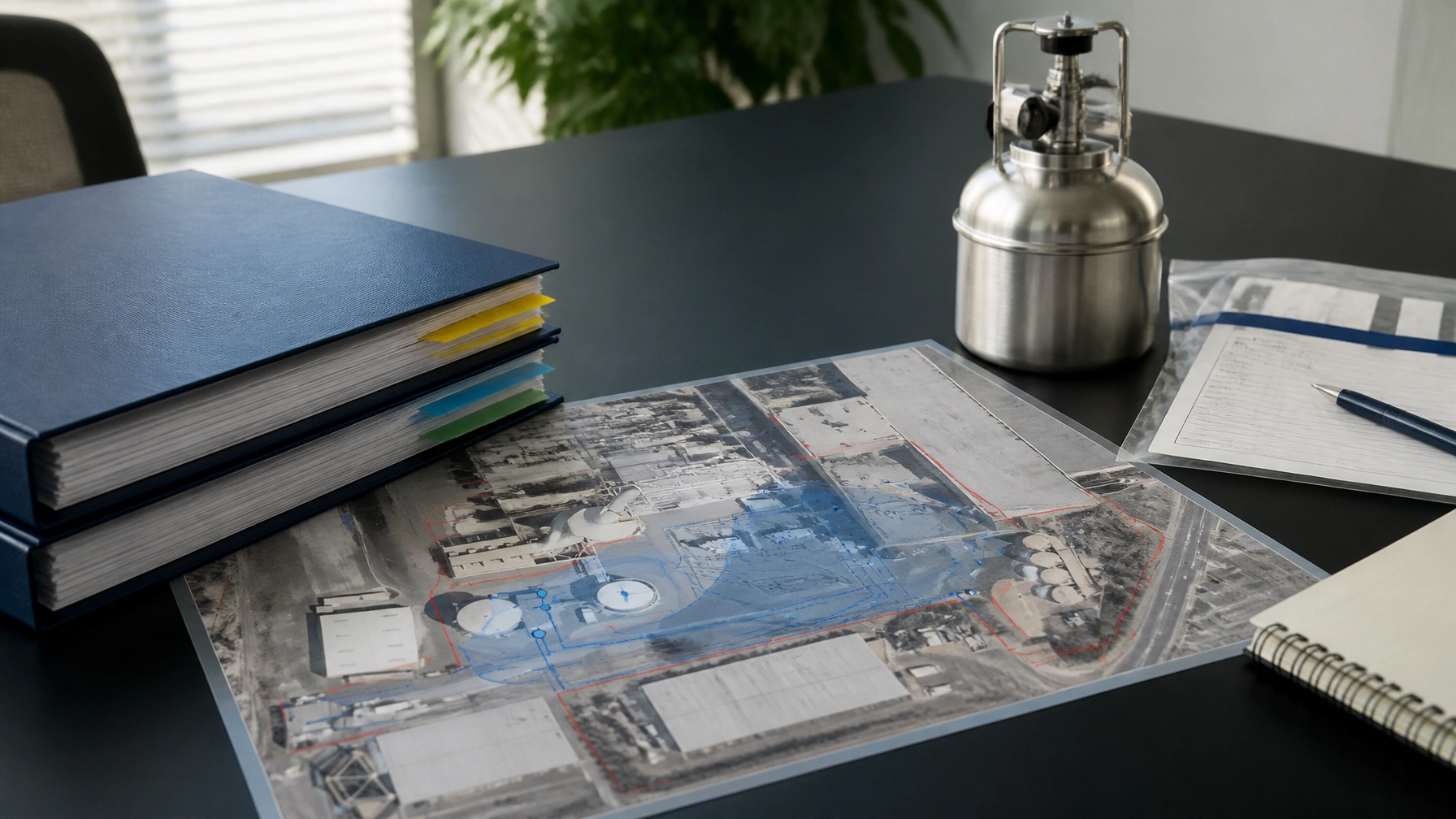
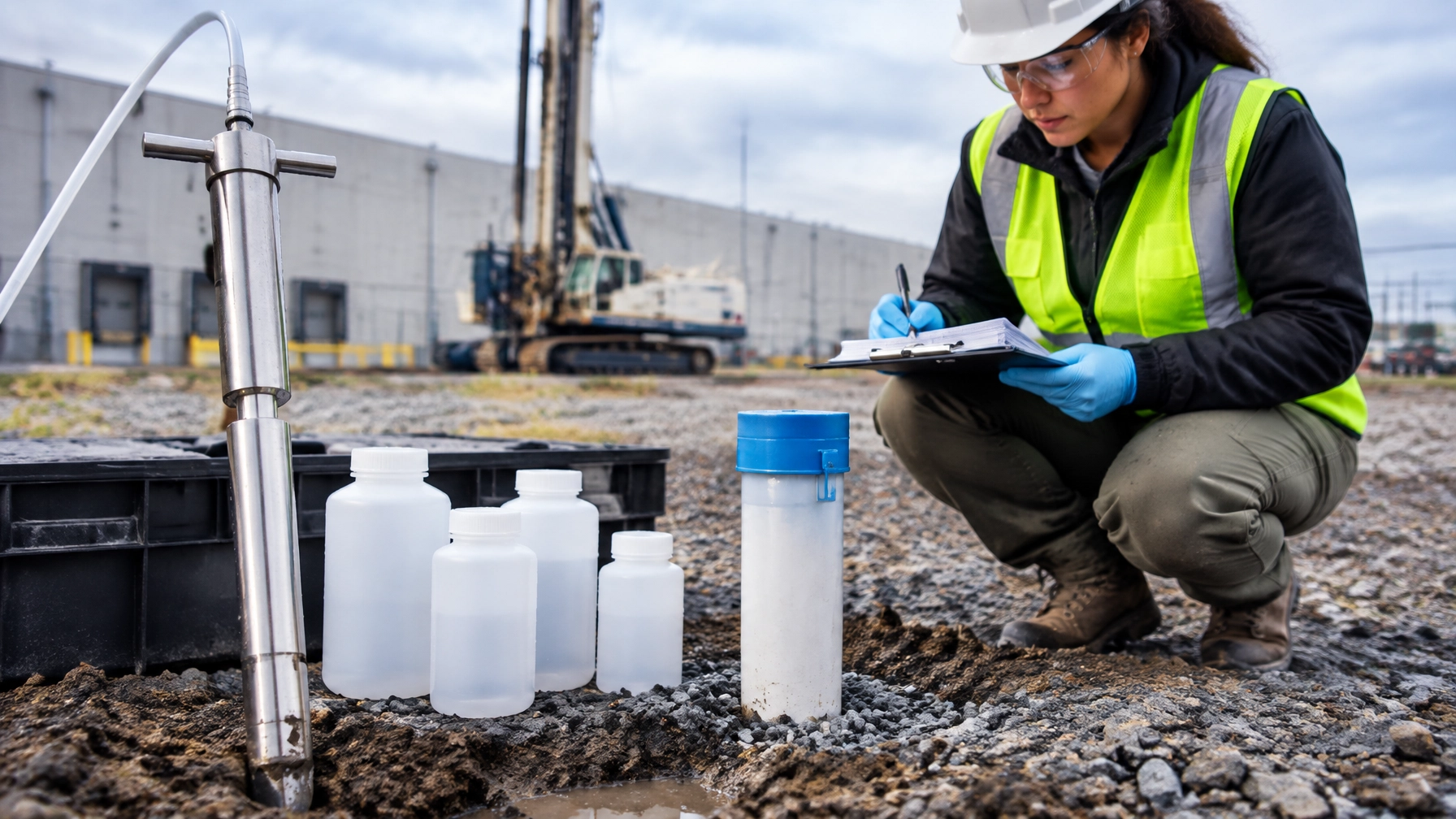
    Environmental field table with monitoring well equipment, sample vials, and site documentation

    Clean Soil Bank access can change the excavation budget

    Urban redevelopment often creates two soil problems at the same time:

    • The project has surplus clean soil that must leave the site.
    • The project needs imported clean fill for grading, utility trenches, or site restoration.

    VCP projects may use the NYC Clean Soil Bank to dispose of surplus clean soil at no cost other than trucking. Qualifying projects may also receive clean soil at no cost.

    That can materially affect the earthwork budget, especially on constrained NYC sites where trucking, disposal, and imported fill costs can become a major line item.

    The opportunity still requires coordination. Soil must meet applicable OER requirements, quantities must be documented, and the project team must plan timing, testing, staging, and transportation before excavation begins.

    Envicon’s remediation and brownfield redevelopment team can connect soil characterization, remedial design, waste profiling, construction sequencing, and documentation instead of treating each scope as a separate handoff.

    Hazardous waste fee relief requires advance planning

    A VCP site that excavates and ships hazardous waste off site may qualify for relief from New York State charges.

    According to NYC OER’s hazardous waste fee exemption guidance, the potential savings include:

    • $130 per ton for the State Hazardous Waste Program Fee.
    • Up to $27 per ton for the Special Assessment on Hazardous Waste.
    • Up to $157 per ton in combined taxes and fees, depending on the applicable charges.

    Three conditions must be met:

    1. The property must be enrolled in the NYC VCP.
    2. The approved Remedial Action Work Plan must authorize hazardous waste removal.
    3. OER must oversee the removal.

    The sequence matters. Before hazardous waste leaves the site, OER must submit a Notice of Potential Generation of Hazardous Waste to NYSDEC. The project team must provide the EPA generator ID, soil test date, anticipated tonnage, and anticipated remediation dates.

    After removal, the generator and qualified environmental professional complete the required certification. OER then prepares its remedial action certification for DEC review.

    The official guidance also identifies ongoing filing duties:

    • A Hazardous Waste Annual Report is due each March 1 for sites that generated 15 tons or more during the prior calendar year.
    • A TP-550 quarterly return is due to the New York State Department of Taxation and Finance within 20 days after the end of the quarter in which hazardous waste was generated.

    A project that begins excavation before enrollment or before the approved work plan authorizes the activity may lose the opportunity for the exemption.

    Institutional and engineering controls create long-term duties

    Many NYC cleanups do not remove every contaminant. Instead, the remedy may rely on controls that manage exposure over time.

    Institutional controls can include:

    • Environmental easements.
    • Recorded use restrictions.
    • Soil handling requirements.
    • Restrictions on groundwater use.
    • Requirements for future construction or excavation.

    Engineering controls can include:

    • Concrete or asphalt caps.
    • Clean soil covers.
    • Vapor barriers.
    • Sub-slab depressurization systems.
    • Impermeable barriers.
    • Groundwater treatment or monitoring systems.

    Technical cutaway illustration showing an engineered cap, vapor barrier, and sub-slab system beneath an urban building

    The Site Management Plan and VCP Agreement control the actual obligations. In many VCP files, the owner must complete an annual certification or other periodic certification confirming that controls remain in place, functional, and protective.

    The certification generally requires review by a qualified environmental professional or another party approved by OER. The exact schedule, form, signatory, and supporting documentation depend on the site documents.

    A practical annual control review should include:

    • Inspection of caps, barriers, vents, and monitoring points.
    • Verification that required access remains available.
    • Review of building or site alterations.
    • Confirmation that no excavation or utility work bypassed controls.
    • Review of vapor mitigation system operation and maintenance.
    • Updated photographs, inspection logs, and repair records.
    • Submission of the required certification to OER.

    Failure to maintain controls or submit required certifications can create enforcement exposure and undermine the practical value of the site’s closure status. A Notice of Completion is not a reason to close the environmental file permanently. It is the point where long-term stewardship begins.

    Green Team coordination helps keep remedial work moving

    The OER Green Team assists VCP parties with permits from other government agencies needed for remedial activities. Access typically runs through the project’s OER project manager.

    This coordination can matter when remedial work requires interaction with agencies responsible for:

    • Street openings.
    • Utility conflicts.
    • Construction activity.
    • Public property.
    • Transportation controls.
    • Parks or waterfront areas.
    • Other local or state approvals.

    The Green Team does not replace the project engineer, construction manager, attorney, or permit applicant. It helps connect the VCP remedial plan to the approvals required for implementation.

    Do not confuse Green Team coordination with NYC Green Property Certification. Green Property Certification is a separate OER recognition issued after successful cleanup and ongoing maintenance requirements are satisfied.

    NYC OER VCP investor and counsel checklist

    Before committing capital or closing an acquisition, confirm:

    • The property’s VCP eligibility has been reviewed with OER.
    • Phase I and Phase II data support a current conceptual site model.
    • Contaminant impacts are horizontally and vertically delineated.
    • The proposed remedy matches the planned land use.
    • The VCP Agreement assigns obligations clearly among owner, developer, and successors.
    • The RAWP authorizes the anticipated excavation and waste streams.
    • BIG grant eligibility and deadlines are documented.
    • Insurance and qualified vendor requirements are addressed.
    • Clean Soil Bank opportunities are evaluated before earthwork.
    • Hazardous waste fee exemption steps are scheduled before shipment.
    • IC and EC maintenance responsibilities are included in the operating budget.
    • Annual or periodic certifications are calendared.
    • Green Team and other agency coordination needs are identified.
    • Closure documents, restrictions, and site management records are ready for lender and counsel review.

    Why Envicon is a practical VCP partner

    A VCP project needs more than a report. It needs one technical team that understands the investigation, the remedy, the construction sequence, the regulator’s comments, and the closeout record.

    Envicon supports NYC owners, investors, developers, and environmental attorneys from investigation through construction closeout. Our work can include Phase I and Phase II assessment, remedial investigation, RAWP preparation, soil and waste management, engineering control design, field oversight, agency coordination, and closure documentation.

    We work directly with project counsel, architects, contractors, and public agencies. You get senior-level access, clear documentation, and responsive decisions when field conditions change.

    That is the difference between a consultant who delivers a file and a technical partner who helps move the asset forward.

    Final takeaway

    The NYC OER VCP can provide a credible path to cleanup, liability protection, grant funding, soil management savings, and long-term regulatory control.

    The value depends on execution.

    Enroll before critical work begins. Coordinate the remedy with the development plan. Document hazardous waste and soil movements. Budget for annual site management. Maintain every institutional and engineering control. Keep OER informed when site conditions or planned use changes.

    Envicon helps property teams solve environmental and engineering challenges with precision, speed, and trust.

    Ready to evaluate an NYC VCP property?

    Envicon Group logo

  • NJDEP SRRA 2.0 Rule Changes: RAP Forms, Indoor Air Controls, and LSRP Compliance for 2026 Transactions

    NJDEP SRRA 2.0 Rule Changes: RAP Forms, Indoor Air Controls, and LSRP Compliance for 2026 Transactions

    New Jersey’s SRRA 2.0 rule changes are now affecting how contaminated property owners, developers, attorneys, and LSRPs prepare remedial action permits and transaction files.

    The changes are implemented through amendments to N.J.A.C. 7:26C, including Subchapter 7 for institutional controls and remedial action permits. The current NJDEP courtesy copy identifies a last amended date of February 15, 2026. NJDEP also continues to update the CSRR forms library throughout 2026.

    For a property in Newark, Jersey City, Hoboken, Bayonne, Hudson County, Bergen County, or Essex County, the practical issue is straightforward:

    A RAP application that was acceptable under an older process may not be complete under the current framework.

    What SRRA 2.0 changes for New Jersey transactions

    SRRA 2.0 originates from P.L.2019, c.263 and updates the administrative structure surrounding New Jersey’s Site Remediation Reform Act program.

    The most important transaction-related changes include:

    • Indoor air is now expressly addressed as a remedial action permit component.
    • Indoor Air Notification Areas, or IANAs, are incorporated into the institutional-control framework.
    • RAP applications are organized around soil, groundwater, and indoor air media components.
    • NJDEP has issued revised forms for new RAPs, technical modifications, administrative changes, permit combinations, and media-component termination.
    • Biennial protectiveness certifications require more complete documentation of sampling and monitoring changes.
    • RAP, RAR, GIS, notification, financial assurance, and RAO documentation must work together as one defensible file.

    The legal requirements come from the rule. The forms and instructions provide the Department’s current filing mechanics. Those are related, but they are not the same thing.

    Rule requirements versus current NJDEP filing instructions

    This distinction matters during a closing.

    Requirement Where to verify it Why it matters
    Institutional controls and RAP obligations N.J.A.C. 7:26C Establishes the legal framework
    Current application and certification forms NJDEP CSRR Forms Library Identifies the form version NJDEP currently accepts
    Indoor Air Notification Area materials NJDEP IANA guidance Provides project-specific implementation details
    Technical sampling and vapor intrusion work NJDEP Guidance Library Supports LSRP technical decisions
    Electronic submissions NJDEP Online Services Controls portal-based filing requirements

    A project-specific instruction from NJDEP or a case manager does not replace the rule. Likewise, downloading a current form does not eliminate the need to evaluate the applicable rule, technical guidance, permit conditions, or site history.

    NJDEP RAP forms in 2026

    NJDEP’s current forms library lists separate documents for the major RAP actions. As of September 8, 2026, key forms include:

    Form versions can change during an active transaction. Always confirm the version and update log immediately before filing.

    “Users of this information should not consider these materials the sole source of information sufficient in itself to dictate any outcome or decision on the remediation of a contaminated site.”

    NJDEP, CSRR Forms Library

    That warning applies directly to acquisition and closing work. A form is a filing tool. It is not a substitute for an LSRP’s review of the remedy.

    Indoor air is now a RAP media component

    The SRRA 2.0 framework treats indoor air as a distinct component of remedial action permitting.

    That matters when a property has:

    • A vapor mitigation system.
    • Ongoing indoor-air monitoring.
    • A sub-slab depressurization system.
    • A vapor barrier or other engineering control.
    • A continuing vapor intrusion pathway.
    • Indoor-air conditions that require notification and long-term management.

    The practical change is that soil, groundwater, and indoor air can be managed within a coordinated RAP structure. This helps avoid fragmented files, but it also requires better coordination between the remedial action report, monitoring plan, permit application, and long-term obligations.

    For a Newark warehouse conversion or a Jersey City mixed-use project, the LSRP should confirm whether the existing file addresses indoor air as a current or potential exposure pathway. A historic soil or groundwater RAP may not fully describe what a new residential or commercial use requires.

    Envicon’s vapor intrusion assessment service combines sub-slab investigation, indoor-air sampling, laboratory analysis, and regulatory documentation. The objective is not to generate another report. It is to determine whether the property has a defensible path to occupancy, redevelopment, and closure.

    NJDEP indoor air notification area requirements

    An Indoor Air Notification Area, or IANA, is an institutional control used to identify and communicate an area where indoor-air or vapor intrusion conditions require continuing notification or management.

    An IANA may require:

    • A defined geographic boundary.
    • GIS-compatible mapping.
    • Documentation of the buildings, parcels, and receptors within the area.
    • Indoor-air, sub-slab, soil-gas, or related sampling information.
    • Notification to applicable municipalities, counties, owners, tenants, or occupants.
    • A fact sheet or other public communication.
    • Coordination with the RAP and any applicable monitoring plan.
    • Continuing certification that the remedy remains protective.

    The IANA requirements are not automatically triggered by every vapor-related detection. The LSRP must evaluate site-specific conditions, the exposure pathway, building use, sampling results, mitigation status, and applicable NJDEP guidance.

    This is especially important in dense areas such as Hoboken, Bayonne, Jersey City, Newark, and older industrial corridors in Hudson, Bergen, and Essex Counties. A mapped notification area can extend beyond the parcel where the original discharge occurred if the technical record supports a broader vapor or indoor-air concern.

    The IANA fact sheet and mapping should be reviewed alongside the property’s title records, deed notices, leases, site management documents, and transaction representations. A buyer should understand not only where contamination remains, but also who must be notified and who must maintain the control.

    Indoor-air sampling canister, sub-slab tubing, vapor mitigation equipment, and a mapped building boundary at an urban New Jersey site

    RAP and RAR coordination

    A RAP application does not replace the remedial action report.

    The RAR documents what was implemented and whether the remedial action achieved the required objectives. The RAP establishes the continuing requirements for controls, monitoring, maintenance, inspections, certifications, and financial assurance.

    A coordinated file should connect:

    1. The approved or certified remedial action workplan.
    2. Field documentation and construction records.
    3. Sampling results and laboratory data.
    4. As-built drawings and GIS-compatible maps.
    5. The remedial action report.
    6. The RAP application and applicable supplemental certification.
    7. The operation, maintenance, and monitoring plan.
    8. Financial assurance documentation, when required.
    9. The RAO and its conditions.
    10. Any deed notice, IANA notification, or other institutional control.

    A missing connection can delay a closing even when the physical remedy is complete.

    For example, an owner may have a functioning vapor mitigation system but lack a current indoor-air monitoring plan. Another property may have a deed notice that does not match the latest site plan. A third may have an RAO that does not eliminate ongoing RAP obligations.

    Technical modifications versus administrative changes

    Use the correct RAP pathway.

    A technical modification is appropriate when the substance of the remedy or permit conditions changes. Examples can include:

    • Changing the engineering control.
    • Revising monitoring locations or frequencies.
    • Modifying a vapor mitigation system.
    • Adding or changing a media component.
    • Revising remedial objectives or technical conditions.

    An administrative change is intended for non-technical updates, such as:

    • Contact information.
    • Ownership or permittee information.
    • Administrative corrections.
    • Other changes that do not alter the protectiveness or operation of the remedy.

    The distinction should be made before filing. Using an administrative form for a technical change can create an incomplete submission and force a second filing.

    Biennial protectiveness certifications

    RAP obligations continue after the transaction closes.

    Under the updated framework, biennial protectiveness certifications should address more than whether a control remains in place. The certification process can require:

    • Current site and property-use information.
    • Inspection and maintenance records.
    • Monitoring results.
    • Additional sampling performed during the certification period.
    • Changes to monitoring plans or schedules.
    • Changes in ownership, occupancy, or site conditions.
    • Financial assurance and operation-and-maintenance obligations.
    • Any new information affecting protectiveness.

    A buyer in Jersey City or Hoboken should request the full biennial certification history during due diligence. A seller should identify upcoming certification dates before finalizing representations and closing conditions.

    Electronic filing checklist for 2026

    Before submitting a RAP package, confirm the following:

    • Current NJDEP form version downloaded from the CSRR Forms Library.
    • Correct RAP action selected: initial, new media component, technical modification, administrative change, combination, or termination.
    • Soil, groundwater, and indoor air components identified consistently across all documents.
    • RAR and RAP dates, case numbers, program interest numbers, blocks, and lots match.
    • LSRP certifications and responsible-party signatures are complete.
    • Indoor-air monitoring plan included when required.
    • IANA boundary, fact sheet, notifications, and GIS files included when applicable.
    • Laboratory data deliverables and electronic data submissions are complete.
    • Required maps are GIS-compatible.
    • Financial assurance and cost estimates are updated where engineering controls remain.
    • NJDEP fees are confirmed.
    • Submission method is correct, whether NJDEP Online, email, or another Department-directed process.
    • Proof of submission is saved in the transaction file.

    N.J.A.C. 7:26C-1.6 generally requires electronic copies of forms, documents, maps, laboratory data deliverables, sampling data, and GIS-compatible maps unless NJDEP provides different instructions.

    What this means for RAO readiness

    An RAO is not just a closing document. It is the LSRP’s professional conclusion that the remediation complies with applicable requirements and protects public health, safety, and the environment.

    For restricted-use or limited-restricted-use remedies, an RAO may remain tied to:

    • A RAP.
    • A deed notice.
    • An IANA.
    • An engineering control.
    • Long-term monitoring.
    • Biennial certifications.
    • Financial assurance.
    • Continuing owner and operator duties.

    The safest transaction strategy is to perform a RAP file review before the purchase agreement becomes final. That review should identify missing forms, outdated controls, unrecorded notices, open monitoring obligations, and any conflict between the intended redevelopment and the existing remedy.

    Envicon provides NJ LSRP services for owners, developers, attorneys, and investors that need a clear path through NJDEP compliance. Our team works directly across Newark, Jersey City, Hoboken, Bayonne, Hudson County, Bergen County, and Essex County.

    Official sources

    Request a RAP file review

    If your property has an existing RAP, vapor mitigation system, IANA, deed notice, or pending RAO, do not wait until the closing deadline to discover a documentation gap.

    Request a RAP file review through Envicon. You can also call us at (917) 764-2171 or use our proprietary project risk screener.

    The rule changes are technical. The business impact is simple. A complete, coordinated file protects the property, supports the transaction, and keeps the project moving.

    Envicon corporate logo

  • ASTM E1527-21 Checklist: What a Lender-Ready Phase I ESA Includes in NYC and New Jersey

    ASTM E1527-21 Checklist: What a Lender-Ready Phase I ESA Includes in NYC and New Jersey

    DRAFT FOR APPROVAL

    A lender-ready Phase I ESA does more than attach an environmental database report to a property address. It must show how the Environmental Professional evaluated the site, its history, surrounding properties, potential releases, and the information provided by the buyer.

    For commercial real estate in Manhattan, Brooklyn, Queens, the Bronx, Staten Island, Jersey City, Newark, Hudson County, and Bergen County, the standard is usually ASTM E1527-21, with additional lender, state, and transaction requirements layered on top.

    The EPA recognizes ASTM E1527-21 as consistent with the All Appropriate Inquiries rule. The standard can support CERCLA landowner liability protections when the required inquiry, timing, user responsibilities, and continuing obligations are properly addressed.

    A report can follow ASTM E1527-21 and still create closing problems if it is stale, incomplete, unclear about RECs, or disconnected from the lender’s actual requirements.

    What ASTM E1527-21 does

    ASTM E1527-21 provides a standardized process for evaluating the environmental condition of commercial real estate. Its purpose is to identify Recognized Environmental Conditions, or RECs, associated with hazardous substances and petroleum products.

    The ASTM standard is site-specific. It relies on professional judgment. It reduces uncertainty, but it does not eliminate it.

    “No environmental site assessment can wholly eliminate uncertainty regarding the potential for recognized environmental conditions.”

    That is why the person conducting the work matters. A lender-ready assessment needs a qualified Environmental Professional who can explain what the records mean for the property, not just list databases and historical maps.

    ASTM E1527-21 checklist

    Checklist item What the Phase I ESA should address
    Standard and purpose State whether the assessment follows ASTM E1527-21 and is intended to satisfy AAI requirements
    Property identification Address, legal description, parcel boundaries, current use, improvements, and transaction context
    Records review Federal, state, local, tribal, historical, physical setting, agency, and prior environmental records
    Site reconnaissance Visual inspection of the subject property and adjoining properties
    Interviews Current and past owners, operators, occupants, managers, and other knowledgeable parties
    Environmental liens Search for recorded environmental cleanup liens, usually a user responsibility
    Activity and use limitations Institutional controls, engineering controls, environmental land use restrictions, and deed restrictions
    REC analysis Clear conclusions regarding RECs, HRECs, CRECs, and de minimis conditions
    Vapor migration Review of potential vapor pathways and whether additional vapor assessment is appropriate
    Emerging contaminants Discussion of relevant substances, including PFOA and PFOS where applicable
    Data gaps Identification of missing information and its effect on the conclusions
    User responsibilities Specialized knowledge, commonly known information, purchase price context, and lien information
    Report timing 180-day updates for specific components and one-year completion requirement
    EP declaration Qualifications, signature, professional opinion, and AAI declaration
    Non-scope conditions Clear statement regarding asbestos, lead, mold, radon, structural, and building code conditions

    1. Records review must go beyond a database radius report

    A credible ASTM E1527-21 checklist in NYC or ASTM E1527-21 checklist in New Jersey starts with records. The environmental database report is only one part of that review.

    The Environmental Professional should evaluate:

    • Historical aerial photographs
    • Sanborn fire insurance maps
    • City directories
    • Topographic maps
    • Building department and land use records
    • Federal, state, and local environmental databases
    • Spill records and tank registrations
    • Prior Phase I and Phase II reports
    • Remedial investigation and cleanup files
    • Regulatory closures and continuing obligations
    • Nearby properties with potential migration pathways

    For a Manhattan warehouse, a Brooklyn industrial conversion, or a Queens property near former manufacturing uses, historical records often provide the first indication of a potential REC.

    In Jersey City, Newark, Hudson County, and Bergen County, the review may also need to consider NJDEP files, former industrial operations, underground storage tanks, historic fill, and the status of any Licensed Site Remediation Professional, or LSRP, matter.

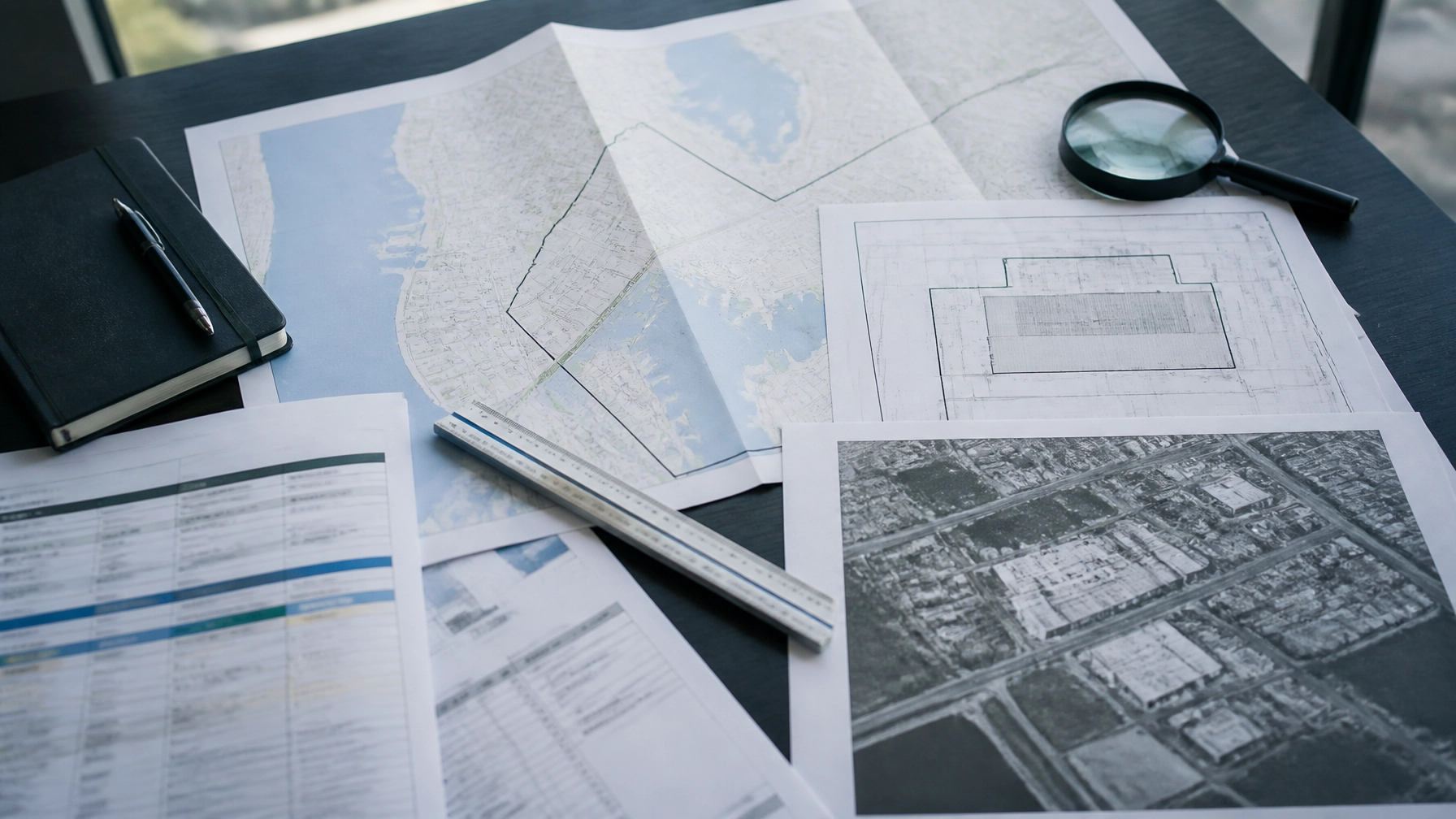
    Historical records and environmental lien review for an urban commercial property

    2. Site reconnaissance must test the records against current conditions

    The site visit is where the report meets the property.

    The inspector should evaluate accessible interior and exterior areas for evidence of:

    • Petroleum or chemical storage
    • Underground or aboveground storage tanks
    • Floor drains, sumps, pits, and trenches
    • Staining, stressed vegetation, odors, or distressed pavement
    • Drums, containers, waste areas, and discharge points
    • Transformers and electrical equipment
    • Current or former industrial operations
    • Soil or fill placement
    • Monitoring wells, remediation systems, or vapor mitigation equipment
    • Adjoining properties with potential impacts

    A site reconnaissance for a lender should also document limitations. Locked areas, snow cover, construction activity, unsafe conditions, or denied access can affect the reliability of the conclusions.

    ASTM E1527-21 site reconnaissance showing a monitoring well, storage tank area, and industrial property conditions

    3. Interviews are not optional paperwork

    Interviews help confirm how the property was used and whether the written records tell the full story.

    The assessment should consider interviews with:

    • Current owners
    • Current occupants
    • Past owners and operators
    • Facility managers
    • Maintenance personnel
    • Environmental contacts
    • Local officials when appropriate

    For an abandoned property, the Environmental Professional may need to speak with neighboring property owners or other people who could have observed site activities.

    A lender-ready report should state who was contacted, when the interview occurred, how it occurred, and whether the person had relevant knowledge.

    4. REC, HREC, CREC, and de minimis conclusions must be clear

    The most important part of the report is not the appendix. It is the conclusion.

    Recognized Environmental Condition

    A REC generally involves the presence or likely presence of hazardous substances or petroleum products due to a release, likely release, or material threat of a future release.

    Historical Recognized Environmental Condition

    An HREC describes a past release that has been addressed to unrestricted use standards without controls required to manage remaining contamination.

    Controlled Recognized Environmental Condition

    A CREC describes a past release addressed to regulatory satisfaction, but contamination remains subject to activity and use limitations, institutional controls, or engineering controls.

    De minimis condition

    A de minimis condition does not present a material risk of harm and does not require a response action. It is not a REC.

    The report should explain the reasoning behind each conclusion. “No further action recommended” without a clear explanation does not give a lender or buyer a reliable path forward.

    5. Activity and use limitations and environmental liens need user coordination

    Under ASTM E1527-21 and 40 CFR Part 312, the user has responsibilities that cannot simply be delegated away.

    The user should help identify:

    • Recorded environmental cleanup liens
    • Environmental land use restrictions
    • Institutional controls
    • Engineering controls
    • Existing deed notices
    • Specialized knowledge about the property
    • Commonly known information in the local community
    • A purchase price that may reflect environmental impairment

    An environmental lien search is especially important for properties with prior remediation, regulatory closure, or known contamination. Title review and the environmental assessment should not operate as separate workstreams.

    6. Vapor encroachment deserves explicit attention

    ASTM E1527-21 does not automatically provide a complete vapor intrusion investigation. It does, however, require professional judgment regarding conditions that may indicate a release or threatened release.

    For properties near dry cleaners, gas stations, chemical facilities, landfills, industrial corridors, or known groundwater contamination, the report should address the potential for vapor migration.

    That review may include:

    • Historical solvent or petroleum uses
    • Nearby contaminated properties
    • Groundwater flow and subsurface conditions
    • Basements and occupied lower levels
    • Existing sub-slab depressurization systems
    • Indoor air or soil gas data
    • Regulatory files involving vapor intrusion

    A separate vapor intrusion assessment or Phase II investigation may be appropriate when the records support a potential pathway.

    Technical cutaway showing vapor migration from subsurface contamination toward a mixed-use building basement

    7. Emerging contaminants are not a box to check

    The Phase I process does not include routine soil, groundwater, indoor air, or building material sampling. Sampling belongs in a Phase II or another defined investigation.

    The scope also needs to distinguish between emerging contaminants and substances covered by CERCLA. EPA designated PFOA and PFOS, including their salts and structural isomers, as CERCLA hazardous substances effective July 8, 2024. See the EPA PFOA and PFOS designation for the current federal position.

    Other PFAS may still require separate evaluation based on property history, state requirements, lender policy, or client risk tolerance.

    For industrial properties, airports, fire-training locations, plating facilities, and manufacturing sites, ask whether a records-based PFAS screen or sampling program should be added.

    What ASTM E1527-21 does not cover

    A Phase I ESA is not a complete building condition assessment or health and safety survey. Unless separately contracted, it does not cover:

    • Asbestos
    • Lead-based paint
    • Mold
    • Radon
    • Indoor air quality testing
    • Structural conditions
    • Building code compliance
    • Fire and life safety systems
    • Wetlands
    • Threatened or endangered species
    • Construction defects
    • Full regulatory compliance audits

    If the lender needs these items, define them before authorization. Envicon can coordinate a broader due diligence scope through its environmental assessment practice, rather than forcing the buyer to manage multiple disconnected consultants.

    Timing rules for AAI compliance

    The EPA’s AAI guidance and 40 CFR Part 312 require the inquiry to be completed within one year before acquisition.

    The following components must be completed or updated within 180 days before closing:

    • Interviews
    • Government records review
    • Visual inspection
    • Environmental lien search
    • Environmental Professional declaration

    A report date alone does not prove that every component is current. The report should identify the dates of the individual activities.

    Why local execution matters

    A Phase I ESA in Manhattan is not the same transaction problem as a Phase I ESA in Newark. A Brooklyn warehouse conversion may involve a different historical record trail than a Bergen County industrial parcel. Jersey City waterfront property may raise issues tied to prior industrial use, fill, groundwater, or ongoing NJDEP matters.

    Envicon’s NYC environmental consulting team works across Manhattan, Brooklyn, Queens, the Bronx, and Staten Island. Our Jersey City team supports projects across Hudson County, Newark, and Bergen County.

    We keep the Environmental Professional, field team, and project leadership connected. You get a report that explains the issue and a practical next step when the findings require more work.

    FAQ

    Is ASTM E1527-21 required for every Phase I ESA?

    No. ASTM E1527-21 is a voluntary industry standard. EPA recognizes it as a method that can satisfy AAI requirements when properly performed. A lender may impose additional requirements.

    How long is an ASTM E1527-21 Phase I ESA valid?

    For AAI purposes, the assessment must be completed within one year before acquisition, with specific components updated within 180 days before closing. Lender policies may be stricter.

    Does a Phase I ESA include testing?

    No. A standard Phase I ESA is generally a records, interview, and visual investigation. Sampling is typically part of a Phase II ESA or another separately authorized scope.

    What happens if the report identifies a REC?

    The next step depends on the condition. Options may include a Phase II ESA, vapor assessment, regulatory file review, remediation estimate, lender reliance letter, or transaction-specific risk analysis.

    How much does a Phase I ESA cost in NYC or New Jersey?

    Envicon’s current starting ranges for typical commercial properties are published in the Phase I ESA cost estimator. Site history, size, location, lender requirements, and turnaround affect the final price.

    Takeaway

    A lender-ready ASTM E1527-21 report is clear about four things:

    1. What was reviewed
    2. What was observed
    3. What environmental conditions were identified
    4. What those findings mean for the transaction

    The goal is not to produce a longer report. The goal is to produce a defensible answer that keeps the deal moving.

    Ready for a lender-ready Phase I ESA?

    Envicon corporate logo

  • New Jersey Due Diligence Contamination Reporting: What Buyers and Sellers Should Know About the 2026 Rule Status

    New Jersey Due Diligence Contamination Reporting: What Buyers and Sellers Should Know About the 2026 Rule Status

    A proposed New Jersey rule would have changed how contamination discovered during commercial property due diligence moved from the consultant’s field notes to NJDEP.

    That rule did not take effect.

    As of September 2026, New Jersey’s proposed due diligence contamination reporting requirement has expired. Buyers, sellers, and environmental consultants should not treat the former proposal as a universal current reporting deadline. Existing obligations under the New Jersey Spill Compensation and Control Act, the Site Remediation Reform Act, ARRCS, ISRA, and applicable contracts still matter.

    The distinction is important in Newark, Jersey City, Hoboken, Bayonne, Hudson County, Bergen County, and Essex County, where former industrial uses, historic fill, underground storage tanks, dry cleaners, manufacturing operations, and regulated facilities frequently affect commercial transactions.

    “For now, it is business as usual for environmental diligence in connection with property sales.” Cole Schotz, April 2026

    The short answer: the proposed rule expired

    NJDEP proposed a new provision, N.J.A.C. 7:26C-2.4, in October 2024. The initial version would have required a person conducting All Appropriate Inquiries or environmental due diligence to immediately notify both NJDEP and the property owner when the investigation identified a discharge of a hazardous substance.

    The proposal generated significant concern across the commercial real estate and environmental industries. The central issue was practical. If every Phase II ESA finding created an immediate regulatory reporting event, buyers could face a choice between reporting before closing or avoiding invasive testing altogether.

    NJDEP later withdrew that version and issued a narrower Notice of Substantial Change in November 2025. The re-proposed approach would have required the person conducting due diligence to notify only the record owner. The owner would then have been expected to evaluate reporting and remediation obligations under the Spill Act.

    Written comments closed on January 16, 2026. The re-proposed provision needed to be adopted by April 2026. NJDEP did not adopt it by that deadline. The proposal expired by operation of law and did not become binding.

    You can monitor future NJDEP rulemaking through the agency’s Notice of Rule Proposals page and the Site Remediation Program hub.

    Proposal versus current law

    Issue 2024 proposal 2025 re-proposed approach Current status in 2026
    Person conducting due diligence discovers a discharge Notify NJDEP and the record owner Notify the record owner No special adopted due diligence rule is in force
    Direct NJDEP notice by buyer or consultant Required under the proposal Removed from the re-proposed version Not required solely because a Phase II identified contamination
    Owner notification Required Required Not imposed by the expired proposal
    Owner reporting and remediation Triggered through notice Owner would report and initiate remediation Existing Spill Act and ARRCS obligations still apply where triggered
    LSRP role Expanded to people conducting AAI Included among persons conducting due diligence LSRP duties still depend on the LSRP’s engagement and statutory role
    Contract allocation Could not eliminate the proposed reporting duty Could not eliminate owner notification Contracts can allocate costs, notice, access, and risk, but cannot override NJDEP authority
    Universal reporting deadline for every transaction No longer applicable No longer applicable Do not treat the expired proposal as current law

    The table describes rulemaking history, not legal advice for a specific transaction. The New Jersey Spill Act and current NJDEP regulations control the analysis.

    What existing law still requires

    The expiration of the proposed NJ real estate environmental due diligence rule does not create a free pass for contamination.

    New Jersey’s existing framework can impose reporting and remediation duties on owners, operators, persons responsible for a discharge, persons responsible for conducting remediation, and other parties depending on the property, facility, discharge, and activity involved.

    The practical questions include:

    • Who owns and operates the property?
    • Is the property an industrial establishment subject to ISRA?
    • Does the information identify a new discharge or document an existing known condition?
    • Is there an immediate environmental concern or an active exposure pathway?
    • Is the site already under NJDEP oversight?
    • Has an LSRP been retained for remediation?
    • Does the investigation involve a regulated storage tank, major facility, pipeline, or other regulated operation?
    • What do the purchase agreement, access agreement, confidentiality provisions, and indemnities require?

    A buyer or consultant should not assume that the absence of a special due diligence rule eliminates all potential reporting exposure. It means the analysis returns to the existing statutory and regulatory framework.

    That is why transaction teams should involve environmental counsel and a qualified environmental professional before invasive work begins, not after a laboratory result arrives.

    LSRP obligations are not the same as transactional due diligence

    An LSRP performing a Phase I or limited Phase II ESA for a prospective buyer is not automatically in the same position as an LSRP retained to conduct remediation under SRRA.

    The scope and role matter.

    A transactional environmental professional may be retained to:

    • Perform an ASTM E1527-21 Phase I ESA.
    • Review historic property use and NJDEP records.
    • Identify recognized environmental conditions.
    • Design a targeted Phase II ESA.
    • Collect soil, groundwater, or soil-gas samples.
    • Estimate potential cleanup costs.
    • Support lender, counsel, and acquisition decisions.

    An LSRP retained for remediation may have broader responsibilities, including regulatory coordination, remedial investigation, remedial action planning, NJDEP submissions, institutional controls, engineering controls, and preparation or oversight of a Response Action Outcome.

    Those are different engagements. The name on the business card does not determine the obligation by itself.

    At the same time, an LSRP cannot use a transactional label to ignore duties that arise from the actual work, the site conditions, the client’s role, or the LSRP’s formal involvement in remediation. Scope should be documented clearly at kickoff.

    Envicon’s NJ LSRP services support site investigation, regulatory coordination, remedial planning, and closure strategy across New Jersey.

    Phase I and Phase II scope should answer transaction questions

    A Phase I ESA is not a generic background report. It should establish a defensible record of:

    • Historic property uses.
    • Current and adjoining property uses.
    • Regulatory database findings.
    • Site reconnaissance observations.
    • Interviews and records gaps.
    • Recognized environmental conditions, controlled RECs, and historic RECs.
    • A clear recommendation for whether additional investigation is justified.

    Envicon’s Phase I ESA service follows ASTM E1527-21 and All Appropriate Inquiries requirements, with deliverables designed for lenders, counsel, and acquisition teams.

    When a Phase I identifies a REC, the Phase II should be tied to the risk. A targeted program may include:

    • Soil borings near former tanks, process areas, or waste handling locations.
    • Groundwater sampling where hydrogeology and site history support it.
    • Soil-gas or sub-slab sampling where vapor intrusion is a concern.
    • PFAS screening where current or historic use warrants it.
    • Laboratory analysis selected for the contaminants of concern.
    • Data comparison to applicable NJDEP criteria.
    • Delineation recommendations.
    • A preliminary remedial cost range.
    • A transaction-focused path forward.

    New Jersey Phase II environmental site assessment sampling and documentation

    A Phase II should reduce uncertainty. It should not create a larger scope by default without explaining what decision the additional work will support.

    Contract allocation still matters

    The expired proposal does not eliminate the need for careful transaction documents.

    Buyers and sellers should address environmental risk directly in the purchase agreement. Common provisions include:

    • Who controls environmental investigations.
    • Whether the buyer can perform invasive testing.
    • Required notice of sampling results.
    • Seller access and cooperation obligations.
    • Responsibility for existing contamination.
    • Responsibility for new discharges caused by post-closing operations.
    • Indemnification and defense obligations.
    • Escrow or purchase-price adjustment mechanisms.
    • Remediation milestones and closing conditions.
    • Treatment of confidential or attorney work-product materials.
    • Cooperation with NJDEP, an LSRP, lenders, and future owners.

    Contract language can allocate economic risk between the parties. It cannot prevent NJDEP from enforcing obligations that apply under the Spill Act or other environmental laws.

    A buyer should not rely on a broad indemnity as a substitute for investigation. An indemnity may be difficult to enforce if the seller lacks assets, disputes the scope, or becomes unavailable after closing.

    What buyers and sellers should do in 2026

    For a commercial transaction in Jersey City, Newark, Hoboken, Bayonne, or the surrounding Hudson, Bergen, and Essex County markets, use a disciplined sequence.

    Buyers

    • Order a current ASTM E1527-21 Phase I ESA early.
    • Confirm whether the Phase I is within the applicable reliance period.
    • Screen for ISRA, UST, vapor intrusion, PFAS, and known NJDEP cases.
    • Define the Phase II scope around specific RECs.
    • Coordinate sampling with the purchase agreement and lender.
    • Price potential remediation before waiving contingencies.
    • Have counsel review notice, confidentiality, indemnity, and access provisions.
    • Do not assume the expired rule creates a universal duty to report every finding directly to NJDEP.

    Sellers

    • Review existing NJDEP files, closure documents, deed notices, and engineering controls.
    • Identify prior environmental reports before listing the property.
    • Confirm whether an existing LSRP engagement remains active.
    • Understand whether a transaction triggers ISRA or other regulatory action.
    • Do not delay a response when credible information indicates a discharge.
    • Coordinate with environmental counsel and an LSRP before responding to a buyer’s findings.
    • Keep documentation organized so the transaction team can distinguish historical conditions from new releases.

    New Jersey commercial property environmental risk review with mapped sampling locations

    Why the right consultant matters

    Large consulting firms often separate the person who sells the engagement from the person who investigates the property. That creates delay when a Phase II result changes the transaction.

    Envicon takes a different approach. Our team works directly with developers, attorneys, lenders, contractors, and property owners. We connect Phase I findings to Phase II scope, remedial cost, regulatory strategy, and the closing timeline.

    That matters when a former industrial parcel in Newark has historic fill, when a Jersey City warehouse has a dry-cleaning history, or when a Hudson County redevelopment site has a vapor concern that needs to be evaluated before financing.

    We do not just deliver a report. We help turn findings into a decision.

    The takeaway

    The 2026 status is clear:

    • NJDEP’s proposed due diligence contamination reporting rule was not adopted.
    • The re-proposed owner-notification requirement expired.
    • Buyers and consultants should not treat the proposal as a universal current reporting deadline.
    • Existing Spill Act, SRRA, ARRCS, ISRA, and LSRP obligations still apply where their conditions are met.
    • Contracts can allocate economic risk, but they cannot erase statutory duties.
    • Phase I and Phase II scopes should be designed around the transaction decision, not built from a template.

    The rule status may be settled for now. The site risk still needs a real answer.

    Request a New Jersey transaction risk review

    If you’re buying or selling commercial property in Newark, Jersey City, Hoboken, Bayonne, Hudson County, Bergen County, or Essex County, send Envicon the address, transaction timeline, and available environmental records.

    We’ll help identify the right diligence scope, regulatory questions, and next step.

    New Jersey commercial property transaction closing diligence review

    Envicon logo

  • NYC OER Remedial Action Plan Cost: Budgeting Soil, Vapor, and Construction Oversight for 2026 Sites

    NYC OER Remedial Action Plan Cost: Budgeting Soil, Vapor, and Construction Oversight for 2026 Sites

    Status: DRAFT. Not scheduled or published.

    For a Queens redevelopment site, “NYC OER remedial action plan cost” is not one line item. It is a project budget made up of investigation, design, agency review, field implementation, laboratory work, disposal, vapor controls, construction oversight, and closure documentation.

    That distinction matters.

    An OER review fee may be relatively modest. The cost of collecting enough defensible data, managing contaminated soil, installing vapor controls, monitoring construction, and securing regulatory sign-off can be much larger.

    The right budget starts with the site conditions and the regulatory endpoint. It does not start with a generic per-acre number.

    What does an NYC OER RAP budget include?

    A typical NYC OER remedial pathway may involve:

    • CEQR and E-designation review
    • Review of the affected tax lots and development scope
    • Phase I and Phase II environmental assessment
    • Soil, groundwater, and soil vapor sampling
    • Laboratory analysis and data validation
    • Remedial Action Plan or Remedial Action Work Plan preparation
    • Construction Health and Safety Plan, or CHASP
    • Community Air Monitoring Plan implementation
    • Soil excavation, segregation, transportation, and disposal
    • Groundwater management or treatment
    • Vapor barriers or sub-slab depressurization systems
    • Confirmation sampling
    • Construction-phase environmental oversight
    • Remedial Closure Report or Remedial Action Report
    • OER comment responses and final closure coordination
    • Ongoing monitoring or engineering controls, when required

    Each item responds to a different risk. Combining them into one unsupported estimate creates surprises later.

    For a Queens site, the first question is not “What does remediation cost?” The first question is “What does OER require for this tax lot and this proposed use?”

    OER fees are only one part of the budget

    NYC OER fees should be separated from the cost of doing the work.

    Under the current NYC rule framework, OER review fees can include:

    • $1,325 for a full, phased review associated with a new development or major alteration, including investigation, remedial planning, and remedial reporting
    • $475 for a second review after a Notice to Proceed
    • $475 for certain minor actions or a Notice of No Objection
    • $275 for periodic remedial system performance report review
    • $475 for review associated with converting an active sub-slab depressurization system to a passive system after closure

    These are agency review fees. They are not the cost of the environmental consultant, laboratory, contractor, disposal facility, attorney, architect, engineer, or title professional.

    Review the applicable requirements in 43 RCNY Chapter 14 and confirm the current fee and filing requirements with OER before finalizing a 2026 budget.

    The difference is important. A developer may budget for the OER fee and still be unprepared for the cost of implementing the approved remedy.

    The largest NYC OER RAP cost drivers

    1. E-designation and CEQR scope

    An E-designation does not create a universal remediation scope. The applicable CEQR determination, tax lot, hazardous materials requirements, proposed building, and construction methods control the work.

    A redevelopment with one tax lot and limited excavation may require a narrower program than a multi-lot mixed-use project with:

    • Multiple historic industrial uses
    • A deep foundation system
    • An occupied adjacent building
    • A new cellar or below-grade parking
    • Soil vapor concerns
    • Groundwater handling
    • Extensive off-site soil disposal

    Start with the NYC OER E-designation guidance, then map the requirements to the actual development plan.

    2. Tax lots and site size

    The number of tax lots affects the investigation and documentation burden. A single development parcel may still contain different historical uses, fill conditions, former tanks, dry-cleaning operations, rail infrastructure, or utility corridors.

    A Queens or Brooklyn site assembled from several parcels may need sampling points across different areas of concern. The cost is driven by the number of decisions the data must support, not simply the acreage.

    3. Phase II delineation

    Phase II work answers two separate questions:

    1. What contaminants are present?
    2. Where are they, and how far do they extend?

    If initial samples identify petroleum, VOCs, SVOCs, metals, or other constituents, additional borings, monitoring wells, or soil vapor points may be required to define the horizontal and vertical extent.

    Poor delineation creates two common problems:

    • The contractor cannot price excavation with confidence.
    • Confirmation sampling identifies contamination after the project has already mobilized.

    A properly scoped Phase II environmental assessment can reduce both risks.

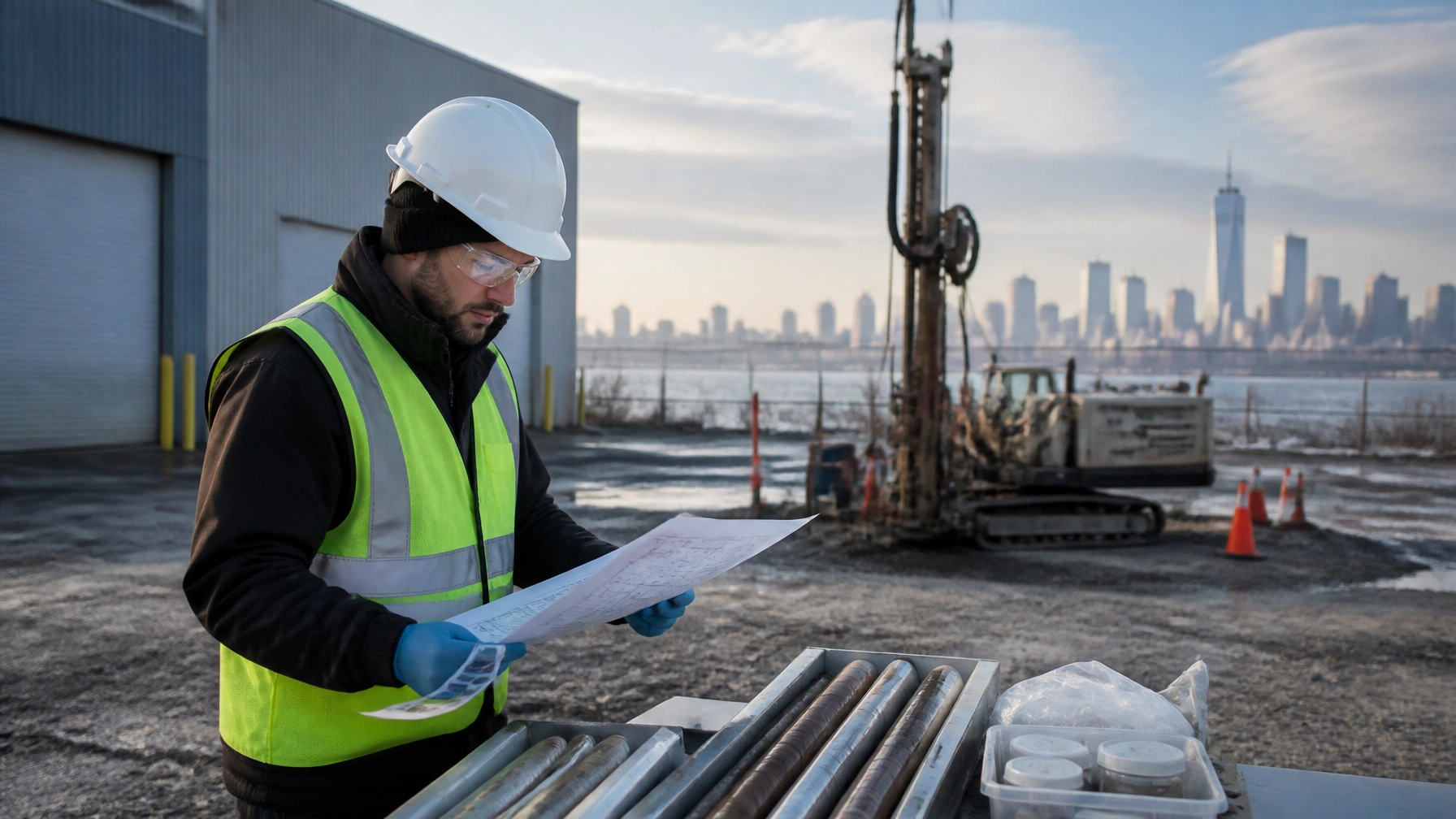
    Environmental engineer reviewing soil cores, sample jars, and groundwater monitoring equipment

    4. Soil, groundwater, and vapor conditions

    Contamination type affects the remedy.

    Soil excavation may require characterization, trucking, disposal profiling, replacement fill, and confirmation samples. Groundwater may require dewatering, treatment, discharge controls, or temporary storage. Soil vapor may require additional sampling and engineered controls beneath the building.

    Vapor conditions can be especially important where a new building will occupy a former dry cleaner, industrial property, fuel facility, or site with volatile organic compounds in soil or groundwater.

    OER may require a remedy such as:

    • A vapor barrier
    • Passive or active sub-slab depressurization
    • Vent piping and monitoring points
    • Indoor air or sub-slab verification sampling
    • Long-term operation and maintenance documentation

    Our vapor intrusion assessment service covers screening, sub-slab sampling, indoor air testing, and mitigation planning for New York and New Jersey properties.

    5. Laboratory work and data quality

    Laboratory cost depends on the number of samples, analytes, turnaround time, quality assurance requirements, and whether additional rounds are needed.

    A soil sample analyzed for metals is not the same cost as a full VOC, SVOC, pesticide, PCB, or petroleum panel. Soil vapor analysis may require specialized canisters and TO-15 laboratory analysis.

    Budget separately for:

    • Sample collection
    • Laboratory analysis
    • Data validation
    • Expedited turnaround
    • Additional confirmation rounds
    • QA/QC samples
    • Resampling caused by rejected or incomplete data

    The cheapest laboratory quote is not always the lowest project cost if the data do not support OER closure.

    6. Excavation, disposal, and replacement soil

    Excavation cost depends on volume, depth, access, shoring, water conditions, truck routes, waste classification, disposal destination, and whether contaminated material can be reused or must leave the site.

    The budget should identify:

    • Estimated cubic yards
    • Expected soil classifications
    • Loading and trucking requirements
    • Disposal facility pricing
    • Transportation distance
    • Clean fill replacement
    • Soil management and tracking
    • Potential stockpile duration
    • Weather and schedule contingencies

    Disposal pricing can change quickly. It should be based on actual waste characterization and facility acceptance, not a generic allowance.

    7. CHASP, CAMP, and air monitoring

    Intrusive work near residences, schools, businesses, transit facilities, or occupied buildings may require a CHASP and air monitoring.

    The cost depends on:

    • Monitoring duration
    • Number of work shifts
    • Number and location of monitoring stations
    • Particulate and VOC equipment
    • Calibration and data management
    • Weather interruptions
    • Community complaints or response requirements
    • Reporting frequency

    CAMP is not just a monitor standing at the fence. It requires setup, readings, documentation, response procedures, and coordination with the contractor.

    8. Construction duration and oversight coverage

    Construction oversight is often budgeted too narrowly. A short remedial excavation may need periodic visits. A complex brownfield redevelopment may require daily coverage through excavation, dewatering, vapor barrier installation, backfill, and confirmation sampling.

    Costs are affected by:

    • Full-time versus part-time field coverage
    • Number of shifts
    • Weekend or night work
    • Excavation duration
    • Contractor coordination
    • Daily reporting
    • Photo documentation
    • Nonconformance tracking
    • Soil load documentation
    • OER and design-team meetings

    Our construction oversight and field engineering team provides PE-supervised field coverage, CAMP implementation, QA/QC documentation, and closure-ready records.

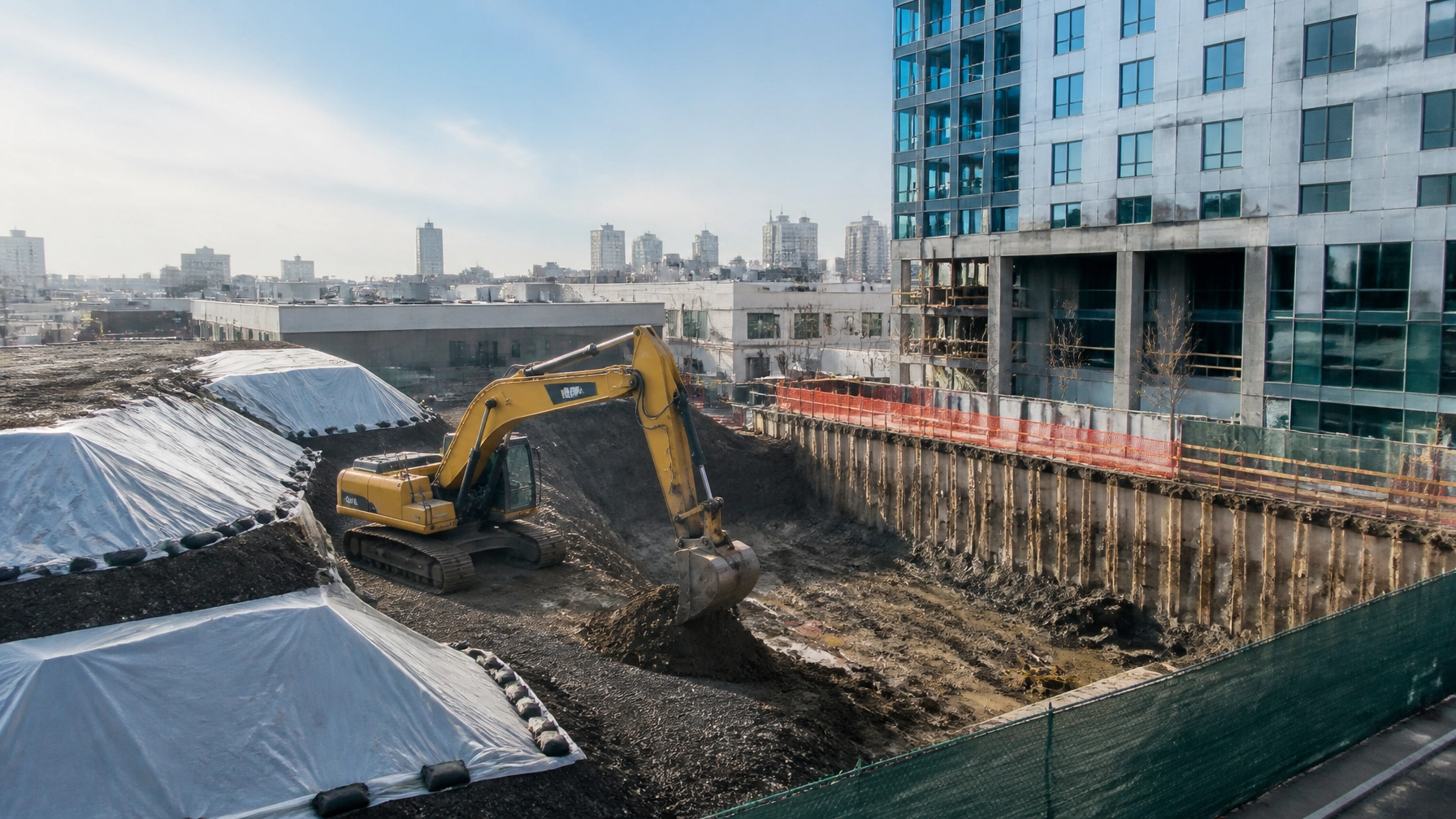
    Environmental construction oversight during compliant excavation and soil management at an urban redevelopment site

    NYC environmental remediation construction oversight cost table

    Cost driver What increases the cost What to confirm before budgeting
    OER review Phased review, revised submissions, additional review cycles Applicable tax lots, filing type, current fee
    Phase II delineation More borings, wells, soil vapor points, deeper sampling Historical uses and areas of concern
    Laboratory work More samples, broader analyte lists, expedited results Required methods and data quality objectives
    Soil management Greater volume, hazardous classification, longer haul distance Waste profiles, disposal facilities, clean fill source
    Groundwater High water table, dewatering, treatment, discharge controls Excavation depth and discharge pathway
    Vapor mitigation Larger footprint, active system, verification sampling Building design and vapor pathway
    CHASP and CAMP Longer construction, sensitive receptors, night work Work hours, monitoring locations, response plan
    Oversight Daily coverage, multiple shifts, complex excavation Contractor schedule and reporting requirements
    Confirmation sampling Failed samples, additional excavation, re-mobilization Closure criteria and sample locations
    OER closeout Multiple comments, incomplete records, changed conditions Closure report requirements and sign-off path
    Ongoing controls Active system monitoring, inspections, periodic reports Engineering controls and maintenance obligations

    Budgeting by borough

    The same technical issue can carry different execution costs across New York City.

    • Queens: Larger redevelopment parcels may involve multiple tax lots, deep excavation, and mixed industrial histories. A focused Queens environmental review should connect the CEQR scope to the actual construction plan.
    • Brooklyn: Dense urban conditions, adjacent buildings, former manufacturing uses, and limited staging can increase oversight and disposal logistics. Brownfield remediation cost in Brooklyn often turns on access and schedule as much as contamination.
    • Bronx: Former commercial and industrial uses may require careful soil and vapor assessment before new residential or community-serving development.
    • Manhattan: Limited staging, high carrying costs, deep foundations, and neighboring occupied properties can make field coordination a major budget factor.
    • Staten Island: Larger sites may create more sampling and soil-volume requirements, while groundwater and wet-weather conditions can affect excavation planning.

    How to build a defensible 2026 budget

    Before requesting contractor pricing, assemble:

    1. The CEQR determination and E-designation language.
    2. Current tax lot and development information.
    3. Phase I and prior environmental reports.
    4. Existing soil, groundwater, and soil vapor results.
    5. Proposed excavation and foundation plans.
    6. Anticipated construction schedule.
    7. Known utility, access, and staging limitations.
    8. Required OER deliverables and closure endpoint.

    Then separate the budget into five categories:

    • Consultant and engineering services
    • OER and other agency fees
    • Laboratory and sampling costs
    • Contractor, disposal, and material costs
    • Legal, title, design, financing, and carrying costs

    That structure shows where uncertainty remains. It also gives your lender, attorney, architect, and contractor a common project record.

    The Envicon approach

    Envicon does not treat a RAP as a report-writing exercise. We connect the investigation, remedial design, construction plan, field oversight, and closure documentation.

    That means your consultant should be able to explain:

    • Why each sample is needed
    • Which findings change the remedy
    • What the contractor must document
    • Which costs are fixed and which remain conditional
    • What OER needs before the next approval
    • How field records will support the closure package

    Large firms often separate these responsibilities across departments. The result is more handoffs and less ownership. Envicon keeps the work PE-led, field-first, and regulator-facing.

    We solve environmental and engineering challenges with precision, speed, and trust.

    Takeaway

    There is no reliable universal price for an NYC OER remedial action plan. The cost depends on the CEQR and E-designation scope, number of tax lots, contamination profile, laboratory program, excavation volume, vapor controls, CHASP and CAMP requirements, construction duration, OER review, confirmation sampling, and closure obligations.

    A defensible budget identifies those drivers before construction starts.

    If your 2026 project is in Queens, Brooklyn, the Bronx, Manhattan, or Staten Island, request a scope and cost-driver review before you commit to a consultant or remediation contractor.

    Request a scope and cost-driver review

    The goal is not to produce a bigger report. The goal is to remove the uncertainty between an environmentally challenged site and a buildable, compliant asset.

    Envicon corporate logo

  • New Jersey Flood Hazard Area Permit Completeness: What REAL Rule Applications Need Before NJDEP Review

    New Jersey Flood Hazard Area Permit Completeness: What REAL Rule Applications Need Before NJDEP Review

    A New Jersey flood permit does not become complete just because it was uploaded to NJDEP.

    For waterfront and flood-zone projects in Jersey City, Hoboken, Bayonne, Newark, Hudson County, Bergen County, and Essex County, NJDEP must have enough reliable information to evaluate the regulated activity. That means more than an application form. It means verified flood elevations, survey data, floodway and riparian mapping, grading details, building elevations, ownership certifications, fees, and supporting permits.

    This is the standard developers should use when reviewing NJ flood hazard area permit completeness.

    A submission date protects your schedule only when the application contains enough information for substantive agency review.

    Why completeness matters under the REAL rules

    New Jersey’s Resilient Environments and Landscapes rules changed several permitting standards, particularly for tidal flood hazard areas, coastal development, wetlands, and climate-informed flood elevations.

    The transition provisions also created important legacy distinctions. The relevant legacy date depends on the type of flood hazard area:

    • Fluvial flood hazard area: legacy treatment under the pre-Inland Flood Protection standards generally required a complete application before July 17, 2023.
    • Tidal flood hazard area: legacy treatment under pre-REAL tidal standards generally required a complete application before January 20, 2026.
    • Other REAL-affected permits: certain Coastal Zone Management, freshwater wetlands, and related applications may have different transition deadlines.

    A flood hazard application submitted by July 20, 2026 does not automatically receive pre-REAL treatment. The controlling rule version depends on the permit type, the tidal or fluvial classification, and whether the application met the applicable administrative and technical completeness requirements.

    Review the NJDEP REAL legacy provisions and confirm the rule path before relying on legacy treatment.

    Start with the correct flood hazard area mapping

    NJDEP distinguishes between tidal and fluvial flood hazard areas.

    A tidal flood hazard area is governed primarily by coastal or tidal flooding. This is common along the Hudson River waterfront and other coastal waters near Jersey City, Hoboken, Bayonne, and Newark Bay.

    A fluvial flood hazard area is governed primarily by stormwater runoff through a river, stream, or watercourse. Inland portions of Bergen and Essex Counties may fall into this category.

    The application should identify:

    • The regulated water or watercourse.
    • Whether the site is tidal or fluvial.
    • The flood hazard area limit.
    • The floodway limit, if one exists.
    • The flood fringe area.
    • The applicable mapping or calculation method.
    • The source and date of the flood elevation information.

    NJDEP recognizes several methods for determining flood hazard area and floodway limits. These may rely on NJDEP delineations, FEMA mapping, approximate methods, or hydrologic and hydraulic calculations.

    Do not assume FEMA mapping alone answers every NJDEP question. NJDEP may require a formal verification, particularly when the floodway or design flood elevation is not clear.

    The agency’s Flood Hazard Areas resource page provides the current technical framework and links to the governing rules.

    Survey equipment and elevation benchmarks at a New Jersey waterfront development site

    Survey and elevation data must agree

    A technically complete application needs a reliable topographic and boundary survey. The survey should support both the civil plans and the flood analysis.

    At minimum, coordinate the following:

    • Property boundaries and easements.
    • Existing buildings, pavement, walls, utilities, and drainage structures.
    • Topographic contours across the site.
    • Spot elevations at structures, roadways, curbs, bulkheads, and water features.
    • Existing and proposed grades.
    • Finished floor elevations.
    • Lowest floor elevations.
    • Flood design elevations across the site.
    • Vertical datum and any conversion to the datum required by NJDEP.
    • Cross-sections of regulated waters or structures used in the analysis.

    An elevation mismatch between the survey, architectural plans, flood model, and permit forms is a common source of deficiency comments. For example, a proposed building may appear compliant on an architectural plan but fall below the required elevation once the survey datum is reconciled.

    The application should make the elevation story easy to follow. NJDEP reviewers should not have to reconstruct it from disconnected drawings.

    Floodway, fill, and grading require direct analysis

    Floodway work receives closer scrutiny because the floodway carries a substantial portion of the flood flow. NJDEP generally restricts new buildings in the floodway, with limited exceptions such as certain Hudson River pile-supported structures.

    A complete submittal should clearly show whether the project includes:

    • Building construction or reconstruction.
    • Fill placement.
    • Excavation.
    • Site grading.
    • Retaining walls.
    • Roads and parking areas.
    • Utility installation.
    • Outfalls or drainage improvements.
    • Bulkhead or shoreline work.
    • Temporary construction access.
    • Soil stockpiles or staging areas.

    If fill or grading displaces flood storage, the design should address that displacement. Depending on the site and activity, the application may need a pre-development and post-development storage analysis, compensatory storage calculations, or other measures that demonstrate no adverse off-site flooding impact.

    The technical package should explain:

    • How much fill the project places.
    • Where fill is located relative to the flood hazard area and floodway.
    • Whether excavation replaces lost storage volume.
    • How the design affects water surface elevations.
    • Whether the project creates a rise in flood elevations.
    • How the design avoids redirecting water toward adjacent properties.

    Technical cutaway visualization of floodplain grading, compensatory storage, elevated building pad, and riparian buffer

    Building elevations need to be shown, not implied

    Flood-resistant design begins with the relationship between the proposed structure and the flood hazard area design flood elevation.

    For flood fringe development, NJDEP generally expects new structures to have the lowest floor elevated at least one foot above the applicable design flood elevation, subject to the specific rule provisions and project conditions.

    Plans should identify:

    • The flood hazard area design flood elevation.
    • The proposed lowest floor elevation.
    • The elevation of utilities and mechanical equipment.
    • The elevation of entrances and access routes.
    • Foundation type and openings.
    • Whether the building is supported on piers, piles, fill, or another system.
    • How the design complies with the New Jersey Uniform Construction Code and applicable FEMA requirements.

    A statement that the building will be “elevated” is not enough. The plans, survey, architectural set, and flood analysis must use the same elevations.

    Riparian zones and resource interfaces

    A flood permit application may also involve a regulated riparian zone. NJDEP identifies riparian zones that are generally:

    • 300 feet along Category One waters and certain upstream tributaries.
    • 150 feet along designated trout waters, certain threatened or endangered species habitat areas, and other sensitive waters.
    • 50 feet along other regulated waters.

    The width must be measured from the correct feature, such as the top of bank, centerline, normal water surface limit, or mean high water, depending on the waterbody.

    The application should map:

    • Riparian zone boundaries.
    • Existing vegetation.
    • Proposed vegetation disturbance.
    • Limits of clearing and grading.
    • Proposed revegetation or mitigation.
    • Any required deed restriction or preservation area.

    Flood hazard permitting rarely operates in isolation. Waterfront projects may also trigger review under:

    • Freshwater Wetlands Protection Act rules.
    • Coastal Zone Management rules.
    • Stormwater Management rules.
    • Soil erosion and sediment control requirements.
    • Municipal floodplain regulations.
    • Construction stormwater requirements.
    • U.S. Army Corps of Engineers jurisdiction.

    NJDEP specifically notes that floodway projects may overlap with wetlands, coastal, Highlands, and stormwater requirements. A complete application should identify those interfaces early instead of treating them as separate surprises.

    Ownership, certifications, fees, and electronic submittal

    Administrative completeness is just as important as engineering completeness.

    Before electronic submittal, confirm:

    • The correct applicant and property owner names.
    • Proof of property control or authorization.
    • Signed owner certifications.
    • Professional engineer, land surveyor, architect, or other required certifications.
    • Consistent tax lot, block, street address, and municipality information.
    • Current application forms.
    • Correct permit category.
    • Required public notice documentation, where applicable.
    • Correct application fee.
    • Supporting approvals and related permits.
    • Electronic file naming and document organization.
    • Accessible PDFs with legible plans and signatures.

    NJDEP’s flood hazard program uses DEP Online for certain authorizations, including general permit-by-certification applications. Other permit paths may require different electronic submission procedures. Confirm the current filing instructions before uploading.

    A missing signature or incorrect fee can prevent the application from being logged properly. A missing hydraulic report can prevent technical review. Both problems cost time.

    Organized NJ flood permit submittal package with civil plans, hydraulic analysis, elevation documents, and digital map review

    How to respond to a deficiency letter

    A deficiency response should not become a document dump.

    Start with a response matrix that lists:

    • Each NJDEP comment.
    • The responsible discipline.
    • The revised sheet, calculation, or certification.
    • The exact response.
    • Any change to the project design.
    • The date submitted.

    Then update every affected document. If the grading plan changes, check the hydraulic model, stormwater report, erosion control plan, wetland limits, riparian mitigation, and architectural elevations.

    NJDEP review becomes slower when one response fixes a plan but creates a contradiction elsewhere. One coordinated team should own the response from survey through civil design and agency communication.

    The Envicon approach to NJ flood permit completeness

    Envicon combines environmental permitting, civil engineering, geotechnical review, stormwater planning, and field coordination under one project team.

    That matters for a NJDEP flood hazard permit in Jersey City or a NJ flood hazard area application in Hoboken because the permit package must work as one technical record. Our team can coordinate:

    • Flood hazard area and floodway mapping.
    • Topographic and elevation review.
    • Civil site plans and grading.
    • Flood storage and hydraulic analysis coordination.
    • Riparian zone mapping.
    • Wetlands, coastal, and stormwater interfaces.
    • Ownership certifications and submission logistics.
    • Deficiency responses and agency communication.

    We work across Hudson, Bergen, and Essex Counties, including Jersey City, Hoboken, Bayonne, Newark, and surrounding waterfront communities. Our compliance and permitting team handles agency coordination. Our civil and geotechnical team connects the flood analysis to the design. Our Jersey City office supports local projects with direct senior-level access.

    NJ flood hazard area permit completeness checklist

    Before submission, confirm that your package includes:

    • Correct permit type and rule version.
    • Tidal or fluvial classification.
    • NJDEP or FEMA mapping basis.
    • Verified design flood elevation, when required.
    • Floodway limit and determination method.
    • Boundary and topographic survey.
    • Vertical datum and elevation conversions.
    • Existing and proposed contours.
    • Fill, grading, excavation, and disturbance limits.
    • Building and lowest floor elevations.
    • Flood storage or compensatory storage analysis.
    • Riparian zone limits and mitigation.
    • Wetland and coastal permitting interfaces.
    • Stormwater and erosion control documents.
    • Ownership authorization and certifications.
    • Correct fees and electronic submission documents.
    • A coordinated deficiency response process.

    The takeaway

    For New Jersey waterfront development, submission is not the finish line. Completeness is the threshold that starts meaningful NJDEP review.

    If your application does not clearly show where the flood hazard area is, how elevations were established, what the project changes, and why those changes comply, the review clock may not deliver the schedule protection you expect.

    Envicon helps turn complex flood permitting into a clear path from survey to approval.

    Request a Flood Permit Completeness Review

    Request a flood permit completeness review

    Call Envicon at (917) 764-2171

    Use our proprietary project risk screener

    Envicon corporate logo

  • Property Condition Report ASTM E2018: Lender-Ready PCA for Newark and Jersey City Acquisitions

    Property Condition Report ASTM E2018: Lender-Ready PCA for Newark and Jersey City Acquisitions

    A property condition report ASTM E2018 assessment gives lenders, investors, and acquisition teams a structured view of a commercial property’s physical condition before closing.

    For buyers in Newark, Jersey City, Hoboken, Bayonne, Bergen County, Hudson County, and Essex County, a lender-ready PCA can identify major capital needs before they become negotiation problems.

    ASTM International’s current standard is ASTM E2018-24, Standard Guide for Property Condition Assessments: Baseline Property Condition Assessment Process. The standard describes a baseline process built around a walk-through survey, records and interviews, identification of material physical deficiencies, and opinions of probable repair costs.

    “The goal of the baseline process for property condition assessments is to identify and communicate material physical deficiencies to a user.”
    Source: ASTM International, E2018-24

    What a property condition report ASTM E2018 assessment covers

    A PCA is not a quick visual tour. It is a documented commercial property assessment designed to help you understand the condition, remaining useful life, and likely capital requirements of the property’s primary improvements.

    A baseline PCA generally includes:

    • Records review and owner or property manager interviews
    • Site reconnaissance and visual inspection
    • Review of the structure and building envelope
    • Roofing and waterproofing observations
    • Mechanical, electrical, and plumbing system review
    • Fire protection and life safety observations
    • Interior and exterior condition review
    • Identification of physical deficiencies
    • Immediate repair recommendations
    • Opinions of probable costs
    • Replacement reserve planning
    • Assumptions, limitations, and reliance conditions

    The assessment is primarily visual and non-intrusive. It is not intended to be a technically exhaustive engineering investigation. ASTM E2018-24 recognizes that the appropriate level of due diligence depends on the property, transaction objectives, risk tolerance, available records, and required delivery timeline.

    ASTM E2018-24 baseline scope for New Jersey acquisitions

    An ASTM E2018-24 property condition assessment NJ assignment should begin with a clear scope. That matters because lenders do not all ask for the same report format or level of detail.

    Records and interviews

    The consultant should request available property records before or during the assessment. Relevant information may include:

    • Construction drawings and specifications
    • Prior inspection reports
    • Roof warranties and repair records
    • Mechanical equipment service records
    • Utility or energy data
    • Capital improvement histories
    • Fire department records and violations
    • Building department records
    • Certificates of occupancy
    • Maintenance contracts
    • Known insurance claims
    • Property manager and tenant interviews

    Records can explain conditions that a site visit alone cannot. A recently patched roof, recurring boiler failure, or open life safety violation may not be obvious during a single inspection.

    For an acquisition in Newark or Jersey City, the quality and completeness of the records should be stated in the PCR. Missing records create uncertainty. They should not disappear into a vague assumptions section.

    Site reconnaissance

    The walk-through should address the property’s primary improvements and site features. The field observer typically reviews representative areas rather than opening walls, dismantling equipment, or testing every component.

    The site review may include:

    • Foundations and visible structural elements
    • Exterior walls, windows, doors, and façade systems
    • Roof coverings, flashing, drains, and penetrations
    • Parking areas, curbs, sidewalks, loading docks, and site drainage
    • Plumbing fixtures and distribution systems
    • Heating, ventilation, and air conditioning
    • Electrical service and distribution
    • Elevators and vertical transportation
    • Fire protection and life safety systems
    • Interior finishes, common areas, and representative tenant spaces

    Commercial property inspectors reviewing an industrial building façade, loading dock, parking area, and stormwater inlet in Jersey City

    Building systems that can affect your acquisition budget

    A lender PCA should connect observed conditions to business decisions. A cracked sidewalk is not equivalent to a failing roof membrane. A dated air-conditioning unit is not equivalent to an unsafe electrical condition.

    Structure and envelope

    The consultant evaluates visible foundations, framing, exterior walls, windows, doors, masonry, sealants, waterproofing, and other envelope components.

    The report should distinguish between:

    • Routine maintenance
    • Deferred maintenance
    • Material physical deficiencies
    • Immediate repair needs
    • Capital replacement needs

    The PCA does not replace structural design or a technically exhaustive structural investigation. If the field observer identifies movement, settlement, distress, or a condition requiring engineering calculations, that issue should be clearly identified for further evaluation.

    Roofing and waterproofing

    Roofing conditions often drive acquisition negotiations. The report should address the apparent roof type, approximate age when known, visible deterioration, drainage, ponding, flashing, penetrations, rooftop equipment, and evidence of active or past leakage.

    A replacement reserve table should not simply list “roof replacement” without explaining the basis for the timing and cost opinion. The useful life depends on installation quality, maintenance, exposure, repairs, and observed condition.

    MEP and life safety

    Mechanical, electrical, and plumbing systems can create large post-closing expenses. A PCA should identify visible deficiencies in equipment, distribution, controls, serviceability, and remaining useful life.

    Life safety observations may include visible conditions involving:

    • Fire alarm systems
    • Sprinkler systems
    • Emergency lighting
    • Exit access
    • Guardrails and handrails
    • Egress doors
    • Fire-rated assemblies
    • Obstructed paths
    • Elevator condition

    A PCA can identify visible concerns, but it is not a fire marshal inspection, code certification, or complete accessibility audit.

    Commercial property condition assessment of a mechanical room with boilers, pumps, electrical panels, sprinkler piping, and ventilation equipment

    Immediate needs, physical deficiencies, and reserve planning

    The most useful PCRs separate repair needs by urgency and planning horizon.

    Immediate needs

    Immediate needs generally involve conditions that require prompt attention because they affect safety, essential operations, or the risk of further deterioration.

    Examples may include:

    • Active roof leaks affecting occupied space
    • Unsafe electrical conditions
    • Failed fire protection equipment
    • Severe water intrusion
    • Structural distress requiring further investigation
    • Inoperable essential building systems
    • Unsafe site access or egress conditions

    The exact timeframe should follow the assignment and lender requirements. A consultant should not force every recommendation into an arbitrary timeline without explaining the risk.

    Physical deficiencies

    A physical deficiency is a material defect, deferred maintenance condition, or system failure that affects the property’s condition, function, safety, or value.

    The report should avoid burying material issues among cosmetic observations. It should identify the location, condition, consequence, recommended action, and estimated cost.

    Opinions of probable costs

    ASTM E2018-24 cost opinions are planning estimates. They are not contractor bids, final design estimates, or guaranteed project costs.

    A useful cost opinion should state:

    • The observed condition
    • The recommended remedy
    • The estimated quantity or affected area when reasonably known
    • The cost basis
    • The expected timing
    • Relevant assumptions
    • Whether design, permitting, testing, or contingency is excluded

    A lender or buyer can then use the information for underwriting, negotiation, reserves, and post-closing capital planning.

    Replacement reserves

    Many lenders request a multi-year reserve schedule. Envicon’s Property Condition Report service includes a 12-year replacement reserve table for standard PCR assignments.

    Reserve planning may address:

    • Roof replacement
    • HVAC replacement
    • Boilers and chillers
    • Domestic water heaters
    • Electrical distribution
    • Elevators
    • Parking lots and paving
    • Windows and façade systems
    • Site drainage
    • Fire protection equipment

    The reserve schedule should reflect the actual property. A generic table copied from another asset does not help you underwrite risk.

    Lender deliverables for a commercial property condition report Newark

    A lender-ready commercial property condition report Newark assignment should provide clear deliverables that can move through underwriting without unnecessary back and forth.

    Lender deliverable What it should address
    Executive summary Property overview, key risks, immediate needs, and overall condition
    ASTM E2018-24 scope Assessment purpose, inspected improvements, exclusions, and limitations
    Records and interviews Documents reviewed, parties interviewed, and missing information
    Site reconnaissance Building systems, site improvements, photos, and observed conditions
    Physical deficiencies table Location, issue, consequence, recommendation, and priority
    Immediate repair table Safety-critical or urgent conditions with probable costs
    Capital reserve schedule Major replacements, useful life, timing, and estimated costs
    Opinions of probable cost Screening-level budgets with assumptions and limitations
    Reliance and limiting conditions Intended users, inspection date, access restrictions, and uncertainty
    Supporting exhibits Photographs, site information, plans, and relevant records

    For a lender PCA Jersey City transaction, the report should identify the property address, inspection date, intended user, and lender reliance requirements at the beginning of the assignment. If the lender has a required form or checklist, provide it before the field visit.

    PCA versus Phase I ESA

    A PCA and a Phase I ESA answer different questions.

    Question ASTM E2018 PCA Phase I ESA
    Primary focus Physical condition of buildings and site improvements Environmental liability and contamination risk
    Main output Property Condition Report Phase I Environmental Site Assessment
    Typical findings Roof failure, boiler age, façade damage, electrical deficiencies Recognized Environmental Conditions, historical releases, UST concerns
    Cost planning Repair costs and replacement reserves Usually identifies the need for additional investigation
    Standard ASTM E2018-24 ASTM E1527-21
    Common use Acquisition, lending, capital planning Due diligence, financing, environmental liability management

    A PCA does not replace a Phase I ESA. For many commercial acquisitions, you need both reports. Envicon can coordinate the scopes so your lender receives consistent property information from one accountable team.

    What a PCA does not replace

    A baseline PCA does not replace:

    • Phase I or Phase II Environmental Site Assessments
    • Asbestos surveys
    • Lead-based paint inspections
    • Mold assessments or sampling
    • Structural design or technically exhaustive structural inspections
    • Building code certification
    • Fire marshal approval
    • ADA or accessibility compliance surveys
    • Geotechnical investigation
    • Intrusive testing or destructive investigation
    • Contractor bids or final construction documents

    If the property has a known concern, add the correct specialist scope. Our civil and geotechnical engineering team can help determine whether the PCA should be paired with structural, geotechnical, drainage, or site engineering work.

    Local PCA coverage across Northern New Jersey

    Envicon supports commercial property acquisitions throughout:

    • Newark and Essex County
    • Jersey City and Hudson County
    • Hoboken
    • Bayonne
    • Bergen County
    • Elizabeth and Union County
    • Other New Jersey and New York metro markets

    Our Jersey City location team understands the conditions that affect Hudson County transactions, including older industrial buildings, waterfront exposure, dense urban access, mixed-use assets, and compressed lender schedules.

    The difference is execution. You get direct access to senior professionals, a clear scope, transparent cost expectations, and a report written to move the transaction forward. We do not hand you a generic inspection summary and leave you to interpret the risk.

    FAQ: Property condition report ASTM E2018

    Is ASTM E2018-24 required by law?

    No. ASTM E2018-24 is a voluntary standard guide. Lenders, investors, and transaction parties may require a PCA that follows the standard or a customized scope based on the property and transaction.

    How long does a PCA take in Newark or Jersey City?

    A standard PCA commonly requires a site visit followed by report preparation. Envicon’s service page identifies a typical 5 to 7 day turnaround, subject to property size, access, records, lender requirements, and scope.

    Does a PCA include repair costs?

    Yes. A PCR should include opinions of probable costs for suggested remedies to observed physical deficiencies. These are budget-level estimates, not contractor bids.

    Does a PCA include asbestos or mold testing?

    Not in the baseline ASTM E2018-24 scope. Asbestos, lead, mold, and other hazardous material assessments should be separately scoped when property history or observed conditions warrant them.

    Should I order a PCA and Phase I ESA together?

    Usually, yes, when the transaction requires both physical condition and environmental due diligence. Ordering the scopes together can reduce scheduling conflicts and create one coordinated lender deliverable.

    Ready for a lender-ready PCA?

    Request a site-specific scope for your Newark, Jersey City, Hoboken, Bayonne, Bergen County, Hudson County, or Essex County acquisition.

    A property condition report should do more than document defects. It should give you a clear basis for underwriting, negotiation, reserves, and the next decision. Envicon delivers lender-ready property intelligence with precision, speed, and trust.

    Envicon corporate logo

  • NJDEP PFAS Baseline Sampling 2026: How Unknown Areas of Concern Change Phase II Scope

    NJDEP PFAS Baseline Sampling 2026: How Unknown Areas of Concern Change Phase II Scope

    Status: DRAFT. Not scheduled or published.

    New Jersey’s June 15, 2026 amendments to the Technical Requirements for Site Remediation change how many Phase II investigations must be scoped.

    Under amended N.J.A.C. 7:26E-2.1(c), investigators must analyze for GenX chemicals, PFNA, PFOS, PFOA, 2,3,7,8-TCDD, and other required parameters when hazardous substances at an Area of Concern are unknown or not well documented.

    That matters for industrial property PFAS due diligence in Newark, Jersey City, Hoboken, Bayonne, Hudson County, Bergen County, and Essex County.

    The issue is not simply whether PFAS were known to be used at the property. The issue is whether the site history is strong enough to show what was used, stored, discharged, or released at each Area of Concern.

    If it is not, the Phase II scope gets broader.

    What changed under NJDEP PFAS baseline sampling 2026 rules?

    The June 2026 rulemaking formalized PFAS standards and amended the analytical requirements in N.J.A.C. 7:26E.

    For an AOC where contaminants are unknown or poorly documented, the required analytical list now includes:

    • GenX chemicals
    • PFNA, or perfluorononanoic acid
    • PFOS, or perfluorooctane sulfonate
    • PFOA, or perfluorooctanoic acid
    • 2,3,7,8-TCDD
    • TCL plus TICs and TAL
    • Hexavalent chromium
    • Extractable petroleum hydrocarbons
    • pH

    The exact scope still depends on the environmental media and site conditions. “All media” does not mean every project must sample air, sediment, groundwater, and soil regardless of site conditions. It means that the required analytes must be included across the applicable environmental media being investigated.

    That can include:

    • Soil
    • Groundwater
    • Surface water
    • Sediment
    • Soil vapor pore spaces
    • Air, where an applicable pathway and method exist

    The controlling source is the NJDEP courtesy copy of N.J.A.C. 7:26E, dated June 15, 2026.

    Why unknown or poorly documented AOCs create a larger Phase II

    An Area of Concern is not limited to a leaking underground storage tank. Under the Tech Regs, an AOC can include a former tank, loading area, process floor drain, sump, waste storage area, dry well, stormwater system, discharge area, fill area, or environmental medium where contamination may have migrated.

    In Newark or Bayonne, that can mean multiple historic operations layered on top of one another. In Jersey City or Hoboken, the concern may involve industrial fill, former manufacturing, waterfront operations, rail infrastructure, or redevelopment over a property with incomplete records.

    An AOC may be considered poorly documented when:

    • Former operators cannot be identified.
    • Historical plans are incomplete or unavailable.
    • The property changed ownership several times.
    • Chemical storage or waste handling records are missing.
    • A previous consultant identified contamination but did not define the source.
    • Historic fill obscures the original site grade and use.
    • Existing environmental reports list “unknown source” conditions.
    • The property was part of a larger industrial complex.
    • Former tenants used shared drains, sumps, utilities, or loading areas.

    A Phase I may identify the risk. The Phase II must resolve it.

    Technical GIS conceptual site model showing sampling points, groundwater wells, site boundaries, drainage paths, and subsurface soil strata at an urban New Jersey industrial parcel

    NJDEP PFAS baseline Phase II Newark: start with site history

    The best sampling plan starts before the drill rig arrives.

    NJDEP’s 2024 Field Sampling Procedures Manual places site history, physical setting, sample locations, laboratory selection, and quality assurance inside the sampling plan process.

    For a Newark warehouse or industrial parcel, we review:

    • Historical Sanborn fire insurance maps
    • Aerial photographs and topographic maps
    • City directories and industrial records
    • NJDEP case files and DataMiner information
    • Previous Phase I, Phase II, and remedial reports
    • UST and aboveground storage tank records
    • Building plans and drainage layouts
    • Former tenant operations
    • Fire-training, plating, textile, metal, chemical, and manufacturing uses
    • Historic fill placement and imported material sources
    • Nearby properties that may have contributed off-site impacts

    The goal is to classify each AOC as documented, partially documented, or unknown.

    That classification affects the analytical scope, number of samples, laboratory method, field controls, and cost.

    Unknown AOC PFAS testing Jersey City: what the field plan should address

    For unknown AOC PFAS testing in Jersey City, the sampling plan should connect each sample to a specific question.

    Examples include:

    • Did the former loading area affect shallow soil?
    • Is groundwater impacted beneath the former process floor?
    • Did a dry well or storm sewer create a migration pathway?
    • Is historic fill contributing to groundwater impacts?
    • Could contamination have migrated from an adjacent parcel?
    • Does the proposed construction excavation create a soil management issue?
    • Are results needed for a private acquisition, NJDEP case, ISRA transaction, or both?

    A defensible plan identifies the sample locations, depths, matrix, analytes, laboratory method, quality controls, and decision criteria before mobilization.

    For PFAS work, field procedures matter as much as the analyte list.

    NJDEP’s PFAS Sampling Fact Sheet states:

    “The Department is requesting that the full list of PFAS compounds analyzed and reported by the respective analytical methods be reported.”

    That means a laboratory should not selectively report only the four compounds that appear most familiar. The project team must understand the full target list generated by the selected method and make sure the report identifies detections, non-detects, reporting limits, and any data usability concerns.

    PFAS field QA/QC is not optional

    PFAS exists in many common products and materials. Cross-contamination can compromise results at very low concentrations.

    A project-specific QAPP and Sampling and Analysis Plan should address:

    • PFAS-free water for equipment and field blanks
    • Field reagent blanks where applicable
    • Equipment rinsate blanks based on project objectives
    • Matrix spike and matrix spike duplicate samples
    • Sample containers supplied or approved by the laboratory
    • Chain of custody and temperature control
    • Clean, powder-free nitrile gloves
    • Avoidance of PTFE, Teflon, fluoropolymer tubing, and similar materials
    • PFAS sampling before other sampling that may use fluoropolymer materials
    • Low-flow or passive groundwater sampling where appropriate
    • No field filtration unless the method and project objectives support it
    • Documentation of drilling water, bentonite, well materials, and decontamination products
    • Separate handling of potentially high-concentration samples and investigation-derived waste

    For groundwater, turbidity deserves attention. NJDEP’s fact sheet notes that low-flow or passive methods are preferred when turbidity could bias results. Samples should not be filtered in the field because adsorption can create a negative bias.

    Two environmental professionals collecting groundwater at a New Jersey industrial property using PFAS-conscious equipment, HDPE bottles, nitrile gloves, and a decontamination station

    7:26E PFAS all media requirement versus private transaction scope

    A regulatory investigation and a private transaction investigation are related, but they are not identical.

    A private buyer may want a focused Phase II to price risk before closing. NJDEP, an LSRP, or an ISRA pathway may require a broader investigation that supports regulatory decision-making and eventual closure.

    The scope should make that distinction clear.

    Situation Likely scope Key issue
    Well-documented AOC with defined contaminants Targeted analytes and media tied to the documented release The records must support the exclusion of PFAS
    Unknown or poorly documented AOC Baseline analytes, including PFNA, PFOA, PFOS, GenX, and 2,3,7,8-TCDD, across applicable media The 7:26E requirement drives broader testing
    Private acquisition with no NJDEP case Transaction-focused Phase II with lender and buyer objectives The report may not satisfy future NJDEP obligations
    ISRA-triggered industrial transfer PA/SI, LSRP oversight, and regulatory reporting under NJDEP requirements Timing and documentation must align with ISRA
    Existing NJDEP case with PFAS information Scope determined through the LSRP’s professional judgment and regulatory requirements Existing data must be evaluated for usability
    Positive PFAS result Additional delineation, receptor review, and potential remedial action Cost and schedule can expand quickly

    A private Phase II can be narrower than a regulatory site investigation. It should not be presented as equivalent unless the scope, documentation, and reporting requirements support that conclusion.

    Cost and schedule planning

    Envicon’s Phase II ESA process typically runs three to five weeks, including laboratory work, when access, drilling, laboratory capacity, and scope are confirmed. PFAS may add coordination time because the laboratory must confirm methods, containers, preservatives, reporting limits, and target analytes before field work.

    The cost depends on:

    • Number of AOCs
    • Number and depth of borings
    • Need for monitoring wells
    • Soil, groundwater, sediment, or surface water matrices
    • PFAS analytical method and target list
    • Conventional contaminants analyzed alongside PFAS
    • Access restrictions and utility clearance
    • Historic fill and groundwater conditions
    • Investigation-derived waste management
    • Data validation requirements
    • Whether the work supports a private transaction or NJDEP case

    For context, Envicon’s Jersey City environmental services page identifies a typical Phase II ESA range of $8,000 to $25,000 for soil and groundwater investigations. A PFAS baseline scope involving multiple unknown AOCs or all applicable media may fall outside that range.

    The right answer is not the cheapest sample plan. It is the smallest defensible plan that answers the regulatory and business question.

    How Envicon approaches the work

    We do not treat PFAS as a laboratory add-on after the sampling plan is finished.

    Our Phase II ESA team coordinates:

    • Site history and AOC review
    • NJDEP and ISRA implications
    • LSRP involvement where required
    • Sampling and Analysis Plan development
    • PFAS-specific QA/QC
    • Certified laboratory coordination
    • Field documentation and chain of custody
    • Data usability review
    • Comparison to applicable standards
    • Cost and schedule implications
    • Next-step recommendations

    When the property is subject to NJDEP oversight, our NJ LSRP services connect the Phase II scope to the broader path toward delineation, remediation, RAO, or other closure strategy.

    You should know what the data means before you commit to the next phase.

    The takeaway

    In 2026, an unknown AOC is not a blank space in the scope. It is a reason to investigate more carefully.

    For industrial properties in Newark, Jersey City, Hoboken, Bayonne, Hudson, Bergen, and Essex, incomplete records can trigger broader PFAS analysis under N.J.A.C. 7:26E. The practical response is a clear site history, a defensible sampling plan, PFAS-specific QA/QC, complete laboratory reporting, and an early decision about whether the work supports a transaction, NJDEP case, ISRA obligation, or all three.

    If your property has an unknown source, historic fill, incomplete operational records, or an upcoming closing, contact Envicon Group before the scope is finalized.

    Ready to scope the investigation?

    Precision matters. So does knowing what the data means before it changes your deal.

    Envicon corporate logo

  • Asbestos Inspection NYC: Rule 56, ACP-5, and Commercial Property Closing Due Diligence

    Asbestos Inspection NYC: Rule 56, ACP-5, and Commercial Property Closing Due Diligence

    A commercial property closing in New York City can move quickly until asbestos documentation stops the permit or lender process.

    An asbestos inspection in NYC is not the same as a Phase I ESA, a property condition assessment, or a general building walkthrough. Before renovation or demolition, the inspection must address the materials that construction will disturb. The work must also align with NYSDOL Industrial Code Rule 56, NYC Department of Environmental Protection requirements, and NYC Department of Buildings permit procedures.

    For buyers, owners, lenders, and counsel, the objective is simple: identify asbestos risk early, document it correctly, and prevent a closing or construction schedule from depending on an incomplete survey.

    “Building owners are responsible for having a DEP-certified asbestos investigator perform an asbestos survey.”
    Source: NYC DEP asbestos abatement forms and filing instructions

    What Rule 56 requires before renovation or demolition

    New York State Industrial Code Rule 56, codified at 12 NYCRR Part 56, requires an asbestos survey before building demolition, renovation, remodeling, or repair work that may disturb suspect materials.

    The survey should be performed by a properly certified asbestos inspector. In New York City, the owner also needs a DEP-certified asbestos investigator, commonly called a CAI, to prepare the documentation used in the city filing process.

    Do not rely on building age alone. NYC DOB identifies a limited exemption from DEP asbestos certification for certain alterations in buildings constructed after April 1, 1987. Known asbestos-containing material must still be properly handled if the work will disturb it. Confirm the exemption with the project’s certified investigator and design team before relying on it.

    Rule 56 requires the survey to cover the building or the portion of the building affected by the work. A quick visual review of accessible finishes is not enough when demolition plans include walls, ceilings, pipe chases, mechanical rooms, roofing, flooring, or concealed assemblies.

    What the inspector evaluates

    A compliant survey identifies suspect materials, divides them into homogeneous areas, collects representative bulk samples, and documents the results.

    A homogeneous area is a material or material system that appears consistent in color, texture, installation method, and installation period. Common examples include:

    • Plaster or sprayed fireproofing
    • Pipe, boiler, tank, and duct insulation
    • Floor tile and mastic
    • Ceiling tile
    • Wallboard and joint compound
    • Roofing materials
    • Window caulk and glazing
    • Exterior siding
    • Fireproofing and fire-stopping materials

    The inspector should document where each homogeneous area occurs, whether it will be disturbed, and whether it is assumed to contain asbestos or supported by laboratory results.

    Bulk sampling and laboratory analysis

    Bulk samples should follow EPA and AHERA protocols, as required under Rule 56. NYSDOL guidance generally expects:

    • Three, five, or seven samples for friable surfacing materials, depending on the area size
    • Three samples for most homogeneous areas of thermal system insulation
    • At least two samples for miscellaneous and nonfriable suspect materials when the inspector is relying on sampling to rebut the asbestos assumption

    Samples should be analyzed by a laboratory that meets applicable NYS ELAP requirements. Multi-layered systems must be addressed as systems. Sampling only the visible top layer can leave the underlying material unresolved.

    If the inspector cannot obtain sufficient representative samples, the material may need to remain classified as assumed asbestos-containing material.

    Inaccessible spaces create real closing risk

    An asbestos survey should identify inaccessible or not readily accessible areas, such as:

    • Sealed wall cavities
    • Above hard ceilings
    • Pipe chases
    • Interstitial floors
    • Mechanical shafts
    • Below fixed equipment
    • Areas blocked by active tenants or stored materials

    The inspector should not open an assembly without proper authorization, safe access, and coordination with the project team. However, an inaccessible area cannot simply disappear from the risk discussion.

    For an acquisition, the report should state:

    1. What area was inaccessible
    2. Why it could not be inspected
    3. Whether the area will be disturbed
    4. Whether additional investigation is recommended
    5. What contingency should be carried in the construction budget

    That information matters to lenders and buyers. A survey with undocumented limitations can lead to a change in scope after closing, a contractor stop-work event, or a larger abatement budget.

    Technical asbestos survey documentation showing sampling points, floor plans, and specimen bags

    ACP-5, ACP-7, and the NYC permit relationship

    The inspection is only the first step. NYC DEP and DOB use different forms for different project conditions.

    ACP-5

    An ACP-5 Asbestos Assessment Report is used when:

    • The affected area is free of asbestos-containing material
    • ACM is present but will not be disturbed
    • The work is a minor project
    • The investigator must document the asbestos condition for a DOB application

    For a full building demolition, NYC DOB requires an ACP-5 with item 8(d) checked, stating that the entire building is free of ACM, except for limited A-TRU or emergency procedures.

    ACP-7

    An ACP-7 Asbestos Project Notification is required when the work will disturb more than 25 linear feet or more than 10 square feet of ACM. The owner or authorized agent must file it through NYC DEP’s Asbestos Reporting and Tracking System at least one week before work begins.

    If the project scope, contractor, quantity, location, or dates change, an ACP-8 amendment may be required. Complex or phased projects may also trigger review by the Asbestos Technical Review Unit, or A-TRU.

    NYC DOB requires the applicant to indicate the asbestos status on the permit application. As the NYC DOB asbestos project requirements explain, the permit path depends on whether the work is exempt, covered by an ACP-5, or requires abatement and completion documentation.

    Abatement, air monitoring, and clearance

    If the survey identifies ACM that construction will disturb, the owner must use a NYSDOL-licensed asbestos abatement contractor.

    NYC DOB also identifies the need for an independent air-monitoring firm when abatement is required. Air monitoring helps document that controls are working during the project. After abatement, the project must pass required visual inspection and clearance procedures before the area is released for subsequent construction.

    Depending on the project, closeout documentation may include:

    • Clearance air monitoring results
    • ACP-20 conditional completion
    • ACP-21 asbestos project completion
    • ACP-15 project monitor reporting
    • Updated ACP-5 documentation for areas outside the abatement scope

    The sequence matters. Abatement, air monitoring, clearance, DEP filing, and DOB sign-off should be built into the construction schedule before the closing date.

    Controlled commercial building asbestos abatement preparation with containment, HEPA filtration, and air monitoring equipment

    An asbestos survey is not a Phase I ESA or PCA

    Commercial buyers often assume that one due diligence report covers every environmental and building risk. It does not.

    Scope Primary purpose Does it replace an asbestos survey?
    Phase I ESA under ASTM E1527-21 Identifies recognized environmental conditions related to hazardous substances and petroleum No
    Phase II ESA Tests soil, groundwater, soil vapor, or indoor air when a REC requires investigation No
    ASTM E2018 Property Condition Assessment Evaluates physical building systems, deferred maintenance, and capital needs No
    Asbestos survey Identifies ACM that may be disturbed by renovation or demolition No
    Lead survey Evaluates lead-based paint or lead hazards under the applicable scope No
    Mold assessment Evaluates moisture conditions and fungal growth No

    A Phase I ESA may recommend an asbestos survey as a business environmental risk or construction concern. A PCA may note visible suspect materials. Neither document provides the Rule 56 sampling, ACP-5, ACP-7, or permit documentation required for asbestos work.

    Envicon coordinates these scopes when the project needs them, but we keep the conclusions separate. That is how you give lenders, counsel, contractors, and regulators a clear record.

    Permit-readiness checklist for NYC commercial properties

    Before submitting renovation or demolition documents, confirm that the project team has:

    • Defined the exact renovation or demolition limits
    • Reviewed drawings for walls, ceilings, floors, shafts, mechanical systems, and exterior work
    • Retained a qualified asbestos inspector and NYC DEP-certified investigator
    • Identified homogeneous areas and inaccessible spaces
    • Collected representative bulk samples
    • Used a compliant laboratory and documented chain of custody
    • Determined whether ACM will be disturbed
    • Prepared ACP-5 or ACP-7 documentation
    • Confirmed whether A-TRU review or a variance applies
    • Selected a NYSDOL-licensed abatement contractor
    • Selected an independent air-monitoring firm
    • Scheduled clearance and closeout documentation
    • Coordinated asbestos records with the lender, attorney, architect, and general contractor

    Manhattan, Brooklyn, Queens, the Bronx, Staten Island, and Westchester

    The same core requirements apply across New York City, but project conditions vary by building type and borough.

    Older commercial buildings in Manhattan may contain layered plaster, fireproofing, pipe insulation, and multiple renovation generations. Brooklyn warehouse conversions often require careful review of roofing, floor tile, boiler rooms, and concealed utilities. Queens demolition and industrial redevelopment projects may involve extensive mechanical and exterior materials. The Bronx and Staten Island projects can combine older building stock with phased redevelopment. Westchester projects remain subject to New York State requirements, even though NYC DEP and DOB forms do not apply outside the city.

    Envicon supports asbestos and environmental due diligence across Manhattan, Brooklyn, Queens, the Bronx, Staten Island, and Westchester County.

    Frequently asked questions

    Is an asbestos inspection required before renovation in NYC?

    In most cases, yes. The owner must determine whether the planned work will disturb ACM and satisfy applicable NYSDOL, NYC DEP, and DOB requirements before work begins.

    Does a Phase I ESA include asbestos?

    No. A Phase I ESA under ASTM E1527-21 is not an asbestos survey. Request a separate asbestos scope when renovation or demolition will disturb building materials.

    What is the difference between ACP-5 and ACP-7?

    ACP-5 documents the asbestos assessment for non-project, minor, or no-disturbance conditions. ACP-7 notifies NYC DEP of an asbestos project that exceeds the regulated quantity thresholds.

    Can a lender require an asbestos survey before closing?

    Yes. A lender may require the survey when the property will be renovated, demolished, refinanced with planned capital work, or used as collateral with known environmental or building-material concerns.

    What happens if inaccessible areas were not sampled?

    The report should identify the limitation and explain whether additional access, sampling, or an asbestos contingency is needed. Do not assume an inaccessible area is asbestos-free.

    The Envicon approach

    An asbestos inspection should not become a report that sits in a deal folder. It should answer the practical questions:

    • Can the planned work proceed?
    • What must be abated?
    • Which forms are required?
    • What will the lender need?
    • What does the contractor need before mobilization?
    • What remains uncertain?

    Envicon provides asbestos and lead survey support as part of a broader environmental assessment practice. For NYC projects, our environmental consulting team coordinates with owners, lenders, attorneys, architects, contractors, DEP, and DOB.

    Ready to clear the asbestos question before closing?

    The goal is not to produce another document. It is to give your project a defensible path from inspection to permit, closing, and construction.

    Envicon corporate logo

  • NYSDEC Part 375 Daily Field Reports: Brownfield Documentation Controls for New York COC Readiness

    NYSDEC Part 375 Daily Field Reports: Brownfield Documentation Controls for New York COC Readiness

    DRAFT FOR APPROVAL. Not scheduled or published.

    As of September 2026, New York Brownfield Cleanup Program teams need to treat field documentation as a regulatory deliverable, not a project afterthought.

    The December 31, 2025 amendments to 6 NYCRR Part 375 added a daily reporting requirement for field activities performed under an approved work plan. The practical message is clear. If the field record is incomplete, the Final Engineering Report becomes harder to defend. If the Final Engineering Report is incomplete, Certificate of Completion readiness suffers.

    For projects in NYC, Westchester, Nassau, and Suffolk County, an NYSDEC Part 375 daily field report should establish what happened, where it happened, who observed it, what samples or materials moved, and whether the work stayed within the approved design.

    The field record should answer those questions while the work is happening. Reconstructing them months later is slower, more expensive, and less credible.

    What changed under the December 31, 2025 Part 375 amendments?

    NYSDEC adopted revised environmental remediation regulations effective December 31, 2025. The amendments apply across several state remediation programs, including the Brownfield Cleanup Program.

    One important change appears in Part 375-1.6(a). Daily reports must be submitted for field activities completed under an approved work plan. NYSDEC’s rulemaking materials explain that the requirement is intended to improve supervision and produce the documentation needed for the Final Engineering Report during field work.

    The daily report is not simply an internal contractor log. It supports the official project record and gives NYSDEC and the New York State Department of Health timely information about field conditions, community air monitoring, deviations, and remedy implementation.

    Review the official materials:

    The regulation does not make every field condition a violation. It does make undocumented field work a problem.

    What an NYSDEC Part 375 daily field report should document

    A useful daily report should be specific enough that a QEP can rely on it when preparing the FER. It should also allow a regulator, lender, attorney, or future property owner to understand the work without guessing.

    At minimum, the report should address:

    • Project name, BCP site number, location, and reporting date
    • Names and roles of the QEP, field engineer, contractor, subcontractors, and visitors
    • Weather and site conditions that affected the work
    • Approved work plan, RAWP, design drawing, or specification being followed
    • Work areas, excavation grids, boring locations, monitoring points, or structure identifiers
    • Equipment and personnel on site
    • Excavation limits, depths, quantities, and material handling activities
    • Soil stockpile locations and segregation controls
    • Dewatering, treatment, discharge, or temporary containment activities
    • Community air monitoring results and corrective actions
    • Samples collected, including sample IDs, locations, depths, and collection times
    • Laboratory, cooler, and chain-of-custody information
    • Waste profiles, manifests, truck tickets, disposal facilities, and load quantities
    • Photographs with time, location, direction, and subject
    • Deviations from the approved plan
    • Open issues, notifications, decisions, and next steps
    • Sign-off by the responsible field professional

    A report that says “excavation continued” is not enough. A defensible entry identifies the area excavated, the approximate limits, the soil observed, the material disposition, the confirmation samples collected, and whether the work matched the approved plan.

    Technical field documentation station with sample containers and digital reporting equipment

    Build a real-time NYSDEC field deviation log

    Field deviations are normal on complex brownfield sites. Utilities appear where drawings show nothing. Foundations extend beyond historic plans. Excavation limits change when contamination extends farther than expected. Imported fill does not always match the anticipated material.

    The issue is not whether the site changes. The issue is whether the project team records the change and evaluates its effect.

    A NYSDEC field deviation log should be maintained alongside the daily reports. Each entry should include:

    1. Date and exact location
      Identify the grid, elevation, structure, boring, excavation area, or monitoring point.

    2. Approved condition
      Reference the drawing, work plan section, specification, or RAWP requirement.

    3. Observed condition
      State what the field team actually encountered.

    4. Immediate response
      Record whether work stopped, continued under controls, or moved to another area.

    5. Technical evaluation
      Explain whether the condition affects cleanup objectives, engineering controls, exposure pathways, or schedule.

    6. Notification and decision path
      Identify who was notified, when, and what direction was given.

    7. Supporting evidence
      Link photographs, survey data, field screening, laboratory results, RFIs, sketches, or revised drawings.

    8. Final disposition
      Document the approved corrective action, design change, additional sampling, or rationale for leaving the work as installed.

    The deviation log should not be a place to hide problems. It should be the project’s decision trail.

    A short, timely entry is more useful than a polished explanation written at the end of the job. The QEP should review open deviations before they become buried under subsequent work.

    Connect photos, samples, manifests, and maps

    Traceability is where many otherwise competent project records become difficult to defend.

    A photograph should connect to a location and a field activity. A sample should connect to a sample plan, a specific location, and a laboratory result. A manifest should connect to a soil stockpile, load, destination, and disposal approval.

    Use consistent identifiers across the full record:

    • Excavation area: EX-03
    • Stockpile: SP-02
    • Confirmation sample: EX03-FL-04
    • Photograph: EX03-2026-09-08-017
    • Waste profile: WP-02
    • Manifest: M-2026-0912

    The naming convention matters less than consistency. The same identifier should appear in the daily report, photo log, sample table, map, laboratory package, waste record, and FER appendix.

    This is where digital dashboards and GIS workflows can improve control. A field team can capture the record once, associate it with a mapped location, and make the information available to the QEP and project manager in real time.

    That is different from receiving a monthly PDF after the field decision has already been made.

    QEP certification and complete, accurate project data

    The QEP’s role is not to repeat the contractor’s narrative. The QEP must determine whether the documentation supports the FER and whether the record accurately describes the remedy as implemented.

    For COC readiness, the project file should allow the QEP to confirm:

    • The work followed the approved work plan and remedial design
    • Deviations were identified and evaluated
    • Required notifications and approvals were documented
    • Sampling and analytical data are complete and traceable
    • Engineering controls were installed as designed or properly revised
    • Institutional control records match the completed remedy
    • Waste and soil movement records support the reported quantities
    • Community air monitoring and other compliance records are included
    • The FER describes the actual completed work, not the original plan
    • The supporting data demonstrates achievement of the remedial objectives

    The QEP or New York licensed professional engineer should not be forced to certify a project record that depends on assumptions.

    A certification is only as strong as the underlying documentation. The goal is not to create more paperwork. The goal is to create a complete and accurate record that can withstand NYSDEC review.

    Engineering controls and institutional control records

    Many BCP sites do not end with excavation alone. They may include caps, barriers, vapor mitigation systems, groundwater monitoring, site management plans, environmental easements, or use restrictions.

    Those controls need their own documentation trail.

    For engineering controls, retain:

    • Approved design drawings
    • Material certifications
    • Installation records
    • Survey data and elevations
    • Inspection reports
    • Testing and commissioning records
    • As-built drawings
    • Photographs before concealment
    • Repair or corrective action records

    For institutional controls, retain:

    • Environmental easements or declarations
    • Site Management Plan requirements
    • Operations and maintenance procedures
    • Monitoring schedules
    • Annual certification records
    • Access and inspection documentation
    • Future soil disturbance procedures
    • Vapor mitigation operation records, where applicable

    The record should show not only that a control was installed, but also how the control will remain effective after the construction team leaves.

    Engineer reviewing as-built and institutional control documentation beside a completed brownfield remedy

    BCP and Part 375 are not the same as NYC OER VCP

    Program selection affects the documentation standard.

    A site enrolled in the NYSDEC Brownfield Cleanup Program follows the BCP and Part 375 framework. The COC path is tied to NYSDEC approval of the Final Engineering Report and satisfaction of the applicable remedial requirements.

    A site proceeding through the NYC Office of Environmental Remediation Voluntary Cleanup Program follows a different agency process, with different forms, milestones, and closure documents. NYC OER requirements may overlap with Part 375 concepts, but they should not be treated as interchangeable.

    Private transaction reporting is different again. A buyer, lender, insurer, or attorney may request a Phase I ESA, Phase II ESA, vapor assessment, reliance letter, or remediation risk opinion. Those deliverables support a transaction. They do not replace the regulatory record required for a NYSDEC BCP COC.

    This distinction matters in NYC, where a single project may involve NYSDEC, NYC OER, NYC Department of Buildings, NYC Department of Environmental Protection, and lender requirements. The project team should identify the governing program before field work begins.

    For NYC projects, see Envicon’s environmental consultant services. Envicon also supports projects in Westchester County, Nassau County, and Suffolk County.

    Field-report checklist for September 2026 implementation

    Use this checklist before the next field mobilization:

    • Confirm the project’s regulatory program and approved work plan
    • Assign responsibility for daily report preparation and review
    • Establish consistent location, sample, photograph, and manifest identifiers
    • Create a live deviation log
    • Define the notification process for unexpected conditions
    • Link field photographs to locations and activities
    • Reconcile sample IDs with laboratory reports and chain-of-custody forms
    • Reconcile soil quantities with stockpile records and manifests
    • Track engineering control installation before concealment
    • Maintain current as-built drawings
    • Review open issues with the QEP before closeout
    • Map each FER section to supporting field records
    • Audit the COC package before submission

    If the project team cannot produce this record now, it will not become easier at FER closeout.

    How Envicon supports defensible brownfield documentation

    Envicon provides PE-supervised remediation and construction oversight for complex New York and New Jersey projects. Our field engineers document remedial excavation, CAMP activities, soil management, sampling, deviations, and construction conditions as the work proceeds.

    Our remediation and brownfield services connect field oversight with remedial design, engineering controls, waste management, confirmation sampling, and regulatory closeout. Our construction oversight team produces daily field reports, photo logs, QA/QC records, nonconformance tracking, and certification-ready closeout packages.

    The advantage is direct accountability. You do not receive a report from a distant project queue and then spend weeks reconstructing what happened on site. You get a field-first team that works with your QEP, contractor, attorney, architect, and agency contacts from the beginning.

    The takeaway

    The December 31, 2025 Part 375 amendments make contemporaneous field documentation central to New York BCP closeout.

    A defensible COC record depends on more than laboratory results. It depends on a connected chain of evidence:

    • Daily field reports
    • Real-time deviation entries
    • Photo and sample traceability
    • Soil and manifest records
    • Engineering control documentation
    • Institutional control records
    • QEP review and certification
    • A FER that accurately describes the remedy as built

    Do not wait until the FER is due to discover that the field record is incomplete.

    Request a remediation documentation audit

    Request a remediation documentation audit to identify gaps in daily reports, deviation logs, sample traceability, engineering control records, and COC closeout documentation.

    Call Envicon at (917) 764-2171 to speak with a project engineer.

    Request a consultation for your NYC, Westchester, Nassau, or Suffolk County brownfield project.

    Envicon corporate logo