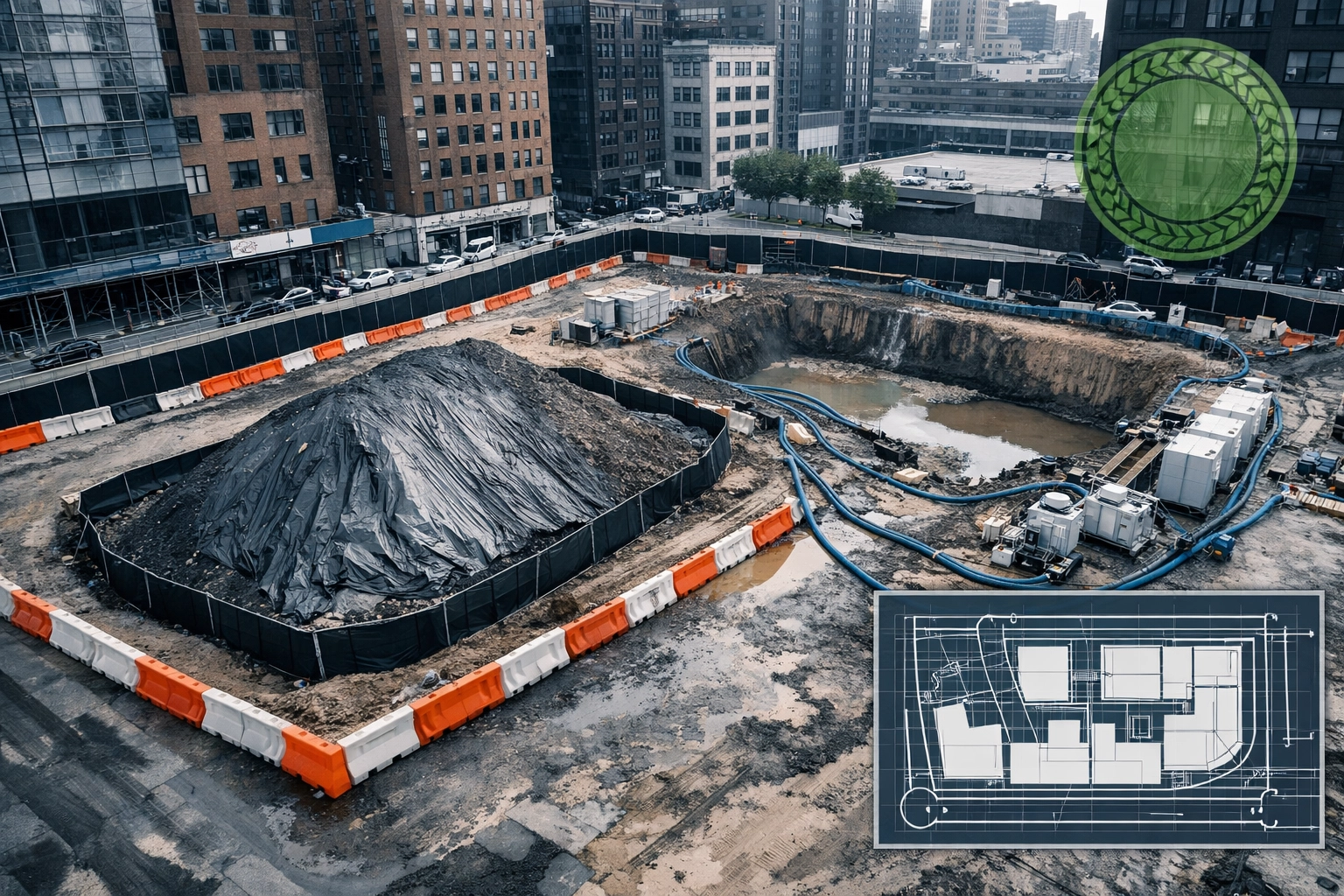
In the high-stakes arena of New York City real estate, time isn't just money: it’s the difference between a landmark success and a stalled asset. For developers navigating the complexities of the NYC Office of Environmental Remediation (OER) and the Voluntary Cleanup Program (VCP), the environmental track is often viewed as a hurdle. At Envicon Strategic Solutions, we see it differently. We view environmental compliance as a strategic lever that, when integrated early, accelerates your vertical climb.
If you are dealing with an "E-Designation" or seeking the robust tax benefits of the New York State Brownfield Cleanup Program (BCP), the path forward requires more than just technical box-checking. It requires a visionary approach to land use that treats remediation and construction as a single, fluid workflow.
The OER Gating Items: Why Sequence Matters
The most common mistake we see in NYC development isn't a lack of capital; it's a lack of sequential foresight. The OER process is governed by strict "gating items." You cannot legally move dirt until your Remedial Action Work Plan (RAWP) is approved and a Notice to Proceed is issued.
If your environmental consultant is operating in a silo, separate from your shoring and excavation team, you are likely hemorrhaging time. Integrating the NYC OER brownfield cleanup into your master schedule starts with the enrollment phase.
All environmental investigation must follow a Work Plan approved by the regulatory body before work begins. This isn't a suggestion: it’s a statutory requirement. Waiting until the architects have finalized blueprints to start your environmental characterization is a recipe for a six-month delay.

Mapping the Critical Path to the 2036 Deadline
The regulatory landscape has a ticking clock that every developer in the tri-state area needs to memorize: December 31, 2036.
Under current legislation, sites must receive their Certificate of Completion (CoC) by this date to remain eligible for specific tax incentives. While 2036 might seem distant, the physics of NYC construction says otherwise. When you factor in the ten-year window to place a building into service post-remediation to claim tangible property tax credits, the "buffer" disappears quickly.
Strategic developers are currently looking at their portfolios with a ten-year lens. They are asking:
- How does the Phase II environmental site assessment NJ or NY process impact our acquisition price?
- Are we accounting for the sequential nature of DEC/OER review cycles?
- Is our remediation strategy flexible enough to handle "emerging contaminants" like PFAS?
The "Excavation as Remediation" Strategy
One of the most effective ways to compress your timeline is to align your remedial action with your foundation work. In NYC, where most sites require significant excavation for sub-grade parking or mechanicals, the soil being removed is often the remediation itself.
By coordinating the RAWP with the geotechnical investigation costs NJ and NY, we can classify soil for disposal before the first shovel hits the ground. This "characterization-in-place" allows for direct loading: moving soil from the ground to the truck to the facility without double-handling or stockpiling.
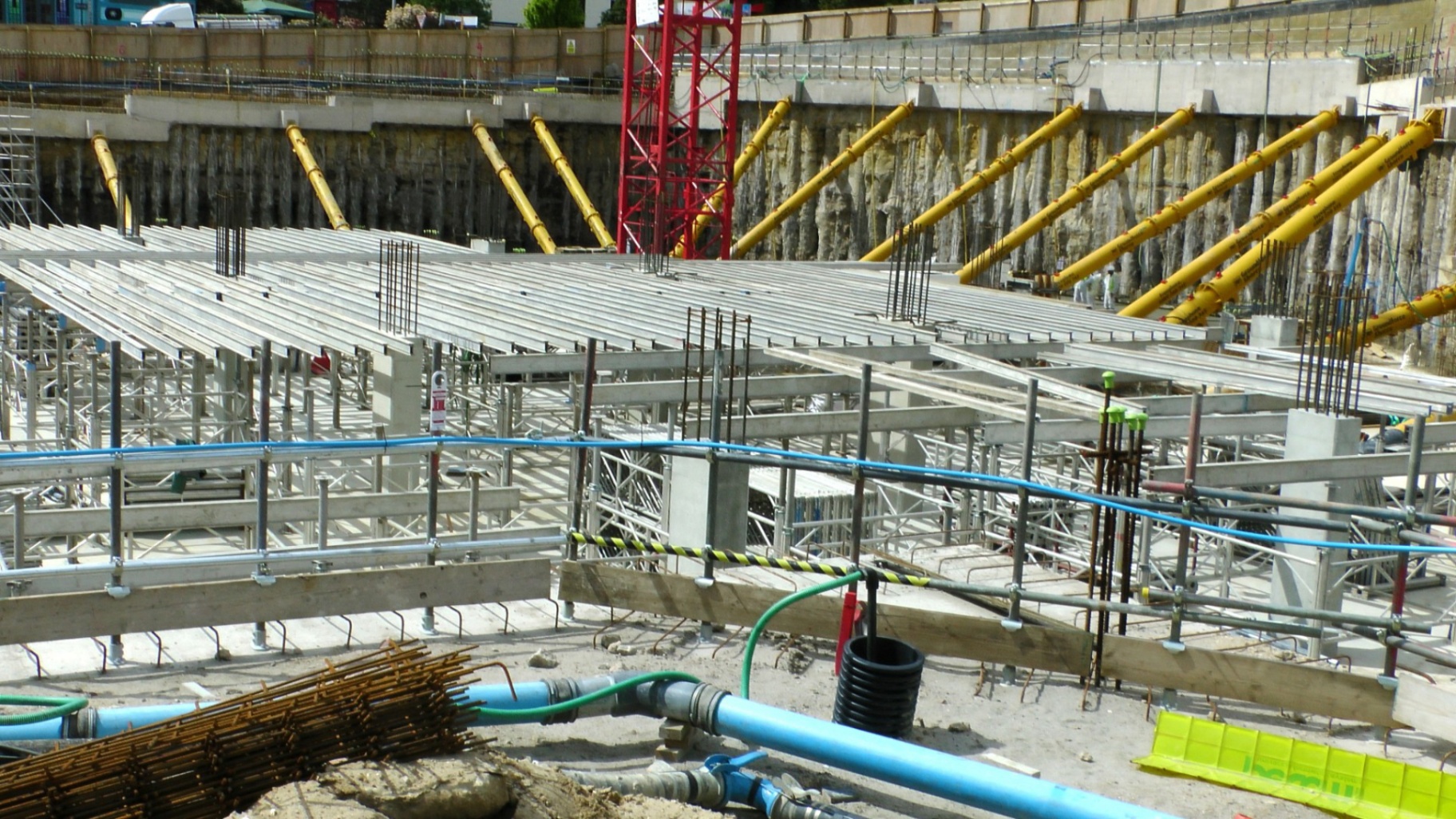
When your environmental team and your civil engineers speak the same language, you avoid the nightmare of "hot spots" being discovered during active excavation, which can shut down a site for weeks.
Beyond NYC: Regional Due Diligence and PFAS Risks
While OER is specific to the five boroughs, many of our clients operate across the river. The integration of environmental due diligence doesn't stop at the Hudson. In fact, environmental due diligence for developers NJ is becoming increasingly complex due to the focus on PFAS (per- and polyfluoroalkyl substances).
Rising PFAS remediation costs NJ are changing the way acquisitions are de-risked. If you are looking at a multi-state portfolio, you need an advisor who understands that a "clean" Phase I ESA in 2024 might be a liability in 2026. At Envicon, we don't just look at what the law says today; we look at where the regulatory wind is blowing. This visionary approach ensures that the project you start today isn't derailed by the standards of tomorrow.
The Technical Reality of the NYC BIG Program
For smaller developers or those working in underserved communities, the NYC Brownfield Incentive Grant (BIG) Program offers a lifeline. These grants cover technical assistance for project planning, including the development of required documents and the selection of qualified vendors.
Leveraging these grants early in the pre-development phase can offset the initial geotechnical investigation costs and allow for a more robust characterization of the site. This isn't just about saving money; it’s about having the best data available when you go to your lenders.
"True site vision isn't seeing the dirt as it is today; it’s seeing the completed structure while the first boring is still being drilled."
Why the "Big Consultant" Model is Broken
We’ve all seen it: the massive engineering firms where your project is handled by a junior associate and your "senior" advisor is unreachable. In the fast-moving world of NYC development, that model is a liability.
Envicon was built to be the antidote to the slow, bureaucratic consulting firm. Here is why the Envicon approach beats the traditional big-box consultants:
- Velocity of Communication: We don't hide behind "review periods." When a site issue arises at 4:00 PM on a Friday, we are solving it before the Monday morning kickoff.
- Integrated Expertise: We bridge the gap between civil, geotechnical, and environmental engineering. We don't point fingers at other trades; we provide the solution that works for all of them.
- Local Authority: We don't just know the OER rules; we understand the "why" behind them. Our relationships with regulators are built on a foundation of technical excellence and integrity.
- Sales Psychology for Your Lenders: We help you sell the safety and viability of your project to your investors. We provide the technical authority that turns environmental "risk" into a managed "variable."

Conclusion: Building the Future, Faster
Integrating NYC OER brownfield cleanup with your development timeline isn't a logistical burden: it’s a competitive advantage. By engaging in deep environmental due diligence early, understanding the hard deadlines like the 2036 CoC cutoff, and aligning your excavation with your remediation goals, you protect your capital and your community.
The future of New York City and New Jersey is built on repurposed land. At Envicon Strategic Solutions, we are proud to be the architects of that transition, providing the visionary leadership and no-nonsense technical expertise required to turn brownfields into landmarks.
Key Takeaways for Your Next Project:
- Start Early: Enrollment in the VCP should happen months before you expect to break ground.
- Coordinate Trades: Ensure your environmental and geotechnical teams are sharing data to optimize soil disposal.
- Watch the 2036 Clock: Plan your construction phases to ensure a Certificate of Completion is achieved within the tax credit window.
- De-Risk Emerging Contaminants: Address PFAS and other emerging risks during the Phase II stage, especially in the NJ market.
Ready to streamline your next development? Let’s look at your site together. Visit Envicon Strategic Solutions to see how we can move your project from a liability to a legacy.
Leave a Reply