Blog

  • The Phase I ESA Scope Creep: How Big Firms Inflate Your Bill Without Adding Value

    The Phase I ESA Scope Creep: How Big Firms Inflate Your Bill Without Adding Value

    You’ve seen the proposal. It looks clean, the price is "competitive," and the firm has a logo you recognize from every office park in America. You sign the contract for a Phase I Environmental Site Assessment (ESA), thinking you’ve checked the box for your lender and your due diligence period is safe.

    Then, the "scope creep" starts.

    First, it’s a delay because the junior staffer assigned to your site couldn't find the historical Sanborn maps. Then, it’s a "preliminary finding" of a potential Recognized Environmental Condition (REC) that: conveniently: requires a $15,000 Phase II investigation before the Phase I report is even drafted. Suddenly, that low-bid Phase I is the most expensive document in your closing file, not because of the data, but because of the fluff.

    At Envicon Group, we see this every day in the New York and New Jersey markets. We call it "Big Box Pain." It’s the result of national firms treating environmental due diligence like a commodity while billing it like a luxury.

    The "110-Hour Gap": Where Your Money Goes

    Industry data shows a massive discrepancy in how Phase I ESAs are billed versus how much work they actually require. A standard, high-quality Phase I ESA: following the ASTM E1527-21 standard: should take approximately 15 to 20 billable hours of professional time. This includes the records review, the site visit, the interviews, and the report writing.

    Yet, many national firms show a "utilization gap" where projects are scoped or billed at nearly double that. Why? Because you aren't paying for the expert's time; you're paying for the firm's overhead, the regional VP’s bonus, and the administrative bloat of a company with 10,000 employees.

    Worse, that extra time isn't spent digging deeper into your site’s history. It’s spent on "defensive writing." Big firms write reports to protect themselves from liability, not to help you close a deal. They use vague language to leave the door open for Phase II upselling, effectively holding your project hostage until you agree to more sampling.

    Junior Staff vs. Licensed Pros

    When you hire a big-box firm, the person who "pitches" you is rarely the person who "performs" for you. You get the Senior Partner at the 11:00 AM Zoom call, but at 7:00 AM on Monday morning, it’s a junior staffer with six months of experience standing on your site.

    If that staffer doesn't know how to identify a decommissioned heating oil fill pipe or doesn't understand the nuance of New Jersey’s Linear Construction Program, they’re going to flag everything as a risk. They check boxes. They don't solve problems.

    Envicon takes the opposite approach. We are PE-led and field-first. When we walk a site in Jersey City or Brooklyn, we’re looking for a path to "No Further Action" or a "Response Action Outcome (RAO)," not a reason to bill you for more soil borings. We know the regulators at the NJ DEP and the NYC OER by name. We know what they’re looking for, which means we don’t have to guess: and you don’t have to pay for our learning curve.

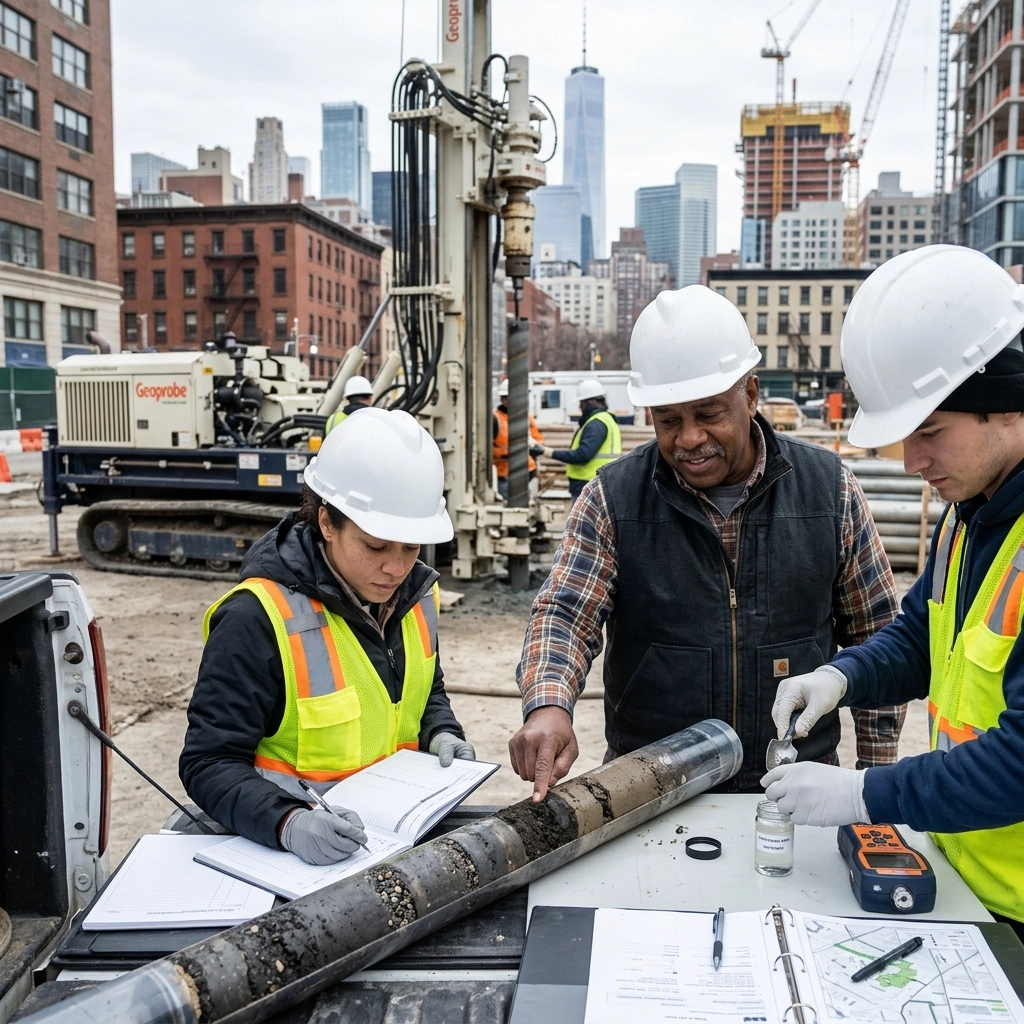
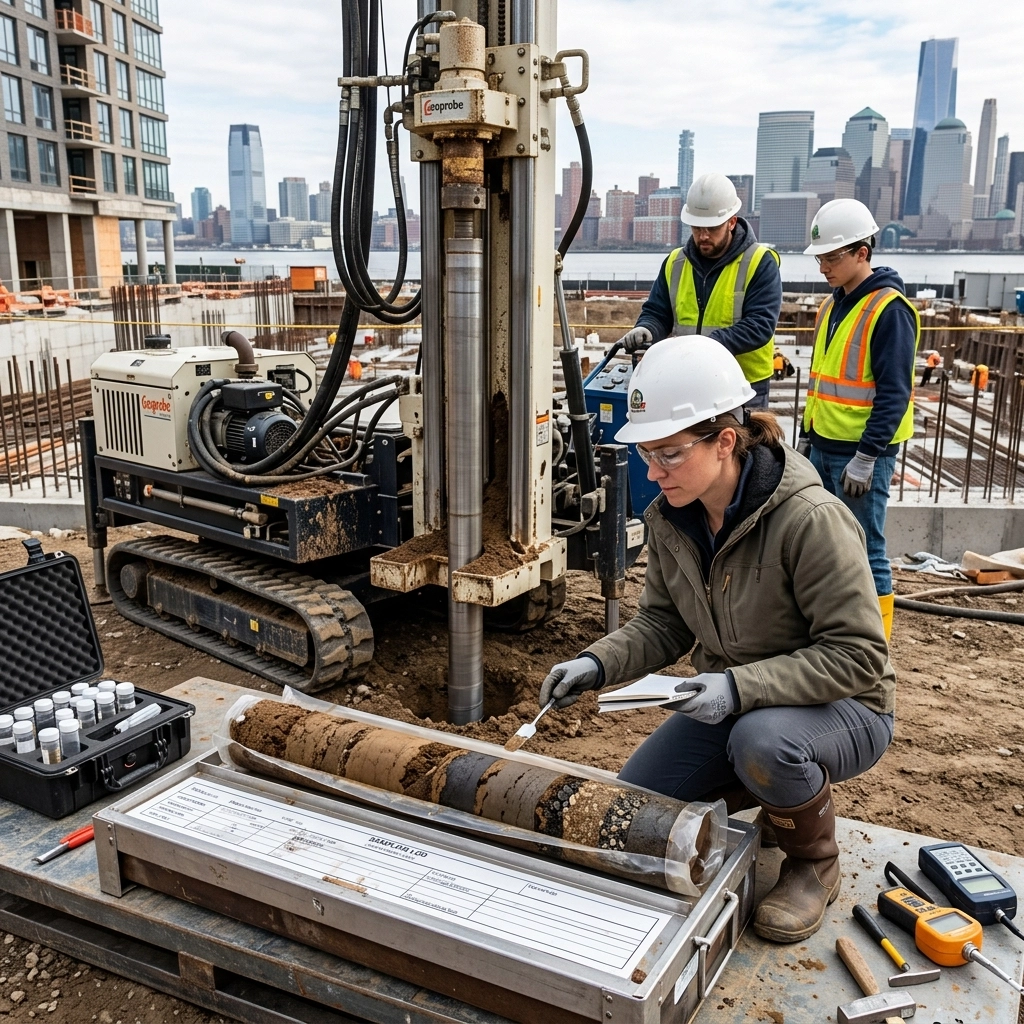
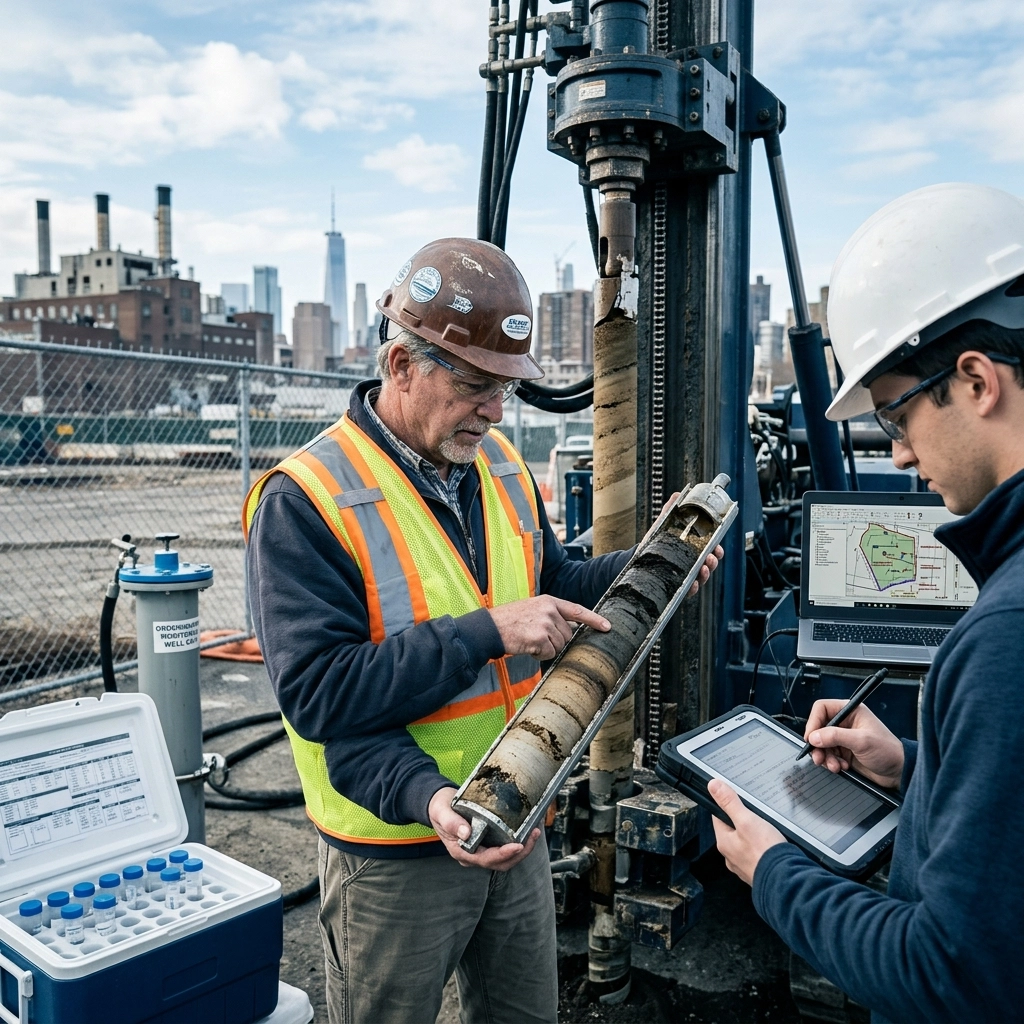
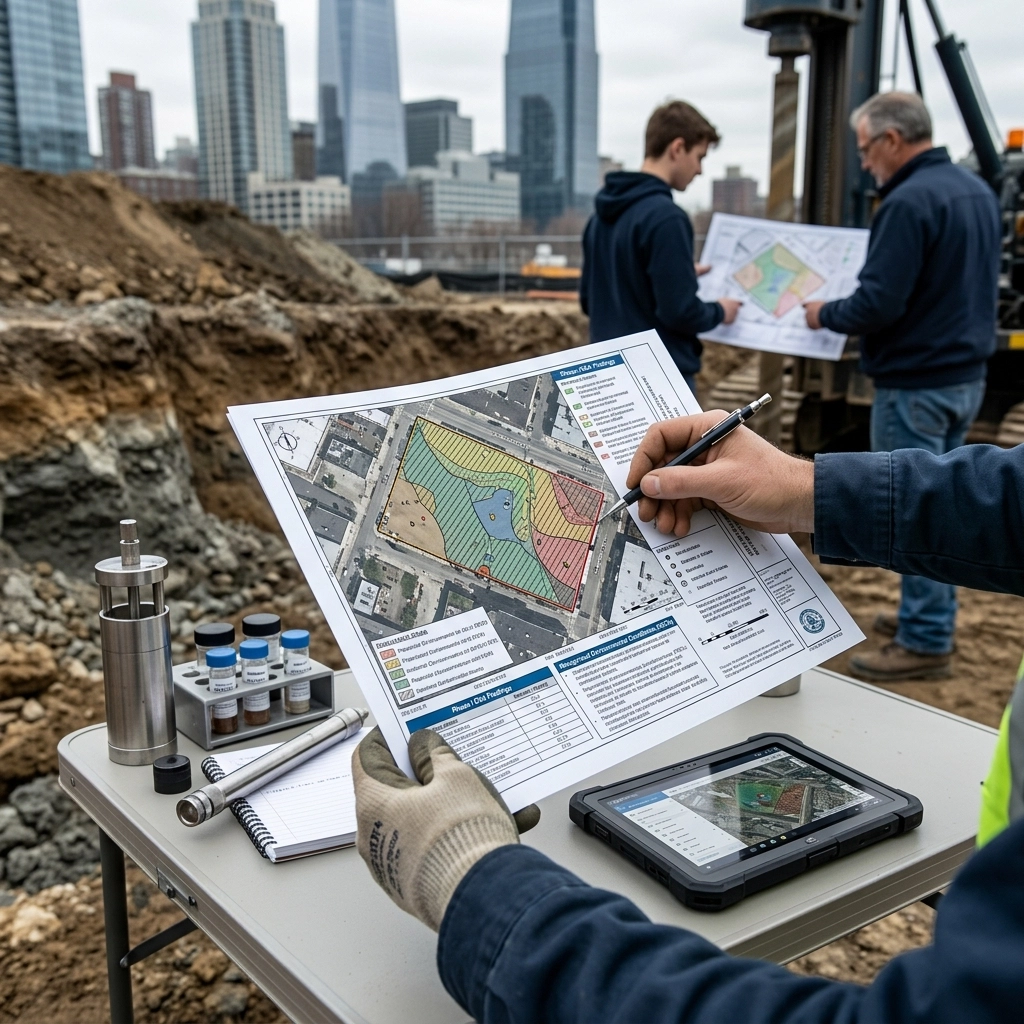
    GeoProbe drill rig soil core sample in a clear liner showing soil strata for environmental site assessment.
    Caption: Technical visual: A GeoProbe drill rig extracting a 5-foot soil core sample in a clear plastic liner. Professional-grade site characterization requires seeing the stratigraphy firsthand, not just reading old reports.

    The Scope Creep Playbook: Three Red Flags

    If you’re seeing these three things, you’re being played by the big-box playbook:

    1. The "Premature" Phase II Recommendation: If a firm suggests a Phase II before they’ve even finished the historical records review, they’re looking at your project as a revenue stream, not a site to be cleared.
    2. The 180-Day Refresh Game: Under CERCLA, a Phase I has a 180-day shelf life. Big firms often drag their feet on the final report, forcing you into a "refresh" fee just as you're hitting the closing table.
    3. Vague Proposals: If the scope doesn't explicitly state who is doing the site visit and what specific local databases are being searched, expect change orders.

    The Envicon Answer: Precision and 72-Hour Turnarounds

    Time is the one thing a developer can’t buy back. Every week your Phase I sits in a corporate queue is a week of carry costs, lender impatience, and market volatility.

    We’ve optimized our workflow to provide a 72-hour turnaround on initial site summaries when needed. We don't wait three weeks to tell you there’s a problem. We tell you the day of the site visit, and we provide a solution in the same breath.
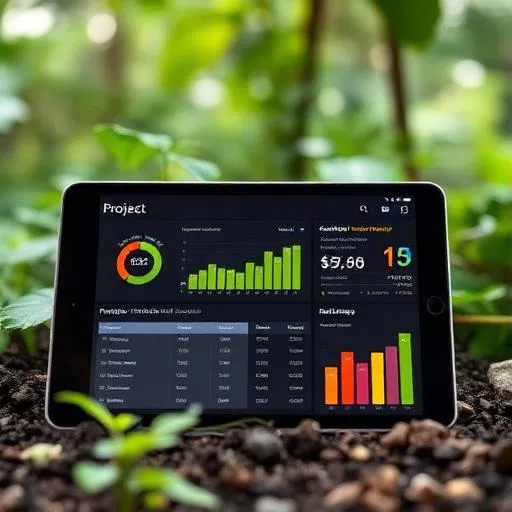
    Tablet displaying project analytics and environmental data dashboards outdoors on active soil

    We use integrated technology: like the field tablets shown above: to sync site data directly to our engineers. This isn't just about being "high-tech"; it’s about removing the lag between the field and the final report. While a big firm is still waiting for their junior staffer to upload photos to a central server in another state, our PEs are already reviewing the findings and drafting the executive summary.

    Real Value vs. Defensive Reporting

    A report that says "There might be a problem, we recommend $20,000 in testing" is a defensive report. It adds zero value to your project.

    An Envicon report says: "We identified a former UST location; however, based on the 1994 closure letter we recovered from the municipal archives and our visual inspection of the slab, it does not constitute a REC under ASTM E1527-21. No further action is required for financing."

    That is the difference between a consultant who is a partner and a consultant who is a vendor. One clears the path; the other builds a fence.
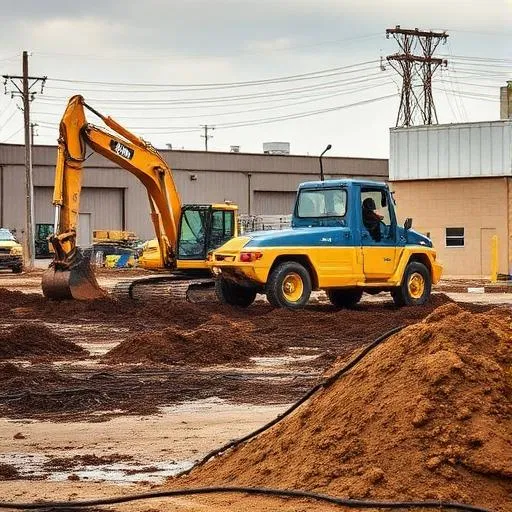
    Active brownfield redevelopment site with heavy equipment and soil staging areas

    Why Attorneys and Developers Are Switching

    The legal and development communities in NY and NJ are tired of the "Big Box" runaround. They need certainty. They need to know that when they hand a report to a lender, it won't be kicked back for "lack of regional specificity."

    Envicon brings 20 years of direct agency relationships. We don’t just work in these jurisdictions; we live in them. Whether it’s navigating the NYC Voluntary Cleanup Program (VCP) or handling complex soil management in the Meadowlands, we provide the technical confidence that only comes from thousands of hours on-site.

    Summary: Stop Paying for Overhead

    If you are tired of paying for reports that create more problems than they solve, it’s time to change your approach.

    • Demand Senior-Level Site Visits: Ensure a licensed pro: not an intern: is the one actually looking at your dirt.
    • Insist on Fixed-Price Scopes: No "administrative" surcharges or vague "consultation" fees.
    • Look for Local Fluency: Ensure your consultant knows the specific requirements of the NJ DEP or NYC OER.
    • Prioritize Speed: In this market, a 30-day Phase I is a dead project.

    At Envicon Group, we don’t sell reports. We sell cleared paths. We remove the obstacles between you and a buildable site, and we do it with the urgency your project deserves.

    Ready to see the difference a field-first firm makes?

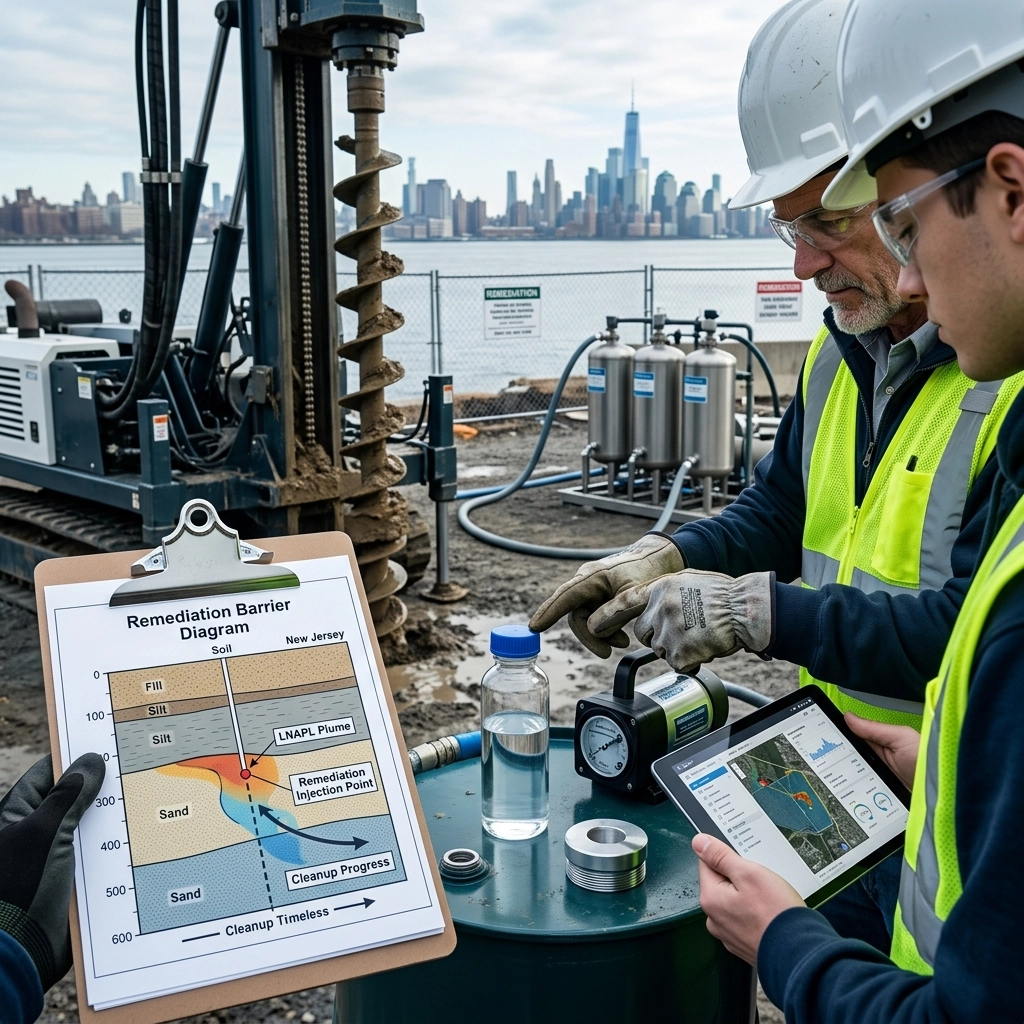
    Envicon engineer reviewing a site map at a Northern New Jersey urban redevelopment site during a field inspection.
    Caption: An Envicon Professional Engineer in a high-vis vest reviewing a detailed site map on a clipboard at 7:00 AM. We start our day when your project starts, not when the office opens.

    The Bottom Line

    Don't let "scope creep" eat your project's margin. Switch to a firm that values your timeline as much as you do. Contact Envicon Group today for a Phase I ESA that actually moves the needle.


    Envicon Group Logo - High Res

  • The Hidden Cost of ‘Cheap’ Phase I Reports: Why NJ Developers Lose Millions

    The Hidden Cost of ‘Cheap’ Phase I Reports: Why NJ Developers Lose Millions

    In the high-stakes world of New Jersey and New York real estate, speed and margins are everything. When you’re looking at a potential acquisition in Jersey City or an infill project in Newark, the "Environmental Due Diligence" line item on your pro forma can feel like a nuisance: a box to be checked so the bank stays happy.

    It’s tempting to go with the lowest bidder. You get a quote for $1,800 and another for $4,500. It’s just a Phase I Environmental Site Assessment (ESA), right? They all look the same. They all follow the same rules. Why not save the $2,700 and put it toward the architectural renderings?

    Because that "cheap" report is often the most expensive mistake a developer can make.

    In our world at Envicon Strategic Solutions, we’ve seen the fallout. We’ve seen $20 million deals stall at the closing table because a cut-rate consultant missed a historical gas station on a 1920s map. We’ve seen lenders reject reports three days before a deadline because the "Environmental Professional" didn’t meet the latest ASTM E1527-21 standards.

    Saving a few thousand dollars on the front end can easily cost you millions in delays, lost financing, and unforeseen remediation. Here is why the "bargain" Phase I is actually a liability in disguise.

    The Lender Rejection: A Fast Track to Financing Limbo

    The primary purpose of a Phase I ESA for most investors is to satisfy a lender. But here’s the reality: banks are getting smarter, and their risk departments are getting tighter.

    Many low-cost firms survive on volume. They use "report mills": junior staff or overseas data-entry teams: who copy and paste from old templates. They might miss the fact that the EPA or NJDEP updated their requirements, or they might fail to include the mandatory "User Questionnaire."

    If your report doesn't strictly adhere to the ASTM E1527-21 standards, it’s essentially a paperweight. According to industry research, inadequate documentation or missing data can invalidate a report for lenders, forcing you to pay for a second assessment entirely.

    Imagine being 45 days into your 60-day due diligence period. Your lender’s environmental reviewer flags the report as "deficient." Now, you have to hire a firm like ours to redo the work, but because you're in a panic, you’re paying rush fees. The "cheap" report just doubled in price: and that’s the best-case scenario.

    Modern Urban Skyline at Dusk

    The Phase II Avalanche: When "Clean" Becomes a Money Pit

    The job of a Phase I is to identify Recognized Environmental Conditions (RECs). A good consultant uses a mix of data, history, and a "sixth sense" developed from years of walking NJ construction sites.

    A cheap consultant has one goal: get off the site as fast as possible.

    When a consultant is under-qualified or rushing, they often do one of two things:

    1. They miss a REC. They miss the evidence of an old underground storage tank (UST) or a historical dry cleaner. You buy the property thinking it's "clean." Six months later, during excavation for your foundation, you hit a plume of PERC or a leaking tank. Now, you’re looking at hundreds of thousands in remediation costs that weren't in your budget.
    2. They call everything a REC. To cover their own liability because they didn't do the deep research, they'll flag non-issues as major risks. This triggers a Phase II Investigation involving soil and groundwater sampling.

    Research shows that while a Phase I might cost a few thousand, a Phase II can range from $5,000 to well over $100,000. We’ve seen cases where a $1,000 "budget" Phase I failed to properly vet a site, leading to $20,000 in unnecessary sampling just to prove the site was actually fine. That’s a $21,000 bill for a "bargain."

    The Local Intelligence Gap: Why NY/NJ Knowledge is Your Shield

    You can’t evaluate a site in Hudson County from an office in another state. New Jersey is home to some of the most complex environmental regulations in the country. From the Site Remediation Reform Act (SRRA) to the nuances of the Licensed Site Remediation Professional (LSRP) program, you need a partner who speaks the local language.

    At Envicon, we don't just read the records; we understand the history of the neighborhood. We know which industrial zones in Brooklyn or Queens have specific "E-Designations" that require OER oversight. A national firm selling cheap reports won't have that "boots on the ground" intuition.

    NJ environmental engineers inspecting soil at an urban brownfield redevelopment site in Jersey City.

    When we walk a site, we aren't just looking for oil stains. We’re looking at the topography, the surrounding land use, and the regulatory "vibe" of the municipality. That authority: that deep-seated local knowledge: is what de-risks your acquisition.

    "Engineering is about math, but development is about trust. You need to know that the person signing your report cares as much about your ROI as you do." : Jason Pancoast, CEO, Envicon Strategic Solutions

    Efficiency vs. Cutting Corners: The Envicon Advantage

    We get it. You need to move fast. But there is a massive difference between efficiency and cutting corners.

    Our approach at Envicon Strategic Solutions is built on being your Visionary Partner, not just a vendor. We use high-end technology to streamline our data collection, which allows us to provide fast turnarounds without sacrificing the integrity of the report.

    When you work with us, you’re getting:

    • Lender-Ready Accuracy: We know what the big banks and local credit unions need to see. Our reports move through review boards like a hot knife through butter.
    • Strategic Vision: If we find a REC, we don't just drop a problem in your lap. We provide a roadmap for how to handle it, what it might cost, and how it impacts your development timeline.
    • A Safety Net for Your Legacy: We believe in building communities. A project built on a "cheap" foundation (literally or figuratively) is a project at risk. We protect your name by ensuring your site is truly compliant.

    Active Urban Construction Site

    The Bottom Line: Buy Authority, Not Just a Report

    If you’re a developer in the NJ/NY corridor, you aren't just buying a PDF. You are buying the ability to sleep at night. You are buying the confidence to tell your investors that the dirt beneath their feet is a solid investment.

    A "cheap" Phase I is a gamble where the house always wins. The few thousand you save today could be the reason you’re dealing with a lawsuit or a stalled project five years from now.

    At Envicon, we don't compete on being the "cheapest." We compete on being the most authoritative, responsive, and visionary firm in the market. We’re the firm you call when you want the job done right the first time so you can get back to the business of building the future.

    Key Takeaways for Your Next Acquisition:

    • Check the Credentials: Is the person signing the report a qualified Environmental Professional (EP) with local NJ/NY experience?
    • Verify the Standard: Ensure the report strictly follows ASTM E1527-21 to avoid lender rejection.
    • Look Beyond the Price: If the quote is significantly lower than the market average, ask what they are not doing (e.g., historical city directory searches or local agency file reviews).
    • Think Long-Term: The cost of an undetected environmental issue always outweighs the cost of a high-quality Phase I ESA.

    Ready to de-risk your next project with a team that knows the soil of NJ and NY inside and out? Contact us today and let’s build something that lasts.


    Envicon Strategic Solutions provides expert environmental consulting, geotechnical engineering, and strategic due diligence for developers and investors across New Jersey and New York.

  • Phase II Environmental Site Assessments: Beyond the ASTM Checklist

    Phase II Environmental Site Assessments: Beyond the ASTM Checklist

    You just received your Phase I Environmental Site Assessment (ESA). You were hoping for a "clean" report, but instead, the consultant identified a Recognized Environmental Condition (REC). Maybe it’s an old underground storage tank (UST) from the 1970s, or perhaps the historic fill across your Hudson County site isn't as "clean" as the seller claimed.

    Now, your lender is pushing for a Phase II.

    In the world of New Jersey and New York real estate, a Phase II environmental site assessment NJ isn't just a hurdle: it’s the fork in the road that determines whether your project is a viable asset or a massive liability. Most big-box firms treat the Phase II as a checklist exercise defined by ASTM E1903-19. They follow the standard, collect a few samples, and hand you a report that says, "We found something; you need more testing."

    At Envicon, we don't believe in the "more testing" loop. We believe in clearing paths. Going beyond the ASTM checklist means moving from "what is there" to "how do we fix it and what will it cost?"

    The "Checklist" Trap vs. Real Site Characterization

    The ASTM standard provides a framework, but it doesn't provide a strategy. If your consultant is simply checking boxes, they aren't looking at your project through the lens of a developer or a contractor. They are looking at it through the lens of a lab technician.

    A standard Phase II often focuses on the presence or absence of contamination. But for a developer in NJ, knowing that contamination is "present" is only 10% of the battle. You need to know the vertical and horizontal extent, the impact on your foundation design, and the remediation costs that will hit your pro forma.

    Soil Borings: More Than Just Holes in the Ground

    Soil sampling is the backbone of any Phase II environmental site assessment NJ. However, the way those borings are executed matters.

    Large national firms often sub out the drilling to the lowest bidder and send a junior staffer: someone with six months of experience: to log the soil. They follow a pre-set grid, collect the samples, and leave.

    Envicon takes a different approach. We utilize direct oversight by experienced professionals who understand the geology of the Newark Basin or the complex fill layers of Long Island City. We don't just drill; we interpret in real-time. If we see evidence of a smear zone or a perched water table that wasn't in the original scope, we adjust. We hit the right depths the first time so you don't have to re-mobilize a drill rig two weeks later because a junior tech missed a crucial layer.

    Soil boring and sampling for a Phase II environmental site assessment in NJ showing soil strata.

    Groundwater Sampling: Understanding the Flow

    In New Jersey, groundwater is almost always a factor. Whether you are dealing with the NJDEP Technical Requirements (N.J.A.C. 7:26E) or navigating a voluntary cleanup, groundwater sampling is where many projects get bogged down in "the black box."

    Traditional firms might install a few monitoring wells, take a single round of samples, and report a "hit." Envicon looks at the bigger picture. Is the contamination coming from an on-site source, or is it a regional issue? Is it a "slug" of contamination moving through a high-permeability sand layer, or is it trapped in tight silt?

    Understanding the hydrogeology is the difference between a simple Monitored Natural Attenuation (MNA) approach and an expensive, multi-year pump-and-treat system. We provide the technical depth to argue your case with regulators, ensuring you aren't paying to clean up someone else’s mess.

    Vapor Analysis: The Modern Deal Killer

    If you’re developing in an urban area like Jersey City, Hoboken, or Brooklyn, vapor intrusion is likely your biggest environmental risk. Volatile Organic Compounds (VOCs) from historic dry cleaners or industrial shops can migrate through soil gas and into your future building.

    The ASTM checklist covers vapor, but NJDEP and NYSDEC have specific, rigorous requirements for vapor pins and sub-slab sampling.

    We see it all the time: a big firm does a "screen" and tells the client they need a vapor barrier. But what kind of barrier? Is it a 20-mil plastic sheet, or does the site require a fluid-applied membrane with an active sub-slab depressurization system (SSDS)? The cost difference can be hundreds of thousands of dollars. Envicon performs the high-level vapor analysis necessary to design the right solution, not just the most expensive one.

    Field engineer at brownfield site

    The Big Firm "Black Box" vs. Envicon Precision

    When you hire a firm with 10,000 employees, your project becomes a line item. The person you spoke to during the proposal stage: the one who sounded like an expert: isn't the one on your site at 7:00 AM overseeing the geoprobe.

    This is the "Black Box" of environmental consulting. You put money in, you wait six weeks, and a 200-page report comes out that is 90% "boilerplate" and 10% actionable data.

    Envicon Group is built differently. We are family-owned and operated, PE-led, and field-first. When we conduct a Phase II, our leadership is involved in the field strategy. We don't produce bloated reports designed to protect our liability; we produce clean, defensible documentation designed to move your project to the next phase.

    Why Regional Fluency Wins Every Time

    Environmental regulations in the NY/NJ metro area are a minefield. Between the NJDEP LSRP program and the NYC Office of Environmental Remediation (OER) "E-Designation" program, there is no room for a "national" playbook.

    Regional fluency means knowing how a specific reviewer at the NJDEP thinks. It means knowing which soil disposal facilities are currently accepting historic fill and which ones are backed up for months. Envicon brings 20 years of direct agency relationships to the table. We don't just follow the rules; we know how to navigate them to find the most efficient path to a Response Action Outcome (RAO) or a Notice of Satisfaction.

    Turning Data into Action

    A Phase II environmental site assessment NJ should provide more than just data points. It should provide a roadmap.

    Our "Beyond the Checklist" approach includes:

    • Conceptual Site Models (CSM): We visualize how contaminants move through your specific site, which allows for more targeted (and cheaper) remediation.
    • Remediation Cost Estimating: We provide "contractor-style" estimates. We know what it costs to dig, haul, and dispose of soil because we are on those sites every day.
    • Strategic Integration: We coordinate with your architects and civil engineers to ensure that the environmental cleanup works with your foundation and utility plan, not against it.

    Aerial view with monitoring locations

    The Envicon Difference: Sell Trust, Not Reports

    Most consultants sell you a service. They sell you a "Phase II." We sell you a cleared path.

    We understand the pressure of a closing date. We know the weight of a lender's requirements. Our mission is to resolve your environmental challenges with precision and urgency so you can unlock the full potential of your property. Whether it's Phase I & II ESAs or complex remedial design, we take ownership of the outcome.

    "Integrity is not just ethical behavior: it is about delivering the truth and never cutting corners. We don't just deliver services; we help transform contaminated properties into thriving assets." : Jason Pancoast, CEO

    Summary: What You Need to Know

    If your Phase I identified RECs, don't just order a "standard" Phase II. Demand a site investigation that actually moves your project forward.

    1. Don't settle for junior staff. Ensure your consultant provides direct oversight of all soil borings and sampling.
    2. Look beyond the "Hit." Finding contamination is easy. Defining the extent and the cost to fix it is where the value is.
    3. Address vapor early. In NJ and NYC, vapor is often the longest lead time and most sensitive regulatory issue.
    4. Demand regional expertise. National firms use cookie-cutter templates; your NJ site needs an NJ-specific strategy.

    Your project is too valuable to be stuck in a consultant's queue. You need a partner who understands that every week of delay is a week of carry costs.

    Ready to clear the path for your next development?
    Contact Envicon Group today to discuss your site and get a "no-fluff" assessment of your environmental needs. Let's get to work.Envicon Strategic Solutions Logo

  • Struggling with NYC E-Designation Approvals? 10 Things NYCOER Won’t Tell You (But We Will)

    Struggling with NYC E-Designation Approvals? 10 Things NYCOER Won’t Tell You (But We Will)

    You're closing on a development site in Brooklyn. The purchase agreement is signed. Your financing is locked. Then you discover the property has an E-Designation, and suddenly you're navigating the NYC Office of Environmental Remediation like it's your first day of calculus.

    Here's the thing: NYCOER doesn't run a customer service hotline. Their guidance documents are technical, procedural, and assume you already know what you're doing. That's where developers get stuck, not because E-Designations are impossible, but because no one tells you the practical realities until you're already bleeding time and money.

    We've guided dozens of developers through E-Designation approvals in Manhattan, Brooklyn, Queens, and the Bronx. We know what NYCOER expects, what they'll reject, and how to avoid the delays that sink project timelines. Here are 10 things they won't tell you upfront.

    Developer reviewing NYC zoning maps at Brooklyn construction site for E-Designation approval

    1. The Department of Buildings Might Issue Your Permit Before They Realize You Have an E-Designation

    This sounds impossible, but it happens more often than you'd think. DOB and OER don't always communicate in real-time. You could receive a building permit, start mobilizing contractors, and then get stopped cold when applying for your Certificate of Occupancy because no one flagged the E-Designation earlier in the process.

    What to do: Run a ZOLA search yourself before your first DOB filing. Don't rely on agency coordination to catch it. If you spot an E-Designation, engage OER immediately, even before your architect submits plans.

    2. There Are Three Different Approvals, and You Need to Know Which One You're Asking For

    NYCOER issues three distinct approvals:

    • Notice of No Objection (NNO): Confirms your remedial plan is acceptable
    • Notice to Proceed (NTP): Allows you to start construction after submitting required documentation
    • Notice of Satisfaction (NOS): Final approval confirming all E-Designation requirements are met

    Big box firms often submit for the wrong approval at the wrong phase, triggering rejections and delays. Each approval unlocks a specific gate in your project. DOB won't issue permits or a Certificate of Occupancy without the correct one.

    Insider tip: Pre-submission meetings with OER clarify which approval you need and when. We walk clients through this roadmap before anyone drafts a single report.

    3. You're Dealing With Three Separate Compliance Tracks, Not Just One

    NYC OER E-Designation requirements cover three categories:

    • Hazardous materials (contaminated soil, groundwater, vapor intrusion)
    • Air quality (emissions from mechanical systems, traffic impacts)
    • Noise (construction and operational noise mitigation)

    Each category has its own investigation protocol, remediation standard, and approval pathway. A site with all three designations requires coordinated submissions across multiple disciplines, environmental, mechanical engineering, and acoustics.

    Urban Redevelopment at Dusk

    What most consultants miss: Treating these as isolated compliance boxes instead of integrated project risks. If your hazmat remediation delays soil removal, it cascades into foundation work, mechanical rough-ins, and noise mitigation timelines. We sequence these approvals so nothing stalls your critical path.

    4. OER's "30-Day Review" Doesn't Mean You'll Be Approved in 30 Days

    Yes, OER commits to providing comments within 30 days of submission. But "comments" aren't approval. They're often a list of deficiencies, requests for additional data, or clarifications on your remedial approach.

    Budget at least two months from initial submission to final approval: and that assumes your consultant got it right the first time. If OER requests a revised Phase II ESA, additional soil borings, or updated site management plans, add another 30–45 days per revision cycle.

    Reality check: We've seen projects stall for six months because the initial consultant didn't understand OER's current interpretation of vapor intrusion guidance. Speed comes from getting it right upfront, not rushing a half-baked submission.

    5. Pre-Submission Meetings Are "Encouraged," But They Should Be Mandatory

    OER offers pre-submission consultations to discuss site conditions, remedial strategies, and approval timelines. Most developers skip this step, assuming their consultant knows the drill.

    Big mistake. OER's expectations evolve. What worked on a Red Hook project in 2023 might not fly in Astoria in 2026, especially with updated NYSDEC Part 375 guidance influencing city standards. Pre-submission meetings let you test your approach before investing in field investigations and engineering reports.

    Our approach: We treat pre-submission meetings as strategy sessions, not formalities. We outline the site history, propose investigation scope, and confirm OER's current priorities for hazmat, air quality, and noise compliance before mobilizing a single drill rig.

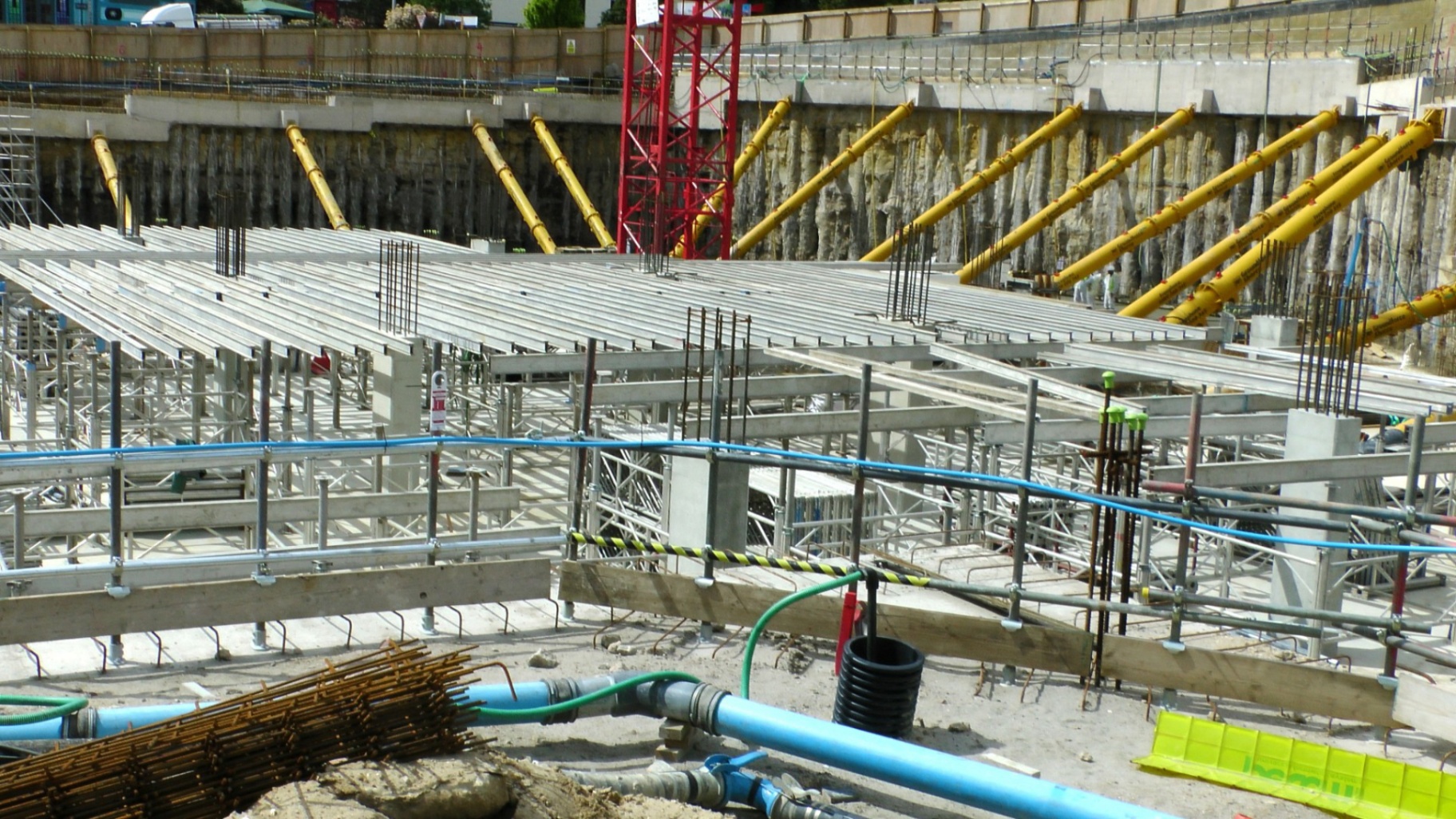
    Active construction site

    6. Restrictive Declarations Follow the Property Forever

    If your site requires ongoing monitoring, institutional controls, or use restrictions, OER will require a Restrictive Declaration recorded against the deed. This isn't a temporary condition: it binds current and future property owners.

    What this means for you: Lenders scrutinize Restrictive Declarations. Buyers in future transactions will demand indemnifications. If you're developing for sale or refinance, these covenants affect marketability and valuation.

    Mitigation strategy: Structure your remediation to eliminate long-term monitoring wherever possible. Active remediation costs more upfront but removes the perpetual compliance burden that scares off institutional capital.

    7. Phase II ESAs for E-Designation Sites Aren't Like Regular Phase IIs

    Standard Phase II Environmental Site Assessments follow ASTM E1903 protocols. E-Designation Phase IIs must also satisfy NYCOER's Technical Guidance, which often requires:

    • Soil vapor sampling at specific intervals
    • Groundwater monitoring wells even if contamination is above the water table
    • Composite sampling strategies that differ from ASTM methods
    • Laboratory analysis for compound lists OER specifies (not just your standard VOC/SVOC panel)

    A consultant unfamiliar with OER's expectations will deliver a Phase II that checks ASTM boxes but fails OER review. You'll pay for a do-over investigation, losing 60+ days before you even start remediation.

    Quality indicator: Ask your consultant how many E-Designation projects they've closed with NYCOER in the past 18 months. If the answer is vague, find someone else.

    8. Air Quality E-Designations Require More Than Just HVAC Specs

    If your site has an air quality E-Designation, OER needs to see emission calculations for mechanical systems, traffic impact analyses, and sometimes dispersion modeling to demonstrate compliance with ambient air quality standards.

    This isn't your mechanical engineer's standard submittal. It requires coordination between your HVAC designer, traffic consultant, and environmental team to model cumulative air quality impacts from your building operations and surrounding traffic patterns.

    Common failure point: Developers assume their architect's HVAC drawings satisfy the E-Designation. They don't. OER wants quantified emission rates, ambient concentration predictions, and compliance demonstrations against NAAQS thresholds.

    9. Noise E-Designations Demand Acoustic Testing: Not Just Sound Insulation

    If your site has a noise E-Designation (usually adjacent to highways, rail lines, or industrial zones), OER requires an acoustic analysis showing interior noise levels won't exceed residential habitability standards.

    This means:

    • Field noise measurements at the property line
    • Architectural drawings showing window specs, wall assemblies, and HVAC attenuation
    • Acoustic modeling predicting interior sound levels
    • Post-construction verification testing before OER issues a Notice of Satisfaction

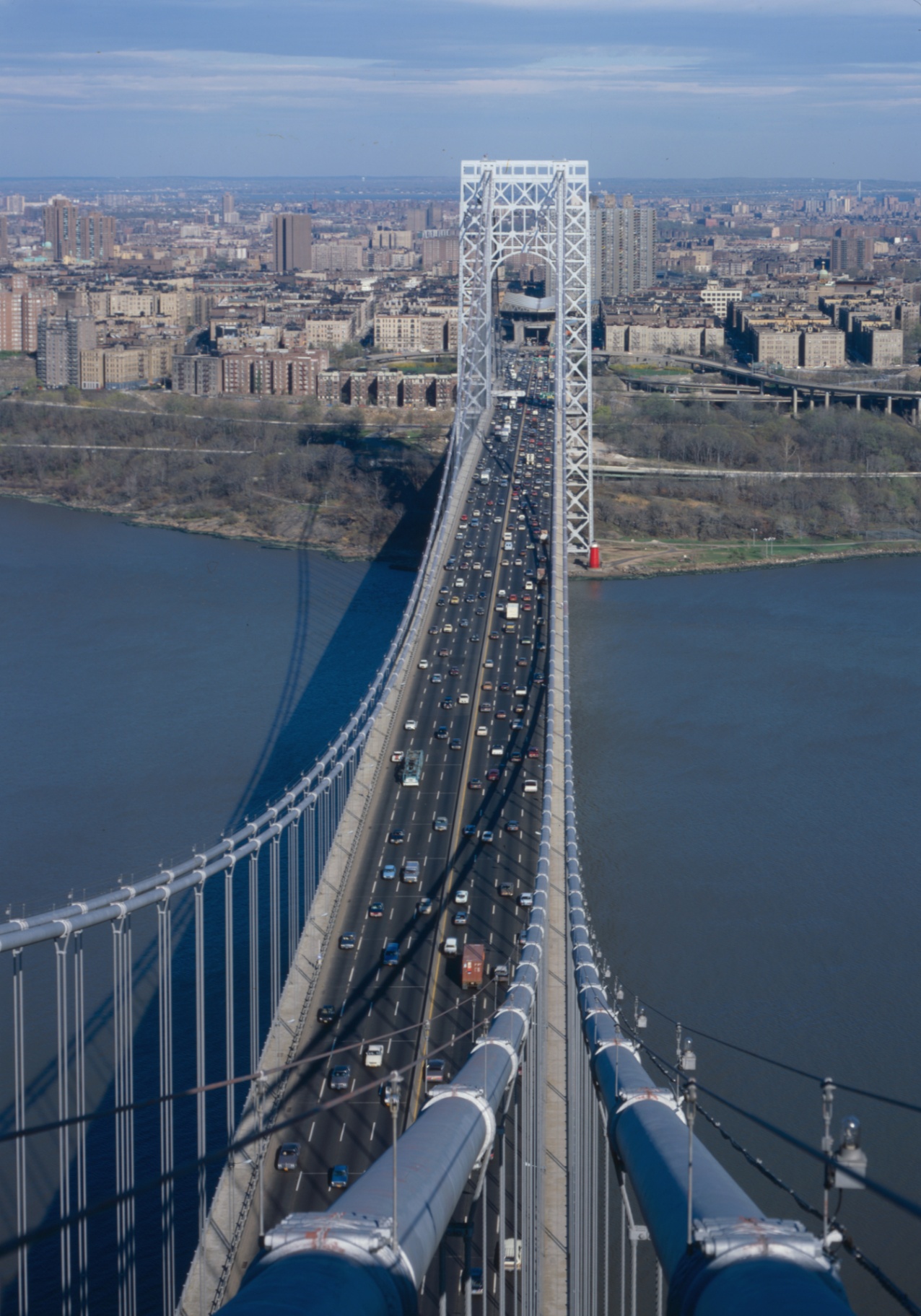
    New Jersey-New York City Major Bridge Aerial View

    Developer trap: Submitting architectural plans without acoustic modeling, then discovering your window specs don't meet attenuation requirements after they're already installed. We engage acoustic engineers during design development, not during punch list.

    10. OER Holds the Keys to Your Certificate of Occupancy: Not Just Your Building Permit

    Even if DOB approves your construction documents and you pass all inspections, DOB cannot issue a Certificate of Occupancy until OER provides the appropriate Notice of Satisfaction confirming E-Designation compliance.

    We've seen projects fully constructed, leased, and ready to welcome tenants: but sitting empty because the developer's consultant never submitted final compliance documentation to OER.

    Final gate: Treat your OER approval timeline as critically as your DOB inspection schedule. Your contractor can't finish what OER won't release.

    Navigate E-Designations Like You Own the Process

    E-Designation approvals aren't bureaucratic mysteries: they're technical compliance processes that reward preparation, precision, and experience. NYCOER's staff are responsive when you demonstrate you understand their standards and speak their language.

    The developers who close E-Designation sites on schedule aren't luckier or better connected. They work with consultants who've done this dozens of times, know what OER expects before the first submission, and structure investigations to avoid revision cycles.

    If you're staring at an E-Designation site and wondering whether your current team can navigate NYCOER without bleeding months off your timeline, let's talk. We've been doing this in NYC since before E-Designations were called E-Designations.

    Ready to move forward? Contact our team for a pre-submission strategy session. We'll review your site conditions, outline the approval pathway, and give you a realistic timeline before you spend a dollar on field work.

    Envicon Strategic Solutions blue footer with logo


    5 Additional Blog Post Ideas

    1. The Real Cost of Skipping a Phase I ESA: 3 NYC Developers Who Learned the $2M Lesson
      Target: Phase I ESA cost New Jersey and environmental due diligence for NJ real estate acquisitions

    2. PFAS in Groundwater: How NY/NJ's 2026 Sampling Requirements Will Delay Your Project (Unless You Do This)
      Target: PFAS sampling requirements NJDEP 2026 and regulatory compliance positioning

    3. NJDEP Historic Fill Guidance Just Changed: What It Means for Your Linear Construction Project
      Target: NJDEP historic fill guidance summary and linear construction technical guidance NJDEP

    4. How to Use NJDEP DataMiner Without Getting Lost: A Developer's 10-Minute Guide
      Target: NJDEP Dataminer search guide for developers with practical walkthrough

    5. Remedial Action Outcomes in NJ: Why Your LSRP Keeps Asking for More Data (And How to Avoid It)
      Target: NJDEP RAO guidance for contaminated sites and LSRP service costs NJ

  • Removing E-Designations in NYC: The Insider’s Playbook for Developers

    Removing E-Designations in NYC: The Insider’s Playbook for Developers

    If you are a developer in New York City, you know that the "E" on a zoning map doesn't stand for "Easy." An (E) Designation is essentially a giant red flag from the city telling you that before you can even think about getting a building permit, let alone a Certificate of Occupancy, you have to satisfy the New York City Office of Environmental Remediation (OER).

    At Envicon, we see it all the time: a developer picks up a prime lot in a rezoned neighborhood, only to realize their timeline is held hostage by a decades-old environmental requirement. Every week your project sits in a regulatory queue is another week of carrying costs, lender pressure, and missed market windows.

    The good news? The process is predictable if you know the players and the path. This isn't about writing a thick report and hoping for the best. It’s about aggressive coordination and technical precision. Here is the insider’s playbook on how to remove E-designation NYC requirements and get your project to the finish line.

    What Exactly Is an (E) Designation?

    In simple terms, an (E) Designation is an environmental requirement assigned to a specific tax lot during a city-led rezoning. Because the city changed the land use (often from industrial to residential or commercial), they want to ensure the new occupants aren't being exposed to historical contamination, excessive noise, or poor air quality.

    There are three main types:

    1. Hazardous Materials: The most common. It requires soil, groundwater, and soil vapor testing.
    2. Noise: Focuses on the building envelope (windows and walls) to ensure interior noise levels are safe.
    3. Air Quality: Usually concerns the type of fuel used for heating/cooling systems or the placement of exhaust stacks.

    Envicon engineers reviewing a 3D subsurface soil model for NYC E-designation site investigation.

    The OER Workflow: From Investigation to Satisfaction

    Navigating the OER is a marathon, not a sprint. If you’re wondering how to remove E-designation NYC hurdles, you have to follow the OER’s specific multi-stage workflow. At Envicon, we don't just hand you a report; we manage this entire lifecycle to ensure there are no surprises at the 11th hour.

    1. The Phase I Environmental Site Assessment (ESA)

    Everything starts here. You need a Qualified Environmental Professional (QEP) to dig into the property’s history. If the Phase I identifies potential issues, we move to testing.

    2. Remedial Investigation Work Plan (RIWP)

    You can’t just go out and start drilling holes. The OER must approve an RIWP that outlines exactly where we are sampling soil, groundwater, and vapor. Envicon coordinates directly with the OER to get this plan approved quickly so we can get the rigs on-site.

    3. The Investigation and Report (RIR)

    Once the field work is done, we produce a Remedial Investigation Report (RIR). This document tells the story of what is actually in the ground.

    4. Remedial Action Work Plan (RAWP) and Notice to Proceed (NTP)

    The RAWP is your blueprint for cleanup. It tells the OER how you’re going to handle the contamination (e.g., soil excavation, vapor barriers, or sub-slab depressurization systems). Once the OER signs off on the RAP, they issue a Notice to Proceed (NTP). This is the golden ticket that allows the Department of Buildings (DOB) to issue your work permits.

    5. Implementation and the Remedial Action Report (RAR)

    While your contractor is digging, Envicon is on-site. We provide construction oversight, air monitoring, and soil management. Once the work is done, we compile a Remedial Action Report (RAR) certified by a Professional Engineer (PE).

    6. Notice of Satisfaction (NOS)

    When the OER accepts the RAR, they issue a Notice of Satisfaction (NOS). This allows you to get your Temporary Certificate of Occupancy (TCO) and eventually your final CO.

    Aerial view of an active brownfield remediation site

    Temporary Satisfaction vs. Permanent Removal

    One of the biggest points of confusion for developers is the difference between satisfying an (E) and removing it.

    • Temporary Satisfaction: You get an NOS that lets you build and occupy the building. However, if your site requires ongoing management (like a vapor barrier that needs to be maintained), the (E) Designation stays on the books. This can complicate future refinancing or a sale if the next buyer’s lender isn't comfortable with "ongoing environmental obligations."
    • Permanent Removal: Since 2022, the process for permanent removal has become more streamlined. If the remediation is "unrestricted" (meaning the site is clean enough for any use) or if the noise/air requirements have been fully met as verified by an installation report, the OER can issue a Final Notice of Satisfaction.

    At Envicon, we aim for permanent removal whenever possible. We want your asset to be clean and compliant, not just "good enough for now."

    Why Your "Big Box" Consultant Is Stalling Your Project

    If you’ve hired a national firm with 10,000 employees, you likely talked to a polished partner during the pitch and now you're stuck talking to a junior staffer who has never actually set foot on a NYC construction site.

    In the world of (E) Designations, regional fluency is everything. Here is why the Envicon approach beats the big-box model:

    • Direct Agency Relationships: We don't wait in a generic queue. We know the reviewers at the OER and the DOB. We understand their specific "pet peeves" and technical preferences. We resolve issues through direct phone calls, not passive-aggressive email chains.
    • Architectural Coordination: A noise (E) Designation isn't just about environmental science; it’s about window specs and alternate ventilation. Envicon works directly with your architects to ensure the Remedial Action Plan matches the building’s design. Big firms often deliver a report that is technically "correct" but impossible for your architect to implement.
    • No-Fluff Deliverables: Large firms write bloated reports designed to protect their own liability. Envicon writes clean, actionable documentation designed to get a reviewer to say "Yes."
    • Ownership of the Outcome: We don't just hand you a report and walk away. We sit at the table with your construction manager, your attorney, and the city officials. If there is a problem in the field at 7:00 AM, we are there to solve it.

    "Collaboration is not a buzzword at Envicon: it’s how we work. We remove the obstacles between you and a buildable site."

    Detailed soil core sample and PID sensor for an OER-compliant environmental site assessment in NYC.

    The Cost of Cutting Corners

    We’ve seen developers try to save $5,000 on a "cheap" Phase I or RIWP, only to lose $50,000 in carrying costs when the OER rejects the submittal. A rejected plan means re-mobilizing rigs, re-sampling, and re-submitting.

    When you work with Envicon Group, you are investing in certainty. We specialize in turning complex, contaminated properties into thriving assets. We understand the NY/NJ metro area better than anyone because we’ve been here for 20 years. We aren't just consultants; we are your partners in the field.

    Summary Checklist for Developers

    • Identify early: Check the zoning map for an (E) immediately during due diligence.
    • Engage a QEP: Hire a firm like Envicon that understands the NYC OER process specifically.
    • Budget for the RAR: Don't just budget for the investigation; the final reporting and certification are where the CO is won or lost.
    • Coordinate: Ensure your environmental consultant is talking to your architect and MEP engineer from day one.
    • Aim for the NOS: Keep your eye on the Notice of Satisfaction: it’s the only document that truly matters to your lender.

    Modern multi-family residential development - a completed brownfield project

    Clear the Path for Your Next Project

    Don't let an (E) Designation turn into a multi-year headache. Whether you are in the middle of a messy cleanup or just starting your due diligence, you need a firm that prioritizes speed, precision, and trust.

    At Envicon, we don't sell reports. We sell cleared paths. Contact us today to discuss your site and let’s get your project moving.

    Envicon Group
    Precision. Speed. Integrity.Envicon Strategic Solutions Logo

  • Environmental Due Diligence for NJ Developers: The “No-Fluff” Guide to Closing Deals

    Environmental Due Diligence for NJ Developers: The “No-Fluff” Guide to Closing Deals

    In the New Jersey real estate world, "time is money" isn't just a cliché: it’s the difference between a closed deal and a collapsed one. You’ve found the site, the numbers work, and your equity is ready. Then the lender asks for a Phase I Environmental Site Assessment (ESA).

    Suddenly, your timeline is at the mercy of a consultant who might not have stepped foot on a construction site in a decade.

    At Envicon, we do things differently. We don't sell reports that sit in a queue for three weeks. We sell cleared paths. If you’re a developer in NJ, you need environmental due diligence that moves as fast as you do. Whether it’s a 72-hour turnaround on critical data or ensuring 100% lender approval, we’re here to make sure environmental "issues" don't become deal-breakers.

    Speed is the Only Metric That Matters (Almost)

    Most big-box consulting firms treat due diligence like an academic exercise. They’ll give you a 200-page report filled with boilerplate language and a "to-be-determined" conclusion. Meanwhile, your carry costs are ticking up.

    Envicon was built on the idea that urgency is a core competency. We’ve optimized our workflow to provide 72-hour turnaround capabilities for preliminary data because we know you need to make decisions in real-time. You can’t wait 21 days just to find out if you need a Phase II.

    Stopwatch on engineering blueprints representing Envicon's commitment to fast delivery

    The "Phase I" Trap in New Jersey

    Here’s the first bit of "no-fluff" advice: In New Jersey, a standard ASTM Phase I ESA is usually not enough to protect you.

    While federal law (CERCLA) recognizes a Phase I ESA for "All Appropriate Inquiries," the state of New Jersey is a different beast. Under the New Jersey Spill Compensation and Control Act, a Phase I alone won't grant you "innocent purchaser" status. To get state-level liability protection, you need a Preliminary Assessment (PA).

    We see developers make this mistake all the time. They hire a national firm that applies a cookie-cutter federal template to a Jersey City brownfield. They end up with a report that satisfies the bank but leaves them wide open to state enforcement and cleanup costs later.

    At Envicon, we produce combined Phase I/PA reports. One document, dual protection, zero headaches. We satisfy both federal and NJDEP requirements in one shot so you can close with confidence.

    What’s Actually in a "No-Fluff" Due Diligence Process?

    Environmental due diligence for developers in NJ shouldn't be a mystery. Here is the breakdown of how we move a project from "potential liability" to "buildable asset":

    1. The Preliminary Assessment (PA) & Phase I

    We dig into the history. We look at Sanborn maps, city directories, and NJDEP’s "Known Contaminated Sites" list. But we also do something the big firms don't: we look at it through the lens of a contractor. We aren't just looking for "Recognized Environmental Conditions" (RECs); we’re looking for things that will cost you money during excavation.

    2. Phase II Site Investigation

    If the PA identifies a concern: maybe an old underground storage tank (UST) or historic fill: we move to a Phase II Site Investigation. This involves soil borings, groundwater sampling, and vapor intrusion screening.

    We don't just "sample and see." We strategically target areas to define the scope of the problem. Our goal is to give you a "go/no-go" answer and a real-world budget for remediation before your due diligence period ends.

    3. The Path to Closure (LSRP Oversight)

    In NJ, the Licensed Site Remediation Professional (LSRP) program is the law of the land. You don’t wait for the NJDEP to approve your cleanup; your LSRP takes the lead. Envicon’s PE-led team works directly with LSRPs to ensure that any necessary remediation is integrated into your construction schedule, not fighting against it.

    Soil core liners showing historic fill strata at a New Jersey redevelopment site during a site investigation.
    Suggested prompt: A professional environmental engineer in a hard hat reviewing soil samples on an active New Jersey construction site with urban skyline in background.

    100% Lender Approval: Why It Matters

    You can have the best deal in the world, but if your bank’s environmental risk officer doesn't like the report, you aren't getting funded.

    Envicon maintains a 100% lender approval rate. Why? Because we write reports that are technically bulletproof and defensively sound. We know what the major regional and national banks are looking for. We don’t leave "gray areas" that cause a risk officer to flag your file. We provide the clarity they need to check the box and move to closing.

    Why NJ Developers Are Switching to Envicon

    If you’re currently using a giant national firm, you know the drill:

    • You talk to a VP during the pitch.
    • A junior staffer with six months of experience actually does the site visit.
    • The report is delayed because it’s stuck in a corporate "quality control" loop in another time zone.
    • You get hit with a change order the moment something slightly unusual is found.

    The Envicon Answer:
    We are field-first and regulator-facing. When you call us, you’re talking to the people who are actually on your site. We’ve spent 20 years building relationships with the NJDEP and local municipalities. We don’t guess how a reviewer will react: we usually already know.

    We focus on Brownfield Redevelopment Support, turning contaminated properties into thriving assets. We don’t just identify the dirt; we help you manage it.

    Active brownfield redevelopment site with heavy equipment and soil staging

    Common NJ "Deal Killers" We Handle Daily

    • Historic Fill: Most of Hudson, Essex, and Bergen counties are built on historic fill. If your consultant doesn't know how to handle the NJDEP’s specific rules on fill, you’ll overpay for soil disposal.
    • Vapor Intrusion: New Jersey has some of the strictest vapor intrusion standards in the country. We design mitigation systems that work with your building's slab, not against it.
    • Linear Projects and Utilities: Coordinating with PSE&G or local water authorities requires a specific type of environmental oversight that we provide through our Civil and Site Engineering team.

    The Envicon Difference: From OER to Closing

    In the NY/NJ metro area, regulatory fluency is a requirement, not a luxury. Whether we are dealing with the NYC OER or the NJDEP, our approach is the same: precision, speed, and trust.

    We work alongside your architects, attorneys, and construction managers to ensure everyone is aligned. Alignment is how projects actually get built. We don’t just hand you a report and wish you luck. We stay at the table until the Remedial Action Outcome (RAO) is in your hand.

    Summary: Your Due Diligence Checklist

    Before you sign your next PSA, make sure your environmental partner can answer these three questions:

    1. Can you guarantee a combined Phase I/PA that meets NJDEP standards for innocent purchaser defense?
    2. Can you provide 72-hour turnaround on initial site findings?
    3. Do you have a 100% track record with commercial lenders in the NJ/NY market?

    If the answer is "let me check with my supervisor," you’re talking to the wrong firm.

    At Envicon, we remove the obstacles between you and a buildable site. We don't just deliver services; we help transform underused and contaminated properties into your next big success.

    Ready to clear the path for your next deal? Contact us today for a no-fluff consultation on your site.Envicon Strategic Solutions Logo

  • NJDEP LSRP Rules: How Recent Updates Affect Your Cleanup Timeline

    NJDEP LSRP Rules: How Recent Updates Affect Your Cleanup Timeline

    If you are a developer, lender, or property owner in New Jersey, you already know that the Licensed Site Remediation Professional (LSRP) program is the engine that drives your project toward a Response Action Outcome (RAO). But as of early 2026, the rules governing that engine have undergone a major tune-up.

    The NJDEP has recently rolled out significant updates to the Remedial Action Permit (RAP) program and tightened the screws on remediation standards. These aren't just administrative tweaks; they are fundamental shifts that will dictate how fast you can close on a property, how much your cleanup will cost, and how long your site remains "under the thumb" of regulatory oversight.

    At Envicon, we don't just read the guidance: we live it. As a -licensed professional-led, field-first firm, we see these changes through the lens of a contractor who needs to move dirt and a developer who needs to hit a closing date. Here is what you need to know about the current NJDEP landscape and how to keep your timeline from unraveling.

    The RAP Revolution: One Permit to Rule Them All

    The most substantial procedural change hit the books on February 17, 2026. The NJDEP released updated Remedial Action Permit (RAP) forms and instructions that effectively ended the era of fragmented permitting.

    In the past, you might have had a soil permit, a separate groundwater permit, and perhaps another layer for vapor intrusion. This created a mountain of paperwork, varying expiration dates, and a fee schedule that felt like death by a thousand cuts. The new framework consolidates soil, groundwater, and indoor air permits into a single Combined RAP.

    Why This Matters for Your Timeline

    On the surface, consolidation sounds like a win for efficiency: and it can be. However, the transition period is where most projects stumble.

    • Simplified Biennial Evaluations: By grouping media into one permit, the biennial protectiveness evaluations are now synchronized. You aren't filing reports every six months for different issues; you’re doing it once.
    • Modifications vs. New Applications: When your site conditions change, the NJDEP now prefers modifications over entirely new applications. This is designed to streamline the process, but it requires an LSRP who knows how to navigate the new forms without triggering a "deficiency" notice that puts you back at the bottom of the pile.

    At Envicon, we’ve seen big-box firms struggle with this transition, treating the new forms like the old ones. We take a different approach. We look at the Combined RAP as a strategic tool to front-load the regulatory heavy lifting so your long-term compliance is a "set it and forget it" situation, not a recurring nightmare.

    LSRP Badge Graphic

    The Bar Just Got Higher: Stricter Remediation Standards

    While the permitting process is trying to get leaner, the technical standards are getting meaner. Effective August 4, 2025, the NJDEP updated the Soil Remediation Standards (N.J.A.C. 7:26D) and Ground Water Quality Standards (N.J.A.C. 7:26I).

    Perhaps more critically for urban redevelopment, the agency lowered the Groundwater Screening Levels for the vapor intrusion pathway as of February 7, 2025.

    The Financial and Schedule Impact

    If you did your due diligence in 2024 and thought you had a "clean" site, you might be in for a rude awakening in 2026.

    1. Re-evaluating "Old" Data: Contaminant levels that were once below the threshold may now exceed the new, stricter standards. This means more sampling, more characterization, and potentially more remediation.
    2. Vapor Intrusion Hurdles: With lower screening levels, more sites are being pushed into active vapor mitigation. Installing a sub-slab depressurization system isn't just a cost issue; it’s a construction scheduling issue. If your consultant isn't talking to your architect and foundation contractor early, you’re going to have a conflict in the field.

    "The technical threshold is a moving target," says one industry insider. "If your consultant is just checking boxes from a 2023 playbook, you’re building on a foundation of regulatory sand."

    Stopwatch on Blueprints

    SRRA 2.0: Clarification or Complication?

    The 2025 regulatory adoptions implementing SRRA 2.0 have brought much-needed clarity: but also more responsibility: to the LSRP program. There are now stricter obligations regarding discharge reporting and the documentation of remediation funding sources.

    The NJDEP is no longer playing games with how contamination is documented. If an LSRP discovers a discharge, the reporting clock starts immediately. For developers, this means you need an LSRP who is "regulator-facing": someone who understands how to present data to the NJDEP in a way that is honest, accurate, and protective of the project’s interests.

    The 45-Day Transition Rule

    If you are switching LSRPs: perhaps moving away from a slow-moving national firm to a more agile partner like Envicon: you need to be aware of the 45-day transition requirement. The NJDEP now has a strict window for LSRP arrangement changes. If this isn't managed precisely, your permit status could lapse, halting work on-site and potentially triggering fines.

    The Envicon Difference: Sitting at the Table, Not in a Queue

    When you hire a massive national environmental firm, your project often becomes a number in a spreadsheet. Your "LSRP of record" might be in an office three states away, and the person actually doing the work is a junior staffer who has never stepped foot on your site.

    Envicon operates differently. We are PE-led and field-first.

    Why Clients Switch to Envicon:

    • Regulator-Facing Leadership: We don't just mail reports and hope for the best. We have direct relationships with reviewers. We sit at the table with the NJDEP to hash out solutions before the formal submittal.
    • Precision Over Paperwork: Big firms write 500-page reports to protect themselves from liability (CYA). Envicon produces lean, high-impact documentation designed to get you an RAO. We don't sell reports; we sell cleared paths.
    • Contractor-Adjacent Mindset: We understand that every day an excavator sits idle is money out of your pocket. Our team is on-site, coordinating with your construction manager to ensure remediation doesn't stop the build.

    Active Brownfield Remediation

    Action Items for NJ Developers in 2026

    If you have an active project in New Jersey, here is your immediate checklist:

    • Audit Your Permits: Have your LSRP review all existing RAPs. Determine if an administrative combination under the new framework will save you time and money on your next biennial certification.
    • Re-Screen Your Data: Check your 2023-2024 soil and groundwater data against the August 2025 standards. Don't wait for a lender to flag an "outdated" report during the closing process.
    • Verify Your Funding Source: Ensure your remediation funding source (RFS) documentation is compliant with the SRRA 2.0 clarifications. The NJDEP is auditing these more frequently.
    • Assess Your LSRP Relationship: Is your consultant proactive, or are they waiting for you to call them? If you aren't getting ahead of these updates, you are falling behind.

    Summary: Navigate the Shift with Precision

    The NJDEP’s modernization of the RAP program and the tightening of remediation standards are designed to protect the environment, but they place a significant burden on the development community. Between the consolidated permits and the stricter vapor intrusion levels, the margin for error has vanished.

    At Envicon, we believe that integrity is about delivering the truth and never cutting corners. But we also believe that speed and precision are not mutually exclusive. We help transform underused and contaminated properties into thriving assets by staying ahead of the regulatory curve.

    Don't let a "cheap" or "slow" report become your most expensive mistake. If your current consultant is giving you more questions than answers, it’s time for a different approach.

    Ready to clear the path for your next project? Contact Envicon today to discuss how we can streamline your NJDEP compliance.


    Key Takeaways

    • Combined RAPs are now the standard for soil, water, and air: simplify your reporting now.
    • Stricter 2025 standards may require new remediation strategies for existing projects.
    • The 45-day LSRP transition rule is a critical deadline for project continuity.
    • Envicon's PE-led approach ensures you are "regulator-facing," getting you to the table faster than the big-box firms.

    Permit Approval Stamp


    Sources:

    1. NJDEP Remedial Action Permit Program Updates – Feb 2026
    2. NJDEP Soil and Ground Water Quality Standards – August 2025 Adoption
    3. SRRA 2.0 Implementation Guidelines

    Envicon Group Logo

  • The 2026 Exit Strategy: Why You Need to Audit Your Environmental Liability Before You List

    The 2026 Exit Strategy: Why You Need to Audit Your Environmental Liability Before You List

    You've spent years running your industrial facility in New Jersey or New York. The market's heating up, institutional buyers are circling, and you're finally ready to cash out. But here's the thing nobody tells you until it's too late: the environmental liability sitting under your property could crater your deal, or worse, follow you home after closing.

    In 2026, the stakes are higher than ever. Buyers aren't just kicking tires anymore. They're bringing environmental consultants to the first tour. Lenders are requiring Phase II ESAs before they'll even talk loan terms. And if you think you can just "disclose and move on," you're in for a brutal awakening when the buyer's LSRP starts finding things you didn't know existed.

    The solution? Audit your environmental liability before you list. Not after you've accepted an offer. Not during due diligence. Before the sign goes up.

    The New Reality: Buyers Control the Narrative (Unless You Don't Let Them)

    Let's talk about what's changed. Ten years ago, you could sell an industrial property with a Phase I ESA and a handshake. The buyer's attorney would ask a few questions, you'd sign some disclosures, and the deal would close.

    That world is dead.

    Today's institutional buyers, the private equity groups, the REIT funds, the family offices, are hiring the same consultants who work for the NJDEP and NYSDEC. They're not looking for deal-killers; they're expecting to find them. And when they do, they'll use your environmental liability as leverage to renegotiate price, demand escrows, or walk entirely.

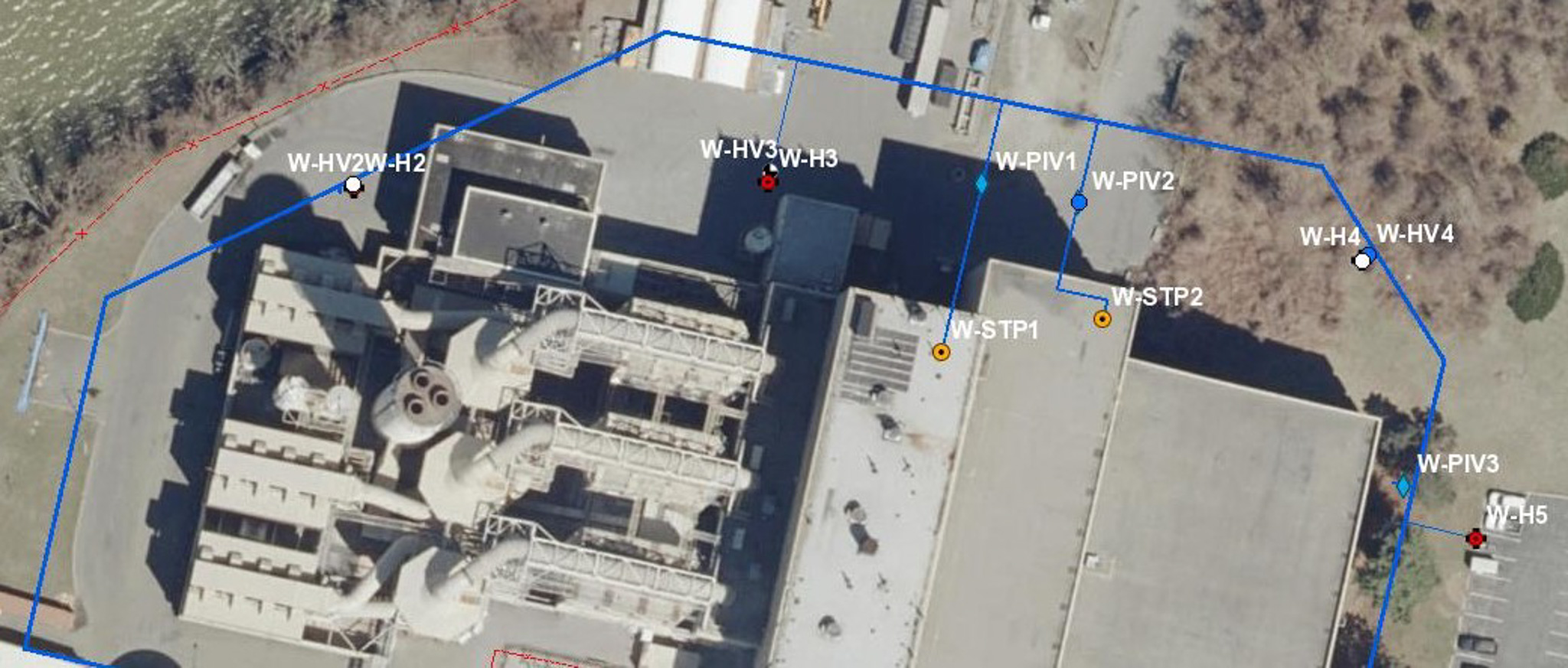
    Aerial Site Map with Monitoring Locations

    Here's the problem: if they control the discovery process, they control the narrative. They'll interpret every soil boring, every groundwater sample, every historical aerial photo through the lens of maximum liability. And you'll be stuck defending a property you've owned for decades against questions you didn't even know to ask.

    The fix? Beat them to it. Run your own environmental audit six months before you list. Get ahead of the contamination story. Understand your actual liability, not your buyer's worst-case fantasy version of it.

    What an Exit-Focused Environmental Audit Actually Looks Like

    This isn't your standard Phase I ESA. A pre-sale environmental audit is a strategic document designed to answer one question: What will sink this deal, and how do we fix it now?

    Here's what we look for:

    Undisclosed Historical Uses
    That corner of your property that "used to be a gas station" in the 1960s? If it's not in your Phase I, it's going to show up in the buyer's. We pull Sanborn maps, talk to municipal archives, and dig through NJDEP case files to make sure there are no surprises.

    Vapor Intrusion Pathways
    If you've got contaminated groundwater anywhere within 100 feet of your building footprint, a sophisticated buyer is going to model vapor intrusion risk. In NYC, this is an automatic E-designation trigger. In New Jersey, it's a mandatory LSRP review. Either way, you need to know before the buyer's consultant puts it in a report.

    Ongoing Compliance Gaps
    Are your underground storage tanks properly registered? Is your stormwater permit current? Do you have an active remediation case that hasn't been closed out? These aren't environmental liabilities in the contamination sense, but they're transactional liabilities that will delay closing and erode buyer confidence.

    Off-Site Migration Potential
    This is the nightmare scenario: contamination that started on your property but has migrated onto your neighbor's. In New Jersey, under the LSRP rules, you can be held liable for off-site impacts even if the contamination predates your ownership. If groundwater is flowing off your property, we need to know where it's going and what it's carrying.

    Environmental consultants reviewing site assessment maps for property due diligence

    The Valuation Impact: Why "Clean Enough" Isn't Good Enough

    Let's talk money. In 2026, environmental liability doesn't just affect whether your property sells: it affects the price, the terms, and the speed of the transaction.

    We've seen deals where unaudited environmental liability resulted in:

    • 15-25% price reductions after the buyer's Phase II came back with contamination the seller "didn't know about"
    • $250,000+ escrow holdbacks for potential remediation costs that never materialized
    • 120+ day closing delays while the buyer's LSRP worked through NJDEP permitting
    • Post-closing clawback provisions that kept the seller on the hook for years after the sale

    Now compare that to properties where the seller did the work upfront. They walked into negotiations with a completed Phase II, a closed NJDEP case, or a No Further Action letter. Those properties closed at asking price, in 60 days, with zero post-closing liability.

    The math is simple: spending $50,000 on an environmental audit today can save you $500,000 in lost value tomorrow.

    Regulatory Landscape: Why 2026 is Different

    If you've been sitting on an exit strategy for a few years, here's what you need to know about the regulatory environment in 2026:

    NJDEP's LSRP Program is Maturing
    The Licensed Site Remediation Professional program isn't new, but it's finally hitting its stride. Case timelines are tightening, compliance requirements are stricter, and the NJDEP is starting to audit LSRP decisions retroactively. If your property has an open case or a delayed closure, expect buyers to demand a clear pathway to NFA before they'll sign a purchase agreement.

    NYSDEC Part 375 Updates
    The NYSDEC recently finalized major changes to Part 375, New York's soil cleanup regulations. New soil cleanup objectives, updated brownfield credit structures, and revised vapor intrusion guidance all affect how contaminated properties are valued and transacted in 2026.

    PFAS is No Longer "Emerging"
    Per- and polyfluoroalkyl substances (PFAS) have moved from "emerging contaminant" to "regulated liability" in both New York and New Jersey. If your facility manufactured, used, or stored firefighting foam, certain plastics, or industrial coatings, PFAS is now a mandatory part of your environmental due diligence: and your buyer's.

    Aerial view of industrial facility

    The Timeline: When to Start (Hint: It's Earlier Than You Think)

    Most sellers think about environmental audits during the listing process. That's six months too late.

    Here's the right timeline:

    18 Months Before Sale: Initial Audit
    Commission a comprehensive environmental liability audit. This includes Phase I and targeted Phase II sampling, historical research, regulatory compliance review, and off-site migration assessment.

    12-15 Months Before Sale: Remediation (If Needed)
    If the audit identifies contamination that will affect value or marketability, start the cleanup process now. NJDEP closures take 6-12 months minimum. NYSDEC brownfield enrollments can take even longer.

    6 Months Before Sale: Transaction Readiness
    Update your audit with any new data, obtain closure letters where possible, and package everything into a "seller's environmental data package" that you can hand to qualified buyers on day one.

    Listing Phase: Transparency and Control
    Market the property with full environmental transparency. Sophisticated buyers will appreciate the proactive approach and view it as a sign of competent ownership.

    What This Looks Like in Practice

    We worked with an industrial owner in Hudson County who was preparing to sell a 4-acre manufacturing facility. The property had been in operation since the 1950s, and the owner "knew" there was probably some contamination, but had never formally investigated.

    Eighteen months before listing, we ran a comprehensive audit. We found:

    • Petroleum impacts from former underground storage tanks (closed in 1998 but never remediated)
    • Solvent contamination in shallow groundwater from historical degreasing operations
    • An unregistered discharge case with the NJDEP that had fallen through the cracks in the 1980s

    None of it was catastrophic. But all of it would have killed the sale if discovered during buyer due diligence.

    We spent 12 months cleaning it up. Remediated the petroleum, enrolled in the ISRA program, closed out the NJDEP case with a Response Action Outcome. Total cost: $180,000.

    The property sold for $7.2 million: $900,000 more than comparable properties in the area. The buyer loved the clean title. Closing took 45 days. Zero post-closing liability.

    The Takeaway: Environmental Audits Are Exit Strategy

    Here's what property owners need to understand in 2026: environmental compliance isn't a box-checking exercise anymore. It's a value driver. It's a negotiation tool. It's the difference between controlling your exit and having your exit controlled for you.

    If you're planning to sell an industrial property in the next two years: whether it's a warehouse in Newark, a manufacturing plant in Queens, or a distribution center in Long Island City: start with an environmental audit. Not because you're worried about liability (though you should be). But because it's the smartest business move you can make.

    The buyers are coming prepared. Make sure you are too.

    Need help understanding what's under your property before you list? Let's talk. We've been doing this for 30 years, and we know exactly what buyers' consultants will look for( because we train them.)Envicon Strategic Solutions Logo

    Envicon Group – 

    Site-Civil • Geotechnical • Environmental

    Northern NJ & NYC • [www.envicongroup.com](https://wp.envicongroup.com)

  • NYC OER Brownfield Cleanup: Navigating the Voluntary Cleanup Program without the Headache

    NYC OER Brownfield Cleanup: Navigating the Voluntary Cleanup Program without the Headache

    If you’re developing property in New York City, you’ve likely stared at a tax map and seen that dreaded "E-Designation." Or perhaps you’ve walked a site that has "potential" written all over it, only to realize its history as a dry cleaner or an auto shop is going to make your lender break out in a cold sweat.

    In this town, land is too valuable to leave dormant, but the regulatory hurdles can feel like a labyrinth designed to drain your budget and stall your timeline. That’s where the NYC Office of Environmental Remediation (OER) and the Voluntary Cleanup Program (VCP) come into play.

    At Envicon, we don’t look at these sites as "contaminated properties." We look at them as assets waiting to be unlocked. For over 20 years, we’ve been the boots-on-the-ground partner for developers and investors, navigating the friction between construction schedules and environmental mandates. We’ve spent two decades building direct agency relationships, which means when we call the OER, we aren't just a voice in a queue, we’re a known entity with a track record of getting projects to the finish line.

    What is the NYC Voluntary Cleanup Program?

    The VCP is a streamlined, city-run program specifically designed for properties with light to moderate contamination. It was created to provide a faster, more predictable alternative to the State’s Brownfield Cleanup Program (BCP), which is often better suited for massive, heavily contaminated industrial sites.

    For the average NYC developer, the VCP is the "sweet spot." It’s optional, it’s efficient, and it comes with a level of liability protection that makes your project "bankable." Once you enroll, you work with OER to implement an approved cleanup plan. When you're done, you get a Notice of Completion (NOC) and a green property certification.

    But the real magic isn't just in the certification; it's in the speed.

    Aerial view of an active brownfield remediation site featuring open soil excavations and heavy equipment

    The 45-Day Advantage: Why Speed is Your Best Friend

    In the world of NYC real estate, time isn't just money, it’s interest, carry costs, and lost market opportunities. One of the biggest "headache reducers" of the NYC VCP is the accelerated timeline.

    Developers can often receive an approved remedy and formally enroll their property in the VCP within 45 days of their first meeting with OER. Compare that to the months (or years) of back-and-forth you might experience with other regulatory pathways.

    At Envicon, we use this speed to your advantage. We don't just hand you a report and wish you luck; we manage the submittals, handle the technical pushback, and ensure that the OER understands the construction constraints of your specific site. We know that if we aren't moving fast, we're standing in the way of your foundation pour.

    Liability Protection That Actually Protects

    One of the primary concerns for any investor is the long-term environmental liability. What happens if rules change five years from now?

    Because of a Memorandum of Understanding (MOU) between the NYC OER and the New York State Department of Environmental Conservation (NYSDEC), the State agrees that it has no plan to require additional investigation or remedial action once a site is enrolled in the VCP.

    This protection attaches the moment you enroll. It covers you under CERCLA (federal hazardous waste law) and New York State Environmental Conservation Law. For a property investor, this is the "shield" that allows you to sleep at night and keeps your equity partners happy.

    The Financial "Carrots" of the VCP

    Navigating an NYC OER brownfield cleanup isn't just about avoiding fines; it’s about accessing incentives that can significantly offset your remediation costs.

    • Environmental Grants: Standard projects can receive between $25,000 and $50,000. If you’re building city-supported affordable housing, that number can jump to $250,000.
    • The Clean Soil Bank: This is a game-changer for NYC excavation. You can often dispose of surplus clean soil for free (minus trucking) or even receive clean soil for free if your site needs fill.
    • Hazardous Waste Fee Exemptions: This is where the real savings hide. Sites in the VCP can save up to $157 per ton in NY State taxes and fees on hazardous waste removal. On a large site, that’s not just a rounding error, it’s a massive win for the bottom line.

    A circular rubber permit approval stamp on an official document representing the regulatory approval process

    Is Your Site Eligible?

    The VCP is tailored for "manageable" contamination. If you have a site with an E-Designation, a history of underground storage tanks (USTs), or urban fill that needs management, the VCP is likely your best path.

    Specifically, the program is ideal for:

    1. Contaminated Fill Sites: The most common type of NYC brownfield.
    2. Properties with E-Designations: Sites where the city has already flagged environmental concerns during rezoning.
    3. Localized Spills: Oil spills that are confined to the property boundaries.

    If your site is on the EPA’s National Priorities List or is a Class 1 or 2 hazardous waste site, you’ll likely be pushed toward the State BCP. But for the vast majority of urban redevelopment, the VCP is the smarter, leaner choice.

    The Envicon Approach: Relationship-Driven Results

    When you hire a massive, national consulting firm, you’re often paying for a "brand name" that carries a lot of overhead. You get a partner who makes the pitch, and then your project is handed off to a junior staffer who has never stepped foot on a Brooklyn job site at 7:00 AM.

    Envicon is different. We are a family-owned, PE-led firm that operates with regional fluency. We don’t just write reports to cover our own backs; we write reports to clear a path for your project.

    "We don’t sell paper. We sell buildable sites. If a report doesn't move the project forward, it's just noise." , Jason Pancoast, CEO.

    Our 20 years of direct agency relationships mean we know the people reviewing your files. We understand what they need to see to say "yes." This isn't about cutting corners; it's about the precision and trust that comes from decades of doing the work right. We sit at the table with the OER and the NYSDEC so you don’t have to.

    Environmental sampling tools and GIS soil mapping for an NYC OER brownfield cleanup and urban redevelopment project.

    From OER to Closing: How We Help

    Navigating the Voluntary Cleanup Program requires a partner who understands the full lifecycle of a project: from the initial Phase I ESA to the final site-civil engineering and construction oversight.

    We offer a vertically integrated approach:

    • Initial Characterization: Getting the soil and groundwater data right the first time so there are no surprises during excavation.
    • Remedial Action Plans (RAP): Designing a cleanup strategy that is cost-effective and compatible with your building’s foundation and utility plan.
    • Construction Oversight: Having our team in the field to manage soil disposal and air monitoring, ensuring you stay in compliance while the machines are moving.
    • Final Reporting: Delivering the documentation the OER needs to issue your Notice of Completion.

    Excavator and crew conducting soil removal at an urban redevelopment site for environmental remediation

    Why Switch to Envicon?

    If your current consultant is giving you "vague" timelines, or if you feel like your project is stuck in a regulatory black box, it’s time for a change. Big-box firms thrive on change orders and "further study." Envicon thrives on outcomes.

    We take full responsibility for the environmental portion of your project. Whether it’s coordinating with your architect on vapor barriers or negotiating with soil disposal facilities to get you the best rate, we are in the trenches with you. We believe in delivering the truth, even when it’s tough, because that’s the only way to keep a project moving.

    Summary & Key Takeaways

    • NYC VCP is a Streamlined Path: Ideal for sites with light to moderate contamination and E-designations.
    • Speed is Built-in: Enrollment can happen in as little as 45 days.
    • Liability Protection is Real: The MOU with the State DEC provides the legal and financial security lenders require.
    • Financial Perks: Grants, soil reuse programs, and tax exemptions can save hundreds of thousands of dollars.
    • Regional Fluency Matters: Envicon’s 20 years of agency experience turns "regulatory hurdles" into a manageable process.

    Don't let an E-designation or a brownfield history stall your vision. Your site has value, and the regulatory path to clearing it doesn't have to be a headache.

    Ready to clear the path for your next NYC project?
    Contact Envicon Group today to discuss your site and how we can navigate the VCP together. Let's get to work.Envicon Strategic Solutions Logo

  • Geotechnical Investigation Costs in NJ: Why Cutting Corners on Soil Borings Backfires

    Geotechnical Investigation Costs in NJ: Why Cutting Corners on Soil Borings Backfires

    If you’re a developer in New Jersey, you know the drill. You’re looking at a site in Jersey City, Newark, or maybe a patch of land in the Meadowlands, and the numbers are tight. You’re looking for places to trim the fat. Naturally, the "soft costs" get the first look. You see a quote for a geotechnical investigation and think, “It’s just dirt. How different can one hole be from another?”

    I’ve seen it a hundred times. A client tries to save a few thousand bucks on the front end by hiring a "discount" boring crew or a big-box firm that treats their project like a line item on a spreadsheet. Then, six months later, they’re calling us at 7:00 AM because the foundation is settling, the structural engineer won't sign off, or they’ve hit a lens of organic peat that wasn't in the report.

    At Envicon, we don’t sell paper. We sell cleared paths. And in the world of NJ development, a cleared path starts with knowing exactly what’s under your boots before the first shovel hits the ground.

    The Reality of Geotechnical Investigation Costs in NJ

    Let’s talk numbers. You need to know what you’re paying for. In New Jersey, geotechnical investigation costs typically range from $1,000 to $5,000 for a standard assessment. If you’re looking at a basic soil report for two borings at a depth of 15 feet, you’re looking at a starting point around $1,050.

    Here is a quick breakdown of what the market looks like right now:

    • Basic 2-Boring Report (15ft depth): ~$1,050.
    • Additional Borings: ~$525 per hole.
    • Deeper Investigations (20ft+): ~$1,400 for the first two, with costs scaling up.
    • Comprehensive Geotechnical Surveys: Average around $2,700, but can climb to $5,500+ for complex industrial sites.
    • Mobilization: This is the "hidden" cost. Getting a rig to a site in North Jersey can run you anywhere from $1,000 to $2,200 just to show up.

    If those numbers seem high, consider the alternative. A single foundation failure or a week-long delay due to an unexpected subsurface condition will cost you ten times that amount in carry costs and change orders.

    Professional engineers conducting a geotechnical investigation with a drill rig on a New Jersey development site.

    Why the "Cheap" Quote is a Trap

    In this business, you get exactly what you pay for. When you see a quote that’s significantly lower than the market average for geotechnical investigation costs in NJ, you have to ask what’s being left out. Usually, it’s the human element.

    1. The Big-Box Firm "Junior" Problem

    When you hire a massive national firm, you’re paying for their glitzy office in a different time zone. You might talk to a Senior VP during the pitch, but who’s actually out on your site at 6:00 AM? Usually, it’s a junior staffer with six months of experience who is just checking boxes. They follow a script. If they hit something weird, they might not even notice it until the lab results come back weeks later.

    Envicon is different. We’re field-first. Our leadership is hands-on. When we’re on-site, we’re looking for the "why" behind the soil conditions, not just the "what." We understand the local geology: from the trap rock of the Palisades to the silty clays of the Rahway River basin.

    2. The "CYA" Report

    Many consultants write reports designed to protect themselves, not to help you build. They’ll load the document with so many caveats and "recommendations for further study" that you can't actually use the report to get a permit or a loan. You end up paying for a document that tells you that you need to spend more money.

    3. Missing the "NJ Factor"

    New Jersey is a unique beast. Between the NJDEP regulations and the specific load-bearing requirements for urban infill, you need a firm that has regional fluency. A "national" firm might apply a cookie-cutter approach that works in Ohio but fails miserably in the swampy soils of the Hackensack Meadowlands.

    The Consequences of Cutting Corners

    What happens when your soil borings aren't deep enough or frequent enough? It’s never good news.

    • Differential Settlement: This is the nightmare scenario. If one side of your building settles faster than the other because a boring missed a pocket of soft soil, you’re looking at structural cracks, window misalignments, and potentially a condemned building.
    • The "Unexpected" Rock: We’ve seen projects grind to a halt because a "budget" investigation missed a shallow rock ledge. Suddenly, the developer is hit with a $50,000 change order for blasting or specialized excavation.
    • Lender Rejection: Banks aren't stupid. If your geotechnical report looks thin or was performed by a firm they don't trust, they’ll stall your funding. At Envicon, we provide the level of due diligence that satisfies both the regulators and the money.

    Active construction site showing excavation support and site safety controls

    Envicon’s Approach: Precision Over Paperwork

    We don’t believe in "standard" investigations because no two sites in New Jersey are standard. Our approach to geotechnical work is built on three pillars:

    Hands-On Leadership

    At Envicon, you aren't just another project number. Our PEs are involved from day one. We coordinate directly with your architects, structural engineers, and attorneys to ensure everyone is aligned. If we find something unexpected in a boring, we call you immediately: we don't wait for the final report to drop a bomb on your desk.

    Strategic Site Characterization

    We don't just poke holes in the ground. We look at the history of the site. Was it a former industrial facility? Is there a risk of contaminated soil that might affect your foundation design? We integrate our geotechnical expertise with our environmental knowledge to give you a 360-degree view of your risk.

    Contractor-Adjacent Mentality

    We speak the language of the job site. We know that every day your rig isn't moving is a day you’re losing money. We work with urgency to get our crews in, get the data, and get the report into your hands so you can keep moving toward a buildable site.

    Split-spoon sampler showing soil core strata layers for an accurate geotechnical investigation report in New Jersey.

    What You Should Look for in a Geotechnical Partner

    If you’re comparing quotes for geotechnical investigation costs in NJ, don't just look at the bottom line. Look for these markers of authority:

    • Regional Fluency: Do they know the local municipal requirements?
    • Direct Principal Involvement: Will you have a direct line to the person signing the report?
    • Integrated Services: Can they handle the Phase I ESA and the Geotech at the same time to save on mobilization?
    • Transparent Pricing: Are they giving you a "not-to-exceed" number, or is the contract riddled with potential add-ons?

    The Envicon Difference: Why Clients Switch

    Most of our clients come to us after being burned by a "big-box" consultant. They’re tired of the change orders, the slow turnaround, and the junior staff who don't know a silt fence from a soldier pile.

    We make complex projects simpler to execute. We don't just deliver a report; we give you a path to closure. Whether you’re dealing with the NYC OER, the NJDEP, or a private lender, we stand behind our word and our work.

    "Integrity is not just ethical behavior : it is about delivering the truth and never cutting corners." : Jason Pancoast, CEO, Envicon Group.

    Summary & Takeaways

    Cutting corners on soil borings is a gamble where the house always wins. While the initial geotechnical investigation costs in NJ might seem like an easy place to save, the long-term risks far outweigh the short-term gains.

    • Standard costs range from $1,000 to $5,000, but complexity drives the price.
    • Cheap reports often lead to massive change orders and structural failures.
    • Regional expertise is non-negotiable in the NY/NJ market.
    • Envicon provides PE-led, field-first solutions that big-box firms can’t match.

    Don't let your project get stuck in the mud. If you want a partner who takes ownership of the outcome, let’s talk. We’re ready to help you unlock the full potential of your site.

    Ready to get a real look at your site?
    Contact Envicon today for a no-fluff consultation on your next project.

    Envicon Group Logo