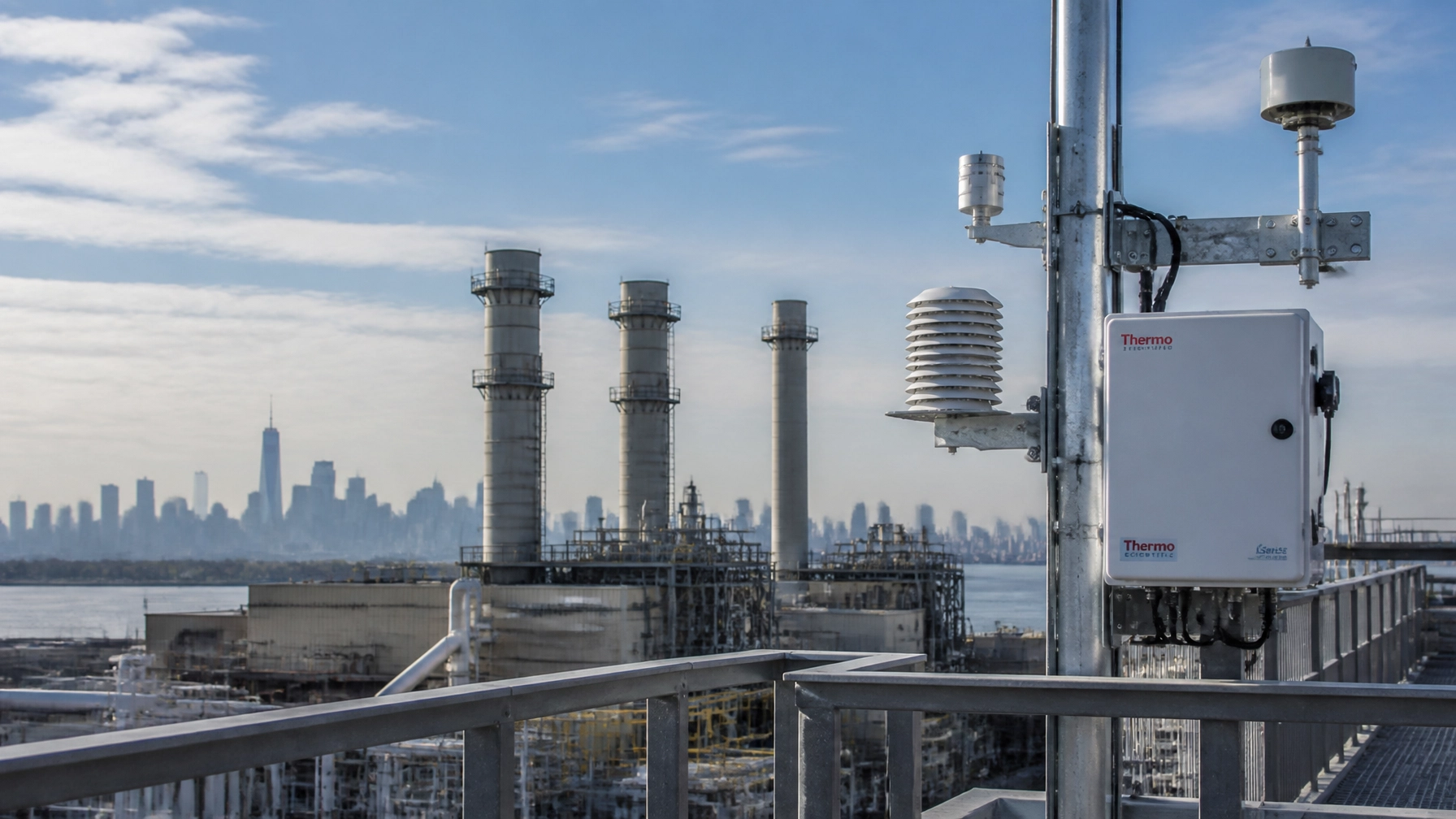
The regulatory landscape in New York is shifting, and for many facility owners and fuel suppliers, the clock is officially ticking. Under the NYSDEC Mandatory Greenhouse Gas (GHG) Reporting Program (6 NYCRR Part 253), 2026 is the year where data collection transitions from a suggestion to a strictly enforced legal requirement.
If your facility or operation meets the reporting thresholds, you are no longer just "tracking" emissions: you are entering a high-stakes compliance cycle with specific, hard deadlines. The most immediate of these is September 1, 2026, for methane-related facilities, followed by a critical year-end deadline for Large Emission Sources.
At Envicon Group, we don’t just deliver reports that sit in a drawer. We provide the "cleared path" to compliance, ensuring your project stays on track, your lender stays confident, and your operations remain uninterrupted by regulatory friction.
Understanding Part 253: Who Is in the Crosshairs?
The NYSDEC Part 253 regulation is designed to align New York’s emissions tracking with the ambitious goals of the Climate Leadership and Community Protection Act (CLCPA). While federal EPA reporting has existed for years, New York’s requirements are more granular and, in many cases, more demanding.
You are considered a Reporting Entity as of January 1, 2026, if your activity met specified thresholds at any point between 2023 and 2025. These categories include:
- Facilities: Any operation in New York emitting ≥10,000 metric tons of CO2e per year. This includes stationary combustion, electricity generation, landfills, and compressor stations.
- Fuel Suppliers: Companies providing natural gas, liquid fuels, or petroleum products that generate GHG emissions when used.
- Electric Power Entities: Importers or emitters of any greenhouse gases in the New York power sector.
- Large Emission Sources: Facilities emitting ≥25,000 metric tons of CO2e per year. These entities face the strictest requirements, including mandatory third-party verification.
The September 1, 2026 Deadline: The EMMP
For specific sectors, the first major hurdle arrives on September 1, 2026. This deadline is specifically for the submission of an Emissions Monitoring and Measurement Plan (EMMP).
This requirement targets methane-related operations, including:
- Solid and liquid waste management facilities.
- Anaerobic digesters.
- Liquid waste handlers.
The EMMP is not a generic document. It must be a site-specific proposal submitted to the NYSDEC in an approved format, detailing exactly how you intend to monitor and measure methane emissions throughout the reporting year. Failure to have an approved EMMP by this date puts your facility at risk of immediate non-compliance as the 2026 reporting year progresses.

The December 31, 2026 Deadline: Monitoring Plans for Large Sources
While methane-heavy facilities are focused on September, all Large Emission Sources (those over the 25,000 MT threshold) must look toward December 31, 2026. By this date, a written GHG Monitoring Plan must be electronically submitted to the NYSDEC.
This plan serves as the backbone of your reporting accuracy. It must describe:
- Methods used to quantify emissions.
- Data management systems and software used for tracking.
- Quality Assurance/Quality Control (QA/QC) procedures.
- Maintenance and calibration schedules for all monitoring equipment.
Waiting until December to draft this plan is a recipe for disaster. The NYSDEC requires these plans to be robust enough to withstand a third-party audit. At Envicon, we integrate these requirements into our Environmental Dashboard Blueprint, giving our clients real-time visibility into their compliance status rather than a mad scramble at year-end.
The 2027 Horizon: Annual Reporting and Third-Party Verification
The work you do in 2026 sets the stage for the formal reporting cycle in 2027. This is where the numbers meet the platform.
- June 1, 2027: This is the deadline for all Reporting Entities to submit their first annual emissions report for the 2026 calendar year. This is done via the New York State Greenhouse Gas Reporting Tool (NYS e-GGRT).
- December 1, 2027: For Large Emission Sources, this is the deadline for the first Third-Party Verification Statement. You must hire an independent, accredited verifier to audit your 2026 data.
After this inaugural year, the verification deadline shifts to August 10th annually. The initial 2027 window provides a slight buffer, but the complexity of coordinating with third-party verifiers means you need to have your "house in order" long before the June reporting deadline.

The Cost of Non-Compliance
The NYSDEC is not treating Part 253 as a "learning period." Non-compliance can result in significant civil penalties. Beyond the fines, there are secondary business impacts that are often more damaging:
- Lender Friction: Banks and investors are increasingly flagging environmental reporting gaps as financial risks. A missing GHG report can stall a refinancing or sale.
- Operational Stalls: If your monitoring equipment isn't calibrated (a request for postponement was due July 1, 2026), your data may be deemed invalid, requiring expensive re-sampling or "back-filling" using conservative, less favorable emission factors.
- Reputational Damage: As a public record, your compliance status: or lack thereof: is visible to competitors, activists, and regulators.
The Envicon Difference: Why Big-Firm Reports Aren't Enough
When you hire a large national consulting firm, you often get a "partner" at the pitch and a junior staffer for the execution. You receive a bloated, 100-page report written defensively to protect the consultant, not to move your project forward.
Envicon Group takes a different approach. We are field-first and regulator-facing. We don't just "hand you a report" and leave you to figure it out. We work directly with the NYSDEC and NYC OER because we know the reviewers by name.
Our compliance and permit matrix ensures that GHG reporting isn't treated in a vacuum: it’s integrated into your broader site-civil and environmental strategy. Whether we are managing Phase I & II Environmental Site Assessments or implementing remedial designs, we ensure that every action taken on-site supports your long-term compliance goals.
"Collaboration is not a buzzword: it's how we work. We don't sell reports; we sell cleared paths to a buildable, compliant site." : Jason Pancoast, CEO
Your Action Plan for 2026
If you haven't started your Part 253 preparation, you need to move now. Here is your immediate checklist:
- Confirm Your Status: Review your 2023-2025 activity data. Are you above the 10,000 MT or 25,000 MT threshold?
- Assess Monitoring Equipment: Do you have the necessary sensors in place? Are they calibrated?
- Draft the EMMP (If Applicable): Methane sources must have their proposals ready by September 1.
- Establish Data Workflows: Move away from spreadsheets and into a centralized digital solution that ensures data integrity for future audits.
- Secure a Third-Party Verifier: The demand for accredited GHG verifiers in New York will skyrocket as the 2027 deadline approaches. Lock in your partner early.

At Envicon Group, we specialize in turning complex, environmentally challenged sites into clean, buildable assets. We bring 20 years of direct agency relationships and a proprietary technology backbone to every project. Don't let a regulatory deadline stall your growth.
Summary Takeaways
- September 1, 2026: EMMP due for methane-related facilities.
- December 31, 2026: Monitoring Plans due for Large Emission Sources (≥25k MT).
- June 1, 2027: First annual report due via NYS e-GGRT.
- December 1, 2027: First third-party verification due for 2026 emissions.
- Envicon Advantage: Direct coordination, field-first execution, and a clear path from data to closure.
Ready to clear the path for your project?
- Book a free consultation: https://envicongroup.com/contact
- Risk screener tool: https://envicongroup.com/risk-screener?utm_source=website&utm_medium=nav_megamenu&utm_campaign=resources&utm_content=risk-screener
- Read more on the blog homepage: https://envicongroup.com/blog?utm_source=website&utm_medium=nav_megamenu&utm_campaign=resources&utm_content=blog-insights
Leave a Reply