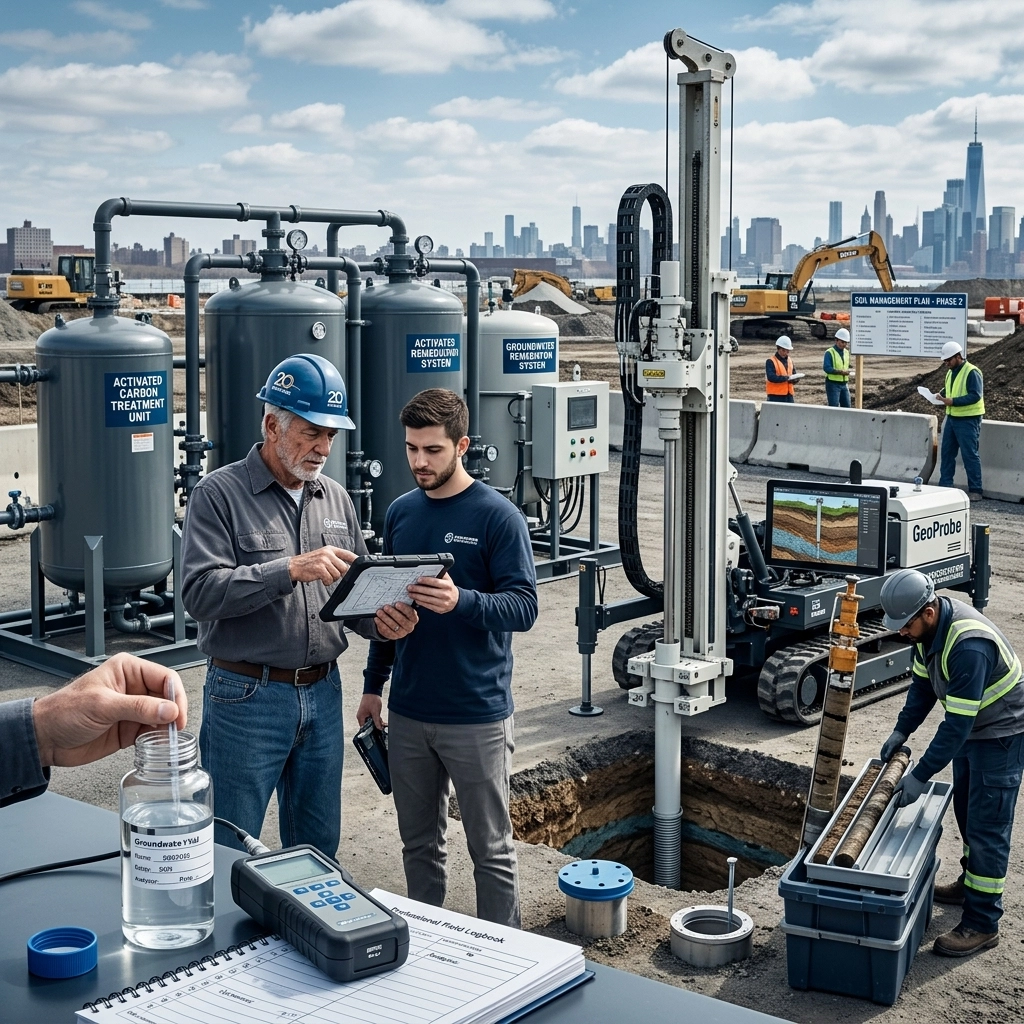
Category: Industry Insight

  • Soil and Groundwater Management: Handling Plans, Treatment Strategies, and Disposal

    Soil and Groundwater Management: Handling Plans, Treatment Strategies, and Disposal

    If you’ve spent any time on a brownfield redevelopment site in North Jersey or the five boroughs, you know that the moment an excavator bucket hits the dirt, the clock starts ticking: and so does the meter. Soil and groundwater management isn't just a regulatory hurdle; it’s often the single largest variable in your construction budget.

    At Envicon Group, we see it all the time: a developer gets a Phase II report, sees some elevated lead or petroleum hydrocarbons, and panics. They assume every cubic yard of dirt has to go to a high-priced landfill. But here’s the truth: with a precise Soil and Groundwater Management Plan (SGMP), you aren't just checking a box for the NYSDEC or NJDEP: you’re protecting your bottom line.

    Why the "Handling Plan" is Your Most Important Document

    A Soil Management Plan (SMP) is your playbook. It tells your site super, your excavation sub, and your environmental oversight team exactly what to do when they find something unexpected. Without one, a project can grind to a halt the moment a "pocket" of impacted soil is discovered.

    We don't write 300-page reports that sit in a trailer gathering dust. We create actionable handling plans that focus on:

    • Material Characterization: Segmenting the site into zones based on existing data. Not all dirt is created equal. If 70% of your site meets "Residential" or "Non-Refusal" standards, why pay to dispose of it as "Hazardous"?
    • Field Screening Protocols: Using PIDs (Photoionization Detectors) and visual/olfactory cues to make real-time decisions.
    • Stockpile Management: Procedures for staging material on liners, covering it to prevent runoff, and keeping it separate from clean fill.
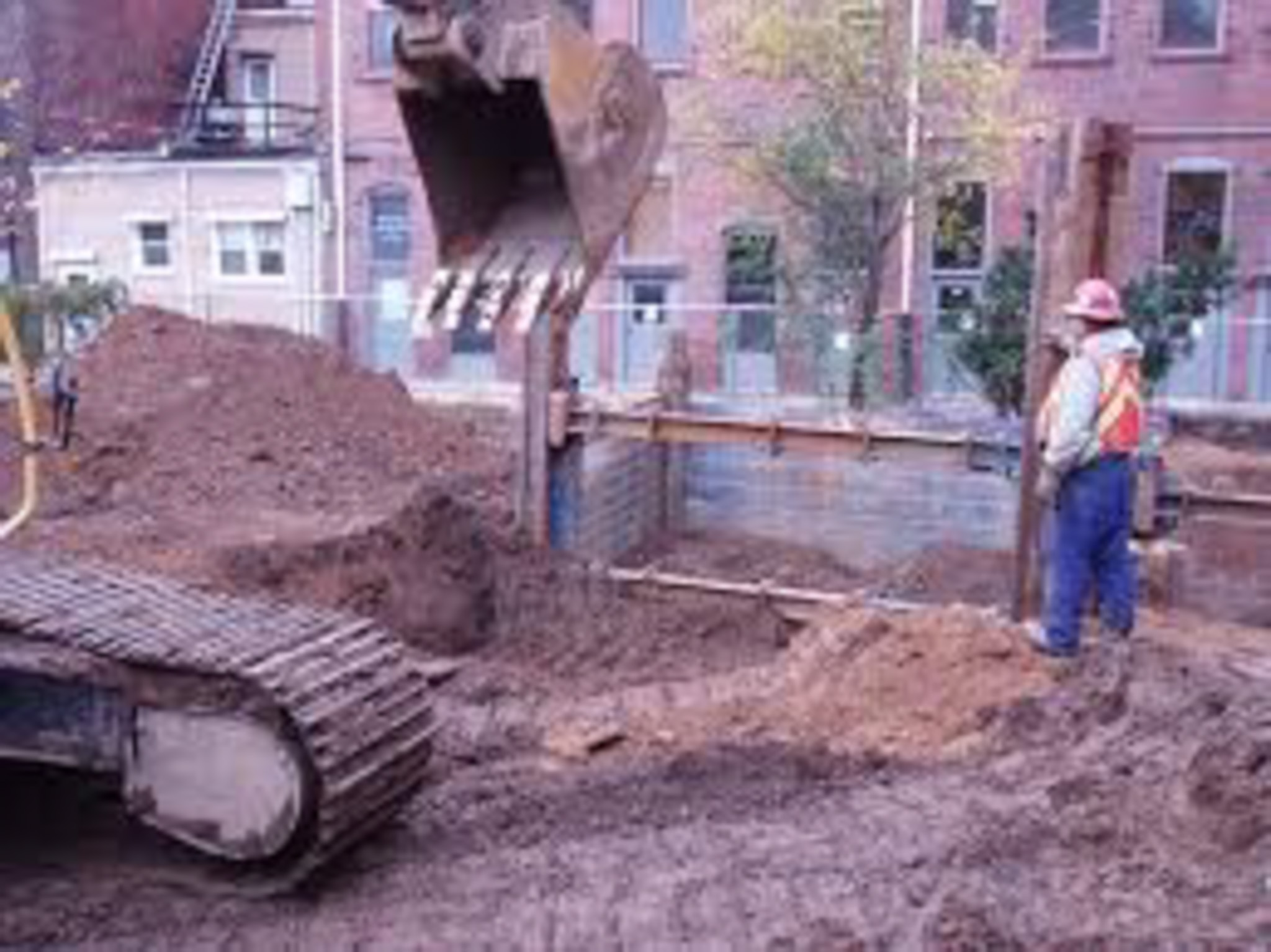
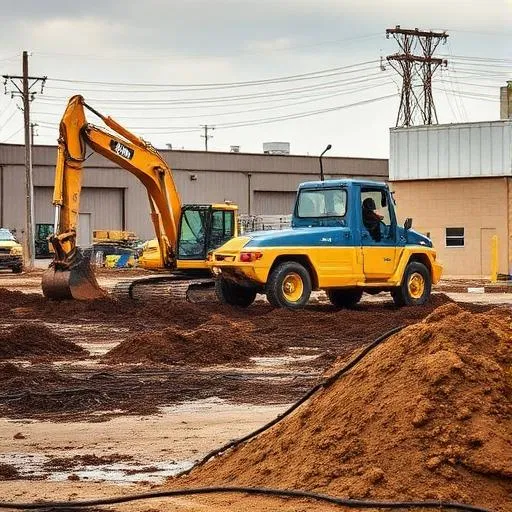
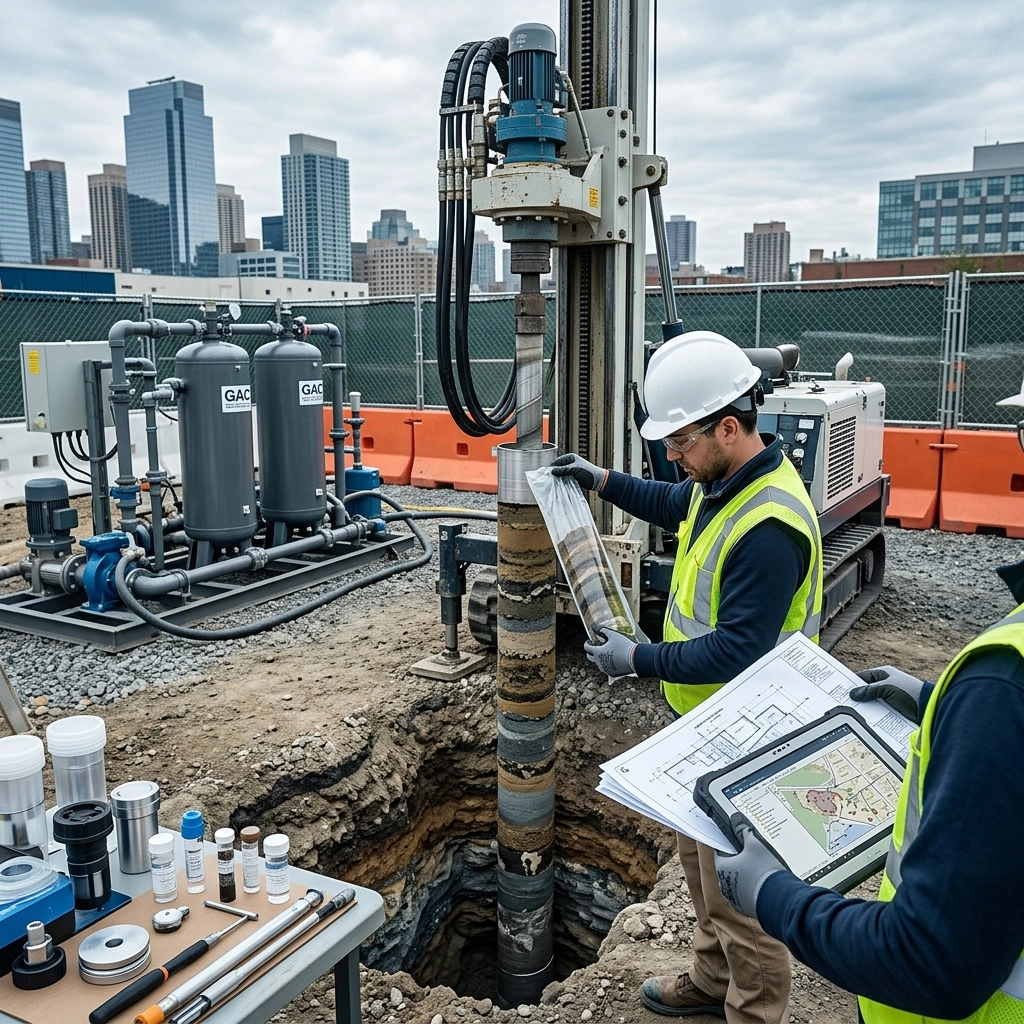
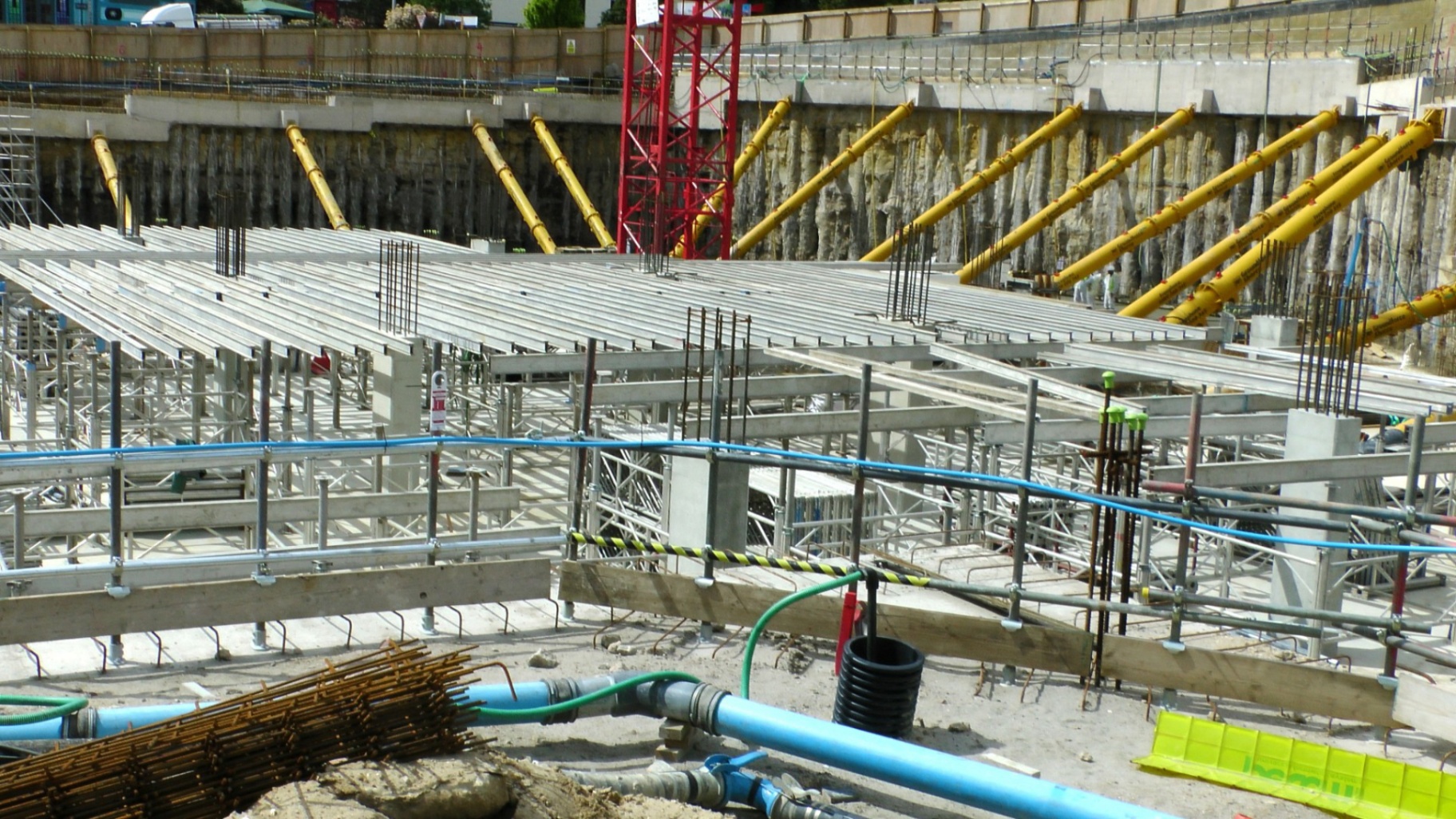
    Excavator and Crew at Urban Redevelopment Site

    Groundwater: More Than Just "Pumping It Out"

    If you’re digging deep enough for a foundation or a utility trench in Jersey City or Long Island City, you’re going to hit water. Groundwater sampling and management are where many projects run into trouble with local authorities.

    You can’t just pump groundwater into the nearest storm drain. Whether you are dealing with NYSDEC or NJDEP jurisdictions, the discharge of construction dewatering fluids requires a permit: often a temporary discharge permit from the local utility (like NYC DEP) or a state-level SPDES/NJPDES permit.

    Treatment Strategies for Dewatering

    When groundwater is contaminated, you need an on-site treatment train. This usually involves:

    1. Sediment Tanks (Frac Tanks): Letting the heavy solids settle out.
    2. Bag Filters: Removing finer particulates.
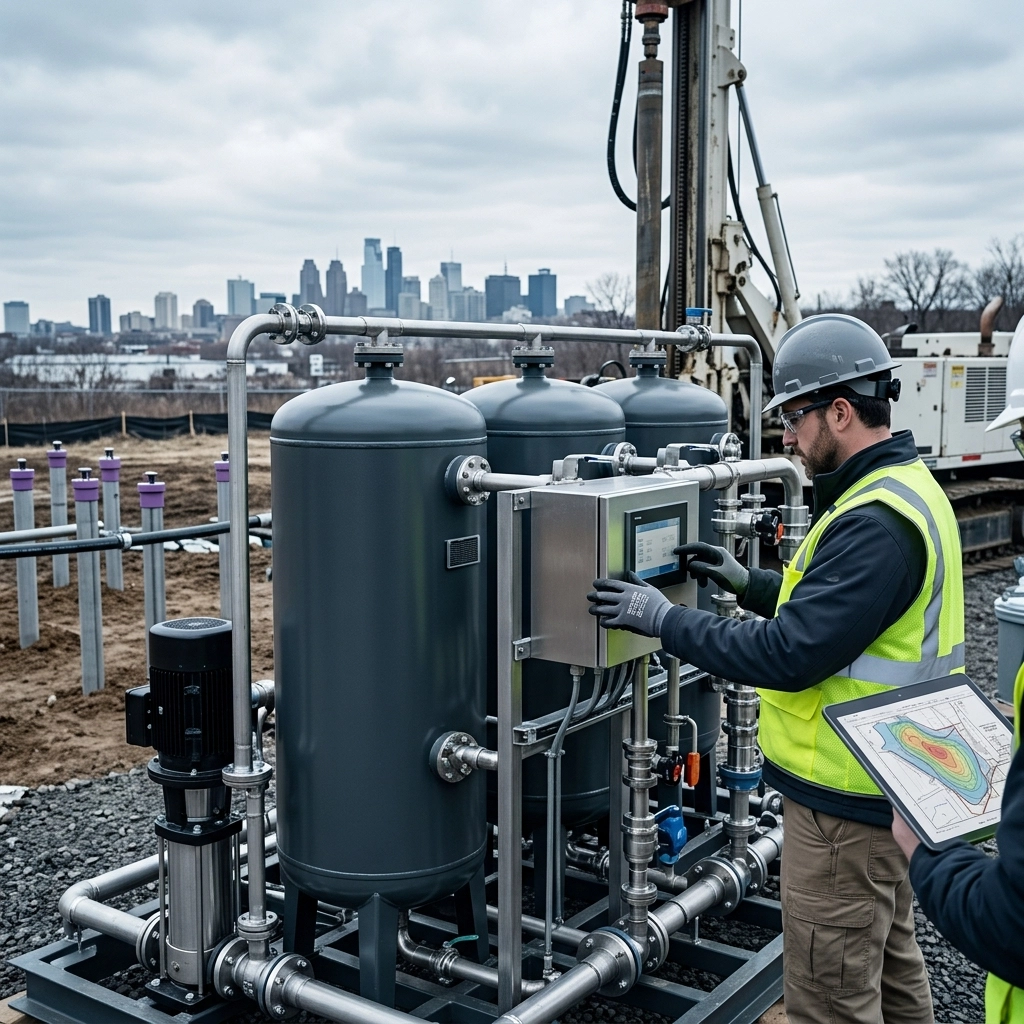
    3. Activated Carbon (GAC): Scrubbing out dissolved organic contaminants.

    We focus on right-sizing these systems. Over-engineering a treatment system is a waste of money; under-engineering it leads to permit violations and work stoppages. We find the middle ground that keeps you compliant and moving.

    Disposal vs. Beneficial Reuse: The Cost-Saving Pivot

    The most expensive way to handle soil is to truck it straight to a landfill. At Envicon, we look for every opportunity for Beneficial Reuse.

    In New York, under 6 NYCRR Part 360, there are specific pathways to reuse soil as fill, provided it meets certain chemical and physical criteria. Similarly, New Jersey’s "Linear Construction" and "Fill Material" guidance documents provide avenues for keeping soil out of the waste stream.

    Waste Profiling

    To get a facility to accept your soil, you need a waste profile. This requires specific laboratory analysis: often dictated by the receiving facility, not just the state. We handle the coordination between the lab, the site, and the disposal facility to ensure that when the trucks show up, they have the paperwork they need to dump and return.
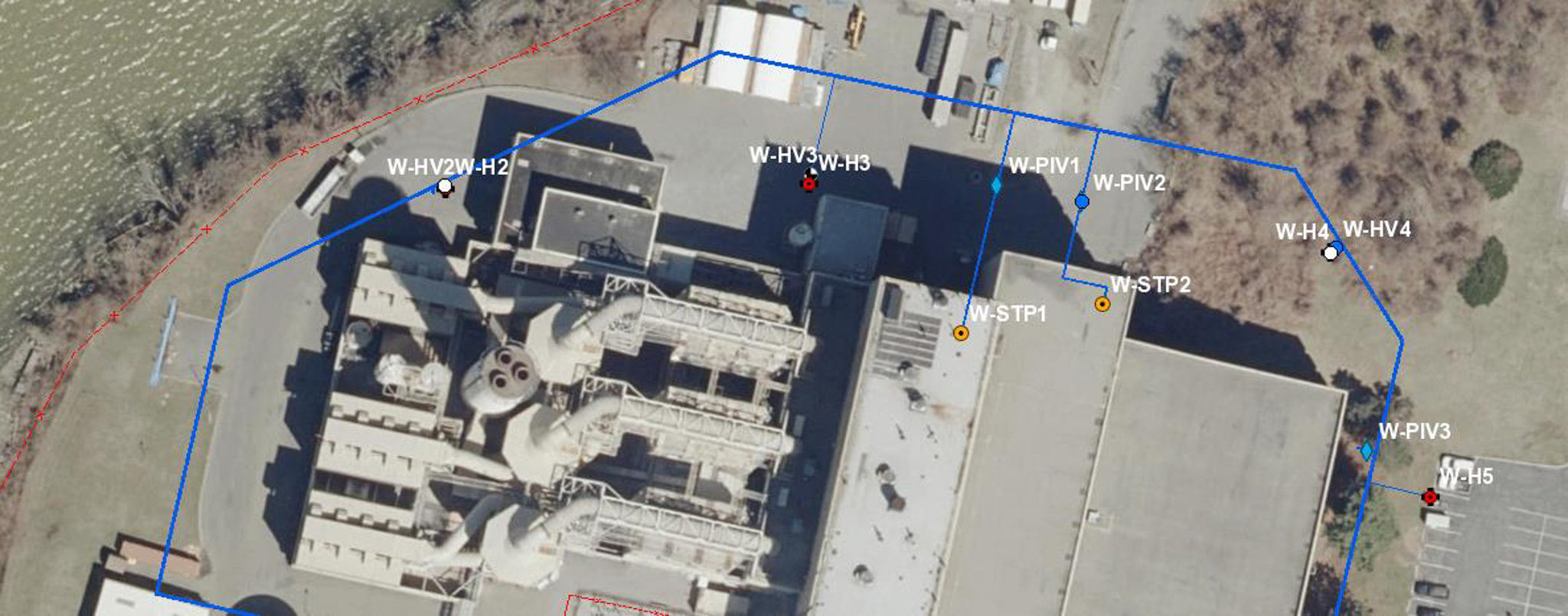
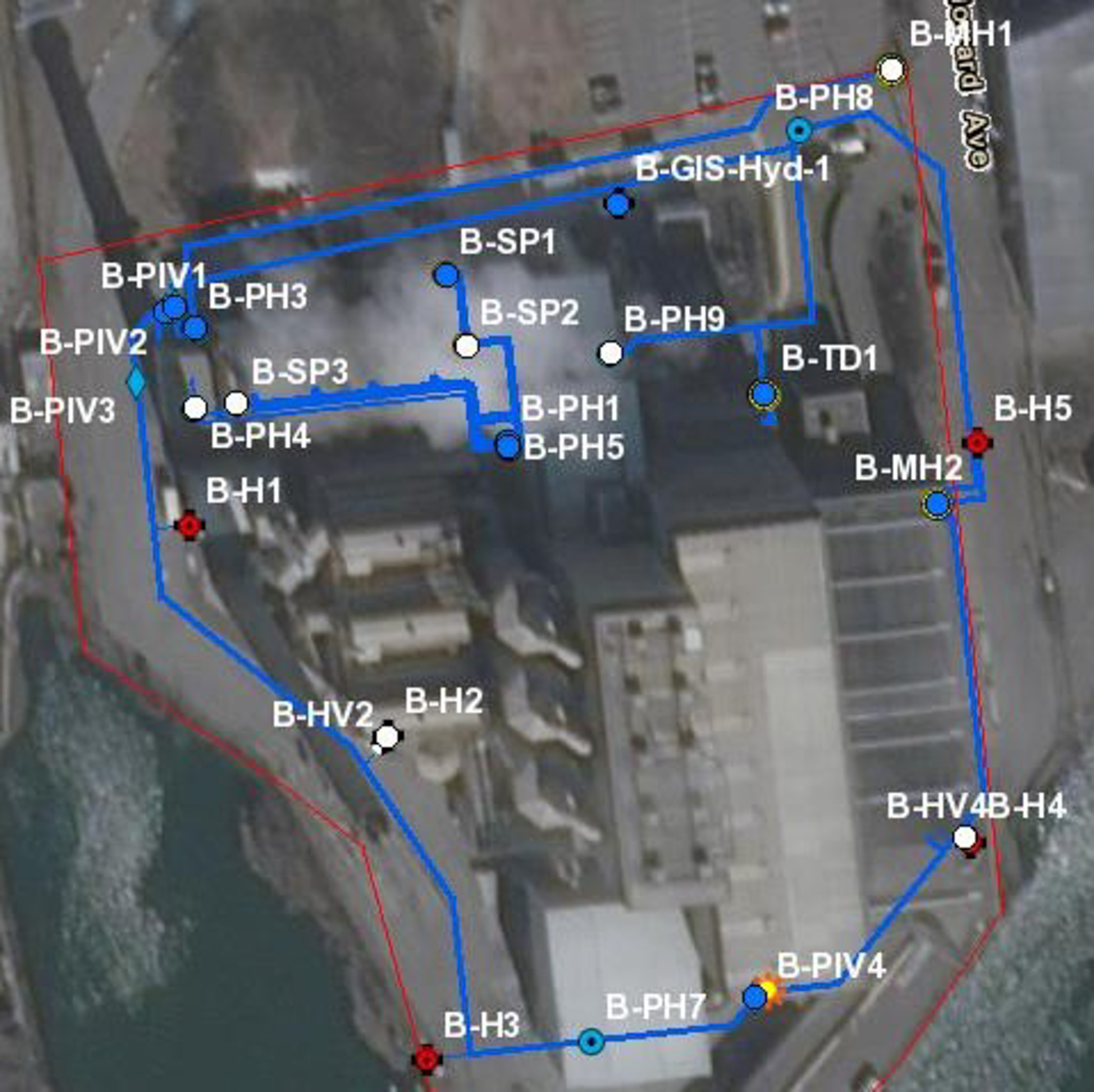
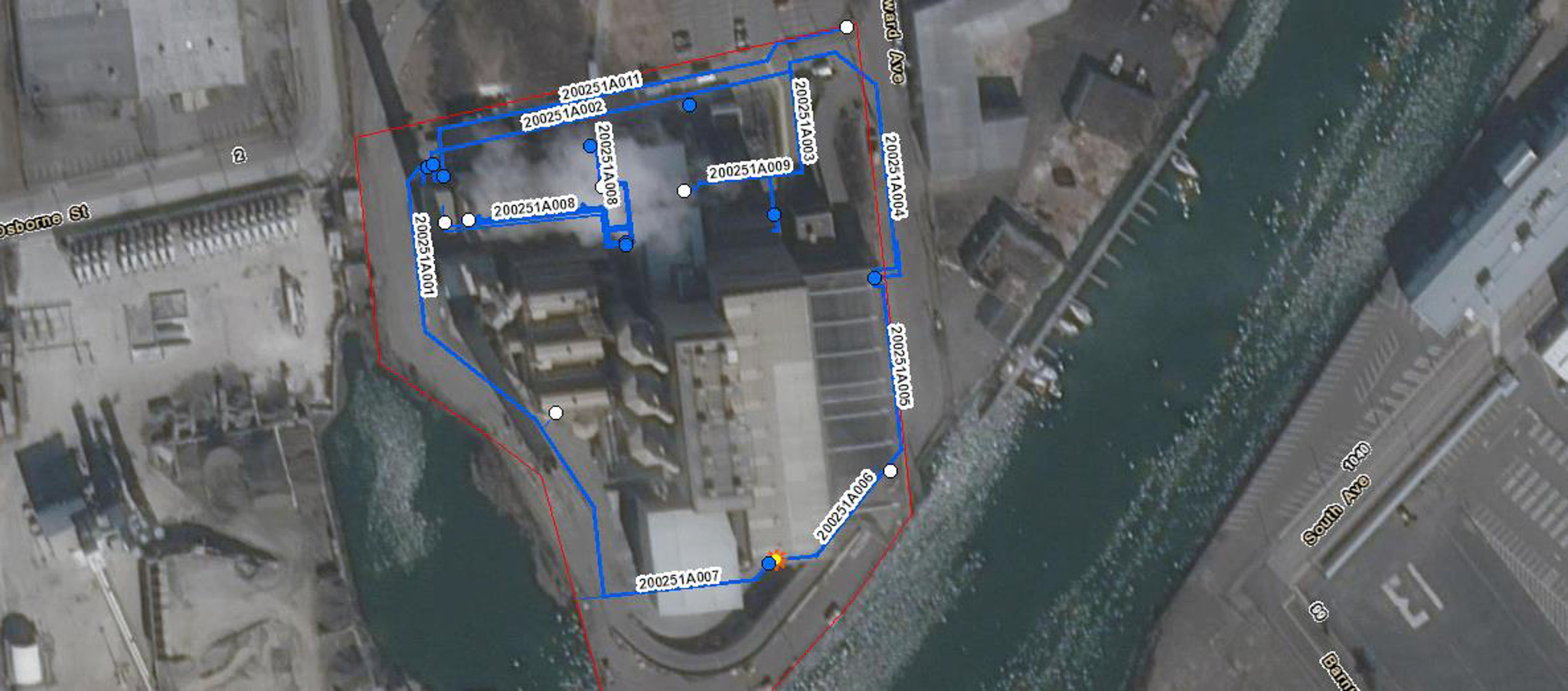
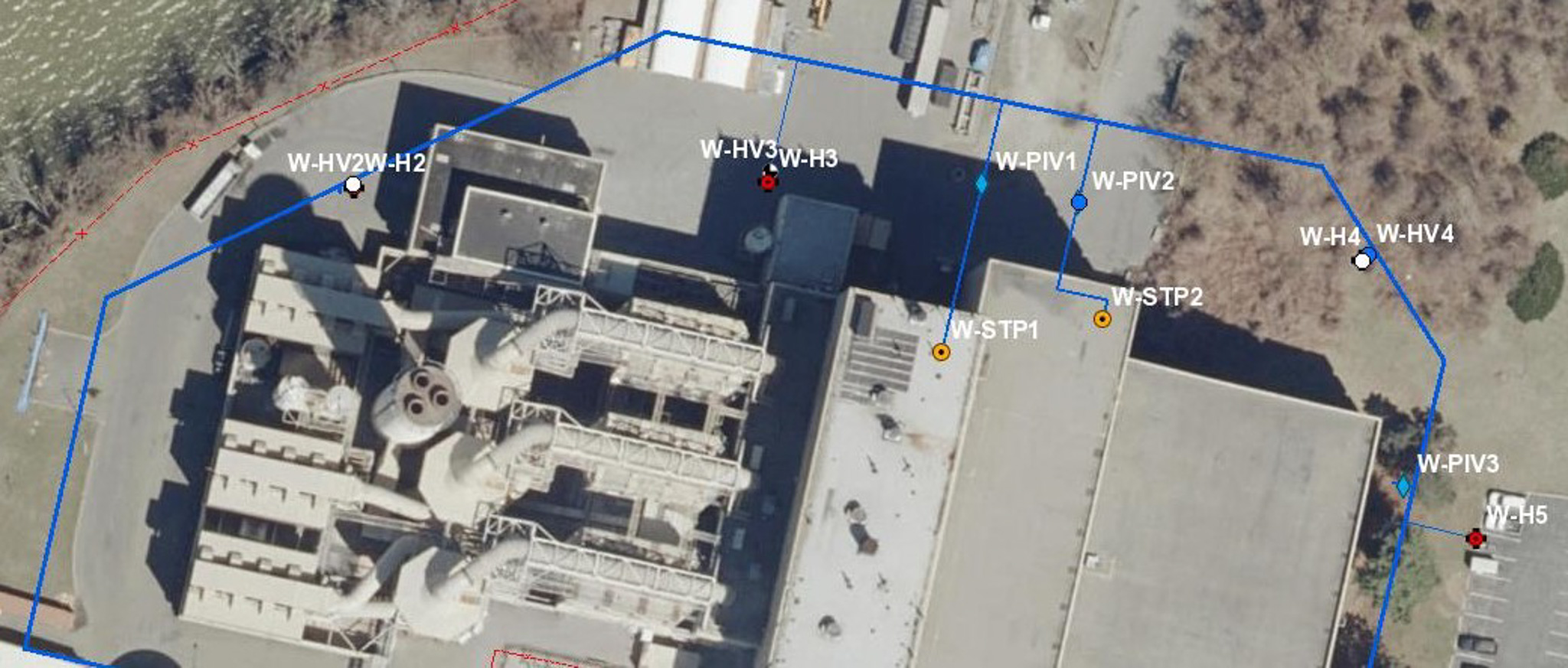
    Aerial Site Map with Facility Layout and Monitoring Points

    Navigating the NYSDEC and NJDEP Minefield

    Regulatory agencies don't want to be your enemy, but they do want total transparency. In brownfield redevelopment, the "Discovery of Unanticipated Conditions" is a common clause. If your team finds an underground storage tank (UST) that wasn't on the maps, or a plume of chlorinated solvents, how you react in the first four hours determines the next four months of your project.

    We believe in "Regulator-Facing" consulting. That means we don't hide behind emails. We know the reviewers. We understand what the NJDEP is looking for in a Remedial Action Report (RAR). By delivering clean, technically sound documentation the first time, we avoid the endless "Request for Information" (RFI) loops that plague bigger, slower firms.

    "A project is only as fast as its slowest permit. In the world of soil and water, that's usually the management plan." : Jason Pancoast, CEO, Envicon Group

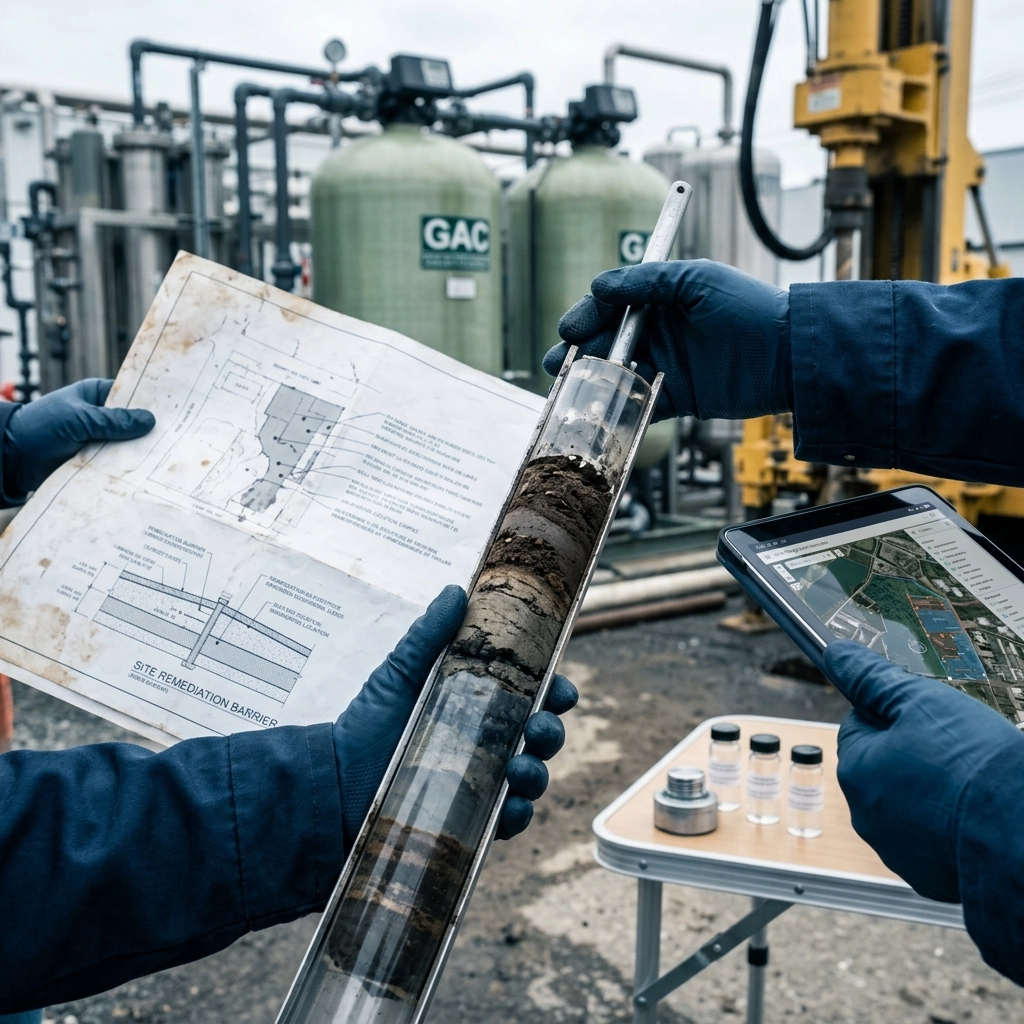
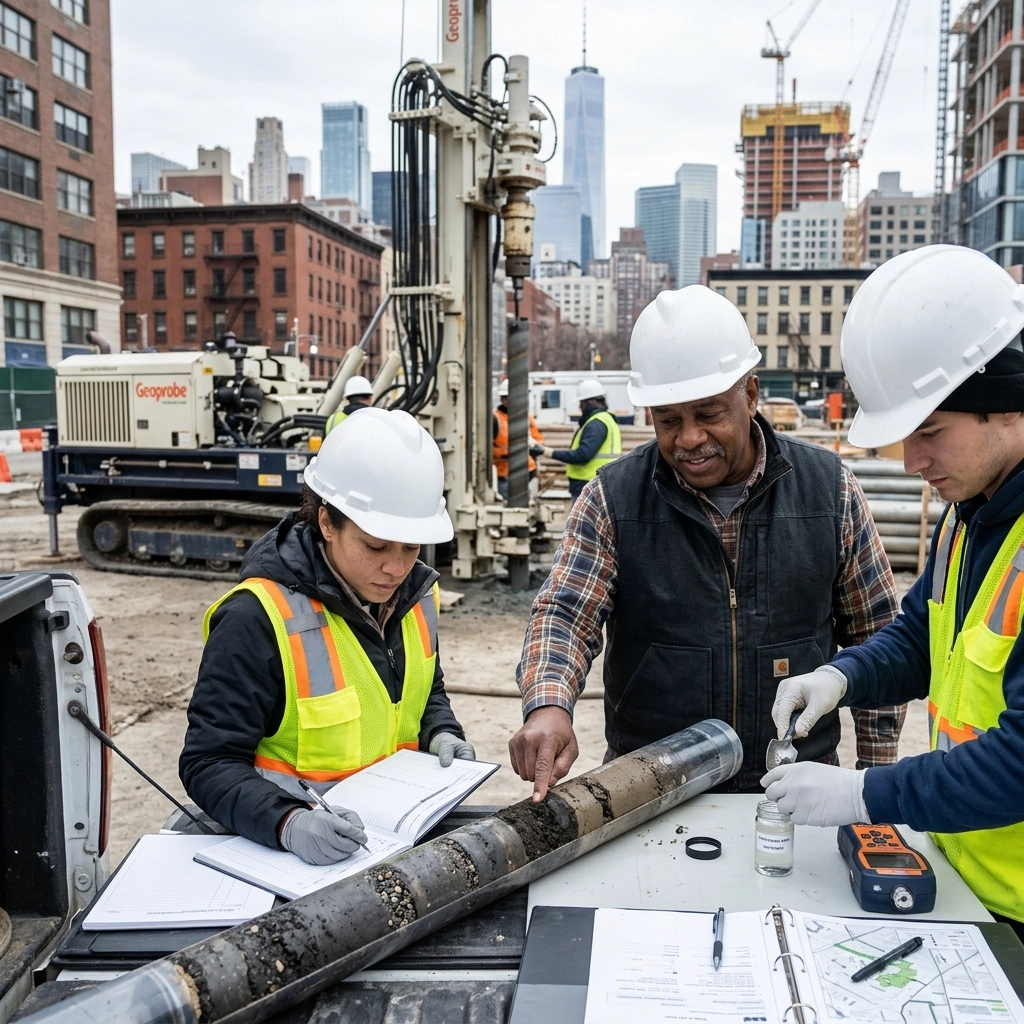
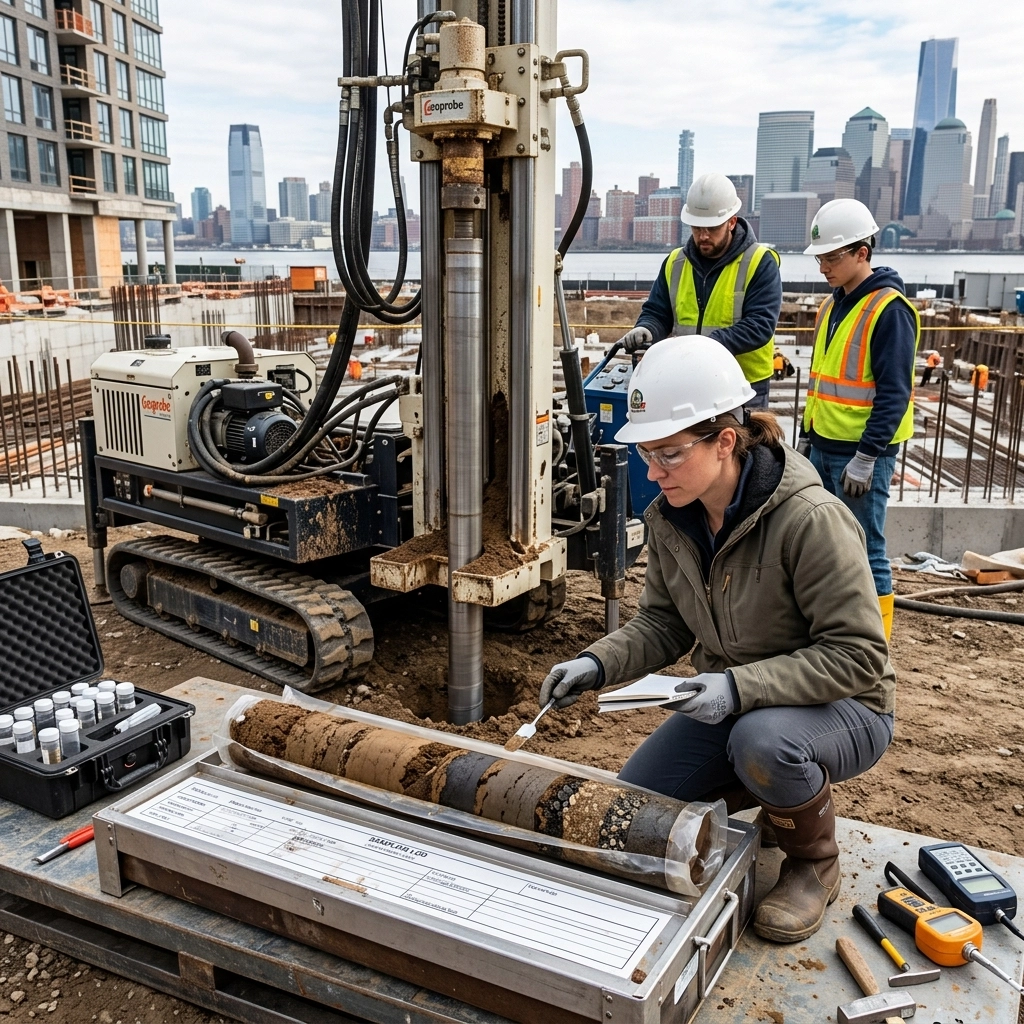
    Soil core samples and geological strata data for environmental site management on a NYC construction project.

    The Envicon Advantage: Why We’re Different

    When you hire a national "Big Box" environmental firm, you’re often paying for a massive overhead structure. You get a senior partner for the pitch, and then a junior staffer: who might be on their first job: actually managing your site oversight.

    At Envicon Group, we take a different approach:

    • Direct Leadership: You have access to senior experts who have spent 20 years in the dirt. We make decisions in the field, not three days later from a corporate office.
    • Precision over Volume: We don't sell 500-page reports designed to protect us (the "CYA" approach). We sell cleared paths. Our documentation is concise, accurate, and designed to move your project to the next milestone.
    • Local Fluency: We live and work in the NYC/NJ area. We understand the specific soil types of the Meadowlands, the bedrock of Manhattan, and the regulatory quirks of the OER and NYC Parks.

    Practical Steps for Your Next Project

    If you are preparing for excavation, keep these three action items in mind:

    1. Review Your Data Early: Don't wait until the excavators are mobilized to look at your soil boring results. A proactive waste characterization can save weeks of delays.
    2. Define Your Reuse Goals: Ask your consultant, "Is this soil eligible for beneficial reuse?" If they don't have a clear answer, they haven't looked at the regs closely enough.
    3. Coordinate the Trades: Your civil engineer, environmental consultant, and site contractor must be in sync. The grading and drainage plan needs to match the Soil Management Plan.
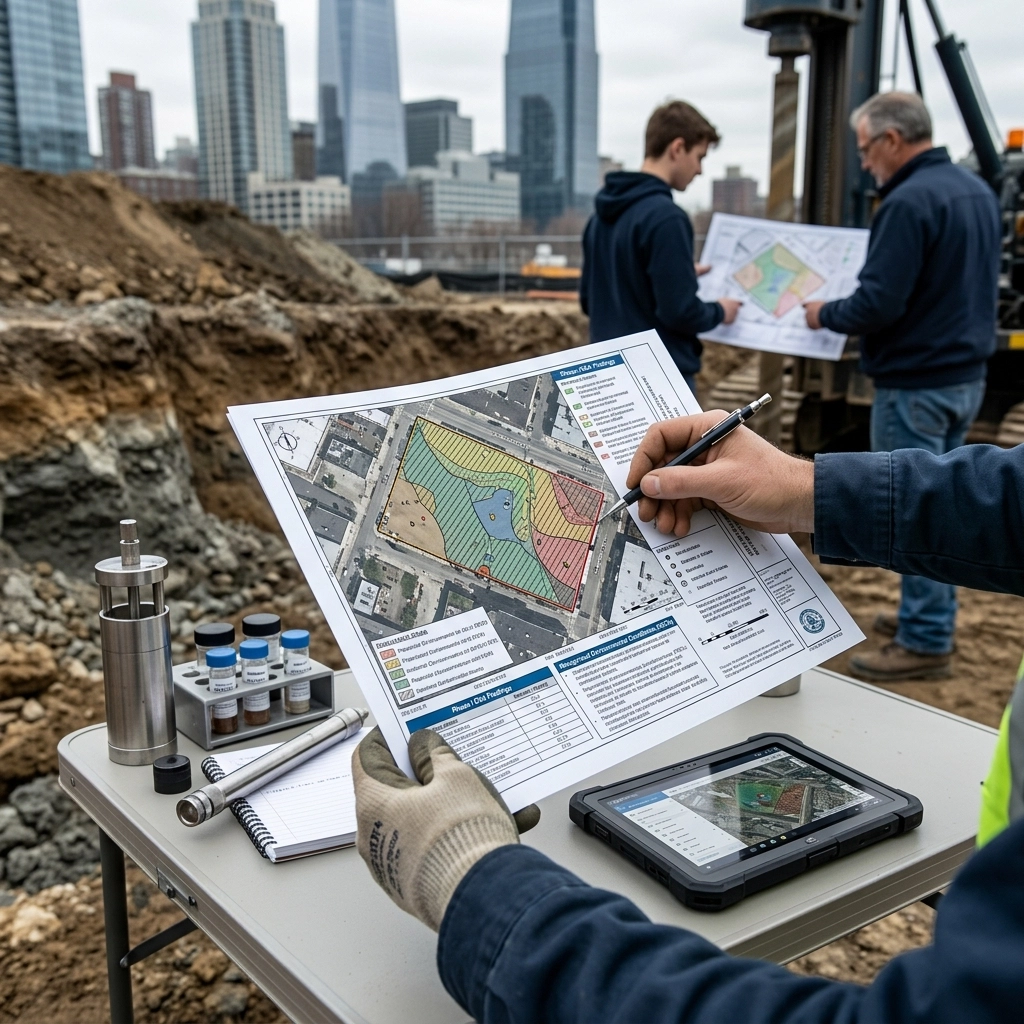
    Tablet Project Analytics Environmental Data Outdoor

    Summary: Turning Liabilities into Assets

    Managing soil and groundwater is about risk mitigation. A contaminated site is a liability until the moment it’s managed, treated, or disposed of correctly: then, it becomes a buildable asset.

    Envicon Group specializes in that transformation. We provide the technical precision of a high-end engineering firm with the urgency and "get it done" attitude of a site contractor. We aren't just here to tell you what's in the ground; we're here to help you get it out of the way so you can build.

    Ready to clear the path for your next project?
    Contact the Envicon Group team today to discuss your soil and groundwater management strategy. We don't just deliver reports: we deliver outcomes.

    Key Takeaways:

    • SMPs are essential: They prevent work stoppages and provide a clear roadmap for site personnel.
    • Groundwater requires permits: Don't overlook the complexity of dewatering and discharge.
    • Reuse saves money: Waste profiling and beneficial reuse strategies can significantly reduce disposal costs.
    • Local expertise matters: NYSDEC and NJDEP regulations require a nuanced, relationship-based approach.

    About Envicon Group:
    We are a New York and New Jersey-based professional services firm specializing in environmental consulting, civil engineering, and construction oversight. For 20 years, we have helped developers, architects, and industrial clients navigate the complexities of remediation and redevelopment.Envicon Strategic Solutions Logo

  • 100% Lender Approval: Why Your Environmental Report Needs to be Bank-Proof, Not Just ASTM-Compliant

    100% Lender Approval: Why Your Environmental Report Needs to be Bank-Proof, Not Just ASTM-Compliant

    You’re three weeks out from closing. Your equity is lined up, your site plans are drafted, and the excavator is on standby. Then, a memo from the lender’s environmental risk desk hits your inbox.

    The bank isn't satisfied with your Phase I Environmental Site Assessment (ESA).

    Your consultant told you it was "ASTM-compliant." They checked the boxes. They looked at the historical maps. They used the right font. But for the bank, "compliant" is the floor: and their risk officers are looking at the ceiling. Suddenly, your "compliant" report is a deal-killer, and you’re staring at a thirty-day delay and a five-figure re-sampling bill you didn't budget for.

    At Envicon Group, we’ve spent 20 years ensuring our clients never have that conversation. We maintain a 100% lender approval rate. That isn't a marketing stat; it’s the result of writing reports that are bank-proof, not just technically accurate. We don't just deliver a document; we deliver a cleared path to the closing table.

    The "ASTM-Compliant" Trap

    Most environmental consultants work for the report. They follow the ASTM E1527-21 standard like a recipe book. If the standard says "identify Recognized Environmental Conditions (RECs)," they list them and walk away.

    The problem? Banks don't lend money on a list of problems. They lend money on a list of solutions.

    When a "Big Box" national firm hands you a defensive, 400-page report filled with boilerplate liability disclaimers, they are protecting themselves, not you. If that report identifies a REC but fails to quantify the risk or provide a clear remediation path, the lender sees an open-ended liability. To a bank, "unknown contamination" equals "unlimited cost."

    An ASTM-compliant report tells the bank there might be a fire. A bank-proof report tells them where the extinguishers are, how much they cost, and that we’ve already talked to the fire marshal.

    esa-documentation-desk-forms-reports-compliance-review.webp

    What Makes a Report "Bank-Proof"?

    Lenders operate under strict FDIC and OCC guidelines. They aren't just looking at the dirt; they are looking at their collateral value. If a report is vague, the lender’s risk desk will default to the most conservative (and expensive) interpretation.

    A bank-proof report requires three things that standard ESA providers often skip:

    1. Reliance and Liability Language: Lenders need to know they can legally rely on the report. If your consultant’s "Standard Terms" cap their liability at the cost of the report ($2,500), no bank in New York or New Jersey is going to accept that for a $10M construction loan.
    2. Quantified Risk: If we find a REC, we don't just flag it. We use our engineering background to explain the actual impact. We provide site plans that show exactly where the issues are and: more importantly: where they aren't.
    3. A Path to Closure: We include specific engineering visuals, such as utility infrastructure maps or remediation barrier plans, that show the lender exactly how the site will be made buildable.

    Technical GIS site plan overlaying utility lines and remediation barriers for lender-approved environmental reports.
    Caption: A bank-proof report includes detailed engineering site plans that overlay utility infrastructure with proposed remediation barriers, giving lenders a visual roadmap to project completion.

    We Sit at the Table with the Regulators

    One reason Envicon has a 100% approval rate is that we don't guess what a regulator will say. We already know.

    Whether it’s the NYC OER (Office of Environmental Remediation), the NYSDEC, or the NJDEP, we sit at the table with the people who review your submittals. When we submit a Phase II investigation or a Remedial Action Plan (RAP), it’s built on twenty years of local relationships.

    Lenders trust us because they know that if Envicon says a site can be cleared, we have the regulatory fluency to make it happen. We don't hide behind a queue or a portal. We pick up the phone. For a developer in Hudson County or Brooklyn, that speed is the difference between hitting a construction window and paying carry costs through a North New York winter.

    Engineering vs. Observation: The Envicon Edge

    Most firms that perform Phase I ESAs are "observation-based." They hire junior staff to walk the site, take photos, and plug data into a template.

    Envicon is "engineering-led." We look at a site through the lens of civil and geotechnical reality. When we’re on-site at 7:00 AM, we aren't just looking for staining on the concrete; we’re looking at the grading, the drainage, and how the soil management plan will integrate with your foundation pour.

    licensed-professional-engineer-seal-drafting-symbols.webp

    If your environmental consultant doesn't understand how a SWPPP (Stormwater Pollution Prevention Plan) impacts your remediation timeline, you’re going to have a bad time at the bank. We integrate these services because they are inseparable in the real world. By providing a unified engineering and environmental front, we eliminate the gaps that lender risk officers love to exploit.

    Why Your "Big Box" Consultant is Costing You Money

    The national firms have a pitch: "We have offices in 50 states."

    That’s great if you’re buying a strip mall in Nebraska. It’s a liability if you’re redeveloping a brownfield in Long Island City or a former industrial site in Jersey City. Those firms treat regulatory coordination like a black box. You don't know who is talking to your reviewer, and you’re often paying for a "Principal" who hasn't stepped foot on a job site in a decade.

    The Envicon Difference:

    • Direct Access: You talk to the PE leading your project, not an account manager.
    • Zero Scope Creep: We don't low-ball the Phase I just to hit you with five change orders during the Phase II. We price for the outcome, not the activity.
    • Field-First Mentality: We use our own sampling equipment and technology. We don't wait for subcontractors to show up; we drive the schedule.

    Environmental soil core sample and field tablet showing stratigraphic data for precision site assessment.

    Caption: Precision in the field: Our teams use advanced soil sampling equipment and real-time data tracking to ensure that every bank-proof report is backed by defensible, high-resolution data.

    Selling Trust, Not Reports

    At the end of the day, a bank approves a loan because they trust the developer and the consultants standing behind them. They want to know that if things get complicated: and on NJ/NYC redevelopment sites, they always do: the team in place has the integrity and the technical chops to fix it.

    We don’t just sell reports. We sell cleared paths. We sell the peace of mind that comes from knowing your environmental due diligence is a bridge to your project, not a wall. When we put our seal on a document, we are telling the lender that this site is a viable, buildable, and compliant asset.

    The Takeaway

    An ASTM-compliant report is a commodity. A bank-proof report is a strategic asset. If you are tired of defensive writing, slow turnarounds, and "surprises" at the closing table, it’s time to change how you handle environmental risk.

    The Envicon Formula for 100% Approval:

    • Quantify the unknown: Don't just list RECs; provide the engineering solution.
    • Own the regulatory relationship: Know the reviewer by name, not just by agency.
    • Integrate the disciplines: Ensure your environmental findings align with your civil and site engineering reality.

    Stop letting "standard" reports stall your projects. Let's build a bank-proof strategy for your next acquisition.

    Contact Envicon Group Today to review your current portfolio or discuss an upcoming project. We don't just find the problems( we engineer the way out.)

  • PFAS Remediation Costs in NJ: What Developers Need to Budget for in 2026

    PFAS Remediation Costs in NJ: What Developers Need to Budget for in 2026

    If you are looking at a redevelopment site in New Jersey right now, you already know the stakes have changed. We aren't just talking about old heating oil tanks or a bit of historic fill anymore. We are in the era of "forever chemicals," and as of 2026, the regulatory and financial landscape for PFAS remediation has hit a tipping point.

    At Envicon, we spend a lot of time on-site at 7:00 AM talking to developers who are frustrated. They’ve seen the headlines about multi-billion dollar settlements, and they want to know one thing: How much is this going to cost my project?

    The short answer is that while the settlements are huge, they aren't a "get out of jail free" card for private developers. In fact, 2026 is the year where we’re seeing the most aggressive enforcement and the most complex budgeting requirements yet.

    Here is the no-fluff breakdown of what you need to budget for PFAS remediation in NJ this year, why the "big box" consulting firms are probably steering you toward a budget blowout, and how we handle things differently.

    The 2026 Landscape: Settlements vs. Reality

    You might have heard that the 3M settlement is pumping over $43 million into New Jersey this year alone for natural resource damages. There’s also the massive $2 billion DuPont, Chemours, and Corteva settlement finalized in late 2025.

    On paper, that looks like the state is picking up the tab. In reality, that money is largely earmarked for municipal water system upgrades and state-level abatement. If you are a private developer with a contaminated site, you are still on the hook for the investigation, the remediation, and the long-term monitoring.
    Based on what we are seeing in the field, individual property-level costs for PFAS-related issues are currently ranging anywhere from $30,000 to over $300,000, depending entirely on the scale of the groundwater impact.

    site-preparation-remediation-brownfield-excavator-industrial-warehouse.webp

    Why PFAS Costs Are Spiking in 2026

    Budgeting for PFAS isn’t like budgeting for a standard soil excavation. With traditional contaminants, you dig it up, haul it away, and you’re done. PFAS is a different beast for three reasons:

    1. The Detection Limits are Near Zero

    The NJDEP has some of the strictest standards in the country. We are measuring these chemicals in parts per trillion (ppt). To put that in perspective, that’s like finding one specific grain of sand in an Olympic-sized swimming pool. This means your Phase II Environmental Site Assessment needs to be surgical. If your consultant uses "big firm" sampling protocols that aren't hyper-precise, you risk cross-contamination, which leads to false positives and thousands of dollars in unnecessary work.

    2. Disposal and Media Management

    You can’t just dump PFAS-impacted soil or water anywhere. In 2026, the cost of disposing of "spent media" (the filters used to pull PFAS out of water) has risen significantly. If your site requires a pump-and-treat system, you aren't just paying for the electricity; you’re paying for the specialized disposal of the hazardous waste those filters collect.

    3. The "Uncertainty" Premium

    Lenders are spooked. If your environmental report doesn't have a clear, definitive path to closure, your financing is going to stall. Most consultants write reports to protect themselves (CYA). They use phrases like "further investigation may be required." At Envicon, we think that’s garbage. We provide value-add work, meaning we don't just hand you a problem; we hand you a cost-benefit analysis of the solution so you can actually close your loan.

    What to Put in Your 2026 Pro Forma

    If you’re running numbers on a NJ site today, here are the line items you need to account for:

    • Surgical Groundwater Sampling: Budget for high-frequency monitoring. Because PFAS moves quickly through groundwater, the NJDEP wants to see a clear "plume" map.
    • Reverse Osmosis or Granular Activated Carbon (GAC): If you are dealing with significant water issues, these systems are the gold standard. They are expensive to install but necessary for compliance.
    • LSRP Oversight: In New Jersey, your Licensed Site Remediation Professional (LSRP) is the gatekeeper. You need an LSRP who understands that your goal is a buildable site, not a decade-long research project.
    • Legal and Regulatory Coordination: PFAS litigation is a moving target. You need a team that coordinates directly with your attorneys and the NJDEP to ensure you are taking advantage of any settlement credits that might actually apply to your specific site.

    Industrial GAC filtration system for PFAS groundwater remediation at a New Jersey construction site.

    The "Big Firm" Overhead vs. Envicon Precision

    We see it all the time: a developer hires a national firm with 10,000 employees because the name looks good on a pitch deck. Three months later, that developer is staring at a 400-page report written by a junior staffer who has never actually set foot on the site. The report is full of fluff, costs a fortune in overhead, and, worst of all, doesn't give the developer a "yes" or "no" on whether to move forward.

    Envicon does things differently.

    We are a family-owned, PE-led firm. When you call us, you talk to the people doing the work. We don't sell reports; we sell cleared paths.

    • Speed: We know that every week your project is stalled, you’re eating carry costs. We operate with a contractor-adjacent sense of urgency.
    • Regional Fluency: We don't apply a "national playbook" to a Jersey City or Newark project. We know the NJDEP reviewers. We know the local soil conditions. We know how to get things through the system without the "black box" mystery of a large firm.
    • Integrity: If a site is a dog, we’ll tell you it’s a dog before you spend six figures investigating it. We believe in delivering the truth, even when it’s not what you want to hear, because that’s how you build trust.

    "Collaboration is not a buzzword: it’s how we work. We don't just deliver services; we help transform underused and contaminated properties into thriving assets." : Jason Pancoast, CEO

    Aerial site map with sampling and monitoring locations

    How to Manage the Risk

    If you are worried about PFAS costs, the worst thing you can do is wait. The regulations aren't getting looser.

    1. Start Due Diligence Early: Don't wait for the lender to ask for PFAS sampling. If the site had industrial use, assume it’s there and get ahead of it.
    2. Focus on Value-Add Engineering: Don't just sample; plan. If we find PFAS, can we use an institutional control (like a deed notice) or an engineering control (like a cap) to manage it without a $1M cleanup?
    3. Hire for the Finish Line: You don't need a consultant who can find a problem. You need a partner who can get you an NFA (No Further Action) or a RAO (Response Action Outcome).

    At Envicon, we sit at the table with the architects, attorneys, and regulators to make sure everyone is aligned. We take ownership of the outcome. Whether it's coordinating subcontractors or resolving a field challenge at sunrise, we are there to keep the project moving.

    The Bottom Line

    PFAS remediation in NJ is expensive, but it doesn't have to be a project-killer. The key is moving away from the "academic" approach of big-box firms and moving toward a field-first, engineering-heavy strategy.

    Don't let a 400-page report sit in your inbox while your carry costs pile up. You need a team that treats your budget like their own.

    Summary/Takeaway for Developers:

    • Settlements exist but won't cover everything: Private developers still bear the brunt of site-specific costs.
    • Budget $30k-$300k+: Depending on groundwater impact and the need for specialized filtration.
    • Precision matters: Low detection limits require expert sampling to avoid expensive false positives.
    • Choose a partner, not a vendor: Avoid big-firm overhead and choose a firm that provides a cleared path to a buildable site.

    Ready to clear the path for your next project? Let’s get to work.

    Contact Envicon today to discuss your site’s environmental strategy and get a no-nonsense look at your 2026 budget requirements.Envicon Strategic Solutions Logo

  • From OER to Closing: How Envicon Navigates the Full Cleanup Lifecycle

    From OER to Closing: How Envicon Navigates the Full Cleanup Lifecycle

    You found the perfect lot. Maybe it’s a corner in Long Island City or a former industrial strip in North Brooklyn. The location is prime, the zoning works, and your vision is set. But then you look at the tax map and see it: the "E-Designation." Or perhaps you’re looking to enter the New York City Voluntary Cleanup Program (VCP) to access grants and liability relief.

    Suddenly, your straightforward development project just became a complex environmental puzzle.

    Navigating the NYC Office of Environmental Remediation (OER) process isn't just about soil samples and lab results. It’s about managing a rigorous regulatory lifecycle that, if handled poorly, can stall your financing, delay your permits, and eat your margins. At Envicon Group, we don't just hand you a report and wish you luck. We take ownership of the entire process, from the first boring to the final Notice of Satisfaction (NOS).

    Here is how we navigate the full cleanup lifecycle to get your project across the finish line.

    The Investigative Foundation: Beyond the Phase I

    Every brownfield cleanup starts with investigation. In the NYC OER world, this means moving from a Phase I Environmental Site Assessment (ESA) into a Remedial Investigation (RI).

    Many big-box firms treat the RI as a checkbox. They send a junior staffer out to poke a few holes, collect some dirt, and write a bloated report that protects the firm more than the client. We do things differently. We approach the investigation with the "end game" in mind. We aren't just looking for what’s in the soil; we’re looking for how what’s in the soil will impact your foundation design, your disposal costs, and your timeline.
    Aerial Site Map - Waterfront Industrial Property

    Our team develops a Remedial Investigation Report (RIR) that OER actually wants to read. We identify the exact nature and extent of contamination early, so there are no surprises when the excavators show up. By establishing a clear baseline, we set the stage for a realistic budget and a predictable schedule.

    Designing the Solution: The Remedial Action Plan (RAP)

    Once the investigation is approved, we move into the design phase. This is where the Remedial Action Plan (RAP) comes into play. The RAP is your roadmap. It outlines how we will handle soil management, vapor barriers, and any necessary groundwater treatment.

    This is a critical juncture for closing real estate deals. Your lenders and partners need to know that the environmental risks are quantified and controlled. A poorly designed RAP can lead to "scope creep" during construction: the silent killer of development budgets.

    "We don’t sell reports. We sell cleared paths. Integrity in this business means delivering the truth about a site’s condition immediately, so you can make informed decisions before the first shovel hits the dirt." : Jason Pancoast, CEO of Envicon Group.

    We work directly with your architects and structural engineers to ensure the remedial design integrates seamlessly with your building’s footprint. We don’t just throw a generic vapor barrier spec at the problem; we select systems that satisfy OER while respecting your construction's physical and financial constraints.

    Permit Approval Stamp

    The Boots on the Ground: Remediation Oversight

    When construction begins, the environmental work moves from the office to the field. This is where most consultants fall short. They might show up once a week to "check-in." At Envicon, we believe in active remediation oversight.

    Remediation oversight at a NYC brownfield site using soil logs and real-time GIS data for environmental compliance.

    During the excavation phase, we manage the soil. In New York City, "dirt" is a major line item. Properly characterizing soil for disposal at the right facilities can save a developer hundreds of thousands of dollars. We oversee the loading, manifest the trucks, and ensure every yard of soil is tracked according to OER standards.

    We also manage the Community Air Monitoring Plan (CAMP). Keeping your neighbors happy and the regulators satisfied requires constant vigilance. Our field teams use real-time data to ensure that dust and vapors are controlled, preventing the dreaded "Stop Work Order" that can haunt a high-profile NYC job site.

    Active Brownfield Remediation Site

    Real-Time Data and Regulatory Coordination

    The mid-point of a project is often where the paperwork pile-up begins. While the building is going up, the documentation for the cleanup must be meticulously maintained. This isn't just about filing papers; it's about constant communication with the OER project manager.

    We use modern project analytics to track our progress. Whether it’s confirming the installation of a vapor barrier or documenting the depth of a clean soil cap, we capture the data in real-time. This proactive approach means that when construction wraps up, we aren't "reconstructing" the story of the cleanup: we already have it ready.

    Tablet Displaying Environmental Data

    This level of coordination is what separates an expert advisor from a mere vendor. We know the OER reviewers by name. We understand their concerns and anticipate their questions. By maintaining a transparent, professional relationship with the regulators, we move your project through the queue faster than the national firms that treat NYC as just another satellite office.

    The Final Milestone: Reaching the Notice of Satisfaction (NOS)

    The ultimate goal of any OER project is the Notice of Satisfaction (NOS). This is the gold seal. It signifies that the site has been successfully remediated in accordance with the RAP and that the "E-Designation" or VCP requirements have been met.

    Without an NOS, you may face hurdles in obtaining your final Certificate of Occupancy (CO) or closing on your permanent financing. The transition from the Remedial Closure Report (RCR) to the NOS is where many projects stall. Big-box firms often lose interest once the heavy lifting is done, leaving the developer to nag them for the final paperwork.

    At Envicon, we push the RCR through the finish line with urgency. We understand that for you, "finished" doesn't mean when the soil is gone: it means when the deal is closed and the building is full. We stay on the job until the NOS is in your hand.

    Modern Urban Skyline at Dusk

    Why Envicon? The Insider Advantage

    You have choices when it comes to environmental consultants. You could hire a national firm with 10,000 employees. You’ll get a nice pitch from a senior partner, and then you’ll likely never see them again. Your project will be handed off to a junior associate who is learning the NYC OER manual on your dime.

    At Envicon Group, we offer a different experience:

    • PE-Led, Field-First: Our leadership stays involved in the field. We are on-site, talking to your contractors at 7:00 AM, not just sitting in a boardroom.
    • Zero-Fluff, All Action: We don't write reports for the sake of writing reports. We provide actionable outcomes that move the project forward.
    • Regional Fluency: We’ve spent 20 years building relationships with OER, NYSDEC, and NJDEP. We know the local rules because we help navigate them every single day.
    • Ownership of Outcomes: If there’s a field challenge, we own it. We coordinate with the architects, the attorneys, and the regulators to find a solution that works for the project, not just the consultant’s liability insurance.

    Summary: A Cleared Path to Success

    Navigating a brownfield cleanup in NYC is a marathon, not a sprint. Success requires a partner who understands every step of the lifecycle: from the initial RIR to the final NOS.

    By choosing a firm that prioritizes precision, urgency, and integrity, you remove the environmental obstacles between you and a buildable site. We help you transform underused, contaminated properties into thriving, compliant assets.

    Ready to clear the path for your next project?
    Whether you're dealing with an E-Designation or looking to enter the Voluntary Cleanup Program, let’s talk. At Envicon, we don't just identify problems: we deliver the truth and the solutions to overcome them.

    Contact us today to discuss your site and how we can get you to closing.


    Key Takeaways for Developers:

    • Investigation matters: A thorough RIR prevents expensive surprises during excavation.
    • Design for construction: Ensure your RAP is integrated with your building's structural and architectural plans.
    • Oversight is essential: Active soil management and air monitoring keep your project compliant and on schedule.
    • Documentation is the deal-closer: The RCR is the final hurdle to getting your NOS and your Certificate of Occupancy.
    • Choose a local expert: Relationship-driven firms with regional fluency navigate NYC OER more effectively than national conglomerates.

    Envicon Group Logo

  • The Phase I ESA Scope Creep: How Big Firms Inflate Your Bill Without Adding Value

    The Phase I ESA Scope Creep: How Big Firms Inflate Your Bill Without Adding Value

    You’ve seen the proposal. It looks clean, the price is "competitive," and the firm has a logo you recognize from every office park in America. You sign the contract for a Phase I Environmental Site Assessment (ESA), thinking you’ve checked the box for your lender and your due diligence period is safe.

    Then, the "scope creep" starts.

    First, it’s a delay because the junior staffer assigned to your site couldn't find the historical Sanborn maps. Then, it’s a "preliminary finding" of a potential Recognized Environmental Condition (REC) that: conveniently: requires a $15,000 Phase II investigation before the Phase I report is even drafted. Suddenly, that low-bid Phase I is the most expensive document in your closing file, not because of the data, but because of the fluff.

    At Envicon Group, we see this every day in the New York and New Jersey markets. We call it "Big Box Pain." It’s the result of national firms treating environmental due diligence like a commodity while billing it like a luxury.

    The "110-Hour Gap": Where Your Money Goes

    Industry data shows a massive discrepancy in how Phase I ESAs are billed versus how much work they actually require. A standard, high-quality Phase I ESA: following the ASTM E1527-21 standard: should take approximately 15 to 20 billable hours of professional time. This includes the records review, the site visit, the interviews, and the report writing.

    Yet, many national firms show a "utilization gap" where projects are scoped or billed at nearly double that. Why? Because you aren't paying for the expert's time; you're paying for the firm's overhead, the regional VP’s bonus, and the administrative bloat of a company with 10,000 employees.

    Worse, that extra time isn't spent digging deeper into your site’s history. It’s spent on "defensive writing." Big firms write reports to protect themselves from liability, not to help you close a deal. They use vague language to leave the door open for Phase II upselling, effectively holding your project hostage until you agree to more sampling.

    Junior Staff vs. Licensed Pros

    When you hire a big-box firm, the person who "pitches" you is rarely the person who "performs" for you. You get the Senior Partner at the 11:00 AM Zoom call, but at 7:00 AM on Monday morning, it’s a junior staffer with six months of experience standing on your site.

    If that staffer doesn't know how to identify a decommissioned heating oil fill pipe or doesn't understand the nuance of New Jersey’s Linear Construction Program, they’re going to flag everything as a risk. They check boxes. They don't solve problems.

    Envicon takes the opposite approach. We are PE-led and field-first. When we walk a site in Jersey City or Brooklyn, we’re looking for a path to "No Further Action" or a "Response Action Outcome (RAO)," not a reason to bill you for more soil borings. We know the regulators at the NJ DEP and the NYC OER by name. We know what they’re looking for, which means we don’t have to guess: and you don’t have to pay for our learning curve.

    GeoProbe drill rig soil core sample in a clear liner showing soil strata for environmental site assessment.
    Caption: Technical visual: A GeoProbe drill rig extracting a 5-foot soil core sample in a clear plastic liner. Professional-grade site characterization requires seeing the stratigraphy firsthand, not just reading old reports.

    The Scope Creep Playbook: Three Red Flags

    If you’re seeing these three things, you’re being played by the big-box playbook:

    1. The "Premature" Phase II Recommendation: If a firm suggests a Phase II before they’ve even finished the historical records review, they’re looking at your project as a revenue stream, not a site to be cleared.
    2. The 180-Day Refresh Game: Under CERCLA, a Phase I has a 180-day shelf life. Big firms often drag their feet on the final report, forcing you into a "refresh" fee just as you're hitting the closing table.
    3. Vague Proposals: If the scope doesn't explicitly state who is doing the site visit and what specific local databases are being searched, expect change orders.

    The Envicon Answer: Precision and 72-Hour Turnarounds

    Time is the one thing a developer can’t buy back. Every week your Phase I sits in a corporate queue is a week of carry costs, lender impatience, and market volatility.

    We’ve optimized our workflow to provide a 72-hour turnaround on initial site summaries when needed. We don't wait three weeks to tell you there’s a problem. We tell you the day of the site visit, and we provide a solution in the same breath.

    Tablet displaying project analytics and environmental data dashboards outdoors on active soil

    We use integrated technology: like the field tablets shown above: to sync site data directly to our engineers. This isn't just about being "high-tech"; it’s about removing the lag between the field and the final report. While a big firm is still waiting for their junior staffer to upload photos to a central server in another state, our PEs are already reviewing the findings and drafting the executive summary.

    Real Value vs. Defensive Reporting

    A report that says "There might be a problem, we recommend $20,000 in testing" is a defensive report. It adds zero value to your project.

    An Envicon report says: "We identified a former UST location; however, based on the 1994 closure letter we recovered from the municipal archives and our visual inspection of the slab, it does not constitute a REC under ASTM E1527-21. No further action is required for financing."

    That is the difference between a consultant who is a partner and a consultant who is a vendor. One clears the path; the other builds a fence.

    Active brownfield redevelopment site with heavy equipment and soil staging areas

    Why Attorneys and Developers Are Switching

    The legal and development communities in NY and NJ are tired of the "Big Box" runaround. They need certainty. They need to know that when they hand a report to a lender, it won't be kicked back for "lack of regional specificity."

    Envicon brings 20 years of direct agency relationships. We don’t just work in these jurisdictions; we live in them. Whether it’s navigating the NYC Voluntary Cleanup Program (VCP) or handling complex soil management in the Meadowlands, we provide the technical confidence that only comes from thousands of hours on-site.

    Summary: Stop Paying for Overhead

    If you are tired of paying for reports that create more problems than they solve, it’s time to change your approach.

    • Demand Senior-Level Site Visits: Ensure a licensed pro: not an intern: is the one actually looking at your dirt.
    • Insist on Fixed-Price Scopes: No "administrative" surcharges or vague "consultation" fees.
    • Look for Local Fluency: Ensure your consultant knows the specific requirements of the NJ DEP or NYC OER.
    • Prioritize Speed: In this market, a 30-day Phase I is a dead project.

    At Envicon Group, we don’t sell reports. We sell cleared paths. We remove the obstacles between you and a buildable site, and we do it with the urgency your project deserves.

    Ready to see the difference a field-first firm makes?

    Envicon engineer reviewing a site map at a Northern New Jersey urban redevelopment site during a field inspection.
    Caption: An Envicon Professional Engineer in a high-vis vest reviewing a detailed site map on a clipboard at 7:00 AM. We start our day when your project starts, not when the office opens.

    The Bottom Line

    Don't let "scope creep" eat your project's margin. Switch to a firm that values your timeline as much as you do. Contact Envicon Group today for a Phase I ESA that actually moves the needle.

    Envicon Group Logo - High Res

  • The Hidden Cost of ‘Cheap’ Phase I Reports: Why NJ Developers Lose Millions

    The Hidden Cost of ‘Cheap’ Phase I Reports: Why NJ Developers Lose Millions

    In the high-stakes world of New Jersey and New York real estate, speed and margins are everything. When you’re looking at a potential acquisition in Jersey City or an infill project in Newark, the "Environmental Due Diligence" line item on your pro forma can feel like a nuisance: a box to be checked so the bank stays happy.

    It’s tempting to go with the lowest bidder. You get a quote for $1,800 and another for $4,500. It’s just a Phase I Environmental Site Assessment (ESA), right? They all look the same. They all follow the same rules. Why not save the $2,700 and put it toward the architectural renderings?

    Because that "cheap" report is often the most expensive mistake a developer can make.

    In our world at Envicon Strategic Solutions, we’ve seen the fallout. We’ve seen $20 million deals stall at the closing table because a cut-rate consultant missed a historical gas station on a 1920s map. We’ve seen lenders reject reports three days before a deadline because the "Environmental Professional" didn’t meet the latest ASTM E1527-21 standards.

    Saving a few thousand dollars on the front end can easily cost you millions in delays, lost financing, and unforeseen remediation. Here is why the "bargain" Phase I is actually a liability in disguise.

    The Lender Rejection: A Fast Track to Financing Limbo

    The primary purpose of a Phase I ESA for most investors is to satisfy a lender. But here’s the reality: banks are getting smarter, and their risk departments are getting tighter.

    Many low-cost firms survive on volume. They use "report mills": junior staff or overseas data-entry teams: who copy and paste from old templates. They might miss the fact that the EPA or NJDEP updated their requirements, or they might fail to include the mandatory "User Questionnaire."

    If your report doesn't strictly adhere to the ASTM E1527-21 standards, it’s essentially a paperweight. According to industry research, inadequate documentation or missing data can invalidate a report for lenders, forcing you to pay for a second assessment entirely.

    Imagine being 45 days into your 60-day due diligence period. Your lender’s environmental reviewer flags the report as "deficient." Now, you have to hire a firm like ours to redo the work, but because you're in a panic, you’re paying rush fees. The "cheap" report just doubled in price: and that’s the best-case scenario.

    Modern Urban Skyline at Dusk

    The Phase II Avalanche: When "Clean" Becomes a Money Pit

    The job of a Phase I is to identify Recognized Environmental Conditions (RECs). A good consultant uses a mix of data, history, and a "sixth sense" developed from years of walking NJ construction sites.

    A cheap consultant has one goal: get off the site as fast as possible.

    When a consultant is under-qualified or rushing, they often do one of two things:

    1. They miss a REC. They miss the evidence of an old underground storage tank (UST) or a historical dry cleaner. You buy the property thinking it's "clean." Six months later, during excavation for your foundation, you hit a plume of PERC or a leaking tank. Now, you’re looking at hundreds of thousands in remediation costs that weren't in your budget.
    2. They call everything a REC. To cover their own liability because they didn't do the deep research, they'll flag non-issues as major risks. This triggers a Phase II Investigation involving soil and groundwater sampling.

    Research shows that while a Phase I might cost a few thousand, a Phase II can range from $5,000 to well over $100,000. We’ve seen cases where a $1,000 "budget" Phase I failed to properly vet a site, leading to $20,000 in unnecessary sampling just to prove the site was actually fine. That’s a $21,000 bill for a "bargain."

    The Local Intelligence Gap: Why NY/NJ Knowledge is Your Shield

    You can’t evaluate a site in Hudson County from an office in another state. New Jersey is home to some of the most complex environmental regulations in the country. From the Site Remediation Reform Act (SRRA) to the nuances of the Licensed Site Remediation Professional (LSRP) program, you need a partner who speaks the local language.

    At Envicon, we don't just read the records; we understand the history of the neighborhood. We know which industrial zones in Brooklyn or Queens have specific "E-Designations" that require OER oversight. A national firm selling cheap reports won't have that "boots on the ground" intuition.

    NJ environmental engineers inspecting soil at an urban brownfield redevelopment site in Jersey City.

    When we walk a site, we aren't just looking for oil stains. We’re looking at the topography, the surrounding land use, and the regulatory "vibe" of the municipality. That authority: that deep-seated local knowledge: is what de-risks your acquisition.

    "Engineering is about math, but development is about trust. You need to know that the person signing your report cares as much about your ROI as you do." : Jason Pancoast, CEO, Envicon Strategic Solutions

    Efficiency vs. Cutting Corners: The Envicon Advantage

    We get it. You need to move fast. But there is a massive difference between efficiency and cutting corners.

    Our approach at Envicon Strategic Solutions is built on being your Visionary Partner, not just a vendor. We use high-end technology to streamline our data collection, which allows us to provide fast turnarounds without sacrificing the integrity of the report.

    When you work with us, you’re getting:

    • Lender-Ready Accuracy: We know what the big banks and local credit unions need to see. Our reports move through review boards like a hot knife through butter.
    • Strategic Vision: If we find a REC, we don't just drop a problem in your lap. We provide a roadmap for how to handle it, what it might cost, and how it impacts your development timeline.
    • A Safety Net for Your Legacy: We believe in building communities. A project built on a "cheap" foundation (literally or figuratively) is a project at risk. We protect your name by ensuring your site is truly compliant.

    Active Urban Construction Site

    The Bottom Line: Buy Authority, Not Just a Report

    If you’re a developer in the NJ/NY corridor, you aren't just buying a PDF. You are buying the ability to sleep at night. You are buying the confidence to tell your investors that the dirt beneath their feet is a solid investment.

    A "cheap" Phase I is a gamble where the house always wins. The few thousand you save today could be the reason you’re dealing with a lawsuit or a stalled project five years from now.

    At Envicon, we don't compete on being the "cheapest." We compete on being the most authoritative, responsive, and visionary firm in the market. We’re the firm you call when you want the job done right the first time so you can get back to the business of building the future.

    Key Takeaways for Your Next Acquisition:

    • Check the Credentials: Is the person signing the report a qualified Environmental Professional (EP) with local NJ/NY experience?
    • Verify the Standard: Ensure the report strictly follows ASTM E1527-21 to avoid lender rejection.
    • Look Beyond the Price: If the quote is significantly lower than the market average, ask what they are not doing (e.g., historical city directory searches or local agency file reviews).
    • Think Long-Term: The cost of an undetected environmental issue always outweighs the cost of a high-quality Phase I ESA.

    Ready to de-risk your next project with a team that knows the soil of NJ and NY inside and out? Contact us today and let’s build something that lasts.


    Envicon Strategic Solutions provides expert environmental consulting, geotechnical engineering, and strategic due diligence for developers and investors across New Jersey and New York.

  • Phase II Environmental Site Assessments: Beyond the ASTM Checklist

    Phase II Environmental Site Assessments: Beyond the ASTM Checklist

    You just received your Phase I Environmental Site Assessment (ESA). You were hoping for a "clean" report, but instead, the consultant identified a Recognized Environmental Condition (REC). Maybe it’s an old underground storage tank (UST) from the 1970s, or perhaps the historic fill across your Hudson County site isn't as "clean" as the seller claimed.

    Now, your lender is pushing for a Phase II.

    In the world of New Jersey and New York real estate, a Phase II environmental site assessment NJ isn't just a hurdle: it’s the fork in the road that determines whether your project is a viable asset or a massive liability. Most big-box firms treat the Phase II as a checklist exercise defined by ASTM E1903-19. They follow the standard, collect a few samples, and hand you a report that says, "We found something; you need more testing."

    At Envicon, we don't believe in the "more testing" loop. We believe in clearing paths. Going beyond the ASTM checklist means moving from "what is there" to "how do we fix it and what will it cost?"

    The "Checklist" Trap vs. Real Site Characterization

    The ASTM standard provides a framework, but it doesn't provide a strategy. If your consultant is simply checking boxes, they aren't looking at your project through the lens of a developer or a contractor. They are looking at it through the lens of a lab technician.

    A standard Phase II often focuses on the presence or absence of contamination. But for a developer in NJ, knowing that contamination is "present" is only 10% of the battle. You need to know the vertical and horizontal extent, the impact on your foundation design, and the remediation costs that will hit your pro forma.

    Soil Borings: More Than Just Holes in the Ground

    Soil sampling is the backbone of any Phase II environmental site assessment NJ. However, the way those borings are executed matters.

    Large national firms often sub out the drilling to the lowest bidder and send a junior staffer: someone with six months of experience: to log the soil. They follow a pre-set grid, collect the samples, and leave.

    Envicon takes a different approach. We utilize direct oversight by experienced professionals who understand the geology of the Newark Basin or the complex fill layers of Long Island City. We don't just drill; we interpret in real-time. If we see evidence of a smear zone or a perched water table that wasn't in the original scope, we adjust. We hit the right depths the first time so you don't have to re-mobilize a drill rig two weeks later because a junior tech missed a crucial layer.

    Soil boring and sampling for a Phase II environmental site assessment in NJ showing soil strata.

    Groundwater Sampling: Understanding the Flow

    In New Jersey, groundwater is almost always a factor. Whether you are dealing with the NJDEP Technical Requirements (N.J.A.C. 7:26E) or navigating a voluntary cleanup, groundwater sampling is where many projects get bogged down in "the black box."

    Traditional firms might install a few monitoring wells, take a single round of samples, and report a "hit." Envicon looks at the bigger picture. Is the contamination coming from an on-site source, or is it a regional issue? Is it a "slug" of contamination moving through a high-permeability sand layer, or is it trapped in tight silt?

    Understanding the hydrogeology is the difference between a simple Monitored Natural Attenuation (MNA) approach and an expensive, multi-year pump-and-treat system. We provide the technical depth to argue your case with regulators, ensuring you aren't paying to clean up someone else’s mess.

    Vapor Analysis: The Modern Deal Killer

    If you’re developing in an urban area like Jersey City, Hoboken, or Brooklyn, vapor intrusion is likely your biggest environmental risk. Volatile Organic Compounds (VOCs) from historic dry cleaners or industrial shops can migrate through soil gas and into your future building.

    The ASTM checklist covers vapor, but NJDEP and NYSDEC have specific, rigorous requirements for vapor pins and sub-slab sampling.

    We see it all the time: a big firm does a "screen" and tells the client they need a vapor barrier. But what kind of barrier? Is it a 20-mil plastic sheet, or does the site require a fluid-applied membrane with an active sub-slab depressurization system (SSDS)? The cost difference can be hundreds of thousands of dollars. Envicon performs the high-level vapor analysis necessary to design the right solution, not just the most expensive one.

    Field engineer at brownfield site

    The Big Firm "Black Box" vs. Envicon Precision

    When you hire a firm with 10,000 employees, your project becomes a line item. The person you spoke to during the proposal stage: the one who sounded like an expert: isn't the one on your site at 7:00 AM overseeing the geoprobe.

    This is the "Black Box" of environmental consulting. You put money in, you wait six weeks, and a 200-page report comes out that is 90% "boilerplate" and 10% actionable data.

    Envicon Group is built differently. We are family-owned and operated, PE-led, and field-first. When we conduct a Phase II, our leadership is involved in the field strategy. We don't produce bloated reports designed to protect our liability; we produce clean, defensible documentation designed to move your project to the next phase.

    Why Regional Fluency Wins Every Time

    Environmental regulations in the NY/NJ metro area are a minefield. Between the NJDEP LSRP program and the NYC Office of Environmental Remediation (OER) "E-Designation" program, there is no room for a "national" playbook.

    Regional fluency means knowing how a specific reviewer at the NJDEP thinks. It means knowing which soil disposal facilities are currently accepting historic fill and which ones are backed up for months. Envicon brings 20 years of direct agency relationships to the table. We don't just follow the rules; we know how to navigate them to find the most efficient path to a Response Action Outcome (RAO) or a Notice of Satisfaction.

    Turning Data into Action

    A Phase II environmental site assessment NJ should provide more than just data points. It should provide a roadmap.

    Our "Beyond the Checklist" approach includes:

    • Conceptual Site Models (CSM): We visualize how contaminants move through your specific site, which allows for more targeted (and cheaper) remediation.
    • Remediation Cost Estimating: We provide "contractor-style" estimates. We know what it costs to dig, haul, and dispose of soil because we are on those sites every day.
    • Strategic Integration: We coordinate with your architects and civil engineers to ensure that the environmental cleanup works with your foundation and utility plan, not against it.

    Aerial view with monitoring locations

    The Envicon Difference: Sell Trust, Not Reports

    Most consultants sell you a service. They sell you a "Phase II." We sell you a cleared path.

    We understand the pressure of a closing date. We know the weight of a lender's requirements. Our mission is to resolve your environmental challenges with precision and urgency so you can unlock the full potential of your property. Whether it's Phase I & II ESAs or complex remedial design, we take ownership of the outcome.

    "Integrity is not just ethical behavior: it is about delivering the truth and never cutting corners. We don't just deliver services; we help transform contaminated properties into thriving assets." : Jason Pancoast, CEO

    Summary: What You Need to Know

    If your Phase I identified RECs, don't just order a "standard" Phase II. Demand a site investigation that actually moves your project forward.

    1. Don't settle for junior staff. Ensure your consultant provides direct oversight of all soil borings and sampling.
    2. Look beyond the "Hit." Finding contamination is easy. Defining the extent and the cost to fix it is where the value is.
    3. Address vapor early. In NJ and NYC, vapor is often the longest lead time and most sensitive regulatory issue.
    4. Demand regional expertise. National firms use cookie-cutter templates; your NJ site needs an NJ-specific strategy.

    Your project is too valuable to be stuck in a consultant's queue. You need a partner who understands that every week of delay is a week of carry costs.

    Ready to clear the path for your next development?
    Contact Envicon Group today to discuss your site and get a "no-fluff" assessment of your environmental needs. Let's get to work.Envicon Strategic Solutions Logo

  • Struggling with NYC E-Designation Approvals? 10 Things NYCOER Won’t Tell You (But We Will)

    Struggling with NYC E-Designation Approvals? 10 Things NYCOER Won’t Tell You (But We Will)

    You're closing on a development site in Brooklyn. The purchase agreement is signed. Your financing is locked. Then you discover the property has an E-Designation, and suddenly you're navigating the NYC Office of Environmental Remediation like it's your first day of calculus.

    Here's the thing: NYCOER doesn't run a customer service hotline. Their guidance documents are technical, procedural, and assume you already know what you're doing. That's where developers get stuck, not because E-Designations are impossible, but because no one tells you the practical realities until you're already bleeding time and money.

    We've guided dozens of developers through E-Designation approvals in Manhattan, Brooklyn, Queens, and the Bronx. We know what NYCOER expects, what they'll reject, and how to avoid the delays that sink project timelines. Here are 10 things they won't tell you upfront.

    Developer reviewing NYC zoning maps at Brooklyn construction site for E-Designation approval

    1. The Department of Buildings Might Issue Your Permit Before They Realize You Have an E-Designation

    This sounds impossible, but it happens more often than you'd think. DOB and OER don't always communicate in real-time. You could receive a building permit, start mobilizing contractors, and then get stopped cold when applying for your Certificate of Occupancy because no one flagged the E-Designation earlier in the process.

    What to do: Run a ZOLA search yourself before your first DOB filing. Don't rely on agency coordination to catch it. If you spot an E-Designation, engage OER immediately, even before your architect submits plans.

    2. There Are Three Different Approvals, and You Need to Know Which One You're Asking For

    NYCOER issues three distinct approvals:

    • Notice of No Objection (NNO): Confirms your remedial plan is acceptable
    • Notice to Proceed (NTP): Allows you to start construction after submitting required documentation
    • Notice of Satisfaction (NOS): Final approval confirming all E-Designation requirements are met

    Big box firms often submit for the wrong approval at the wrong phase, triggering rejections and delays. Each approval unlocks a specific gate in your project. DOB won't issue permits or a Certificate of Occupancy without the correct one.

    Insider tip: Pre-submission meetings with OER clarify which approval you need and when. We walk clients through this roadmap before anyone drafts a single report.

    3. You're Dealing With Three Separate Compliance Tracks, Not Just One

    NYC OER E-Designation requirements cover three categories:

    • Hazardous materials (contaminated soil, groundwater, vapor intrusion)
    • Air quality (emissions from mechanical systems, traffic impacts)
    • Noise (construction and operational noise mitigation)

    Each category has its own investigation protocol, remediation standard, and approval pathway. A site with all three designations requires coordinated submissions across multiple disciplines, environmental, mechanical engineering, and acoustics.

    Urban Redevelopment at Dusk

    What most consultants miss: Treating these as isolated compliance boxes instead of integrated project risks. If your hazmat remediation delays soil removal, it cascades into foundation work, mechanical rough-ins, and noise mitigation timelines. We sequence these approvals so nothing stalls your critical path.

    4. OER's "30-Day Review" Doesn't Mean You'll Be Approved in 30 Days

    Yes, OER commits to providing comments within 30 days of submission. But "comments" aren't approval. They're often a list of deficiencies, requests for additional data, or clarifications on your remedial approach.

    Budget at least two months from initial submission to final approval: and that assumes your consultant got it right the first time. If OER requests a revised Phase II ESA, additional soil borings, or updated site management plans, add another 30–45 days per revision cycle.

    Reality check: We've seen projects stall for six months because the initial consultant didn't understand OER's current interpretation of vapor intrusion guidance. Speed comes from getting it right upfront, not rushing a half-baked submission.

    5. Pre-Submission Meetings Are "Encouraged," But They Should Be Mandatory

    OER offers pre-submission consultations to discuss site conditions, remedial strategies, and approval timelines. Most developers skip this step, assuming their consultant knows the drill.

    Big mistake. OER's expectations evolve. What worked on a Red Hook project in 2023 might not fly in Astoria in 2026, especially with updated NYSDEC Part 375 guidance influencing city standards. Pre-submission meetings let you test your approach before investing in field investigations and engineering reports.

    Our approach: We treat pre-submission meetings as strategy sessions, not formalities. We outline the site history, propose investigation scope, and confirm OER's current priorities for hazmat, air quality, and noise compliance before mobilizing a single drill rig.

    Active construction site

    6. Restrictive Declarations Follow the Property Forever

    If your site requires ongoing monitoring, institutional controls, or use restrictions, OER will require a Restrictive Declaration recorded against the deed. This isn't a temporary condition: it binds current and future property owners.

    What this means for you: Lenders scrutinize Restrictive Declarations. Buyers in future transactions will demand indemnifications. If you're developing for sale or refinance, these covenants affect marketability and valuation.

    Mitigation strategy: Structure your remediation to eliminate long-term monitoring wherever possible. Active remediation costs more upfront but removes the perpetual compliance burden that scares off institutional capital.

    7. Phase II ESAs for E-Designation Sites Aren't Like Regular Phase IIs

    Standard Phase II Environmental Site Assessments follow ASTM E1903 protocols. E-Designation Phase IIs must also satisfy NYCOER's Technical Guidance, which often requires:

    • Soil vapor sampling at specific intervals
    • Groundwater monitoring wells even if contamination is above the water table
    • Composite sampling strategies that differ from ASTM methods
    • Laboratory analysis for compound lists OER specifies (not just your standard VOC/SVOC panel)

    A consultant unfamiliar with OER's expectations will deliver a Phase II that checks ASTM boxes but fails OER review. You'll pay for a do-over investigation, losing 60+ days before you even start remediation.

    Quality indicator: Ask your consultant how many E-Designation projects they've closed with NYCOER in the past 18 months. If the answer is vague, find someone else.

    8. Air Quality E-Designations Require More Than Just HVAC Specs

    If your site has an air quality E-Designation, OER needs to see emission calculations for mechanical systems, traffic impact analyses, and sometimes dispersion modeling to demonstrate compliance with ambient air quality standards.

    This isn't your mechanical engineer's standard submittal. It requires coordination between your HVAC designer, traffic consultant, and environmental team to model cumulative air quality impacts from your building operations and surrounding traffic patterns.

    Common failure point: Developers assume their architect's HVAC drawings satisfy the E-Designation. They don't. OER wants quantified emission rates, ambient concentration predictions, and compliance demonstrations against NAAQS thresholds.

    9. Noise E-Designations Demand Acoustic Testing: Not Just Sound Insulation

    If your site has a noise E-Designation (usually adjacent to highways, rail lines, or industrial zones), OER requires an acoustic analysis showing interior noise levels won't exceed residential habitability standards.

    This means:

    • Field noise measurements at the property line
    • Architectural drawings showing window specs, wall assemblies, and HVAC attenuation
    • Acoustic modeling predicting interior sound levels
    • Post-construction verification testing before OER issues a Notice of Satisfaction

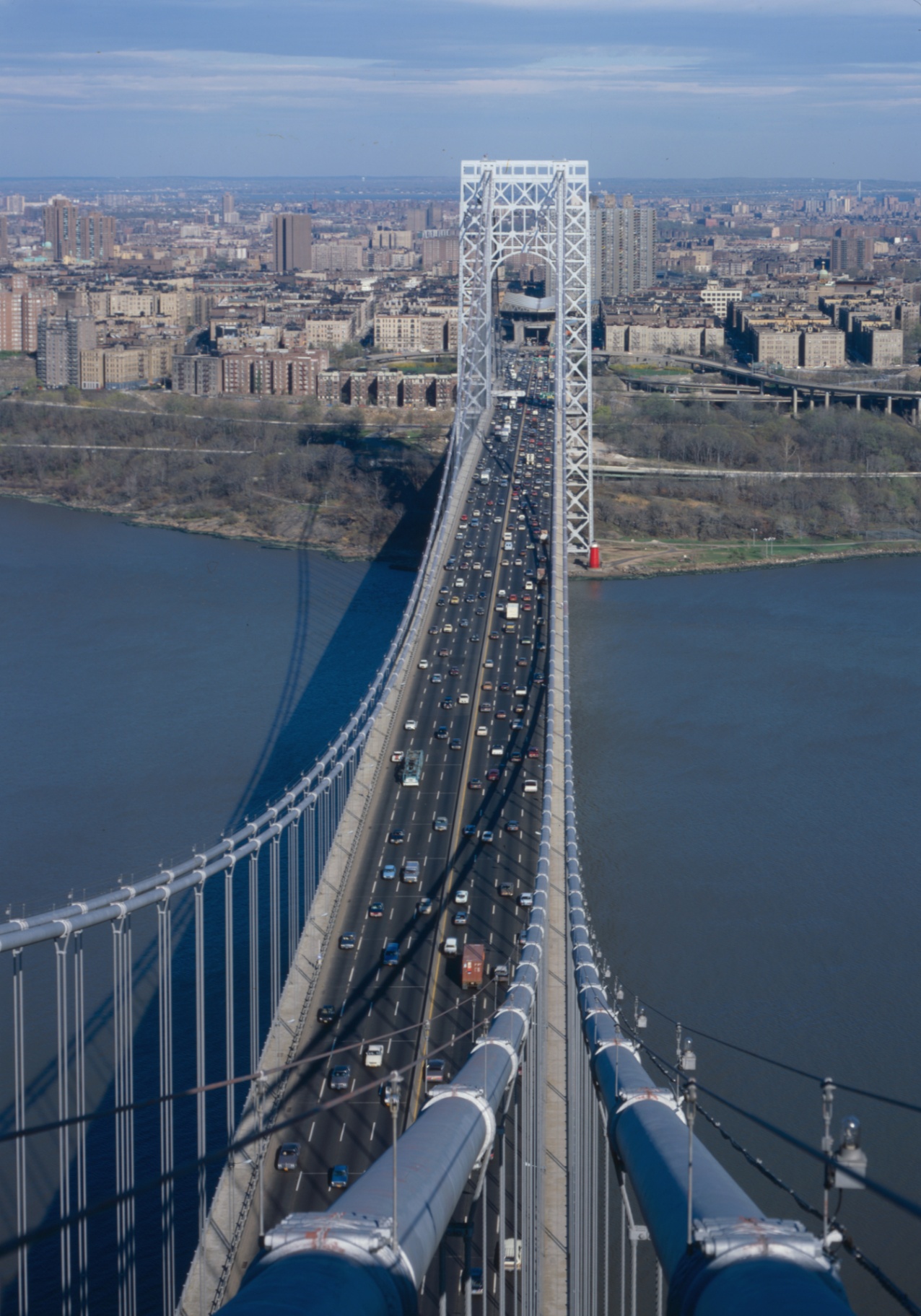
    New Jersey-New York City Major Bridge Aerial View

    Developer trap: Submitting architectural plans without acoustic modeling, then discovering your window specs don't meet attenuation requirements after they're already installed. We engage acoustic engineers during design development, not during punch list.

    10. OER Holds the Keys to Your Certificate of Occupancy: Not Just Your Building Permit

    Even if DOB approves your construction documents and you pass all inspections, DOB cannot issue a Certificate of Occupancy until OER provides the appropriate Notice of Satisfaction confirming E-Designation compliance.

    We've seen projects fully constructed, leased, and ready to welcome tenants: but sitting empty because the developer's consultant never submitted final compliance documentation to OER.

    Final gate: Treat your OER approval timeline as critically as your DOB inspection schedule. Your contractor can't finish what OER won't release.

    Navigate E-Designations Like You Own the Process

    E-Designation approvals aren't bureaucratic mysteries: they're technical compliance processes that reward preparation, precision, and experience. NYCOER's staff are responsive when you demonstrate you understand their standards and speak their language.

    The developers who close E-Designation sites on schedule aren't luckier or better connected. They work with consultants who've done this dozens of times, know what OER expects before the first submission, and structure investigations to avoid revision cycles.

    If you're staring at an E-Designation site and wondering whether your current team can navigate NYCOER without bleeding months off your timeline, let's talk. We've been doing this in NYC since before E-Designations were called E-Designations.

    Ready to move forward? Contact our team for a pre-submission strategy session. We'll review your site conditions, outline the approval pathway, and give you a realistic timeline before you spend a dollar on field work.

    Envicon Strategic Solutions blue footer with logo


    5 Additional Blog Post Ideas

    1. The Real Cost of Skipping a Phase I ESA: 3 NYC Developers Who Learned the $2M Lesson
      Target: Phase I ESA cost New Jersey and environmental due diligence for NJ real estate acquisitions

    2. PFAS in Groundwater: How NY/NJ's 2026 Sampling Requirements Will Delay Your Project (Unless You Do This)
      Target: PFAS sampling requirements NJDEP 2026 and regulatory compliance positioning

    3. NJDEP Historic Fill Guidance Just Changed: What It Means for Your Linear Construction Project
      Target: NJDEP historic fill guidance summary and linear construction technical guidance NJDEP

    4. How to Use NJDEP DataMiner Without Getting Lost: A Developer's 10-Minute Guide
      Target: NJDEP Dataminer search guide for developers with practical walkthrough

    5. Remedial Action Outcomes in NJ: Why Your LSRP Keeps Asking for More Data (And How to Avoid It)
      Target: NJDEP RAO guidance for contaminated sites and LSRP service costs NJ

  • Removing E-Designations in NYC: The Insider’s Playbook for Developers

    Removing E-Designations in NYC: The Insider’s Playbook for Developers

    If you are a developer in New York City, you know that the "E" on a zoning map doesn't stand for "Easy." An (E) Designation is essentially a giant red flag from the city telling you that before you can even think about getting a building permit, let alone a Certificate of Occupancy, you have to satisfy the New York City Office of Environmental Remediation (OER).

    At Envicon, we see it all the time: a developer picks up a prime lot in a rezoned neighborhood, only to realize their timeline is held hostage by a decades-old environmental requirement. Every week your project sits in a regulatory queue is another week of carrying costs, lender pressure, and missed market windows.

    The good news? The process is predictable if you know the players and the path. This isn't about writing a thick report and hoping for the best. It’s about aggressive coordination and technical precision. Here is the insider’s playbook on how to remove E-designation NYC requirements and get your project to the finish line.

    What Exactly Is an (E) Designation?

    In simple terms, an (E) Designation is an environmental requirement assigned to a specific tax lot during a city-led rezoning. Because the city changed the land use (often from industrial to residential or commercial), they want to ensure the new occupants aren't being exposed to historical contamination, excessive noise, or poor air quality.

    There are three main types:

    1. Hazardous Materials: The most common. It requires soil, groundwater, and soil vapor testing.
    2. Noise: Focuses on the building envelope (windows and walls) to ensure interior noise levels are safe.
    3. Air Quality: Usually concerns the type of fuel used for heating/cooling systems or the placement of exhaust stacks.

    Envicon engineers reviewing a 3D subsurface soil model for NYC E-designation site investigation.

    The OER Workflow: From Investigation to Satisfaction

    Navigating the OER is a marathon, not a sprint. If you’re wondering how to remove E-designation NYC hurdles, you have to follow the OER’s specific multi-stage workflow. At Envicon, we don't just hand you a report; we manage this entire lifecycle to ensure there are no surprises at the 11th hour.

    1. The Phase I Environmental Site Assessment (ESA)

    Everything starts here. You need a Qualified Environmental Professional (QEP) to dig into the property’s history. If the Phase I identifies potential issues, we move to testing.

    2. Remedial Investigation Work Plan (RIWP)

    You can’t just go out and start drilling holes. The OER must approve an RIWP that outlines exactly where we are sampling soil, groundwater, and vapor. Envicon coordinates directly with the OER to get this plan approved quickly so we can get the rigs on-site.

    3. The Investigation and Report (RIR)

    Once the field work is done, we produce a Remedial Investigation Report (RIR). This document tells the story of what is actually in the ground.

    4. Remedial Action Work Plan (RAWP) and Notice to Proceed (NTP)

    The RAWP is your blueprint for cleanup. It tells the OER how you’re going to handle the contamination (e.g., soil excavation, vapor barriers, or sub-slab depressurization systems). Once the OER signs off on the RAP, they issue a Notice to Proceed (NTP). This is the golden ticket that allows the Department of Buildings (DOB) to issue your work permits.

    5. Implementation and the Remedial Action Report (RAR)

    While your contractor is digging, Envicon is on-site. We provide construction oversight, air monitoring, and soil management. Once the work is done, we compile a Remedial Action Report (RAR) certified by a Professional Engineer (PE).

    6. Notice of Satisfaction (NOS)

    When the OER accepts the RAR, they issue a Notice of Satisfaction (NOS). This allows you to get your Temporary Certificate of Occupancy (TCO) and eventually your final CO.

    Aerial view of an active brownfield remediation site

    Temporary Satisfaction vs. Permanent Removal

    One of the biggest points of confusion for developers is the difference between satisfying an (E) and removing it.

    • Temporary Satisfaction: You get an NOS that lets you build and occupy the building. However, if your site requires ongoing management (like a vapor barrier that needs to be maintained), the (E) Designation stays on the books. This can complicate future refinancing or a sale if the next buyer’s lender isn't comfortable with "ongoing environmental obligations."
    • Permanent Removal: Since 2022, the process for permanent removal has become more streamlined. If the remediation is "unrestricted" (meaning the site is clean enough for any use) or if the noise/air requirements have been fully met as verified by an installation report, the OER can issue a Final Notice of Satisfaction.

    At Envicon, we aim for permanent removal whenever possible. We want your asset to be clean and compliant, not just "good enough for now."

    Why Your "Big Box" Consultant Is Stalling Your Project

    If you’ve hired a national firm with 10,000 employees, you likely talked to a polished partner during the pitch and now you're stuck talking to a junior staffer who has never actually set foot on a NYC construction site.

    In the world of (E) Designations, regional fluency is everything. Here is why the Envicon approach beats the big-box model:

    • Direct Agency Relationships: We don't wait in a generic queue. We know the reviewers at the OER and the DOB. We understand their specific "pet peeves" and technical preferences. We resolve issues through direct phone calls, not passive-aggressive email chains.
    • Architectural Coordination: A noise (E) Designation isn't just about environmental science; it’s about window specs and alternate ventilation. Envicon works directly with your architects to ensure the Remedial Action Plan matches the building’s design. Big firms often deliver a report that is technically "correct" but impossible for your architect to implement.
    • No-Fluff Deliverables: Large firms write bloated reports designed to protect their own liability. Envicon writes clean, actionable documentation designed to get a reviewer to say "Yes."
    • Ownership of the Outcome: We don't just hand you a report and walk away. We sit at the table with your construction manager, your attorney, and the city officials. If there is a problem in the field at 7:00 AM, we are there to solve it.

    "Collaboration is not a buzzword at Envicon: it’s how we work. We remove the obstacles between you and a buildable site."

    Detailed soil core sample and PID sensor for an OER-compliant environmental site assessment in NYC.

    The Cost of Cutting Corners

    We’ve seen developers try to save $5,000 on a "cheap" Phase I or RIWP, only to lose $50,000 in carrying costs when the OER rejects the submittal. A rejected plan means re-mobilizing rigs, re-sampling, and re-submitting.

    When you work with Envicon Group, you are investing in certainty. We specialize in turning complex, contaminated properties into thriving assets. We understand the NY/NJ metro area better than anyone because we’ve been here for 20 years. We aren't just consultants; we are your partners in the field.

    Summary Checklist for Developers

    • Identify early: Check the zoning map for an (E) immediately during due diligence.
    • Engage a QEP: Hire a firm like Envicon that understands the NYC OER process specifically.
    • Budget for the RAR: Don't just budget for the investigation; the final reporting and certification are where the CO is won or lost.
    • Coordinate: Ensure your environmental consultant is talking to your architect and MEP engineer from day one.
    • Aim for the NOS: Keep your eye on the Notice of Satisfaction: it’s the only document that truly matters to your lender.

    Modern multi-family residential development - a completed brownfield project

    Clear the Path for Your Next Project

    Don't let an (E) Designation turn into a multi-year headache. Whether you are in the middle of a messy cleanup or just starting your due diligence, you need a firm that prioritizes speed, precision, and trust.

    At Envicon, we don't sell reports. We sell cleared paths. Contact us today to discuss your site and let’s get your project moving.

    Envicon Group
    Precision. Speed. Integrity.Envicon Strategic Solutions Logo

  • Environmental Due Diligence for NJ Developers: The “No-Fluff” Guide to Closing Deals

    Environmental Due Diligence for NJ Developers: The “No-Fluff” Guide to Closing Deals

    In the New Jersey real estate world, "time is money" isn't just a cliché: it’s the difference between a closed deal and a collapsed one. You’ve found the site, the numbers work, and your equity is ready. Then the lender asks for a Phase I Environmental Site Assessment (ESA).

    Suddenly, your timeline is at the mercy of a consultant who might not have stepped foot on a construction site in a decade.

    At Envicon, we do things differently. We don't sell reports that sit in a queue for three weeks. We sell cleared paths. If you’re a developer in NJ, you need environmental due diligence that moves as fast as you do. Whether it’s a 72-hour turnaround on critical data or ensuring 100% lender approval, we’re here to make sure environmental "issues" don't become deal-breakers.

    Speed is the Only Metric That Matters (Almost)

    Most big-box consulting firms treat due diligence like an academic exercise. They’ll give you a 200-page report filled with boilerplate language and a "to-be-determined" conclusion. Meanwhile, your carry costs are ticking up.

    Envicon was built on the idea that urgency is a core competency. We’ve optimized our workflow to provide 72-hour turnaround capabilities for preliminary data because we know you need to make decisions in real-time. You can’t wait 21 days just to find out if you need a Phase II.

    Stopwatch on engineering blueprints representing Envicon's commitment to fast delivery

    The "Phase I" Trap in New Jersey

    Here’s the first bit of "no-fluff" advice: In New Jersey, a standard ASTM Phase I ESA is usually not enough to protect you.

    While federal law (CERCLA) recognizes a Phase I ESA for "All Appropriate Inquiries," the state of New Jersey is a different beast. Under the New Jersey Spill Compensation and Control Act, a Phase I alone won't grant you "innocent purchaser" status. To get state-level liability protection, you need a Preliminary Assessment (PA).

    We see developers make this mistake all the time. They hire a national firm that applies a cookie-cutter federal template to a Jersey City brownfield. They end up with a report that satisfies the bank but leaves them wide open to state enforcement and cleanup costs later.

    At Envicon, we produce combined Phase I/PA reports. One document, dual protection, zero headaches. We satisfy both federal and NJDEP requirements in one shot so you can close with confidence.

    What’s Actually in a "No-Fluff" Due Diligence Process?

    Environmental due diligence for developers in NJ shouldn't be a mystery. Here is the breakdown of how we move a project from "potential liability" to "buildable asset":

    1. The Preliminary Assessment (PA) & Phase I

    We dig into the history. We look at Sanborn maps, city directories, and NJDEP’s "Known Contaminated Sites" list. But we also do something the big firms don't: we look at it through the lens of a contractor. We aren't just looking for "Recognized Environmental Conditions" (RECs); we’re looking for things that will cost you money during excavation.

    2. Phase II Site Investigation

    If the PA identifies a concern: maybe an old underground storage tank (UST) or historic fill: we move to a Phase II Site Investigation. This involves soil borings, groundwater sampling, and vapor intrusion screening.

    We don't just "sample and see." We strategically target areas to define the scope of the problem. Our goal is to give you a "go/no-go" answer and a real-world budget for remediation before your due diligence period ends.

    3. The Path to Closure (LSRP Oversight)

    In NJ, the Licensed Site Remediation Professional (LSRP) program is the law of the land. You don’t wait for the NJDEP to approve your cleanup; your LSRP takes the lead. Envicon’s PE-led team works directly with LSRPs to ensure that any necessary remediation is integrated into your construction schedule, not fighting against it.

    Soil core liners showing historic fill strata at a New Jersey redevelopment site during a site investigation.
    Suggested prompt: A professional environmental engineer in a hard hat reviewing soil samples on an active New Jersey construction site with urban skyline in background.

    100% Lender Approval: Why It Matters

    You can have the best deal in the world, but if your bank’s environmental risk officer doesn't like the report, you aren't getting funded.

    Envicon maintains a 100% lender approval rate. Why? Because we write reports that are technically bulletproof and defensively sound. We know what the major regional and national banks are looking for. We don’t leave "gray areas" that cause a risk officer to flag your file. We provide the clarity they need to check the box and move to closing.

    Why NJ Developers Are Switching to Envicon

    If you’re currently using a giant national firm, you know the drill:

    • You talk to a VP during the pitch.
    • A junior staffer with six months of experience actually does the site visit.
    • The report is delayed because it’s stuck in a corporate "quality control" loop in another time zone.
    • You get hit with a change order the moment something slightly unusual is found.

    The Envicon Answer:
    We are field-first and regulator-facing. When you call us, you’re talking to the people who are actually on your site. We’ve spent 20 years building relationships with the NJDEP and local municipalities. We don’t guess how a reviewer will react: we usually already know.

    We focus on Brownfield Redevelopment Support, turning contaminated properties into thriving assets. We don’t just identify the dirt; we help you manage it.

    Active brownfield redevelopment site with heavy equipment and soil staging

    Common NJ "Deal Killers" We Handle Daily

    • Historic Fill: Most of Hudson, Essex, and Bergen counties are built on historic fill. If your consultant doesn't know how to handle the NJDEP’s specific rules on fill, you’ll overpay for soil disposal.
    • Vapor Intrusion: New Jersey has some of the strictest vapor intrusion standards in the country. We design mitigation systems that work with your building's slab, not against it.
    • Linear Projects and Utilities: Coordinating with PSE&G or local water authorities requires a specific type of environmental oversight that we provide through our Civil and Site Engineering team.

    The Envicon Difference: From OER to Closing

    In the NY/NJ metro area, regulatory fluency is a requirement, not a luxury. Whether we are dealing with the NYC OER or the NJDEP, our approach is the same: precision, speed, and trust.

    We work alongside your architects, attorneys, and construction managers to ensure everyone is aligned. Alignment is how projects actually get built. We don’t just hand you a report and wish you luck. We stay at the table until the Remedial Action Outcome (RAO) is in your hand.

    Summary: Your Due Diligence Checklist

    Before you sign your next PSA, make sure your environmental partner can answer these three questions:

    1. Can you guarantee a combined Phase I/PA that meets NJDEP standards for innocent purchaser defense?
    2. Can you provide 72-hour turnaround on initial site findings?
    3. Do you have a 100% track record with commercial lenders in the NJ/NY market?

    If the answer is "let me check with my supervisor," you’re talking to the wrong firm.

    At Envicon, we remove the obstacles between you and a buildable site. We don't just deliver services; we help transform underused and contaminated properties into your next big success.

    Ready to clear the path for your next deal? Contact us today for a no-fluff consultation on your site.Envicon Strategic Solutions Logo