Category: Industry Insight

  • NJDEP LSRP Rules: How Recent Updates Affect Your Cleanup Timeline

    NJDEP LSRP Rules: How Recent Updates Affect Your Cleanup Timeline

    If you are a developer, lender, or property owner in New Jersey, you already know that the Licensed Site Remediation Professional (LSRP) program is the engine that drives your project toward a Response Action Outcome (RAO). But as of early 2026, the rules governing that engine have undergone a major tune-up.

    The NJDEP has recently rolled out significant updates to the Remedial Action Permit (RAP) program and tightened the screws on remediation standards. These aren't just administrative tweaks; they are fundamental shifts that will dictate how fast you can close on a property, how much your cleanup will cost, and how long your site remains "under the thumb" of regulatory oversight.

    At Envicon, we don't just read the guidance: we live it. As a -licensed professional-led, field-first firm, we see these changes through the lens of a contractor who needs to move dirt and a developer who needs to hit a closing date. Here is what you need to know about the current NJDEP landscape and how to keep your timeline from unraveling.

    The RAP Revolution: One Permit to Rule Them All

    The most substantial procedural change hit the books on February 17, 2026. The NJDEP released updated Remedial Action Permit (RAP) forms and instructions that effectively ended the era of fragmented permitting.

    In the past, you might have had a soil permit, a separate groundwater permit, and perhaps another layer for vapor intrusion. This created a mountain of paperwork, varying expiration dates, and a fee schedule that felt like death by a thousand cuts. The new framework consolidates soil, groundwater, and indoor air permits into a single Combined RAP.

    Why This Matters for Your Timeline

    On the surface, consolidation sounds like a win for efficiency: and it can be. However, the transition period is where most projects stumble.

    • Simplified Biennial Evaluations: By grouping media into one permit, the biennial protectiveness evaluations are now synchronized. You aren't filing reports every six months for different issues; you’re doing it once.
    • Modifications vs. New Applications: When your site conditions change, the NJDEP now prefers modifications over entirely new applications. This is designed to streamline the process, but it requires an LSRP who knows how to navigate the new forms without triggering a "deficiency" notice that puts you back at the bottom of the pile.

    At Envicon, we’ve seen big-box firms struggle with this transition, treating the new forms like the old ones. We take a different approach. We look at the Combined RAP as a strategic tool to front-load the regulatory heavy lifting so your long-term compliance is a "set it and forget it" situation, not a recurring nightmare.

    LSRP Badge Graphic

    The Bar Just Got Higher: Stricter Remediation Standards

    While the permitting process is trying to get leaner, the technical standards are getting meaner. Effective August 4, 2025, the NJDEP updated the Soil Remediation Standards (N.J.A.C. 7:26D) and Ground Water Quality Standards (N.J.A.C. 7:26I).

    Perhaps more critically for urban redevelopment, the agency lowered the Groundwater Screening Levels for the vapor intrusion pathway as of February 7, 2025.

    The Financial and Schedule Impact

    If you did your due diligence in 2024 and thought you had a "clean" site, you might be in for a rude awakening in 2026.

    1. Re-evaluating "Old" Data: Contaminant levels that were once below the threshold may now exceed the new, stricter standards. This means more sampling, more characterization, and potentially more remediation.
    2. Vapor Intrusion Hurdles: With lower screening levels, more sites are being pushed into active vapor mitigation. Installing a sub-slab depressurization system isn't just a cost issue; it’s a construction scheduling issue. If your consultant isn't talking to your architect and foundation contractor early, you’re going to have a conflict in the field.

    "The technical threshold is a moving target," says one industry insider. "If your consultant is just checking boxes from a 2023 playbook, you’re building on a foundation of regulatory sand."

    Stopwatch on Blueprints

    SRRA 2.0: Clarification or Complication?

    The 2025 regulatory adoptions implementing SRRA 2.0 have brought much-needed clarity: but also more responsibility: to the LSRP program. There are now stricter obligations regarding discharge reporting and the documentation of remediation funding sources.

    The NJDEP is no longer playing games with how contamination is documented. If an LSRP discovers a discharge, the reporting clock starts immediately. For developers, this means you need an LSRP who is "regulator-facing": someone who understands how to present data to the NJDEP in a way that is honest, accurate, and protective of the project’s interests.

    The 45-Day Transition Rule

    If you are switching LSRPs: perhaps moving away from a slow-moving national firm to a more agile partner like Envicon: you need to be aware of the 45-day transition requirement. The NJDEP now has a strict window for LSRP arrangement changes. If this isn't managed precisely, your permit status could lapse, halting work on-site and potentially triggering fines.

    The Envicon Difference: Sitting at the Table, Not in a Queue

    When you hire a massive national environmental firm, your project often becomes a number in a spreadsheet. Your "LSRP of record" might be in an office three states away, and the person actually doing the work is a junior staffer who has never stepped foot on your site.

    Envicon operates differently. We are PE-led and field-first.

    Why Clients Switch to Envicon:

    • Regulator-Facing Leadership: We don't just mail reports and hope for the best. We have direct relationships with reviewers. We sit at the table with the NJDEP to hash out solutions before the formal submittal.
    • Precision Over Paperwork: Big firms write 500-page reports to protect themselves from liability (CYA). Envicon produces lean, high-impact documentation designed to get you an RAO. We don't sell reports; we sell cleared paths.
    • Contractor-Adjacent Mindset: We understand that every day an excavator sits idle is money out of your pocket. Our team is on-site, coordinating with your construction manager to ensure remediation doesn't stop the build.

    Active Brownfield Remediation

    Action Items for NJ Developers in 2026

    If you have an active project in New Jersey, here is your immediate checklist:

    • Audit Your Permits: Have your LSRP review all existing RAPs. Determine if an administrative combination under the new framework will save you time and money on your next biennial certification.
    • Re-Screen Your Data: Check your 2023-2024 soil and groundwater data against the August 2025 standards. Don't wait for a lender to flag an "outdated" report during the closing process.
    • Verify Your Funding Source: Ensure your remediation funding source (RFS) documentation is compliant with the SRRA 2.0 clarifications. The NJDEP is auditing these more frequently.
    • Assess Your LSRP Relationship: Is your consultant proactive, or are they waiting for you to call them? If you aren't getting ahead of these updates, you are falling behind.

    Summary: Navigate the Shift with Precision

    The NJDEP’s modernization of the RAP program and the tightening of remediation standards are designed to protect the environment, but they place a significant burden on the development community. Between the consolidated permits and the stricter vapor intrusion levels, the margin for error has vanished.

    At Envicon, we believe that integrity is about delivering the truth and never cutting corners. But we also believe that speed and precision are not mutually exclusive. We help transform underused and contaminated properties into thriving assets by staying ahead of the regulatory curve.

    Don't let a "cheap" or "slow" report become your most expensive mistake. If your current consultant is giving you more questions than answers, it’s time for a different approach.

    Ready to clear the path for your next project? Contact Envicon today to discuss how we can streamline your NJDEP compliance.


    Key Takeaways

    • Combined RAPs are now the standard for soil, water, and air: simplify your reporting now.
    • Stricter 2025 standards may require new remediation strategies for existing projects.
    • The 45-day LSRP transition rule is a critical deadline for project continuity.
    • Envicon's PE-led approach ensures you are "regulator-facing," getting you to the table faster than the big-box firms.
    Permit Approval Stamp


    Sources:

    1. NJDEP Remedial Action Permit Program Updates – Feb 2026
    2. NJDEP Soil and Ground Water Quality Standards – August 2025 Adoption
    3. SRRA 2.0 Implementation Guidelines

    Envicon Group Logo

  • The 2026 Exit Strategy: Why You Need to Audit Your Environmental Liability Before You List

    The 2026 Exit Strategy: Why You Need to Audit Your Environmental Liability Before You List

    You've spent years running your industrial facility in New Jersey or New York. The market's heating up, institutional buyers are circling, and you're finally ready to cash out. But here's the thing nobody tells you until it's too late: the environmental liability sitting under your property could crater your deal, or worse, follow you home after closing.

    In 2026, the stakes are higher than ever. Buyers aren't just kicking tires anymore. They're bringing environmental consultants to the first tour. Lenders are requiring Phase II ESAs before they'll even talk loan terms. And if you think you can just "disclose and move on," you're in for a brutal awakening when the buyer's LSRP starts finding things you didn't know existed.

    The solution? Audit your environmental liability before you list. Not after you've accepted an offer. Not during due diligence. Before the sign goes up.

    The New Reality: Buyers Control the Narrative (Unless You Don't Let Them)

    Let's talk about what's changed. Ten years ago, you could sell an industrial property with a Phase I ESA and a handshake. The buyer's attorney would ask a few questions, you'd sign some disclosures, and the deal would close.

    That world is dead.

    Today's institutional buyers, the private equity groups, the REIT funds, the family offices, are hiring the same consultants who work for the NJDEP and NYSDEC. They're not looking for deal-killers; they're expecting to find them. And when they do, they'll use your environmental liability as leverage to renegotiate price, demand escrows, or walk entirely.

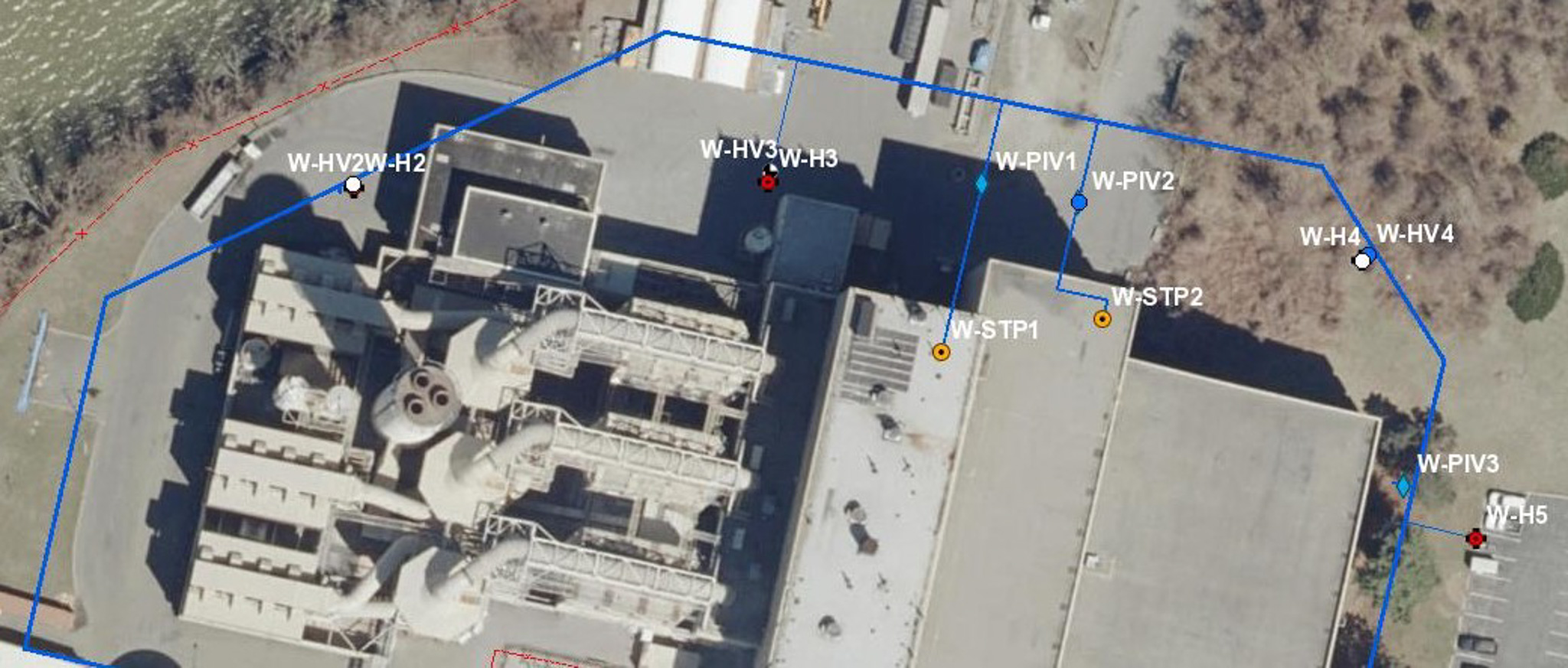
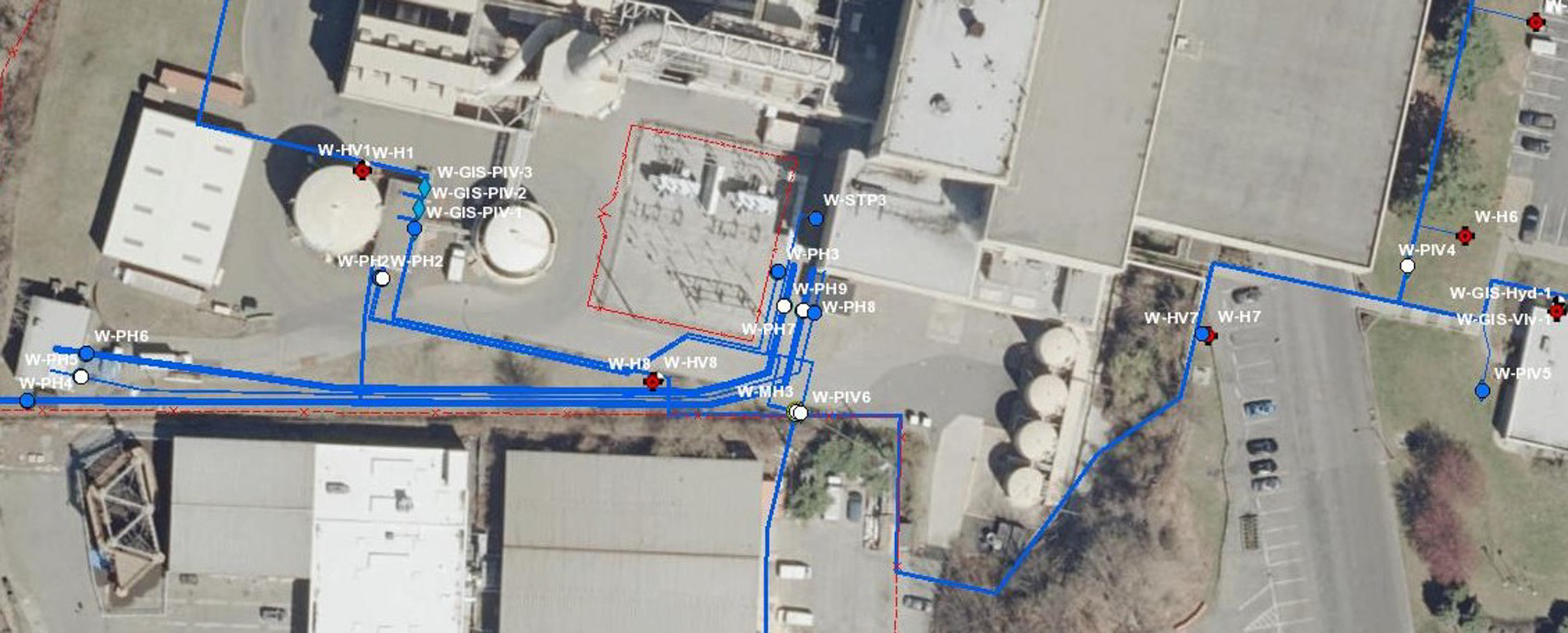
    Aerial Site Map with Monitoring Locations

    Here's the problem: if they control the discovery process, they control the narrative. They'll interpret every soil boring, every groundwater sample, every historical aerial photo through the lens of maximum liability. And you'll be stuck defending a property you've owned for decades against questions you didn't even know to ask.

    The fix? Beat them to it. Run your own environmental audit six months before you list. Get ahead of the contamination story. Understand your actual liability, not your buyer's worst-case fantasy version of it.

    What an Exit-Focused Environmental Audit Actually Looks Like

    This isn't your standard Phase I ESA. A pre-sale environmental audit is a strategic document designed to answer one question: What will sink this deal, and how do we fix it now?

    Here's what we look for:

    Undisclosed Historical Uses
    That corner of your property that "used to be a gas station" in the 1960s? If it's not in your Phase I, it's going to show up in the buyer's. We pull Sanborn maps, talk to municipal archives, and dig through NJDEP case files to make sure there are no surprises.

    Vapor Intrusion Pathways
    If you've got contaminated groundwater anywhere within 100 feet of your building footprint, a sophisticated buyer is going to model vapor intrusion risk. In NYC, this is an automatic E-designation trigger. In New Jersey, it's a mandatory LSRP review. Either way, you need to know before the buyer's consultant puts it in a report.

    Ongoing Compliance Gaps
    Are your underground storage tanks properly registered? Is your stormwater permit current? Do you have an active remediation case that hasn't been closed out? These aren't environmental liabilities in the contamination sense, but they're transactional liabilities that will delay closing and erode buyer confidence.

    Off-Site Migration Potential
    This is the nightmare scenario: contamination that started on your property but has migrated onto your neighbor's. In New Jersey, under the LSRP rules, you can be held liable for off-site impacts even if the contamination predates your ownership. If groundwater is flowing off your property, we need to know where it's going and what it's carrying.

    Environmental consultants reviewing site assessment maps for property due diligence

    The Valuation Impact: Why "Clean Enough" Isn't Good Enough

    Let's talk money. In 2026, environmental liability doesn't just affect whether your property sells: it affects the price, the terms, and the speed of the transaction.

    We've seen deals where unaudited environmental liability resulted in:

    • 15-25% price reductions after the buyer's Phase II came back with contamination the seller "didn't know about"
    • $250,000+ escrow holdbacks for potential remediation costs that never materialized
    • 120+ day closing delays while the buyer's LSRP worked through NJDEP permitting
    • Post-closing clawback provisions that kept the seller on the hook for years after the sale

    Now compare that to properties where the seller did the work upfront. They walked into negotiations with a completed Phase II, a closed NJDEP case, or a No Further Action letter. Those properties closed at asking price, in 60 days, with zero post-closing liability.

    The math is simple: spending $50,000 on an environmental audit today can save you $500,000 in lost value tomorrow.

    Regulatory Landscape: Why 2026 is Different

    If you've been sitting on an exit strategy for a few years, here's what you need to know about the regulatory environment in 2026:

    NJDEP's LSRP Program is Maturing
    The Licensed Site Remediation Professional program isn't new, but it's finally hitting its stride. Case timelines are tightening, compliance requirements are stricter, and the NJDEP is starting to audit LSRP decisions retroactively. If your property has an open case or a delayed closure, expect buyers to demand a clear pathway to NFA before they'll sign a purchase agreement.

    NYSDEC Part 375 Updates
    The NYSDEC recently finalized major changes to Part 375, New York's soil cleanup regulations. New soil cleanup objectives, updated brownfield credit structures, and revised vapor intrusion guidance all affect how contaminated properties are valued and transacted in 2026.

    PFAS is No Longer "Emerging"
    Per- and polyfluoroalkyl substances (PFAS) have moved from "emerging contaminant" to "regulated liability" in both New York and New Jersey. If your facility manufactured, used, or stored firefighting foam, certain plastics, or industrial coatings, PFAS is now a mandatory part of your environmental due diligence: and your buyer's.

    Aerial view of industrial facility

    The Timeline: When to Start (Hint: It's Earlier Than You Think)

    Most sellers think about environmental audits during the listing process. That's six months too late.

    Here's the right timeline:

    18 Months Before Sale: Initial Audit
    Commission a comprehensive environmental liability audit. This includes Phase I and targeted Phase II sampling, historical research, regulatory compliance review, and off-site migration assessment.

    12-15 Months Before Sale: Remediation (If Needed)
    If the audit identifies contamination that will affect value or marketability, start the cleanup process now. NJDEP closures take 6-12 months minimum. NYSDEC brownfield enrollments can take even longer.

    6 Months Before Sale: Transaction Readiness
    Update your audit with any new data, obtain closure letters where possible, and package everything into a "seller's environmental data package" that you can hand to qualified buyers on day one.

    Listing Phase: Transparency and Control
    Market the property with full environmental transparency. Sophisticated buyers will appreciate the proactive approach and view it as a sign of competent ownership.

    What This Looks Like in Practice

    We worked with an industrial owner in Hudson County who was preparing to sell a 4-acre manufacturing facility. The property had been in operation since the 1950s, and the owner "knew" there was probably some contamination, but had never formally investigated.

    Eighteen months before listing, we ran a comprehensive audit. We found:

    • Petroleum impacts from former underground storage tanks (closed in 1998 but never remediated)
    • Solvent contamination in shallow groundwater from historical degreasing operations
    • An unregistered discharge case with the NJDEP that had fallen through the cracks in the 1980s

    None of it was catastrophic. But all of it would have killed the sale if discovered during buyer due diligence.

    We spent 12 months cleaning it up. Remediated the petroleum, enrolled in the ISRA program, closed out the NJDEP case with a Response Action Outcome. Total cost: $180,000.

    The property sold for $7.2 million: $900,000 more than comparable properties in the area. The buyer loved the clean title. Closing took 45 days. Zero post-closing liability.

    The Takeaway: Environmental Audits Are Exit Strategy

    Here's what property owners need to understand in 2026: environmental compliance isn't a box-checking exercise anymore. It's a value driver. It's a negotiation tool. It's the difference between controlling your exit and having your exit controlled for you.

    If you're planning to sell an industrial property in the next two years: whether it's a warehouse in Newark, a manufacturing plant in Queens, or a distribution center in Long Island City: start with an environmental audit. Not because you're worried about liability (though you should be). But because it's the smartest business move you can make.

    The buyers are coming prepared. Make sure you are too.

    Need help understanding what's under your property before you list? Let's talk. We've been doing this for 30 years, and we know exactly what buyers' consultants will look for( because we train them.)Envicon Strategic Solutions Logo

    Envicon Group – 

    Site-Civil • Geotechnical • Environmental

    Northern NJ & NYC • [www.envicongroup.com](https://wp.envicongroup.com)

  • NYC OER Brownfield Cleanup: Navigating the Voluntary Cleanup Program without the Headache

    NYC OER Brownfield Cleanup: Navigating the Voluntary Cleanup Program without the Headache

    If you’re developing property in New York City, you’ve likely stared at a tax map and seen that dreaded "E-Designation." Or perhaps you’ve walked a site that has "potential" written all over it, only to realize its history as a dry cleaner or an auto shop is going to make your lender break out in a cold sweat.

    In this town, land is too valuable to leave dormant, but the regulatory hurdles can feel like a labyrinth designed to drain your budget and stall your timeline. That’s where the NYC Office of Environmental Remediation (OER) and the Voluntary Cleanup Program (VCP) come into play.

    At Envicon, we don’t look at these sites as "contaminated properties." We look at them as assets waiting to be unlocked. For over 20 years, we’ve been the boots-on-the-ground partner for developers and investors, navigating the friction between construction schedules and environmental mandates. We’ve spent two decades building direct agency relationships, which means when we call the OER, we aren't just a voice in a queue, we’re a known entity with a track record of getting projects to the finish line.

    What is the NYC Voluntary Cleanup Program?

    The VCP is a streamlined, city-run program specifically designed for properties with light to moderate contamination. It was created to provide a faster, more predictable alternative to the State’s Brownfield Cleanup Program (BCP), which is often better suited for massive, heavily contaminated industrial sites.

    For the average NYC developer, the VCP is the "sweet spot." It’s optional, it’s efficient, and it comes with a level of liability protection that makes your project "bankable." Once you enroll, you work with OER to implement an approved cleanup plan. When you're done, you get a Notice of Completion (NOC) and a green property certification.

    But the real magic isn't just in the certification; it's in the speed.

    Aerial view of an active brownfield remediation site featuring open soil excavations and heavy equipment

    The 45-Day Advantage: Why Speed is Your Best Friend

    In the world of NYC real estate, time isn't just money, it’s interest, carry costs, and lost market opportunities. One of the biggest "headache reducers" of the NYC VCP is the accelerated timeline.

    Developers can often receive an approved remedy and formally enroll their property in the VCP within 45 days of their first meeting with OER. Compare that to the months (or years) of back-and-forth you might experience with other regulatory pathways.

    At Envicon, we use this speed to your advantage. We don't just hand you a report and wish you luck; we manage the submittals, handle the technical pushback, and ensure that the OER understands the construction constraints of your specific site. We know that if we aren't moving fast, we're standing in the way of your foundation pour.

    Liability Protection That Actually Protects

    One of the primary concerns for any investor is the long-term environmental liability. What happens if rules change five years from now?

    Because of a Memorandum of Understanding (MOU) between the NYC OER and the New York State Department of Environmental Conservation (NYSDEC), the State agrees that it has no plan to require additional investigation or remedial action once a site is enrolled in the VCP.

    This protection attaches the moment you enroll. It covers you under CERCLA (federal hazardous waste law) and New York State Environmental Conservation Law. For a property investor, this is the "shield" that allows you to sleep at night and keeps your equity partners happy.

    The Financial "Carrots" of the VCP

    Navigating an NYC OER brownfield cleanup isn't just about avoiding fines; it’s about accessing incentives that can significantly offset your remediation costs.

    • Environmental Grants: Standard projects can receive between $25,000 and $50,000. If you’re building city-supported affordable housing, that number can jump to $250,000.
    • The Clean Soil Bank: This is a game-changer for NYC excavation. You can often dispose of surplus clean soil for free (minus trucking) or even receive clean soil for free if your site needs fill.
    • Hazardous Waste Fee Exemptions: This is where the real savings hide. Sites in the VCP can save up to $157 per ton in NY State taxes and fees on hazardous waste removal. On a large site, that’s not just a rounding error, it’s a massive win for the bottom line.

    A circular rubber permit approval stamp on an official document representing the regulatory approval process

    Is Your Site Eligible?

    The VCP is tailored for "manageable" contamination. If you have a site with an E-Designation, a history of underground storage tanks (USTs), or urban fill that needs management, the VCP is likely your best path.

    Specifically, the program is ideal for:

    1. Contaminated Fill Sites: The most common type of NYC brownfield.
    2. Properties with E-Designations: Sites where the city has already flagged environmental concerns during rezoning.
    3. Localized Spills: Oil spills that are confined to the property boundaries.

    If your site is on the EPA’s National Priorities List or is a Class 1 or 2 hazardous waste site, you’ll likely be pushed toward the State BCP. But for the vast majority of urban redevelopment, the VCP is the smarter, leaner choice.

    The Envicon Approach: Relationship-Driven Results

    When you hire a massive, national consulting firm, you’re often paying for a "brand name" that carries a lot of overhead. You get a partner who makes the pitch, and then your project is handed off to a junior staffer who has never stepped foot on a Brooklyn job site at 7:00 AM.

    Envicon is different. We are a family-owned, PE-led firm that operates with regional fluency. We don’t just write reports to cover our own backs; we write reports to clear a path for your project.

    "We don’t sell paper. We sell buildable sites. If a report doesn't move the project forward, it's just noise." , Jason Pancoast, CEO.

    Our 20 years of direct agency relationships mean we know the people reviewing your files. We understand what they need to see to say "yes." This isn't about cutting corners; it's about the precision and trust that comes from decades of doing the work right. We sit at the table with the OER and the NYSDEC so you don’t have to.

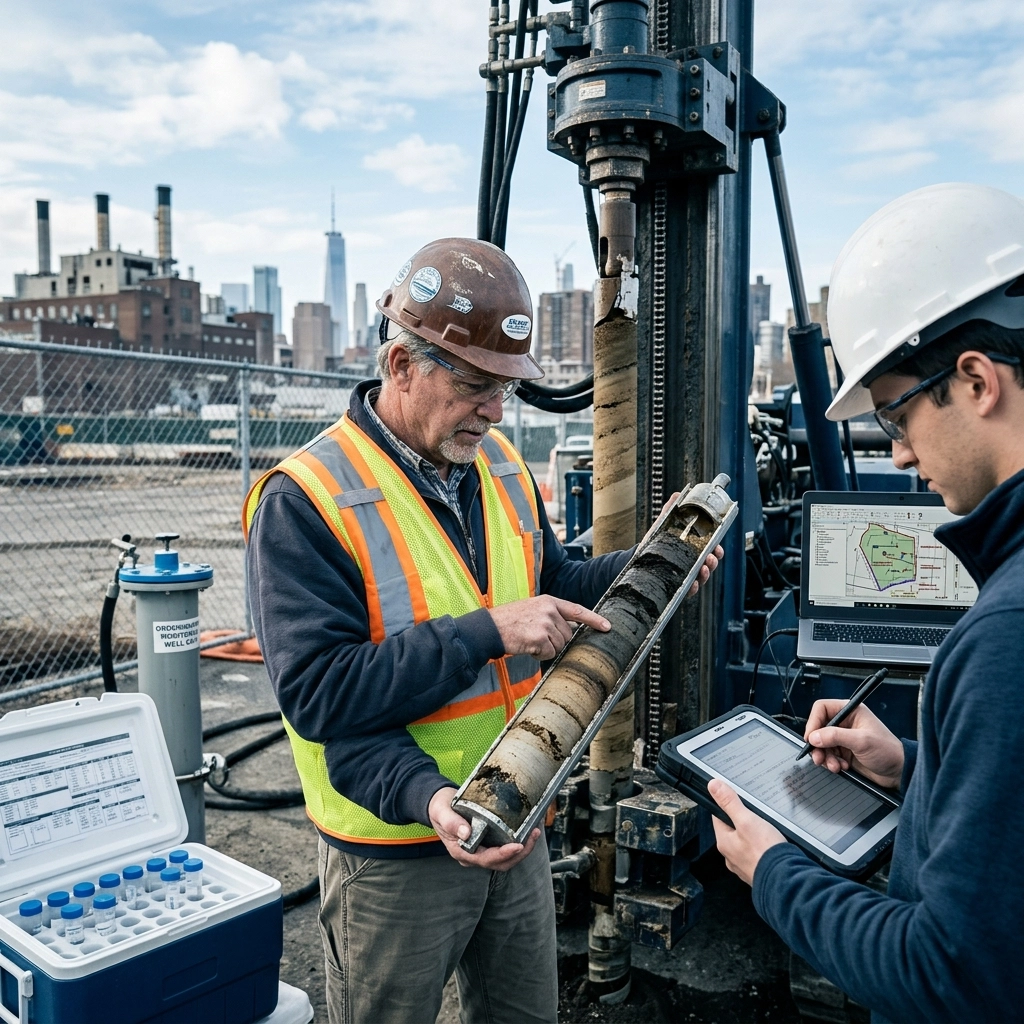
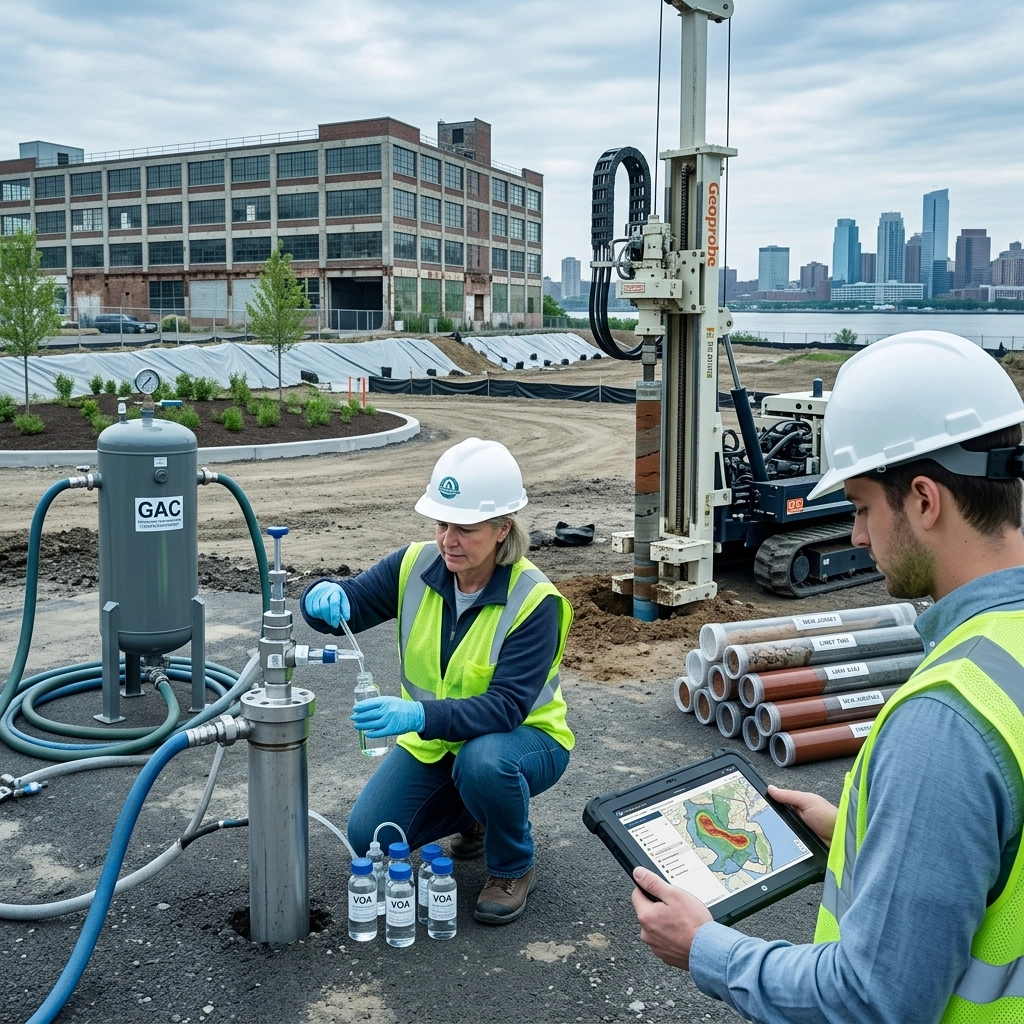
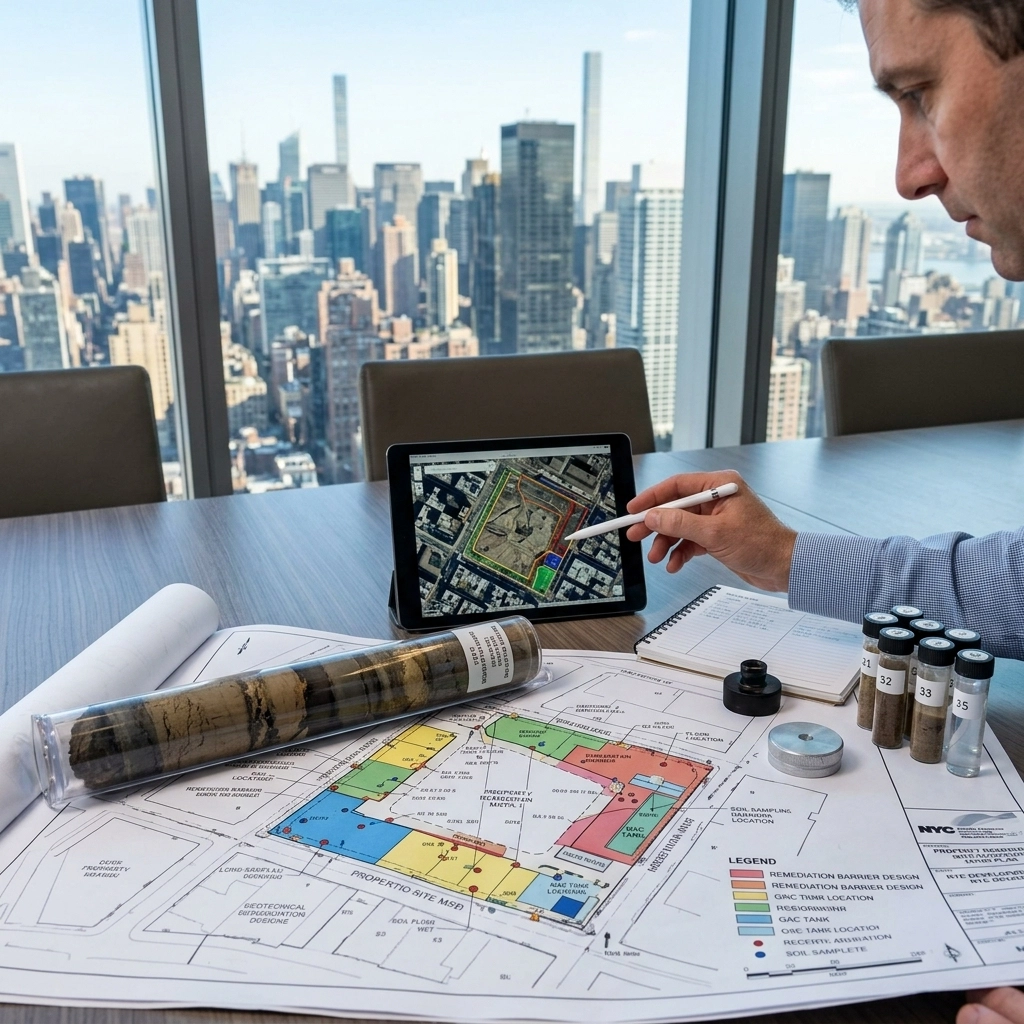
    Environmental sampling tools and GIS soil mapping for an NYC OER brownfield cleanup and urban redevelopment project.

    From OER to Closing: How We Help

    Navigating the Voluntary Cleanup Program requires a partner who understands the full lifecycle of a project: from the initial Phase I ESA to the final site-civil engineering and construction oversight.

    We offer a vertically integrated approach:

    • Initial Characterization: Getting the soil and groundwater data right the first time so there are no surprises during excavation.
    • Remedial Action Plans (RAP): Designing a cleanup strategy that is cost-effective and compatible with your building’s foundation and utility plan.
    • Construction Oversight: Having our team in the field to manage soil disposal and air monitoring, ensuring you stay in compliance while the machines are moving.
    • Final Reporting: Delivering the documentation the OER needs to issue your Notice of Completion.

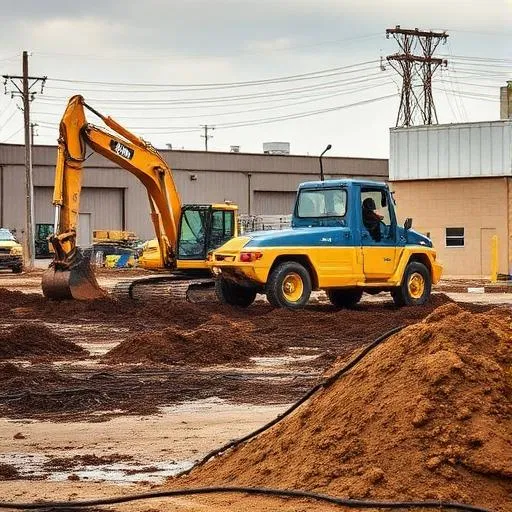
    Excavator and crew conducting soil removal at an urban redevelopment site for environmental remediation

    Why Switch to Envicon?

    If your current consultant is giving you "vague" timelines, or if you feel like your project is stuck in a regulatory black box, it’s time for a change. Big-box firms thrive on change orders and "further study." Envicon thrives on outcomes.

    We take full responsibility for the environmental portion of your project. Whether it’s coordinating with your architect on vapor barriers or negotiating with soil disposal facilities to get you the best rate, we are in the trenches with you. We believe in delivering the truth, even when it’s tough, because that’s the only way to keep a project moving.

    Summary & Key Takeaways

    • NYC VCP is a Streamlined Path: Ideal for sites with light to moderate contamination and E-designations.
    • Speed is Built-in: Enrollment can happen in as little as 45 days.
    • Liability Protection is Real: The MOU with the State DEC provides the legal and financial security lenders require.
    • Financial Perks: Grants, soil reuse programs, and tax exemptions can save hundreds of thousands of dollars.
    • Regional Fluency Matters: Envicon’s 20 years of agency experience turns "regulatory hurdles" into a manageable process.

    Don't let an E-designation or a brownfield history stall your vision. Your site has value, and the regulatory path to clearing it doesn't have to be a headache.

    Ready to clear the path for your next NYC project?
    Contact Envicon Group today to discuss your site and how we can navigate the VCP together. Let's get to work.Envicon Strategic Solutions Logo

  • Geotechnical Investigation Costs in NJ: Why Cutting Corners on Soil Borings Backfires

    Geotechnical Investigation Costs in NJ: Why Cutting Corners on Soil Borings Backfires

    If you’re a developer in New Jersey, you know the drill. You’re looking at a site in Jersey City, Newark, or maybe a patch of land in the Meadowlands, and the numbers are tight. You’re looking for places to trim the fat. Naturally, the "soft costs" get the first look. You see a quote for a geotechnical investigation and think, “It’s just dirt. How different can one hole be from another?”

    I’ve seen it a hundred times. A client tries to save a few thousand bucks on the front end by hiring a "discount" boring crew or a big-box firm that treats their project like a line item on a spreadsheet. Then, six months later, they’re calling us at 7:00 AM because the foundation is settling, the structural engineer won't sign off, or they’ve hit a lens of organic peat that wasn't in the report.

    At Envicon, we don’t sell paper. We sell cleared paths. And in the world of NJ development, a cleared path starts with knowing exactly what’s under your boots before the first shovel hits the ground.

    The Reality of Geotechnical Investigation Costs in NJ

    Let’s talk numbers. You need to know what you’re paying for. In New Jersey, geotechnical investigation costs typically range from $1,000 to $5,000 for a standard assessment. If you’re looking at a basic soil report for two borings at a depth of 15 feet, you’re looking at a starting point around $1,050.

    Here is a quick breakdown of what the market looks like right now:

    • Basic 2-Boring Report (15ft depth): ~$1,050.
    • Additional Borings: ~$525 per hole.
    • Deeper Investigations (20ft+): ~$1,400 for the first two, with costs scaling up.
    • Comprehensive Geotechnical Surveys: Average around $2,700, but can climb to $5,500+ for complex industrial sites.
    • Mobilization: This is the "hidden" cost. Getting a rig to a site in North Jersey can run you anywhere from $1,000 to $2,200 just to show up.

    If those numbers seem high, consider the alternative. A single foundation failure or a week-long delay due to an unexpected subsurface condition will cost you ten times that amount in carry costs and change orders.

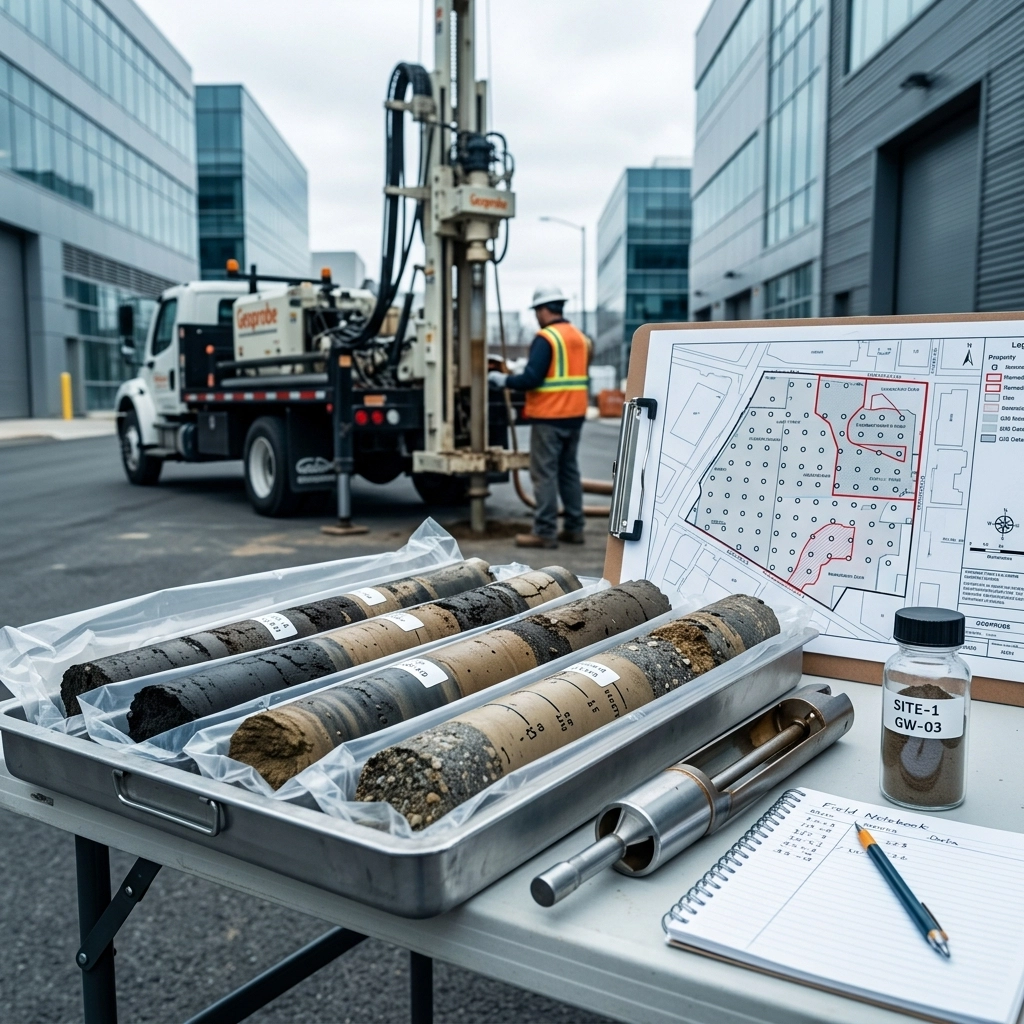
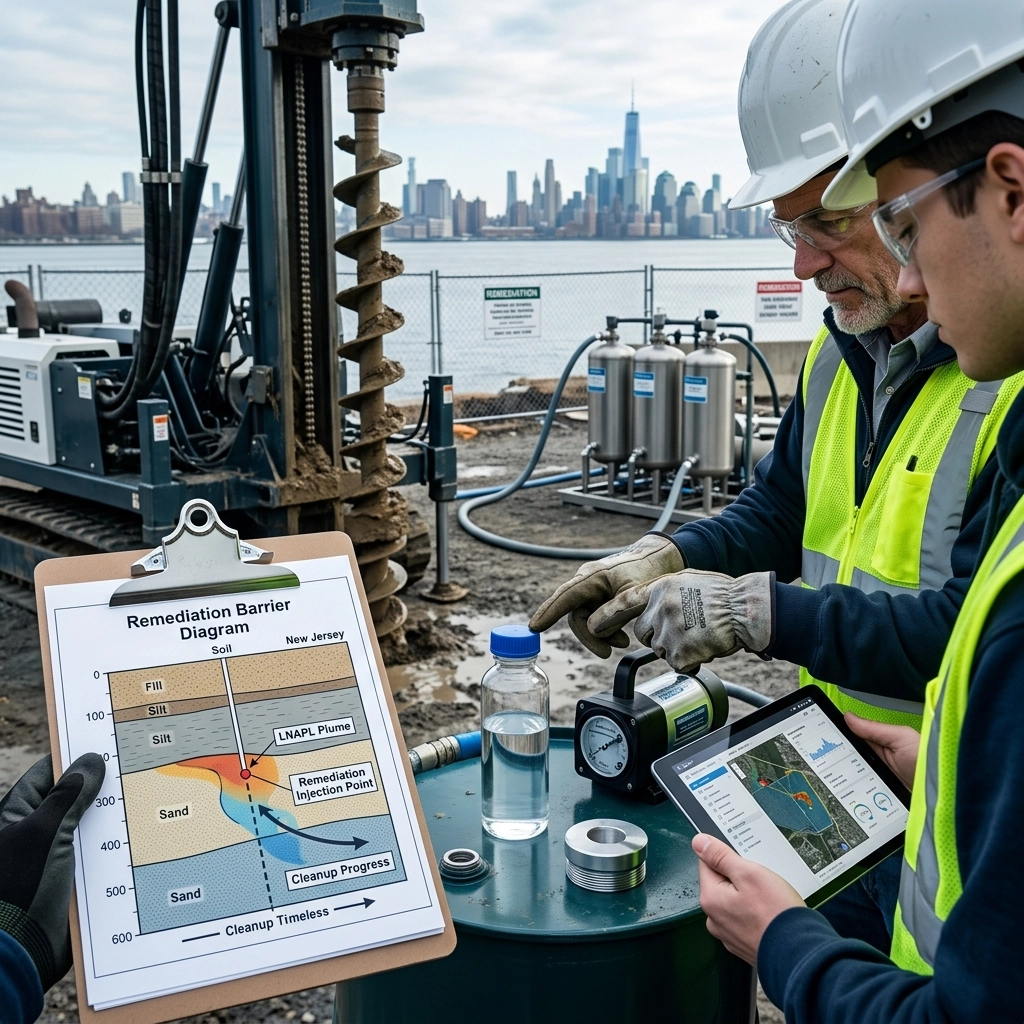
    Professional engineers conducting a geotechnical investigation with a drill rig on a New Jersey development site.

    Why the "Cheap" Quote is a Trap

    In this business, you get exactly what you pay for. When you see a quote that’s significantly lower than the market average for geotechnical investigation costs in NJ, you have to ask what’s being left out. Usually, it’s the human element.

    1. The Big-Box Firm "Junior" Problem

    When you hire a massive national firm, you’re paying for their glitzy office in a different time zone. You might talk to a Senior VP during the pitch, but who’s actually out on your site at 6:00 AM? Usually, it’s a junior staffer with six months of experience who is just checking boxes. They follow a script. If they hit something weird, they might not even notice it until the lab results come back weeks later.

    Envicon is different. We’re field-first. Our leadership is hands-on. When we’re on-site, we’re looking for the "why" behind the soil conditions, not just the "what." We understand the local geology: from the trap rock of the Palisades to the silty clays of the Rahway River basin.

    2. The "CYA" Report

    Many consultants write reports designed to protect themselves, not to help you build. They’ll load the document with so many caveats and "recommendations for further study" that you can't actually use the report to get a permit or a loan. You end up paying for a document that tells you that you need to spend more money.

    3. Missing the "NJ Factor"

    New Jersey is a unique beast. Between the NJDEP regulations and the specific load-bearing requirements for urban infill, you need a firm that has regional fluency. A "national" firm might apply a cookie-cutter approach that works in Ohio but fails miserably in the swampy soils of the Hackensack Meadowlands.

    The Consequences of Cutting Corners

    What happens when your soil borings aren't deep enough or frequent enough? It’s never good news.

    • Differential Settlement: This is the nightmare scenario. If one side of your building settles faster than the other because a boring missed a pocket of soft soil, you’re looking at structural cracks, window misalignments, and potentially a condemned building.
    • The "Unexpected" Rock: We’ve seen projects grind to a halt because a "budget" investigation missed a shallow rock ledge. Suddenly, the developer is hit with a $50,000 change order for blasting or specialized excavation.
    • Lender Rejection: Banks aren't stupid. If your geotechnical report looks thin or was performed by a firm they don't trust, they’ll stall your funding. At Envicon, we provide the level of due diligence that satisfies both the regulators and the money.

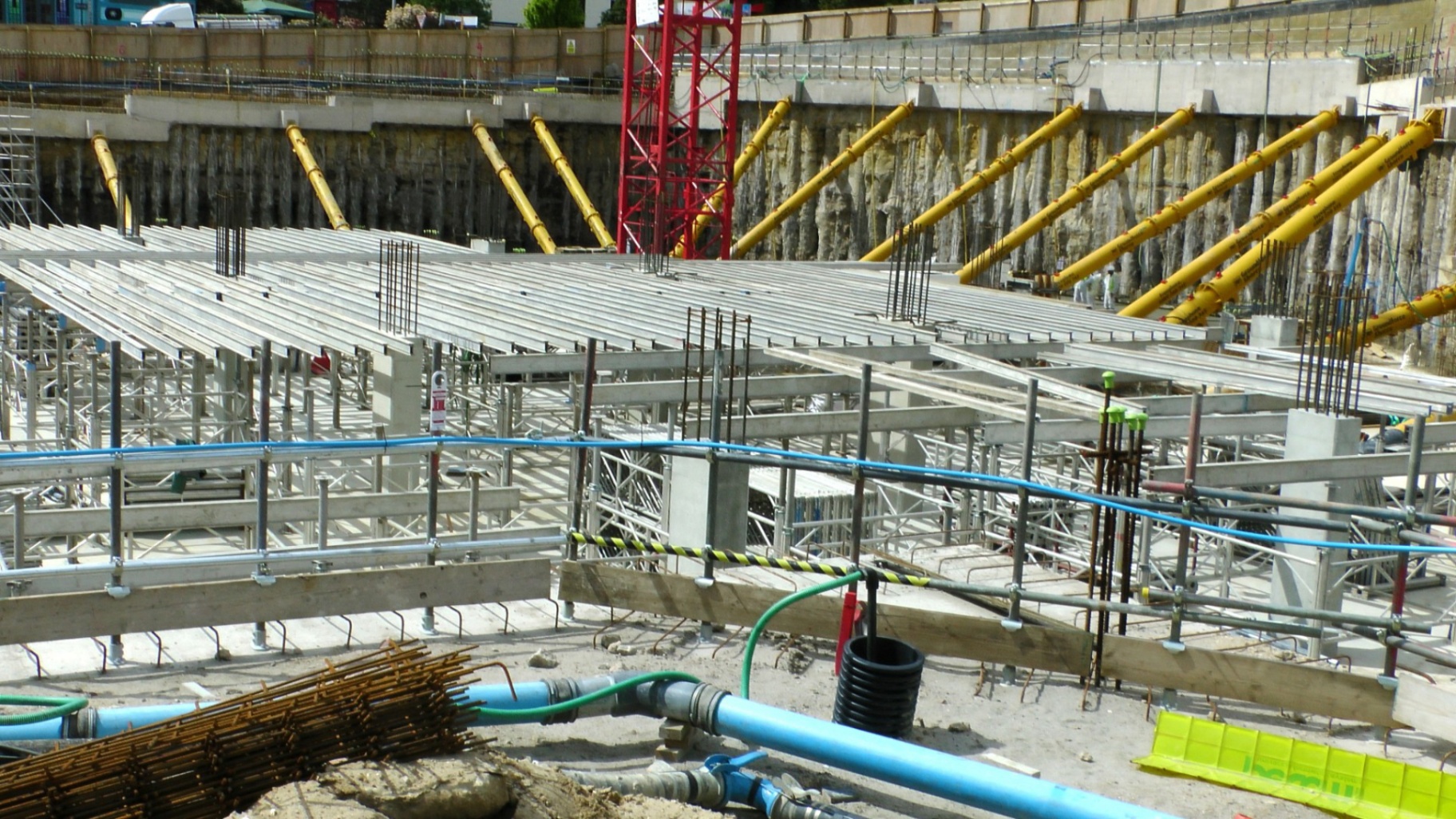
    Active construction site showing excavation support and site safety controls

    Envicon’s Approach: Precision Over Paperwork

    We don’t believe in "standard" investigations because no two sites in New Jersey are standard. Our approach to geotechnical work is built on three pillars:

    Hands-On Leadership

    At Envicon, you aren't just another project number. Our PEs are involved from day one. We coordinate directly with your architects, structural engineers, and attorneys to ensure everyone is aligned. If we find something unexpected in a boring, we call you immediately: we don't wait for the final report to drop a bomb on your desk.

    Strategic Site Characterization

    We don't just poke holes in the ground. We look at the history of the site. Was it a former industrial facility? Is there a risk of contaminated soil that might affect your foundation design? We integrate our geotechnical expertise with our environmental knowledge to give you a 360-degree view of your risk.

    Contractor-Adjacent Mentality

    We speak the language of the job site. We know that every day your rig isn't moving is a day you’re losing money. We work with urgency to get our crews in, get the data, and get the report into your hands so you can keep moving toward a buildable site.

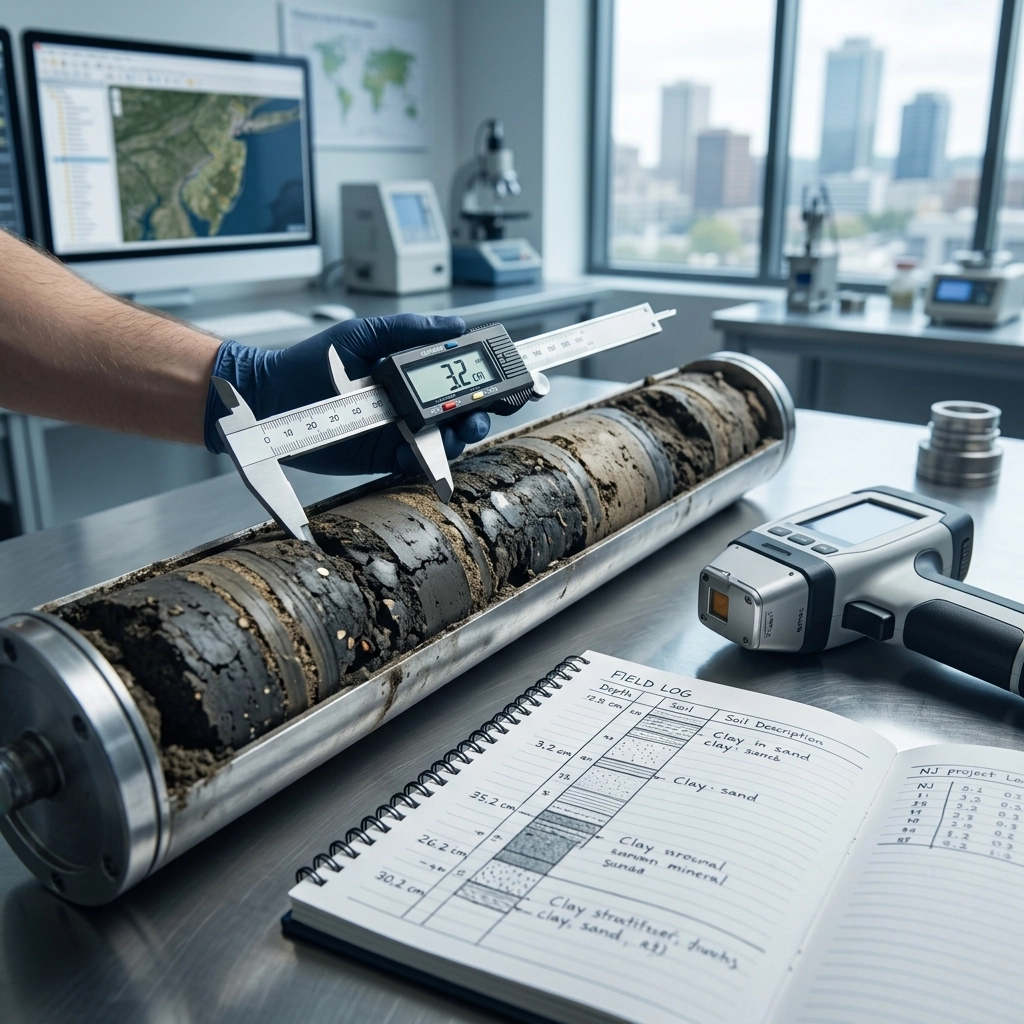
    Split-spoon sampler showing soil core strata layers for an accurate geotechnical investigation report in New Jersey.

    What You Should Look for in a Geotechnical Partner

    If you’re comparing quotes for geotechnical investigation costs in NJ, don't just look at the bottom line. Look for these markers of authority:

    • Regional Fluency: Do they know the local municipal requirements?
    • Direct Principal Involvement: Will you have a direct line to the person signing the report?
    • Integrated Services: Can they handle the Phase I ESA and the Geotech at the same time to save on mobilization?
    • Transparent Pricing: Are they giving you a "not-to-exceed" number, or is the contract riddled with potential add-ons?

    The Envicon Difference: Why Clients Switch

    Most of our clients come to us after being burned by a "big-box" consultant. They’re tired of the change orders, the slow turnaround, and the junior staff who don't know a silt fence from a soldier pile.

    We make complex projects simpler to execute. We don't just deliver a report; we give you a path to closure. Whether you’re dealing with the NYC OER, the NJDEP, or a private lender, we stand behind our word and our work.

    "Integrity is not just ethical behavior : it is about delivering the truth and never cutting corners." : Jason Pancoast, CEO, Envicon Group.

    Summary & Takeaways

    Cutting corners on soil borings is a gamble where the house always wins. While the initial geotechnical investigation costs in NJ might seem like an easy place to save, the long-term risks far outweigh the short-term gains.

    • Standard costs range from $1,000 to $5,000, but complexity drives the price.
    • Cheap reports often lead to massive change orders and structural failures.
    • Regional expertise is non-negotiable in the NY/NJ market.
    • Envicon provides PE-led, field-first solutions that big-box firms can’t match.

    Don't let your project get stuck in the mud. If you want a partner who takes ownership of the outcome, let’s talk. We’re ready to help you unlock the full potential of your site.

    Ready to get a real look at your site?
    Contact Envicon today for a no-fluff consultation on your next project.

    Envicon Group Logo

  • NJ Brownfield Tax Credits: Turning Contaminated Sites into Profitable Assets

    NJ Brownfield Tax Credits: Turning Contaminated Sites into Profitable Assets

    In the New Jersey real estate market, land is the ultimate finite resource. If you are looking at a prime location in Jersey City, Newark, or even the sprawling industrial corridors of Woodbridge, chances are that "prime" site has a history. Often, that history involves soil or groundwater contamination that makes traditional lenders nervous and developers hesitate.

    But here is the reality: the most profitable projects in the next decade won't be built on virgin greenfields. They will be built on brownfields. Thanks to the New Jersey Brownfield Redevelopment Incentive Program (BRIP), what used to be an environmental liability is now one of the most powerful financial levers in your capital stack.

    At Envicon, we don't just see the contamination; we see the path to a buildable site. We understand that for a developer, a tax credit isn't just a "nice to have": it is often the difference between a project that pencils out and one that sits dormant for another twenty years.

    The $50 Million Opportunity: Understanding BRIP

    The New Jersey Economic Development Authority (NJEDA) manages a $50 million annual pool specifically designed to offset the costs of environmental remediation. This isn't a grant you have to beg for; it’s a competitive, one-time transferable tax credit program meant to bridge the "feasibility gap" that contaminated sites create.

    In September 2024, Governor Phil Murphy signed legislation that significantly sweetened the deal. If you haven’t looked at the program since the early 2020s, the numbers have changed in your favor. The state has realized that to meet housing and commercial demands, they need to make it easier for you to clean up these sites.

    Why the 2024 Enhancements Matter

    The updated rules didn't just add more money to the pot; they targeted the specific pain points of urban redevelopment. By increasing the percentages of costs covered and raising the total caps per project, the state has made it possible to tackle more complex, deeply contaminated sites that were previously untouchable.

    Active brownfield redevelopment site with heavy equipment and soil staging areas

    Breaking Down the Percentages: What’s in it for You?

    The BRIP program is structured to reward developers who take on the hardest projects in the areas that need them most. The credit amounts vary based on where your project is located and what you are building:

    • Standard Projects: For sites outside of special incentive zones, you can receive a credit for 40% of remediation costs, capped at $4 million.
    • Targeted Areas: If your project is in a qualified incentive tract or a government-restricted municipality, the credit jumps to 80% of remediation costs, with a cap of $12 million. (This is a massive increase from the previous 60% and $8 million limits).
    • Solar on Landfills: If you’re looking at a renewables project involving a closed landfill, the credit can cover 100% of cleanup costs, capped at $12 million in qualified areas.

    These aren't just small rebates. When you are looking at a multi-million dollar remediation involving soil excavation, groundwater treatment, or vapor mitigation, an 80% credit fundamentally changes your ROI.

    The Power of Transferability: Cash in Hand

    One of the biggest misconceptions about tax credits is that you need a massive New Jersey tax liability to use them. That’s not how Envicon helps our clients navigate this.

    These credits are transferable. If your development entity doesn't have the tax appetite to use a $10 million credit, you can sell it. Historically, these credits sell for 75% to 85% of their face value.

    Think about that as a liquidity event during or shortly after your remediation phase. You perform the cleanup, verify the costs, receive the credit, and sell it to a major corporation with a high New Jersey Franchise Tax bill. You get immediate capital back into your project, reducing your debt load or funding the next phase of vertical construction.

    The Envicon Approach: More Than a Report

    If you go to a "Big Box" national consulting firm, they will happily bill you for a 500-page report that describes your contamination in excruciating detail. They’ll hand it to you, wish you luck with the NJEDA, and send a change order for the next meeting.

    Envicon works differently. We are a field-first, PE-led firm. We don't sell reports; we sell cleared paths. When it comes to NJ Brownfield Tax Credits, our role is to act as your strategic partner from the initial Phase I ESA through the final certificate of completion.

    The Problem with "Big Firm" Consulting

    At a national firm, your project is a number in a queue. You talk to a partner during the pitch, but a junior staffer in a satellite office is the one actually looking at your data. They write "defensive" reports: meaning they are more concerned with protecting the firm from liability than moving your project forward.

    The Envicon Difference

    We bring 20 years of direct agency relationships. We know the reviewers at the NJDEP and the NJEDA. We understand the nuances of the LSRP (Licensed Site Remediation Professional) program and how to document costs in a way that the state actually accepts.

    • Precision in Budgeting: We help you identify the "feasibility gap" early. If the project won't qualify for the credit because it's too "easy" to clean up, we tell you the truth upfront.
    • Urgency in Execution: Every week your site sits behind a fence is a week of carry costs. We coordinate subcontractors and remediation teams with the mindset of a contractor, not an academic.
    • Regulatory Fluency: We sit at the table with the regulators. We don’t wait for them to call us; we proactively resolve issues before they become "Notice of Deficiencies."

    Aerial view of an active brownfield remediation site featuring soil excavations

    Navigating the Fine Print: Eligibility and Compliance

    To get the money, you have to play by the rules. The NJEDA has two major hurdles that catch unprepared developers off guard:

    1. The "But For" Test: You must demonstrate that the project is not economically feasible but for the tax credit. This requires sophisticated financial modeling and a clear environmental cost estimate.
    2. Prevailing Wage: Any project receiving these credits must comply with prevailing wage requirements for both the remediation and the subsequent building services. If you haven't factored this into your construction budget, the tax credit might be offset by higher labor costs.

    This is where Envicon’s strategic support becomes invaluable. We help you balance the environmental costs against the regulatory requirements to ensure the math actually works in your favor.

    Real-Time Data, Real-World Results

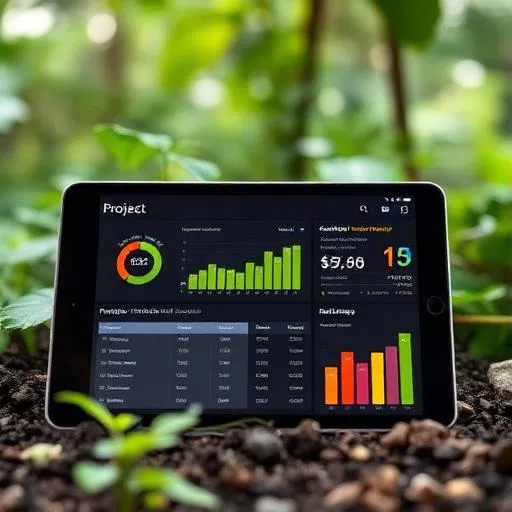
    In today’s market, you can't manage a brownfield project with paper logs and "we'll get back to you next week" updates. Envicon utilizes advanced project analytics and real-time data tracking to monitor remediation progress.

    When we are on-site, we are tracking every yard of soil and every gallon of treated water. This level of precision isn't just for our records: it is the documentation you need to justify your tax credit application to the state. When the NJEDA auditors look at an Envicon-managed project, they see a clear, transparent trail of data that matches the requested credit.

    Tablet displaying project analytics and environmental data dashboards outdoors

    Why Now is the Time to Move

    The $50 million annual cap for the BRIP program is a "rolling" application process, but it is competitive. As more developers realize the potential of these 2024 enhancements, the queue will grow.

    Waiting to start your environmental due diligence means you are giving your competitors a head start on the same pool of funds. Whether you are looking at a site in Hudson County or a sprawling industrial tract in South Jersey, the window of opportunity is widest right now.

    Summary: Your Brownfield Action Plan

    • Identify the Opportunity: Don't walk away from a site just because it's a brownfield. Look at the location and the potential for a 40-80% credit.
    • Vet the Math: Use the "But For" test to see if the project qualifies. Factor in prevailing wage and the 75-85% sale value of the credits.
    • Hire Local Fluency: Skip the national firms that treat NJ as a "regional territory." Hire a firm that knows the dirt and the regulators personally.
    • Document Everything: Success in the BRIP program is 50% engineering and 50% documentation. Ensure your consultant has the technology to track every dollar of remediation.

    Your project is stalled? Your consultant handed you a report that creates more questions than answers?

    It’s time to switch to a firm that takes ownership of the outcome. At Envicon, we believe in doing the work right, standing behind our word, and keeping projects moving. We don't just identify problems; we clear the obstacles between you and a buildable site.

    Contact Envicon today to discuss your site and see how we can help you turn your environmental liabilities into profitable assets.


    Envicon Group
    Precision. Urgency. Integrity.Envicon Strategic Solutions Logo

  • ASTM E1527-21: The Technical Shifts Every Real Estate Attorney Needs to Know

    ASTM E1527-21: The Technical Shifts Every Real Estate Attorney Needs to Know

    For real estate attorneys and lenders operating in the high-stakes markets of New York and New Jersey, the Phase I Environmental Site Assessment (ESA) is more than a line item: it is the bedrock of the CERCLA (Comprehensive Environmental Response, Compensation, and Liability Act) "All Appropriate Inquiries" (AAI) defense.

    As of February 13, 2024, the old standard, ASTM E1527-13, has been officially superseded for the purposes of federal liability protection. The new standard, ASTM E1527-21, is now the only path to securing the Innocent Landowner Defense, Bona Fide Prospective Purchaser (BFPP) status, and Contiguous Property Owner status.

    At Envicon, we don’t view this update as a mere administrative hurdle. It is a fundamental shift in how environmental risk is identified, classified, and communicated. For counsel, a report that misses these technical nuances isn’t just a bad deliverable: it’s a professional liability. If your current consultant is still "checking boxes" based on 2013 logic, your client is likely exposed.

    The Re-Definition of Risk: REC, HREC, and CREC

    One of the most significant shifts in the E1527-21 update involves the clarification of "Recognized Environmental Conditions" (RECs). In the past, the distinction between a REC, a Historical REC (HREC), and a Controlled REC (CREC) was often a point of contention between consultants and legal counsel.

    Envicon understands that for an attorney, these definitions determine the language of the purchase and sale agreement (PSA) and the structure of environmental indemnifications. The new standard provides a much-needed logic flow (codified in Appendix X4) to eliminate ambiguity:

    1. REC (Recognized Environmental Condition): The presence or likely presence of hazardous substances or petroleum products. The word "likely" is now more robustly defined, reducing the "subjective gut feeling" of the environmental professional.
    2. HREC (Historical REC): A past release that has been addressed to unrestricted use standards. If a site was cleaned up to residential standards in NJ, it’s an HREC.
    3. CREC (Controlled REC): A past release that has been addressed but involves "controls" (e.g., a cap, a deed notice, or an NJDEP Classification Exception Area).

    licensed-professional-engineer-seal-drafting-symbols.webp

    For lenders, a CREC is a signal that while the site is "closed" in the eyes of the regulator, it carries ongoing compliance costs and potential limitations on future redevelopment. Envicon ensures that our reports clearly delineate these categories so your team can price that risk accurately.

    The 180-Day Clock: Managing the "Shelf Life"

    In the fast-moving NJ/NYC real estate market, delays are the only constant. Whether it's a zoning holdup at the NYC Department of Buildings or a financing delay, the timeline from the Phase I order to the closing table is often longer than anticipated.

    ASTM E1527-21 introduces a strict "shelf life" for the Phase I ESA. To remain valid for AAI, five specific components of the report must be updated if they are more than 180 days old at the time of acquisition:

    • Interviews with owners/occupants.
    • Review of government records.
    • Visual inspection of the property.
    • Search for environmental liens.
    • The Declaration by the Environmental Professional (EP).

    Crucially, no Phase I is valid if it is more than 365 days old.

    stopwatch-on-engineering-blueprints-timely-delivery-envicon.webp

    At Envicon, we proactively track these dates for our clients. We’ve seen too many deals hit a wall at the 11th hour because a national "big-box" firm delivered a report that expired three days before the closing. Envicon’s hands-on leadership means we coordinate with counsel to ensure updates are scheduled and performed with zero downtime, keeping your project moving toward the finish line.

    User Responsibilities: A New Burden for Counsel and Lenders

    Under E1527-21, the "User" (the party seeking the ESA) has expanded responsibilities. This is where many attorneys find themselves in a bind. The standard now explicitly states that the search for Environmental Liens and Activity and Use Limitations (AULs) must be conducted back to 1980.

    More importantly, the standard clarifies that this search is the responsibility of the User, not the Environmental Professional, unless specifically contracted otherwise. If the attorney assumes the EP is doing the title search, and the EP assumes the attorney is handling it, a "Significant Data Gap" occurs.

    A significant data gap can invalidate the AAI defense. When you work with Envicon, we don't leave this to chance. We sit at the table with the legal team early in the process to define who is providing the title records. If needed, Envicon can manage the procurement of these records to ensure the report is technically bulletproof.

    Modern GIS mapping and 1980s property records for ASTM E1527-21 environmental due diligence in NJ/NY.
    Suggested caption: A flowchart illustrating the ASTM E1527-21 logic for determining RECs vs. CRECs.

    Expanded Scope: Adjoining Properties and Emerging Contaminants

    The E1527-21 standard also mandates a more rigorous review of adjoining properties. Environmental Professionals must now conduct a more thorough evaluation of historical uses of neighboring lots in all directions: not just the ones that look suspicious.

    Furthermore, while emerging contaminants like PFAS (Per- and Polyfluoroalkyl Substances) are not yet officially listed as "hazardous substances" under CERCLA, the new standard mentions them in the context of "Non-Scope Considerations."

    In New Jersey, the NJDEP already regulates several PFAS compounds with some of the strictest limits in the country. For a developer or lender in Jersey City or Newark, ignoring PFAS just because it isn't "strictly" required by ASTM yet is a massive strategic error. Envicon brings regional fluency to the table; we know that what is "non-scope" for a national firm is "mission-critical" for an NJ developer. We include these evaluations as standard practice where local regulations demand it, protecting you from future liability.

    The Envicon Difference: Beyond the "Check-the-Box" Mentality

    Why does the choice of consultant matter more under the new standard? Because E1527-21 requires more professional judgment and regional expertise than ever before.

    Large national firms often utilize junior-level staff to conduct site visits and write reports using automated templates. These "big-box" reports are written defensively to protect the consultant’s overhead, often resulting in a list of "Potential RECs" that leave the attorney with more questions than answers.

    Envicon Group operates differently:

    • PE-Led, Field-First: Our senior leadership is involved from the initial site walk through the final signature. We don't just identify a problem; we provide a clear path to closure.
    • Regulator-Facing Expertise: We have decades of experience dealing with the NYC OER, NYSDEC, and NJDEP. When we identify a CREC, we know exactly how the local reviewer will perceive it.
    • Direct Alignment: We work directly with real estate attorneys to ensure the Phase I findings align with the transaction's risk tolerance. We don’t just deliver a PDF; we deliver a strategy.

    Summary of Key Takeaways for Counsel

    • Audit Your Standards: Ensure all new Phase I orders explicitly reference ASTM E1527-21.
    • Mind the Calendar: If your closing is delayed beyond six months, you need an update. Coordinate these fees upfront.
    • Clarify Title Responsibilities: Don't assume the consultant is searching for 1980s-era liens unless it's in the scope of work.
    • Focus on Logic: Use the new REC/CREC definitions to tighten your environmental indemnification clauses in the PSA.
    • Look Beyond Federal: In NY and NJ, local regulations often outpace federal standards. Choose a consultant like Envicon that understands the regional landscape.

    Environmental due diligence is not a commodity: it is a risk management tool. In a regulatory environment that is increasingly complex and litigious, you need a partner who understands that a "cleared path" is the only outcome that matters.

    Urban Intersection at Dusk

    Ready to Modernize Your Due Diligence?

    If you are currently managing a portfolio or a specific transaction in the NJ/NY area, don't let an outdated Phase I standard jeopardize your CERCLA defense. Contact Envicon today to review your current diligence requirements and ensure your projects are built on a foundation of technical precision and regulatory certainty.

    Contact Envicon Group | Explore Our Services


    Envicon Group Logo

  • Beyond the SWPPP Paperwork: Why Field-Level QA/QC is Your Best Defense Against Fines

    Beyond the SWPPP Paperwork: Why Field-Level QA/QC is Your Best Defense Against Fines

    Let’s be honest: nobody gets excited about a three-ring binder.

    In the world of New York and New Jersey construction, the Stormwater Pollution Prevention Plan (SWPPP) is often treated like a high school diploma. You work hard to get it, you’re relieved when it’s done, and then you stick it in a drawer (or a job site trailer) and hope you never have to look at it again.

    But here’s the reality I see every week at Envicon Group: the binder doesn’t stop the NJDEP or the NYSDEC from handing out fines. A piece of paper doesn't keep sediment out of the Hudson River or the local storm drain. Only field-level QA/QC: actual eyes on the ground and boots in the mud: does that.

    If you’re treating your SWPPP as a "check-the-box" administrative task, you aren't just risking the environment; you’re risking your project’s timeline, your budget, and your reputation.

    The Paperwork Trap

    Most environmental consultants are great at writing reports. They’ll give you a 200-page document full of technical jargon and site maps that look beautiful in a PDF. But once that report is delivered, many of those "big-box" firms disappear. They leave the implementation to a site super who is already juggling ten other priorities or, worse, to a junior staffer who wouldn't know a failing silt fence if they tripped over it.

    This is the "Paperwork Trap." You feel compliant because the binder is on the shelf. But stormwater compliance isn't a static event; it’s a daily battle against gravity, weather, and site wear-and-tear.

    When a regulator pulls up to your site after a two-inch rainfall, they aren’t going to read your executive summary first. They’re going to look at the perimeter. They’re going to look at your stabilized construction entrance. They’re going to look for evidence that your Best Management Practices (BMPs) are actually working. If the field reality doesn't match the paperwork, the paperwork becomes evidence against you, not a defense for you.

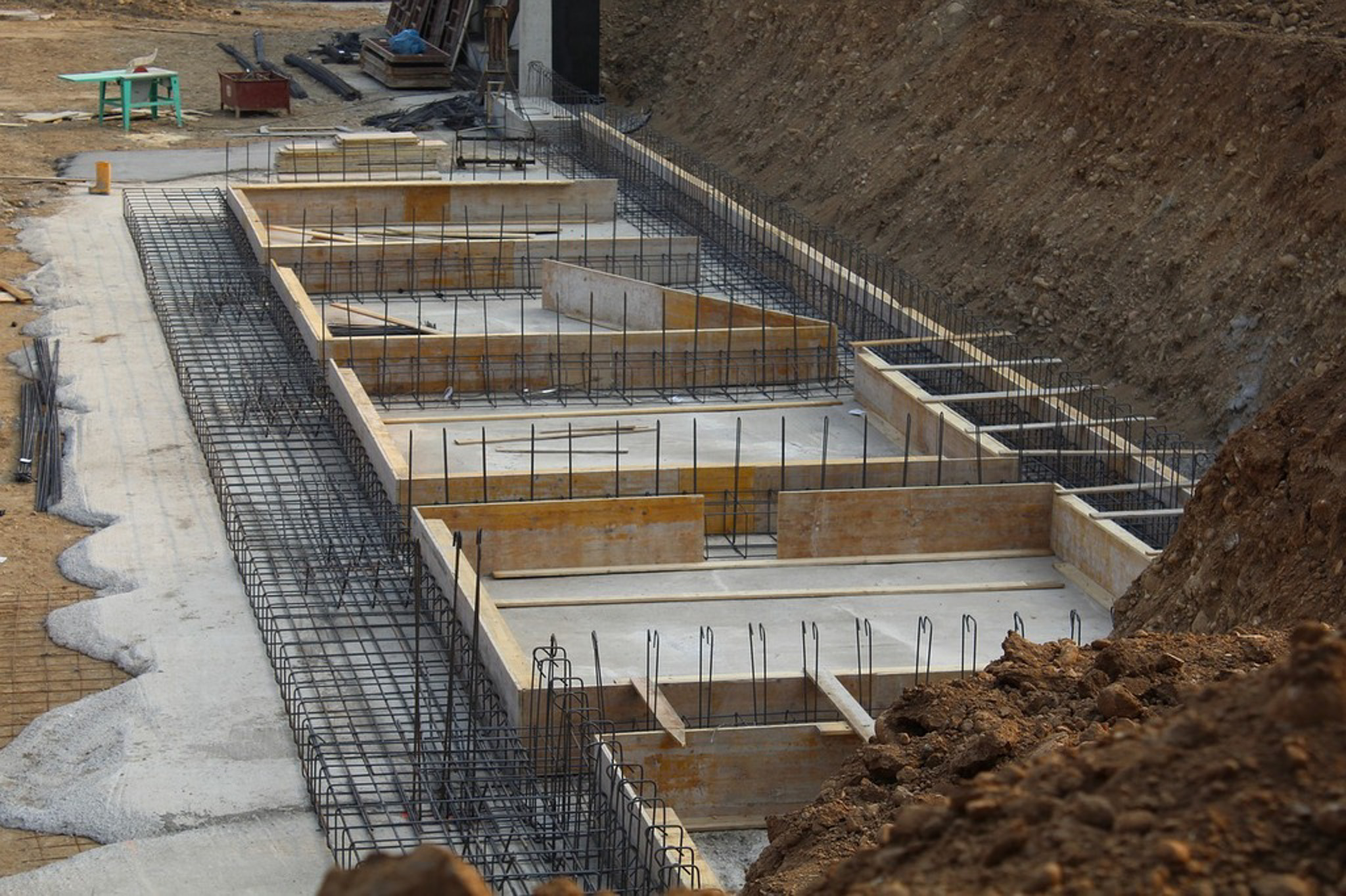
    Active brownfield remediation site showing the importance of site-level management

    Why Field-Level QA/QC is Your Real Defense

    Field-level Quality Assurance and Quality Control (QA/QC) is the bridge between what the engineers planned and what the contractors built. At Envicon, we don't just deliver a plan; we provide construction oversight that ensures the plan actually works.

    Here is why active field monitoring is your best defense against fines:

    1. The SWPPP is a "Living Document"

    According to the EPA and state-level guidelines, a SWPPP must be amended and updated to reflect actual site conditions. If you move a soil stockpile or change an access road, your plan is technically out of compliance until it's updated. Field-level QA/QC ensures that these changes are documented in real-time. Without someone actively managing this, your "living document" becomes a dead record that regulators will pick apart.

    2. Qualified SWPPP Practitioner (QSP) Oversight

    In many jurisdictions, specifically across NY and NJ, you are required to have a Qualified SWPPP Practitioner (QSP) or a similarly credentialed professional perform regular inspections. This isn't just a suggestion; it’s a regulatory mandate. These inspections must happen:

    • Weekly during active construction.
    • Before and after "qualifying rain events."
    • During extended storms.
    • Once a month, even if the site is inactive.

    If your consultant is sitting in an office in another state, they aren't seeing the gap under the silt fence or the track-out on the public road. Field-level QA/QC catches these issues before the inspector arrives.

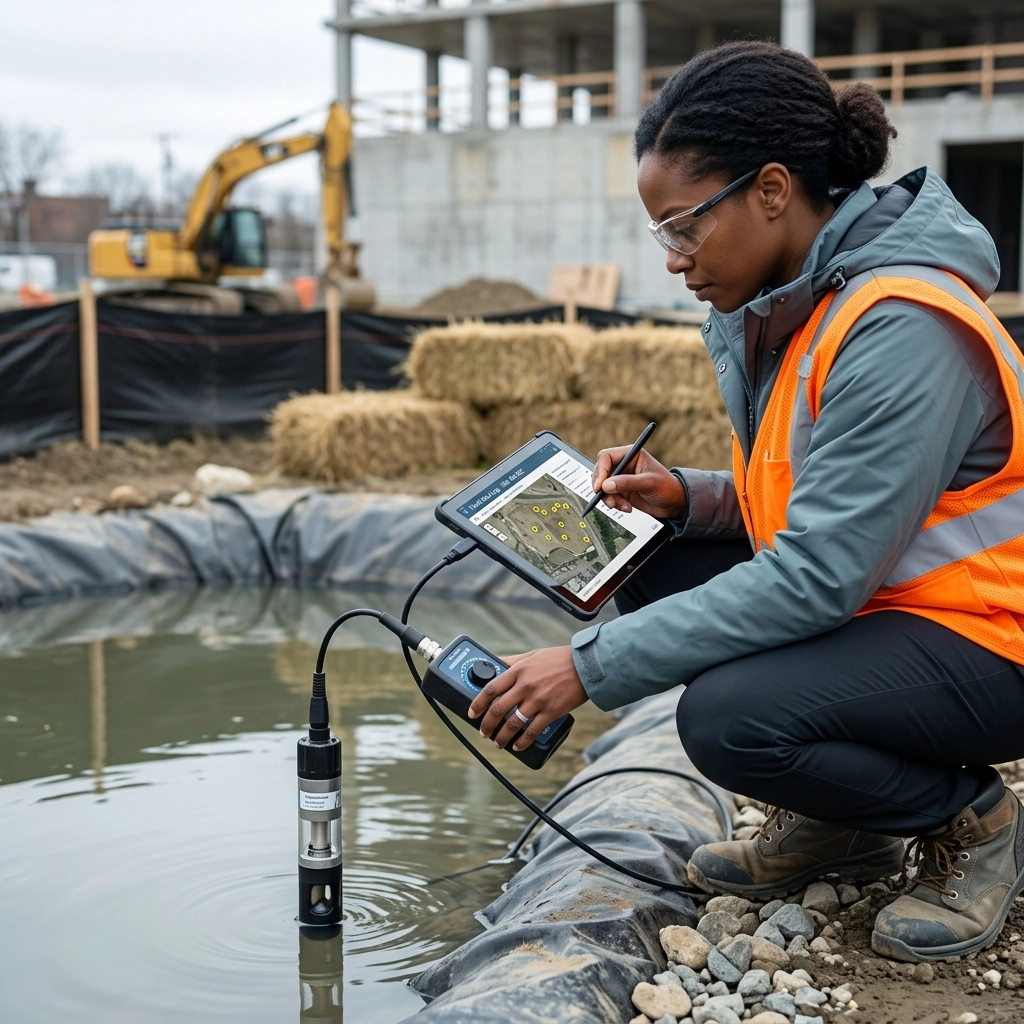
    Field environmental monitoring tools and GIS tablet ensuring SWPPP compliance and construction oversight.

    The High Cost of "Good Enough"

    We’ve seen it happen. A developer tries to save a few thousand dollars by hiring a discount consultant who provides the bare minimum oversight. Then, a storm hits. The hay bales fail. Sediment-laden water enters a protected wetland or a municipal sewer system.

    The result?

    • Civil Penalties: Fines can reach tens of thousands of dollars per day per violation.
    • Stop-Work Orders: Every day your site is shut down while you scramble to fix environmental issues, your carry costs are ticking.
    • Third-Party Lawsuits: In areas like NYC and Northern Jersey, environmental advocacy groups are hyper-vigilant. A visible plume of mud in a river is an invitation for a lawsuit.

    At Envicon, we believe in "cleared paths." We don't just tell you there's a problem; we work with the site crew to fix it. We speak the language of the contractor and the regulator. If we see a BMP that’s poorly installed, we don’t just write a note in a report: we get it corrected on the spot.

    Detailed documentation and compliance review are critical, but must match field conditions

    The Envicon Difference: More Than a Report

    When you work with a national firm, you often get a junior inspector who is following a checklist. They lack the authority to make decisions and the experience to see where a site is heading.

    At Envicon Group, we bring 20 years of local experience in redevelopment and civil engineering. Here is why our approach to SWPPP and field QA/QC is different:

    • PE-Led and Field-First: Our leadership is involved. You get experts who have sat across the table from the NYSDEC and NJDEP for two decades. We know what they’re looking for because we’ve built those relationships.
    • Proactive, Not Reactive: We don't wait for the rain to tell us a site is vulnerable. We look at the grading and the schedule and tell you where the weak points are before the clouds roll in.
    • Integrated Solutions: Because we handle civil engineering, geotechnical, and environmental consulting, we see the big picture. We understand how a foundation pour affects your stormwater runoff.
    • Responsiveness: If there’s an issue on a Friday afternoon, we aren't "checking out." We’re on-site or on the phone, making sure your project stays compliant through the weekend.

    "Collaboration is not a buzzword: it’s how we work. We don't just deliver services; we help transform underused properties into thriving assets by removing the obstacles in your way." : Jason Pancoast, CEO.

    Moving Beyond the Binder

    Stormwater compliance shouldn't be a source of anxiety. It should be a predictable, managed part of your project lifecycle. By investing in field-level QA/QC, you aren't just "buying insurance" against fines: you’re ensuring that your project moves forward without the friction of environmental delays.

    Whether you are working on a waterfront transfer station in Hudson County or a renewables project in upstate New York, the rules are getting tighter. The agencies are getting more aggressive. The binder on the shelf is no longer enough.

    Proper oversight during concrete and foundation work ensures structural and environmental integrity

    Summary & Key Takeaways

    1. Paperwork is just the start: A SWPPP is a roadmap, but you still have to drive the car. Field-level implementation is where compliance actually happens.
    2. Inspect to Protect: Regular inspections by a qualified professional (QSP) are your early warning system. Catching a failing BMP on Tuesday is much cheaper than paying a fine on Wednesday.
    3. Stay "Live": Keep your SWPPP updated. If the site changes, the plan must change. An outdated plan is a non-compliant plan.
    4. Hire for the Field, Not the Office: Choose a consultant that prioritizes site-level QA/QC and has the local regulatory fluency to keep your project moving.

    Don't let a "check-the-box" mentality stall your project. If you're tired of big-firm overhead and junior-staff execution, let's talk. We specialize in turning complex, environmentally challenged sites into clean, buildable, and compliant assets.

    Your project is too important to leave to a binder. Let’s get it right in the field.

    Contact Envicon Group Today to discuss your next project’s SWPPP and environmental monitoring needs.Envicon Strategic Solutions Logo

  • 72-Hour Turnaround: Why Speed is Your Best ROI in NYC Real Estate

    72-Hour Turnaround: Why Speed is Your Best ROI in NYC Real Estate

    In the New York City real estate market, time isn’t just money: it’s the difference between a landmark acquisition and a missed opportunity. If you’re sitting on a deal in the five boroughs or across the river in Jersey City, you already know the stakes. The window to secure financing, satisfy a lender’s "anxiety list," and get a shovel in the ground is closing faster than ever.

    At Envicon Group, we see it every day. A developer has a site under contract. The carry costs are ticking. The lender is breathing down their neck for environmental due diligence. And the consultant they hired? They’re "getting to it" sometime next week.

    In this market, "sometime next week" is a death sentence for your ROI.

    We’ve built our reputation on a radical proposition for the NYC and NJ markets: 72-hour turnaround for critical due diligence data. We aren't talking about a generic "we’ll call you back" promise. We’re talking about actionable, lender-ready data that moves the needle on your Phase I ESA or site characterization before your competition even gets a return email from their big-box consultant.

    The Brutal Math of Delay

    Why does 72 hours matter? Because in NYC real estate, momentum is a fragile thing. Research shows that property listings see an 82% surge in online views within the first 72 hours [2]. While that statistic often refers to residential staging, the psychology of the deal is identical in commercial development. When a deal is fresh, enthusiasm is high. When it lingers because of a "missing report," doubt creeps in.

    Lenders lose patience. Investors start looking at other "cleaner" opportunities. Every week your project sits in a consultant’s queue, you are bleeding carry costs. Whether it’s property taxes, insurance, or interest on a bridge loan, the meter is always running.

    If your consultant takes three weeks to tell you what we can tell you in three days, they haven’t just cost you time: they’ve actively eroded your project's ROI. At Envicon, we don’t sell reports; we sell cleared paths.

    A stopwatch rests on top of site engineering blueprints, symbolizing Envicon Strategic Solutions’ commitment to fast turnarounds

    We Don't Sell Reports. We Sell Cleared Paths.

    The dirty secret of the environmental consulting industry is that most firms write reports to protect themselves, not to help you build. They produce 300-page "CYA" (Cover Your Assets) documents filled with enough "if," "maybe," and "pending further investigation" to stall a project for months.

    We take a different approach. As a PE-led, field-first firm, we understand that you need to know three things immediately:

    1. Is there a problem?
    2. How much will it cost to fix?
    3. How long will it take to get regulatory sign-off?

    Our 72-hour data turnaround gives you the answers to these questions while the deal is still hot. We’ve spent 20 years building direct relationships with the people who actually sign the papers: the reviewers at the NYC OER (Office of Environmental Remediation), the NYSDEC, and the NJ DEP.

    When we deliver data, it’s formatted the way they want to see it, which means fewer comments, faster approvals, and a shorter path to remediation and redevelopment.

    The "Big-Box" Pain vs. The Envicon Answer

    If you’ve ever worked with a national, 10,000-employee firm, you know the routine. You meet a polished Senior Partner during the pitch. The moment the contract is signed, they vanish. Your project is handed off to a junior staffer who has never set foot on a construction site in Queens or Newark.

    That junior staffer follows a cookie-cutter playbook designed for a parking lot in Ohio, not a complex brownfield in Hudson County. When a challenge arises: and in NYC, it always does: they don’t have the authority to make a call. They have to "check with the home office."

    At Envicon, we operate differently:

    • No Black Boxes: You won’t wonder who is talking to your regulator. We work directly with your architects, attorneys, and construction managers to ensure everyone is aligned.
    • Zero-Fluff Communication: We talk like the professionals we are. We’re the ones on-site at 7:00 AM talking to the excavator operator, not just sitting behind a desk.
    • Transparent Pricing: We don't do "scope creep." We focus on making complex projects simpler to execute, which means no surprise change orders that inflate your budget.

    Active brownfield redevelopment site with heavy equipment and soil staging areas

    Speed as a Competitive Advantage

    In a high-stakes environment, speed is a signal of quality. Professional-grade materials and data delivered quickly build buyer and lender confidence. Just as virtual staging can help a property close 55 days faster than the market average [2], rapid environmental due diligence clears the psychological hurdles that prevent a deal from closing.

    When you can present a lender with a clean, actionable environmental strategy within 72 hours of your initial site visit, you aren't just a developer anymore: you’re a "low-risk" partner.

    Our team uses real-time analytics and field-tested technology to ensure that the data we collect on Monday is in your inbox by Thursday. This isn't just about being fast; it's about being right, the first time.

    Tablet displaying project analytics and environmental data dashboards outdoors on active soil

    The ROI of "Right the First Time"

    Think about the last time a project of yours was delayed. Was it because of a technical environmental issue, or was it because of a paperwork error? In many cases, it’s the latter. A mislabeled sample, a missing signature on a manifest, or a report that didn’t follow the specific NYC OER "E-Designation" protocols can set you back weeks.

    Every week of delay is a week of lost revenue. If you’re building multi-family residential, that’s a week of lost rent. If you’re flipping an industrial asset, that’s another week of market volatility you have to navigate.

    The ROI on hiring Envicon doesn't just come from our fee: it comes from the months of carry costs we save you by navigating the regulatory maze with precision. We’ve been family-owned and operated for two decades. We don't have a "regional satellite office" mentality. We live and work in the NJ/NYC market. This is our backyard, and we know exactly where the pitfalls are buried.

    Summary: Stop Waiting, Start Building

    The NYC real estate market doesn't reward the patient; it rewards the prepared. If your current environmental consultant is the bottleneck in your development process, it’s time to change the equation.

    Why Envicon Group?

    • 72-Hour Data Turnaround: We move at the speed of your deal.
    • Regulator Fluency: We know the reviewers at NYC OER and NYSDEC by name.
    • Project Ownership: We take full responsibility for outcomes, from Phase I ESA to final closure.
    • Value-Add Results: We don't just identify problems; we provide the engineering solutions to solve them.

    Don't let your project sit in a queue. Let's get to work and clear the path to your next successful build.

    Ready to move faster?

    Contact Envicon Group today for a consultation on your next project. Whether you’re dealing with a complex brownfield or need a rapid Phase I for an acquisition, we’re ready to deliver.


    Sources:

    1. Real Estate Market Timing and Momentum Research
    2. ROI of Speed and Presentation in Property Sales

    Envicon Logo

  • Looking For NJ Brownfield Tax Credits? 10 Things to Know Before You Apply

    Looking For NJ Brownfield Tax Credits? 10 Things to Know Before You Apply

    In the world of New Jersey real estate development, a "contaminated site" is often viewed as a liability: a red-tape nightmare that drains capital and kills timelines. But at Envicon Strategic Solutions, we see it differently. We see a blank canvas. We see a chance to take an underutilized piece of our state’s industrial history and turn it into a community anchor.

    The New Jersey Brownfield Tax Credit program is the engine that makes this transformation financially viable. Managed by the New Jersey Economic Development Authority (NJEDA), this program doesn't just offer a "discount" on cleanup; it provides a strategic path to maximize ROI on sites that others are too afraid to touch.

    However, navigating the NJEDA and NJDEP bureaucracy isn't for the faint of heart. If you’re eyeing a brownfield project in Jersey City, Newark, or even the growing corridors of South Jersey, here are 10 things you need to know before you sign that redevelopment agreement.

    1. There’s a $50 Million Annual Pool (And It’s Moving Fast)

    The State of New Jersey has committed $50 million annually to this program. While that sounds like a massive number, in the world of high-stakes remediation, it disappears quickly. The credits are awarded on a rolling basis, meaning timing isn't just an advantage: it’s the whole game.

    At Envicon, we tell our clients that the "wait and see" approach is the fastest way to leave money on the table. You need to be ready to move as soon as your site investigation identifies the gap.

    2. Eligibility is Broader Than You Think

    You don’t have to be a multi-billion dollar REIT to play in this space. Eligibility extends to private developers, non-profits, and even municipal government entities. The core requirement is that the site must be a "brownfield": a property that is vacant or underutilized with confirmed or suspected contamination.

    Whether you’re looking at an abandoned gas station or a massive former manufacturing plant, if the soil or groundwater is holding back the property’s potential, you’re likely in the running.

    3. Location Dictates Your Ceiling: The 80% Play

    This is where strategy beats brute force. For a standard site, the tax credit covers 50% of remediation costs, capped at $4 million. But if you’re looking at projects in "Government Restricted Municipalities": think Atlantic City, Paterson, or Trenton: or qualified incentive tracts, the math changes drastically.

    In these areas, the credit can jump to 80% of costs, with a maximum cap of $12 million. Knowing exactly where these lines are drawn on the map is the difference between a project that pencils out and one that doesn't.

    Modern Urban Skyline at Dusk

    4. The "But For" Requirement

    The NJEDA isn't in the business of handing out free money for projects that would happen anyway. To qualify, you must demonstrate that the project is not economically feasible without the tax credit. This requires a sophisticated "pro forma" analysis.

    We often see developers struggle here because their "Big Box" consultants provide technical data but lack the visionary business sense to explain the financial gap to the state. We bridge that gap by aligning the environmental reality with your business goals.

    5. Solar on Landfills: The 100% Cleanup Hack

    If your vision includes renewable energy, New Jersey has a massive incentive for you. If you’re installing solar panels on a closed landfill, the tax credit can cover 100% of the cleanup costs.

    With caps ranging from $8 million to $12 million depending on the location, this turns "useless" land into a literal power plant. It’s one of the most effective ways to build a legacy of sustainability while securing a rock-solid bottom line. Check out our Energy & Renewables section to see how we’ve handled similar integrations.

    6. These Credits are Liquid Gold (Transferability)

    You don’t need a massive tax appetite to benefit from these credits. NJ Brownfield Tax Credits are transferable. This means you can sell them to other parties for cash: typically for no less than 85% of their value (or 75% for Low Income Housing projects).

    This provides immediate liquidity that can be cycled back into the construction phase of your project. It’s essentially a secondary financing vehicle that most traditional lenders don't even account for.

    Engineers reviewing site plans at a Jersey City urban construction site for a brownfield redevelopment project.

    7. The Prevailing Wage Reality

    Transparency is key: if you take the credit, you must play by the state’s labor rules. This means complying with construction prevailing wages during remediation and construction, and building services prevailing wages for 10 years after completion.

    A lot of developers get "sticker shock" when they realize this. However, when you factor in an 80% credit on a $10M remediation, the math usually still favors the developer. You just need a partner who can accurately forecast these labor costs early in the Phase II ESA process.

    8. The Six-Year Clock Starts Now

    Once you get board approval from the NJEDA, the clock starts ticking. You generally have six years to complete your redevelopment project. While six years sounds like a long time, in New Jersey’s regulatory environment, it can vanish in a heartbeat.

    This is where the "Envicon Approach" shines. We don't just file reports; we manage the momentum. We know that every month spent waiting for a permit is a month of lost tax credit eligibility.

    9. Budget for the Fees

    The state doesn't work for free. Depending on the size of your project, you're looking at:

    • Application Fees: $2,000–$7,000
    • Approval Fees: $5,000–$15,000
    • Issuance Fees: $5,000–$15,000

    These are minor costs in the grand scheme of a multi-million dollar credit, but they need to be on your radar from day one to ensure a smooth administrative process.

    10. The 4-Year Profit Sharing Provision

    The state wants to ensure they aren't over-subsidizing "windfall" profits. If you sell or transfer the property within four years of receiving the credit, the NJEDA will review your rate of return. If you've exceeded the "reasonable" rate of return approved in your application, the state may participate in those excess profits.

    This makes your exit strategy just as important as your acquisition strategy. We work with environmental lawyers to ensure our clients' projects are structured to withstand this scrutiny while protecting their upside.

    Aerial Site Map - Phase II ESA

    Why Envicon is the Partner for Your Next NJ Acquisition

    If you're currently working with a "Big Box" consulting firm, you've probably noticed a pattern: they are great at identifying problems, but slow at providing strategic solutions. They treat your site like a science experiment; we treat it like a business asset.

    At Envicon Strategic Solutions, we believe that remediation is just a hurdle on the track toward a greater community vision. Here is why developers are switching to us:

    • Speed over Bureaucracy: We understand that in NJ, time is literally money. Our local expertise allows us to navigate NJDEP and NJEDA requirements faster than firms that are managed from a headquarters in another state.
    • Strategic Vision: We don’t just give you a soil sample report. We give you a roadmap. We look at the tax credits, the zoning, and the long-term project viability to ensure you’re maximizing every dollar.
    • Accountability: When we say a site can be cleared for redevelopment, we stand by it. Our goal isn't to bill hours; it's to get your project to the finish line.

    "The most successful developers aren't the ones who avoid contaminated sites: they're the ones who have the right partners to unlock the hidden value within them."

    Summary & Key Takeaways

    NJ Brownfield Tax Credits are a powerful tool, but they require a strategic hand to execute. Remember:

    • Location matters: Target incentive tracts for up to 80% coverage.
    • Timing is critical: The $50M pool is competitive.
    • Compliance is mandatory: Factor in prevailing wages and the 4-year profit share.
    • Partnership is everything: Choose a consultant who understands the pro forma as well as they understand the chemistry.

    Ready to see if your property qualifies for a massive tax credit? Don’t let your project get bogged down in the dirt. Contact Envicon Strategic Solutions today for a high-level site assessment and let’s turn that liability into a legacy.

  • The Digital Twin of Your Jobsite: How Modern Software Eliminates Change Orders

    The Digital Twin of Your Jobsite: How Modern Software Eliminates Change Orders

    If you’ve spent five minutes on a construction site in New Jersey or New York, you know the sound of money burning. It’s the sound of an excavator idling while a foreman stares at a utility line that wasn't on the plans. It’s the sound of a "revision" email hitting your inbox at 4:30 PM on a Friday.

    Change orders are the parasites of construction management. They eat your contingency, kill your schedule, and sour the relationship between owners and contractors. In the old days, we chalked this up to the "cost of doing business."

    At Envicon Group, we don’t accept that. The technology exists today to virtually eliminate the "oops" factor. We call it the Digital Twin, and it’s how we’re delivering civil engineering in NJ with a level of precision that makes the big-box consulting firms look like they’re still using rotary phones.

    What is a Digital Twin? (And No, It’s Not Just BIM)

    A lot of people confuse a Digital Twin with a standard Building Information Model (BIM). They aren't the same. A BIM is a static snapshot: a digital blueprint of what should be there.

    A Digital Twin is a living, breathing digital replica of your actual jobsite. It integrates real-time data from drones, sensors, and field reports to show you exactly what is there. When we talk about civil engineering NJ, we’re talking about complex sites with decades of legacy utilities, varying soil compositions, and tight regulatory constraints.

    A digital twin allows us to overlay our site-civil planning with real-world conditions as they evolve. It creates a single source of truth. No more "I thought the water main was three feet to the left." We know exactly where it is because the model is fed by constructible data, not just architectural theory.

    Aerial site map showing facility buildings overlaid with a utility infrastructure plan. Blue lines indicate water or utility pipelines.

    Stopping the Change Order Before It Starts

    Why do change orders happen? Usually, it's one of three things:

    1. Incomplete Data: You didn't know a foundation pier was in the way.
    2. Miscommunication: The field crew is working off an outdated set of prints.
    3. Design Conflicts: The drainage pipe clashes with the electrical conduit.

    Modern software eliminates these by moving the "discovery" phase from the field to the screen.

    1. Pre-Construction Simulation

    Before a single shovel hits the dirt, we run simulations. We can virtually "construct" the project, identifying every clash between structural elements and utilities. Research shows that digital twins reduce uncertainty by allowing teams to explore how equipment and workflows function in real-world conditions before mobilization. If the excavator doesn't have the swing radius to clear a neighbor's fence while digging the retention pond, we find that out in January, not in the middle of a July heatwave.

    2. Real-Time Coordination

    Our team at Envicon doesn’t sit in a glass tower. We’re field-first. By using cloud-based site software, the 3D model in the field is the same one the engineer is looking at in the office. When we perform construction oversight, we are verifying the digital twin against the physical reality every single day. If a deviation is found, it’s addressed in minutes, not through a two-week RFI process.

    ![Subsurface utility clash detection in NJ civil engineering using digital twin software to prevent change orders. A technical 3D visualization showing a "clash detection" event where a proposed drainage pipe intersects with an existing underground fiber optic line, highlighted in red.]
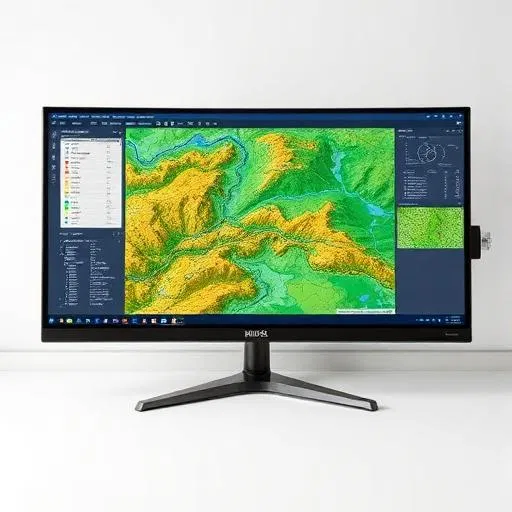
    The NJ/NY Reality: High Stakes, Low Margin for Error

    Developing in the Tri-State area isn't like developing in a greenfield in the Midwest. We deal with NYC OER, NJ DEP, and high-density urban infrastructure. The risks are higher. A single utility strike in Jersey City can shut down a block and trigger six-figure fines.

    When you hire a "national firm," you’re often paying for a logo. You get a junior staffer who’s following a cookie-cutter playbook designed for suburbs, not the Hudson County waterfront. They deliver a 200-page report that’s written to protect their liability, not to move your project forward.

    At Envicon, we use digital twins to manage these environmental and civil risks proactively. We don’t just hand you a report and wish you luck. We provide a cleared path. By integrating geospatial data analysis into our models, we can identify contaminated soil pockets or groundwater issues before they trigger a stop-work order.

    A widescreen monitor displays detailed topographic and geospatial data analysis with 3D terrain modeling and GIS layers.

    Transparent Pricing through Technical Precision

    One of the biggest complaints we hear about big consultants is "scope creep." The project starts at $50k and ends at $150k because of "unforeseen complexities."

    Modern software changes the pricing game. Because we have a more accurate view of the site through digital modeling, our estimates are based on reality, not guesswork. We focus on transparent execution. If we know exactly how much soil needs to be moved and exactly where the subsurface obstructions are, we can price with confidence.

    Our philosophy is simple: Integrity is delivering the truth, even when it’s inconvenient. We’d rather tell you about a potential $20,000 issue during the design phase than let you find it during excavation when it becomes a $100,000 disaster.

    "Collaboration is not a buzzword: it’s how we work. The digital twin is the ultimate collaborative tool because it removes ego from the equation. The data doesn't lie." : Jason Pancoast, CEO

    Why the "Big-Box" Approach is Failing You

    If your current consultant is still relying on 2D CAD files and physical site visits once a month, they are costing you money.

    • The Big Firm Pain: You talk to a partner during the pitch, then never see them again. You’re passed off to a junior engineer who doesn't know your site's history or your regulator's name.
    • The Envicon Answer: You get hands-on leadership. We are PE-led and field-first. We know the reviewers at NJ DEP and NYC OER because we talk to them every day. We use technology to bridge the gap between the office and the dirt.

    We don't sell reports. We sell buildable sites. Whether it's Phase I & II ESAs or complex stormwater management, our goal is to get you to vertical construction as fast as humanly possible.

    Active construction site showing excavation support with soldier piles and bracing, steel framework installation, and site safety controls.

    Summary: The Digital Twin Takeaway

    The digital twin is no longer a luxury for billion-dollar infrastructure projects. It is a necessary tool for any developer who wants to protect their margins in the NJ/NY market.

    • Eliminate Surprises: Identify clashes and utility conflicts before mobilization.
    • Real-Time Data: Move from static PDFs to living models that reflect current site conditions.
    • Budget Certainty: Reduce the reliance on "contingency" by getting the data right the first time.
    • Regulatory Speed: Present clear, 3D evidence to regulators to speed up permitting and closures.

    If your project is stalled or you’re tired of the "change order dance" with your current consultant, it’s time for a different approach. We don't just identify problems; we resolve them with precision, urgency, and trust.

    Ready to see your jobsite in 3D before you break ground?

    Contact Envicon Group today to discuss how we can bring modern site software and expert civil engineering to your next project. Let’s clear the path to your buildable site.

    Envicon Group logo displaying the company name in bold, modern font, with a blue and green water droplet and leaf icon integrated into the “O.”