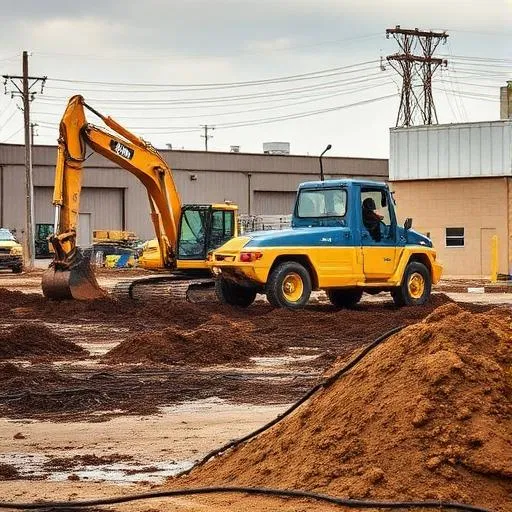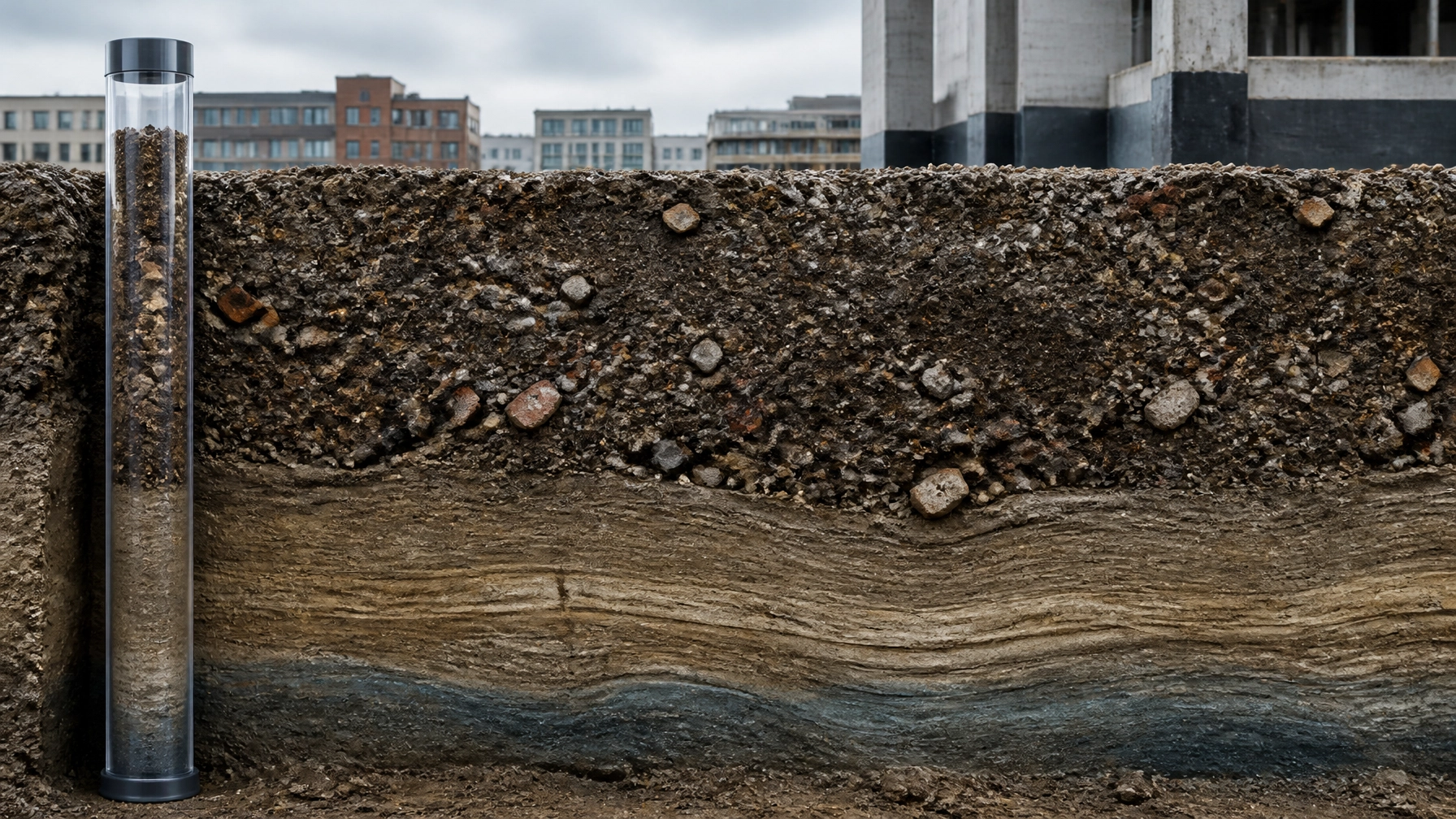
A site can look clean at the surface and still contain decades-old construction debris, ash, brick, dredge material, or other imported soil beneath it.
That material may qualify as historic fill under New Jersey Department of Environmental Protection (NJDEP) guidance. For developers, construction managers, and contractors, the distinction matters. Treating historic fill like ordinary clean fill can stall approvals, trigger additional investigation, and create major disposal costs after excavation has already started.
NJDEP’s Historic Fill Material Technical Guidance provides a practical framework for investigating, managing, and remediating these conditions. The right approach starts before the first truck arrives.
What NJDEP means by “historic fill”
NJDEP defines historic fill as:
“Non-indigenous material, deposited to raise the topographic elevation of the site, which was contaminated prior to emplacement, and is in no way connected with the operations at the location of emplacement.”
Historic fill can include:
- Construction and demolition debris
- Brick and ash
- Dredge spoils
- Incinerator residue
- Fly ash
- Non-hazardous solid waste
- Mixed soil and imported material
It often appears in waterfront, industrial, rail, and urban redevelopment areas across northern and southern New Jersey. The material may have been placed decades ago to raise grades, fill wetlands, support roads, or create usable land.
Historic fill is different from contamination caused by operations at the property. A former manufacturing facility may have both: historic fill beneath the site and separate areas of concern associated with tanks, process areas, spills, or waste handling.
That distinction affects the investigation strategy. Each potential area of concern still requires independent evaluation.
Why historic fill creates project risk
The most common mistake is simple: a project team assumes that excavated material is “just dirt.”
That assumption can fail in several ways:
- The material contains metals or polycyclic aromatic hydrocarbons (PAHs) above applicable soil remediation standards.
- The fill extends deeper or farther across the property than expected.
- Groundwater beneath or within the fill shows impacts.
- The material cannot be reused as alternate fill.
- The soil must be characterized, transported, treated, or disposed of under a different cost structure.
The result is usually not a theoretical compliance issue. It is a construction problem.
A contractor may need to stop excavation while the material is characterized. A developer may face re-mobilization costs, additional laboratory analysis, revised soil management plans, and disposal pricing that was never included in the original budget. An approval may also be delayed because the proposed remedy does not match actual subsurface conditions.
For environmental due diligence for developers in New Jersey, historic fill belongs in the schedule and budget before closing: not after excavation begins.

How NJDEP expects historic fill to be evaluated
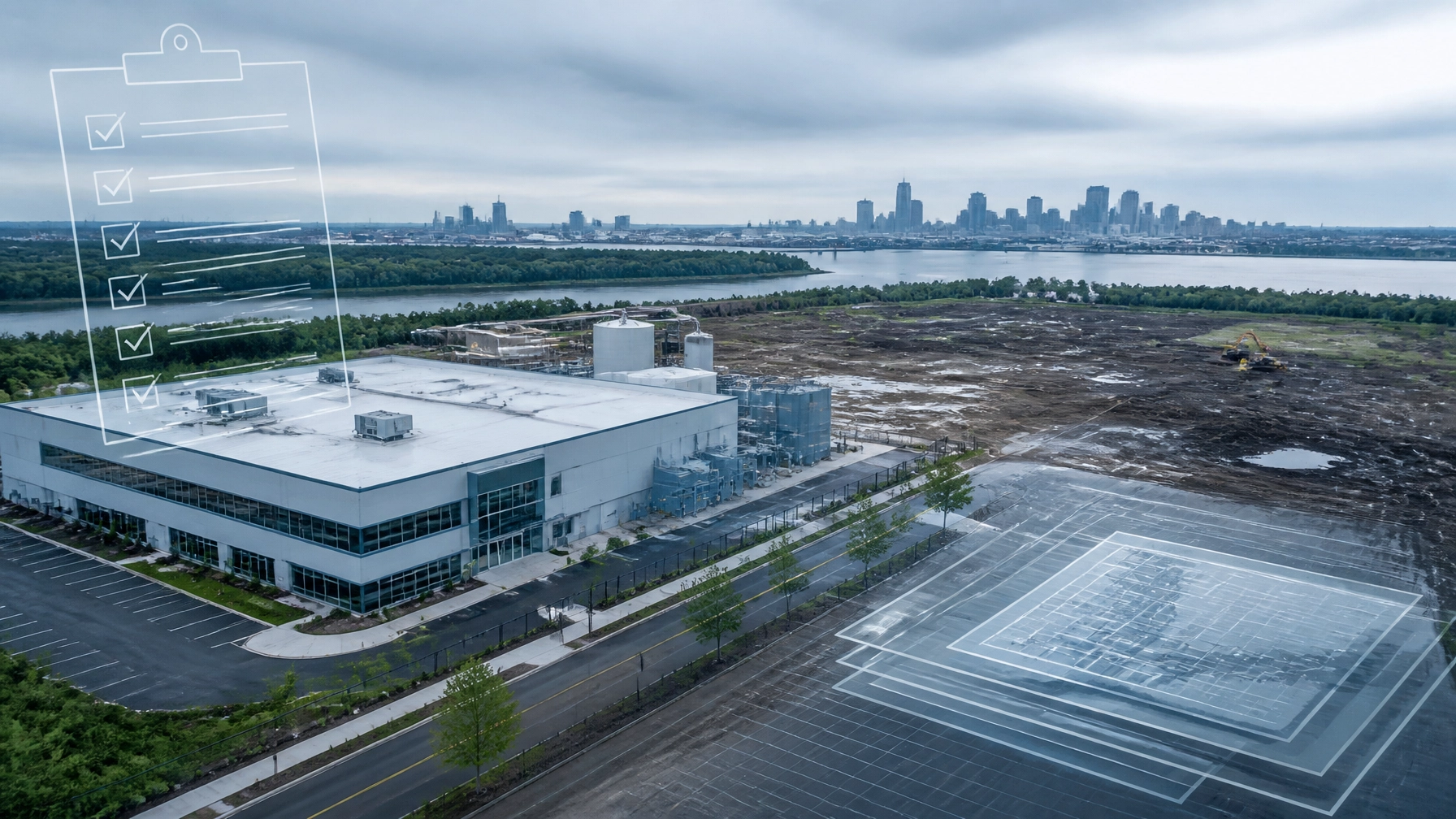
The first step is identifying whether historic fill may be present. NJDEP guidance recommends reviewing:
- Historical maps and aerial photographs
- Property records and prior environmental reports
- Site grading and development history
- NJ Geological Survey historic fill mapping
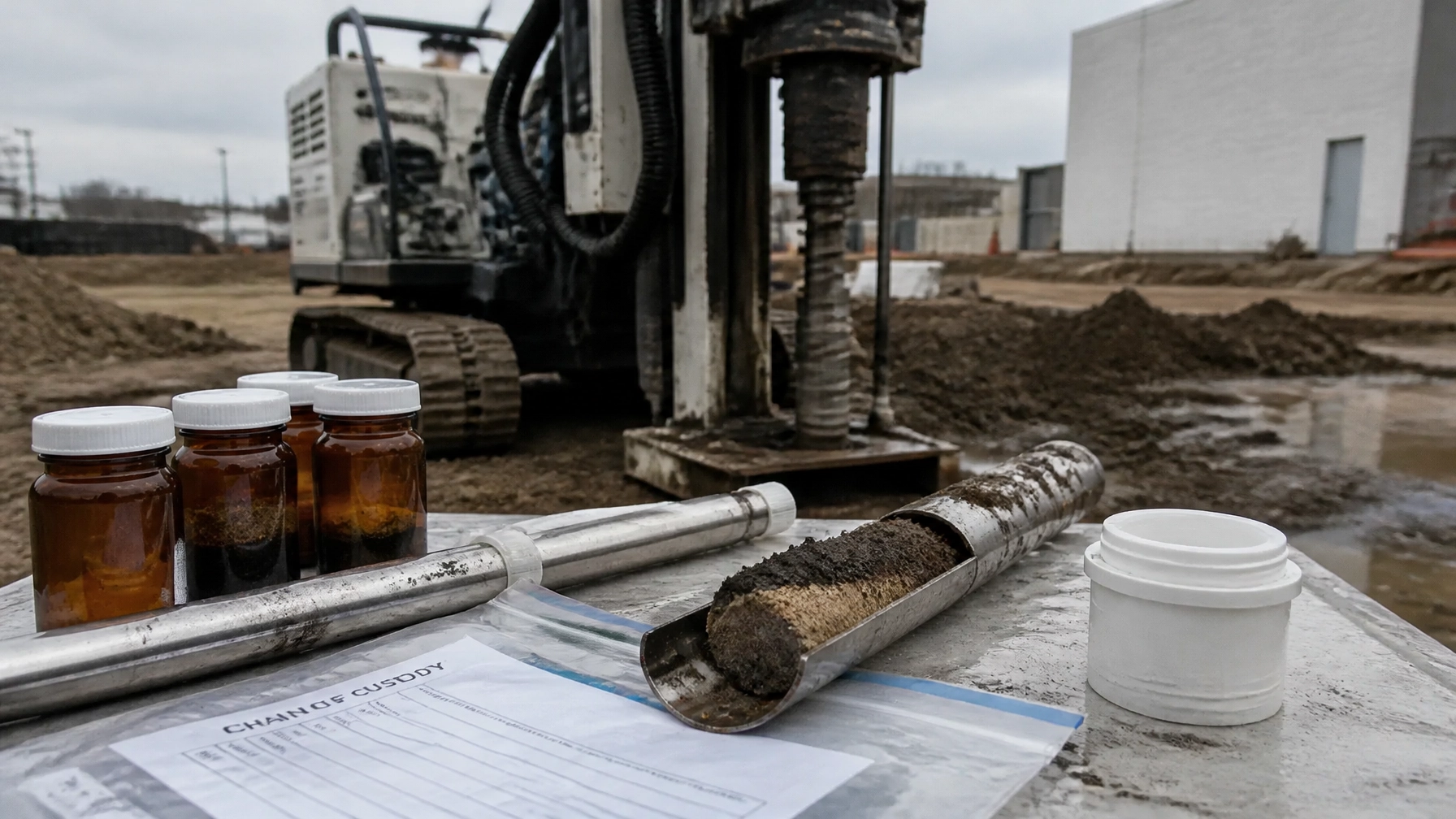
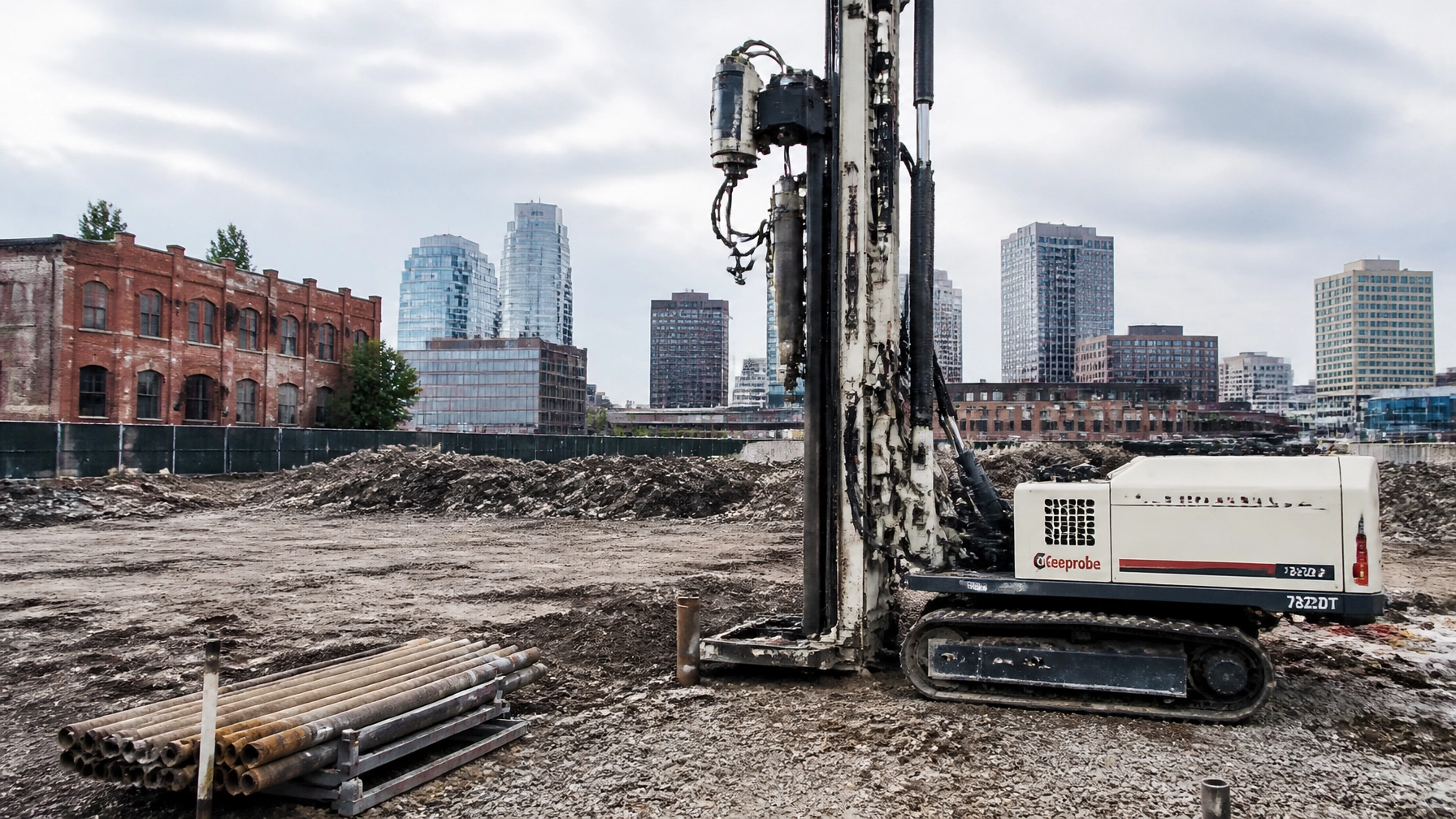
- Subsurface boring, test pit, or trench logs
- Field observations such as brick, ash, debris, odor, staining, and soil discoloration
Borings, test pits, or trenches should generally extend below the suspected fill to identify the transition to native soil, meadow mat, or bedrock. Field screening with instruments such as a photoionization detector (PID) can help identify conditions that may point to additional, non-historic-fill areas of concern.
Once historic fill is confirmed, the remediating party generally has two paths.
Option 1: Assume the historic fill is contaminated
The remediating party may assume that the historic fill exceeds the applicable residential soil remediation standards and proceed with the remedial investigation.
This path can save time when the fill is visibly heterogeneous, widespread, or difficult to sample representatively. It does not eliminate the need to understand the fill’s thickness, horizontal extent, composition, groundwater relationship, or construction implications.
Assumption is a regulatory strategy: not permission to move the material without controls.
Option 2: Sample the fill to demonstrate compliance
The remediating party may collect samples to demonstrate that the historic fill does not exceed NJDEP’s residential soil remediation standards.
NJDEP’s guidance identifies several sampling considerations, including:
- A minimum of two sample locations per acre of historic fill
- A discrete six-inch sample interval for homogeneous fill
- Separate six-inch samples from distinct fill strata
- Analysis for PAHs and metals
- Complete TCL/TAL analysis and extractable petroleum hydrocarbons (EPH) for a portion of samples, with a minimum of one sample per stratum or fill type
The appropriate program depends on the site, the proposed use, the fill profile, and the regulatory pathway. A generic sampling grid is not a substitute for professional judgment.
If results show that contaminants exceed applicable standards, the site moves into a remedial investigation and remedial action process.
What happens when contamination exceeds standards?
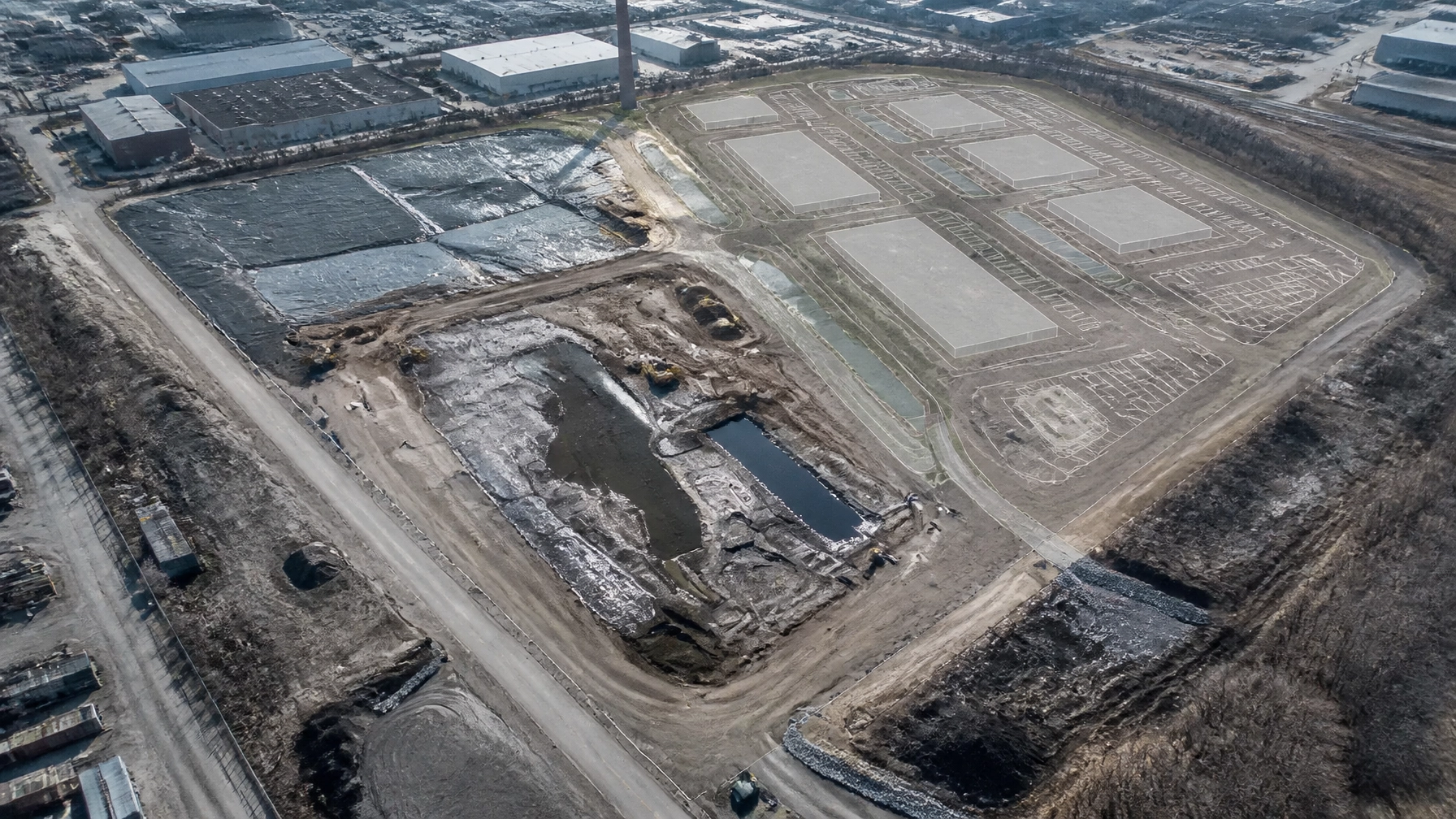
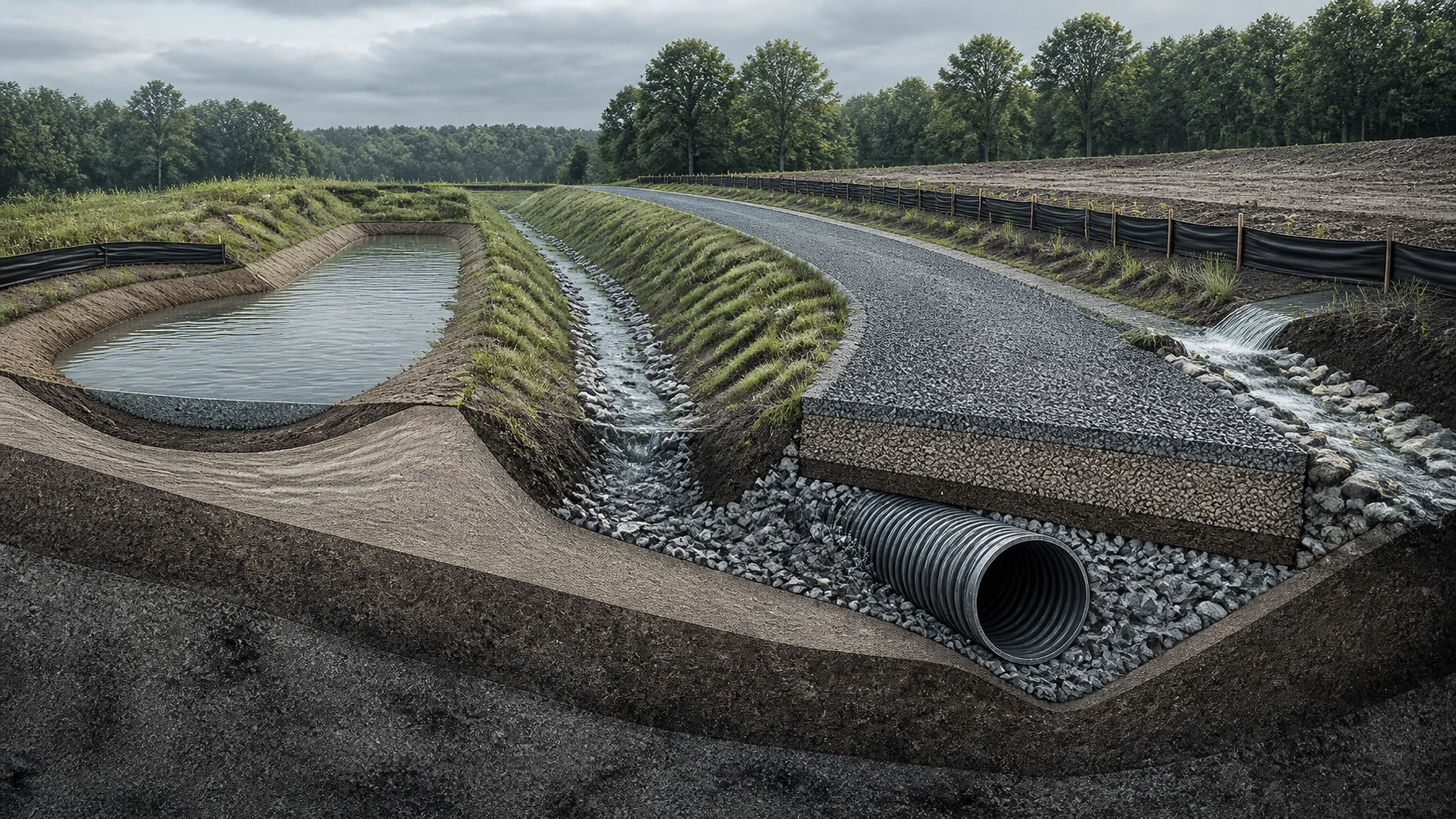
If contaminated historic fill remains in place, NJDEP typically relies on a combination of engineering and institutional controls to prevent exposure.
Engineering controls may include:
- Asphalt or concrete pavement
- Building slabs
- Clean soil caps
- Geotextile separation layers
- Engineered barriers in landscaped areas
- Other protective cover systems appropriate to the site use
Institutional controls generally include a Deed Notice describing the contamination, the affected areas, the required controls, and the limitations on future disturbance or use. A soil remediation permit may also be required to ensure that the cap remains protective over time.
The remedy has to work with the civil design. Elevations, utility trenches, foundations, stormwater features, landscaping, and future maintenance all affect whether a proposed cap will remain intact.

A cap designed without coordination with the civil engineer can create problems during utility installation. A deed notice prepared without matching the final site plan can create problems during review, financing, or future property transfer.
This is where integrated environmental and civil oversight matters. The remedy should support the build: not become a separate obstacle to it.
Can historic fill be reused on the site?
Sometimes. But not automatically.
If historic fill will be moved and reused as alternate fill at a site undergoing remediation through the NJDEP Site Remediation Program, the material must be evaluated under the Department’s Fill Material Guidance for SRP Sites.
The evaluation considers whether the proposed fill is appropriate for the receiving area and whether placement would worsen site conditions. Depending on the material and location, the review may involve:
- Traditional contaminants such as metals, PAHs, volatile organic compounds, and other site-specific constituents
- Current applicable soil remediation standards
- Comparison of donor and receiving-area conditions
- “Like-on-like” considerations
- Statistical evaluation of the available data
- Emerging concerns such as PFAS when relevant to the site history or regulatory review
Historic fill that exceeds applicable standards cannot simply be labeled “alternate fill” and placed elsewhere. NJDEP approval may be required. In some cases, the material must be recycled at an authorized facility or managed as a regulated waste stream.
The practical rule is straightforward:
Do not move historic fill first and investigate reuse later.
Characterize the material before excavation, identify the proposed destination, and build the soil management plan around an approved path.

A better preconstruction workflow for NJ projects
For developers and construction teams, the most reliable approach is to connect environmental due diligence, regulatory strategy, and construction planning from the start.
Before closing or mobilization, confirm:
- Whether historic fill is likely based on historical records and NJGS mapping
- The expected thickness and horizontal extent of the fill
- Whether the fill is homogeneous or layered
- Which contaminants should be included in the analytical program
- Whether groundwater sampling is needed
- Whether the material may remain in place, be excavated, or be reused
- Whether caps, Deed Notices, soil permits, or groundwater controls will affect design
- How excavated soil will be segregated, documented, transported, and disposed of
- Whether PFAS or other emerging concerns require additional evaluation
This process gives the owner a decision before the excavator is on site. It also gives the contractor a workable plan instead of a vague environmental condition buried in a report.
At Envicon Group, we combine soil and groundwater management, NJ LSRP support, remedial planning, regulatory coordination, and construction oversight. Our team works directly with project stakeholders and NJDEP rather than handing off a report and leaving the construction team to interpret it.
That difference is important. Large firms may provide a technically complete document, but the project still needs someone to connect the findings to excavation sequencing, disposal pricing, civil plans, agency comments, and field decisions. We stay involved through those handoffs.
The takeaway
Historic fill is not automatically a reason to abandon a New Jersey development site. It is a condition that needs to be identified, characterized, and managed deliberately.
The project risks are predictable:
- Delayed approvals
- Unplanned remedial investigation
- Re-sampling and re-mobilization
- Unexpected disposal costs
- Rejected alternate-fill proposals
- Caps or deed restrictions that do not match the design
Early investigation creates options. It may support a clean-fill determination, justify an assumed-contamination remedy, preserve appropriate reuse opportunities, or allow the project team to price disposal before construction begins.
The ground under your project may not be natural. Your environmental strategy should account for that before the schedule depends on it.
Sources and regulatory references
- NJDEP Historic Fill Material Technical Guidance
- NJDEP Fill Material Guidance for SRP Sites
- NJDEP Site Remediation Program
Get a clear path forward
Historic fill should not surprise your project team after excavation starts. Envicon Group can help you evaluate the subsurface conditions, plan soil management, coordinate with NJDEP, and keep the development moving.