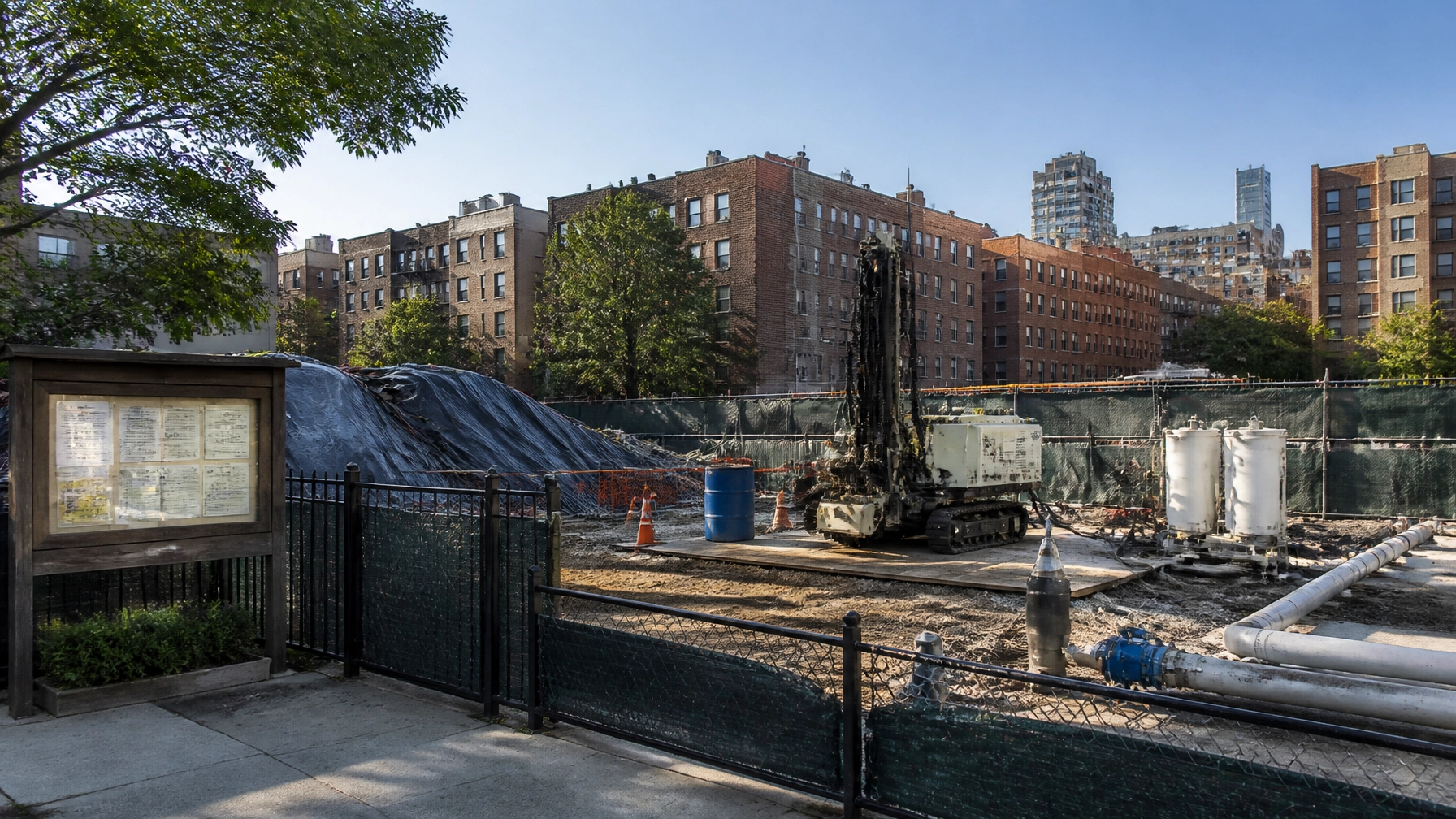
Category: Industry Insight

  • NYC OER and Environmental Justice: New Expectations for Site Cleanups

    NYC OER and Environmental Justice: New Expectations for Site Cleanups

    For NYC developers, property owners, and project teams, environmental justice is no longer a policy discussion that sits outside the cleanup plan. It now affects how you screen a site, evaluate future land use, design construction protections, communicate with nearby residents, and document the remedy.

    The technical cleanup standards have not been replaced with a separate “environmental justice cleanup track.” Instead, NYC’s Office of Environmental Remediation (OER), the City Environmental Quality Review process, and New York State environmental requirements now create a higher expectation for how projects address existing community burdens.

    That matters in Brooklyn, Queens, the Bronx, Manhattan, and Staten Island: especially where a contaminated or underutilized property sits near homes, schools, child-care facilities, hospitals, public housing, community gardens, or other sensitive receptors.

    What environmental justice means for an NYC cleanup

    New York’s environmental justice framework focuses on whether a proposed action could cause or increase a disproportionate pollution burden in a disadvantaged community.

    The City’s 2025 CEQR Technical Manual, Chapter 23, applies to environmental reviews commenced on or after December 30, 2025. It directs lead agencies and applicants to evaluate potential effects on disadvantaged communities, or DACs.

    The standard DAC study area generally extends one-half mile from the project area and includes project components located within, or within one-half mile of, a DAC.

    That screening step can affect more than the environmental review document. It can influence:

    • The scope of environmental and health impact analysis
    • Construction-phase controls
    • Community air monitoring
    • Public outreach and document access
    • Evaluation of cumulative pollution burdens
    • Selection of remedial alternatives
    • The proposed future use of the property
    • Agency coordination and project schedule

    The first practical question is simple: Is your project in or near a New York State-designated disadvantaged community, and what existing burdens are already present there?

    Do not rely on a general neighborhood description. Use current state and City mapping resources, then document the basis for the screening decision.

    OER’s cleanup process already includes public protection

    For projects entering NYC’s Voluntary Cleanup Program (VCP), public participation is a formal part of the remedial process.

    OER states that:

    “Citizen Participation is a critical component of the NYC VCP.”

    The requirements include a document repository, a site contact list, public notices, fact sheets, and prescribed public comment periods. OER’s public participation guidance explains that the site contact list may include:

    • Adjacent property owners and residents
    • Nearby schools, hospitals, and day-care facilities
    • The local Community Board
    • Elected officials
    • Community-based organizations
    • Other interested parties

    For a Remedial Action Work Plan (RAWP), the public receives an opportunity to review the proposed remedy and submit comments. OER’s public-facing guidance identifies a 30-day public comment period for the RAWP. The City’s regulations also provide mechanisms for extensions and public meetings upon request.

    The RAWP must also include a Community Protection Statement. That statement summarizes, in concise and non-technical language, the measures the project will use to protect people near the site during construction.

    This is important in an environmental justice community. A technically complete plan that residents cannot understand, access, or comment on is not a strong community protection strategy.

    The 2025 CEQR changes raise the front-end stakes

    The 2025 CEQR Technical Manual makes disadvantaged community analysis more explicit than prior City guidance.

    Under the updated framework, the lead agency must consider whether a project may cause or increase a disproportionate pollution burden when making a significance determination. If an Environmental Impact Statement is required, the analysis must address those effects in the environmental review.

    The review should connect the project’s potential effects to existing conditions. That may include:

    • Air emissions and construction dust
    • Traffic and truck activity
    • Noise and vibration
    • Soil disturbance and off-site tracking
    • Soil vapor and indoor air pathways
    • Groundwater or surface-water impacts
    • Flooding and climate vulnerability
    • Loss or creation of open space
    • Proximity to sensitive populations
    • Existing industrial or infrastructure burdens

    The analysis is not simply a demographic appendix. It should inform project decisions.

    For example, if a site is near a school and sits in a community already affected by industrial traffic, the project team may need to consider truck routing, work-hour restrictions, enhanced dust controls, perimeter monitoring, and clearer public notice procedures.

    The question is not only whether the project complies with a numerical standard. The question is whether the project adds another burden to a community that is already carrying several.

    Community Air Monitoring must be designed for the actual work

    Intrusive remediation creates short-term risks that nearby communities experience in real time. Excavation, soil stockpiling, truck loading, dewatering, utility work, and subsurface demolition can generate dust, odors, and volatile organic compounds.

    Under NYC’s Brownfield Cleanup Program requirements, the RAWP must include a Community Air Monitoring Plan (CAMP). The plan should be specific to the contaminants, work activities, site layout, wind conditions, nearby receptors, and planned controls.

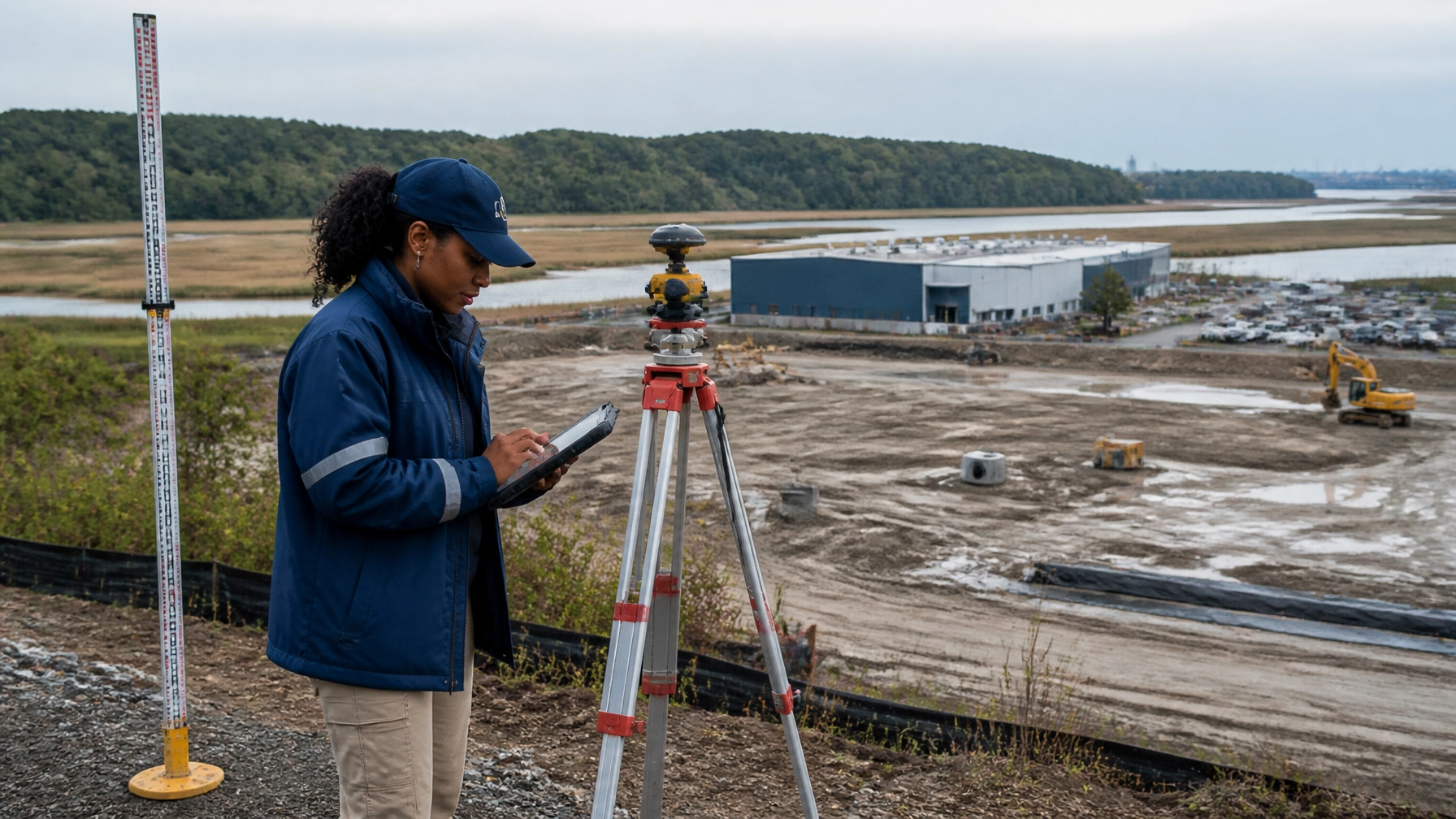
    Real-time community air monitoring instruments positioned at the perimeter of an urban excavation site

    A field-ready CAMP typically addresses:

    • Monitoring locations and perimeter coverage
    • Particulate monitoring
    • Volatile organic compound monitoring
    • Instrument calibration and response procedures
    • Background readings
    • Action levels and notification requirements
    • Dust suppression and work-practice changes
    • Data logging and reporting
    • Procedures for exceedances or instrument alarms
    • Coordination with the project health and safety plan

    Monitoring is not a substitute for good construction controls. If readings increase, the team must be able to act. That may mean wetting exposed soil, covering stockpiles, adjusting excavation methods, stopping work temporarily, cleaning tracked soil from paved areas, or changing truck handling procedures.

    In a community that has experienced years of environmental burdens, “we monitored it” is not enough. The project must show what the monitoring measured and what the team did with the information.

    Remedy selection now requires a broader site and community view

    NYC OER regulations require the remedial program to protect public health and the environment, including soil, groundwater, surface water, air, indoor air, sensitive populations, and ecological resources.

    The regulations also identify environmental justice impacts as a factor in evaluating future land use. That includes considering whether the proposed use may cause or increase a disproportionate burden on the community, including low-income minority communities, or contribute to a concentration of commercial or industrial uses in a historically mixed-use or residential area.

    That affects the alternatives analysis.

    A remedy should not be selected only because it is the least expensive construction option. The project team should evaluate:

    • Short-term construction impacts
    • Long-term exposure pathways
    • Reliability of engineering controls
    • Operation and maintenance requirements
    • Future building and utility work
    • Access for monitoring and repairs
    • Community acceptance
    • Compatibility with reasonably anticipated land use
    • Long-term costs and financial assurance
    • The risk of disturbing the remedy during future redevelopment

    Potential remedies may include source removal, treatment, containment, vapor barriers, sub-slab depressurization, groundwater controls, soil management plans, and institutional controls. The right combination depends on site data: not a template.

    A restricted-use remedy can be protective, but it creates ongoing obligations. The owner may need to maintain caps, inspect controls, submit annual certifications, follow a site management plan, and notify OER before a change in use.

    Public participation is a project control, not a public-relations exercise

    A strong citizen participation plan helps identify issues before they become schedule problems.

    Residents may know about recurring odors, flooding, informal site access, community gardens, nearby basement conditions, or sensitive uses that do not appear in a standard desktop review. Community Boards and local organizations may also identify practical concerns about truck traffic, construction hours, or access routes.

    The project team should engage early enough to use that information.

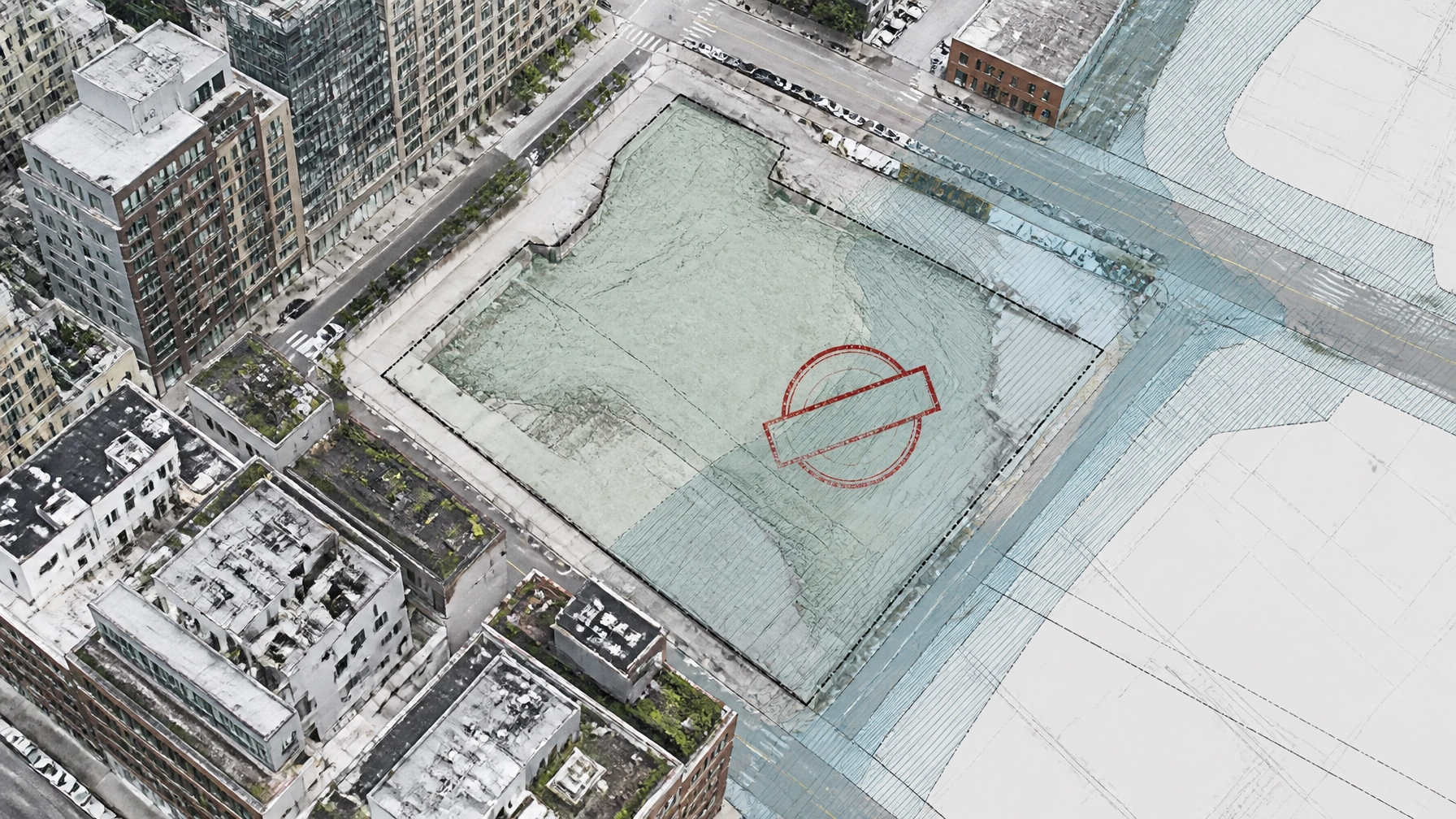
    Technical site plan and neighborhood map review showing environmental data layers and nearby community facilities

    At a minimum, the team should:

    1. Identify DAC status and nearby sensitive receptors during early due diligence.
    2. Build a complete site contact list.
    3. Prepare plain-language summaries of contamination and the proposed remedy.
    4. Confirm where the public can access technical documents.
    5. Coordinate notices with OER before major milestones.
    6. Explain CAMP procedures before intrusive work begins.
    7. Track public comments and document how they were addressed.
    8. Keep communication active through construction and closure.

    The NYC Brownfield Cleanup Regulations require meaningful participation principles, including early involvement, representation of diverse community perspectives, and full, timely, accessible disclosure of reports, technical data, and analytical assumptions.

    That is a clear standard for project communication.

    What developers should do now

    If you own, finance, or plan to redevelop a potentially contaminated NYC property, do not wait until the RAWP is drafted to consider environmental justice.

    Start with a project-specific screening that connects regulatory status to field conditions and community context.

    Your early action list should include:

    • Review zoning, CEQR documents, E-Designations, and prior environmental reports.
    • Screen the project against current New York State DAC mapping.
    • Define the one-half-mile study area where applicable.
    • Identify schools, hospitals, day-care facilities, residences, gardens, and public spaces.
    • Review historic fill, petroleum, chlorinated solvents, metals, and vapor conditions.
    • Determine whether OER VCP enrollment is appropriate.
    • Build the CAMP around actual contaminants and construction activities.
    • Budget for public participation, monitoring, reporting, and long-term controls.
    • Coordinate OER, NYC Department of Health and Mental Hygiene, NYSDEC, design professionals, contractors, and counsel early.

    This is where an experienced local environmental consultant makes a measurable difference. Envicon Group works directly with developers, attorneys, architects, contractors, and agency stakeholders across New York and New Jersey. We connect Phase I and Phase II investigations, remedial design, CAMP, soil management, regulatory coordination, and construction oversight into one practical path forward.

    We do not just deliver a report. We help you move from environmental uncertainty to a buildable, defensible project.

    The takeaway

    NYC OER’s environmental justice expectations are not limited to one new permit or one additional form. They change the standard for responsible project delivery.

    A successful cleanup must be technically protective, regulator-ready, understandable to the surrounding community, and durable through construction and future use.

    The best time to identify environmental justice concerns is before they become agency comments, public objections, redesigns, or construction delays.

    Precision gets the remedy approved. Transparency helps the project earn trust.

    Ready to assess your NYC cleanup strategy?

    Envicon Group logo

  • Phase I ESA 2026 Checklist: Every Document You Need Before Closing

    Phase I ESA 2026 Checklist: Every Document You Need Before Closing

    A Phase I Environmental Site Assessment is more than a box to check before acquiring commercial real estate. It is one of the documents your lender, attorney, insurer, and investment committee may rely on before releasing capital.

    In 2026, the core standard remains ASTM E1527-21, which the U.S. Environmental Protection Agency recognizes as consistent with the federal All Appropriate Inquiries (AAI) rule under 40 CFR Part 312. A properly completed Phase I ESA can support CERCLA landowner liability protections: but only if the investigation, documentation, and timing are handled correctly.

    This Phase I ESA checklist covers the documents and project information you should assemble before closing on property in New York or New Jersey.

    “AAI is the process of evaluating a property's environmental conditions and assessing potential liability for any contamination.” : U.S. EPA

    The 2026 Phase I ESA timing rule

    Before reviewing the documents, confirm the assessment will still be current on the closing date.

    Under ASTM E1527-21 and EPA’s AAI requirements:

    • The overall inquiry must generally be completed within one year before acquisition.
    • Certain components must be completed or updated within 180 days before closing.
    • The 180-day components include:
      • Interviews with current and past owners, operators, and occupants
      • Federal, state, tribal, and local government records review
      • Visual inspection of the property and adjoining properties
      • Search for recorded environmental cleanup liens
      • Environmental Professional declaration and related updates required by the standard

    The report date alone does not tell you whether the Phase I ESA is still viable. The individual dates for the interviews, records review, site inspection, lien search, and professional declaration matter.

    If your closing moves, your Phase I ESA may require an update. If any required component falls outside the one-year window, the assessment may need to be redone.

    Review the current EPA AAI requirements and ASTM E1527-21 standard with your environmental professional and counsel.

    Document checklist: what to provide before the assessment begins

    A strong Phase I ESA starts with complete information from the buyer, seller, lender, and project team. At minimum, gather:

    • Current title commitment or title report
    • Legal description and tax lot information
    • ALTA survey or recent property survey
    • Current site plan and proposed development plans
    • Purchase and sale agreement, if available
    • Prior Phase I or Phase II ESA reports
    • Remedial investigation or cleanup reports
    • Environmental permits and agency correspondence
    • Records of spills, releases, tank removals, or closures
    • Information about current and historical occupants
    • Known environmental liens, deed restrictions, or institutional controls
    • Information about the intended future use of the property
    • Purchase price information when contamination may affect fair market value
    • Completed ASTM user questionnaire

    The user questionnaire is not administrative filler. It documents information the buyer may know that cannot be confirmed through database research or a site visit.

    ASTM’s Appendix X3 user questionnaire addresses issues such as environmental liens, activity and use limitations, specialized knowledge, prior reports, and the relationship between purchase price and uncontaminated fair market value.

    If the seller or broker says, “There are no environmental issues,” document that statement and provide it to the Environmental Professional. Do not rely on an informal verbal assurance.

    1. Title and land records

    Title records are critical because environmental obligations may follow the property even when the current owner did not cause the contamination.

    Your closing file should include documentation showing that the team reviewed:

    • Recorded environmental cleanup liens
    • Environmental easements
    • Deed notices and deed restrictions
    • Institutional controls
    • Engineering controls
    • Activity and Use Limitations, commonly called AULs
    • Restrictions on groundwater use, excavation, or future construction

    AULs may limit what you can build, how deep you can excavate, whether groundwater can be used, or how a capped area must be maintained. They can also affect financing, insurance, construction cost, and long-term property value.

    The environmental lien search is generally a user responsibility under AAI. Your consultant may assist, but the buyer should confirm that the search was completed and retain the supporting documentation.

    2. Historical property records

    A Phase I ESA should establish how the property and nearby parcels were used over time.

    Depending on availability, the historical records package may include:

    • Aerial photographs
    • Sanborn fire insurance maps
    • City directories
    • Topographic maps
    • Building department records
    • Property tax records
    • Zoning and land-use records
    • Historical site plans
    • Prior surveys
    • Newspaper or archive research
    • Previous industrial or commercial permits

    The review should address both the subject property and adjoining properties. A former dry cleaner, metal plating facility, gas station, rail yard, auto repair shop, manufacturing operation, or bulk storage facility next door may create a potential migration concern even if the subject parcel itself appears clean.

    Historical sources rarely provide a complete answer by themselves. Their value comes from the pattern they establish. Aerial photographs may show tanks or waste areas. Sanborn maps may identify former industrial operations. City directories may reveal tenants that do not appear in current records.

    Historical records, archival aerials, abstract Sanborn-style maps, and property boundary materials used during Phase I ESA research

    3. Federal, New York, and New Jersey regulatory records

    The regulatory database review should be broad enough to identify known or suspected releases on the property and nearby sites.

    A typical federal review may include records associated with:

    • CERCLA and Superfund sites
    • RCRA hazardous waste facilities
    • Underground storage tanks
    • RCRA corrective action
    • Brownfields
    • Federal institutional controls
    • Hazardous waste generators

    For New York properties, the consultant should review applicable NYSDEC Environmental Site Database records, including:

    • Spills and petroleum release incidents
    • Brownfield Cleanup Program sites
    • State Superfund sites
    • Bulk storage facilities
    • Institutional and engineering controls
    • Other site remediation records

    NYSDEC records are particularly important in New York City, Long Island, Westchester, and other areas where historic industrial use, petroleum storage, and urban fill are common.

    For New Jersey properties, the review should account for NJDEP records involving:

    • Contaminated sites
    • Known contaminated sites
    • Underground storage tanks
    • Remediation cases
    • Brownfield redevelopment
    • Institutional and engineering controls
    • Licensed Site Remediation Professional activity

    The NJDEP Contaminated Site Remediation & Redevelopment program provides access to tools such as DataMiner, DocMiner, remediation guidance, and site records.

    A Phase I ESA does not replace separate New Jersey obligations. If an industrial establishment is subject to the Industrial Site Recovery Act, the transaction may require additional compliance. A Phase I ESA also does not substitute for a Preliminary Assessment, Site Investigation, or LSRP-led remediation when New Jersey law requires those steps.

    4. Site reconnaissance documentation

    The physical inspection is where desktop research meets current site conditions.

    The Phase I ESA file should include:

    • Date and time of the inspection
    • Name and qualifications of the Environmental Professional
    • Site access limitations
    • Interior and exterior observations
    • Photographs of the property
    • Property boundary or vicinity map
    • Observations of adjoining properties
    • Notes regarding current operations and occupants

    The Environmental Professional will typically look for:

    • Aboveground and underground storage tanks
    • Drums, containers, or chemical storage
    • Staining, odors, or distressed vegetation
    • Floor drains, sumps, pits, or lagoons
    • Waste handling areas
    • Electrical transformers and possible PCB concerns
    • Evidence of dumping, fill, or burial
    • Oil-water separators
    • Vapor intrusion indicators
    • Wells, septic systems, or dry wells
    • Discolored water or stressed surface features

    A site visit cannot eliminate all uncertainty. It can, however, identify conditions that require immediate follow-up before the transaction becomes difficult to unwind.

    Phase I ESA site reconnaissance at an urban industrial redevelopment parcel with a clipboard, inspection tools, and capped monitoring well

    5. Interviews and written confirmations

    Interviews are a required part of AAI, not an optional courtesy.

    The consultant should attempt to interview:

    • Current property owners
    • Past owners
    • Current operators
    • Past operators
    • Occupants and facility managers
    • Property managers
    • Local officials when appropriate
    • Neighboring property owners when the site is abandoned

    Interview records should identify who participated, when the interview occurred, and whether it took place in person, by phone, or in writing.

    Ask direct questions:

    • Have there been spills, fires, or chemical releases?
    • Were tanks installed, removed, or abandoned?
    • Was waste buried or stored onsite?
    • Has groundwater been sampled?
    • Were regulators involved?
    • Were any environmental restrictions recorded?
    • Have odors, staining, or vapor concerns been reported?

    A vague answer is not the same as a clean answer. If the information is incomplete, the report should identify the resulting data gap and explain its significance.

    6. The final signed Phase I ESA report

    Before closing, obtain the complete report: not just an executive summary.

    The final report should include:

    • Property identification and legal description
    • Purpose, scope, and limitations
    • User-provided information
    • Historical records review
    • Regulatory database review
    • Physical setting information
    • Site reconnaissance findings
    • Photographs and maps
    • Interview summaries
    • Identified data gaps
    • Findings and professional opinions
    • REC, CREC, HREC, and de minimis condition analysis
    • Recommendations for additional investigation, if warranted
    • References and supporting records
    • Signed Environmental Professional declaration
    • Appendices containing source materials

    A Recognized Environmental Condition (REC) may indicate the presence or likely presence of hazardous substances or petroleum products due to a release or threatened release. A Controlled REC or Historical REC may involve known conditions that are controlled or addressed under an established regulatory framework.

    The classification matters. It determines whether you should proceed to a Phase II ESA, negotiate an indemnity, request a credit, revise the construction budget, or change the development plan.

    What a complete closing file should contain

    Use this final checklist before releasing funds:

    • Final ASTM E1527-21 Phase I ESA
    • Signed Environmental Professional declaration
    • Completed user questionnaire
    • Title report and environmental lien search
    • AUL, deed restriction, and institutional control documentation
    • Federal, state, and local database reports
    • NYSDEC or NJDEP records, when applicable
    • Historical source exhibits
    • Site reconnaissance photographs
    • Property boundary and vicinity maps
    • Interview notes or summaries
    • Prior environmental reports
    • Agency correspondence and remediation records
    • Written explanation of significant data gaps
    • Closing-date review confirming 180-day and one-year viability

    Why local execution matters in New York and New Jersey

    A national consultant may deliver a technically acceptable report and still leave you with unanswered questions about the next step. The issue is not whether the report contains pages. The issue is whether the findings help you close, finance, permit, and build.

    At Envicon Group, our environmental professionals work directly with developers, lenders, attorneys, architects, contractors, and agencies across New York and New Jersey. We connect Phase I findings to practical decisions about Phase II sampling, remediation, permitting, soil management, and construction risk.

    That field-first approach matters on dense urban sites, former industrial parcels, waterfront properties, and brownfields where records are incomplete and schedules are tight. We produce clear documentation, identify what requires action, and coordinate the next move instead of handing you a report and leaving you to interpret it.

    Explore Envicon’s Phase I ESA Checklist resource or review our Environmental Assessment & Investigation services.

    Final takeaway

    A compliant Phase I ESA is built from more than a database search. Before closing, you need current records, complete user disclosures, documented interviews, a defensible site inspection, title and lien research, state-specific review, and a signed report that clearly explains RECs and data gaps.

    Start early. Track every date. Preserve every supporting document.

    The goal is not to collect another report. The goal is to remove the environmental obstacles between your transaction and a buildable site.

    Ready to close with fewer surprises?

    Envicon Group logo

  • NJDEP PFAS Final Rule: New Standards Changing NJ Site Cleanup

    NJDEP PFAS Final Rule: New Standards Changing NJ Site Cleanup

    Published August 17, 2026, at 2:00 PM ET

    On June 15, 2026, the New Jersey Department of Environmental Protection (NJDEP) adopted final remediation standards for four widely monitored PFAS compounds: PFNA, PFOA, PFOS, and GenX.

    The rule does more than add another table to a regulatory manual. It converts interim criteria into enforceable requirements under:

    For developers, property investors, attorneys, lenders, and contractors working on contaminated or underused sites, the practical message is straightforward: PFAS now belong in routine New Jersey site investigation, due diligence, remedial planning, and redevelopment decisions.

    What the NJDEP PFAS Final Rule Changes

    The final rule formally codifies standards that NJDEP had already established on an interim basis, primarily beginning in 2022 and 2023.

    That means the rule doesn’t create entirely unexpected cleanup numbers for many active cases. However, it strengthens their legal and regulatory standing. PFAS criteria are no longer temporary benchmarks that can be treated as secondary considerations. They are now part of New Jersey’s enforceable remediation framework.

    The final rule also expands analytical requirements when site history is incomplete or contaminants are unknown.

    Under those circumstances, investigators must evaluate:

    • PFNA : perfluorononanoic acid
    • PFOA : perfluorooctanoic acid
    • PFOS : perfluorooctanesulfonic acid
    • GenX chemicals, also identified as HFPO-DA
    • 2,3,7,8-tetrachlorodibenzo-p-dioxin, or TCDD

    NJDEP explains that contaminants of emerging concern must be considered when a property was occupied by facilities that manufactured, stored, handled, or used them. The Department’s position is clear: “all contamination, including all discharged hazardous substances, hazardous wastes, and pollutants, must be addressed.” Read NJDEP’s Contaminated Site Remediation and Redevelopment guidance for additional context.

    Final NJDEP PFAS Remediation Standards

    The following standards now apply to the four PFAS compounds addressed by the final rule.

    Groundwater Standards

    Compound Groundwater standard
    PFNA 0.013 µg/L
    PFOS 0.013 µg/L
    PFOA 0.014 µg/L
    GenX / HFPO-DA 0.020 µg/L

    A microgram per liter, or µg/L, is equivalent to one part per billion. For PFNA, PFOS, and PFOA, these values correspond to approximately 13 to 14 parts per trillion.

    These are very low thresholds. A groundwater result that appears small in conventional environmental sampling can still exceed the applicable NJDEP standard.

    Soil Standards for Ingestion and Dermal Contact

    Compound Residential soil Nonresidential soil
    PFNA 0.047 mg/kg 0.67 mg/kg
    PFOS 0.11 mg/kg 1.6 mg/kg
    PFOA 0.13 mg/kg 1.8 mg/kg
    GenX / HFPO-DA 0.23 mg/kg 3.9 mg/kg

    These standards address direct exposure pathways, including incidental soil ingestion and dermal contact.

    The applicable land use matters. A property planned for residential use may face substantially more stringent criteria than an industrial or commercial site. That distinction needs to be evaluated early: before a developer commits to a site plan, financing structure, or construction schedule.

    Soil Leachate Standards

    Compound Soil leachate standard
    PFNA 0.26 µg/L
    PFOS 0.26 µg/L
    PFOA 0.28 µg/L
    GenX / HFPO-DA 0.40 µg/L

    For migration to groundwater, New Jersey does not rely on one universal soil number. The soil standard is generally calculated on an Area of Concern or site-specific basis using the Synthetic Precipitation Leaching Procedure, commonly called SPLP.

    NJDEP notes that migration-to-groundwater soil criteria can be one to two orders of magnitude lower than the numeric ingestion-dermal soil standards. That difference is important. A soil concentration may not exceed a direct-contact standard and still require additional evaluation because of its potential to affect groundwater.

    Why PFAS Testing Now Matters Earlier in the Project

    PFAS investigations can affect a project long before remediation begins.

    If historical records are incomplete, the property’s former operations may not tell the full story. Potential PFAS sources in New Jersey include:

    • Metal finishing and chromium plating
    • Industrial manufacturing
    • Electronics and aerospace operations
    • Textile, carpet, paper, and surface-coating facilities
    • Firefighter training areas
    • Airports and aviation facilities
    • Refineries and bulk petroleum storage
    • Locations where aqueous film-forming foam, or AFFF, was stored or discharged

    NJDEP describes PFAS as “mobile, persistent, and soluble in water.” Those characteristics create investigation challenges. A release may not remain directly below the original source area. It may migrate through groundwater, drainage systems, fill, or utility corridors.

    For a buyer, that can turn an apparently routine Phase I Environmental Site Assessment into a more involved Phase II investigation. For an owner already in the Site Remediation Program, it can expand the remedial investigation scope and affect the path to a Response Action Outcome.

    PFAS sampling equipment, monitoring well components, and sample vials arranged for a New Jersey site investigation

    What Developers and Property Owners Should Do Now

    The right response isn’t to test every property blindly. It is to use the rule to improve decision-making before uncertainty becomes a schedule problem.

    1. Revisit historical site use

    Review former operations, fire protection systems, waste handling practices, manufacturing processes, and chemical storage. A property that was never identified as a PFAS site may still have a credible pathway for PFAS use or release.

    2. Review existing data

    Look at prior soil, groundwater, surface water, and sediment results. Confirm:

    • Which PFAS compounds were analyzed
    • Whether laboratory reporting limits were low enough for current standards
    • Whether samples covered likely source areas and migration pathways
    • Whether quality assurance and quality control procedures were appropriate
    • Whether the data can support a regulatory decision today

    Old data may provide useful evidence, but it shouldn’t automatically be treated as sufficient.

    3. Update the sampling plan

    PFAS sampling requires careful planning. Sampling equipment, personal protective equipment, field materials, containers, and decontamination procedures can introduce background contamination or create quality-control issues.

    NJDEP’s PFAS Sampling Fact Sheet addresses analytical methods, sampling considerations, and investigative-derived waste management.

    4. Reassess remediation costs and schedules

    PFAS remediation can involve additional investigation, groundwater treatment, soil management, disposal restrictions, institutional controls, or long-term monitoring.

    That does not mean every PFAS-impacted site requires an expensive treatment system. The remedy depends on the source, concentrations, hydrogeology, exposure pathways, land use, and regulatory endpoint.

    But those decisions need to happen early. Waiting until construction is underway can result in re-mobilization, change orders, soil handling disruptions, and lender concern.

    What This Means for Active NJDEP Remediation Cases

    Owners with ongoing remediation should ask whether the final rule changes:

    • The current remedial investigation scope
    • The list of contaminants being evaluated
    • Groundwater sampling locations or frequency
    • Soil excavation or management limits
    • Treatment system design
    • Construction dewatering requirements
    • Soil disposal or reuse documentation
    • The schedule for regulatory submissions
    • The assumptions used in the project budget

    The final standards also reinforce the importance of working with an experienced Licensed Site Remediation Professional, or LSRP. Professional judgment still matters. NJDEP has recognized that documented lines of evidence may help determine whether PFAS analysis is necessary in certain circumstances.

    That judgment must be defensible. “We didn’t think PFAS applied” is not a technical rationale. A strong decision connects site history, potential sources, environmental media, previous data, and current regulatory requirements.

    Granular activated carbon groundwater treatment vessels operating at a New Jersey brownfield remediation site

    The Envicon Approach: Clear Answers Before They Become Delays

    PFAS work is not just a laboratory exercise. It is a project-control issue.

    At Envicon, we connect regulatory review, field investigation, engineering, and construction planning from the beginning. Our team works directly with developers, attorneys, architects, contractors, and agency stakeholders so that findings lead to action: not another report sitting in a project folder.

    Our approach includes:

    • Reviewing PFAS risk during environmental due diligence
    • Designing targeted soil and groundwater investigations
    • Coordinating low-level PFAS laboratory analysis and quality control
    • Evaluating source areas and migration pathways
    • Comparing results against NJDEP remediation standards
    • Supporting LSRP and NJDEP coordination
    • Developing practical soil and groundwater management strategies
    • Evaluating treatment options such as granular activated carbon
    • Tracking schedule, budget, field activity, and deliverable status through project dashboards

    Large consulting firms often separate the person who sells the project from the person who investigates the site and the person who handles the regulator. That structure creates handoffs. Handoffs create delay.

    Our clients work with a PE-led, field-first team that stays involved from the first call through project close. We bring 20 years of New York and New Jersey experience to the work, along with direct familiarity with NJDEP procedures and the realities of active redevelopment sites.

    The goal is not to produce the longest PFAS report. The goal is to give you a technically sound, regulator-ready path to a clean, buildable, compliant property.

    Key Takeaway

    The NJDEP PFAS Final Rule makes four things clear:

    • PFNA, PFOA, PFOS, and GenX standards are now formally enforceable.
    • PFAS testing may be required when site history is unknown or poorly documented.
    • Soil, groundwater, and soil-leachate pathways must be evaluated separately.
    • Early investigation and defensible technical judgment can prevent avoidable project delays.

    If you own, finance, purchase, or redevelop property in New Jersey, review your PFAS exposure now. The earlier you understand the site, the more options you have.

    Precision, speed, and trust turn environmental uncertainty into a cleared path forward.

    Talk With Envicon About Your New Jersey Site

    Envicon Group logo

    Sources

  • Reserve Study HOA Requirements in New Jersey: A 30-Year Capital Plan for Condo Boards

    Reserve Study HOA Requirements in New Jersey: A 30-Year Capital Plan for Condo Boards

    A reserve study HOA boards can defend is more than a spreadsheet. It connects the physical condition of shared property to the money required to repair or replace it.

    For New Jersey condominium, cooperative, and HOA boards, that connection now carries statutory weight. Under N.J.S.A. 45:22A-44.2 and 45:22A-44.3, covered planned real estate developments must address capital reserves through a professional study and a 30-year funding plan. The goal is straightforward: maintain common assets without repeatedly turning predictable repairs into emergency special assessments or loans.

    This guide explains the reserve study requirements for New Jersey condos and HOAs, what the study should contain, and how it works alongside structural integrity inspections.

    “An association of a planned real estate development shall obtain a reserve study including a 30-year funding plan.”
    N.J.S.A. 45:22A-44.3

    What is a reserve study?

    A capital reserve study condo board members can use has two connected parts:

    1. Physical analysis
    2. Financial analysis

    The physical analysis identifies the common-area assets the association must maintain. It documents their current condition, estimated remaining useful life, and likely repair or replacement requirements.

    The financial analysis converts those findings into a long-range funding plan. It considers current reserve balances, annual contributions, projected expenses, inflation, investment income, and the timing of major capital work.

    The result should answer practical board questions:

    • What assets will require major work?
    • When will that work likely occur?
    • What will it cost in today’s dollars and future dollars?
    • Are current contributions adequate?
    • Will the association face a funding gap?
    • What action should the board take before the problem becomes urgent?

    New Jersey reserve study requirements

    New Jersey’s reserve study law applies to associations of planned real estate developments governed by the Planned Real Estate Development Full Disclosure Act, or PREDFDA. The statute requires a capital reserve study prepared in accordance with the latest Community Associations Institute National Reserve Study Standards or comparable recognized standards.

    The study must be performed or overseen by one of the following:

    • A Community Associations Institute credentialed Reserve Specialist
    • A New Jersey-licensed professional engineer
    • A New Jersey-licensed architect

    The statute also identifies an exception for an association with less than $25,000 in total common-area capital assets. Coverage can depend on the association’s legal structure, governing documents, and asset portfolio. Boards should have association counsel confirm how the law applies to their specific community.

    The New Jersey Department of Community Affairs explains that a community may still have a capital reserve study obligation even if its building is not subject to the separate structural inspection requirement. Read the New Jersey DCA Structural Integrity Law and Capital Reserve Study FAQ before relying on an exemption.

    Associations that had not completed a reserve study within five years of January 8, 2024, were required to undertake one within one year of that effective date. New associations must complete a study as soon as practicable after a majority of the executive board is elected, and no later than two years after that election.

    A reserve study should be reviewed and updated at least every five years. A board should not wait for the five-year mark if the property has experienced major damage, construction defects, severe weather, unexpected price escalation, or a significant capital project.

    What belongs in the component inventory?

    The component inventory is the foundation of the study. If an asset is missing from the inventory, its future cost may also be missing from the funding plan.

    Typical components include:

    • Roofing systems
    • Exterior façades and masonry
    • Balconies and decks
    • Windows and doors
    • Elevators
    • Parking lots and parking structures
    • Concrete walks and plazas
    • Site drainage and stormwater systems
    • Domestic water and plumbing systems
    • Boilers, chillers, and HVAC equipment
    • Electrical distribution equipment
    • Fire protection systems
    • Swimming pools and recreational facilities
    • Retaining walls, fences, gates, and site lighting
    • Clubhouses and other common buildings

    The association’s master deed, bylaws, maintenance obligations, prior studies, repair records, warranties, and operating history should inform the inventory.

    Licensed engineer inspecting a New Jersey condominium façade, balcony slab, roof edge, and parking deck during a reserve study site walk

    Physical analysis and useful-life assumptions

    A reserve study site visit is not a substitute for a full forensic investigation. It is a disciplined condition assessment of the components included in the association’s maintenance responsibility.

    The engineer or reserve specialist typically documents:

    • Current condition
    • Visible deterioration
    • Prior repairs
    • Maintenance history
    • Remaining useful life
    • Expected repair or replacement year
    • Recommended next action
    • Estimated cost

    Useful-life assumptions must reflect actual site conditions. A roof exposed to coastal wind, ponding water, or repeated patching may not have the same remaining life as a well-maintained roof in a protected location.

    The study should explain the assumptions behind each forecast. It should not simply apply a generic 20-year or 30-year life to every component.

    For example, useful life may be affected by:

    • Installation quality
    • Material type
    • Exposure to water, salt, freeze-thaw cycles, or ultraviolet radiation
    • Maintenance frequency
    • Prior repairs
    • Design defects
    • Occupancy and usage
    • Current observed condition

    The report should also separate routine maintenance from major capital work. Repainting a corridor is different from replacing a failed façade system. Both may affect the budget, but they belong in different planning categories.

    Sample reserve study component table

    A board-ready report should present information in a format that supports decisions. A simplified example appears below.

    Component Current condition Estimated remaining life Planning action Cost basis
    Roof membrane Fair 6 years Replacement planning Local contractor pricing and current cost data
    Façade masonry Fair 10 years Targeted repairs and follow-up review Engineer assessment and repair allowance
    Parking deck coating Poor 3 years Repair and recoating project Quantity estimate and bid-level allowance
    Elevator modernization Fair 12 years Capital replacement reserve Service records and vendor budget
    Site drainage Fair 8 years Repair, cleaning, and selective replacement Field observations and civil design allowance

    These figures are examples only. A qualified professional must develop project-specific assumptions.

    Financial analysis: inflation, funding, and timing

    A 30-year reserve study New Jersey boards can rely on should show how projected costs change over time.

    The financial model generally considers:

    • Current reserve fund balance
    • Annual reserve contributions
    • Planned capital expenditures
    • Inflation assumptions
    • Interest or investment income assumptions
    • Timing of repairs and replacements
    • Future study and update costs
    • Required structural inspection costs
    • Corrective maintenance identified by structural inspections

    Inflation matters because a component scheduled for replacement in 15 years will not cost the same as it costs today. The model should identify the inflation assumptions used and test whether the plan remains workable under different conditions.

    Boards should review more than one funding scenario. Common approaches include:

    • Gradual increases in annual reserve contributions
    • A stable contribution schedule supported by a higher current contribution
    • A phased capital program
    • A combination of reserves and carefully documented financing
    • A limited special assessment where permitted and unavoidable

    The statutory objective is to maintain adequate reserves without needing a special assessment or loan obligation for predictable capital work. New Jersey law also provides an 85 percent funding option for certain existing associations, subject to specific notice, disclosure, and time-limit requirements. Because that option can create a future funding gap and affect unit sales, counsel should review the association’s eligibility and required notices before the board adopts it.

    HOA reserve funding model showing component replacement cycles, inflation scenarios, reserve balances, and a 30-year capital planning timeline

    Special-assessment risk is a planning problem

    A special assessment is not always avoidable. A storm event, premature failure, concealed defect, or unexpected structural condition can change the plan.

    The avoidable problem is discovering a predictable capital expense after the reserve account is already underfunded.

    A useful study helps the board see the funding gap early. It can show:

    • The year the reserve balance becomes inadequate
    • Which component creates the largest exposure
    • Whether a modest annual contribution increase changes the outcome
    • Whether project phasing reduces short-term pressure
    • Whether the association’s current budget matches the adopted plan

    That visibility gives owners a clearer explanation of why contributions may need to increase. It also gives the board a documented basis for its decisions.

    Reserve studies do not replace structural integrity inspections

    New Jersey’s reserve study requirement and structural integrity inspection requirement work together, but they are not the same service.

    A reserve study focuses on capital planning. It evaluates the condition, useful life, and cost of common-area components and develops a funding plan.

    A structural integrity inspection evaluates the primary load-bearing system of a covered residential condominium or cooperative building. Covered systems may include concrete, masonry, steel, hybrid construction, heavy timber, podium decks, foundations, beams, columns, bracing, and connected balconies, subject to statutory definitions and exclusions.

    Under N.J.S.A. 52:27D-132.3 and 52:27D-132.4, covered buildings require inspections by a licensed New Jersey engineer on a statutory schedule. Older covered buildings had an initial deadline tied to January 8, 2024, while newer buildings generally follow the certificate of occupancy timeline. The inspection report establishes required maintenance and the timing of future inspections.

    A reserve study should account for:

    • The cost of required structural inspections
    • Corrective maintenance identified by those inspections
    • Repair design and construction support
    • Follow-up monitoring where conditions warrant it

    But the reserve study itself does not certify structural safety. If the board sees cracking, spalling concrete, water intrusion, corrosion, movement, or other distress, it should engage a qualified structural engineer promptly.

    Envicon provides NJ structural integrity inspections and reserve studies with a coordinated handoff between the physical findings and the financial plan.

    Board disclosure and governance

    A reserve study is most useful when the board treats it as a working governance document, not a report that sits in a file cabinet.

    Boards should:

    • Present the key findings to unit owners
    • Explain major assumptions in plain language
    • Adopt an annual reserve contribution consistent with the selected plan
    • Document any decision to deviate from the recommendation
    • Track repairs and replacements against the study
    • Update the model after major work or unexpected damage
    • Have association counsel review statutory obligations and owner disclosures

    For communities in Jersey City, Hoboken, Newark, and throughout Hudson County, local building conditions, waterfront exposure, aging infrastructure, and dense construction can materially affect capital planning. Envicon’s Jersey City engineering team works with boards, managers, attorneys, and property owners across the New York and New Jersey metro area.

    How much does a reserve study cost for an HOA?

    The cost depends on the size and complexity of the association, the number of buildings and components, the study level, site access, available records, and whether structural or property-condition work must be coordinated.

    A full study with an on-site inspection generally requires more field time than a financial update based on a recent, reliable study. A large condominium with elevators, parking structures, façades, mechanical systems, and multiple buildings will require a broader scope than a small HOA with roads, drainage, and a clubhouse.

    The right question is not only the fee. It is whether the study gives the board a defensible inventory, realistic useful-life assumptions, transparent cost basis, and a funding plan that owners can understand.

    You can request a project-specific scope through Envicon’s reserve study service or review related civil and geotechnical engineering services.

    Frequently asked questions

    Is a reserve study required for every HOA in New Jersey?

    Not necessarily. Coverage depends on the association’s status as a planned real estate development, its common-area capital assets, and applicable statutory requirements. Counsel should confirm whether an exemption applies.

    How often should a New Jersey reserve study be updated?

    The study should be reviewed and updated at least every five years under the applicable New Jersey requirements. Earlier updates may be appropriate after major repairs, damage, or changes in construction costs.

    Does a reserve study include a structural inspection?

    A reserve study includes a condition assessment of common-area components, but it does not replace a statutory structural integrity inspection. Covered condo and co-op buildings may need both services.

    Who can prepare a reserve study?

    The study must be performed or overseen by a credentialed Reserve Specialist, a New Jersey-licensed professional engineer, or a New Jersey-licensed architect, and it should follow recognized national reserve study standards.

    What happens if the reserve study shows a funding shortfall?

    The board should evaluate contribution increases, project timing, phasing, financing, or other lawful funding options. Counsel and the reserve professional should review any special assessment or alternative funding decision.

    The takeaway for New Jersey boards

    A reserve study HOA boards can defend begins with accurate field information. It ends with a funding plan that connects today’s decisions to tomorrow’s obligations.

    For New Jersey associations, the practical sequence is clear:

    1. Confirm coverage and statutory obligations.
    2. Build a complete component inventory.
    3. Assess physical condition and useful life.
    4. Coordinate structural inspection findings where required.
    5. Model inflation, timing, and reserve contributions.
    6. Document the board’s funding decision.
    7. Review and update the plan before conditions change.

    A strong reserve plan does more than reduce financial surprises. It gives owners confidence, supports responsible governance, and keeps the community’s shared assets moving toward long-term stability.

    Ready to build a defensible 30-year capital plan?

    Envicon Group logo

  • REAL Rule Extension Strategy: What the New Deadlines Mean for Projects

    REAL Rule Extension Strategy: What the New Deadlines Mean for Projects

    Updated August 17, 2026

    New Jersey developers received more time to plan around the NJPACT Resilient Environment and Landscapes (REAL) rules. But the extension does not eliminate the technical work required to preserve a project’s regulatory options.

    The key date is now July 20, 2027: the proposed end of the REAL legacy period for eligible projects. Applications that meet NJDEP’s completeness standards may continue to qualify for review under regulations in effect before the REAL amendments were adopted on January 20, 2026.

    That creates a meaningful opportunity for certain coastal, flood hazard, stormwater, and wetlands projects in New Jersey. It also creates a predictable mistake: treating the extension as permission to wait.

    What the REAL Rule extension actually changes

    On June 1, 2026, the New Jersey Department of Environmental Protection (NJDEP) announced a proposal to extend the initial 180-day REAL legacy period from July 20, 2026, to July 20, 2027.

    The proposal affects four major regulatory chapters:

    • Coastal Zone Management Rules : N.J.A.C. 7:7
    • Freshwater Wetlands Protection Act Rules : N.J.A.C. 7:7A
    • Stormwater Management Rules : N.J.A.C. 7:8
    • Flood Hazard Area Control Act Rules : N.J.A.C. 7:13

    NJDEP adopted the REAL amendments on January 20, 2026. The rules move New Jersey land-use permitting toward standards that account for projected climate conditions, sea-level rise, extreme precipitation, and future flood exposure: not only historic conditions.

    NJDEP described the proposed extension as a way to determine whether targeted amendments could “streamline or simplify permit reviews” while preserving the rules’ environmental and climate-resilience goals.

    The extension is not a blanket exemption. It does not allow every project to use the former rules. It also does not mean a preliminary concept, incomplete package, or municipal filing automatically receives legacy treatment.

    July 20, 2027 is a completeness deadline: not a planning deadline

    For a project to benefit from legacy provisions, the application must satisfy NJDEP’s requirements for a complete permit application.

    That generally means the application must be:

    • Administratively complete, including required forms, certifications, fees, notices, and supporting materials.
    • Technically complete, including the plans, calculations, studies, and documentation NJDEP needs to review the proposal.
    • Submitted within the applicable legacy period.
    • Eligible for legacy treatment under the specific REAL transition provisions.

    For certain CAFRA individual permits, completeness carries an additional requirement. The application must be complete for public hearing or public comment. In practical terms, the package must contain enough information for NJDEP to move the application into the public review process.

    This is where many project schedules fail. A developer may believe the application is “submitted,” while NJDEP or the project team still needs:

    • Revised floodplain calculations.
    • Updated wetland delineations.
    • Stormwater design revisions.
    • CAFE or flood elevation documentation.
    • Proof of ownership or authorization.
    • Public notice materials.
    • Environmental reports and engineering certifications.
    • Correct fees and application forms.

    A submission date is not the same as a defensible completeness date.

    Technical GIS and site plan review for a New Jersey flood-resilience permit

    What projects should be evaluated first?

    The REAL extension matters most for projects where projected flood and climate-resilience standards could affect feasibility, layout, cost, or approval timing.

    Prioritize projects involving:

    Coastal and CAFRA development

    Projects within New Jersey’s coastal regulatory area may require CAFRA, Waterfront Development, coastal wetlands, or related approvals. NJDEP identifies CAFRA as applying to a broad range of residential, commercial, public, and industrial development, including construction, grading, site preparation, excavation, and shoreline work.

    A revised flood elevation or additional coastal constraint can affect:

    • Finished floor elevations.
    • Building footprints.
    • Parking and access.
    • Utility placement.
    • Road grades.
    • Stormwater facilities.
    • Floodproofing requirements.
    • Construction costs and usable floor area.

    Flood Hazard Area permits

    Projects near regulated waters, floodways, riparian zones, or mapped flood hazard areas need an early review under N.J.A.C. 7:13.

    The analysis should confirm:

    • Whether a Department flood hazard delineation applies.
    • Whether the site falls within a floodway or flood fringe.
    • Whether proposed fill displaces regulated flood storage.
    • Whether dry access is feasible.
    • Whether the project requires an individual permit, general permit, registration, or another authorization.
    • Whether current or future design criteria affect grading and building elevations.

    Major development and stormwater

    Under N.J.A.C. 7:8, stormwater design and performance standards can shape the entire civil plan. A project may need to address groundwater recharge, stormwater quality, quantity control, erosion and sediment control, and long-term maintenance.

    The REAL framework also points toward stronger resilience expectations, including greater attention to onsite retention, runoff reduction, climate-adjusted flood conditions, and nature-based solutions.

    A stormwater strategy developed after the site plan is already fixed usually creates redesign. The better approach is to evaluate drainage, grading, impervious coverage, utility conflicts, and flood conditions at the beginning.

    Freshwater wetlands and transition areas

    Projects that disturb freshwater wetlands, transition areas, or open waters may require approvals under N.J.A.C. 7:7A. Wetlands permitting can also affect stormwater obligations when the work forms part of a major development.

    A complete regulatory strategy should connect:

    • Wetland limits and verification.
    • Proposed disturbance areas.
    • Avoidance and minimization.
    • Transition-area requirements.
    • Mitigation.
    • Stormwater management.
    • Construction sequencing.
    • Long-term conservation restrictions.

    Treating wetlands as a stand-alone exhibit is a common way to miss conflicts with the civil and construction plans.

    The right strategy: compare both rule sets

    The extension gives project teams a choice to analyze: not a reason to assume that older standards are always better.

    For each New Jersey project, compare the pre-REAL and REAL pathways across four areas:

    1. Entitlement and feasibility
      Does the project fit under the older standards? Would REAL change the footprint, elevations, access, or environmental constraints?

    2. Schedule
      Can the team produce an administratively and technically complete application before July 20, 2027? Include time for field work, agency coordination, design revisions, public notice, and quality control.

    3. Capital cost
      Compare the cost of accelerated permitting with the cost of designing to newer resilience standards. A lower initial design standard may not produce the lowest lifecycle cost.

    4. Long-term risk
      Consider lender requirements, insurance, flood exposure, future modifications, tenant expectations, and the useful life of the asset.

    For some sites, pursuing legacy treatment may protect project economics. For others, designing to REAL-aligned conditions now may prevent future redesign and provide a more durable asset.

    The decision should come from a documented project comparison: not from a generic rule summary.

    How Envicon keeps the deadline from becoming a scramble

    A large consultant may send a regulatory memo and leave your development team to coordinate the next ten decisions. That is not enough when the issue involves flood elevations, wetlands, stormwater, civil design, agency review, and construction sequencing at the same time.

    At Envicon, we build the regulatory strategy around the site and the deadline.

    Our team can help you:

    • Screen your NJ portfolio for REAL-sensitive locations.
    • Identify applicable NJDEP permits and rule chapters.
    • Review flood, wetland, coastal, and stormwater constraints.
    • Coordinate survey, geotechnical, environmental, and civil inputs.
    • Prepare a completeness matrix for every required submission item.
    • Compare legacy and REAL-aligned design pathways.
    • Coordinate with architects, attorneys, contractors, municipalities, and NJDEP.
    • Track schedule, budget, deliverables, and field activity through project reporting tools.
    • Keep decisions visible so the project does not sit in a black box.

    Field engineer checking permit package, monitoring well, and stormwater controls

    What about New York projects?

    New York does not have a direct equivalent to New Jersey’s REAL legacy period. The July 20, 2027 deadline does not automatically apply to projects in New York City, Westchester, Long Island, or other New York jurisdictions.

    NY projects require a separate review of the applicable framework, which may include:

    • NYSDEC environmental permits.
    • NYC Department of Environmental Protection requirements.
    • Local floodplain and zoning controls.
    • Stormwater Pollution Prevention Plan requirements.
    • Wetlands and waterbody regulations.
    • Coastal consistency or waterfront requirements.
    • Local building and site-development standards.

    For a portfolio that crosses the Hudson River, maintain separate regulatory schedules. Do not copy a New Jersey permitting assumption into a New York project.

    The correct approach is coordinated, but jurisdiction-specific.

    A practical REAL Rule extension checklist

    Before relying on the July 20, 2027 legacy date, confirm:

    • Is the project located in a REAL-affected regulatory area?
    • Which NJDEP permits, verifications, or authorizations apply?
    • Does the project qualify for legacy treatment?
    • What is the exact completeness standard for each permit?
    • Are all technical studies current and defensible?
    • Are flood elevations, wetland limits, and drainage calculations coordinated?
    • Are fees, notices, certifications, and forms complete?
    • Does a CAFRA individual permit need to be ready for public hearing or comment?
    • Can the team submit with enough time to resolve deficiencies?
    • What happens if the application is reviewed under REAL instead?
    • Have New Jersey and local municipal approvals been aligned?
    • Is the project dashboard tracking the critical path?

    The extension creates runway. It does not create certainty.

    The takeaway

    For New Jersey developers, the REAL Rule extension moves the working legacy deadline to July 20, 2027, subject to the rulemaking and current NJDEP implementation guidance. Eligible projects may have a path to pre-REAL review, but only when the application meets the required administrative and technical completeness standards.

    Start with a site-specific comparison. Then choose the path that protects feasibility, schedule, capital, and long-term asset value.

    Collaboration is not a buzzword: it’s how complex projects get done. Envicon helps remove the obstacles between your project and a buildable, compliant site.

    Sources and regulatory references

    Talk with Envicon before your next NJDEP deadline

    Envicon Group logo

  • NYSDEC’s New DACAT Tool: What New York Developers Need to Know

    NYSDEC’s New DACAT Tool: What New York Developers Need to Know

    Published August 17, 2026 at 2:00 PM ET

    New York developers now have another factor to account for during environmental review: the New York State Department of Environmental Conservation’s Disadvantaged Community Assessment Tool, or DACAT.

    DACAT does not replace a Phase I ESA, Phase II investigation, SEQR review, or project-specific impact analysis. It does something more targeted. It gives lead agencies a consistent way to evaluate whether a disadvantaged community already carries comparatively higher environmental burdens or population vulnerabilities.

    For developers, that distinction matters. A site that looks straightforward on a traditional due diligence checklist may require a more detailed environmental justice, cumulative-impact, mitigation, and community-engagement strategy under the updated New York framework.

    What is the NYSDEC DACAT tool?

    DACAT is an online screening tool created by NYSDEC to help lead agencies assess potential disproportionate impacts on disadvantaged communities, or DACs.

    The tool is connected to New York’s Environmental Justice Siting Law and revisions to 6 NYCRR Part 617, the regulations governing the State Environmental Quality Review Act, commonly known as SEQR. NYSDEC’s regulatory materials identify June 12, 2026, as the effective date for the relevant amendments. Developers should confirm how the current rules apply to their specific project, action date, and lead agency.

    NYSDEC describes DACAT as an:

    “Initial screening tool” intended to identify DAC census tracts that may warrant further consideration, analysis, and community input.

    The tool is designed for lead agencies. It does not make the final determination about whether a project has a significant environmental impact. It helps the agency decide where more detailed review may be necessary.

    That means developers should not wait for an agency reviewer to raise DACAT during SEQR. The better approach is to evaluate the site early: before the design is fixed, the environmental assessment form is submitted, or a permit strategy is already committed.

    How DACAT works

    DACAT evaluates disadvantaged community census tracts using data developed through New York’s Climate Justice Working Group criteria.

    The underlying data considers environmental burdens, climate-related risks, and population vulnerability. The methodology includes approximately 45 indicators organized into environmental burden and population vulnerability categories.

    For each DAC census tract, the tool considers:

    • Environmental Burden Component Score
    • Population Vulnerability Component Score
    • Combined Score
    • Comparisons with relevant non-DAC census tracts

    DACAT uses four comparison scenarios:

    • Statewide rural non-DACs
    • Statewide urban non-DACs
    • Regional rural non-DACs
    • Regional urban non-DACs

    The comparison matters because a community’s existing conditions may look different depending on whether the relevant baseline is statewide, regional, urban, or rural.

    DACAT then places the tract into one of two broad categories:

    • Orange or yellow: comparatively higher existing burdens or vulnerabilities, indicating an increased likelihood that a proposed action could result in moderate-to-large impacts
    • Blue: comparatively lower existing burdens or vulnerabilities, indicating a decreased likelihood of moderate-to-large impacts

    Yellow areas generally identify Indigenous lands within the higher-likelihood category.

    The methodology includes threshold-based comparisons. In simplified terms, a tract may be identified as comparatively higher when its Combined Score is more than 25% above the applicable non-DAC comparison group and either its Environmental Burden or Population Vulnerability score is more than 35% higher. The methodology also addresses Indigenous lands separately.

    These are screening thresholds: not a prediction of what your project will do.

    Environmental engineer reviewing a tablet with abstract environmental justice and census tract data at an urban brownfield site

    DACAT does not identify whether a community is a DAC

    This point is easy to miss.

    DAC designation comes from the Climate Justice Working Group’s official disadvantaged community criteria and map. DACAT does not independently decide whether a census tract qualifies as a disadvantaged community.

    Developers can use the NYSERDA disadvantaged communities map to check whether a property is located within a designated DAC. The map allows users to search an address and review the applicable census tract.

    DACAT adds another layer. It helps the lead agency understand whether that DAC has comparatively higher or lower existing burdens and vulnerabilities than relevant non-DAC areas.

    For a New York development site, the practical sequence is:

    1. Confirm the site’s census tract.
    2. Check whether the tract is a designated DAC.
    3. Review nearby DACs within the project’s potential area of impact.
    4. Understand the DACAT classification and comparison group.
    5. Evaluate the project’s specific impacts.
    6. Build mitigation and community-engagement measures into the project plan.

    What DACAT means for New York developers

    1. Site selection now requires more than contamination screening

    A standard environmental due diligence review typically examines recognized environmental conditions, historic site use, adjoining properties, regulatory databases, and potential contamination pathways.

    That work remains essential. But for projects in or near a DAC, you also need to understand the community’s existing environmental context.

    Relevant issues may include:

    • Existing air emissions and permitted facilities
    • Industrial and transportation activity
    • Flooding and extreme heat exposure
    • Traffic and truck routing
    • Noise and construction impacts
    • Soil, groundwater, and vapor conditions
    • Existing remedial sites and institutional controls
    • Sensitive populations and community vulnerabilities
    • Whether the proposed use could add to cumulative burdens

    A DACAT result should become part of your early site-risk screen: not an afterthought during permitting.

    2. SEQR submissions may require a stronger impact narrative

    DACAT does not model your project’s emissions, traffic, noise, construction activity, or operational risks. The lead agency must combine the screening result with project-specific information and public input.

    That creates a practical responsibility for the project team. Your environmental assessment should clearly explain:

    • What the project will add
    • What the community already experiences
    • How the project avoids or reduces additional burdens
    • What controls will apply during construction
    • How remediation improves existing conditions
    • Why the proposed design is appropriate for the location
    • How the project benefits are distributed

    A vague statement that the project “complies with applicable regulations” may not be enough to move the review forward. Agencies and communities will want to see the connection between existing conditions, proposed impacts, and mitigation.

    3. Brownfield redevelopment needs a net-impact strategy

    Brownfield projects can create an important advantage. A well-designed redevelopment may remove contaminated soil, address vapor intrusion, improve stormwater controls, eliminate unsafe conditions, and return an underused property to productive use.

    But cleanup alone does not automatically resolve environmental justice concerns.

    For example, a project that remediates a former industrial site and then introduces heavy truck traffic, diesel equipment, noise, or new air emissions may still require a careful cumulative-impact analysis.

    The project team should document both sides of the equation:

    • Existing burden reduction: What contamination, exposure pathway, flooding issue, or unsafe condition will the project address?
    • New project burden: What construction and operational impacts could the project introduce?
    • Mitigation: What design, scheduling, monitoring, routing, and control measures will reduce those impacts?
    • Community benefit: How will the completed project improve environmental conditions, economic opportunity, open space, infrastructure, or public health?

    This is where environmental consulting, civil engineering, remediation design, and construction oversight need to work together. A report that treats each discipline as a separate silo will miss the project’s actual risk profile.

    Printed site plan with layered GIS overlays, monitoring points, and environmental burden zones

    A practical DACAT checklist

    Before advancing a New York project into formal review, your team should:

    • Verify the site and surrounding census tracts using the official DAC map.
    • Identify the likely SEQR lead agency and confirm the applicable review pathway.
    • Review the DACAT methodology and comparison scenarios.
    • Map project-specific receptors, emissions, traffic routes, drainage, and construction limits.
    • Coordinate the DACAT review with the Phase I ESA and site investigation.
    • Identify whether remediation will reduce existing community exposure.
    • Develop air, noise, dust, stormwater, and traffic controls before agency comments.
    • Prepare a clear community-engagement plan.
    • Track agency questions, commitments, and deliverables in real time.
    • Keep the design team, environmental consultant, attorney, contractor, and public agency aligned.

    The official NYSDEC Environmental Justice Siting Law page and the SEQR regulatory revisions page should remain part of your project reference file. NYSDEC’s DACAT methodology materials provide the technical foundation for the screening tool.

    DACAT is a screening tool. Your strategy still matters.

    NYSDEC’s materials emphasize that DACAT should not be used by itself to determine whether an impact is small or moderate-to-large.

    That limitation protects developers who do the technical work correctly. A color on a map is not a substitute for site data, engineering analysis, regulatory coordination, or community input. It is an early signal that tells the project team where closer attention may be required.

    The strongest response is not to argue with the map. It is to understand the data, test the project against real conditions, and design a credible path to reduce risk.

    At Envicon Group, we bring environmental due diligence, site investigation, remediation, civil design, regulatory compliance, and construction oversight into one coordinated process. Our team works directly with architects, attorneys, contractors, agencies, and local officials across New York and New Jersey.

    We do not just deliver services. We help transform underused and contaminated properties into thriving, compliant assets.

    The takeaway for developers

    DACAT adds a formal environmental justice screening step to New York project planning. It helps lead agencies compare existing environmental burdens and population vulnerabilities in disadvantaged communities against relevant non-DAC areas.

    For developers, the message is straightforward:

    • Check DAC status early.
    • Understand the DACAT classification.
    • Do not confuse screening with a project impact analysis.
    • Connect remediation, design, construction controls, and community benefits.
    • Build the environmental justice strategy before the agency asks for it.

    The projects that move forward will be the ones that treat environmental justice as part of good site planning: not as a late-stage paperwork exercise.

    Talk with Envicon Group

    If your New York project is in or near a disadvantaged community, we can help you evaluate the DACAT implications, coordinate the technical work, and keep your SEQR and permitting path moving.

    Envicon Group logo

  • NYC OER E-Designation Removal: The Roadmap from (E) to Clean Title

    NYC OER E-Designation Removal: The Roadmap from (E) to Clean Title

    An NYC E-designation can turn a promising development site into a financing problem.

    The designation appears in zoning records because a prior zoning action identified potential requirements related to hazardous materials, air quality, or noise. Until those requirements are addressed, your project may face delays with building permits, certificates of occupancy, lender approval, closing, or redevelopment planning.

    The good news: an NYC OER E-designation isn’t permanent. With the right investigation, remedy, documentation, and agency coordination, you can move from (E) to a property with the designation administratively removed from the Zoning Resolution.

    The process is technical. It isn’t mysterious. The key is defining the correct endpoint before work begins.

    “OER can remove all E-Designations from a property that achieves a high level of cleanup and fully meets air quality and noise requirements.” : NYC Office of Environmental Remediation

    What an NYC E-Designation Means

    New York City places an E-designation on a property as a result of a zoning action. The designation identifies environmental requirements that must be investigated and addressed before redevelopment can proceed.

    The NYC Office of Environmental Remediation manages three primary categories:

    • Hazardous materials: Soil testing, site investigation, and: if contamination is confirmed: an OER-approved Remedial Action Plan.
    • Air quality: Requirements may affect boiler fuel, stack placement, or other building systems.
    • Noise: Requirements may include specific window and wall attenuation, alternate means of ventilation, or acoustic design measures.

    The designation can affect more than construction. It can also raise questions during:

    • Acquisition due diligence
    • Lender underwriting
    • Title review
    • Environmental insurance placement
    • Construction budgeting
    • Sale or refinance discussions

    An E-designation doesn’t automatically mean the property is contaminated. It means the City requires environmental conditions to be evaluated and resolved before the site reaches its approved development outcome.

    That distinction matters. A vague consultant report may confirm that an E exists. It won’t necessarily tell you how to remove it.

    The Standard for NYC OER E-Designation Removal

    Under 43 RCNY § 1475, OER must determine that the applicable environmental requirements have been completed and that the site meets the conditions for removal.

    In practical terms, full E-designation removal generally requires three things:

    1. The site remedy is complete.
    2. The property reaches its full zoning development potential.
    3. All applicable hazardous materials, air quality, and noise requirements are satisfied and certified by OER.

    The remedy must also meet OER’s standard for a high level of cleanup. If the property requires an active soil vapor management system, that can affect eligibility for full removal. The project may need to continue operating under the applicable control requirements until OER confirms that all conditions have been satisfied.

    This is why your desired endpoint needs to be discussed at the beginning: not after soil is excavated, the building is designed, or financing is already under pressure.

    The Roadmap from (E) to Clean Title

    Step 1: Confirm the Designation and Tax Lots

    Start by confirming exactly what applies to the property.

    Review the relevant zoning records, tax lots, and environmental documents. Use NYC’s E-designation resources and “Do I Have an E?” tools to identify whether the designation relates to:

    • Hazardous materials
    • Air quality
    • Noise
    • Multiple environmental categories
    • One or more tax lots within a larger zoning action

    A designation may apply differently across a development assemblage. Treating an entire project as one uniform site can create avoidable gaps in investigation and documentation.

    You also need to identify whether a restrictive declaration, prior remedial document, or other recorded obligation affects the property.

    Step 2: Define the Business Objective

    Not every owner needs the same outcome.

    Some projects need an OER-approved pathway to obtain permits and a certificate of occupancy. Others need the designation removed before a closing, refinance, disposition, or long-term hold.

    Those are different objectives.

    A remedy that allows construction to proceed may still rely on:

    • A vapor barrier
    • An active sub-slab depressurization system
    • A soil or groundwater management plan
    • A cap or other engineering control
    • An environmental restrictive declaration
    • Long-term operation and maintenance requirements

    Those controls may be appropriate for the project. But they can prevent the property from reaching the “clean title” endpoint that a buyer, lender, or investment committee expects.

    Before selecting a remedy, ask:

    • Do we need permit clearance, full E-designation removal, or both?
    • Will the proposed remedy require active controls?
    • Does the design achieve the property’s full zoning development potential?
    • Will air and noise requirements be fully installed and documented?
    • What will remain on title after completion?

    Envicon helps clients answer those questions before they commit to a cleanup strategy.

    Technical cutaway illustration of urban soil strata, groundwater, monitoring wells, and a resolved vapor pathway

    Step 3: Choose the Right OER Pathway

    Most projects follow one of two paths.

    E-Designation Compliance

    Under the standard NYC OER E-designation process, the project team investigates the site, prepares the necessary plans, implements the approved remedy, and submits final documentation for OER review.

    For hazardous materials, that may include:

    • Phase I Environmental Site Assessment
    • Phase II or Remedial Investigation
    • Soil, soil gas, and groundwater sampling
    • Sampling and Analysis Plan
    • Remedial Action Plan
    • Construction Health and Safety Plan
    • Community Air Monitoring Plan
    • Remedial Closure Report

    Air and noise requirements may require separate design and installation documentation, including information from architects, mechanical engineers, acoustical consultants, and contractors.

    NYC OER Voluntary Cleanup Program

    The NYC OER Voluntary Cleanup Program can provide a structured alternative for eligible properties.

    The VCP may offer:

    • Liability protection tied to the OER-approved remedy
    • Assignable protections for successors and assigns that follow program requirements
    • City grants typically ranging from $25,000 to $50,000
    • Free soil disposal through the Clean Soil Bank, aside from trucking costs
    • Exemption from applicable New York State hazardous waste fees
    • A formal Notice of Completion after successful program completion

    The VCP isn’t automatically the best choice for every E-designated property. The right program depends on contamination, ownership, redevelopment plans, schedule, liability concerns, and the desired title outcome.

    Step 4: Investigate the Site to the Correct Standard

    A Phase I report alone rarely resolves an E-designation.

    The investigation must give OER enough information to understand the nature, extent, and potential exposure pathways at the site. Depending on conditions, that may require:

    • Soil borings across suspected source areas
    • Groundwater monitoring wells
    • Soil vapor points
    • Indoor or sub-slab vapor evaluation
    • Laboratory analysis for petroleum, VOCs, SVOCs, metals, PCBs, or other constituents
    • Confirmation sampling after excavation
    • Off-site disposal or reuse documentation

    The scope should reflect the property’s history and proposed development: not a generic template.

    For a former industrial site in Brooklyn, Queens, the Bronx, or Hudson County, the likely concerns may differ from those at a former dry cleaner, auto repair facility, manufactured gas plant, or commercial property with historic fuel storage.

    That is where local experience matters. A technically correct investigation can still lose time if it doesn’t answer the questions OER will ask next.

    Step 5: Implement and Document the Remedy

    Once OER approves the applicable plan, the remedy must be implemented in the field.

    This is where many projects separate the report from the result.

    Environmental oversight should track:

    • Soil excavation limits
    • Stockpile management
    • Waste characterization
    • Trucking and disposal records
    • Confirmation sample locations
    • Imported clean fill
    • Vapor mitigation installation
    • Air monitoring
    • Field changes and contractor coordination
    • As-built conditions

    All project filings go through the EPIC Environment portal. The documentation must be organized so OER can verify what happened, where it happened, and whether the completed work matches the approved remedy.

    A missing manifest, inconsistent sampling location, or undocumented field change can create another review cycle. That means more time, more mobilization, and more cost.

    Technical flat-lay of environmental closeout documentation, site plans, sample vials, and an approval stamp

    Step 6: Obtain OER Certification and DCP Removal

    After the remedy and applicable air and noise requirements are complete, the project submits its closeout package to OER.

    For an E-designation project, OER may issue a final Notice of Satisfaction or equivalent certification confirming that the environmental requirements have been met.

    For a VCP project, OER may issue a Notice of Completion. If the property also carries an E-designation, the project must still satisfy the requirements for that designation and obtain the appropriate OER confirmation.

    Once OER certifies completion, the Department of City Planning administratively removes the E-designation from the Zoning Resolution for the applicable property or tax lots. The City then updates the relevant records and notifies the agencies responsible for enforcing the designation.

    This is the step that converts technical completion into a meaningful zoning outcome.

    It’s also important to use precise language. E-designation removal is not the same as a guarantee that a property has no environmental history or that every title issue has disappeared. It means the property has satisfied the applicable NYC E-designation requirements and achieved the conditions for administrative removal.

    Your attorney and title company should review the final agency documents and recorded instruments as part of the transaction.

    Why the Consultant Matters

    Large firms often make NYC OER compliance feel like a black box. You receive a report, wait for an update, and discover late in the process that the proposed remedy won’t support full removal.

    Envicon takes a different approach.

    We coordinate directly with developers, investors, attorneys, architects, engineers, contractors, and agency reviewers. Our team stays close to the field conditions and the closing or construction deadline. We don’t just document the problem. We build a path to resolution.

    That includes:

    • Defining the removal endpoint early
    • Matching the investigation to the property’s actual history
    • Coordinating OER submissions through EPIC
    • Tracking field work and closeout documentation
    • Identifying vapor, air, noise, and title constraints before they become surprises
    • Giving clients clear status visibility instead of outdated monthly summaries
    • Taking responsibility from the first investigation through agency closeout

    We’ve spent 20 years working across New York and New Jersey. We understand that a project can’t wait for a consultant’s internal queue.

    What to Do If an E-Designation Is Delaying Your Deal

    Before you accept another extension or approve another round of consulting fees, gather:

    • The property address and tax lot numbers
    • The E-designation type
    • Prior environmental reports
    • Existing OER correspondence
    • Any Notice of Satisfaction or Notice of Completion
    • Restrictive declarations or other title documents
    • Proposed development plans
    • Current lender or buyer requirements
    • Known soil vapor, air quality, or noise controls

    Then have an experienced NYC environmental consultant map the remaining steps to the actual business objective.

    The Takeaway

    NYC OER E-designation removal requires more than completing a Phase II or submitting a closure report.

    You need a coordinated process that connects:

    • Site investigation
    • Remedy design
    • Field implementation
    • Air and noise compliance
    • EPIC filings
    • OER certification
    • DCP administrative removal
    • Title and transaction requirements

    The earlier you define the endpoint, the fewer surprises your project will face.

    Envicon Group helps developers, investors, and attorneys turn environmentally constrained properties into clean, buildable, compliant assets. We solve environmental and engineering challenges with precision, speed, and trust: and we stay at the table until the path is clear.

    Talk with Envicon About Your NYC E-Designation

    Envicon Group logo

  • Property Condition Report ASTM E2018-24: Lender-Ready PCA for New York and New Jersey Commercial Property

    Property Condition Report ASTM E2018-24: Lender-Ready PCA for New York and New Jersey Commercial Property

    A commercial acquisition can look strong on paper and still carry major repair exposure. Roof failure, aging HVAC equipment, deteriorated masonry, obsolete electrical infrastructure, and deferred maintenance can change underwriting before closing.

    A property condition report ASTM E2018 assessment gives lenders, investors, and acquisition teams a consistent way to evaluate those risks. For commercial properties in New York City, Jersey City, Newark, Bergen County, and Hudson County, the report should do more than list defects. It should identify what matters now, what will matter later, and what each issue may cost.

    Envicon prepares lender-ready Property Condition Assessments and Property Condition Reports for single assets and commercial portfolios. Our reports are prepared under licensed Professional Engineer oversight and can be coordinated with a Phase I Environmental Site Assessment when the transaction requires both physical and environmental due diligence.

    “The goal of the baseline process for property condition assessments is to identify and communicate material physical deficiencies to a user.”
    ASTM E2018-24, ASTM International

    What ASTM E2018-24 covers

    ASTM E2018-24 is a baseline guide for performing a Property Condition Assessment, or PCA, of the primary improvements on a commercial property. The resulting Property Condition Report, or PCR, combines:

    • A site reconnaissance and building walkthrough
    • Review of available property documents and records
    • Interviews with owners, occupants, operators, and other knowledgeable parties
    • Identification of material physical deficiencies
    • Immediate repair recommendations
    • Opinions of probable cost
    • Capital reserve recommendations for major future repairs and replacements

    The assessment is site-specific and reflects conditions observed and researched at a particular point in time. It is not designed to eliminate every uncertainty. It establishes a practical level of due diligence for lenders and acquisition teams without requiring destructive testing or a technically exhaustive investigation.

    For a property condition assessment for real estate acquisition, the scope should be agreed upon before the site visit. The age, size, use, number of buildings, transaction schedule, lender requirements, and risk tolerance all affect the appropriate level of review.

    What a lender-ready PCA includes

    1. Document review and interviews

    The document review helps the consultant understand the property before and during the site visit. Available records may include:

    • Prior Property Condition Reports
    • Architectural, structural, mechanical, and electrical drawings
    • Construction records and renovation documents
    • Roof warranties and maintenance logs
    • Equipment service records
    • Building permits and certificates of occupancy
    • Fire department records and material violation information
    • Open building violations
    • Utility bills and operating information
    • Capital improvement plans
    • Previous repair proposals and contractor estimates

    Interviews also matter. An owner, property manager, superintendent, or facility operator may know about recurring leaks, equipment that operates only intermittently, or repairs that never reached completion.

    A missing record is not automatically a deficiency. It is a data point. The report should state what was available, what was not available, and how the information gap affects the assessment.

    2. Site reconnaissance

    The site reconnaissance is a visual, non-intrusive walkthrough of accessible areas. The field observer evaluates representative conditions and documents concerns with photographs and written observations.

    For a New York or New Jersey commercial property, the walkthrough commonly includes:

    • Parking areas, drives, sidewalks, curbs, and site drainage
    • Retaining walls, fencing, site lighting, and landscaping
    • Foundations and visible structural components
    • Exterior walls, windows, doors, sealants, and waterproofing
    • Roof surfaces, flashings, drains, penetrations, and rooftop equipment
    • Interior finishes and representative tenant or common areas
    • Mechanical, electrical, plumbing, and fire protection systems
    • Elevators and other vertical transportation systems, when present
    • Accessible routes, ramps, stairs, handrails, and obvious access concerns
    • Fire exits, emergency lighting, fire alarm components, and sprinkler systems

    Accessibility observations in a baseline PCA are limited. They may identify obvious barriers or concerns that warrant additional review. They do not replace a formal ADA or accessibility compliance survey.

    Technical roof and building envelope inspection showing membrane seams, flashing, parapet coping, and rooftop HVAC equipment

    3. Building systems evaluation

    A useful PCA connects observed conditions to building performance and likely capital needs.

    Roof

    The roof review typically considers:

    • Membrane or shingle condition
    • Ponding water
    • Flashing and edge metal
    • Roof drains and leaders
    • Penetrations and rooftop equipment curbs
    • Evidence of active or historic leaks
    • Approximate remaining useful life

    The PCA does not normally include core cuts, moisture mapping, or destructive testing. If the roof appears near failure or concealed moisture is suspected, the report should recommend a qualified roofing investigation.

    Structure and foundation

    The field observer looks for readily visible indicators such as:

    • Significant cracking
    • Settlement or movement
    • Water intrusion
    • Deteriorated concrete or masonry
    • Corrosion at exposed structural steel
    • Deflected floors or roof framing
    • Damaged stairs, balconies, or retaining walls

    The report can identify conditions that warrant further investigation. It does not provide structural calculations, load ratings, foundation design, or a professional structural engineering investigation unless that work is separately authorized.

    Building envelope

    The envelope review includes exterior walls, windows, doors, joints, sealants, and waterproofing components. In older urban properties, particular attention should go to brick deterioration, parapets, lintels, coping stones, façade attachments, and recurring water entry.

    MEP systems

    Mechanical, electrical, and plumbing systems often represent the largest capital reserve exposure. A PCA may review:

    • Boilers, chillers, rooftop units, and split systems
    • Distribution piping and pumps
    • Electrical service, panels, transformers, and emergency power
    • Domestic water and sanitary plumbing
    • Hot water equipment
    • Fire pumps, sprinkler piping, alarms, and extinguishers
    • Elevators and controls, based on available access and records

    The assessment documents apparent age, observed condition, maintenance concerns, and estimated replacement timing. It does not verify concealed system conditions or guarantee future performance.

    Commercial mechanical room with boilers, pumps, electrical panels, conduit, fire protection piping, and inspection documentation

    Immediate repairs, physical deficiencies, and capital reserves

    A lender needs to distinguish between a repair that requires prompt action and a capital item that belongs in long-term planning.

    Immediate repairs

    Immediate repairs may include conditions involving:

    • Life safety
    • Active water intrusion
    • A system with a credible risk of near-term failure
    • Unsafe access or egress
    • Conditions that could cause additional property damage
    • Significant deterioration requiring prompt stabilization

    The report should explain the condition, recommended action, priority, and opinion of probable cost.

    Material physical deficiencies

    A material physical deficiency is more than ordinary wear. It is a condition that may affect the building’s function, safety, value, or expected useful life. The consultant should describe the observed condition in plain language and avoid burying important findings in a long narrative.

    Capital reserve recommendations

    Capital reserves address predictable major repairs and replacements over a defined planning period. Envicon commonly provides a 12-year replacement reserve table for lender and acquisition work.

    Typical reserve items include:

    • Roof replacement
    • Boiler or HVAC replacement
    • Parking lot rehabilitation
    • Façade repairs
    • Window replacement
    • Elevator modernization
    • Electrical service upgrades
    • Plumbing riser replacement
    • Fire protection system upgrades
    • Site drainage improvements

    Opinions of probable cost are not contractor bids. They are planning-level estimates based on observed conditions, system age, replacement assumptions, regional pricing, and the limits of the PCA scope.

    Commercial real estate acquisition planning desk with inspection photographs, building plans, and a capital reserve schedule

    What a PCA does not replace

    A PCA is one part of commercial real estate due diligence. It should not be presented as a substitute for specialized investigations.

    Assessment Primary purpose Typical deliverable What it does not replace
    ASTM E2018-24 PCA Evaluate physical condition and capital needs Property Condition Report with cost opinions Specialized testing or design
    Structural engineering investigation Evaluate structural capacity, distress, or safety Engineering report, calculations, or repair design A baseline PCA
    Phase I ESA Identify recognized environmental conditions ASTM E1527-21 environmental report A physical building condition review
    Asbestos survey Identify asbestos-containing materials Inspection and sampling report A PCA or environmental ESA
    Code or accessibility certification Evaluate compliance with applicable requirements Formal compliance report or certification Limited PCA observations

    For environmental due diligence, pair the PCA with Envicon’s ASTM E1527-21 Phase I ESA services. For subsurface, site, drainage, or foundation-related concerns, our civil and geotechnical engineering team can develop the next scope.

    Lender deliverables checklist

    Before ordering a PCA, confirm that the final package includes:

    • Property address and legal description
    • Purpose, intended user, and reliance requirements
    • ASTM E2018-24 scope statement
    • Description of buildings and site improvements
    • Document review summary
    • Interview summary
    • Site reconnaissance date and weather conditions
    • Photographic documentation
    • Roof, envelope, structural, MEP, and life safety observations
    • Limited accessibility observations, if included
    • Immediate repair table
    • Material physical deficiency table
    • Capital reserve schedule
    • Opinions of probable cost
    • Remaining useful life assumptions
    • Limiting conditions and access restrictions
    • Consultant qualifications
    • Licensed Professional Engineer review, where required by the engagement
    • Clear distinction between observed conditions and recommended further investigation

    A lender may also have its own template, reliance language, reserve horizon, or minimum consultant qualification requirements. Those requirements should be provided before fieldwork so the report supports the actual closing process.

    Why local delivery matters in NY and NJ

    Commercial assets in Manhattan, Jersey City, Newark, Bergen County, and Hudson County have different construction histories, building types, agency environments, and operating constraints. A former industrial building in Jersey City may require a different acquisition strategy than a prewar office building in Manhattan or a warehouse portfolio in Newark.

    Envicon works across the NY/NJ metro area with direct senior-level coordination, licensed engineering oversight, and field-first reporting. From our Jersey City office, we support Hudson County and nearby commercial portfolios with practical schedules, transparent scopes, and reports designed to help the transaction move forward.

    A large report is not the objective. A clear decision is.

    Frequently asked questions

    What is a property condition report ASTM E2018?

    It is the written report produced after a Property Condition Assessment performed using the ASTM E2018 framework. It documents observed building and site conditions, material physical deficiencies, recommended repairs, and opinions of probable cost.

    Is ASTM E2018-24 mandatory?

    ASTM E2018-24 is a voluntary industry guide. A lender, investor, or transaction agreement may require an assessment prepared in accordance with the current edition. Confirm the requirement before authorizing the work.

    How long does a commercial property condition report take?

    Schedule depends on property size, access, document availability, and lender requirements. Envicon’s standard service page identifies a typical 5 to 7 business day turnaround for a standard PCR after access and scope confirmation.

    Does a PCA include a Phase I ESA?

    No. A PCA evaluates physical building and site condition. A Phase I ESA evaluates potential environmental conditions and follows ASTM E1527-21. Many lenders require both reports.

    Does a PCA certify code or ADA compliance?

    No. A baseline PCA may document obvious life safety or accessibility concerns, but it is not a code certification, formal ADA survey, or regulatory compliance audit.

    Can Envicon assess a portfolio?

    Yes. Envicon offers portfolio PCR coordination with individual property reports and a consolidated capital expenditure analysis for multi-property acquisitions.

    The takeaway

    An ASTM E2018-24 PCA gives your lender and acquisition team a disciplined view of the property’s physical risk. The strongest report does not simply catalog defects. It ranks them, prices them, explains uncertainty, and connects immediate repairs to long-term capital planning.

    For commercial property in New York and New Jersey, the right PCA helps you negotiate from facts and close with fewer surprises.

    Start your lender-ready PCA

    Envicon Group logo

  • Maria F. Cardenas Named to NYREJ 2026 Women in Commercial Real Estate Spotlight

    Maria F. Cardenas Named to NYREJ 2026 Women in Commercial Real Estate Spotlight

    Published August 26, 2026

    Jersey City, NJ. The New York Real Estate Journal has named Maria F. Cardenas to its 2026 Women in Commercial Real Estate Spotlight, published in the journal's August 26 issue.

    Maria leads operations and people at Envicon. Her responsibility has grown well past the role she was hired into, and it grew the way it should: by earning the trust of our clients and the respect of her colleagues.

    Most of what she does is invisible when it works. Schedules that hold. Agency deadlines that get met. Contractors, counsel, lenders, and owners who all have the same understanding of where a project stands. When a site condition changes, the client hears it from us that day, not at the next progress meeting.

    That standard is why developers come back to us. Envicon competes with firms many times our size on brownfield redevelopment, Phase I and Phase II ESAs, E-Designation closeouts, and remediation oversight across New York City and Northern New Jersey. We do not win those pursuits on headcount. We win them because clients get a clear read and a defensible position, and because it holds up.

    Maria also sets the example for our team in a field that remains overwhelmingly male. Prepared, direct, accountable. Our younger staff calibrate to it.

    Congratulations, Maria. The recognition is well earned.

    Read Maria's full NYREJ profile: https://nyrej.com/2026-wicre-maria-cardenas-envicon-group

    Working through an environmental condition on a site?

    Talk to the team directly. (917) 764-2171 or Contact Envicon.

    Envicon Group logo

  • PFAS in Biosolids: New NY/NJ Rules Reshaping Land Application

    PFAS in Biosolids: New NY/NJ Rules Reshaping Land Application

    As of August 2026, PFAS in biosolids is no longer a future compliance issue for New York and New Jersey wastewater operators, agricultural users, municipalities, and environmental counsel. It is an active sampling, reporting, and land-management issue.

    The regulatory picture is not identical in both states:

    • New York has interim PFAS thresholds that can restrict or stop biosolids recycling.
    • New Jersey has imposed targeted quarterly PFAS monitoring while developing a broader residuals strategy.
    • EPA has not yet established federal PFAS limits for biosolids land application.

    For any facility that produces, transports, applies, composts, or distributes biosolids, the practical message is simple: test early, document the source, understand the receiving site, and build a response plan before a result creates a scheduling or disposal problem.

    Why PFAS in biosolids matters

    PFAS: per- and polyfluoroalkyl substances: are persistent chemicals that can enter wastewater systems through industrial discharges, commercial operations, consumer products, landfills, and other sources.

    Wastewater treatment plants are not designed to destroy PFAS. Some PFAS can pass through the liquid treatment process and accumulate in residuals, including sewage sludge and biosolids. If those biosolids are land-applied, PFAS may become part of the soil and groundwater management equation.

    That is why regulators are focusing on more than the biosolids pile itself. The compliance question now includes:

    • The PFAS concentration in the biosolids
    • The likely industrial sources entering the treatment plant
    • The soil and groundwater conditions at the receiving property
    • The proposed application rate and land use
    • Potential pathways to surface water, groundwater, crops, livestock, and nearby receptors

    EPA’s current biosolids framework, 40 CFR Part 503, does not contain federal PFAS pollutant limits. EPA’s current PFAS biosolids work includes a draft risk assessment and draft voluntary guidance, not a final nationwide land-application standard. The agency’s PFAS and sewage sludge page states that the draft guidance released July 1, 2026, is intended to provide voluntary recommendations.

    That federal uncertainty has pushed states to act first.

    Environmental scientist preparing PFAS biosolids samples with laboratory containers and analytical equipment

    New York: interim thresholds are already driving decisions

    New York regulates biosolids land application and biosolids products under the 6 NYCRR Part 360 series, including:

    • Subpart 361-2: Land Application and Associated Storage Facilities
    • Subpart 361-3: Biosolids Products

    New York’s primary interim PFAS policy is DMM-7, Biosolids Recycling in New York State: Interim Strategy for the Control of PFAS Compounds. The policy applies to biosolids recycling activities and requires sampling for PFAS compounds using procedures acceptable to the New York State Department of Environmental Conservation (NYSDEC).

    DMM-7 focuses on PFOA and PFOS as indicators of industrial impacts. The interim action levels are:

    • 20 µg/kg or less, dry weight: No PFAS-specific action required under the interim policy.
    • More than 20 but less than 50 µg/kg: Additional sampling is required. If concentrations remain above 20 µg/kg for more than one year, NYSDEC may restrict recycling.
    • 50 µg/kg or greater: NYSDEC may prohibit recycling, including land application, until the concentration is reduced below 20 µg/kg.

    These values are commonly reported as parts per billion, or ppb, on a dry-weight basis.

    DMM-7 also requires facilities to sample each biosolids source and submit results to NYSDEC. Testing must generally use Draft EPA Method 1633, unless NYSDEC approves an alternative. The analysis covers the PFAS compounds included in the method: not only PFOA and PFOS.

    The policy is available in full through NYSDEC’s DMM-7 document.

    New York’s 2026 product requirements

    On June 10, 2026, NYSDEC adopted Program Policy 7a, expanding PFAS monitoring to biosolids-derived soil products, including compost and heat-dried products.

    Facilities permitted under Subpart 361-3, along with certain facilities distributing out-of-state biosolids products, must sample products for PFAS and use a laboratory acceptable to NYSDEC. A key 2026 deadline is September 8, 2026, when required sampling results are due for currently permitted facilities covered by the policy.

    This matters to more than wastewater treatment plants. Composting facilities, product distributors, municipalities, agricultural users, and property owners receiving biosolids-derived products all need a reliable chain of documentation.

    NYSDEC is also developing formal rule amendments for Parts 361-2 and 361-3. Stakeholder materials have discussed possible standards for PFOA and PFOS in biosolids and receiving soils, but those draft concepts should not be treated as final rules until formally adopted.

    New Jersey: monitoring first, numeric limits later

    New Jersey regulates biosolids and residuals through the NJPDES program, residuals permits, the Sludge Quality Assurance Regulations at N.J.A.C. 7:14C, and land-application requirements including N.J.A.C. 7:14A-20.7.

    Beneficial use of residuals as fertilizer or soil conditioner is managed through a Letter of Land Application Management Approval, commonly called a LLAMA or Class B site approval.

    NJDEP’s July 2025 PFAS strategy identifies biosolids and land application as part of the state’s broader PFAS source-management program. It also recognizes that PFAS can accumulate in wastewater residuals and may move through soil to groundwater or surface water.

    The most direct current requirement came through NJDEP’s January 13, 2025 Request for Information to Delegated Local Agencies. The requirement applies to 17 designated direct-land-application POTWs and requires quarterly sampling of:

    • Influent
    • Effluent
    • Residuals, including biosolids

    The samples must be analyzed for 40 PFAS compounds.

    NJDEP’s PFAS DLA FAQ specifies that:

    • Influent, effluent, and residuals samples must be grab samples.
    • Residuals samples must be collected at the same location used for compliance with the Sludge Quality Assurance Regulations.
    • Residuals results must be reported in µg/kg.
    • One field blank is required per sampling event.
    • Laboratories must be New Jersey-certified for EPA Method 1633 or another approved user-defined method capable of detecting the required PFAS.

    The FAQ also directs facilities to contact dwqpfas@dep.nj.gov regarding extensions, reporting, and questions about the RFI.

    Unlike New York, NJDEP’s current public materials do not identify a statewide numeric PFAS concentration limit that automatically prohibits biosolids land application. New Jersey is collecting data, evaluating Class B sites, studying soil and groundwater conditions, and developing a broader residuals strategy.

    That does not mean New Jersey operators can wait. Permit conditions, LLAMA requirements, source-control obligations, and future rulemaking can affect whether a specific land-application program remains workable.

    Soil scientist collecting a receiving-soil sample beside a permitted agricultural biosolids application field

    What operators and landowners should do now

    A defensible PFAS-in-biosolids program starts before the next sample is collected.

    1. Confirm your regulatory category

    Determine whether your facility is:

    • A New York Part 361-2 land-application facility
    • A New York Part 361-3 biosolids-products facility
    • A New Jersey POTW subject to the DLA RFI
    • A New Jersey Class B site or LLAMA holder
    • A distributor or receiver of out-of-state biosolids products

    The answer controls sampling, reporting, approvals, and agency contacts.

    2. Build a source-control record

    PFAS results are not just a laboratory issue. Track industrial users, pretreatment activities, landfill leachate contributions, commercial discharges, and process changes that may affect the wastewater stream.

    A rising PFOA or PFOS result requires more than another sample. It may require source investigation, industrial outreach, pretreatment changes, or a revised residuals-management plan.

    3. Protect sample integrity

    PFAS sampling is unusually sensitive to contamination from field clothing, tubing, waterproof materials, personal-care products, and equipment.

    Use trained personnel, laboratory-approved containers, appropriate field blanks, clean-handling procedures, and documented decontamination protocols. A technically correct result is only useful if the chain of custody and quality-control record can withstand agency review.

    4. Characterize the receiving property

    For land application, biosolids testing is only one side of the analysis. The receiving property may require baseline soil sampling, groundwater review, surface-water evaluation, agronomic-rate calculations, and receptor screening.

    That is especially important near drinking-water sources, wetlands, streams, private wells, sensitive ecological areas, and sites with a history of industrial activity.

    5. Plan for a result above the action level

    Do not wait until a result exceeds a threshold to decide what happens next. Your response plan should identify:

    • Who reviews and validates the laboratory data
    • How affected material is isolated
    • Which agency must be notified
    • Whether additional sampling is required
    • How application schedules will change
    • What alternative management or disposal options are available
    • How the result will be communicated to owners, farmers, contractors, and counsel

    Where Envicon fits

    PFAS compliance is not a single laboratory transaction. It is a field, regulatory, engineering, and documentation problem.

    Envicon helps clients connect those pieces through site investigation, soil and groundwater management, regulatory compliance, sampling coordination, construction oversight, and environmental monitoring. Our team works directly with owners, attorneys, operators, contractors, engineers, and regulators so decisions do not disappear into a consultant’s queue.

    That matters in New York and New Jersey, where the difference between a usable result and a rejected or delayed program often comes down to details:

    • Was the sample representative?
    • Was the method acceptable to the agency?
    • Were the reporting units correct?
    • Was the receiving site evaluated before application?
    • Can the source be traced?
    • Does the documentation support the decision?

    We do not just deliver a report. We help create a clear path from PFAS data to an operational decision.

    “Collaboration is not a buzzword: it’s how we work.”

    The takeaway

    New York is using interim PFAS thresholds and expanding product sampling through DMM-7 and Program Policy 7a. New Jersey is requiring targeted quarterly monitoring while developing its residuals strategy. EPA is still working toward a federal approach.

    For biosolids generators, landowners, municipalities, and agricultural users, the prudent approach is to treat PFAS as a current project-control issue: not a distant regulatory possibility.

    Test the material. Verify the site. Track the source. Document every decision.

    When the rules are moving, the cleared path belongs to the team that is already working ahead of them.

    Talk with Envicon

    Envicon Group logo