Category: Industry Insight

  • PFAS Soil Leachate Standards: The New Compliance Floor for NJ Remediation

    PFAS Soil Leachate Standards: The New Compliance Floor for NJ Remediation

    If you’ve been tracking environmental regulations in New Jersey, you know the "interim" grace period for PFAS is officially over. As of June 15, 2026, the New Jersey Department of Environmental Protection (NJDEP) has formally adopted numeric soil and soil leachate remediation standards for four major per- and polyfluoroalkyl substances (PFAS).

    This isn't just another layer of paperwork. This is a fundamental shift in the compliance floor for every developer, lender, and attorney operating in the NJ/NYC metro area. For years, PFAS was a "known unknown": something we knew was there, but without a codified standard, it was often left in the realm of "investigation only." That changed this month. These standards are now the mandatory cleanup criteria under the New Jersey Spill Compensation and Control Act.

    At Envicon, we don’t sell defensive, bloated reports designed to protect us. We sell cleared paths designed to move your project. If you’re sitting on a site with a history of industrial use, or if you’re in the middle of due diligence, the ground just shifted under your feet. Here is what you need to know about the new standards and how to navigate them without stalling your project.

    The Four Key Contaminants: PFNA, PFOA, PFOS, and GenX

    The NJDEP has focused its regulatory teeth on four specific PFAS compounds that have been linked to significant environmental and health risks:

    • Perfluorononanoic acid (PFNA)
    • Perfluorooctanoic acid (PFOA)
    • Perfluorooctanesulfonic acid (PFOS)
    • GenX (HFPO-DA)

    While these have been treated with "interim" standards since late 2022, their formal adoption into the Site Remediation Standards (SRS) at N.J.A.C. 7:26D means they are now as binding as Lead or Benzene. There is no longer a path to an Unrestricted Use Response Action Outcome (RAO) without addressing these four compounds if they are present on your site.

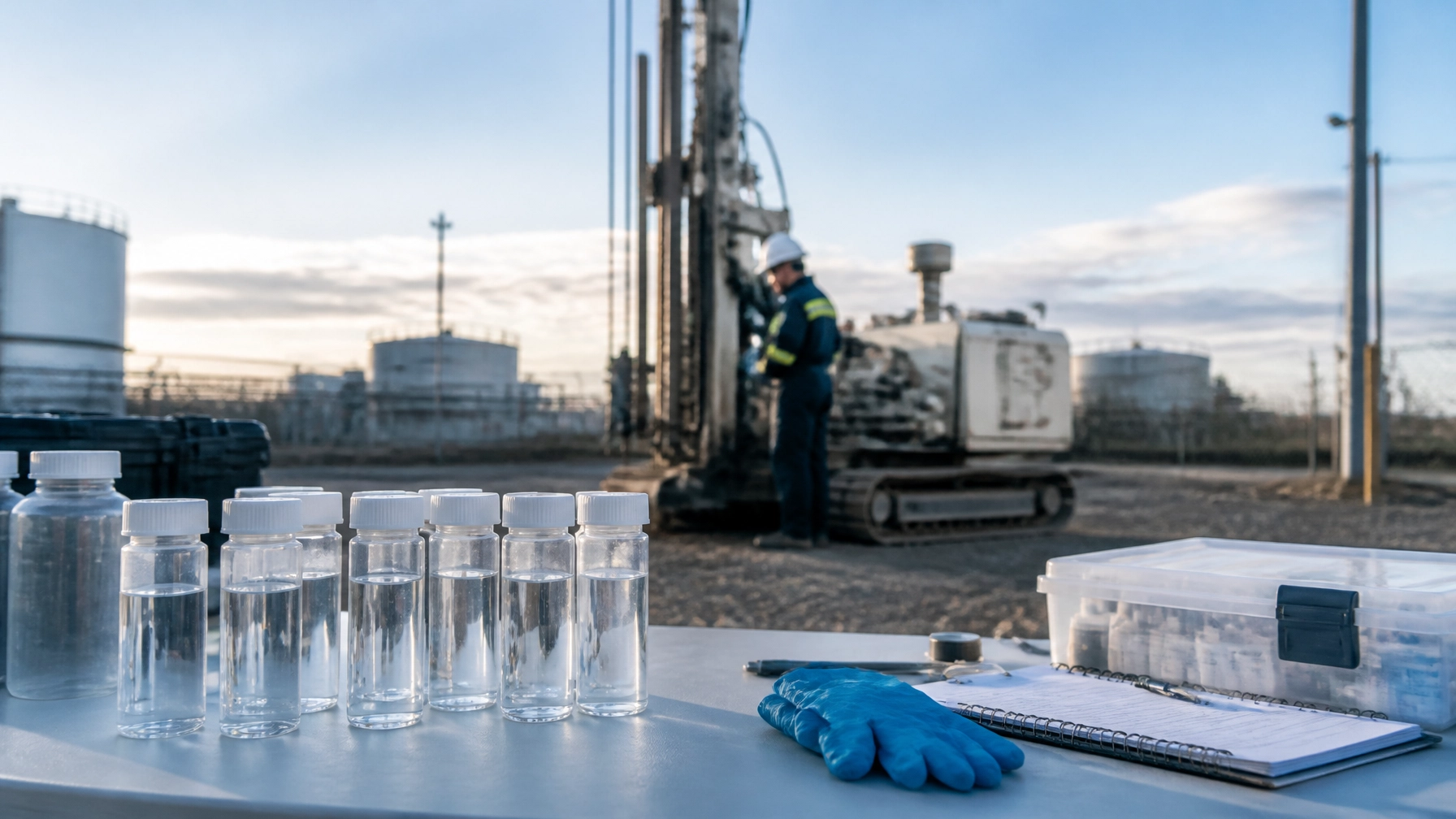
    Macro shot of laboratory equipment used for Synthetic Precipitation Leaching Procedure (SPLP) testing, showing the precision required for PFAS leachate analysis.

    Understanding the "Soil Leachate" Standard: The DAF 20 Rule

    The most technical: and often most frustrating: part of the new regulations is the Migration to Groundwater (MTGW) pathway. In New Jersey, we don't just care about what's in the soil; we care about what can wash out of the soil and into the aquifer.

    For PFAS, the NJDEP has set the soil leachate standard using a Dilution Attenuation Factor (DAF) of 20. This means the allowable concentration in the leachate (the liquid that filters through the soil) is tied directly to the state's stringent groundwater quality standards.

    • PFOA: 14 parts per trillion (ppt) in groundwater = ~280 ppt in soil leachate.
    • PFOS: 13 ppt in groundwater = ~260 ppt in soil leachate.
    • PFNA: 13 ppt in groundwater = ~260 ppt in soil leachate.

    If your soil fails the Synthetic Precipitation Leaching Procedure (SPLP) test at these incredibly low thresholds, you are looking at a remediation obligation. This is a "parts per trillion" game. To put that in perspective, one part per trillion is roughly equivalent to one drop of water in 20 Olympic-sized swimming pools. The margin for error is zero.

    The Spill Act Implications: Why You Can’t Wait

    Under the New Jersey Spill Act, liability is strict, joint, and several. If you own the property, you own the PFAS.

    The formal adoption of these standards means that Phase I and Phase II Environmental Site Assessments must now explicitly evaluate PFAS as a potential Contaminant of Concern (COC) based on historical site use. If your consultant isn't looking for it, your lender likely will be. We’ve seen projects stalled at the closing table because a "big-box" firm used a generic playbook and ignored the emerging PFAS risk, only for a lender's reviewer to flag it at the eleventh hour.

    At Envicon, we work directly with architects, attorneys, and construction managers to ensure alignment. We know the regulator's reviewers at NJDEP by name. We don't just hand you a report with an exceedance; we give you a strategy for the migration-to-groundwater pathway that keeps your construction schedule intact.

    Technical engineering diagram showing the migration of PFAS contaminants from soil through the vadose zone into the groundwater table, illustrating the MTGW pathway.

    Big-Box Friction vs. The Envicon Path

    When you hire a national firm with 10,000 employees, your project is a number. They’ll likely tell you that "PFAS is complicated" and suggest months of additional "characterization" before even talking about a remedy. That is a defensive strategy designed to maximize their billable hours while minimizing their risk.

    We take a different approach. Our field-first, PE-led model is built for speed and technical precision.

    1. Direct Principal Access: You aren't talking to a junior staffer. You're talking to a Professional Engineer who has been on your site at 7:00 AM and knows the soil strata.
    2. Proprietary Tech: We use real-time project reporting dashboards that give you full visibility into your sampling data, schedule, and budget. No more waiting for a PDF that’s already three weeks out of date.
    3. Actionable Outcomes: We don't sell "investigation." We sell "cleared paths." If we find PFAS, we’re already looking at the Remedial Design: whether that's a cap, a soil removal plan, or a more sophisticated remedial action.

    The Action Plan: What to Do Now

    If you are currently managing a site or looking at a new acquisition in New Jersey, here is your immediate checklist:

    • Audit Your Due Diligence: If your Phase I was completed more than six months ago, it likely didn't account for these formal standards. Re-evaluate the potential for PFAS based on historic site operations (firefighting foams, plating, textiles, electronics, etc.).
    • Run the SPLP: Don't just rely on "Total PFAS" in soil. The leachate (SPLP) result is what determines your migration-to-groundwater obligation. It’s often the difference between a minor issue and a major remediation project.
    • Consult Your LSRP: Your Licensed Site Remediation Professional is now legally obligated to use these adopted standards. Ensure they have a clear plan for evaluating PFAS that won't trigger unnecessary "scope creep."
    • Check Your Carry Costs: Every week of delay in NJ remediation is a week of carrying costs and lender pressure. Speed is your most valuable asset.

    A professional engineering dashboard on a widescreen monitor, displaying real-time remediation metrics and GIS mapping for a New Jersey development project.

    Summary: A New Era of NJ Compliance

    The June 2026 adoption of PFAS soil and leachate standards isn't a suggestion: it's the law. The NJDEP has set the bar high, and the technical requirements for leachate testing (DAF 20) mean that many sites previously thought to be "clean" may now require remediation.

    Key Takeaways:

    • PFNA, PFOA, PFOS, and GenX are now formally codified in the NJ SRS.
    • The migration-to-groundwater (leachate) threshold is incredibly low, tied to ppt groundwater standards.
    • Spill Act liability is immediate for owners and responsible parties.
    • Success requires a consultant who understands the local regulatory landscape and moves with urgency.

    We believe in doing the work right, standing behind our word, and keeping projects moving. Whether you’re dealing with a complex brownfield redevelopment or a time-sensitive transaction, Envicon is built to resolve these challenges with precision.

    Stop paying for bloated reports and start paying for cleared paths.

    Contact Envicon Group today to review your site data against the new June 2026 standards and ensure your project stays on track.

    Active remediation site in New Jersey with a focus on a professional groundwater monitoring well cap, showing engineering oversight in action.

    Ready to Move Your Project Forward?

    If your site is facing PFAS questions, lender pressure, or NJDEP compliance issues, we’re ready to help you get to a clear next step.

    Envicon Strategic Solutions logo - MAIN

  • The Inundation Risk Zone (IRZ): Understanding NJ’s Climate-Adjusted Flood Elevations

    The Inundation Risk Zone (IRZ): Understanding NJ’s Climate-Adjusted Flood Elevations

    The rules for building in New Jersey just changed, and if you’re reading this on June 22, 2026, you have exactly 28 days to decide how you’re going to handle it.

    On January 20, 2026, the NJDEP officially adopted the Resilient Environments and Landscapes (REAL) rules. This wasn't just another regulatory tweak; it was a fundamental shift in how tidal flood hazard areas are defined and managed. For developers, investors, and attorneys, the primary headlines are the Climate-Adjusted Flood Elevation (CAFE) and the Inundation Risk Zone (IRZ).

    At Envicon, we don’t sell bloated reports that sit on your desk. We sell cleared paths. Right now, that path is narrowing for anyone who hasn't secured their "legacy" status. Here is what you need to know about the new NJ flood elevations and why the current "one-year delay" is more of a countdown than a reprieve.

    The New Math: CAFE vs. FEMA BFE

    For years, the gold standard for flood elevation was the FEMA Base Flood Elevation (BFE). If FEMA said the 100-year flood was 10 feet, you built to that plus a little freeboard.

    Under the NJPACT REAL rules, that math is obsolete for tidal areas. The state has introduced the Climate-Adjusted Flood Elevation (CAFE), which is set at FEMA BFE + 4 feet.

    Technical diagram showing FEMA BFE vs NJ CAFE +4ft elevation

    This 4-foot jump is designed to account for sea-level rise projections through the year 2100. If your site has a BFE of 10 feet, your new design flood elevation for NJDEP permitting is 14 feet. This isn't a suggestion; it's a requirement for site engineering and habitable floor heights.

    Why this matters now:

    • Design Impact: Foundations, mechanical systems, and access points all have to move up. This changes your floor-area ratio (FAR) and your construction costs.
    • Financing Gap: Lenders are already looking at these rules. A project designed to old standards that doesn't meet CAFE might be viewed as a "stranded asset" before the first shovel hits the dirt.
    • Regulatory Friction: If your project isn't elevated to CAFE, you aren't getting an NJDEP permit: period: unless you fall under the legacy protections.

    Defining the Inundation Risk Zone (IRZ)

    Beyond the vertical elevation (CAFE), the NJDEP has introduced a horizontal boundary: the Inundation Risk Zone (IRZ). This zone identifies land that is currently above the mean high water line but is projected to be permanently inundated by the year 2100.

    Technically, the IRZ includes all land within five feet vertically of the current Mean Higher High Water (MHHW) elevation.

    GIS map showing the Inundation Risk Zone overlay in coastal NJ

    Contrary to some of the early panic in the industry, the IRZ is not a no-build zone. However, it is a "build-with-scrutiny" zone. If your project falls within the IRZ: especially residential developments or critical infrastructure: you are now required to submit:

    1. A Sea-Level Rise Impact Assessment: How will your site function when the surrounding streets are tidally flooded?
    2. An Alternatives Analysis: You must prove that you've tried to minimize the risk or that there is no feasible alternative to building in that zone.
    3. Risk Acknowledgement: Formal documentation that you recognize the long-term risk of the site becoming permanent water.

    The July 20th Deadline: The Legacy Window is Closing

    There has been a lot of talk about "delays" in the implementation of NJPACT. Let’s be direct: the delay is over. The rules are adopted.

    The only "delay" that matters right now is the 180-day legacy window. Projects that submit an administratively and technically complete application to the NJDEP by July 20, 2026, can still be reviewed under the old standards.

    If you miss that deadline by a single day, or if your application is deemed incomplete, you are subject to CAFE and IRZ requirements.

    "Waiting for the next regulatory delay is not a business strategy; it's a liability. The projects that move forward are the ones that treat these deadlines as hard stops." : Jason Pancoast, CEO of Envicon Group.

    The Envicon Edge: Moving Beyond the "Black Box"

    When you hire a national firm to handle your NJDEP permitting, your project often disappears into a black box. You don't know which junior staffer is writing your report or which reviewer they are (or aren't) talking to.

    Envicon works differently. We are a family-owned, PE-led firm that has spent 20 years building direct relationships with the NJDEP and local regulators. We don't just hand you a report and leave you to figure it out. We sit at the table with the reviewers to find the alignment that actually gets your project approved.

    Envicon engineer and developer collaborating on site plans

    Our proprietary project management infrastructure gives you real-time visibility. You’ll know exactly where your application stands as we race toward that July 20th deadline. We provide the technical precision of a large firm with the urgency and accountability of a partner who is on your site at 7:00 AM.

    Summary: Your 30-Day Action Plan

    The Inundation Risk Zone and Climate-Adjusted Flood Elevations are the new reality for New Jersey development. To keep your project on track, you need to act before the July 20th cutoff:

    • Confirm your Zone: Check if your site falls within the IRZ using the latest NJDEP mapping.
    • Audit your Elevations: Does your current design meet the BFE + 4ft standard? If not, do you have a plan to file for legacy status in the next three weeks?
    • Secure your Team: Ensure your consultants are not just aware of the rules, but are actively coordinating with the NJDEP to ensure your application is "technically complete" before the window shuts.

    We don't sell reports. We sell cleared paths. If your project is facing a regulatory hurdle, contact us today to ensure you aren't left underwater, literally or figuratively.

    Take the Next Step


    Envicon Strategic Solutions logo – MAIN
    Envicon Strategic Solutions logo - MAIN

  • NYSDEC’s New DACAT Tool: A Developer’s Guide to Environmental Justice Screening (June 2026)

    NYSDEC’s New DACAT Tool: A Developer’s Guide to Environmental Justice Screening (June 2026)

    As of June 12, 2026, the regulatory landscape for New York real estate development has fundamentally shifted. If you are a developer, property investor, or attorney operating in the five boroughs or upstate, the acronym DACAT is no longer a footnote: it is now a critical milestone in your project’s lifecycle.

    The New York State Department of Environmental Conservation (NYSDEC) has officially launched the Disadvantaged Community Assessment Tool (DACAT). This isn't just another mapping layer; it is a mandatory screening resource under the revised State Environmental Quality Review Act (SEQRA) regulations (6 NYCRR Part 617).

    At Envicon Group, we have been tracking the rollout of the Environmental Justice Siting Law (EJSL) since its inception. We know that for our clients, "compliance" isn't the goal: progress is. Here is what you need to know about DACAT and how to ensure it doesn't become the roadblock that stalls your next closing.

    What is DACAT?

    The Disadvantaged Community Assessment Tool is the operational arm of New York’s commitment to environmental justice. Built on data from the Climate Justice Working Group (CJWG), DACAT is designed to identify "disadvantaged communities" (DACs) that bear a disproportionate burden of negative public health effects, environmental pollution, and climate change impacts.

    The tool categorizes census tracts based on existing environmental stressors and socioeconomic vulnerabilities. In the June 2026 SEQRA framework, applicants must now use DACAT to answer specific questions on both Short and Full Environmental Assessment Forms (EAFs).

    Key Screening Criteria:

    • Location: Is the project located within a DAC?
    • Proximity: Is the project within a half-mile radius of a DAC?
    • Impact: Will the project increase "pollution burdens" (such as air emissions, noise, or waste) on these communities?

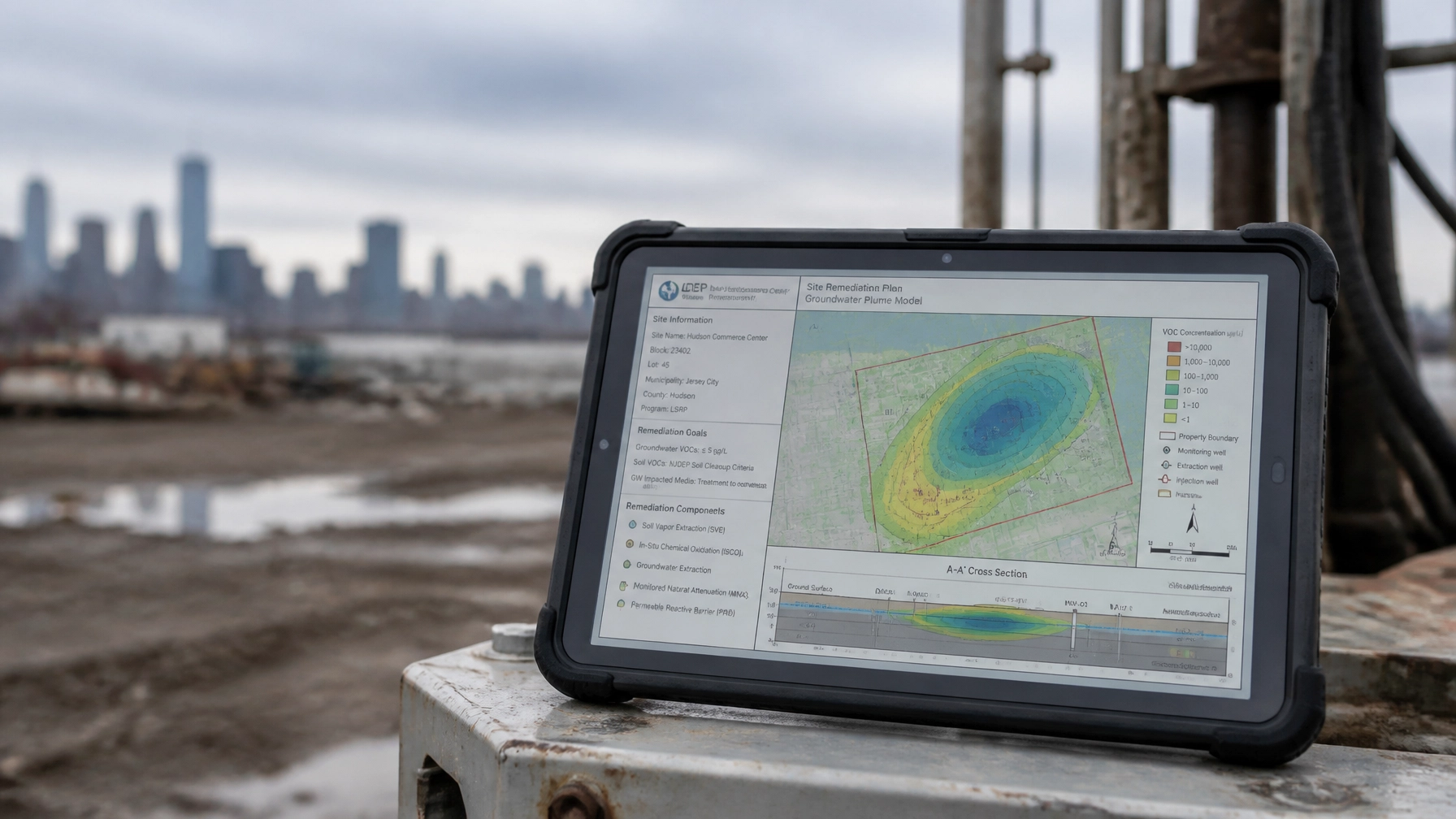
    A digital tablet displaying a technical GIS map of NY/NJ with color-coded DACAT census tracts

    Why Early Screening is Non-Negotiable

    In the "old" days of SEQRA, environmental justice was often a late-stage consideration. In 2026, waiting until your EAF is drafted to run a DACAT screen is a recipe for a project-killing delay.

    If DACAT flags your site as being in or near a "comparatively higher burden" area (often highlighted in orange or yellow on the DEC’s interface), the lead agency is now empowered: and often required: to demand a more detailed Environmental Justice (EJ) analysis.

    Every week of delay in identifying these triggers means increased carrying costs and potential friction with lenders who are increasingly sensitive to EJ risks. National "big-box" firms might hand you a DACAT report weeks after your request. At Envicon, we believe in speed and precision. We integrate this screening into the first 48 hours of our due diligence process.

    "We don’t sell reports. We sell cleared paths. If a site has an EJ hurdle, you need to know it before the ink is dry on the purchase agreement, not six months into the permitting process." : Jason Pancoast, CEO of Envicon Group.

    The Envicon Difference: Proprietary Tech Meets Local Fluency

    Most consultants are using the public DACAT tool as a standalone checkbox. They hand you a map and leave you to figure out what it means for your site plan.

    Envicon Group takes a different approach. We have built a proprietary project management infrastructure that integrates DACAT data with our internal site-civil and remediation databases.

    When we run a screen, we aren't just looking at the DEC’s map. We are looking at:

    1. Historical Site Data: How do the specific contaminants on your site interact with the "burden" factors identified by DACAT?
    2. Regulatory Sentiment: We sit at the table with NYC OER and NYSDEC daily. We know which reviewers prioritize specific EJ metrics and how to frame your remedial design to mitigate those concerns early.
    3. Real-Time Dashboards: Our clients get visibility into these risks through custom dashboards. You can see the EJ status, schedule impacts, and budget requirements in real-time: not in a monthly PDF that’s already outdated.

    Active New York construction site at dusk with heavy equipment and tower cranes, highlighting complex site development

    Integrating DACAT into the SEQRA Process

    Under the new rules effective June 12, 2026, the DACAT output informs the "Significance Determination." If the tool indicates your project may have a moderate to large impact on a DAC, the likelihood of being required to produce a full Environmental Impact Statement (EIS) increases significantly.

    Strategic Takeaways for Developers:

    • Site Selection: Use DACAT during the LOI phase. If a site is in a high-burden DAC, factor in the costs and time for community outreach and enhanced mitigation.
    • Design for Mitigation: If your project involves significant soil disturbance or heavy equipment use, build your Stormwater Pollution Prevention Plans (SWPPP) and air monitoring protocols with the DACAT results in mind. Proactive mitigation is cheaper than reactive legal defense.
    • Community Alignment: Collaboration isn't a buzzword; it's a permit strategy. Engaging with DAC stakeholders early: guided by DACAT’s socioeconomic data: can turn potential opponents into project partners.

    Don't Let a Tool Stop Your Project

    The DACAT tool is a powerful new variable in New York development. While large national firms might apply a cookie-cutter playbook to your NYC or NJ project, Envicon brings 20 years of direct agency relationships and field-first expertise.

    We understand that you are working against real deadlines: closings, permits, and construction starts. We don’t just provide a report; we provide the technical and regulatory path to get your site buildable and compliant.

    Field technicians performing site work with heavy equipment and protective gear

    Summary Checklist for June 2026:

    • Verify DAC status: Every new project must be screened using the official DACAT tool.
    • Check the 0.5-mile radius: Impact is no longer confined to your property line.
    • Update EAFs: Ensure you are using the revised forms (Part 617 amendments).
    • Partner with experts: Hire a firm that knows the reviewer by name, not just the regulation by number.

    Ready to screen your next site?

    Navigating the new NYSDEC requirements doesn't have to be a "black box" experience. Whether you're dealing with a complex brownfield or a time-sensitive transaction, our team is ready to move your project forward.

    Envicon Group

  • GHG Mandatory Reporting: Why NY Developers Need a Monitoring Plan by September

    GHG Mandatory Reporting: Why NY Developers Need a Monitoring Plan by September

    If you are a major property owner or developer in New York, the clock isn’t just ticking: it’s racing. As of today, June 29, 2026, you are exactly 64 days away from a critical regulatory deadline that many in the industry are still scrambling to meet.

    Under 6 NYCRR Part 253, New York’s mandatory Greenhouse Gas (GHG) reporting regulation, applicable entities must submit their Emissions Monitoring and Measurement Plan (EMMP) by September 1, 2026. This isn't just a "check-the-box" administrative task; it is the foundational requirement for the first mandatory data submission due in June 2027.

    At Envicon Group, we don’t sell defensive reports that sit on a shelf. We sell cleared paths to compliance. If your current consultant hasn't walked you through your EMMP yet, your project: and your bottom line: are at risk.

    What is Part 253 and Who is in the Crosshairs?

    New York’s Part 253 is the state’s aggressive move to quantify carbon footprints across the most significant sectors of the economy. It applies to "reporting entities" that meet specific emission thresholds or operate in designated high-impact categories.

    Specifically, you are likely subject to these requirements if you fall into any of the following:

    • Large Facilities: Any facility emitting ≥10,000 metric tons of CO2e per year.
    • Fuel Suppliers: Those delivering fossil fuels or fuel products into New York State.
    • Electric Power Entities: Importers and exporters of electricity.
    • Waste Management: Specified waste transporters and operators of certain anaerobic digesters.

    The thresholds are lower than many developers expect. A large-scale residential or mixed-use development with significant onsite energy generation or central boiler plants can quickly cross the 10,000-metric-ton threshold.

    The September 1 Deadline: The EMMP Explained

    The Emissions Monitoring and Measurement Plan (EMMP) is your roadmap for how you will track, calculate, and report your emissions. NYSDEC requires this plan to be submitted by September 1, 2026, to ensure that by the time you start your 2027 reporting, your data is bulletproof.

    A compliant EMMP must include:

    1. Detailed Measurement Methodologies: How are you tracking fuel use? Are you using direct measurement, or mass-balance calculations?
    2. QA/QC Procedures: What is your internal process for catching data anomalies? How often are your meters calibrated?
    3. Calculation Framework: NY Part 253 specifically requires reporting in CO2e using 20-year Global Warming Potentials (GWP20), a more stringent standard than many federal programs.
    4. Data Management Systems: Where is this data living? If your answer is "a series of disparate spreadsheets," you’re already behind.

    Engineer's tablet showing GHG data dashboard

    The Business Impact: Beyond Simple Compliance

    In the world of high-stakes development, a missed regulatory deadline is never just a fine. It’s a cascading series of delays.

    Every week your compliance is in question, you incur carrying costs. Lenders are increasingly flagging GHG compliance as a prerequisite for funding and refinancing. If your Phase I or environmental due diligence doesn't account for Part 253 reporting obligations, you are flying blind into a potential "stop-work" scenario or a rejected lender submittal.

    As we often say at Envicon: Every week of delay costs you carrying costs, lender patience, and market timing. A rejected EMMP in September means re-mobilization of staff and re-billing, which is exactly the kind of big-firm bloat we help our clients avoid.

    The Problem with "Big-Box" Consulting

    If you’ve hired a national firm for your Environmental Assessments, you know the drill: you met a senior partner at the pitch, and then you were handed off to a junior staffer who hasn't stepped foot on your site in six months.

    When it comes to GHG reporting, these firms tend to produce 300-page reports written defensively to protect their own liability, rather than to move your project forward. They hand you a document and leave you to figure out what it means for your operations.

    At Envicon, we take a different approach. We are field-first and regulator-facing. We sit at the table with NYSDEC and NYC OER reviewers because we know them by name. We understand how they interpret Section 2.20 requirements, and we build your EMMP to satisfy those reviewers on the first pass.

    Envicon engineers conducting a waterfront site inspection

    The Envicon Edge: Real-Time Data Transparency

    Compliance shouldn't be a black box. Most consultants deliver a static PDF report that is outdated by the time it hits your inbox.

    Through our Digital Solutions, Envicon provides real-time project reporting dashboards. For GHG reporting, this means you can see your data collection status, emissions trends, and compliance milestones in real-time.

    Instead of wondering if your team is ready for the June 2027 reporting deadline, you can log in and see the verified data points as they are collected. This transparency changes the dynamic with your stakeholders: whether they are investors, lenders, or regulators.

    "Collaboration is not a buzzword: it's how we work. We don't just sell reports; we sell the truth and a clear path to the next stage of your project." : Jason Pancoast, CEO, Envicon Group

    Action Plan: What You Need to Do Right Now

    With the September 1st deadline approaching, there is no time for "synergy" or corporate fluff. You need actionable outcomes.

    1. Confirm Applicability: Immediately assess your facility's projected emissions for the 2026 calendar year. Use our Risk Screener to get a baseline.
    2. Audit Your Data Systems: Ensure you have the hardware (meters, sensors) and software in place to start collecting 2026 data accurately.
    3. Draft the EMMP: Your plan must be finalized and ready for submission by late August to avoid last-minute filing errors.
    4. Prepare for June 2027: Remember, the EMMP is the plan. The action starts in January 2026, with the first formal report due June 1, 2027.

    Environmental monitoring equipment on a construction site

    Summary: Move Forward with Precision

    The new GHG reporting landscape in New York is complex, but it doesn't have to be a project-killer. By focusing on precision, urgency, and direct agency coordination, you can turn a regulatory hurdle into a managed business process.

    Don't let your project sit in someone’s queue at a national firm while your carrying costs mount. Hire a team that lives and breathes the NYC and NJ regulatory environment every day.

    Professional collaboration on environmental reports

    Ready to secure your project's future?

    Don't wait until August to find out your monitoring plan isn't compliant. Get ahead of the NY Part 253 requirements today.

    Envicon Group Logo

  • REAL Rule Extension Strategy: Managing Project Timelines Through July 2027

    REAL Rule Extension Strategy: Managing Project Timelines Through July 2027

    For New Jersey real estate developers and property owners, the regulatory landscape just shifted again: this time in your favor, but only if you move fast.

    In June 2026, the NJDEP officially filed a rulemaking proposal to extend the "legacy" provisions of the Resilient Environments and Landscapes (REAL) rules by a full year. Originally set to expire in July 2026, this critical window has been pushed to July 20, 2027.

    This isn't just a administrative delay; it’s a strategic opportunity. This one-year extension provides a reprieve from the most aggressive flood elevation requirements in New Jersey history. At Envicon Group, we are seeing this change the math on dozen of projects across Hudson County and the Jersey Shore. If you have a project in the pipeline, this is your chance to lock in current standards and avoid the massive capital expenditures associated with the new Inundation Risk Zone (IRZ) elevations.

    The Stakes: Why the IRZ Changes Everything

    The REAL rules were designed to overhaul the Coastal Zone Management (CZM), Freshwater Wetlands, and Flood Hazard Area (FHA) rules to account for rising sea levels. The most disruptive element for developers is the creation of the Inundation Risk Zone (IRZ).

    Under the new standards, projects in tidal areas must add 4 feet to the existing FEMA 100-year flood elevation to determine the new Design Flood Elevation (DFE). For a typical mid-rise development, this 4-foot "bump" can mean:

    • Redesigning building podiums and parking levels.
    • Losing valuable ground-floor retail or residential space.
    • Significant increases in structural and fill costs.
    • Complex utility relocations and stormwater management adjustments.

    Missing the July 2027 deadline means your project is no longer "grandfathered." It will be reviewed under the new standards, which often forces a total redesign.

    Technical Soil Sample and Digital GIS Mapping

    Tactical Playbook: How to Vest Your Project Before July 2027

    Securing "legacy" status isn't as simple as just "filing an application." The NJDEP has set a high bar for what qualifies. To lock in the current rules, your application must be deemed administratively and technically complete by the July 20, 2027 cutoff.

    1. Define "Technically Complete"

    A "technically complete" application means more than just filling out forms. It requires full environmental site assessments, drainage calculations, site plans, and often physical field data. If you submit a bare-bones application in June 2027 hoping to "fix it later," you will fail. The NJDEP reviewers are notorious for returning incomplete applications, and if your "fix" happens after the deadline, you are subject to the new REAL standards.

    2. Work Backward from the Deadline

    If the deadline is July 20, 2027, you should aim to have your initial filing in by March or April 2027. This provides a 90-day buffer for the NJDEP to issue a Notice of Deficiency (NOD) and for your team to respond. At Envicon, we don't believe in "placeholder" filings. We push for 100% technical accuracy on the first submittal to avoid the back-and-forth that eats up precious calendar days.

    3. Know the Difference: REAL vs. IFPR

    It is critical to distinguish between the REAL rule extension and the Inland Flood Protection Rule (IFPR). The IFPR, which governs non-tidal areas, had its own legacy cutoff in July 2023. This current 2027 extension applies primarily to tidal/coastal projects governed by the REAL rules. Navigating which rule applies to your specific site: or if your site sits on the boundary: requires precise civil and site engineering oversight.

    Professional Planning with Site Maps and Dashboard Data

    Why the "Big Box" Consultants Are Failing You

    Many developers are finding that their national consulting firms are treating this extension with a sense of complacency. In the world of large-firm engineering, your project is one of thousands. Their reports are often written defensively: full of "CYA" language that protects the consultant but leaves the developer guessing on the next step.

    At Envicon Group, we take the opposite approach. We are a family-owned firm that has spent 20 years building direct relationships with regulators at the NJDEP. We don’t just submit a report and wait for a letter in the mail; we pick up the phone. We know the reviewers by name, and we understand how they interpret "technical completeness."

    The Envicon Difference:

    • Direct Leadership: You aren't handed off to a junior associate. The principal who pitched you is the one reviewing your remedial design and coordinating with the agency.
    • Agency Fluency: We understand the nuances of the NJDEP's June 2026 filing better than firms based in Texas or Chicago. We work these jurisdictions every day.
    • Transparency: Our digital project dashboards give you real-time visibility into your permitting status. You’ll know exactly where your application stands in the queue.

    "Collaboration is not a buzzword: it's how we work. When the NJDEP changes the rules, our job is to find the path that keeps your project buildable and compliant, without the bloat of a 500-page defensive report." : Jason Pancoast, CEO of Envicon Group

    Summary: Your Immediate Next Steps

    The extension to July 20, 2027, is a gift, but it is a temporary one. The NJDEP is currently facing a massive backlog of applications, and that backlog will only grow as the new deadline approaches.

    To protect your project’s ROI:

    • Audit your current permit status: Determine if your project is currently "legacy" or if you need to file now to capture that status.
    • Review your elevations: Use our Risk Screener Tool to see if your site falls within the new IRZ boundaries.
    • Avoid the "June 2027 Rush": Start your environmental and engineering due diligence now to ensure a "technically complete" submittal.

    We don’t sell reports; we sell cleared paths. Whether you are dealing with a complex brownfield redevelopment or a high-stakes residential project, we remove the obstacles between you and a buildable site.

    Aerial Brownfield Redevelopment with Infrastructure

    Conclusion: Don't Let Your Project Stall

    The cost of delay in New Jersey development is measured in more than just interest rates; it’s measured in regulatory risk. Every week your application sits in a "big box" consultant's queue is a week you risk losing your legacy status.

    Envicon Group specializes in solving environmental and engineering challenges with precision, speed, and trust. We believe in doing the work right, standing behind our word, and keeping projects moving.

    Ready to lock in your project standards before the 2027 deadline?

    Envicon Group Logo

  • NYC OER and Environmental Justice: How NY’s New Rules Impact City-Led Remediation

    NYC OER and Environmental Justice: How NY’s New Rules Impact City-Led Remediation

    If you’re developing in New York City right now, you know the feeling: your project is moving, the financing is lined up, but then a new acronym or law drops and suddenly your timeline feels like it’s stuck in the mud.

    The latest ripple in the NYC development pond is the New York State Environmental Justice (EJ) Cumulative Impacts Law (S1318A). On the surface, it’s a state-level policy. But in the trenches of NYC redevelopment, its effects are already trickling down to the NYC Office of Environmental Remediation (OER), impacting everything from E-Designation sites to the Voluntary Cleanup Program (VCP).

    The days of just "checking the box" on environmental reports are over. If your consultant is handing you a 500-page report and telling you "we're good," but hasn't mentioned how the New York State Department of Environmental Conservation (NYSDEC) might view your site’s future emissions, you aren't getting the full picture.

    At Envicon, we don’t sell reports; we sell cleared paths. Here is how these state-level EJ changes are fundamentally shifting the way OER projects move forward.

    Breaking Down the New York State EJ Law (S1318A)

    Passed to protect "disadvantaged communities" from disproportionate pollution, S1318A is a game-changer for the NYSDEC permitting process. It requires the state to evaluate the cumulative impact of all pollution sources in a specific area before approving new permits.

    Specifically, if a project is located in a designated EJ area and requires a state permit: for air emissions, waste handling, or water discharge: the DEC must now deny that permit if the project would add more than a de minimis amount of pollution to an already overburdened community.

    Why This Matters for NYC OER Projects

    You might think, "OER is a city agency; why do I care about a state law?"

    It’s because environmental remediation doesn’t happen in a vacuum. Most OER projects, whether they are E-Designations or VCP sites, are eventually redeveloped into something active: a warehouse, a residential tower with a massive HVAC system, or an industrial facility.

    If that future land use requires a DEC permit, the OER cleanup plan is just step one. If you can't get the DEC permit to actually operate because of the new EJ law, your cleared site is essentially a very expensive parking lot.

    Close-up of environmental soil sample vials on a technical site plan map, representing precision in site characterization.

    The Flow-Down: E-Designations and the VCP

    For those working within the NYC Voluntary Cleanup Program (VCP), the core cleanup requirements haven't changed overnight, but the scrutiny has.

    1. Public Participation is No Longer Optional Flavoring: The State EJ law places heavy emphasis on community engagement. We are seeing OER reviewers mirror this expectation, pushing for more robust public participation plans and community benefits, especially in neighborhoods like the South Bronx, North Brooklyn, and Southeast Queens.
    2. The SEQRA Link: Many large-scale rezonings that trigger E-Designations must go through the City Environmental Quality Review (CEQR) or State Environmental Quality Review Act (SEQRA). These reviews now must explicitly evaluate whether the rezoning will cause a "disproportionate pollution burden."
    3. Remedial Goals vs. Future Use: Under S1318A, even if you meet OER’s cleanup standards (Track 1 or Track 2), the future use of the site is under the microscope. If your remediated brownfield is slated for a use that increases truck traffic or local emissions, you need to account for the "existing burden report" required by the state.

    Why "Big Firm" Paperwork Won't Save You

    When you hire a massive national firm, they tend to treat OER projects with a "copy-paste" mentality. They give you a defensively written report designed to protect their firm from liability. But a defensive report doesn't get you a Notice to Proceed (NTP) from OER.

    In the new EJ landscape, you need more than a report; you need a relationship.

    At Envicon, we sit at the table with OER reviewers: we don’t just stand in a queue. We know that regulatory coordination is often a "black box" at national firms. You don't know who is talking to your reviewer or when.

    We work directly with NYC OER, NYSDEC, and NYC Parks reviewers daily. We know their names, we know their expectations, and we understand that alignment is how projects actually get done. When a reviewer raises an EJ concern, we don't just write a rebuttal; we find a technical path forward that keeps the project compliant and moving.

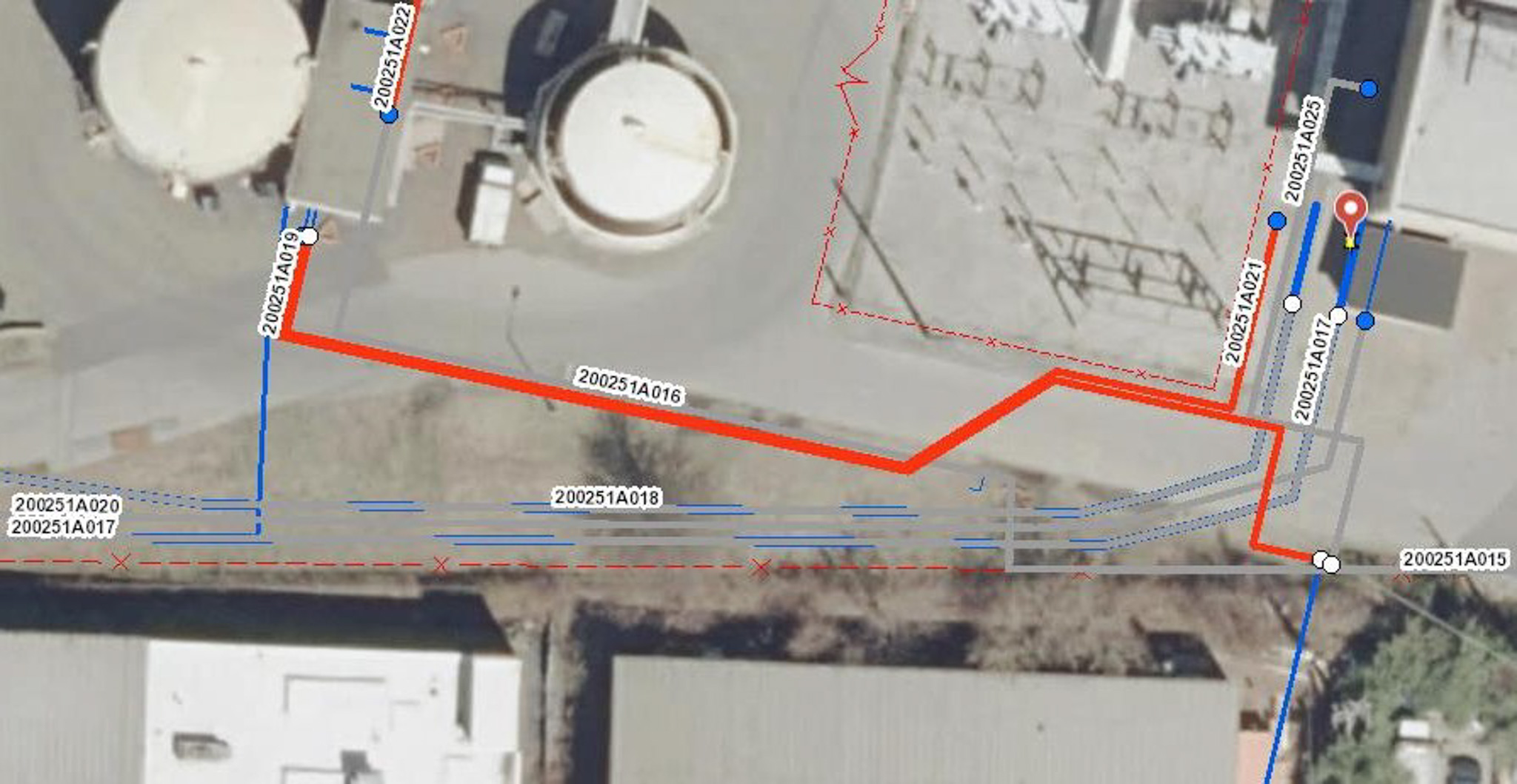
    Aerial site map overlay showing subsurface utility and monitoring points, essential for navigating complex NYC remediation.

    Navigating the "Permit Trap"

    The real danger of the new EJ rules is what we call the "Permit Trap."

    A developer completes an OER remediation under the VCP, receives their Notice of Completion, and then goes to apply for a standard DEC air permit for their new facility's boiler or backup generator. Because the site is in a disadvantaged community, the DEC conducts a cumulative impact analysis and denies the permit based on the neighborhood's existing burden.

    The result? A stalled project and millions in carrying costs.

    The Envicon Strategy:

    • Early Screening: We use our Risk Screener Tool to identify if a site is in a disadvantaged community before you even close on the property.
    • Design Integration: We coordinate with your architects and civil engineers early to ensure the proposed use minimizes new pollution sources.
    • Proactive OER Engagement: We frame our Remedial Action Plans (RAPs) to align with EJ goals from day one, making it harder for regulators to push back later.

    Wide-angle shot of a brownfield redevelopment site in a coastal NYC area, showing active excavation and remediation prep.

    Summary: A Build-Ready Site is a Compliant Site

    The New York State EJ Cumulative Impacts Law isn't a wall; it's a hurdle. But if you try to clear it with an outdated playbook, you're going to trip.

    Environmental justice is becoming the throughline for all NYC remediation. Whether you are dealing with a hazardous materials E-Designation or navigating a complex VCP site, the goal is the same: transforming a contaminated property into a thriving, compliant asset.

    We believe in doing the work right, standing behind our word, and keeping projects moving. Don't let a "defensive" report from a national firm be the reason your NYC development stalls.

    Key Takeaways for Developers:

    • Identify if your site is in a disadvantaged community early in the due diligence phase.
    • Anticipate more intensive public participation requirements from NYC OER.
    • Ensure your future land use doesn't trigger a DEC permit denial under the cumulative impacts rule.
    • Partner with a firm that has direct agency relationships and isn't just reading from a manual.

    Ready to Clear Your Path?

    Navigating OER and EJ requirements requires precision, speed, and trust. Let’s get your project moving.

    Envicon Group Logo

  • The GenX Standard: NJDEP Finalizes PFAS Remediation Rules (0.02 µg/L Groundwater)

    The GenX Standard: NJDEP Finalizes PFAS Remediation Rules (0.02 µg/L Groundwater)

    For years, "forever chemicals" have been the looming shadow over New Jersey real estate and industrial operations. On June 15, 2026, the New Jersey Department of Environmental Protection (NJDEP) finally stepped out of the interim period and into a hard-coded regulatory reality. With the formal adoption of amendments to the Ground Water Quality Standards (N.J.A.C. 7:9C) and Remediation Standards (N.J.A.C. 7:26D), PFAS is no longer a "special consideration": it is now a routine, enforceable metric that will drive every site investigation in the state.

    If you are a developer, property owner, or attorney managing a portfolio in New Jersey, the goalposts just moved. The headline of this rulemaking is the GenX (HFPO-DA) groundwater standard set at a razor-thin 0.02 µg/L (20 parts per trillion).

    At Envicon Group, we don’t just deliver reports that restate these regulations. we sell cleared paths. This update isn't just about new numbers; it’s about a fundamental shift in how projects move through the NJDEP pipeline.

    The New Numeric Reality: Promulgated PFAS Standards

    Before June 15, many LSRPs and consultants were operating under interim criteria. While those numbers were influential, "promulgated" standards carry a different weight in court and during the LSRP closure process.

    The NJDEP has now finalized the following groundwater remediation standards:

    • GenX (HFPO-DA): 0.02 µg/L
    • PFNA: 0.013 µg/L
    • PFOS: 0.013 µg/L
    • PFOA: 0.014 µg/L

    To put 0.02 µg/L for GenX into perspective: imagine one drop of ink in 20 Olympic-sized swimming pools. This level of precision requires sophisticated sampling techniques and laboratory equipment that many "big-box" firms struggle to coordinate efficiently.

    A technical cross-section diagram of a groundwater monitoring well installation showing soil strata and well construction

    Why GenX Changes the Game

    GenX was originally introduced as a "safer" alternative to older PFAS compounds like PFOA. However, New Jersey’s 0.02 µg/L standard reflects a growing regulatory consensus that these shorter-chain chemicals are just as persistent and potentially mobile in groundwater.

    Because GenX and other PFAS compounds do not break down naturally, their presence often leads to expansive plumes that cross property lines. Under the new rules, if your site is even remotely associated with historical industrial activity: coatings, plastics, electronics, or firefighting foams: you can expect the NJDEP to demand a PFAS characterization.

    Routine Sampling Is No Longer Routine

    The most significant operational change in this rulemaking is found in the Technical Requirements for Site Remediation (N.J.A.C. 7:26E). The NJDEP now explicitly requires PFAS evaluation and analysis when contaminants at a site are "unknown or poorly documented."

    In plain English: The days of skipping PFAS in your Phase II Environmental Site Assessment because it "isn't a typical contaminant" are over. If you have an industrial history and your current consultant isn't recommending PFAS sampling, they are likely setting you up for a massive regulatory hurdle: or a lender rejection: later in the project lifecycle.

    Macro photograph of laboratory sample vials filled with water for PFAS analysis

    Why PFAS Will Now Drive Your Investigation Timelines

    In the world of New Jersey redevelopment, time is the only commodity that matters. Every week your project is stalled in a regulatory "black box" incurs carrying costs and tests the patience of your lenders.

    PFAS is the new "timeline killer" for three reasons:

    1. Lab Bottlenecks: PFAS analysis requires specialized equipment (LC-MS/MS). As every site in New Jersey begins sampling simultaneously, lab capacity is becoming a choke point.
    2. Regulatory Scrutiny: NJDEP reviewers are hyper-focused on these new standards. A report that doesn't follow the 2026 updated sampling protocols will be kicked back, leading to re-mobilization and re-sampling costs.
    3. Complex Delineation: Because the standards are so low, "clean" samples are harder to find. Delineating a plume to 0.013 µg/L takes more wells and more time than traditional petroleum or solvent cleanups.

    The Envicon Difference: Speed and Precision

    When you hire a large national firm, you usually talk to a partner during the pitch and then never see them again. Your PFAS sampling plan: the very document that determines your project's financial viability: is often written by a junior staffer in a different time zone.

    At Envicon, we do things differently. We bring 20 years of direct agency relationships with the NJDEP. We know the reviewers, we know the local soil strata, and we know that a 48-hour turnaround capability is a requirement, not a luxury.

    • Field-First Leadership: Our PEs are on the site, not behind a desk. We catch sampling errors before the bottles even reach the lab.
    • Direct Coordination: We work directly with your architects and construction managers to ensure that remediation doesn't stall your build.
    • Technology-Driven Results: We use proprietary project management tools to give you real-time visibility into your sampling status. You won't wait for a monthly PDF to find out if your site is compliant.

    Active brownfield redevelopment site with an excavator and soil staging areas

    Strategic Takeaways for NJ Developers

    The finalization of these rules on June 15, 2026, means the "wait and see" period is over. Here is how you should handle your next NJ acquisition or remediation project:

    • Update Your Due Diligence: Ensure your Phase I ESAs are meeting the ASTM E1527-21 standards and specifically addressing PFAS as a recognized environmental condition (REC).
    • Screen for Risk Early: Use advanced mapping and historical data to determine if GenX or other PFAS compounds were used nearby.
    • Budget for Filtration: If you are managing groundwater during construction (dewatering), you may need GAC (Granular Activated Carbon) systems to meet these new 0.02 µg/L discharge limits.
    • Demand Transparency: If your consultant can't give you a clear path from a PFAS finding to a Response Action Outcome (RAO), you have the wrong consultant.

    The NJDEP is serious about GenX. You need a team that is just as serious about your schedule. At Envicon Group, we remove the obstacles between you and a buildable site. We don’t just deliver services: we help transform underused and contaminated properties into thriving assets.

    Summary Checklist

    • Rule Effective Date: June 15, 2026.
    • Key Standard: GenX at 0.02 µg/L in groundwater.
    • Mandate: PFAS analysis is now required for sites with "unknown" contaminant profiles.
    • Impact: Expect longer investigation timelines and more stringent dewatering requirements.

    Is your project ready for the new PFAS standards? Don't let a "forever chemical" create a forever delay.

    1. Book a free consultation: https://envicongroup.com/contact
    2. Risk screener tool: https://envicongroup.com/risk-screener?utm_source=website&utm_medium=nav_megamenu&utm_campaign=resources&utm_content=risk-screener
    3. Read more on the blog homepage: https://envicongroup.com/blog?utm_source=website&utm_medium=nav_megamenu&utm_campaign=resources&utm_content=blog-insights

    Envicon Group Logo

  • The LSRP/Developer Relationship: Why Direct Access is a Project Requirement

    The LSRP/Developer Relationship: Why Direct Access is a Project Requirement

    If you’re a real estate developer in New Jersey, you’ve likely felt the weight of a project hanging on a single signature. That signature belongs to your Licensed Site Remediation Professional (LSRP). Since the enactment of the Site Remediation Reform Act (SRRA), the balance of power in New Jersey’s environmental landscape shifted from the state to the private sector.

    But here is the reality many developers learn too late: not all LSRP oversight in NJ is created equal.

    When you hire a big-box national firm, the person signing your Response Action Outcome (RAO) is often three levels of management removed from your site. They are reading notes from a junior field tech they’ve never met, and they’re making defensive, conservative decisions to protect their firm’s liability: not to move your project forward.

    At Envicon Group, we believe the relationship between a developer and an LSRP shouldn’t be a "black box" bureaucracy. It should be a direct line of communication. In this deep dive, we’re breaking down the technical requirements of the NJDEP site remediation program and why direct access to your LSRP is the only way to keep a high-stakes project on track.

    What is NJ LSRP Oversight for Property Developers?

    To understand the value of the relationship, you first have to understand the role. Under the NJDEP site remediation program, the LSRP essentially acts as the "deputized" agent of the state. They have the authority to oversee the remediation of contaminated sites without the NJDEP looking over their shoulder at every single step: unless the project triggers "direct oversight."

    For a developer, this is a double-edged sword. On one hand, you have more control over your timeline. On the other, the LSRP bears the professional responsibility for ensuring the site meets all NJDEP Technical Requirements for Site Remediation (N.J.A.C. 7:26E).

    The LSRP oversight process for contaminated property redevelopment typically follows a rigid four-stage pipeline:

    1. Preliminary Assessment (PA): The deep dive into historical records to identify Areas of Concern (AOCs).
    2. Site Investigation (SI): Sampling those AOCs to determine if a discharge occurred.
    3. Remedial Investigation (RI): Mapping the horizontal and vertical extent of the contamination.
    4. Remedial Action (RA): The actual cleanup: whether it’s a "dig and haul," a cap, or an in-situ treatment.

    A close-up of a clear plastic soil core sample inside a split-spoon sampler, showing distinct NJ soil strata (red clay and sand). An environmental engineer's hand in a blue nitrile glove is holding a field notebook with technical annotations.

    LSRP vs. NJDEP Direct Oversight for Site Cleanup

    One of the biggest risks for any New Jersey developer is falling into "Direct Oversight." This happens when mandatory timeframes are missed or when a site has specific, highly sensitive contaminants (like certain chromate or PCB sites) that the NJDEP decides they need to manage personally.

    When you are in the NJDEP site remediation program under the guidance of an LSRP, you have flexibility. You can choose a remedial strategy that fits your end-use, whether that’s a restricted use with a Deed Notice or an unrestricted use cleanup.

    Once you fall into NJDEP direct oversight, that flexibility vanishes. The Department dictates the remedy, the timeline, and the cost. Avoiding NJDEP direct department oversight with LSRP guidance is perhaps the most critical financial service an environmental consultant can provide. If your consultant misses a "Regulatory Timeframe" by even a day because your report was stuck in their "internal quality review" queue for three weeks, you could lose control of your site's destiny.

    The Technical Reality: Why Direct Access Matters

    Most consultants hand you a report and leave you to figure out what it means for your pro forma. But environmental data is not a static set of numbers; it’s a roadmap.

    Take Vapor Intrusion (VI), for example. In the NJDEP Vapor Intrusion Technical Guidance, the thresholds are razor-thin. If your LSRP is actually on-site, seeing the soil strata and the building’s foundation personally, they can often identify "preferential pathways" that a junior staffer might miss.

    A technical 3D cross-section diagram of a sub-slab vapor intrusion mitigation system for a commercial building. Shows the suction pit, PVC piping, and the vapor barrier layer beneath the concrete slab.

    When you have direct access to the professional signing the documents, you can have a technical conversation at 7:00 AM about whether a sub-slab depressurization system is truly necessary or if a more targeted sampling plan can prove the risk is negligible. At Envicon, we don't sell reports; we sell cleared paths. That means our LSRPs are in the field, not just in the boardroom.

    The RAO vs. NFA: Knowing the Difference

    For developers who have been in the game for decades, you might still be asking for a "No Further Action" (NFA) letter. But the difference between NJDEP NFA and LSRP RAO for developers is more than just an acronym change.

    The NFA was a state-issued letter that essentially said, "The government is satisfied." The RAO is a document issued by the LSRP. Because the LSRP’s license is on the line with every RAO they issue, they have to be precise.

    A "Conditional RAO" might allow you to close on your construction loan and get vertical, provided you have a Remedial Action Permit (RAP) in place. This is where the developer/LSRP relationship is most tested. Your lender needs to see a clear path to closure, and your LSRP needs to provide the technical documentation to satisfy that lender’s environmental counsel.

    If your LSRP is an anonymous face at a firm with 10,000 employees, getting them to jump on a call with your lender's attorney is a nightmare of "billable hour" negotiations. At Envicon, we treat your lender’s questions as our own hurdles to clear.

    The Envicon Advantage: Technology Over Paperwork

    At big firms, regulatory coordination is a black box. You don't know who’s talking to your reviewer at the NJDEP or when. We’ve changed that dynamic by building proprietary technology that gives our clients a real-time view of their project's status.

    A clean, modern data dashboard on a dual-monitor setup in a professional engineering office. The screen shows real-time GIS mapping of soil sampling points, VOC concentration heatmaps, and a project timeline with NJDEP regulatory milestones.

    Instead of waiting for a monthly PDF that is already outdated, our developers use digital dashboards to track:

    • Mandatory and Regulatory Timeframes: Ensuring we never trigger direct oversight.
    • Remediation Funding Source (RFS) status: Keeping your financial assurance compliant.
    • Sampling heatmaps: Seeing exactly where the "hot spots" are in real-time.

    This transparency allows for faster decision-making. If we find a localized spill during a site investigation under NJ LSRP oversight, we don’t wait two weeks to write a memo. We show you the data, we discuss the remedial options, and we move.

    Managing the "Disposal Surprise"

    Nothing kills a developer’s budget faster than a soil disposal surprise. Whether you’re dealing with NJDEP Historic Fill or localized contaminants, soil management is a logistics game disguised as an engineering problem.

    By integrating our civil engineering and environmental teams, Envicon provides LSRP consulting for brownfield redevelopment in New Jersey that accounts for the "dirt" from day one. We don't just tell you the soil is contaminated; we build a management plan that minimizes export, maximizes on-site reuse where permitted, and ensures every yard is tracked with the precision required by the NJDEP.

    A wide shot of an environmental remediation site in New Jersey. A licensed site remediation professional (LSRP) wearing a white hard hat and high-visibility vest is standing next to a real estate developer. They are looking at a large site plan spread across the hood of a dusty white pickup truck.

    Summary: A Partnership Built on Results

    The NJDEP site remediation program is complex, but it shouldn't be an obstacle. Choosing the right LSRP means choosing a partner who understands that every week of delay is a week of carrying costs and market risk.

    At Envicon Group, we’ve spent 20 years perfecting the balance of technical depth and developer-focused urgency. We sit at the table with the regulators so you don't have to wait in a queue.

    Key Takeaways for Developers:

    • Direct Access is Mandatory: Your LSRP should be accessible, field-ready, and capable of explaining technical risks in business terms.
    • Timeframes are Non-Negotiable: Missing a deadline can trigger NJDEP Direct Oversight, stripping you of project control.
    • Tech is the Great Equalizer: Use real-time data to make decisions faster and keep lenders confident.
    • The RAO is the Goal: Every action taken on-site should be a strategic step toward the Response Action Outcome.

    Ready to clear the path for your next project? At Envicon Group, we don’t just deliver reports: we deliver outcomes. Contact us today to discuss your site’s specific challenges.

    Envicon Strategic Solutions logo - MAIN

  • NY ‘Qualified Actions’: Leveraging 2026 SEQRA Exemptions for Parks and Infrastructure

    NY ‘Qualified Actions’: Leveraging 2026 SEQRA Exemptions for Parks and Infrastructure

    The New York State Environmental Quality Review Act (SEQRA) has long been the "speed bump" of development in the Empire State. For decades, even projects with clear public benefits: like community parks or critical water main replacements: could get mired in months of environmental impact studies, public hearings, and administrative red tape.

    That changed this month. As of June 12, 2026, the NY FY27 budget amendments have officially introduced a new regulatory category known as "Qualified Actions."

    This isn't just another layer of bureaucracy. It’s a statutory shortcut. By classifying specific types of infrastructure and park projects as "Qualified Actions," the state has effectively exempted them from the traditional SEQRA review process. If your project fits the criteria, you aren't just saving time; you're removing the biggest obstacle between your vision and a buildable site.

    At Envicon Group, we don’t just fill out forms; we clear paths. Here is how you can leverage these 2026 exemptions to keep your project moving at the speed of business.

    What Exactly is a "Qualified Action"?

    In the engineering and environmental world, we used to rely on "Type II" actions for projects that didn't need SEQRA. But the new "Qualified Action" designation is a statutory powerhouse created by the state budget to tackle the housing and infrastructure crisis.

    A Qualified Action is a project that is legally deemed not to have a significant adverse environmental impact. Once a project is identified as such, the lead agency: whether it’s the NYC OER, NYSDEC, or a local municipality: can issue a determination that the project is exempt.

    The beauty of this new rule is the bundling effect. If the main action is qualified, all related approvals: building permits, zoning variances, site plan approvals, and even financial assistance: are swept into the exemption. You no longer have to fight the SEQRA battle on five different fronts.

    The Parks and Trails Shortcut: Turning "Disturbed" into "Developed"

    The biggest win in the FY27 budget is for public recreation. If you are developing a park or a multi-use trail, you may no longer need a full environmental impact statement.

    The catch? The project must be on a "previously disturbed site."

    New York law defines a disturbed site as land that was developed at least two years prior and has been "substantially altered" by that development. Think of abandoned industrial lots, parking facilities, or decommissioned utility sites. These are the perfect candidates for the "Qualified Action" exemption, provided they don't include mass-gathering venues like 50,000-seat stadiums.

    How Envicon Unlocks the Park Exemption

    Proving a site is "previously disturbed" sounds simple, but it requires technical precision. We use 20 years of historical data, Phase I Environmental Site Assessments, and subsurface investigations to document the prior alteration of the land.

    While a big-box firm might spend six weeks writing a defensive report about "potential impacts," we focus on the facts that satisfy the regulator’s reviewer. We sit at the table with NYC Parks and the DEC to ensure they see the site the way we do: as a cleared path for a new community asset.

    Close-up of a soil core sample in a transparent tube from a geotechnical site investigation. Sharp detail, professional engineering equipment in the background.

    Infrastructure Without the Interruption: Water, Sewer, and Green Tech

    Infrastructure projects are the backbone of any development. In the past, upgrading a sewer line or adding green infrastructure to a building could trigger a "Negative Declaration" process that added months to the schedule.

    Under the 2026 rules, the following infrastructure projects are now Qualified Actions:

    • In-kind replacement or rehab of municipal water and wastewater systems.
    • Green infrastructure retrofits (think bioswales, permeable pavement, and green roofs) on existing structures.
    • Sewer extensions to disadvantaged communities (provided they don't require new DEC permits).
    • NYC Public Schools built by the School Construction Authority that connect to existing systems.

    This shift moves the focus from "Will this hurt the environment?" to "How fast can we improve the environment?" It’s a visionary approach that matches Envicon’s philosophy: resolve the challenge with precision and move on.

    Why the "Big-Box" Firms Will Cost You Time

    When a new law like the FY27 budget hits, the large national firms usually have a 6-to-12-month lag. Their legal departments have to "vet" the language, their junior staff has to be trained on the new forms, and their project managers will likely tell you to play it safe and do the full SEQRA review anyway "just in case."

    That "just in case" costs you money in carrying costs, lender patience, and market timing.

    "Every week of delay is a week of lost revenue. If your consultant is writing a report for CYA instead of a path to closure, you're working with the wrong firm." : Jason Pancoast, CEO of Envicon Group.

    Envicon is field-first and regulator-facing. We don't wait for a "corporate bulletin" to tell us how to handle the new SEQRA rules. We are already talking to the reviewers at the NYSDEC and NYC OER about these "Qualified Actions." We know which reviewers are open to the exemption and what specific data points they need to see on a site investigation to sign off on that 120-day determination.

    Digital GIS mapping visual showing underground water and sewer infrastructure layers under a New York street. Technical, professional engineering aesthetic.

    Action Plan: Navigating the 120-Day Window

    The new law gives agencies 120 days to decide if your project is a Qualified Action. If you don't provide the right data on Day 1, that clock resets. Here is how we ensure you don't lose time:

    1. Threshold Determination: We conduct a rapid screening of your site’s history. If it was developed more than two years ago, we build the case for a "Previously Disturbed" status immediately.
    2. Agency Coordination: We don’t hide behind an email queue. We work directly with architects and local officials to align the project description with the statutory criteria for Qualified Actions.
    3. Clean Documentation: Our reports are designed to be read, not just filed. We produce high-quality, technically sound deliverables that give the lead agency the confidence to issue an exemption.

    Summary: A New Era for NY Development

    The 2026 SEQRA amendments are a gift to those who know how to use them. By categorizing parks, trails, and green infrastructure as "Qualified Actions," New York is finally acknowledging that beneficial projects shouldn't be taxed by endless reviews.

    • Parks on disturbed sites are now exempt.
    • Water/Sewer rehab is fast-tracked.
    • Green retrofits avoid the red tape.
    • Envicon Group provides the technical muscle to prove your project qualifies.

    Don't let your project sit in someone’s queue. The path is cleared: you just need the right team to walk it with you.

    Ready to see if your project is a Qualified Action?

    Envicon Group Logo

  • NJDEP Historic Fill Guidance: Managing the Legacy of NJ Land

    NJDEP Historic Fill Guidance: Managing the Legacy of NJ Land

    If you’re developing in Jersey City, Newark, or along the Raritan, you aren’t just moving dirt, you’re managing history. In the world of New Jersey real estate, "dirt" is a loaded term. Usually, it refers to historic fill material, a legacy of centuries of industrial growth, swamp reclamation, and urban expansion.

    But here is the problem: what one person calls "reclaiming land," the New Jersey Department of Environmental Protection (NJDEP) calls a "regulated Area of Concern (AOC)."

    At Envicon Group, we see developers get stuck in the "big-firm loop" every week. A large national consultant comes in, identifies historic fill, and immediately recommends a massive "dig and haul" operation or a bloated, multi-year sampling plan that treats the entire site like a hazardous waste dump. They write reports for their own liability protection, not for your project's progress.

    We do things differently. We lean into the NJDEP historic fill guidance with a technical precision that separates the "fill" from the "spills," saving our clients hundreds of thousands in unnecessary remediation costs.

    What is Historic Fill Material? (The NJDEP Definition)

    Before you can solve the problem, you have to define it according to the book. According to the NJDEP Historic Fill Material Technical Guidance, historic fill is "non-indigenous material, deposited to raise the topographic elevation of the site."

    We’re talking about more than just relocated soil. It’s a cocktail of:

    • Construction debris and dredged spoils.
    • Incinerator residue, coal ash, and cinders.
    • Broken brick, block, and timber.

    The regulatory nuance here is critical: for material to be classified as historic fill, it must have been contaminated prior to being placed on your site. It is a "non-site related" contamination. If the contamination came from a leaking tank or an industrial process on your property, it’s no longer just fill, it’s a discharge.

    Remediating historic fill NJ requires knowing exactly where that line is drawn. If your consultant can’t tell the difference, you’re going to pay for it.

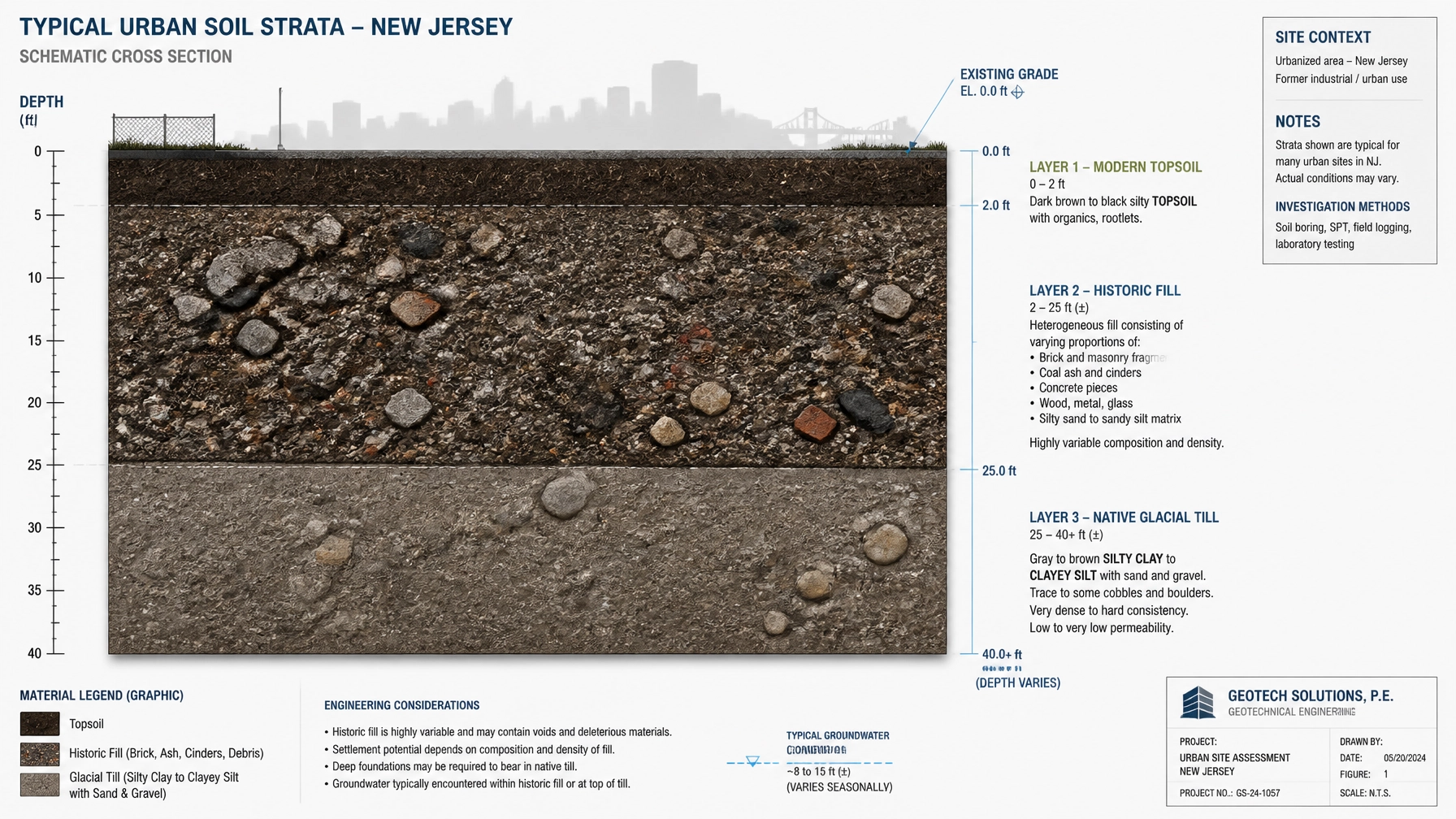
    Close-up of a soil core sample tube showing heterogeneous layers of historic fill, crushed stone, ash, and soil.

    Navigating the Technical Requirements: NJAC 7:26E

    The rules aren't suggestions; they are codified in NJAC 7:26E, the Technical Requirements for Site Remediation. Specifically, sections 3.12 and 4.7 lay out the roadmap for the historic fill site investigation and the subsequent remedial investigation.

    The Preliminary Assessment (PA)

    Your path starts with a Preliminary Assessment. This is where we review aerial photographs, Sanborn Fire Insurance Maps, and NJGS historic fill maps to identify if your site likely contains these materials. At Envicon, we don't just look at the maps; we use GIS-integrated historical data to predict exactly where the fill depth changes.

    Confirming the Presence of Historic Fill

    You can’t just guess. NJDEP procedures to demonstrate presence of historic fill require physical evidence. We use:

    • Test Pits and Trenches: Often the most cost-effective way to see the stratigraphy.
    • Soil Borings: To hit the vertical extent.
    • Photo Documentation: We provide high-resolution visual logs that prove to the NJDEP, and your Licensed Site Remediation Professional (LSRP), that the material meets the technical definition.

    3D Modeling vs. The "Fishing Expedition"

    Most firms treat a site like a grid, poking holes at random intervals and hoping for the best. This "fishing expedition" approach leads to conservative, expensive remediation plans because the consultant doesn't actually understand the subsurface volume.

    At Envicon, we utilize 3D plume modeling and high-resolution site characterization. By integrating our civil engineering services with environmental data, we map the historic fill horizontal and vertical extent investigation in a 3D digital environment.

    Why does this matter? Because if we can prove that a "hot spot" is isolated and not part of the site-wide fill, or conversely, that the fill is consistent and manageable under a standard cap, we change the financial math of the project. We move you from "uncertain liability" to "manageable construction cost."

    A 3D GIS visualization showing a subsurface model of a redevelopment site mapping volumes of historic fill vs. native soil.

    The LSRP’s Role in Historic Fill Remediation

    In New Jersey, the LSRP is the gatekeeper. They have the authority to "sign off" on the remediation, but they also carry the professional liability.

    Big-box firms often have LSRPs who are buried under corporate bureaucracy. They are incentivized to be ultra-conservative, recommending more samples, more reports, and more "digging and hauling."

    At Envicon, our LSRPs are field-first. We sit at the table with you from day one. We know the NJDEP reviewers by name, and we understand how to apply the historic fill technical guidance to achieve a Response Action Outcome (RAO) without bankrupting the developer.

    Remediation Strategies: Capping and Institutional Controls

    You rarely "clean up" historic fill in the traditional sense. It’s too massive. Instead, the standard remedy involves engineering and institutional controls for historic fill njdep.

    1. Engineering Controls (The Cap)

    You "remediate" by breaking the pathway between the contamination and the people. This usually means a historic fill cap design using:

    • Clean Soil Caps: Typically 1-2 feet of certified clean fill over a warning layer (orange geofabric).
    • Hardscaping: Asphalt parking lots or concrete building slabs serve as excellent engineering controls.
    • Stormwater Integration: This is where our civil team shines. We design grading and drainage that works with the cap, ensuring that your stormwater management doesn't puncture the remedial layers unnecessarily.

    2. Institutional Controls (The Deed Notice)

    Since the fill remains on-site, the NJDEP requires a Deed Notice. This is a document filed with the county that tells future owners, "Hey, there is historic fill here, and you have to maintain the cap." This is often paired with a Groundwater Classification Exception Area (CEA) if the fill has impacted the shallow aquifer (which, in NJ urban areas, it almost always has).

    3. Long-Term Compliance

    Once the cap is in place and the RAO is issued, you enter the "monitoring" phase. This involves a Remedial Action Permit (RAP) and a biennial certification every two years. We manage this through our real-time digital solutions, so you never miss a filing deadline with the state.

    A technical site plan showing Remedial Cap zones outlined in bright colors with a detail callout showing the layers of a typical historic fill cap.

    Why Envicon? The Technology Edge

    We don't sell reports. We sell cleared paths.

    When you hire a national firm, your project status is hidden in a monthly PDF that was out of date the day it was emailed. Envicon provides real-time project reporting dashboards.

    If we are in the field doing a historic fill investigation, you can see the boring logs, the PID readings, and the site map updates as they happen. If a lender flags a report, we don't put it in a "queue." We resolve it.

    We’ve spent 20 years building relationships with the NJDEP and local agencies. We know that in the NJ/NY market, speed is a function of technical accuracy. If your report is clean, data-driven, and follows the NJDEP historic fill guidance to the letter, it moves through the system. If it’s bloated and defensive, it sits.

    Summary: Your Historic Fill Action Plan

    If you’re sitting on a site with suspected historic fill, here is your playbook:

    • Don't assume "Dig and Haul": It is usually the most expensive and least necessary option.
    • Verify the Source: Ensure your consultant is distinguishing between historic fill and site-sourced discharges.
    • Demand 3D Modeling: Don't settle for 2D maps that lead to 1D thinking. Know your volumes.
    • Design the Cap Early: Integrate your remedial cap with your civil site plan to avoid "re-mobilization" costs.
    • Leverage Technology: Use real-time data to keep your lenders and partners informed.

    Ready to clear the path for your next project? At Envicon Group, we don’t just deliver reports: we deliver outcomes. Contact us today to discuss your site’s specific challenges.

    Envicon Strategic Solutions logo - MAIN