Blog

  • PFAS Remediation Costs in NY & NJ: What GAC, IX, and Foam Fractionation Actually Run

    PFAS Remediation Costs in NY & NJ: What GAC, IX, and Foam Fractionation Actually Run

    PFAS remediation cost is never a single number. Anyone giving you a fixed price before reviewing the water chemistry, flow rate, PFAS profile, and treatment endpoint is guessing.

    For developers, investors, and municipal or utility managers in New York and New Jersey, that guess can become an expensive surprise. A treatment system that looks reasonable during early budgeting may require frequent media changes, additional pretreatment, more sampling, or a separate residuals-management process once the system operates in the field.

    The right question isn’t simply, “What does GAC cost?” It’s:

    What treatment train can reliably meet the regulatory endpoint at this site, for this water, over the full project schedule?

    Below are practical cost benchmarks for granular activated carbon (GAC), ion exchange (IX), and foam fractionation, along with the variables that determine whether your project lands near the low or high end.

    Current PFAS remediation cost benchmarks

    The following ranges provide a starting point for planning. They are not a substitute for a site-specific design basis.

    Treatment or cost category Planning benchmark Important qualification
    GAC and IX operating costs $0.03–$3.20 per cubic meter Broad range reflecting different water chemistries, system sizes, targets, and operating conditions
    GAC and IX case-study operating costs Approximately $0.14–$0.45 per 1,000 gallons Equal to roughly $0.04–$0.12 per cubic meter
    GAC and IX capital costs Approximately $0.01–$0.45 per cubic meter A normalized planning range, not a universal installed-system price
    Leachate systems using GAC and foam fractionation Approximately $0.058–$0.095 per gallon in reported scenarios Roughly $15–$25 per cubic meter; these figures reflect high-strength leachate and total-cost scenarios

    The operating and capital benchmarks for GAC and IX are discussed in the Water Research Foundation treatment comparison and the EPA PFAS Treatment Technology Cost document.

    The apparent spread is significant. A large municipal system treating relatively consistent water may operate close to the lower range. A smaller remediation system handling concentrated groundwater, landfill leachate, or industrial wastewater can cost substantially more per cubic meter.

    That’s why cost per gallon alone can mislead decision-makers.

    GAC: Proven technology, but media replacement drives the budget
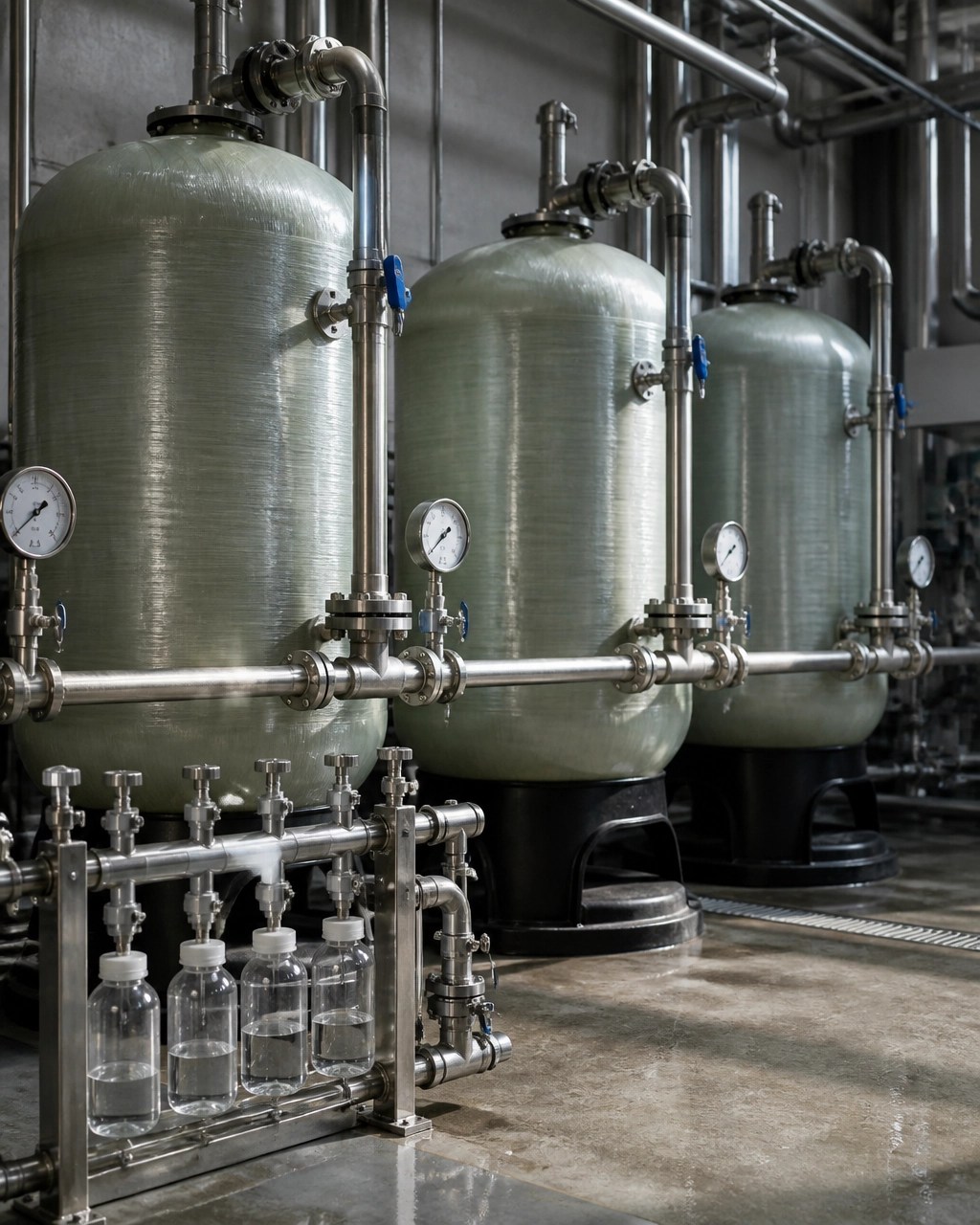
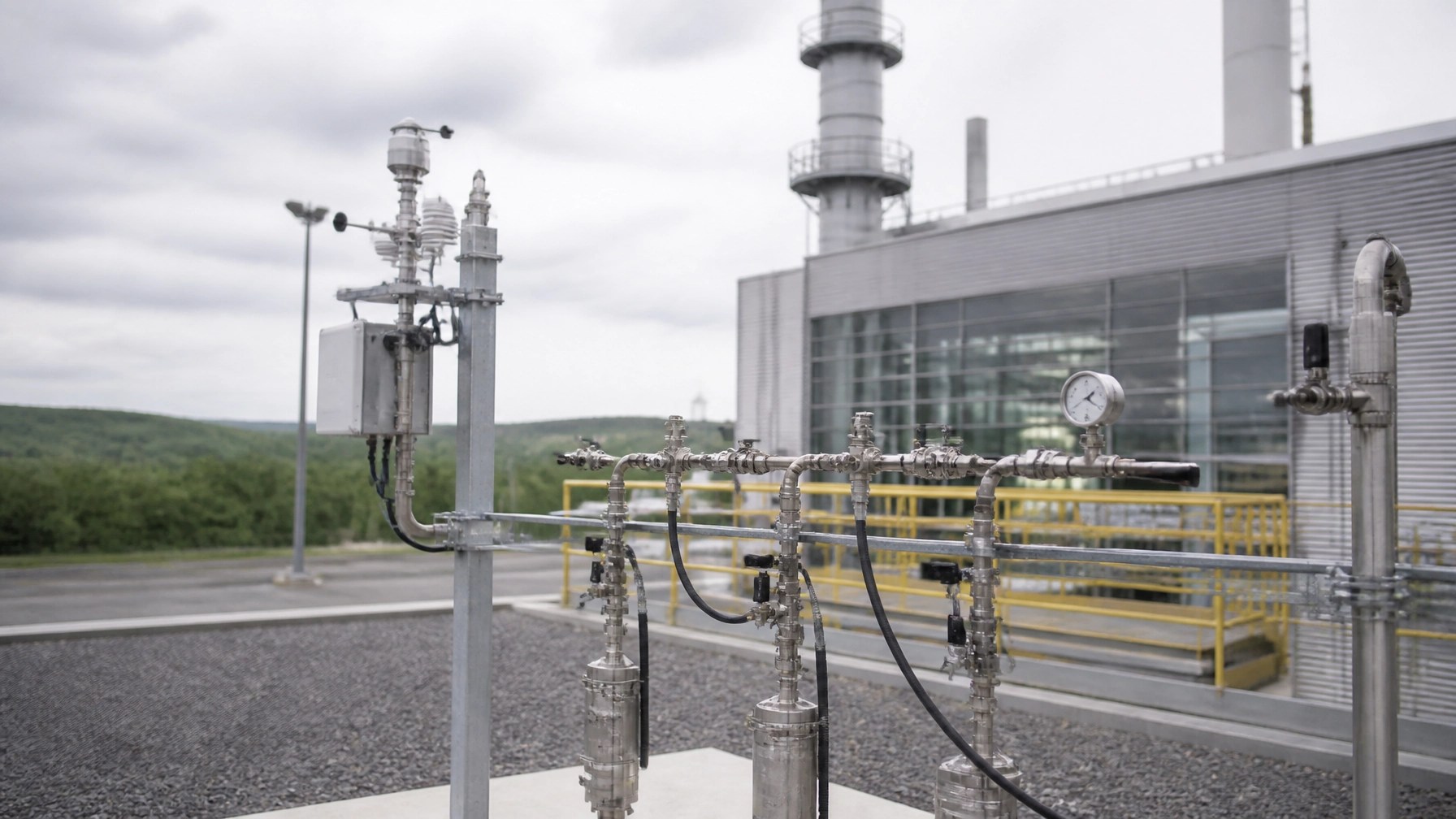
    Close-up of GAC vessels and PFAS treatment piping

    GAC removes PFAS through adsorption. Water passes through carbon media, and PFAS compounds attach to the carbon surface.

    It’s a proven approach with a large operating history. GAC can be a practical fit for groundwater treatment, municipal systems, and certain industrial applications. But the cost depends heavily on how quickly the media becomes exhausted.

    The main GAC cost drivers include:

    • Influent PFAS concentrations and the mix of compounds present
    • Total organic carbon (TOC)
    • Competing organic compounds
    • Suspended solids and pretreatment requirements
    • Required empty bed contact time (EBCT)
    • Total flow and hours of operation
    • Frequency of carbon change-out
    • Transportation and disposal or regeneration of spent carbon
    • Sampling, laboratory analysis, and compliance monitoring

    TOC matters because other organic material competes with PFAS for available adsorption sites. A system treating water with elevated TOC may consume carbon faster than a system treating cleaner groundwater at the same PFAS concentration.

    The result is straightforward: two sites with the same flow rate may have very different operating costs.

    GAC also requires a plan for spent media. Changing the carbon is not the end of the process. You need documentation, transportation, and a compliant destination for the spent material. Those residuals costs belong in the initial estimate.

    IX: More selective media, different design tradeoffs

    Ion exchange systems use specialized resin to capture PFAS from water. Depending on the resin and water chemistry, IX can offer strong PFAS removal and may reduce the treatment footprint or extend media life compared with GAC.

    That does not mean IX is automatically cheaper.

    IX cost depends on:

    • Resin selection and capacity
    • PFAS chain length and compound mixture
    • TOC and other competing constituents
    • Pretreatment needs
    • Resin replacement or regeneration requirements
    • Disposal or management of spent resin
    • Required treatment levels and breakthrough limits
    • System flow, redundancy, and monitoring requirements

    IX can be attractive when PFAS selectivity is important or when space is limited. However, the resin must match the actual influent. A generic resin selection made from a lab report alone may not perform as expected once the system sees variable site water.

    This is where a site-specific remedial design has real financial value. The cheapest equipment on paper is not necessarily the lowest-cost solution if it produces frequent breakthrough, unplanned shutdowns, or repeated media replacement.

    Foam fractionation: Lower water volume, concentrated residuals
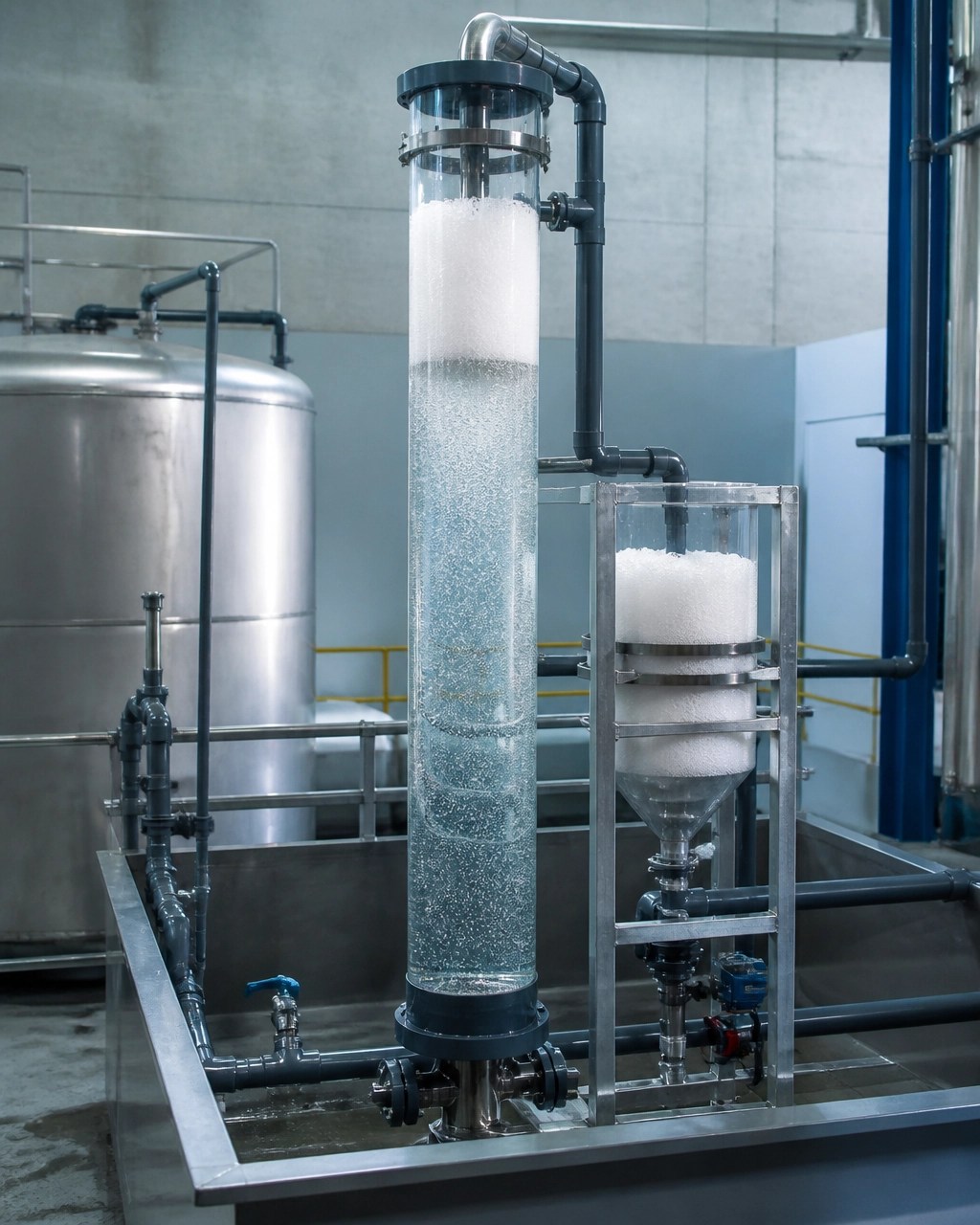
    Industrial foam fractionation PFAS treatment column and foam collection system

    Foam fractionation removes PFAS by transferring surface-active compounds into a concentrated foam stream. The process can reduce the volume of water requiring downstream management, but it does not eliminate the need to manage the captured PFAS.

    The cost question shifts from “How much media will we replace?” to:

    How will we handle, transport, treat, destroy, or dispose of the concentrated residual?

    Foam fractionation may be considered for high-volume water or waste streams, including certain landfill leachates. Its performance depends on the PFAS mixture, surfactant behavior, organic content, solids, and process configuration.

    Reported landfill-leachate case studies have shown total-cost scenarios for systems combining GAC with foam fractionation in the range of approximately $0.058–$0.095 per gallon, or roughly $15–$25 per cubic meter. Those numbers should not be applied to every PFAS project. They reflect difficult, concentrated leachate streams and broader annualized cost assumptions.

    They also are not a standalone equipment price for foam fractionation. The total may include pretreatment, pumping, energy, monitoring, residuals handling, and downstream treatment.

    Foam fractionation can reduce the volume of concentrated waste. It cannot make the liability disappear.

    The five variables that make PFAS remediation costs move

    Before comparing vendor quotes, establish the design basis. At minimum, your consultant should evaluate:

    1. Influent water chemistry

    TOC, suspended solids, iron, manganese, co-contaminants, and other constituents can affect media capacity and system performance.

    2. PFAS compound profile

    PFOA, PFOS, PFNA, GenX, and other PFAS compounds do not behave identically. Chain length and functional group influence how readily a treatment technology removes them.

    3. Flow and treatment duration

    A temporary system treating 20 gallons per minute for six months has a different cost profile from a permanent system treating 500 gallons per minute for ten years.

    4. Regulatory endpoint

    The required endpoint may be based on groundwater, discharge, drinking water, soil-leachate protection, or another site-specific standard. Treatment to a low-parts-per-trillion target requires tighter controls than simple mass reduction.

    5. Residuals and field logistics

    Budget for mobilization, electrical service, tanks, secondary containment, sampling ports, laboratory analysis, waste hauling, media or resin replacement, maintenance, and contingency response.

    A credible estimate should show these assumptions clearly. If the quote only provides a lump sum for “PFAS treatment,” you don’t yet have enough information to make a sound investment decision.

    What changed in New Jersey on June 15, 2026?

    NJDEP formally adopted final site remediation standards for PFNA, PFOA, PFOS, and GenX, effective June 15, 2026. The final standards replace interim standards that had been in place since 2022 and 2023.

    NJDEP also added PFNA, PFOA, PFOS, GenX, and 2,3,7,8-TCDD to required analyses when contamination at a site is unknown or not well documented. The department’s June 15, 2026 announcement provides the regulatory details and links to the applicable guidance.

    This matters for NJ property transactions and redevelopment planning. A project that previously relied on a narrow historical contaminant list may now require a broader analytical program. That can affect:

    • Phase II sampling scope
    • Groundwater investigation
    • Soil-leachate evaluation
    • Remedial alternatives
    • Construction dewatering
    • Discharge permitting
    • Schedule and lender communication

    The New Jersey rules do not create one universal treatment cost. They make early characterization more important.

    As NJDEP Acting Commissioner Ed Potosnak stated, the rule adoption is intended to “protect public health, improve our drinking water, and protect our natural resources.” For owners and developers, the practical response is to identify PFAS risk before it reaches the closing table or construction schedule.

    How Envicon builds a defensible estimate

    Envicon does not select a treatment technology from a template. We start with the site conditions, the regulatory pathway, and the project’s actual schedule.

    Our process typically evaluates:

    • Existing sampling data and data gaps
    • Flow rate, pumping duration, and seasonal variability
    • PFAS compounds and concentration trends
    • TOC and competing constituents
    • GAC, IX, foam fractionation, or combined treatment options
    • Pretreatment and residuals management
    • Agency requirements and discharge constraints
    • Capital cost, operating cost, and contingency exposure

    We then turn those findings into an actionable remedial design and implementation plan. That may include pilot testing, treatment-train evaluation, construction oversight, environmental monitoring, and direct regulatory coordination.

    You get more than a report. You get a clear path from findings to action, with direct access to the engineers managing the work. Our remediation and brownfield support is built around the conditions in New York and New Jersey: not a national playbook applied from a distance.

    The takeaway: price the water before you price the equipment

    GAC, IX, and foam fractionation can all be appropriate PFAS treatment technologies. None is automatically the cheapest.

    Your PFAS remediation cost depends on the water chemistry, TOC, PFAS mixture, flow, regulatory endpoint, treatment duration, and residuals plan. EPA’s PFAS cost model and Work Breakdown Structure can help organize the estimate, but the model is only useful when the inputs reflect actual site conditions.

    The best cost-control measure is early characterization followed by a remedial design tailored to the site.

    PFAS surprises blow budgets. Field data, transparent assumptions, and accountable engineering keep projects moving.

    Get a site-specific PFAS cost range

    If you’re evaluating a contaminated property, planning a dewatering system, or preparing for NJDEP or NYSDEC review, Envicon can help you establish the design basis before you commit to equipment or construction.

    Envicon Group logo

  • NJ Brownfield Tax Credit: The 2026 Reboot and How to Position Your Project

    NJ Brownfield Tax Credit: The 2026 Reboot and How to Position Your Project

    New Jersey’s Brownfields Redevelopment Incentive Program is not accepting new applications today. That does not mean the opportunity has disappeared. It means the program is being rebuilt.

    Following legislation signed on September 4, 2024: P.L. 2024, c.061: the New Jersey Economic Development Authority is developing new implementing rules. NJEDA expects those rules to be released in 2026, after which a new application will be posted.

    For developers, investors, and municipal redevelopment agencies, the practical message is simple:

    The time to prepare for the NJ Brownfield Tax Credit is before the application opens: not after.

    Your project’s remedial cost documentation, regulatory position, financing gap, municipal support, and LSRP record will determine whether you can move quickly when the rules drop.

    What is changing with the NJ Brownfield Tax Credit?

    The existing Brownfields Redevelopment Incentive Program provides a one-time, transferable tax credit tied primarily to eligible remediation costs. The program is designed to make contaminated and underutilized properties financially viable for redevelopment.

    Historically, qualified projects could receive tax credits covering a substantial portion of eligible remediation costs: up to 75% under prior program structures, subject to statutory and per-site caps. The amended framework outlined by NJEDA provides:

    • Up to 80% of remediation costs, capped at $12 million, for projects in a Qualified Incentive Tract or Government-Restricted Municipality.
    • Up to 60% of remediation costs, capped at $8 million, for other eligible brownfield projects.
    • Up to 100% of certain remediation and capping costs for solar projects on closed sanitary landfills, subject to location-based caps.
    • Transferable credits that may be sold or assigned, subject to program requirements.

    The controlling details will come from the final rules and application materials. Until NJEDA publishes them, developers should treat the current program page and signed legislation as the governing roadmap: not as a substitute for final program guidance.

    NJEDA’s official notice confirms that the NJ Brownfield Tax Credit program is currently closed to new applications and that new rules are expected in 2026. Review the NJEDA Brownfields Redevelopment Incentive Program page for updates.

    A4914 could broaden the opportunity for residential redevelopment

    Separate from the 2024 legislation, A4914 was introduced in the New Jersey Legislature on May 7, 2026. It remains proposed legislation, not enacted law.

    As introduced, A4914 would expand the NJ Brownfield Tax Credit framework to include certain residential redevelopment projects constructed on remediated brownfield sites.

    The bill would also:

    • Increase the total program authorization from $100 million to $250 million over the program period.
    • Allow up to $150 million in credits for residential redevelopment projects.
    • Create separate applications for remediation projects and residential redevelopment projects.
    • Require qualifying residential projects to be located within:
      • Two miles of a public rail or light rail stop, or
      • One mile of a public bus stop.
    • Require primarily multifamily projects to include specific bedroom-unit proportions.
    • Require at least 20% affordable housing for qualifying residential projects.
    • Maintain municipal support, prevailing wage, reporting, and compliance requirements.

    The bill’s transit and affordability provisions could materially affect project planning in places such as Hudson County, Newark, Elizabeth, Paterson, Trenton, and other transit-connected redevelopment markets.

    But do not underwrite a project as if A4914 has already passed. The bill may change, stall, or be replaced. Use it as a signal of where state policy may be headed.

    For residential developers, the signal is clear: site selection, transit access, unit mix, affordability strategy, and remediation sequencing may need to be evaluated together.

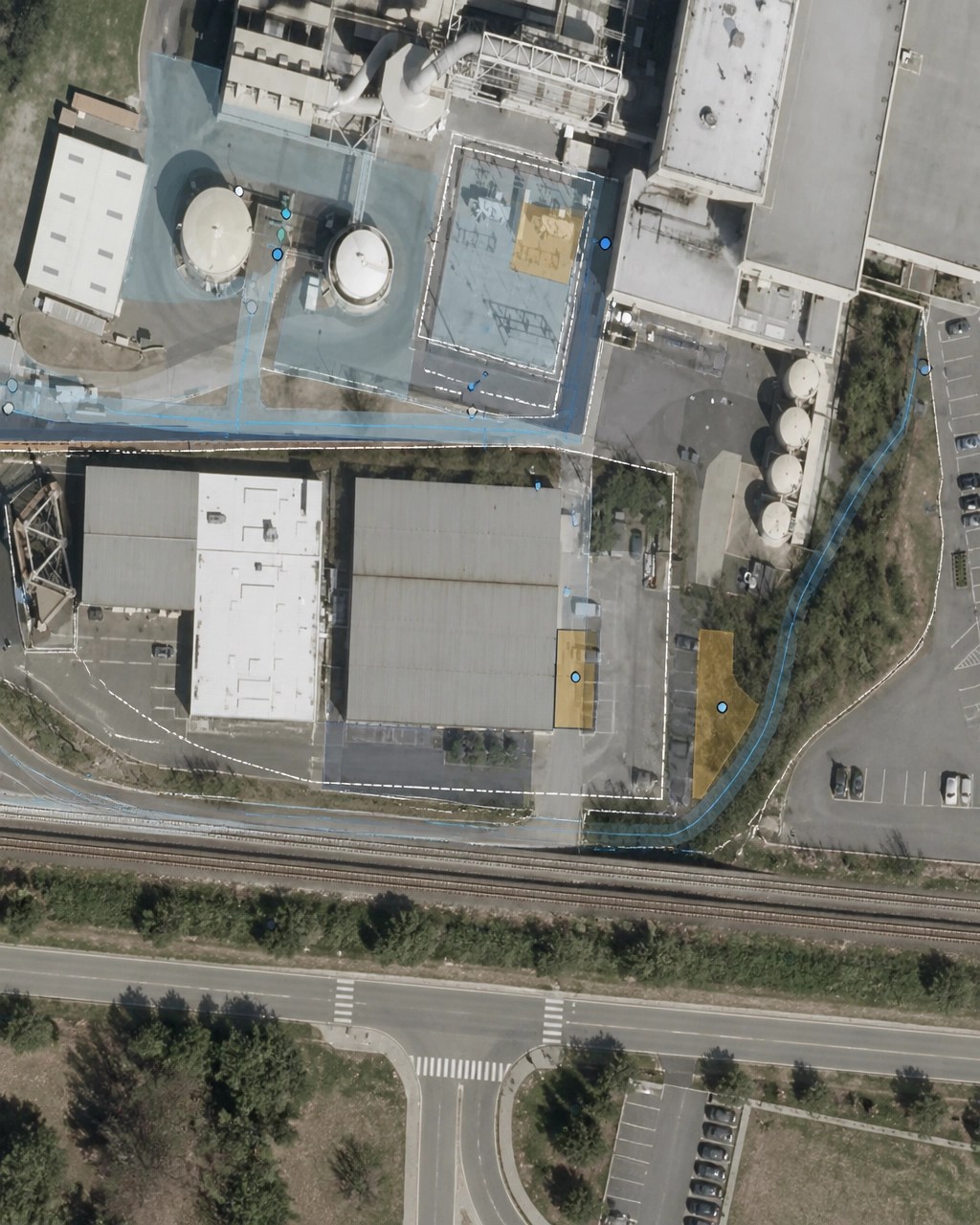
    Technical GIS-style site plan showing remediation zones, monitoring points, transit proximity, and future redevelopment areas

    Position your project before the application window opens

    NJEDA applications are not built around a general statement that a site is contaminated. They require evidence.

    The stronger your technical and financial record, the easier it will be to show that your project meets the program’s requirements and can advance without months of reconstruction.

    1. Build an eligible remedial cost file

    Start separating eligible remediation costs from general development costs now.

    Your cost file should be organized by work category and supported by source documentation, including:

    • Preliminary assessment and site investigation costs.
    • Soil, groundwater, and vapor investigation.
    • Remedial investigation and remedial action work.
    • Excavation, transportation, treatment, disposal, and reuse of soil.
    • Groundwater treatment and discharge management.
    • Demolition, asbestos abatement, and contaminated building material removal.
    • Engineering controls, caps, vapor mitigation, and related remedial infrastructure.
    • Contractor invoices, purchase orders, change orders, disposal manifests, and payment records.
    • Labor and subcontractor documentation.

    The objective is not to create a larger number. It is to create a defensible number.

    Under the amended statutory framework, final credit certification requires evidence of actual remediation costs. Those costs must be supported by appropriate professionals, including a certified public accountant and an LSRP for work governed by New Jersey’s Site Remediation Reform Act.

    A clean cost file protects the credit calculation and gives lenders, equity partners, municipal officials, and counsel a clearer view of the project’s real economics.

    2. Confirm your ISRA position

    If your property involves an industrial establishment, the Industrial Site Recovery Act may affect the transaction, closure, transfer, or redevelopment schedule.

    When ISRA applies, NJDEP guidance identifies key obligations such as:

    • Filing a General Information Notice within the applicable five-day timeframe after an ISRA trigger.
    • Retaining an LSRP and notifying NJDEP within the applicable 45-day timeframe.
    • Establishing a Remediation Funding Source when required.
    • Completing investigation and remediation under the applicable NJDEP rules and technical requirements.

    NJDEP’s Contaminated Site Remediation and Redevelopment Program provides current forms, guidance, and regulatory resources. The exact requirements depend on the facility, transaction structure, operations, and site history.

    Do not wait until the tax-credit application to resolve an ISRA question. A missed notice, incomplete financial assurance package, or unclear responsible-party position can create delays that have nothing to do with construction.

    3. Put the LSRP record in order

    New Jersey’s LSRP system places responsibility for site remediation with a licensed professional, subject to NJDEP oversight and audit.

    That makes the LSRP record central to both regulatory closure and tax-credit readiness.

    Your project team should be able to quickly identify:

    • Areas of concern and the basis for each investigation.
    • Historical site operations and potential contaminant sources.
    • Current and future land-use assumptions.
    • Remedial investigation findings.
    • Soil, groundwater, vapor, and receptor evaluations.
    • Engineering and institutional controls.
    • Remedial action permits and ongoing obligations.
    • Status of the Response Action Outcome, if issued.
    • Remaining conditions that could affect redevelopment.

    An RAO is not just a closing document. It is evidence that the remediation was completed in accordance with applicable requirements. For a tax-credit application, it also helps demonstrate that the environmental work is complete, documented, and connected to a viable redevelopment plan.

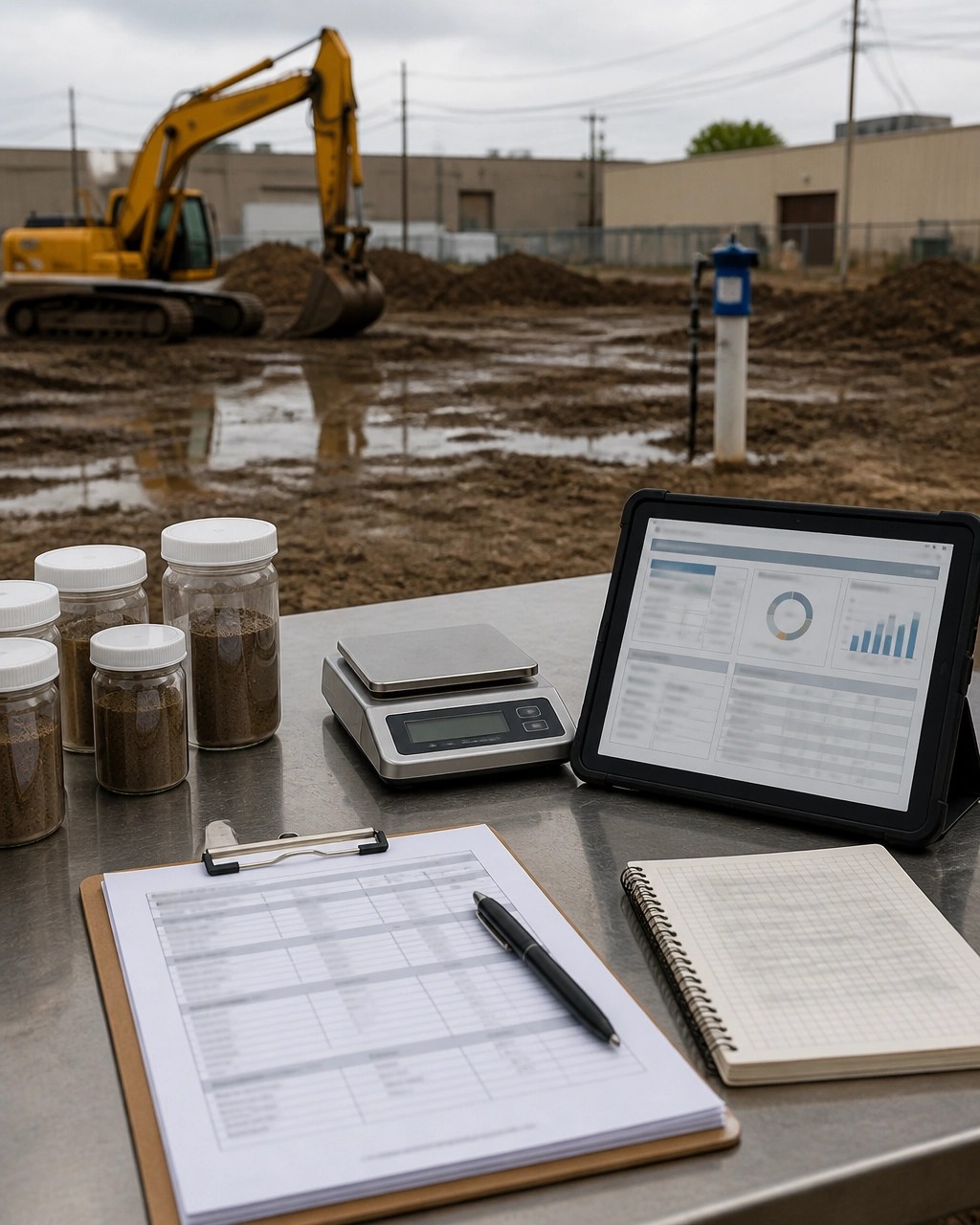
    Brownfield remediation documentation with sample containers, field records, and cost-tracking technology

    Municipal support and project economics will matter

    The NJEDA program requires a letter of support from the governing body of the municipality. That requirement makes early coordination essential.

    Municipal redevelopment agencies should not be brought in after the technical plan and financing package are already fixed. The strongest projects connect:

    • The municipality’s redevelopment objectives.
    • Existing zoning and redevelopment plans.
    • Public-health and environmental benefits.
    • Transit access and infrastructure capacity.
    • Affordable housing or community-use goals.
    • The project’s financing gap.
    • A realistic remediation and construction schedule.

    NJEDA also expects applicants to demonstrate that the project is not economically feasible without the tax credit under applicable program criteria. That requires more than a simple pro forma shortfall.

    You should be prepared to show:

    • Total remediation costs.
    • Total project costs.
    • Developer equity.
    • Debt and investor capital.
    • Grants or other incentives.
    • Reasonable return assumptions.
    • Remaining financing gap.
    • The effect of the credit on project feasibility.

    The numbers need to match across the environmental report, cost estimate, redevelopment agreement, lender materials, and application. If each document tells a different story, reviewers will notice.

    Why preparation should start with one accountable team

    Brownfield redevelopment crosses environmental, civil, regulatory, construction, financial, and municipal workstreams. When those workstreams sit with separate firms that do not coordinate closely, the project owner becomes the integration manager.

    That is where many projects lose time.

    Envicon works across remediation and brownfield support, NJ LSRP services, civil engineering, compliance, and construction oversight. Our role is not to hand over a report and leave you to interpret it.

    We help connect site conditions to an actionable redevelopment path:

    • What contamination exists?
    • What remediation is required?
    • What costs are potentially eligible?
    • What work has already started?
    • What must be documented before the rules reopen?
    • Does ISRA apply?
    • What does the LSRP need to certify?
    • What will the municipality, lender, and NJEDA need to see?
    • What could create a delay or disqualify the project?

    That coordination is especially important because the program may use rolling applications, but demand could exceed available credits. The current statutory framework includes annual limits, and higher per-project awards may increase competition for available funding.

    A practical 2026 readiness checklist

    Before the NJ Brownfield Tax Credit application reopens, confirm that your team has:

    • Completed or updated Phase I and Phase II environmental assessments.
    • Identified all known areas of concern.
    • Confirmed whether ISRA applies.
    • Retained an LSRP where required.
    • Organized remedial cost records and supporting invoices.
    • Documented soil, groundwater, vapor, demolition, and disposal activities.
    • Confirmed the project’s current remedial status.
    • Reviewed RAO, permit, and engineering-control requirements.
    • Evaluated Qualified Incentive Tract or Government-Restricted Municipality status.
    • Built a financing-gap analysis.
    • Coordinated with the municipality on a support letter.
    • Tested the redevelopment plan against possible A4914 requirements if residential use is contemplated.
    • Assigned one accountable team to manage technical, regulatory, and application coordination.

    The window is reopening: but readiness determines who captures it

    The NJ Brownfield Tax Credit can help convert a contaminated or underused property into a financeable, buildable asset. But the credit will not fix an incomplete investigation, unsupported remediation budget, unresolved ISRA issue, or disconnected project team.

    The developers best positioned for 2026 will be the ones preparing now.

    At Envicon, we solve environmental and engineering challenges with precision, speed, and trust. We do not just deliver services. We help clear the path between a difficult site and its next productive use.

    If your New Jersey project may depend on the next Brownfields Redevelopment Incentive Program rules, start building the record today.

    Take the next step

    Envicon Group logo

  • NJDEP Formally Adopts PFAS Site Remediation Standards: Numerical Cleanup Levels for PFOA, PFOS, PFNA, and GenX

    NJDEP Formally Adopts PFAS Site Remediation Standards: Numerical Cleanup Levels for PFOA, PFOS, PFNA, and GenX

    On June 15, 2026, the landscape of New Jersey real estate development and environmental compliance shifted fundamentally. The New Jersey Department of Environmental Protection (NJDEP) formally adopted final enforceable site remediation standards for four prominent per- and polyfluoroalkyl substances (PFAS): PFNA, PFOA, PFOS, and GenX (HFPO-DA).

    What was previously a murky world of interim criteria and guidance has now solidified into law. For developers, property owners, and environmental attorneys, the era of "wait and see" regarding PFAS is over. If you are sitting on a site in Jersey City, Newark, or the industrial corridors of the Meadowlands, these numbers are no longer theoretical: they are the goalposts for your remedial design and your path to a Response Action Outcome (RAO).

    At Envicon Group, we don’t sell bloated reports that hide behind regulatory uncertainty. We sell cleared paths. This adoption means the "path" is now clearly defined, but it is narrower and more technically demanding than ever before.

    The Numerical Reality: Final Remediation Standards

    The newly adopted standards cover three primary pathways: groundwater quality, residential soil (ingestion-dermal), and non-residential soil (ingestion-dermal). While the groundwater numbers remain extremely low: measured in micrograms per liter (µg/L) or parts per billion: the soil standards provide the first definitive cleanup targets for soil excavation and management.

    Groundwater Quality Standards (GWQS)

    Groundwater is often the primary driver of remediation costs in New Jersey. The adopted standards are as follows:

    • PFOA: 0.014 µg/L (14 ppt)
    • PFOS: 0.013 µg/L (13 ppt)
    • PFNA: 0.013 µg/L (13 ppt)
    • GenX (HFPO-DA): 0.02 µg/L (20 ppt)

    These levels are incredibly low. For context, one microgram per liter is equivalent to one second in nearly 32 years. If your site has historically used fire-fighting foams (AFFF), metal plating solutions, or certain industrial coatings, hitting these targets will require a precision-led approach to site investigation and characterization.

    Technical close-up of environmental laboratory sample vials and sampling equipment used for PFAS testing

    Soil Remediation Standards: Ingestion-Dermal Pathway

    NJDEP has codified specific numeric values for soil based on direct contact. These are the numbers that will dictate whether you can leave soil in place or if it needs to be shipped to a licensed facility.

    Contaminant Residential Standard (mg/kg) Non-Residential Standard (mg/kg)
    PFOA 0.13 1.8
    PFOS 0.11 1.6
    PFNA 0.047 0.67
    GenX 0.23 3.9

    Migration to Groundwater: The SPLP Requirement

    Unlike traditional contaminants like Lead or Benzene, NJDEP did not adopt a "one-size-fits-all" numeric standard for the migration-to-groundwater (MTGW) soil pathway for PFAS. Instead, the standard is site-specific.

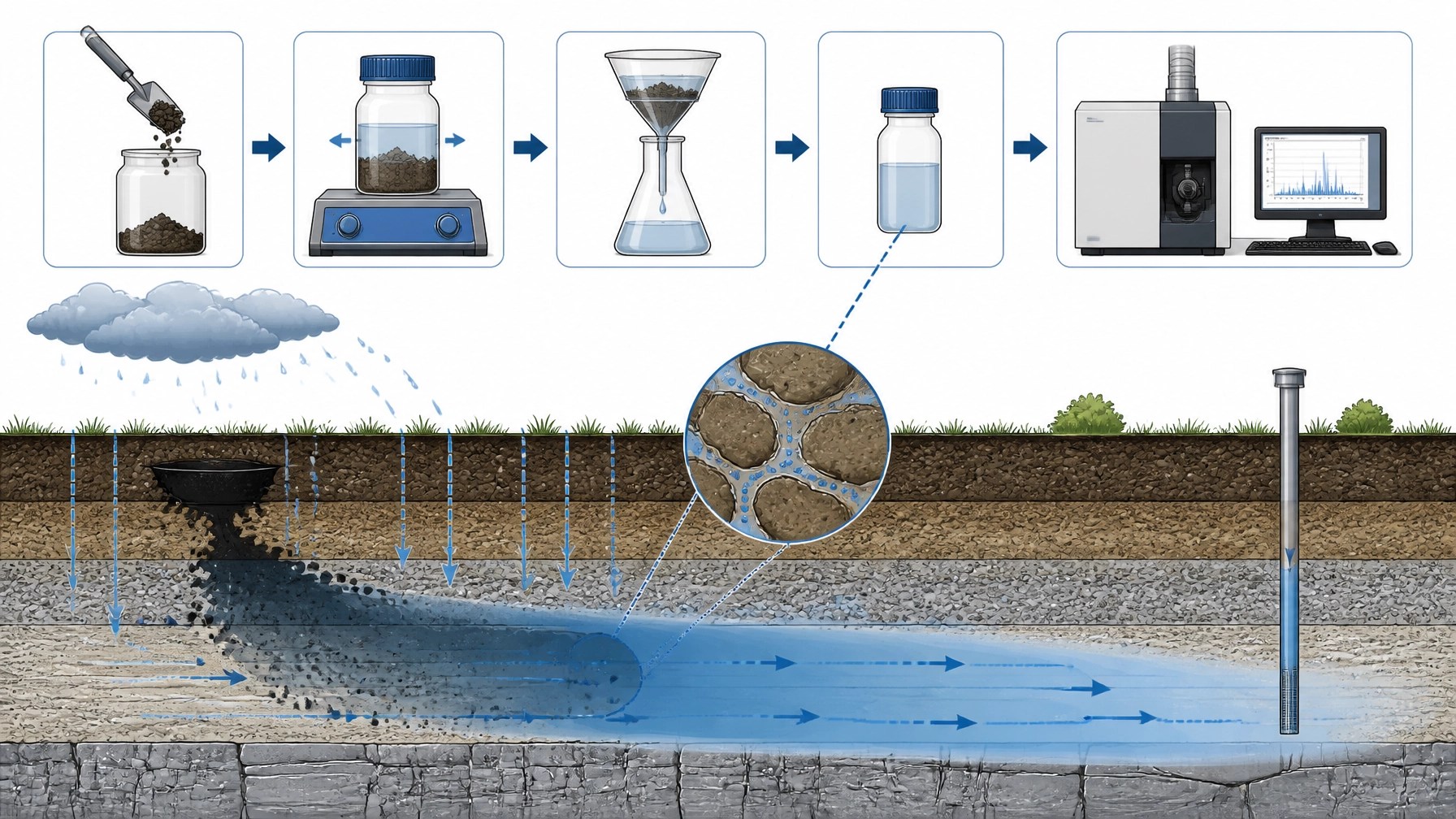
    To determine your site's MTGW standard, you must use the Synthetic Precipitation Leaching Procedure (SPLP). This laboratory method simulates how much PFAS will "leach" out of your soil and into the groundwater during a rain event.

    Because PFAS are "forever chemicals" that don't easily bind to soil, they move. A soil sample might look clean on a total mass basis (mg/kg), but if that soil allows PFAS to leach into the water table above the groundwater standards listed above, you have a problem.

    A technical diagram showing the Synthetic Precipitation Leaching Procedure (SPLP) process for soil migration to groundwater analysis

    This is where many "big-box" consulting firms fail their clients. They run the SPLP test, get a high leaching result, and tell the client they need to excavate everything. At Envicon, we look at the civil engineering and site-specific hydraulics. We use our proprietary project management infrastructure to model whether an engineered cap or stormwater management strategy can mitigate that migration, potentially saving millions in disposal costs.

    The "Unknown" Trigger: Why You Are Testing Now

    Perhaps the most aggressive part of the June 15 adoption is the new requirement for LSRPs to analyze for these four PFAS chemicals whenever site contaminants are "unknown" or when a historical industrial use suggests their presence.

    If you are performing due diligence on a property with a vague industrial history, you can no longer simply test for "standard" parameters. NJDEP now effectively presumes PFAS presence until proven otherwise in many industrial settings. This "unknown" trigger means your Phase II Environmental Site Assessment just got more expensive and more complex.

    The sampling itself is a minefield. PFAS are found in everything from waterproof jackets to the Teflon tape used on plumbing. If your consultant isn't using "PFAS-free" sampling protocols, you risk a "false positive" that could stall your closing or trigger a mandatory reporting requirement to the NJDEP.

    Business Impact: The Cost of Delay

    In the NY/NJ metro area, time is the most expensive commodity. Every week your project is stalled in a "black box" of regulatory review is a week of carrying costs, lender fatigue, and missed market timing.

    When a national firm handles your PFAS issues, they often write "defensive" reports: bloated documents designed to protect the consultant's liability rather than move your project forward. They might wait weeks for a junior staffer to interpret lab results before even talking to a regulator.

    Envicon works differently. We are regulator-facing. We sit at the table with the NJDEP and the LSRP Board. We don't just deliver a report; we deliver a strategy. Whether it's securing brownfield redevelopment support or designing an on-site soil management plan, our goal is to keep the machines moving.

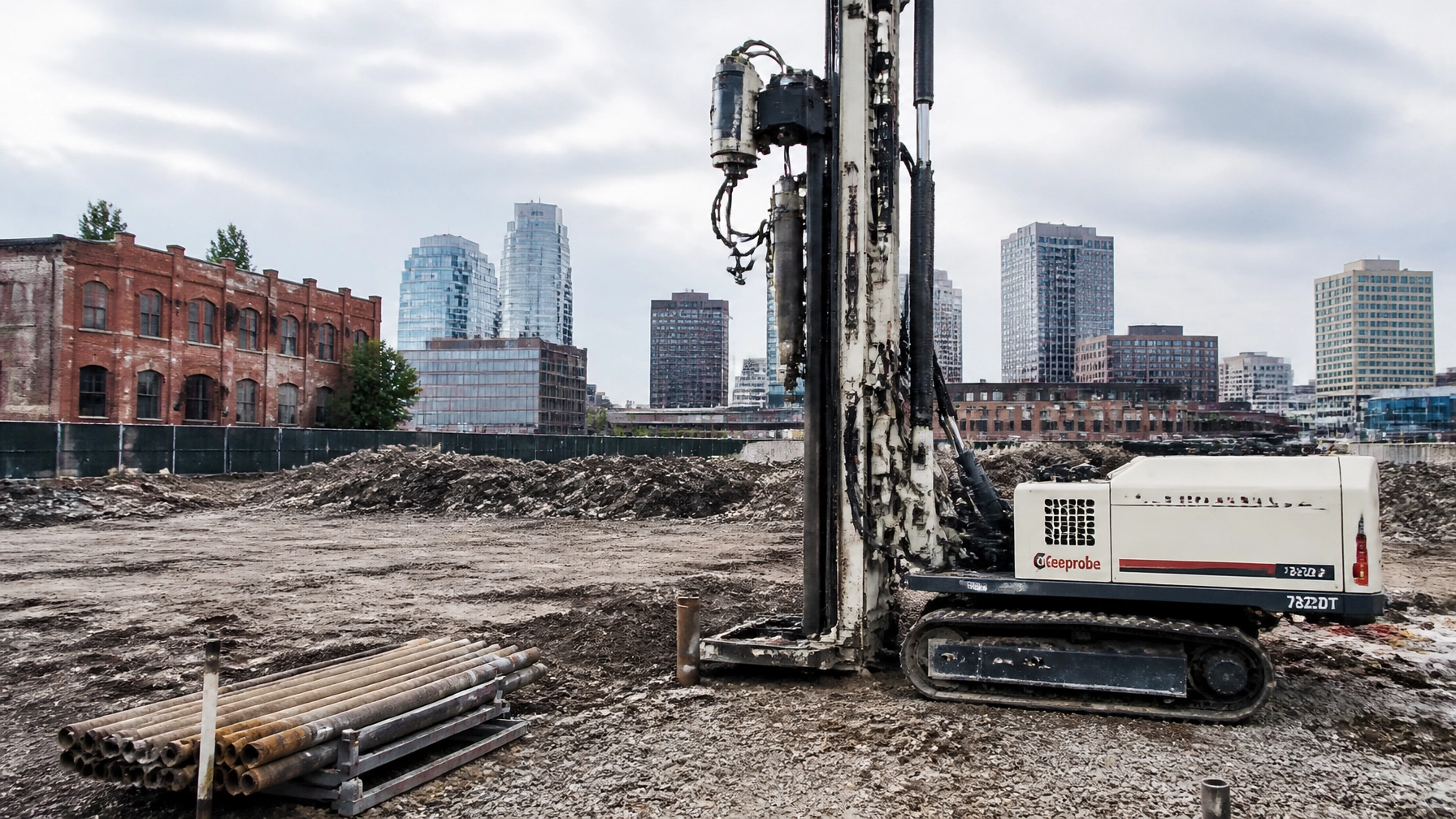
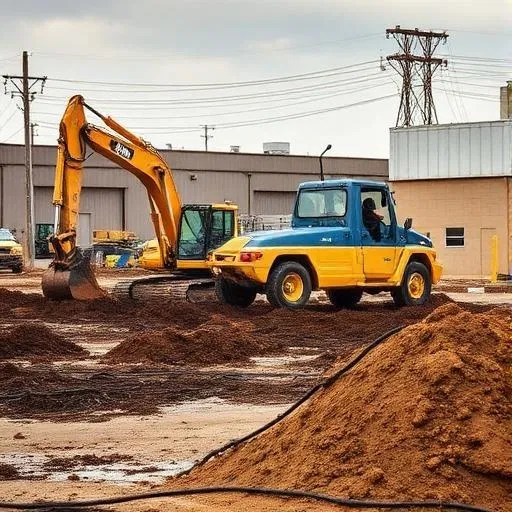
    Active brownfield redevelopment site with heavy equipment and soil staging areas

    Points of Difference: Why Envicon?

    The technical capability to sample for PFAS is common. The ability to navigate the resulting regulatory storm is not.

    • Hands-on Leadership: At Envicon, you don't talk to a partner during the pitch and then get handed off to a junior associate. Our PEs and LSRPs are on-site, in the mud, and on the phone with you at 7 am.
    • No "Cookie-Cutter" Playbooks: National firms apply a generic playbook to the NJ market. We bring 20 years of direct agency relationships. We know the reviewers at NJDEP by name. We know what they expect to see in an SPLP calculation, and we deliver it the first time.
    • Technology-Driven Transparency: Our clients don't wait for a monthly PDF. They get real-time dashboards showing exactly where their sampling stands, what the results mean for their budget, and what the next step is to get to a buildable site.

    Summary and Takeaways

    The formal adoption of PFAS standards in New Jersey marks a new chapter in environmental liability.

    1. Know the Numbers: Groundwater standards are now enforceable at parts-per-trillion levels for PFOA, PFOS, PFNA, and GenX.
    2. SPLP is Mandatory: You cannot determine soil compliance for the migration-to-groundwater pathway without site-specific leaching analysis.
    3. The "Unknown" Rule: Expect to sample for PFAS on almost any industrial or "unknown history" site moving forward.
    4. Strategy Over Reports: Don't pay for a 500-page report that tells you what you already know. Pay for a cleared path to a buildable asset.

    If your current consultant is giving you "defensive" answers or your project is stuck in a sampling loop, it’s time for a different approach. We resolve complex environmental challenges with precision, urgency, and integrity.

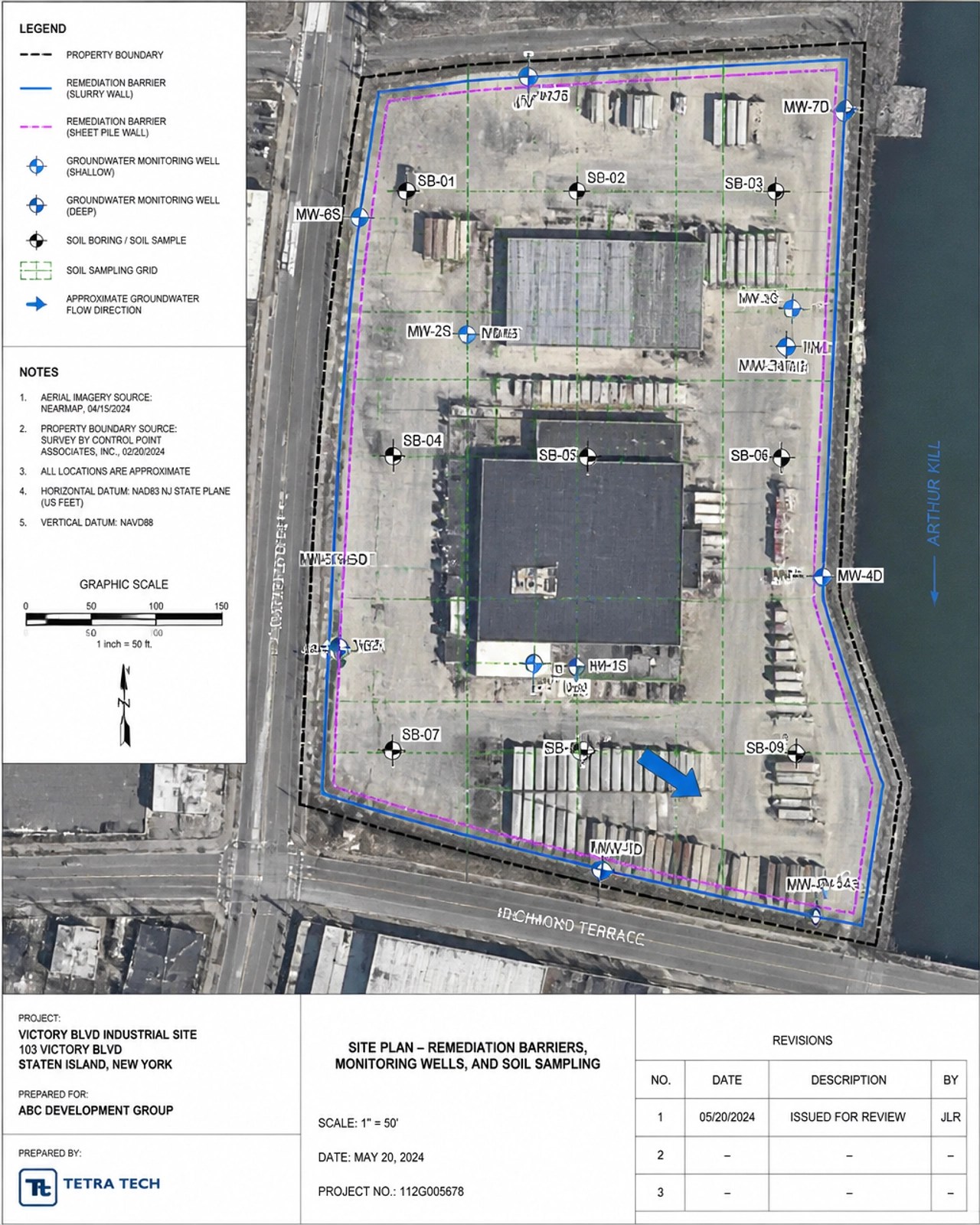
    A professional engineering site plan overlay on an aerial view of an industrial property in New Jersey

    Ready to clear the path for your next project?

    Envicon Group Logo

  • SWPPP Services in NJ & NY: What a Stormwater Plan Actually Has to Cover

    SWPPP Services in NJ & NY: What a Stormwater Plan Actually Has to Cover

    A stormwater plan is not a permit-form attachment. It is the operating plan for keeping sediment, fuel, concrete washout, debris, and other pollutants from leaving your construction site.

    In New Jersey, the plan is commonly referred to as a Stormwater Pollution Prevention Plan (SPPP) in NJDEP materials. In New York, it is generally called a Stormwater Pollution Prevention Plan (SWPPP). Contractors, developers, and construction managers use both terms interchangeably.

    The obligation is clear: construction activity disturbing one acre or more, or less than one acre as part of a larger common plan of development, generally requires stormwater permit coverage and a properly prepared plan.

    • In New Jersey, that means the NJPDES Construction Stormwater General Permit 5G3.
    • In New York, that means the NYSDEC SPDES General Permit for Stormwater Discharges from Construction Activity, GP-0-20-001.

    A copied template may satisfy a checklist at a glance. It will not necessarily satisfy the site, the regulator, or the next rain event.

    Why a Template SWPPP Creates Real Project Risk

    A generic SWPPP usually describes a site that does not exist.

    The drainage arrows don’t match the grading plan. The proposed inlet protection appears in the wrong location. The sediment basin has no relationship to the actual drainage area. The plan does not account for soil stockpiles, phased excavation, utility work, access roads, or changing site conditions.

    That creates two problems.

    First, the plan may be rejected during agency, municipal, or MS4 review. Second, even if it gets accepted, the controls may fail during construction because the field team cannot implement what the drawings actually show.

    A single major rain event can lead to:

    • Sediment entering a storm drain or waterway
    • Failed inlet protection and clogged conveyance systems
    • Mud tracked onto public roads
    • Re-mobilization and emergency stabilization costs
    • Inspection findings and corrective-action requirements
    • Delays to excavation, utilities, foundations, or vertical construction
    • Potential enforcement exposure and damage to lender or owner confidence

    The plan has to work in the field. That is the standard that matters.

    When Do You Need SWPPP Services in NJ and NY?

    The one-acre threshold is the starting point, not the entire analysis.

    A project generally needs stormwater permit coverage when construction will disturb one acre or more of land. This includes clearing, grading, excavation, utility installation, staging, access improvements, and related earthwork.

    A project under one acre may also be regulated if it forms part of a larger common plan of development or sale that will disturb at least one acre in total.

    New York may also regulate certain smaller disturbances in specific watersheds or where NYSDEC determines that stormwater discharges could affect water quality. Local requirements and MS4 review can add another layer.

    In New Jersey, construction stormwater authorization also works alongside soil erosion and sediment control requirements and, where applicable, the state’s major development stormwater management rules.

    Before mobilization, confirm:

    • The total planned disturbance area
    • Whether the work is part of a larger common plan
    • The receiving waters and drainage infrastructure
    • Whether the site is within an MS4 jurisdiction
    • Whether post-construction stormwater management applies
    • Which agency, municipality, or Soil Conservation District approvals are required
    • Who will prepare, certify, implement, inspect, and update the plan

    The wrong answer can put the construction schedule at risk before the first excavator arrives.

    What a Stormwater Plan Actually Has to Cover

    1. Site Conditions and Limits of Disturbance

    A compliant plan starts with the actual site.

    It should identify existing topography, drainage patterns, slopes, surface waters, storm drains, outfalls, wetlands or other sensitive features, access points, and areas that will remain undisturbed.

    The drawings should clearly show:

    • The limits of disturbance
    • Existing and proposed contours
    • Drainage areas and flow paths
    • Excavation and fill areas
    • Soil stockpiles
    • Staging and material storage areas
    • Construction entrances and exits
    • Temporary and permanent stabilization areas
    • Surface-water and storm-drain protection measures

    If the SWPPP does not match the civil drawings, it is not site-specific. It is paperwork disconnected from construction.

    2. Erosion and Sediment Controls

    Erosion controls keep soil in place. Sediment controls capture soil that does move.

    The plan should explain the design, location, installation, and maintenance of measures such as:

    • Silt fences
    • Sediment basins and traps
    • Inlet protection
    • Check dams
    • Stabilized construction entrances
    • Diversion swales
    • Slope interrupters
    • Concrete washout areas
    • Dust and tracking controls
    • Riprap outlet protection
    • Temporary slope stabilization

    In New York, erosion and sediment controls must generally follow the New York State Standards and Specifications for Erosion and Sediment Control, commonly known as the Blue Book.

    In New Jersey, the SPPP works with the applicable certified soil erosion and sediment control plan and NJPDES permit requirements.

    Controls should follow the water, not simply appear around the perimeter. That requires coordination with grading and drainage design.

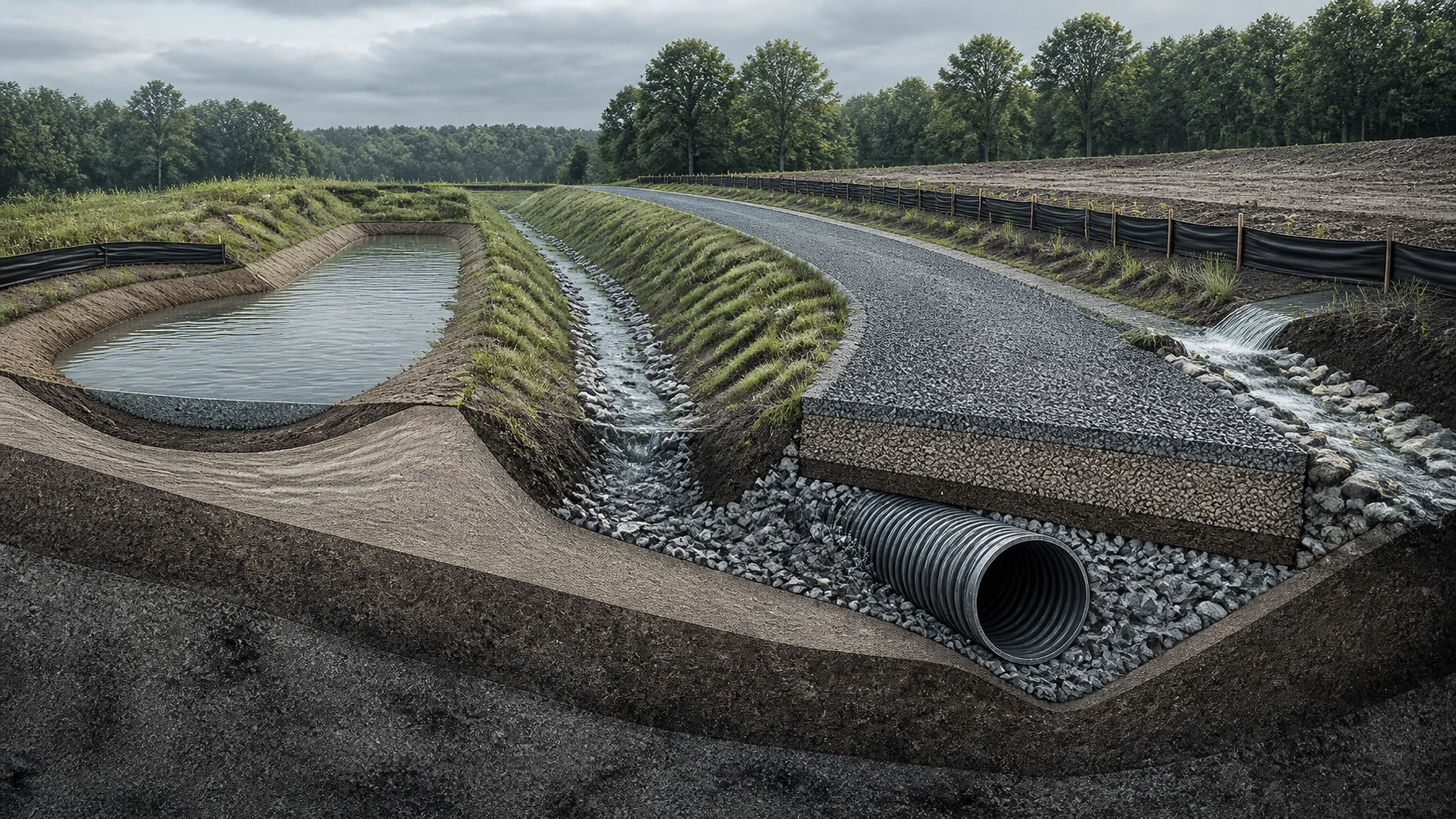
    Properly installed perimeter silt fence, stabilized swale, protected inlet, and aggregate check dam at a construction site

    3. Construction Phasing and Stabilization

    The highest-risk period is often the period when the site is open, graded, and not yet stabilized.

    A strong SWPPP sets out the sequence for:

    1. Installing perimeter controls
    2. Stabilizing construction entrances
    3. Clearing and grubbing
    4. Performing earthwork in manageable phases
    5. Protecting stockpiles and exposed slopes
    6. Installing drainage and sediment controls
    7. Stabilizing completed areas
    8. Removing temporary controls only when the site is ready

    Stabilization may include seeding, mulching, erosion-control blankets, paving, stone, landscaping, or other approved measures.

    The plan should also explain what happens when construction conditions change. A new utility alignment, revised building footprint, relocated stockpile, or expanded excavation can change the drainage pattern. The plan must be updated accordingly.

    4. Pollution Prevention Beyond Dirt and Sediment

    Stormwater compliance is not only about soil.

    The pollution-prevention section should address materials and activities that can contaminate runoff, including:

    • Fuel and petroleum storage
    • Hydraulic fluids and lubricants
    • Concrete washout
    • Paints, curing compounds, and solvents
    • Fertilizers and landscaping materials
    • Construction debris and litter
    • Portable sanitation
    • Waste containers
    • Equipment maintenance and fueling
    • Spill response and cleanup

    A site can have excellent silt fences and still fail an inspection because a leaking drum, uncovered dumpster, or poorly managed concrete washout is exposed to rainfall.

    The plan should identify responsible personnel, storage locations, inspection procedures, and corrective actions. It should be clear enough for the superintendent and field crew to use without interpreting a twenty-page narrative on the fly.

    5. Post-Construction Stormwater Management

    Some projects require more than temporary erosion and sediment controls.

    Where applicable, the plan must also address permanent stormwater management practices. Depending on the project and jurisdiction, that may include:

    • Detention or retention basins
    • Infiltration systems
    • Bioretention areas
    • Permeable pavement
    • Green infrastructure
    • Permanent conveyance systems
    • Water-quality treatment practices
    • Drainage outfalls and energy dissipation

    These systems need to connect to the civil design. Hydrology, hydraulics, grading, soil conditions, groundwater, utilities, and long-term maintenance all matter.

    In New York, applicable projects must follow the relevant requirements in GP-0-20-001 and the NYS Stormwater Management Design Manual. In New Jersey, post-construction design may also fall under the state’s stormwater management rules at N.J.A.C. 7:8.

    A plan that shows a permanent basin but does not resolve constructability, access, outlet details, or maintenance is incomplete in practical terms.

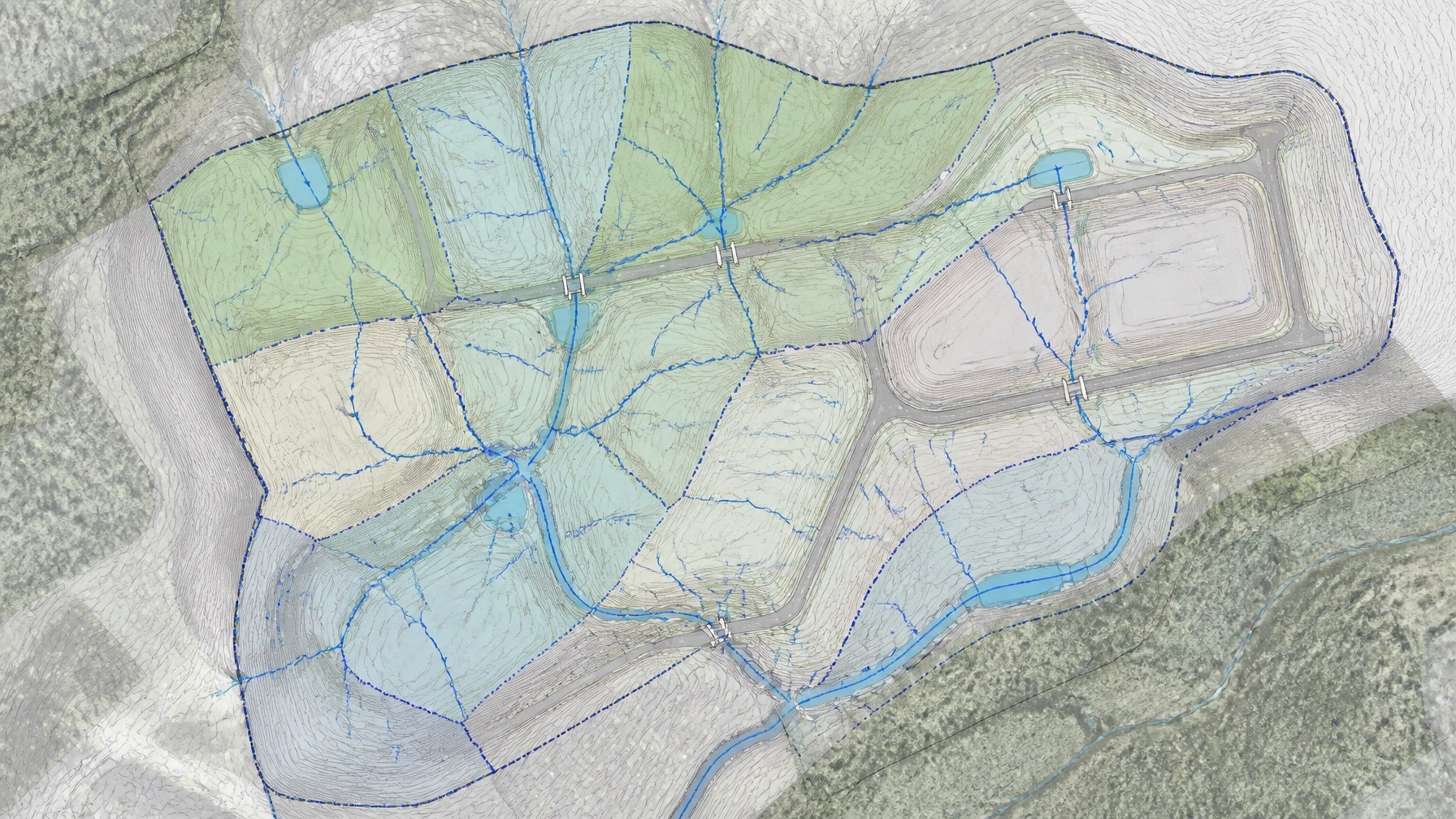
    Technical stormwater drainage model showing watershed boundaries, flow paths, contours, and culvert alignment

    6. Inspections, Maintenance, and Qualified Personnel

    A SWPPP only works when someone owns implementation.

    The plan should identify qualified personnel and define:

    • Inspection frequency
    • Inspection locations
    • What must be checked
    • How deficiencies are documented
    • Who has authority to direct repairs
    • How quickly controls must be maintained or replaced
    • How significant changes are incorporated into the plan
    • Where inspection records are maintained

    Inspectors should evaluate actual conditions, not simply confirm that a control is shown on a drawing. They need to look for undercut silt fencing, clogged inlets, sediment accumulation, exposed stockpiles, damaged stabilization, standing water, and evidence of discharge.

    The contractor, owner, engineer, and environmental consultant need a clear communication process. When a control fails, the response cannot wait for the next scheduled meeting.

    NJ and NY Requirements Are Similar: but Not Identical

    The core objective is the same: control stormwater pollution before it leaves the site. The process differs by state and project context.

    Requirement New Jersey New York
    Primary construction permit NJPDES General Permit 5G3 NYSDEC SPDES General Permit GP-0-20-001
    Common threshold One acre or more, including larger common plans One acre or more, including larger common plans
    Erosion and sediment controls Coordinated with certified soil erosion and sediment control requirements Generally designed to the NYS Blue Book
    Post-construction controls Applicable NJ stormwater management rules may apply Required where GP-0-20-001 and project conditions require them
    Local review Soil Conservation District and municipal requirements may apply MS4 acceptance or no-jurisdiction documentation may apply
    Plan implementation Required before regulated construction activity Required before soil disturbance under permit coverage

    Always verify the current permit, forms, technical standards, and local requirements before submitting. NJDEP and NYSDEC update guidance, permit documents, and administrative procedures.

    For official references, review the NJDEP stormwater program, the NJPDES 5G3 permit information sheet, and NYSDEC’s construction stormwater permit resources.

    How SWPPP Fits Into Environmental Due Diligence for Developers in NJ and NY

    An SWPPP is not a Phase I or Phase II Environmental Site Assessment. It does not replace investigation, remediation, or regulatory closure.

    But for developers, it is part of managing the project’s environmental risk.

    Your due diligence should account for how soil conditions, groundwater, contamination, grading, dewatering, and stormwater controls interact. A brownfield redevelopment project may require additional controls for impacted soil, stockpile management, dust suppression, dewatering discharge, and off-site disposal.

    New Jersey’s one-permit RAP system also brings stormwater-related requirements into the broader remediation framework for applicable remediation sites. The plan cannot sit in a separate folder from the remedial action work plan, civil drawings, and construction schedule.

    That is where integrated coordination matters.

    Envicon prepares SWPPP services in NJ and NY as a standalone service or as part of broader civil and site engineering, compliance and permitting, and environmental assessment support.

    What Makes an SWPPP Usable in the Field?

    Our approach is straightforward:

    • Review the actual site, plans, phasing, and drainage conditions
    • Tie erosion and sediment controls to grading and stormwater design
    • Identify pollution sources before they become inspection findings
    • Coordinate with owners, contractors, CMs, architects, and regulators
    • Assign clear inspection and maintenance responsibilities
    • Update the plan when site conditions or construction sequencing change
    • Produce documentation that supports action, not just file retention

    You should not have to choose between a plan that satisfies the regulator and a plan that helps your superintendent run the site. The right SWPPP does both.

    Collaboration is not a buzzword: it is how the work gets done. When environmental, civil, and construction decisions stay aligned, your project moves with fewer surprises.

    The Takeaway

    A stormwater plan must cover more than silt fence locations.

    It needs to address the complete construction reality: site drainage, erosion and sediment controls, stabilization, pollution prevention, permanent stormwater practices where required, inspections, maintenance, qualified personnel, and plan updates.

    A photocopied template may look efficient. It becomes expensive when the site does not match it.

    Envicon develops site-specific SWPPPs for contractors, developers, and construction managers across New Jersey and New York. We connect the plan to actual grading, drainage, remediation, and construction sequencing so you have a cleared path from permit approval to project closeout.

    Ready for an SWPPP that matches your site?

    Envicon Group logo

  • NJDEP Formally Adopts PFAS Site Remediation Standards: Numerical Cleanup Levels for PFOA, PFOS, PFNA, and GenX

    NJDEP Formally Adopts PFAS Site Remediation Standards: Numerical Cleanup Levels for PFOA, PFOS, PFNA, and GenX

    On June 15, 2026, the landscape of New Jersey real estate development and environmental compliance shifted fundamentally. The New Jersey Department of Environmental Protection (NJDEP) formally adopted final enforceable site remediation standards for four prominent per- and polyfluoroalkyl substances (PFAS): PFNA, PFOA, PFOS, and GenX (HFPO-DA).

    What was previously a murky world of interim criteria and guidance has now solidified into law. For developers, property owners, and environmental attorneys, the era of "wait and see" regarding PFAS is over. If you are sitting on a site in Jersey City, Newark, or the industrial corridors of the Meadowlands, these numbers are no longer theoretical: they are the goalposts for your remedial design and your path to a Response Action Outcome (RAO).

    At Envicon Group, we don’t sell bloated reports that hide behind regulatory uncertainty. We sell cleared paths. This adoption means the "path" is now clearly defined, but it is narrower and more technically demanding than ever before.

    The Numerical Reality: Final Remediation Standards

    The newly adopted standards cover three primary pathways: groundwater quality, residential soil (ingestion-dermal), and non-residential soil (ingestion-dermal). While the groundwater numbers remain extremely low: measured in micrograms per liter (µg/L) or parts per billion: the soil standards provide the first definitive cleanup targets for soil excavation and management.

    Groundwater Quality Standards (GWQS)

    Groundwater is often the primary driver of remediation costs in New Jersey. The adopted standards are as follows:

    • PFOA: 0.014 µg/L (14 ppt)
    • PFOS: 0.013 µg/L (13 ppt)
    • PFNA: 0.013 µg/L (13 ppt)
    • GenX (HFPO-DA): 0.02 µg/L (20 ppt)

    These levels are incredibly low. For context, one microgram per liter is equivalent to one second in nearly 32 years. If your site has historically used fire-fighting foams (AFFF), metal plating solutions, or certain industrial coatings, hitting these targets will require a precision-led approach to site investigation and characterization.

    Technical close-up of environmental laboratory sample vials and sampling equipment used for PFAS testing

    Soil Remediation Standards: Ingestion-Dermal Pathway

    NJDEP has codified specific numeric values for soil based on direct contact. These are the numbers that will dictate whether you can leave soil in place or if it needs to be shipped to a licensed facility.

    Contaminant Residential Standard (mg/kg) Non-Residential Standard (mg/kg)
    PFOA 0.13 1.8
    PFOS 0.11 1.6
    PFNA 0.047 0.67
    GenX 0.23 3.9

    Migration to Groundwater: The SPLP Requirement

    Unlike traditional contaminants like Lead or Benzene, NJDEP did not adopt a "one-size-fits-all" numeric standard for the migration-to-groundwater (MTGW) soil pathway for PFAS. Instead, the standard is site-specific.

    To determine your site's MTGW standard, you must use the Synthetic Precipitation Leaching Procedure (SPLP). This laboratory method simulates how much PFAS will "leach" out of your soil and into the groundwater during a rain event.

    Because PFAS are "forever chemicals" that don't easily bind to soil, they move. A soil sample might look clean on a total mass basis (mg/kg), but if that soil allows PFAS to leach into the water table above the groundwater standards listed above, you have a problem.

    A technical diagram showing the Synthetic Precipitation Leaching Procedure (SPLP) process for soil migration to groundwater analysis

    This is where many "big-box" consulting firms fail their clients. They run the SPLP test, get a high leaching result, and tell the client they need to excavate everything. At Envicon, we look at the civil engineering and site-specific hydraulics. We use our proprietary project management infrastructure to model whether an engineered cap or stormwater management strategy can mitigate that migration, potentially saving millions in disposal costs.

    The "Unknown" Trigger: Why You Are Testing Now

    Perhaps the most aggressive part of the June 15 adoption is the new requirement for LSRPs to analyze for these four PFAS chemicals whenever site contaminants are "unknown" or when a historical industrial use suggests their presence.

    If you are performing due diligence on a property with a vague industrial history, you can no longer simply test for "standard" parameters. NJDEP now effectively presumes PFAS presence until proven otherwise in many industrial settings. This "unknown" trigger means your Phase II Environmental Site Assessment just got more expensive and more complex.

    The sampling itself is a minefield. PFAS are found in everything from waterproof jackets to the Teflon tape used on plumbing. If your consultant isn't using "PFAS-free" sampling protocols, you risk a "false positive" that could stall your closing or trigger a mandatory reporting requirement to the NJDEP.

    Business Impact: The Cost of Delay

    In the NY/NJ metro area, time is the most expensive commodity. Every week your project is stalled in a "black box" of regulatory review is a week of carrying costs, lender fatigue, and missed market timing.

    When a national firm handles your PFAS issues, they often write "defensive" reports: bloated documents designed to protect the consultant's liability rather than move your project forward. They might wait weeks for a junior staffer to interpret lab results before even talking to a regulator.

    Envicon works differently. We are regulator-facing. We sit at the table with the NJDEP and the LSRP Board. We don't just deliver a report; we deliver a strategy. Whether it's securing brownfield redevelopment support or designing an on-site soil management plan, our goal is to keep the machines moving.

    Active brownfield redevelopment site with heavy equipment and soil staging areas

    Points of Difference: Why Envicon?

    The technical capability to sample for PFAS is common. The ability to navigate the resulting regulatory storm is not.

    • Hands-on Leadership: At Envicon, you don't talk to a partner during the pitch and then get handed off to a junior associate. Our PEs and LSRPs are on-site, in the mud, and on the phone with you at 7 am.
    • No "Cookie-Cutter" Playbooks: National firms apply a generic playbook to the NJ market. We bring 20 years of direct agency relationships. We know the reviewers at NJDEP by name. We know what they expect to see in an SPLP calculation, and we deliver it the first time.
    • Technology-Driven Transparency: Our clients don't wait for a monthly PDF. They get real-time dashboards showing exactly where their sampling stands, what the results mean for their budget, and what the next step is to get to a buildable site.

    Summary and Takeaways

    The formal adoption of PFAS standards in New Jersey marks a new chapter in environmental liability.

    1. Know the Numbers: Groundwater standards are now enforceable at parts-per-trillion levels for PFOA, PFOS, PFNA, and GenX.
    2. SPLP is Mandatory: You cannot determine soil compliance for the migration-to-groundwater pathway without site-specific leaching analysis.
    3. The "Unknown" Rule: Expect to sample for PFAS on almost any industrial or "unknown history" site moving forward.
    4. Strategy Over Reports: Don't pay for a 500-page report that tells you what you already know. Pay for a cleared path to a buildable asset.

    If your current consultant is giving you "defensive" answers or your project is stuck in a sampling loop, it’s time for a different approach. We resolve complex environmental challenges with precision, urgency, and integrity.

    A professional engineering site plan overlay on an aerial view of an industrial property in New Jersey

    Ready to clear the path for your next project?

    Envicon Group Logo

  • NYSDEC Part 375 Soil Cleanup Objectives: Where PFAS Rulemaking Stands in 2026

    NYSDEC Part 375 Soil Cleanup Objectives: Where PFAS Rulemaking Stands in 2026

    For over five years, New York’s remediation community has been operating in a state of "regulatory limbo" regarding Per- and Polyfluoroalkyl Substances (PFAS). We’ve navigated a thicket of interim guidance documents, draft policies, and sampling protocols, all while waiting for the New York State Department of Environmental Conservation (NYSDEC) to codify formal Soil Cleanup Objectives (SCOs) into 6 NYCRR Part 375.

    As of July 2026, the wait is nearing its end, but the technical landscape remains complex. NYSDEC’s 2026 Regulatory Agenda has explicitly prioritized the amendment of Part 375-6.8 to include SCOs for Perfluorooctanoic acid (PFOA) and Perfluorooctane sulfonate (PFOS). Simultaneously, the Department is moving to overhaul lead SCOs to align with more stringent federal benchmarks.

    For developers, attorneys, and engineers, understanding the delta between current guidance and the looming regulations is the difference between a project that closes and one that stalls indefinitely. At Envicon, we don't just wait for the PDF to drop; we track the data that builds the rule. Here is where the rulemaking stands and what it means for your site.

    The 2026 Regulatory Agenda: Codifying the "Forever" Chemicals

    The most significant update in the 2026 agenda is the formal move to add PFOA and PFOS to the contaminant tables in Part 375-6.8. Since 2020, remediation in New York has relied on the Sampling, Analysis, and Assessment of PFAS guidance document. While technically "guidance," NYSDEC reviewers have treated these values as de facto standards for years.

    The transition from guidance to regulation is not merely a formality. Codification gives these numbers the force of law, reducing the "gray area" during negotiation with regulators but also hardening the thresholds for cleanup. The 2026 agenda indicates that these SCOs will be derived from a combination of toxicological data and the recently completed statewide rural soil background study.

    Active brownfield redevelopment site with heavy equipment and soil staging areas for remediation.

    The Interim Guidance Trap: CP-51 and the "Lower Of" Rule

    Until the new rulemaking is finalized, we continue to operate under the draft revisions to Commissioner’s Policy CP-51 (Soil Cleanup Guidance). Under this framework, remediation targets are moving targets.

    For PFOA and PFOS, results must be compared to the lower of two values:

    1. The Protection of Groundwater Guidance Value
    2. The Anticipated Site-Use Guidance Value

    For many sites, the "Protection of Groundwater" value effectively serves as the floor. Current guidance sets these at 0.8 ppb (parts per billion) for PFOA and 1.0 ppb for PFOS. When you consider that Unrestricted Use guidance values are even lower: 0.66 ppb for PFOA and 0.88 ppb for PFOS: the margin for error in the field is non-existent.

    If you are managing a Brownfield Cleanup Program (BCP) site or a high-stakes transaction, these fractions of a part-per-billion matter. A single stray detection can trigger additional vertical and horizontal delineation, adding weeks of delay and thousands in laboratory and mobilization costs.

    The Rural Soil Background Study: A Reality Check for Regulators

    One of the primary reasons formal SCOs have taken so long is the "background problem." PFAS are ubiquitous. To address this, NYSDEC completed a statewide rural soil background study to determine what "natural" levels look like in soils unaffected by known point sources.

    The findings, released in 2025 and 2026, were telling:

    • PFOS was detected in over 97% of rural soil samples.
    • PFOA was detected in approximately 76.5% of samples.

    More importantly, the study proposed background concentrations that are actually higher than the current interim guidance values. For example, the rural background for surface soil PFOA is approximately 1.5 ppb, and for PFOS it is 3.0 ppb.

    "Collaboration is not a buzzword: it's how we work. In the case of PFAS, collaboration means sitting with the DEC reviewers and using their own background data to argue for realistic cleanup endpoints that don't ignore the ambient reality of New York's soil." : Jason Pancoast, CEO of Envicon Group.

    This creates a technical paradox: If the "natural" background is 1.5 ppb, but the guidance value for groundwater protection is 0.8 ppb, you could technically be cleaning up a site to a level cleaner than the pristine forest next door. Envicon’s team uses this data to advocate for our clients, ensuring that remediation targets are technically defensible and not based on aspirational numbers that ignore regional background conditions.

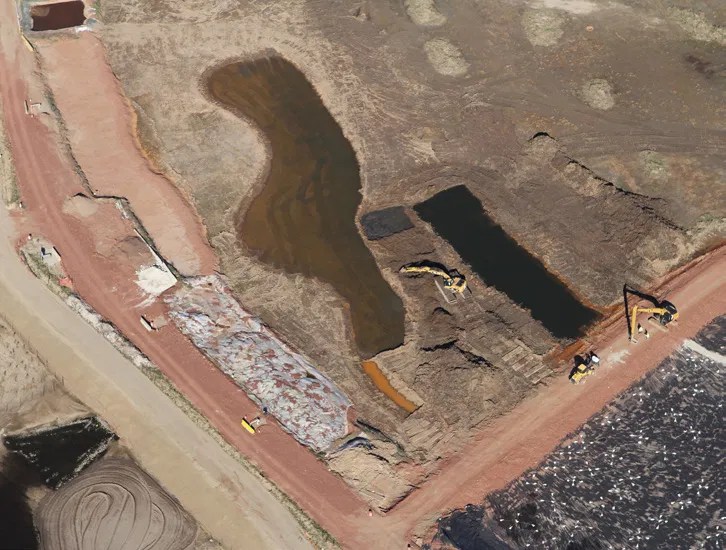
    Aerial view of an active brownfield remediation site featuring open soil excavations and water management.

    The Lead SCO Revisions: Aligning with EPA 2023

    While PFAS grabs the headlines, the planned update to lead SCOs will likely have a broader impact on urban redevelopment. For decades, the residential SCO for lead in New York has been 400 ppm (parts per million). However, the U.S. EPA updated its residential lead soil guidance in January 2023, lowering the benchmark significantly to account for updated blood-lead level modeling.

    The NYSDEC 2026 Regulatory Agenda explicitly states that Part 375 will be amended to "revise the soil cleanup objectives for lead to coincide with U.S. EPA values."

    What this means for you:

    • Residential Targets: Expect the 400 ppm residential SCO to drop, potentially to 200 ppm or lower depending on the final rulemaking.
    • Unrestricted Use: The current 63 ppm threshold may see further scrutiny.
    • Project Feasibility: Sites that were "clean" or "restricted-residential" under the old rules may suddenly require significant soil removal or engineering controls under the new ones.

    At Envicon, we are already screening our current project portfolios against these anticipated lower lead targets. We don’t wait for a change order; we build the contingency into the design phase.

    Navigating Remediation Projects in the "Interim"

    Operating in a transition year like 2026 requires a strategy that balances current compliance with future-proofing. Large national firms often deliver "defensive" reports that stick strictly to the guidance but offer no path forward when the guidance conflicts with background data.

    Envicon takes a different approach:

    1. Site-Specific Background Analysis: We utilize the NYSDEC rural background study data to contextalize detections. If your PFOA is 1.2 ppb, we can demonstrate that this is consistent with ambient rural levels, potentially avoiding unnecessary remedial actions.
    2. Strategic Soil Management: With lead and PFAS targets in flux, soil disposal is the largest variable cost. We develop robust soil management plans that categorize material based on both current and proposed SCOs to minimize "surprise" disposal fees at the end of a project.
    3. Digital Precision: We use GIS-integrated modeling to visualize contamination plumes in 3D. This allows for precision excavation: removing only what is necessary and leaving what is compliant.

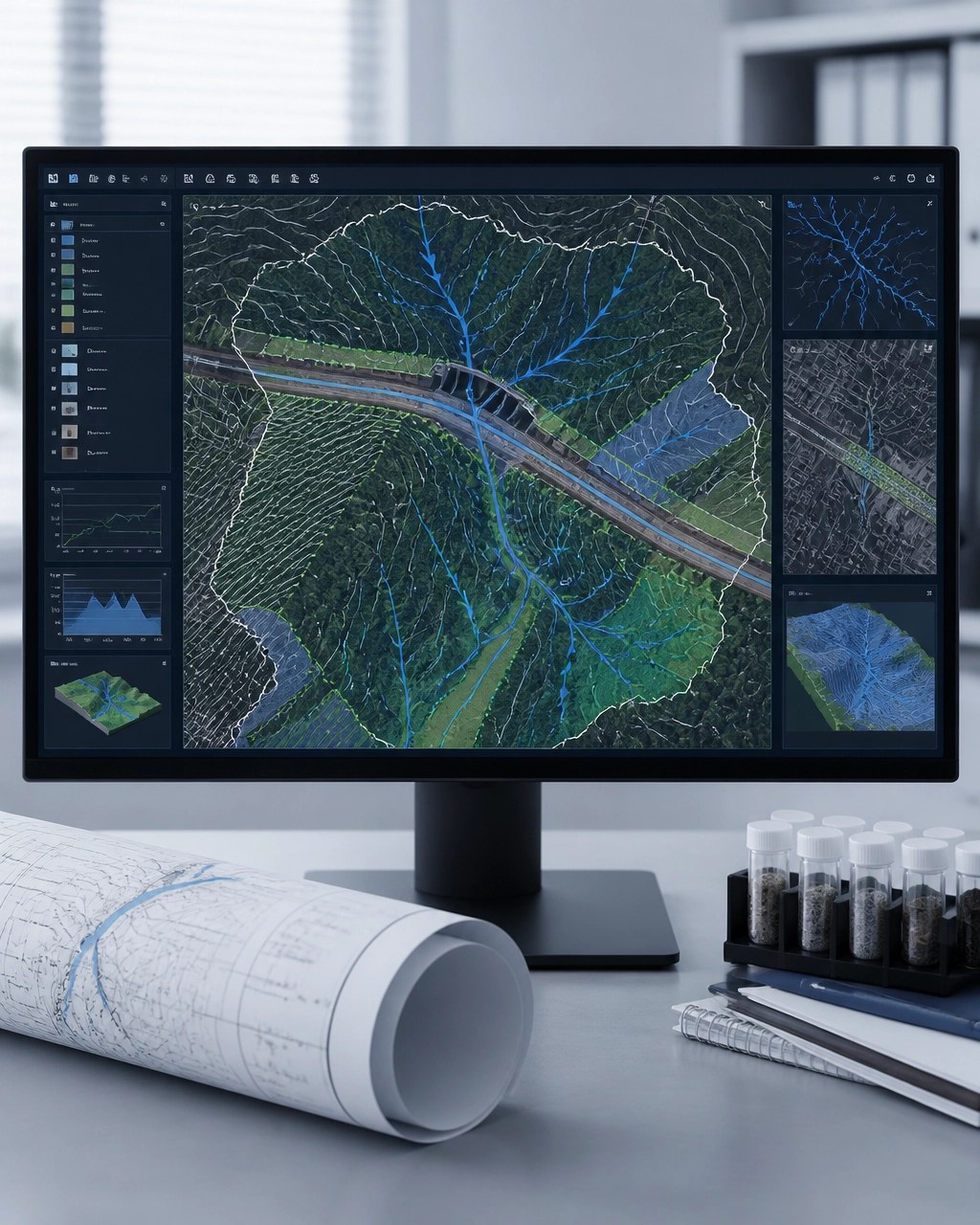
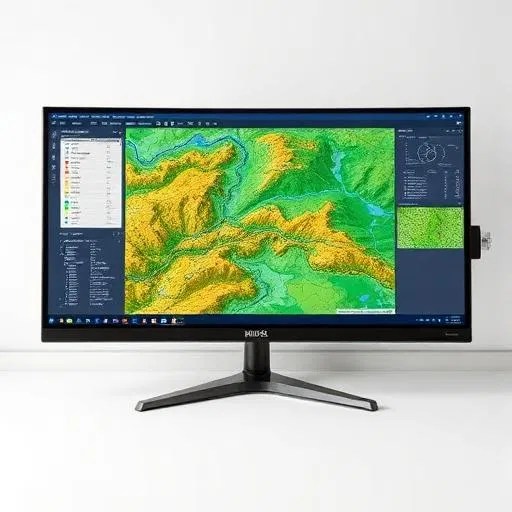
    GIS analysis monitor displaying 3D terrain modeling and geospatial data for remediation planning.

    Why Envicon? The Direct Path to Closure

    When you hire a "big-box" firm, your project often gets handed to a junior staffer who is learning the regulations on your dime. Regulatory coordination becomes a black box. You don't know who is talking to your reviewer or what they are saying.

    At Envicon, we sit at the table with NYC OER, NYSDEC, and NJ DEP. We know the reviewers by name, and we understand the nuances of their specific regions. We don't sell reports that sit in a queue; we sell cleared paths to a buildable site.

    Our use of proprietary project management technology means you have a real-time dashboard of your site’s status. You see the data as we see it. No monthly PDF surprises. Just precision, urgency, and the truth.

    Key Takeaways for 2026:

    • PFAS SCOs are coming: PFOA and PFOS will be codified in Part 375 soon.
    • Background is your best defense: Use the rural soil study to challenge overly stringent interim guidance.
    • Lead is the sleeper issue: Watch for a significant drop in lead SCOs to match EPA's 2023 values.
    • Get a field-first partner: Choose a firm that understands the New York regulatory climate from the ground up, not from a satellite office.

    Take Action Today

    The regulatory landscape is shifting beneath your site. Don't let an "interim" guidance value turn into a permanent project delay.

    Envicon Group Logo

  • NJDEP REAL Rules Legacy Period: Proposed One-Year Extension to July 2027

    NJDEP REAL Rules Legacy Period: Proposed One-Year Extension to July 2027

    The New Jersey Department of Environmental Protection (NJDEP) recently issued a proposal that has sent ripples through the development community: a one-year extension of the "legacy period" for the Resilient Environments and Landscapes (REAL) rules. Originally slated to expire on July 20, 2026, the NJDEP is now proposing to move that finish line to July 20, 2027.

    For developers, engineers, and municipal planners operating in the New Jersey market, this isn’t just a administrative adjustment: it’s a tactical reprieve. The REAL rules represent the most significant overhaul of land use regulations in a generation, fundamentally shifting how we calculate flood hazards, manage stormwater, and assess sea-level rise. This proposed extension buys time, but it also demands a strategic pivot.

    If your project is currently navigating the "legacy" window, you have a 12-month window to lock in pre-REAL standards. But the clock is ticking, and the rules of engagement are specific.

    What is the Legacy Period?

    The REAL rules were officially adopted on January 20, 2026. Recognizing that projects already in the design or financing phase could be derailed by a sudden shift in standards, the NJDEP included a "legacy" provision. This provision allows certain permit applications to be reviewed under the regulations in effect prior to January 20, 2026.

    The most critical difference lies in elevation standards. Under the legacy rules, projects typically adhere to FEMA’s Base Flood Elevation (BFE) plus one foot. Under the full weight of the REAL rules, that standard jumps significantly: often requiring an additional four to five feet of elevation to account for projected sea-level rise.

    The proposed extension to July 20, 2027, means that if you can get a "qualifying" application in before that date, you may be able to build under the older, less restrictive standards.

    The "In-Group": Which Permits Qualify?

    Not every submittal to the NJDEP counts as a ticket into the legacy period. The Department has drawn a clear line between discretionary reviews and automated certifications. To benefit from the extension, your project must involve one of the following "qualifying" applications:

    • Individual Permits (IPs): Complex projects requiring site-specific environmental review.
    • General Permits (GPs): Standardized permits for activities with minimal environmental impact.
    • Verifications: Flood Hazard Area (FHA) verifications that establish the limits of flood plains and floodways.
    • Letters of Interpretation (LOIs): Freshwater wetlands boundary determinations.
    • Transition Area Waivers (TAWs): Permits allowing activity within the "buffer" zones of protected wetlands.
    • Water Quality Certificates: Section 401 approvals required for federal licenses or permits.

    These permits require a level of technical scrutiny that the NJDEP views as substantive. At Envicon, we see these not just as forms to be filled, but as the legal foundation of your project’s value. A compliance and permit matrix is essential here to ensure no deadlines are missed across multiple disciplines.

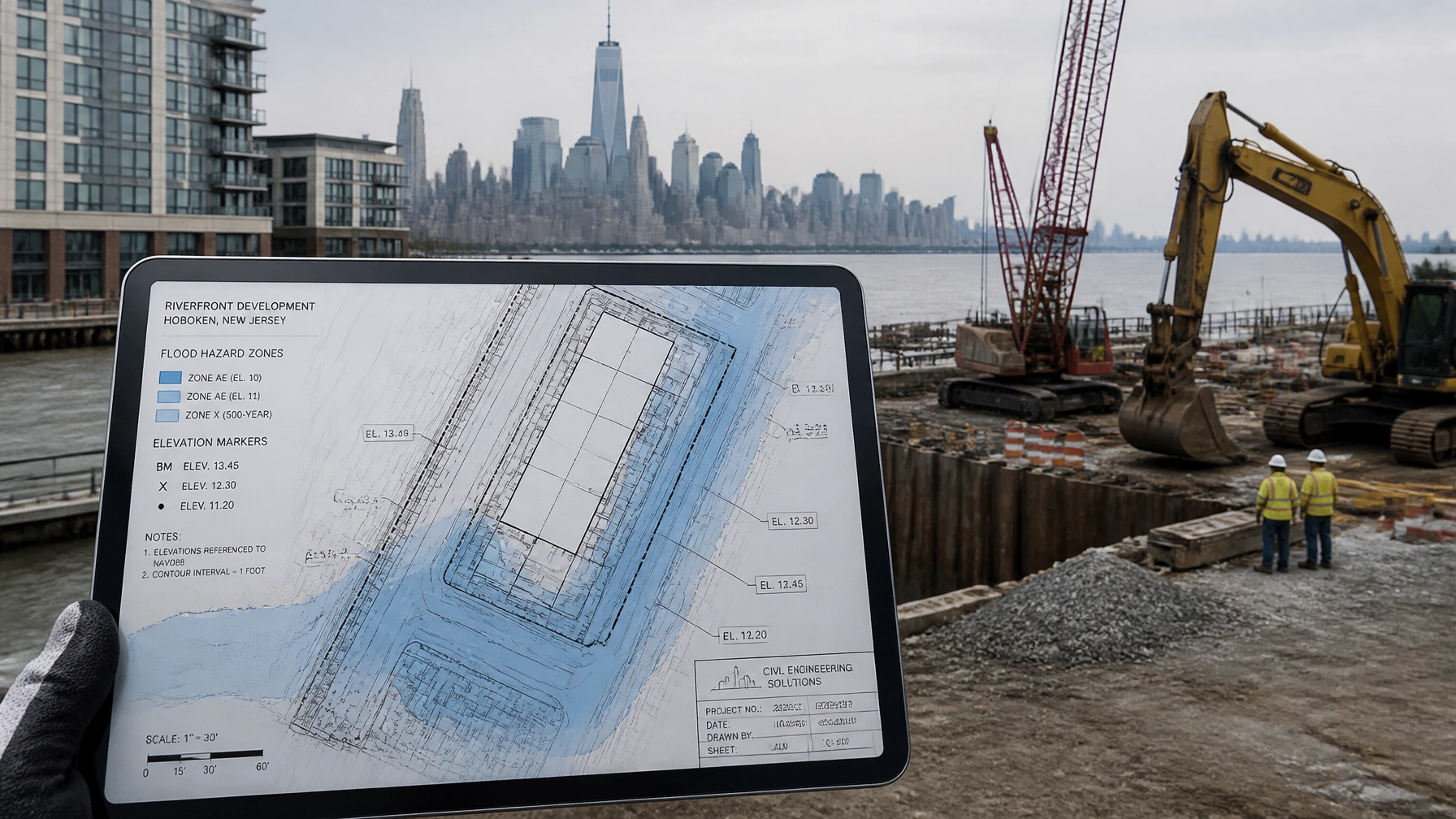
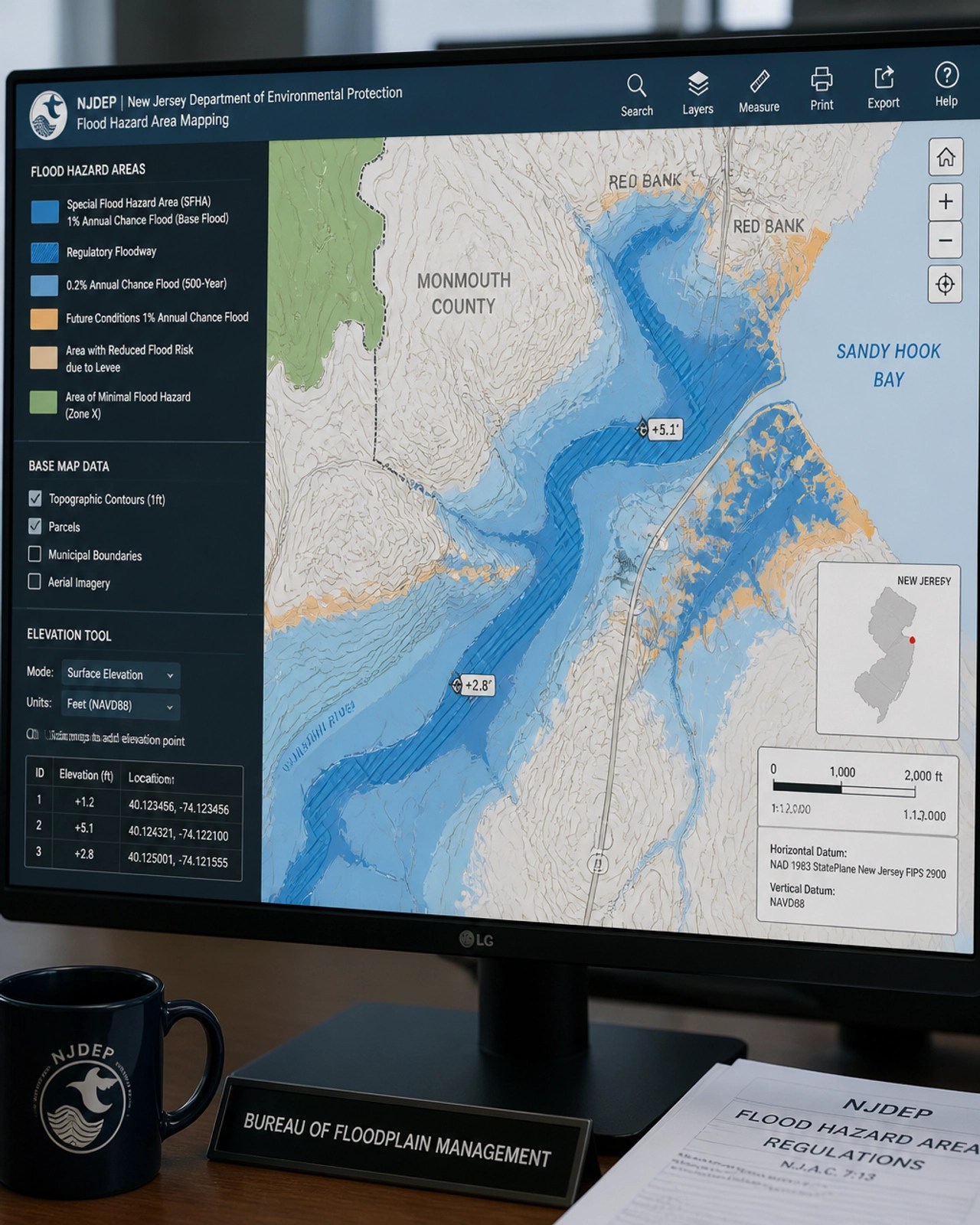
    GIS visualization of NJDEP flood hazard zones and elevation markers

    The "Out-Group": What Doesn't Qualify?

    This is where many developers get burned by "big-box" consulting firms that treat all permits as equal. The NJDEP has explicitly excluded certain "automated" or "registration-based" permits from the legacy extension.

    Permits-by-Registration (PBR) and General-Permits-by-Certification (GP-by-Cert) do not qualify for the legacy period. These are typically processed through the NJDEP’s online portal and are issued nearly instantaneously without a case manager's review. Because these permits are intended to be "current" at the time of issuance, the NJDEP requires them to meet whatever standards are in effect on the day of registration.

    If your strategy relies on a PBR or GP-by-Cert, you will be subject to the full REAL rule standards, regardless of when you started your design. This distinction is critical for project budgeting; an unexpected four-foot increase in site grading because a consultant relied on the wrong permit type can decimate a project's ROI.

    The July 31, 2026 Deadline: Your Voice Matters

    The one-year extension is currently a proposal, not a final law. The NJDEP is holding a public comment period that closes on July 31, 2026.

    In our experience, the developers who win are the ones who stay ahead of the regulatory curve. Providing technical comments on how the REAL rules impact project feasibility isn’t just a civic duty: it’s a business necessity. A virtual public hearing was held on July 7, 2026, but written comments remain the most effective way to get your specific site challenges into the official record.

    The NJDEP is looking for data on how the transition period affects the "pipeline" of development in New Jersey. If your project faces unique hardship due to the REAL standards, this is the window to speak up.

    Engineering stopwatch on top of site blueprints and technical reports

    Strategic Implications: Buy Time or Push Now?

    A common mistake we see is the "wait and see" approach. Many developers see the July 2027 extension and think they have plenty of time. They don't.

    1. The Queue Phenomenon: As the July 2027 deadline approaches, the NJDEP will be flooded with applications. Large national firms often submit "bloated" reports that end up in the back of the queue because they require multiple rounds of clarification.
    2. Lender Scrutiny: Banks and investors are already pricing in REAL rule risks. They want to see a cleared path to a buildable site, not a "maybe" on a legacy permit. Having a Phase I ESA and a clear permitting roadmap is more critical now than ever.
    3. The Design Pivot: If you cannot meet the July 2027 deadline, your design team needs to pivot now to accommodate the 5-foot elevation increase. Waiting until 2027 to find out you need a massive redesign is a million-dollar mistake.

    "We don’t sell reports. We sell cleared paths. In the world of REAL rules, a 'cleared path' means knowing exactly which day your submittal hits the desk of the regulator you know by name." : Jason Pancoast, CEO of Envicon Group

    The Envicon Difference: Why Speed and Local Fluency Matter

    At Envicon, we don't treat the NJDEP as a "black box." We know the reviewers at the NJ DEP and the Land Use Regulation Program because we work with them daily. While national firms are applying a cookie-cutter playbook designed for Texas or California to your Jersey City waterfront project, we are leveraging 20 years of regional fluency.

    When you hire Envicon, you aren't just getting an engineer; you're getting a PE-led team that understands the "field-first" reality of remediation and civil design. We utilize real-time project reporting dashboards that give you full visibility into your permit status. You’ll never wonder if your LOI or FHA verification is sitting in someone's queue.

    Active brownfield remediation site in New Jersey with groundwater sampling equipment

    Summary of Key Takeaways

    The proposed extension to July 20, 2027, is a significant opportunity for New Jersey developers, but it requires precise execution.

    • Deadline: The extension is proposed for July 20, 2027.
    • Qualifying: Individual Permits, General Permits, Verifications, LOIs, TAWs.
    • Non-Qualifying: PBRs and GPs-by-Certification (these must meet REAL standards immediately).
    • Urgency: The public comment deadline is July 31, 2026.
    • Strategy: Don't wait. Use the extra year to finalize designs and secure legacy status before the NJDEP system becomes overloaded.

    Navigating the REAL rules requires more than just technical knowledge; it requires a partner who takes ownership of the outcome. We understand that every week of delay incurs carrying costs and affects your market timing. We are here to remove the obstacles between you and a buildable, compliant, and profitable asset.

    Ready to secure your project's legacy status?

    Don't let your project get stalled in a regulatory queue. Whether you need a rapid site characterization or a comprehensive permitting strategy, our team is ready to move.

    Envicon Group Logo

  • NYC OER Voluntary Cleanup Program 2026: BIG Grants, Jumpstart, and Brownfield Funding Opportunities

    NYC OER Voluntary Cleanup Program 2026: BIG Grants, Jumpstart, and Brownfield Funding Opportunities

    In the high-stakes world of New York City real estate, environmental contamination isn't just a technical hurdle: it’s a financial and scheduling bottleneck that can stall a project before the first shovel hits the ground. As of 2026, the NYC Office of Environmental Remediation (OER) has refined its toolkit to move these projects forward with unprecedented precision.

    The Voluntary Cleanup Program (VCP) remains the gold standard for developers looking to transform contaminated fill and complex sites into buildable, compliant assets. For developers, property investors, and attorneys, navigating the VCP isn't just about compliance; it’s about strategically capturing millions in potential savings and grants.

    The 12,000-Unit Milestone: Brownfields as Assets

    As of early 2026, OER has officially surpassed the milestone of 12,000 affordable housing units created specifically through its cleanup programs. This isn't just a municipal stat; it’s proof that the city’s regulatory framework is working to bridge the gap between "environmentally challenged" and "shovel-ready."

    At Envicon Group, we don’t see a brownfield as a liability. We see it as a cleared path to a high-value asset. Whether you are building 100% affordable housing or a mixed-use commercial hub, the 2026 VCP incentives are designed to reward speed and technical accuracy.

    The 2026 BIG Grant Program: Up to $50,000 for Cleanup

    The Brownfield Incentive Grant (BIG) program remains one of the most effective ways to offset the high costs of NYC remediation. For 2026, the grant structure provides significant capital injections at critical stages of the project.

    • Standard Qualifying Projects: Projects enrolled in the VCP can access cleanup grants of up to $25,000.
    • Preferred Community Development: For non-profit developers or 100% affordable housing projects, the stakes are higher. These "Preferred" projects are eligible for grants up to $50,000 for remedial work.
    • Pre-Development & Investigation: The BIG program also supports the early-stage "heavy lifting," with pre-development grants capped at $5,000 and investigation grants capped at $10,000.

    Unlike large consulting firms that treat grant applications as an afterthought, Envicon integrates these funding milestones into our site development playbook. We ensure your RAWP (Remedial Action Work Plan) is approved and your BIG application is submitted within the strict 6-month window following the Notice of Completion (NOC).

    A technical, professional engineering visual showing a close-up of a GIS mapping interface on a rugged tablet at a job site.

    Jumpstart: Bridging the Gap to State Tax Credits

    One of the most powerful: and often underutilized: tools in the 2026 OER arsenal is the Jumpstart Program. This is specifically designed for city-supported affordable housing and industrial projects that plan to access the New York State Department of Environmental Conservation (NYSDEC) Brownfield Cleanup Program (BCP) tax credits.

    The Jumpstart Program provides upfront, refundable grants of up to $125,000 for investigation and $125,000 for site remediation. These funds act as a bridge, allowing developers to start work immediately without waiting for state tax credits to materialize. Once the project receives its BCP tax credits, the Jumpstart funds are repaid to OER.

    For developers working against tight financing deadlines, this liquidity is a game-changer. It eliminates the "black box" of state-level timing and puts control back into the hands of the developer.

    The "Invisible" Savings: Hazardous Waste Exemptions and the Clean Soil Bank

    While grants are high-profile, the operational savings found in the VCP's 2026 guidelines are often where the real margin is found.

    Hazardous Waste Fee Exemptions

    Projects enrolled in the NYC VCP are eligible for exemptions from New York State’s hazardous waste program fees and special assessments. On a site with significant contaminated soil or historic fill, these exemptions can save a project hundreds of thousands of dollars in disposal costs.

    The NYC Clean Soil Bank

    The Clean Soil Bank is OER’s match-making service for dirt. It matches "generator" sites (those with surplus clean native soil) with "receiver" sites (those that need clean fill for remediation covers or grading).

    • Cost Efficiency: Receiver sites get clean soil for free or at a significantly reduced cost.
    • Sustainability: It keeps thousands of tons of clean soil out of landfills and off the roads.

    At Envicon, we manage the soil characterization and logistics to ensure our clients are on the winning side of this exchange. We don't just write reports; we coordinate the field-level logistics that move soil and save money.

    Active brownfield redevelopment site with heavy equipment and soil staging areas.

    Navigating the VCP: The Envicon Difference

    Large national firms often apply a cookie-cutter approach to NYC brownfields. They deliver defensive, bloated reports that protect the consultant rather than the project.

    At Envicon, our approach is field-first and regulator-facing. We sit at the table with NYC OER, not behind a queue. Our Phase I & Phase II Environmental Site Assessments are designed to identify the exact technical thresholds that trigger VCP eligibility, ensuring you don't leave money on the table.

    "Collaboration is not a buzzword: it's how we work. We don't just deliver services; we help transform underused properties into thriving assets." : Jason Pancoast, CEO of Envicon Group.

    When you hire Envicon, you aren't getting a junior staffer reading from a template. You are getting licensed professionals who know the OER reviewers by name and understand the nuances of the 2026 regulatory landscape. We provide real-time project reporting dashboards that give you full visibility into your schedule, budget, and deliverable status.

    Desk covered with multiple lender-ready Environmental Site Assessment (ESA) forms and reports.

    Summary of 2026 Opportunities

    • BIG Cleanup Grants: Up to $25k for standard sites; $50k for 100% affordable housing or non-profit projects.
    • Jumpstart Funding: Up to $250k in bridge funding for projects targeting State BCP tax credits.
    • Soil Management: Free clean soil via the Clean Soil Bank and full hazardous waste fee exemptions.
    • Housing Impact: Over 12,000 units of affordable housing delivered through the program to date.

    The obstacles between you and a buildable site are real, but they are not insurmountable. The NYC OER VCP is a pathway to clearing those obstacles with precision and speed.

    Mixed-use mid-rise building in a densely developed NYC neighborhood at dusk.

    Ready to Unlock Your Site's Potential?

    Don't let your project sit in someone's queue. Whether you're navigating a complex brownfield or need a technical review of your current environmental strategy, we’re here to move you forward.

    https://cdn.marblism.com/9pkrESHYKOm.png

  • Vapor Intrusion Mitigation Cost in NYC & NJ: Sub-Slab Depressurization System Pricing

    Vapor Intrusion Mitigation Cost in NYC & NJ: Sub-Slab Depressurization System Pricing

    Published August 12, 2026 · 8-minute read

    If you’re budgeting a vapor intrusion remedy in New York City or New Jersey, the first number you’ll find online may be misleading.

    A basic residential radon-style system can cost a few thousand dollars. A regulated vapor intrusion mitigation system for a commercial, multifamily, or mixed-use building can cost tens of thousands: or more than $100,000: once investigation, design, construction, agency coordination, and monitoring are included.

    The difference comes down to site conditions and regulatory requirements.

    This guide breaks down the major drivers behind sub slab depressurization system cost and explains what developers should expect on NYC E-designation and NJDEP-regulated projects.

    “We don’t sell reports. We sell cleared paths.”

    What a sub-slab depressurization system does

    Vapor intrusion occurs when volatile organic compounds (VOCs) in soil or groundwater migrate upward through the subsurface and enter a building through cracks, joints, utility penetrations, sumps, elevator pits, or other openings.

    A sub-slab depressurization system, or SSDS, creates negative pressure beneath the building slab. The system draws soil gas away from occupied space and vents it safely above the roofline.

    A typical active system includes:

    • One or more suction points below the slab
    • Perforated collection piping
    • Vertical PVC risers
    • An inline fan or blower
    • Sealed slab penetrations
    • A roof-level exhaust point
    • Pressure monitoring ports
    • Operating and maintenance documentation

    Technical cutaway diagram of a sub-slab depressurization system

    The system must be designed around the building: not pulled from a generic template. A small warehouse with an accessible slab may require one approach. A high-rise, mixed-use building with multiple basements, elevator pits, and complicated HVAC systems may require several zones, fans, and monitoring locations.

    Typical vapor intrusion mitigation cost ranges

    There is no universal price schedule for SSDS work. The following ranges are useful for early budgeting, not final bids.

    Project component Planning-level range What it may include
    Initial vapor intrusion screening $3,500–$6,000 Records review, pathway evaluation, screening report
    Sub-slab and indoor air sampling $6,000–$12,000 Probe installation, indoor/outdoor air samples, laboratory analysis
    SSDS or vapor mitigation design $12,000–$35,000 Engineering plans, specifications, monitoring plan, regulatory coordination
    Regulated SSDS installation $40,000–$70,000+ per building Piping, suction points, fans, roof penetrations, sealing, commissioning
    Large commercial or multifamily remedy $100,000+ Multiple buildings, zones, barriers, complex routing, long-term controls

    These figures should not be confused with the cost of a straightforward residential radon system, which commonly falls in the approximate range of $800 to $2,500. A regulated vapor intrusion project requires a much broader scope.

    One published remediation case study reported approximately $47,000 to $66,000 in capital and first-year operating costs per building for SSDS implementation. That is a useful reference point for commercial planning, but actual costs depend on the building footprint, contamination, and regulatory pathway.

    Envicon’s current vapor intrusion assessment service lists these professional-service ranges:

    • Screening: $3,500–$6,000
    • Sub-slab and indoor air sampling: $6,000–$12,000
    • Vapor mitigation system design: $12,000–$35,000

    Installation and long-term operation are priced separately because they depend on field conditions.

    The five biggest cost drivers

    1. Building footprint and number of suction points

    The larger the footprint, the more difficult it becomes to create and verify a consistent pressure field beneath the slab.

    A small building may use one or two suction points. A larger commercial or multifamily building may require multiple points connected into separate zones. The design must account for:

    • Total square footage
    • Separate foundation areas
    • Interior footings and grade beams
    • Slab elevations
    • Basement levels
    • Sub-slab aggregate and soil permeability
    • Occupied and unoccupied areas

    More suction points mean more coring, piping, fittings, fans, electrical work, and testing.

    Building use also matters. A residential building, school, medical facility, or childcare space may require a more conservative design and more extensive verification than a vacant industrial structure.

    2. Slab condition and foundation access

    A new building gives the project team more control. A vapor barrier and venting layer can be incorporated before the slab is poured.

    Retrofits are different.

    Existing slabs may contain:

    • Cracks and construction joints
    • Thickened footings
    • Moisture barriers in unknown condition
    • Multiple utility penetrations
    • Sumps and floor drains
    • Finished flooring
    • Mechanical equipment
    • Limited access below occupied spaces

    These conditions increase labor and can require additional sealing, exploratory openings, core drilling, or alternative suction methods.

    The question isn’t only whether a fan can be installed. The question is whether the system can create measurable negative pressure throughout the intended area and maintain that performance over time.

    3. Venting and routing complexity

    The simplest SSDS route runs vertically through an accessible interior space and exhausts above the roof. NYC and NJ buildings rarely offer simple conditions.

    Venting complexity can increase when:

    • The building has multiple occupied floors
    • The roof is difficult to access
    • The system must avoid windows, air intakes, and occupied areas
    • Existing fire-rated assemblies must be penetrated
    • Piping must pass through finished spaces
    • The building has several disconnected slab areas
    • The system must coordinate with HVAC, plumbing, electrical, or structural elements

    In dense NYC construction, even a short pipe route can become a coordination issue. In northern New Jersey, industrial buildings may have large footprints, multiple additions, and undocumented subsurface utilities.

    Field verification before design can prevent expensive changes during installation.

    4. Consultant, laboratory, and regulatory fees

    A reliable vapor intrusion mitigation cost estimate must include more than equipment and installation labor.

    Professional fees may cover:

    • Phase I and Phase II environmental review
    • Soil gas, sub-slab, indoor air, and outdoor air sampling
    • VOC analysis, often using EPA Method TO-15
    • Data validation and interpretation
    • Engineering design
    • Remedial Action Plans or work plans
    • Construction Health and Safety Plans
    • Agency meetings and responses
    • Construction oversight
    • Startup testing and pressure-field verification
    • Operation and maintenance manuals
    • Closure or periodic reporting

    At an NYC property with a hazardous-materials E-designation, the project may require a testing protocol and remedial plan reviewed through the NYC Office of Environmental Remediation. Sampling should not begin until the applicable protocol receives approval.

    That process affects schedule as well as cost. A low initial quote that excludes agency coordination can become expensive when the project reaches review or construction.
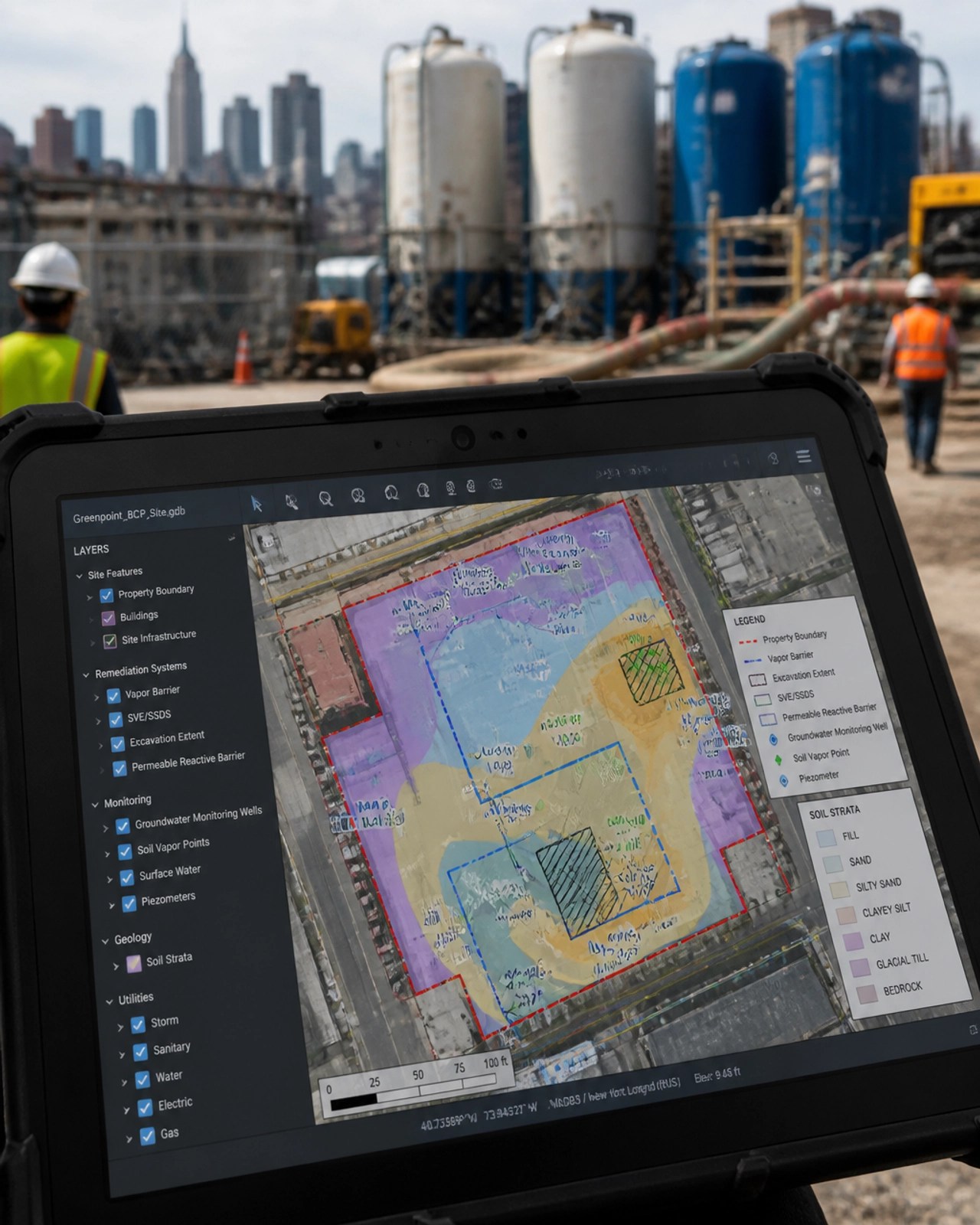
    5. Post-mitigation monitoring and maintenance

    Installation is not the end of the project.

    A functioning system must be commissioned and documented. Depending on the approved plan and regulatory requirements, the owner may need:

    • Sub-slab pressure measurements
    • Pressure-field extension testing
    • Indoor air sampling
    • Follow-up sub-slab sampling
    • Fan and alarm inspections
    • Periodic system operation checks
    • Repair documentation
    • Annual or otherwise scheduled reporting

    The exact monitoring frequency should come from the approved remedial plan, regulator, or site management requirements. It should not be assumed.

    Long-term costs may include electricity, fan replacement, access coordination, laboratory analysis, engineering inspections, and reporting. These expenses should appear in the project’s operating budget from the beginning.

    NYC: E-designation and OER considerations

    An NYC hazardous-materials E-designation signals that environmental requirements may apply before development, renovation, or a change in use.

    Where VOCs or soil vapor are a concern, the project may involve:

    1. Phase I and historical records review
    2. OER-approved soil, groundwater, and soil vapor testing
    3. Sub-slab and indoor air sampling
    4. Evaluation using NYSDOH soil vapor intrusion guidance
    5. A remedial action plan or work plan
    6. Vapor barriers, SSDS, or other engineering controls
    7. Construction oversight and performance verification
    8. Closure documentation and ongoing control requirements

    The NYC Office of Environmental Remediation E-designation page provides the City’s current program information. NYC projects may also rely on the CEQR Technical Manual hazardous materials chapter and NYSDOH soil vapor intrusion decision matrices.

    For a small site, professional fees may begin in the low five figures. For a larger building requiring a full SSDS, vapor barrier, construction controls, and monitoring, the total can move into the six-figure range.

    New Jersey: NJDEP screening levels and LSRP oversight

    New Jersey uses contaminant-specific vapor intrusion screening levels for groundwater, soil gas, and indoor air. The applicable values depend on the chemical, building use, exposure pathway, and medium being evaluated.

    NJDEP’s Vapor Intrusion Technical Guidance and Vapor Intrusion Screening Levels and Indoor Air Remediation Standards tables should be checked for the current requirements before sampling or design.

    Northern New Jersey redevelopment site with vapor mitigation and monitoring equipment

    If results exceed applicable screening or action levels, the project may require additional delineation, interim measures, permanent mitigation, and follow-up monitoring. An NJDEP-regulated site generally benefits from early coordination with the project’s Licensed Site Remediation Professional, or LSRP.

    Costs can rise when:

    • Contamination extends beneath multiple buildings
    • Soil gas results vary significantly across the site
    • Indoor air results require immediate response
    • The building contains occupied residential or commercial space
    • The system must remain as a long-term engineering control
    • Additional sampling is needed to demonstrate stable conditions

    The key is to price the regulatory pathway: not just the fan and pipe.

    How to reduce avoidable SSDS costs

    You can’t control every subsurface condition. You can control when you investigate and how clearly the work is scoped.

    Before requesting proposals, assemble:

    • Building square footage and foundation plans
    • Current and proposed building use
    • Known E-designation or NJDEP case information
    • Prior soil, groundwater, or indoor air data
    • Utility and HVAC plans
    • Slab and basement information
    • Construction schedule
    • Lender, attorney, and agency requirements

    Then ask whether the proposal includes investigation, design, installation oversight, agency coordination, monitoring, and reporting.

    A large consultant may give you a low-looking initial number and add scope later. Envicon’s approach is different: we define the path early, identify the decisions that affect cost, and keep the same project team involved from fieldwork through closeout.

    “Collaboration is not a buzzword: it’s how we work.”

    Our licensed professionals work directly with developers, attorneys, architects, contractors, LSRPs, OER, NYSDEC, NJDEP, and local officials. You get clear deliverables, real-time project visibility, and answers tied to your actual site.

    The bottom line on sub slab depressurization system cost

    For a basic home system, the cost may be a few thousand dollars. For a regulated NYC or New Jersey building, a realistic budget must account for:

    • Site investigation and laboratory analysis
    • Building footprint and suction-point requirements
    • Slab and foundation conditions
    • Pipe and fan complexity
    • Engineering and regulatory coordination
    • Construction oversight
    • Post-mitigation monitoring and maintenance

    The fastest way to refine your vapor intrusion mitigation cost is to evaluate the building and regulatory pathway together. Start with Envicon’s vapor intrusion mitigation systems guide for the technical options, then develop a site-specific scope before committing to construction.
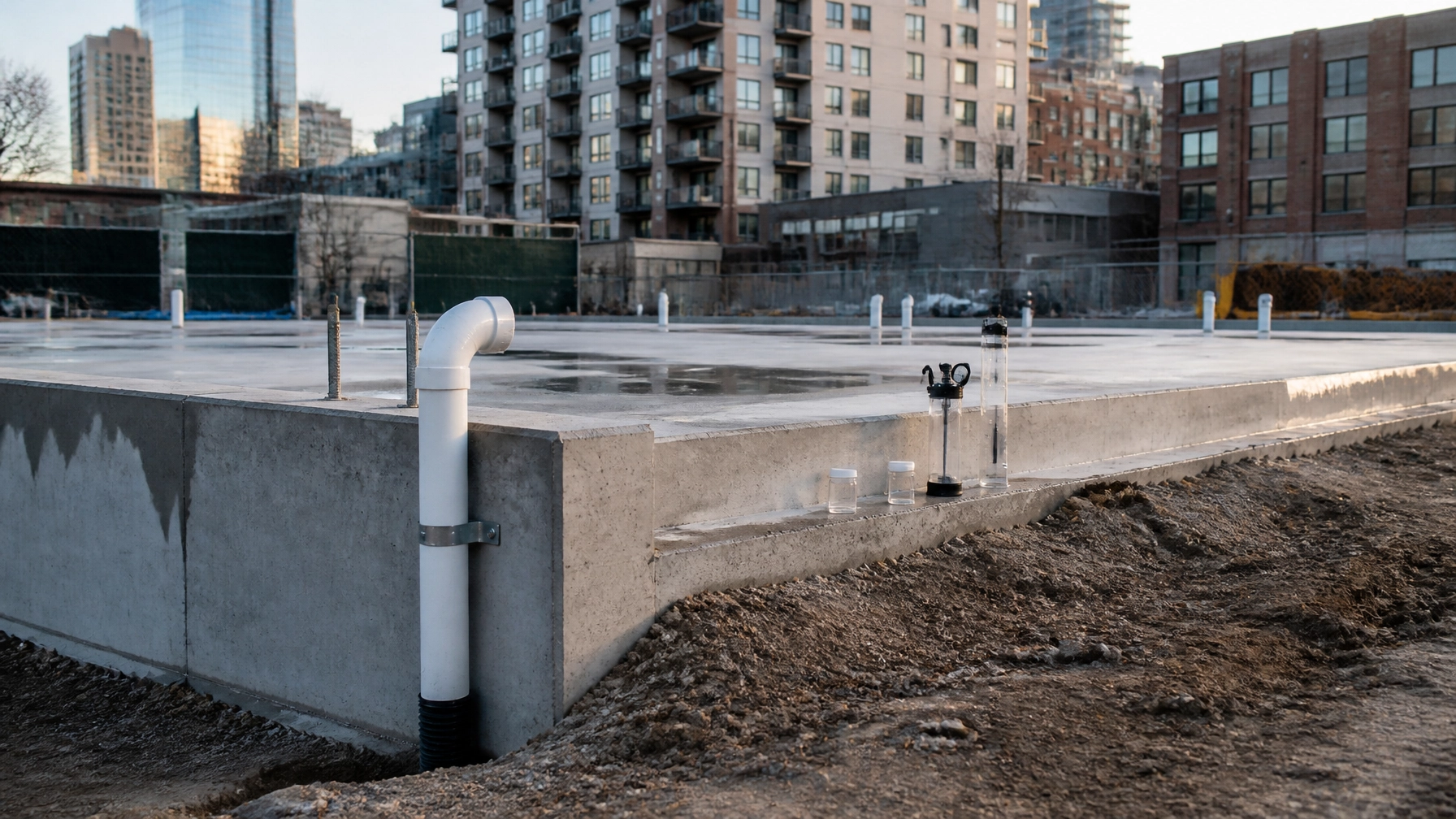
    Get a site-specific cost and mitigation path

    Vapor intrusion shouldn’t be treated as a surprise change order. Envicon Group helps NY and NJ developers, investors, attorneys, and contractors move from uncertainty to a buildable, compliant plan.

    Envicon Group logo

  • NYSDEC Model and Compliance: NYSDEC Part 253 Mandatory GHG Reporting and the September 1 Monitoring Plan Deadline

    NYSDEC Model and Compliance: NYSDEC Part 253 Mandatory GHG Reporting and the September 1 Monitoring Plan Deadline

    For industrial operators, manufacturers, energy providers, and waste management facilities across New York State, regulatory calendars are shifting quickly. The New York State Department of Environmental Conservation (NYSDEC) Climate Leadership and Community Protection Act (CLCPA) implementation has reached a critical juncture with 6 NYCRR Part 253: the state’s Mandatory Greenhouse Gas Reporting Program.

    If your facility qualifies as an applicable reporter or Large Emission Source under Sections 2.2 and 2.13 of the rule, your immediate priority sits squarely on the calendar: September 1, 2026, when your facility’s Emissions Monitoring and Measurement Plan (EMMP) is due to NYSDEC for formal review and approval [1][2][3][5][6].

    This is not a routine administrative checkbox that can be delegated to junior staff or rushed through a generic template. Part 253 establishes rigorous, enforceable requirements for direct emission measurements, continuous monitoring, and strict third-party verification. Missing this deadline, or submitting a defensive, poorly structured plan that fails to satisfy agency expectations, immediately triggers regulatory scrutiny, potential enforcement action, and costly project friction.

    At Envicon Group, we don’t just deliver reports: we clear the path between your facility and absolute regulatory compliance. With two decades of hands-on engineering, field-first oversight, and direct agency relationships across New York and New Jersey, our PE-led team helps industrial leaders navigate complex environmental mandates without the bureaucratic bloat of national consulting firms.


    Deconstructing 6 NYCRR Part 253: Who Qualifies and What Is Required?

    Part 253 applies broadly to fossil fuel suppliers, electricity generators, large industrial manufacturing plants, and specific waste-handling sectors. However, the rule draws sharp distinctions between general greenhouse gas (GHG) reporting obligations and specialized methane-monitoring requirements.

    Understanding your facility’s precise threshold status is the first line of defense against compliance delays.

    The Part 253 Compliance Timeline At a Glance

    Navigating Part 253 requires mastering multiple overlapping deadlines. Missing any single milestone cascades into broader operational and legal liabilities:

    • September 1, 2026: Submission deadline for the specialized Emissions Monitoring and Measurement Plan (EMMP) under Section 2.20 for applicable reporters (including anaerobic digesters, liquid waste handlers, solid waste facilities, and high-emission sources) [1][2][3][5][6].
    • December 31, 2026: General GHG Monitoring Plans due to NYSDEC for designated Large Emission Sources [2][3][4][5][8].
    • June 1, 2027: First annual Emissions Data Report due, covering facility emissions generated throughout calendar year 2026 [1][3][4][6][7][8].
    • December 1, 2027: First annual third-party verification statements due for Large Emission Sources verifying the 2026 data [3][4][5][6].

    Industrial facility in New York State with environmental monitoring equipment


    The September 1 Deadline: Why the Specialized EMMP Demands Immediate Attention

    While general GHG monitoring plans cover broad data collection and quality assurance protocols, Section 2.20 of Part 253 requires covered facilities to develop and submit a standalone Emissions Monitoring and Measurement Plan (EMMP) focused specifically on methane emissions [1][2][5].

    This requirement targets specific high-methane sectors, including:

    • Anaerobic digesters processing organic waste or agricultural byproducts.
    • Handlers of liquid wastes operating under specific emission thresholds.
    • Solid waste management facilities and landfills with fugitive gas generation potential.
    • Industrial sources exceeding 300,000 metric tons of $\text{CO}_2\text{e}$ calculated under Section 2.13 [2].

    Unlike standard recordkeeping obligations where documents remain on-site for review, the EMMP is an approval-based plan. NYSDEC must affirmatively review and approve your methodology [2]. If your submission lacks technical rigor, relies on out-of-date emission factors, or fails to meet EPA 40 CFR Part 98 cross-references, your facility enters a regulatory limbo that can stall operations, complicate financing, and invite enforcement penalties.


    Big-Box Consulting vs. The Envicon Advantage

    When facing complex regulatory mandates like Part 253, industrial operators often default to large national consulting firms. The pitch sounds reassuring: a global footprint, massive staff numbers, and a recognizable brand name.

    In reality, hiring a big-box firm introduces hidden friction:

    • The Bait-and-Switch: You meet senior partners during the pitch, but your actual monitoring plan is written by junior staff who have never stepped foot on an industrial floor in New York.
    • Defensive, Bloated Reports: Large firms write reports designed to protect their own liability rather than move your project forward, burying your engineering team in dense, unactionable text.
    • The Regulatory Black Box: You never know who is talking to your NYSDEC reviewer, when discussions are happening, or whether your submittal is languishing at the bottom of a queue.

    At Envicon Group, we operate differently. We are PE-led, field-first, and regulator-facing. We sit at the table with NYSDEC officials: not behind an automated queue. When you partner with us, you get direct access to seasoned engineers and environmental scientists who know your regional jurisdiction, understand your industrial processes, and take full accountability for your compliance outcomes.


    Key Elements of a Defensible EMMP Submittal

    Building an approved EMMP under Section 2.20 requires meticulous technical documentation. A comprehensive plan must incorporate:

    1. Detailed Source Characterization: Precise identification of all emission units, fugitive methane sources, process vents, and combustion devices operating on-site.
    2. Measurement Methodologies: Clear documentation of direct measurement techniques, continuous emission monitoring systems (CEMS), or mass-balance calculations that align strictly with state and federal standards.
    3. Quality Assurance and Quality Control (QA/QC): Documented calibration schedules, sensor maintenance protocols, and data validation procedures to ensure data integrity.
    4. Execution Timeline and Contact Protocols: A clear schedule for implementing monitoring activities, alongside designated authorized representatives and signed certifications [2].

    Technical schematic and data dashboard displaying environmental compliance metrics


    The Business Impact of Non-Compliance

    Treating Part 253 as a minor paperwork exercise is a high-stakes gamble. The business impact of delayed or rejected submittals extends far beyond statutory fines:

    • Carrying Costs and Market Timing: Regulatory delays stall capital improvements, encumber facility financing, and disrupt operational planning.
    • Re-Mobilization and Re-Sampling Expenses: If NYSDEC rejects your monitoring plan or data submittal due to methodological errors, correcting the record requires costly re-evaluations and extended agency negotiations.
    • Lender Scrutiny: Institutional investors and commercial lenders routinely flag unresolved environmental liabilities during due diligence and refinancing rounds. Clean, defensible compliance documentation is your best insurance policy.

    As our core philosophy dictates: Collaboration is not a buzzword: it’s how we work. We bridge the gap between engineering precision and regulatory reality, ensuring your facility stays fully compliant and operational.


    Action Items for Facility Operators Ahead of September 1

    To ensure your facility meets the upcoming September 1 EMMP deadline without operational disruption, take these proactive steps today:

    • Audit Your Source Categories: Review your facility’s 2025 and projected 2026 emission totals against Sections 2.2 and 2.13 thresholds to determine if your operations trigger mandatory EMMP submittal [1][2].
    • Review Existing Monitoring Infrastructure: Evaluate whether your current data collection systems, flow meters, and sampling protocols satisfy EPA and NYSDEC measurement standards.
    • Partner with Regional Experts: Engage an experienced environmental engineering firm that maintains active, daily working relationships with NYSDEC Division of Air Resources personnel.

    Industrial manufacturing plant exterior with environmental engineering equipment


    Take Control of Your Regulatory Compliance Today

    Navigating NYSDEC Part 253 doesn't have to be a guessing game. Whether you need a comprehensive Emissions Monitoring and Measurement Plan drafted before September 1, a rigorous GHG monitoring plan for your Large Emission Source, or a strategic partner to manage your upcoming third-party verifications, Envicon Group delivers certainty when it matters most.

    We remove the obstacles between your facility and absolute compliance. We don't sell reports. We sell cleared paths.

    Ready to Secure Your NYSDEC Part 253 Compliance?

    Talk directly with our senior environmental engineers and schedule your regulatory readiness review today.

    Call now: (917) 764-2171
    Book a free consultation
    Cost estimator tool

    Envicon Logo