Blog

  • Site Civil & Environmental: Why a Unified Approach is the Secret to NJ Approvals

    Site Civil & Environmental: Why a Unified Approach is the Secret to NJ Approvals

    If you’ve spent any time developing in New Jersey, you know the drill. You find a strong site, the numbers work, and then the approval process starts pulling your schedule in three different directions. In NJ, that pressure usually comes from the NJDEP, local planning boards, stormwater rules, and legacy site conditions that don’t care about your closing date.

    For years, the standard setup has been split teams. One consultant handles grading, drainage, and utility design. Another handles the Phase I ESA, Phase II sampling, remediation, or LSRP coordination. On paper, that looks organized. In practice, it often creates delay.

    Here’s the issue: a siloed process is one of the biggest reasons projects stall during permitting, redesign, or construction.

    At Envicon, we take a different approach. We integrate site civil and environmental engineering in NJ from the start so your layout, due diligence, remediation strategy, and approval path work together. That matters when you need integrated site civil and environmental engineering NJ, NJ site development and environmental permitting support, and brownfield site civil engineering and remediation planning NJ under one roof.

    As we often tell clients, "The fastest approval path is usually the one that solves civil and environmental issues at the same time." When those disciplines stay aligned, you cut rework, protect your budget, and keep momentum.

    The Hidden Cost of the "Silo" Mentality

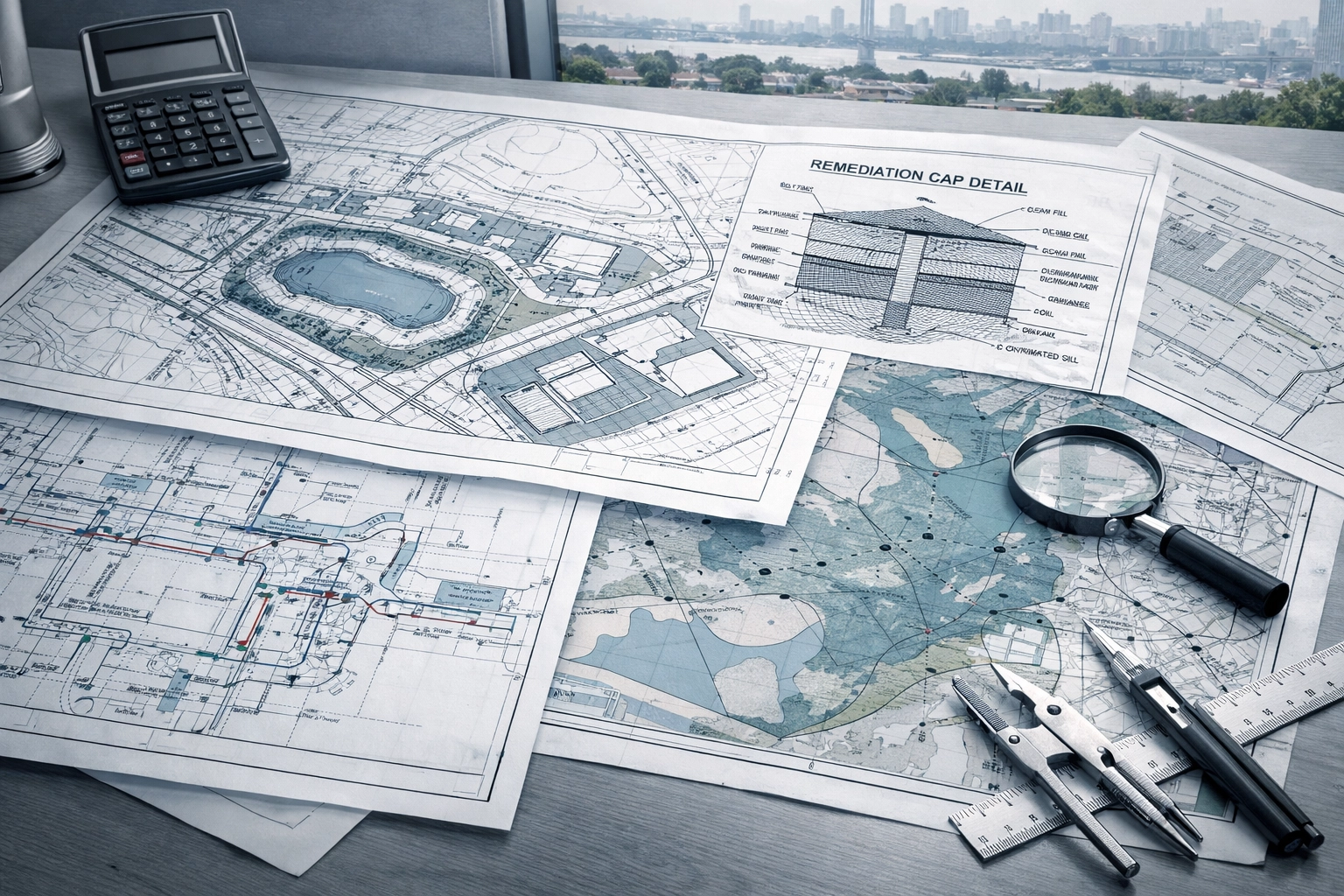
    In NJ, the environment and the infrastructure are inextricably linked. You can’t move a yard of dirt on a brownfield site without triggering a dozen environmental protocols. Conversely, you can’t design a remediation cap without knowing exactly how your stormwater management system is going to sit on top of it.

    When these teams work in isolation, the project suffers from "retrofitting." The civil team designs a beautiful site layout, only for the environmental team to realize three weeks later that a proposed bioswale sits right on top of a legacy plume. Now you’re back to the drawing board, your permit clock restarts, and your carrying costs are climbing.

    "A project's success in New Jersey isn't determined by how well you design a site, but by how well you integrate that design into the state's rigid regulatory framework from day one."

    By integrating civil and site engineering NJ expertise with environmental due diligence for developers NJ, we eliminate that friction. We also support clients looking for NJ environmental and civil engineering for commercial redevelopment, site planning and environmental compliance consulting NJ, and civil engineering and remediation coordination for NJ developers. We aren't just checking boxes; we're lining up design decisions with compliance decisions before they become expensive problems.
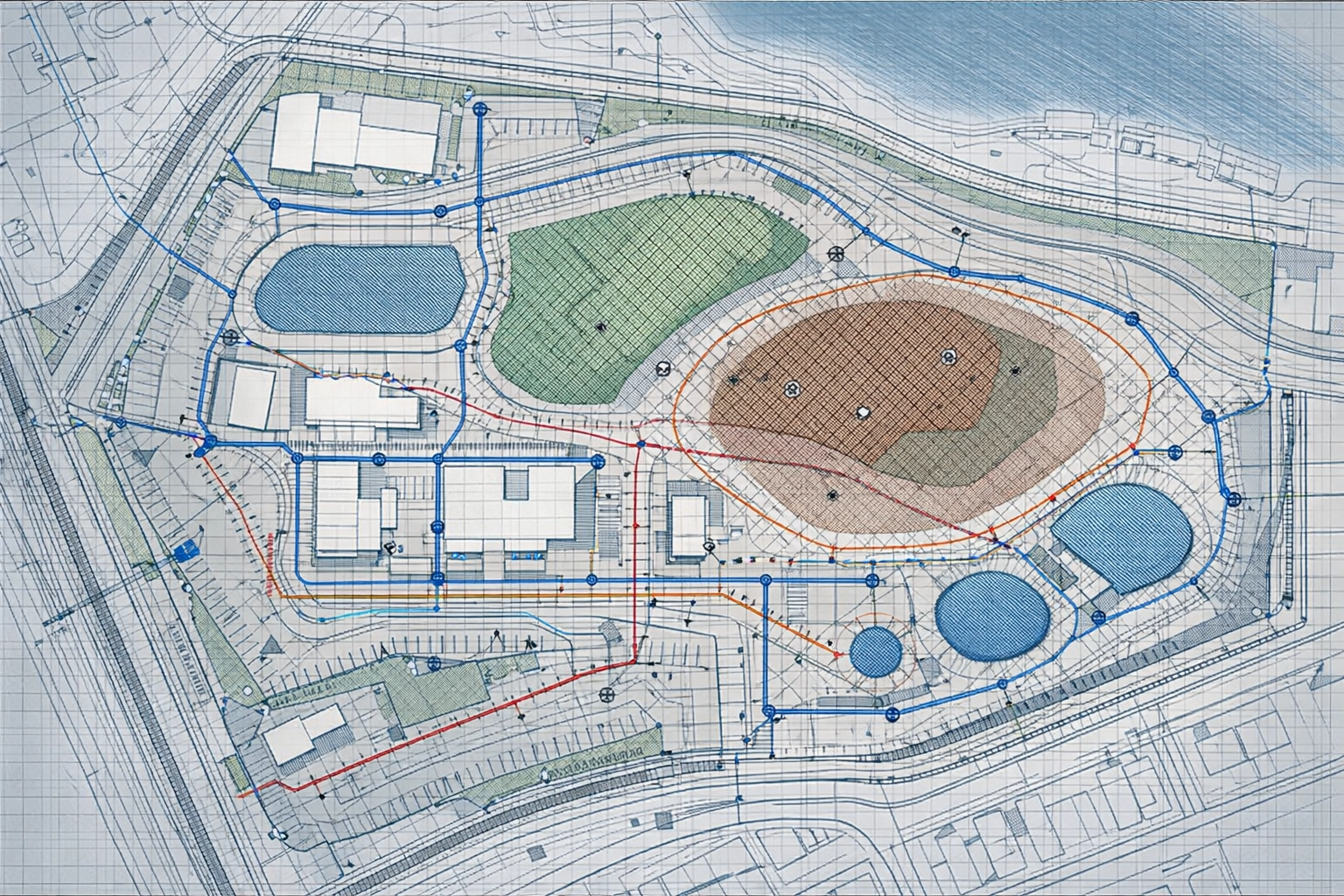
    Integrated NJ site plan showing coordinated civil grading, utility routing, drainage, and environmental remediation zones.

    Navigating the NJDEP Regulatory Maze

    New Jersey remains one of the toughest states for land use and redevelopment. Between the Flood Hazard Area Control Act rules, the Freshwater Wetlands Protection Act rules, and the state’s Stormwater Management rules, the margin for error stays small.

    A unified approach lets us run feasibility reviews that are actually useful. We don’t just study topography. We review soil conditions, groundwater constraints, historic fill, drainage impacts, and likely permitting triggers together.

    On a site in Newark, Jersey City, or anywhere in North Jersey, that matters. Utility trenching can affect vapor pathways. Stormwater features can conflict with capped areas. Grading changes can influence remedial design limits. If those issues get reviewed by separate teams at separate times, your project pays for it later.

    A simple rule we follow is this: "If the civil set and the environmental strategy don’t agree early, the field will force the conversation later." And field fixes are always more expensive.

    Environmental Justice: The New Frontier of NJ Approvals

    If you haven't been paying attention to New Jersey’s Environmental Justice (EJ) Law, you need to start. New Jersey was the first state in the nation to require the DEP to deny permits for certain facilities if they pose a disproportionate environmental or public health risk to "overburdened communities."

    This isn't just a "check the box" requirement. It requires a deep dive into environmental stressors: air quality, contaminated sites, and water pollution.

    When you have a unified team, the EJ impact statement isn't a separate, scary report that shows up at the end. It’s a design constraint that informs the site layout from the beginning. We help our clients choose materials, site layouts, and green infrastructure that actively mitigate these stressors, making the approval process much smoother when it reaches the state level.
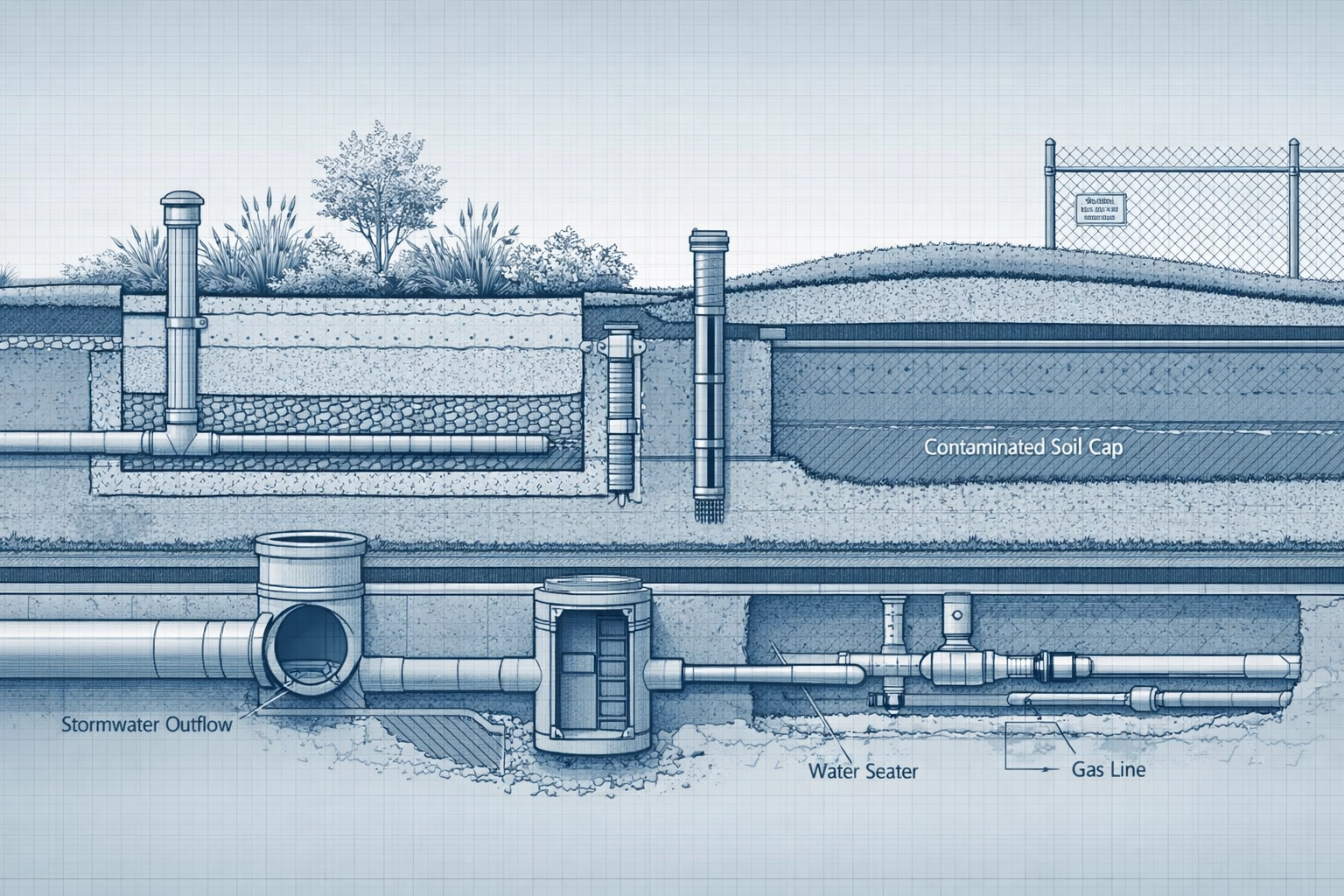
    Blueprint-style engineering section showing coordination between stormwater design, utility infrastructure, and remediation elements on an NJ redevelopment site.
    Technical blueprint visual showing how stormwater controls, utility layouts, and remediation details need to work together on a New Jersey redevelopment site.

    Stormwater and Remediation: A Delicate Dance

    New Jersey’s recent shift toward mandatory Green Infrastructure (GI) has changed the game for site design. You can’t just dig a big hole and call it a detention basin anymore. You need pervious pavement, rain gardens, and bioretention systems.

    Now, imagine trying to install a bioretention system on a site that has a soil cap as part of a remediation plan. If the water infiltrates through the GI and hits the contaminated soil, you’ve just created a massive groundwater problem.

    This is where the unified approach shines. Our engineers and environmental specialists work together to design "lined" green infrastructure or strategically locate basins in clean zones. This level of coordination is something the "big box" consulting firms often struggle with because their departments are too far apart. At Envicon, we’re all at the same table.
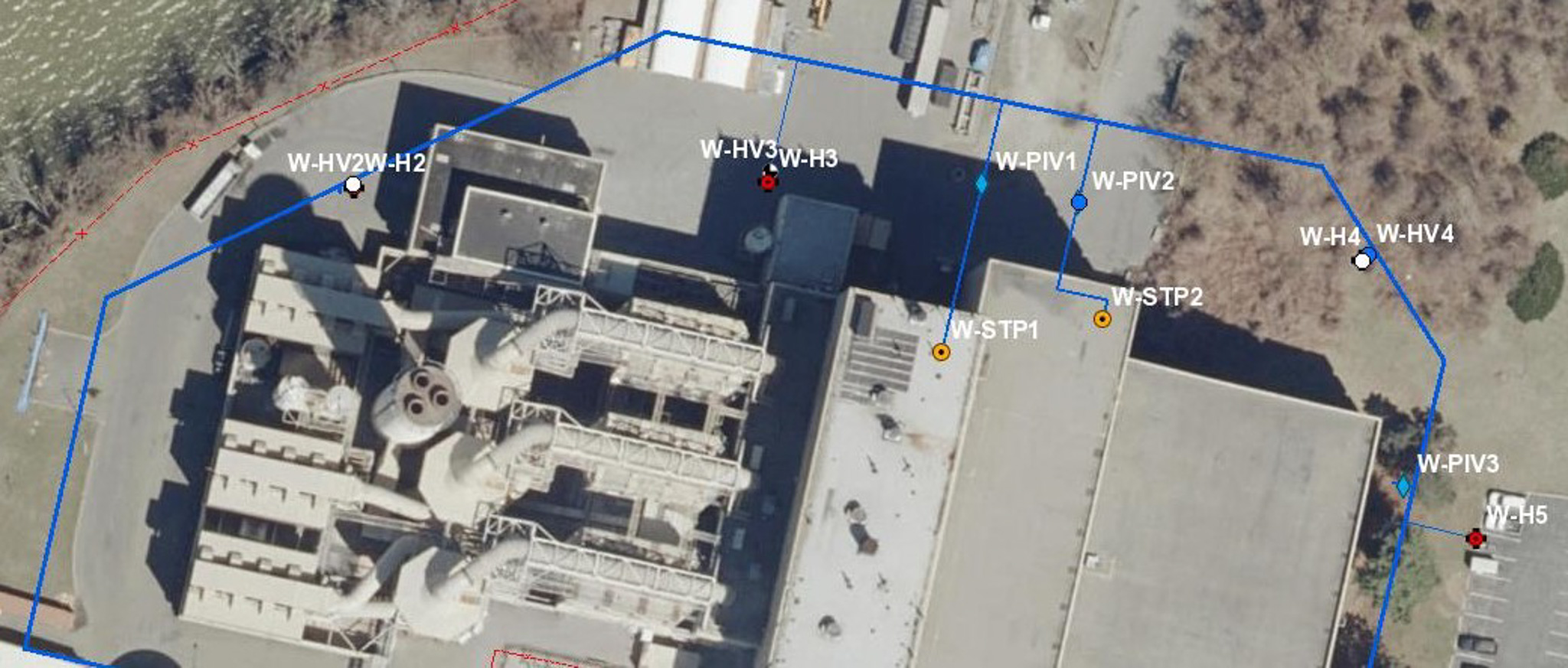
    Aerial View with Monitoring Locations

    Why Envicon is the Alternative to the "Big Box" Consultant

    We know who the big players are. You’ve probably hired them before. They have 5,000 employees and a massive office in a skyscraper. But here is the question: when the NJDEP sends a deficiency letter on a Friday afternoon, who is actually looking at it? Is it a junior staffer who is juggling ten other projects, or is it a partner who understands your business goals?

    Our clients come to us because they are tired of being a number. They want:

    1. Accountability: When the civil and environmental teams are the same team, there is no finger-pointing. We own the project from start to finish.
    2. Responsiveness: In the NJ development world, a week’s delay can cost tens of thousands of dollars. We move at the speed of your project, not the speed of a corporate bureaucracy.
    3. Local Authority: We don't just know the regulations; we know the people who enforce them. We’ve built trust with regulators across New Jersey, and that trust translates into smoother approvals for you.
    4. Integrated Technology: We use advanced GIS mapping and 3D modeling to visualize how site engineering and environmental remediation intersect before a single shovel hits the ground.

    Summary: The Unified Path Forward

    The "New Jersey Tax": the cost of doing business in a high-regulation environment: is real. But it’s a tax you can minimize with the right strategy. By choosing a unified approach to site civil and environmental engineering, you are:

    • Reducing Redesign Costs: Catching conflicts during the concept phase, not the construction phase.
    • Accelerating Timelines: Concurrent permitting and data sharing mean faster submissions to the NJDEP and local boards.
    • Mitigating Risk: Ensuring that your civil design doesn't accidentally compromise your environmental compliance (and vice versa).
    • Building Community Trust: Utilizing Environmental Justice and Green Infrastructure as tools for project advocacy rather than hurdles to clear.

    At the end of the day, development is about vision. You see what a site could be. Our job is to give you a practical path to get there without unnecessary redesign, avoidable delays, or consultant handoffs that slow everything down.

    Stop managing two teams that only compare notes after a problem shows up. Switch to a partner that sees the whole site from day one. That’s how you move faster, respond better to NJDEP comments, and protect your timeline.

    Key takeaway: if you want smoother approvals, fewer surprises, and better coordination, integrated site-civil and environmental engineering in NJ is not a luxury. It’s the smarter operating model.

    Ready to streamline your next NJ project? Contact Envicon today and let’s discuss how our unified approach can shave months off your approval timeline.

    Explore our Services or check out our Projects to see how we’re changing the landscape of NJ development.


    Contact Envicon Group

    Envicon Group logo

  • What Your Environmental Attorney Won’t Tell You About “Standard” Due Diligence

    What Your Environmental Attorney Won’t Tell You About “Standard” Due Diligence

    Look, your environmental attorney is probably great at what they do. They know CERCLA inside and out. They've negotiated brilliant indemnification clauses. They can cite case law in their sleep.

    But here's the thing: most environmental attorneys aren't environmental consultants. And that gap, between legal theory and boots-on-the-ground reality, is where deals go sideways.

    After two decades of watching developers navigate due diligence in NYC and New Jersey, I've seen the same blind spots crop up again and again. Not because attorneys are incompetent, but because "standard" due diligence has some not-so-standard pitfalls that don't always make it into the pre-closing memo.

    Let's talk about what you're not hearing in those conference calls.

    The 180-Day Deadline That Nobody Mentions Until It's Too Late

    Here's a fun fact that should be tattooed on every acquisition proforma: to qualify for the "innocent purchaser defense" under CERCLA, certain components of your Phase I Environmental Site Assessment must be conducted or updated within 180 days prior to acquisition.

    Miss that window? You've just forfeited one of your most valuable liability shields.

    Field team inspecting underground storage tanks

    The entire Phase I ESA report must be less than one year old at closing. But that specific 180-day rule applies to critical components like interviews and site reconnaissance. If your deal drags out (and when don't they?), you might need to refresh portions of your assessment, and that's not always a rubber-stamp exercise.

    I've watched developers scramble to update reports in the eleventh hour, only to discover new information that changes the entire risk profile. Or worse, they close anyway, thinking the old report is "close enough," and later discover they've lost their liability protection because they didn't follow the exact protocol.

    Your attorney might tell you: "We need a Phase I ESA."

    What they might not emphasize: The precise timing requirements that can void your legal defenses if you're even one day off.

    Phase I Due Diligence is Basically a Surface-Level Scan

    Let's be crystal clear about what a Phase I ESA actually does: it's a historical and above-surface investigation. That's it.

    No soil samples. No groundwater testing. No subsurface investigation.

    Think of it like getting a home inspection that only looks at the outside of the house. Sure, you'll spot obvious issues: cracked foundation, peeling paint, questionable landscaping. But what's happening in the walls, under the floors, or in the basement? Total mystery.

    Aerial site map overlay

    Here's where this gets legally dicey: if contamination exists beneath your property: or if contaminated groundwater is migrating from an off-site source: your Phase I might completely miss it. Yet you, as the property owner, can still face significant liability.

    I recently worked with a developer who bought a former industrial property in Hudson County. Clean Phase I. No red flags. Six months after closing, the NJDEP contacted them about groundwater contamination migrating onto the site from an upgradient neighbor. The plume had been there for years, slowly moving through the aquifer, invisible to any historical records review or visual site inspection.

    Now they're on the hook for monitoring, potential remediation, and regulatory reporting: despite doing "standard" due diligence.

    Your attorney might tell you: "The Phase I came back clean."

    What they might not explain: A clean Phase I doesn't mean clean soil or groundwater: it means no red flags in the historical records or visual inspection.

    The "All Appropriate Inquiries" Compliance Minefield

    Want to claim the Bona Fide Prospective Purchaser (BFPP) defense? Better nail every single requirement of "all appropriate inquiries" (AAI).

    Not most of them. Not the important ones. All of them.

    This means following the complete ASTM E1527-21 protocol, reviewing specific records, conducting interviews with the right people, and adhering to those timing rules we already discussed. Non-compliance with any single requirement can eliminate your liability protections entirely.

    Legal documents and environmental field equipment showing due diligence integration needs

    The problem? The standard checklist approach that many attorneys use doesn't always capture site-specific nuances. Did your consultant interview current and past site tenants? Did they review the exact regulatory databases required? Did they physically inspect every accessible structure?

    I've reviewed Phase I ESAs from national firms where the site visit consisted of a drive-by and some photos from the sidewalk. Technically, that's an inspection. Legally, it might not satisfy AAI requirements if contamination is later discovered in an area that wasn't actually accessed.

    The devil isn't just in the details: it's in the literal interpretation of compliance requirements when you're facing a CERCLA enforcement action.

    The Post-Closing Obligations That Never Make It Into the Purchase Agreement

    Here's the plot twist: even if your due diligence comes back spotless and you check every AAI box perfectly, you're not off the hook.

    The BFPP defense comes with ongoing obligations:

    • Exercise "reasonable care" regarding any hazardous substances you discover after closing
    • Cooperate fully with regulatory authorities
    • Comply with all land use restrictions and institutional controls
    • Not impede response actions or natural resource restoration

    Active construction site

    What does "reasonable care" actually mean? Great question. It's one of those delightfully vague legal standards that gets defined through enforcement actions and case law. But generally, it means you can't ignore obvious problems, you need to prevent exposure pathways, and you should probably have some level of ongoing environmental oversight.

    I rarely see this addressed in closing documents beyond boilerplate language. Developers think they're buying a property and moving on. Instead, they're buying a property with a perpetual obligation to remain environmentally vigilant.

    Your attorney might tell you: "The liability protection looks solid."

    What they might not highlight: The ongoing compliance obligations that continue long after the closing dinner.

    Why You Need Technical Eyes on Legal Documents

    Here's where the disconnect between legal and technical perspectives becomes painfully obvious: environmental indemnifications, representations, and warranties.

    Attorneys draft these provisions thinking about legal liability. But environmental consultants read them thinking about actual site conditions and realistic remediation scenarios.

    Example: I reviewed a purchase agreement where the seller agreed to indemnify the buyer for "all environmental conditions existing as of the closing date." Sounds great, right?

    Except the Phase I noted the presence of aging underground storage tanks (USTs) that hadn't been properly closed or removed. The report recommended a Phase II investigation before closing. The buyer's attorney focused on getting strong indemnification language and moved forward without the Phase II.

    Post-closing, those USTs leaked. Thousands of gallons of heating oil in the soil. Cleanup costs pushed $800K. The seller fought the indemnification claim, arguing the tanks were disclosed and the buyer assumed the risk by not investigating further.

    A technical reviewer would have flagged that gap between the legal indemnification and the practical reality immediately. The attorneys were focused on contract language. The real issue was subsurface liability that was predictable but unquantified.

    The Real Standard: Integration, Not Separation

    Look, I'm not knocking environmental attorneys. We work with brilliant legal minds who protect our clients every single day.

    But the standard model: where legal counsel handles contracts and liability, while environmental consultants handle site assessments, and never the two shall meet until something goes wrong: is fundamentally broken.

    Environmental consultants collaborating on NYC site assessment and due diligence

    The best due diligence doesn't segment technical and legal reviews into separate silos. It integrates them from day one:

    • Your environmental consultant should be reviewing draft purchase agreements to identify technical gaps in environmental provisions
    • Your attorney should be on the phone with your consultant discussing realistic risk scenarios, not just legal theories
    • Your team should be stress-testing liability protections against actual site conditions, not generic templates

    At Envicon, we've built our entire practice around this integrated approach. We don't just deliver Phase I reports and disappear. We participate in deal negotiations. We help craft environmental provisions that actually align with subsurface conditions. We flag timing issues before they become compliance problems.

    Because here's the reality: in NYC and New Jersey, where virtually every property has some industrial history, where groundwater is shallow and interconnected, where regulators are sophisticated and aggressive: "standard" due diligence isn't good enough anymore.

    What You Should Actually Be Asking

    Next time you're looking at an acquisition, ask these questions before you execute the PSA:

    • What's the exact timeline for Phase I validity, and does it align with our projected closing date?
    • Are there site conditions that warrant Phase II investigation even if the Phase I comes back clean?
    • What ongoing environmental obligations come with BFPP status, and how do we budget for compliance?
    • Who's reviewing environmental contract provisions with technical expertise, not just legal expertise?
    • What's our plan if we discover contamination post-closing?

    These aren't theoretical concerns. They're the gaps between "standard" due diligence and actual environmental protection.

    The Bottom Line

    Standard due diligence checks boxes. Strategic due diligence manages risk.

    Your environmental attorney is an essential part of your team. But they're not environmental consultants, and they're not site-specific risk assessors. The magic happens when legal and technical expertise work together from the beginning: not when they're playing catch-up after closing.

    If you're acquiring property in the NYC metro area and your due diligence process feels like everyone's working in separate rooms, we should probably talk. Because the gaps in "standard" practice are where liability lives.

    And in 2026, with regulators tightening enforcement and PFAS contamination rewriting the playbook, those gaps just got a lot more expensive to ignore.


    Envicon Strategic Solutions logo

    Envicon Strategic Solutions
    Site-Civil • Geotechnical • Environmental Consulting (NY/NJ/NYC)
    Talk to our team •
    View services

  • NJ Brownfield Tax Credits: Unlocking Capital in Contaminated Real Estate

    In New Jersey, land is limited, expensive, and often burdened by past industrial use. If you're underwriting a deal in Newark, Jersey City, Paterson, Elizabeth, or along the state’s older industrial corridors, you’re not just evaluating dirt. You’re evaluating environmental risk, timing risk, and access to capital.

    That’s exactly why NJ Brownfield Tax Credits for real estate development matter so much right now. For the right project, these credits can help bridge a financing gap, improve deal economics, and unlock capital that would otherwise stay tied up in remediation. Under the state’s brownfield incentive structure, eligible projects may recover a meaningful share of cleanup costs, which can directly change how a site pencils out. You can review the program framework through the New Jersey Economic Development Authority and redevelopment requirements through the NJDEP site remediation program.

    At Envicon, we help clients look at contaminated real estate the way lenders, investors, and public agencies do: through risk, documentation, and timing. When the environmental strategy is aligned with the capital strategy, a brownfield stops being a drag on value and starts becoming a path to redevelopment momentum.

    The New Math: Up to $12 Million in Recoverable Costs

    Let’s get straight to the numbers, because that’s what moves the needle for your investors. In September 2024, New Jersey upped the ante. The state recognized that if we want to solve the housing crisis and drive economic growth, we have to make it profitable to fix "broken" land.

    The annual cap for the Brownfield Tax Credit program is now a steady $50 million, but the individual project caps have seen a massive jump.

    • In Government-Restricted Municipalities (GRMs): You can now recover up to 80% of your remediation costs, with a cap of $12 million per project. This is a significant increase from the previous $8 million limit.
    • Solar on Landfills: If you are looking at a "Brightfield" project: putting solar arrays on closed sanitary landfills: the state will cover 100% of remediation costs, also capped at $12 million.
    • Other Areas: Even outside the high-priority zones, the cap has moved from $4 million to $8 million.

    For a developer, this isn't just a "nice to have" incentive. This is the difference between a project that pencils out and one that stays a vacant lot for another twenty years.

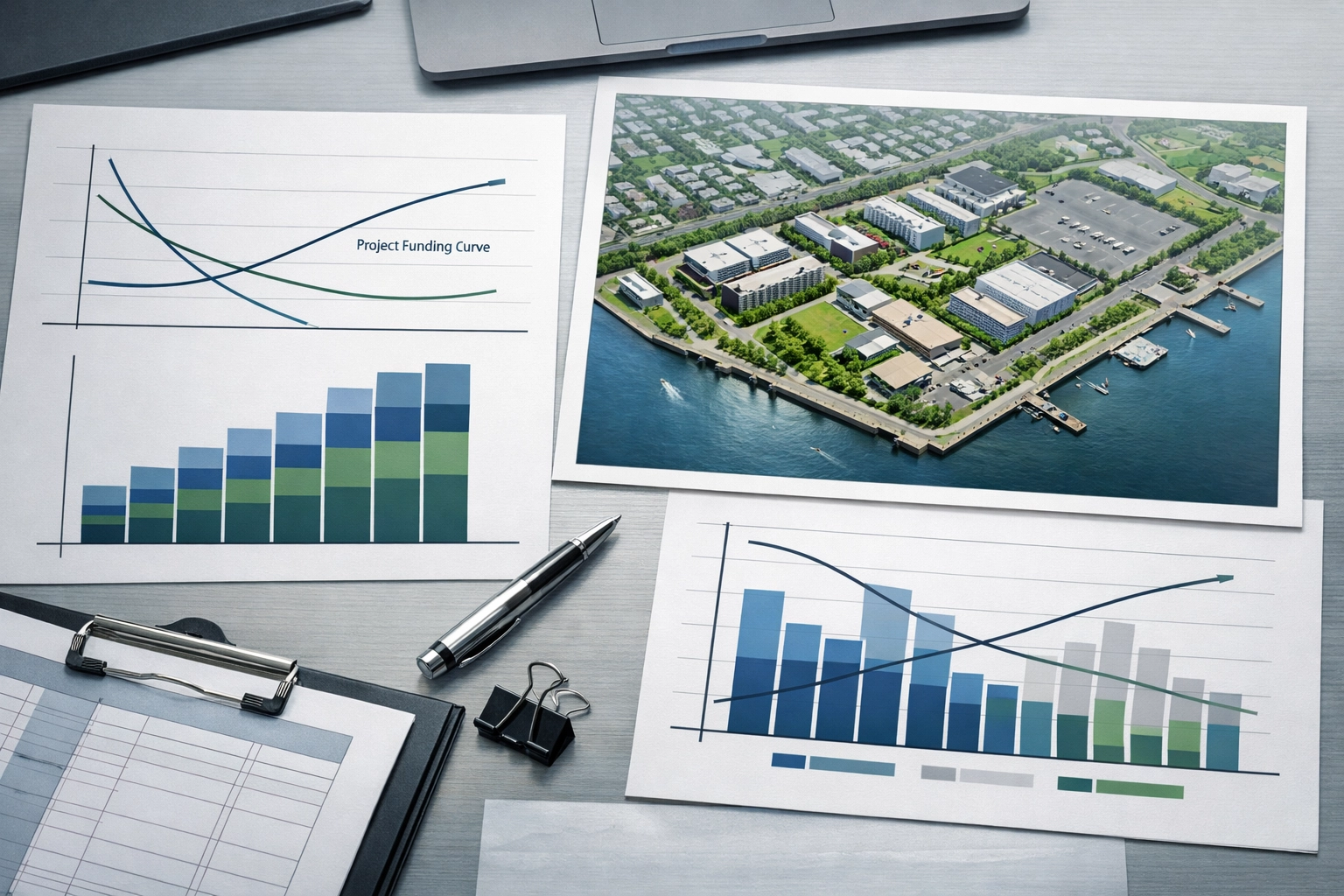
    Financial analysis and redevelopment capital planning for a New Jersey brownfield project

    Why Transferable Credits Matter to Real Estate Capital

    One of the biggest questions we hear is simple: What if I can’t use the tax credit myself?

    That’s where the structure matters. In many cases, NJ Brownfield tax credits are transferable, which means the credit may be sold instead of used directly against your own tax liability. For real estate developers, investors, and project sponsors, that can create a real source of liquidity rather than a benefit that sits idle on paper. The New Jersey Economic Development Authority provides current program details and eligibility guidance at njeda.gov.

    This matters because brownfield tax credits can support real estate capital stacks in a very practical way:

    • They can reduce the amount of equity your team needs to keep tied up in remediation.
    • They can improve lender confidence by showing a defined path to cost recovery.
    • They can create a future cash event if the credit is transferred after issuance.
    • They can help move funds back into hard costs, vertical construction, or carry costs.

    As we often tell clients, “a transferable credit isn’t just a tax benefit; it’s a capital planning tool.” If you structure the environmental work properly from the beginning, the cleanup strategy can support the financing strategy instead of fighting it.

    The Compliance Side That Protects Your Capital

    You don’t access brownfield incentive value just by identifying contamination. You access it by documenting the work correctly and closing out the remediation path under New Jersey rules. That’s where the NJDEP site remediation program and the LSRP process come into play. If you need the regulatory framework, start with the NJDEP Site Remediation Program.

    For owners and developers, this is not just an environmental box to check. It directly affects capital planning. If the remedial investigation, cost backup, and closeout documentation are weak, the tax credit side of the project gets weaker too.

    We look at this through a business lens:

    • Your remediation scope has to be defensible.
    • Your costs have to be documented in a way that stands up to review.
    • Your project schedule has to support both regulatory milestones and financing milestones.
    • Your environmental consultant, LSRP, legal team, and capital partners need to work from the same playbook.

    A lot of firms stop at technical compliance. We don’t. We build the environmental record in a way that helps support the larger redevelopment story. That’s a better approach for lenders, better for investors, and better for keeping your project moving.

    Institutional capital planning and transferable tax credit strategy for brownfield redevelopment

    What Developers Need to Underwrite Early

    If your goal is to use NJ Brownfield Tax Credits to support real estate capital, you need to underwrite the program early, not after design is underway. That’s where many deals lose time.

    The main issues usually come down to a few practical items:

    1. Financing gap support: Some projects need to show that the deal is not feasible without the incentive support. That means your numbers have to be organized early.
    2. Eligible cost tracking: Cleanup costs, investigation costs, and related documentation need to be tracked cleanly from the start.
    3. Schedule alignment: Environmental milestones, redevelopment approvals, and capital deadlines need to line up.
    4. Local support and project positioning: Municipal backing still matters. So does presenting the project as a real redevelopment win, not just a cleanup file.

    As we tell clients, “the best time to plan for a brownfield tax credit is before the first scope gets approved.” That’s how you avoid rework, protect your budget, and keep the project credible with capital partners.

    How Envicon Flips the Script on Traditional Consulting

    Most big-box environmental firms treat remediation as a slow, linear process: Sample. Report. Wait. Repeat. They get paid by the hour, so they aren't exactly incentivized to move at the speed of a real estate deal.

    Envicon is different. We operate at the intersection of Environmental Law and aggressive project management. Here is why our clients are ditching the "Big Consultants" for the Envicon approach:

    • We Understand the "Gap": We don't just give you a technical report. We help your team articulate the "financing gap" required for the tax credit application. We speak the language of IRR and NPV just as well as we speak the language of parts-per-billion.
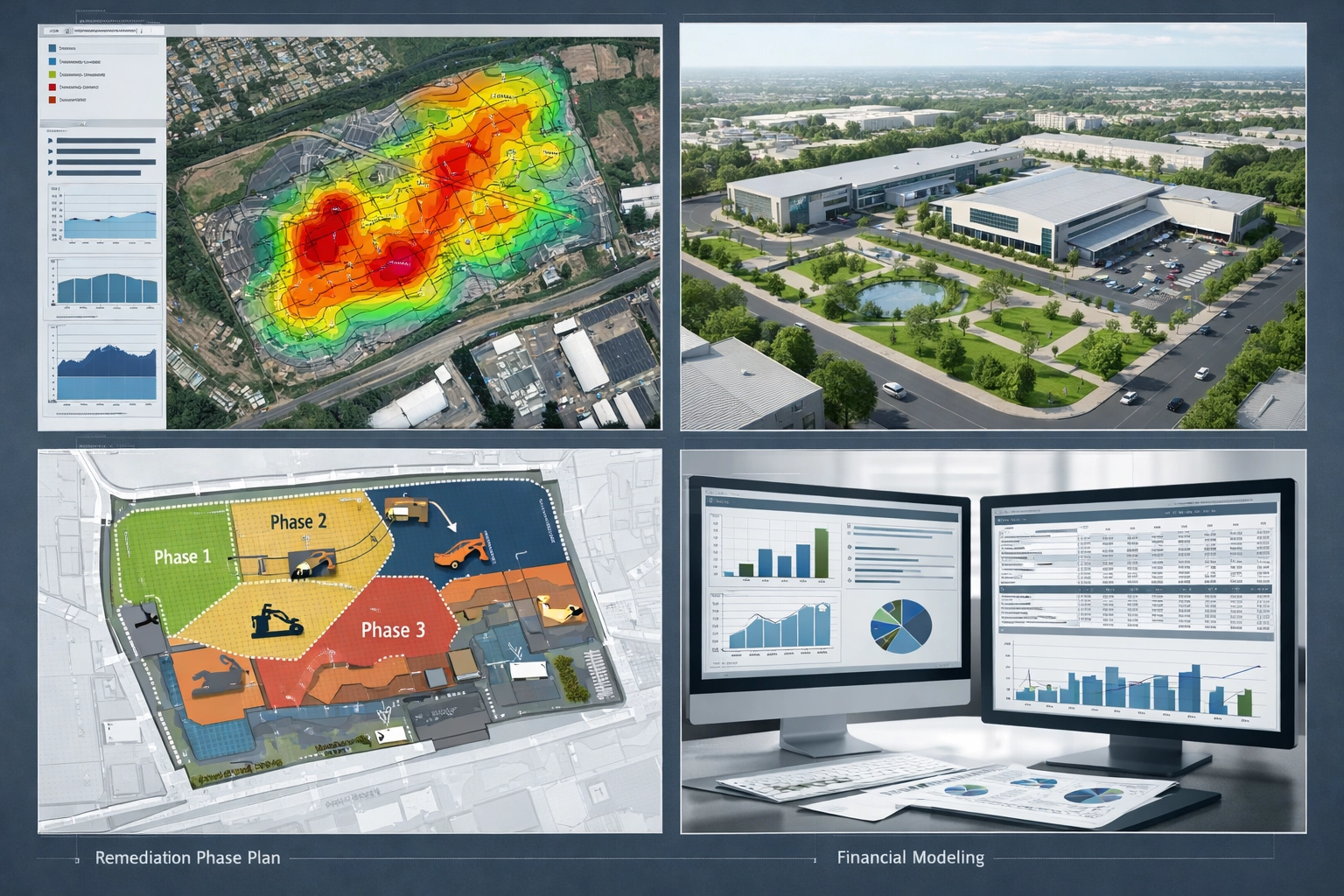
    • Precision Remediation: We use advanced GIS mapping and site assessment to pinpoint contamination. Why remediate five acres when the data shows you only need to treat two? We save you money on the front end, which makes your tax credit application even more attractive.
    • LSRP Accountability: Our LSRPs are focused on the "Response Action Outcome" (RAO) from day one. We don't get bogged down in "analysis paralysis." We move toward closure so you can move toward your tax credit issuance.
    • Speed to Market: In New Jersey real estate, time is more than money: it's everything. Our team is structured to be responsive and adaptable. When a regulatory change happens (like the September 2024 update), we don't hold a committee meeting; we update our clients' strategies immediately.

    Advanced GIS mapping, remediation planning, and redevelopment financial modeling for a New Jersey brownfield project
    Integrated redevelopment planning image showing how environmental data, remediation strategy, and capital planning work together on brownfield sites.


    Summary: Your Competitive Advantage

    The New Jersey Brownfield Tax Credit program is a powerful tool, but it is not a "set it and forget it" solution. It requires a visionary approach to redevelopment: one that sees the hidden capital in contaminated soil.

    Key Takeaways for Developers:

    • Max Credits: Up to $12M or 80-100% of costs in key zones.
    • Liquidity: Credits are transferable and can be sold for cash.
    • Compliance: Strict adherence to NJDEP LSRP rules and green standards is non-negotiable.
    • Urgency: The $50M annual pool is competitive; early and accurate applications win.

    Don't let a "dirty" site scare you off a great deal. With the right strategy, those remediation costs aren't expenses: they are an investment in a future tax credit.

    If you are looking at a site in Hudson County, Newark, or any of New Jersey’s industrial corridors, let’s talk. We can help you navigate the due diligence and build a roadmap to unlocking that capital.

    Ready to turn your liability into an asset? Contact Envicon today and let’s look at the numbers together. Our team of experts is ready to help you navigate the complexities of NJ Brownfield Tax Credits and NJDEP compliance with precision and speed.


    Footer (Contact Envicon Group)

    Envicon Group
    Site-civil • Geotechnical • Environmental (NY/NJ)
    Web: https://wp.envicongroup.com/
    Contact: https://wp.envicongroup.com/contact

    Envicon Group logo

  • Tech-Enabled Field Monitoring: Keeping Your NYC Project Compliant While You Sleep

    Tech-Enabled Field Monitoring: Keeping Your NYC Project Compliant While You Sleep

    If you’re developing in New York City, you already know that the city never sleeps. Unfortunately, neither do the regulations. Between the NYC Office of Environmental Remediation (OER) requirements and NYSDEC oversight, the compliance burden on a high-stakes construction site is enough to keep any developer or construction manager up at night.

    The old way of doing things: relying on a junior technician with a hand-held meter who might miss a spike in dust or a VOC vapor excursion: is a recipe for a Stop Work Order. In a city where every hour of delay costs thousands in carry costs and labor, you can’t afford to be reactive.

    At Envicon Group, we believe that the best way to manage environmental risk isn't just through better reports, but through better technology. Tech-enabled field monitoring is changing the game, providing a 24/7 digital "eye" on your site that ensures you stay compliant while you focus on the build.

    The High Stakes of Construction Oversight in NYC

    In the dense urban fabric of the five boroughs, your project is always under a microscope. Whether you are navigating a Brownfield Cleanup Program or managing a site under an "E" Designation, the Community Air Monitoring Plan (CAMP) is your bible.

    The standard CAMP requires continuous monitoring for volatile organic compounds (VOCs) and particulate matter (PM-10) at the upwind and downwind boundaries of the exclusion zone. If those levels cross a certain threshold, work must stop. If you don't have the data to prove you took action, you're looking at heavy fines and a tarnished reputation with the regulators.

    We’ve seen it happen too often: a large national firm sends out a trainee who isn't familiar with the nuances of a PID (Photoionization Detector) or the specific telemetry of the site. A spike occurs, the alarm doesn't trigger correctly, and by the time anyone notices, the neighbors have already called 311.

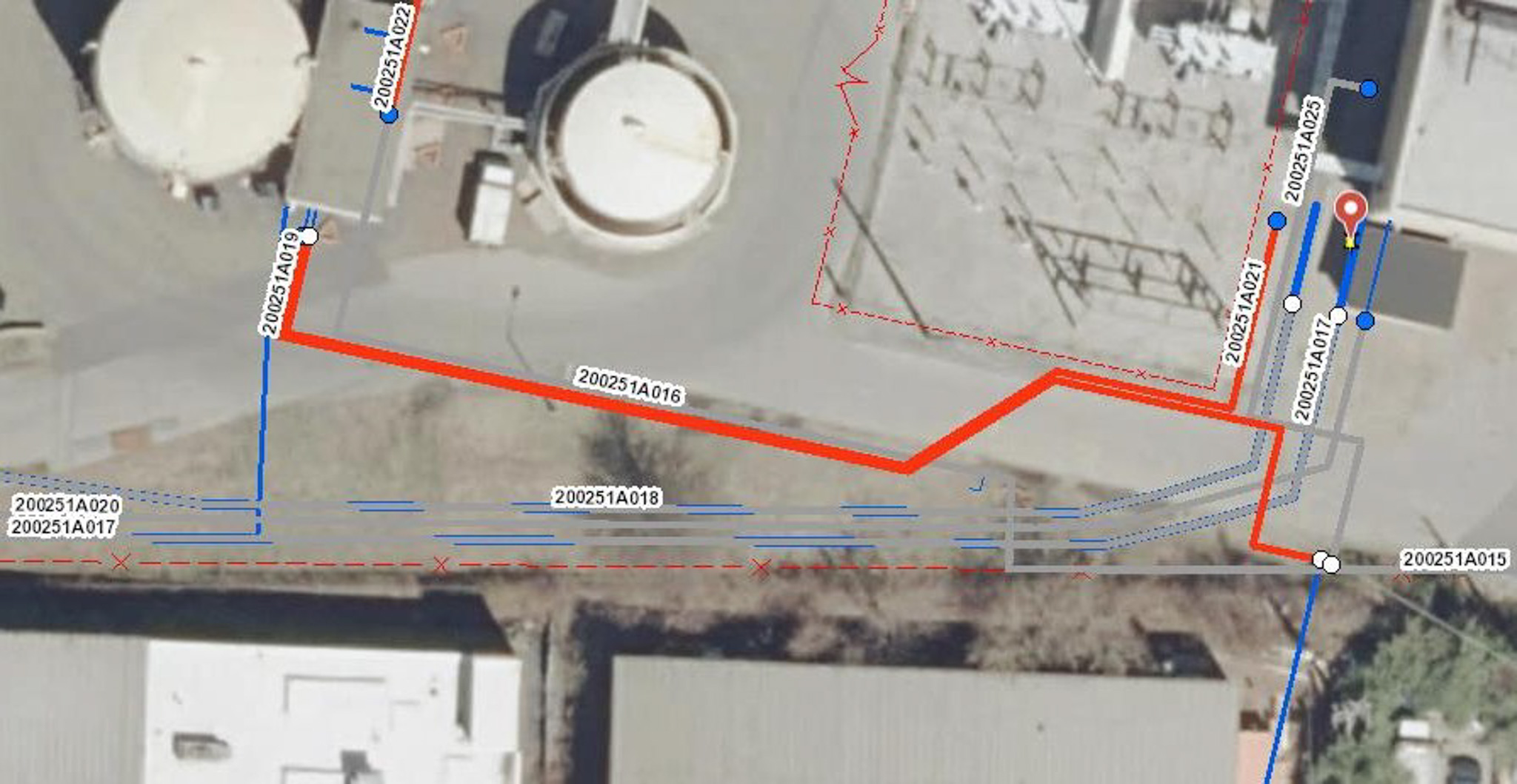
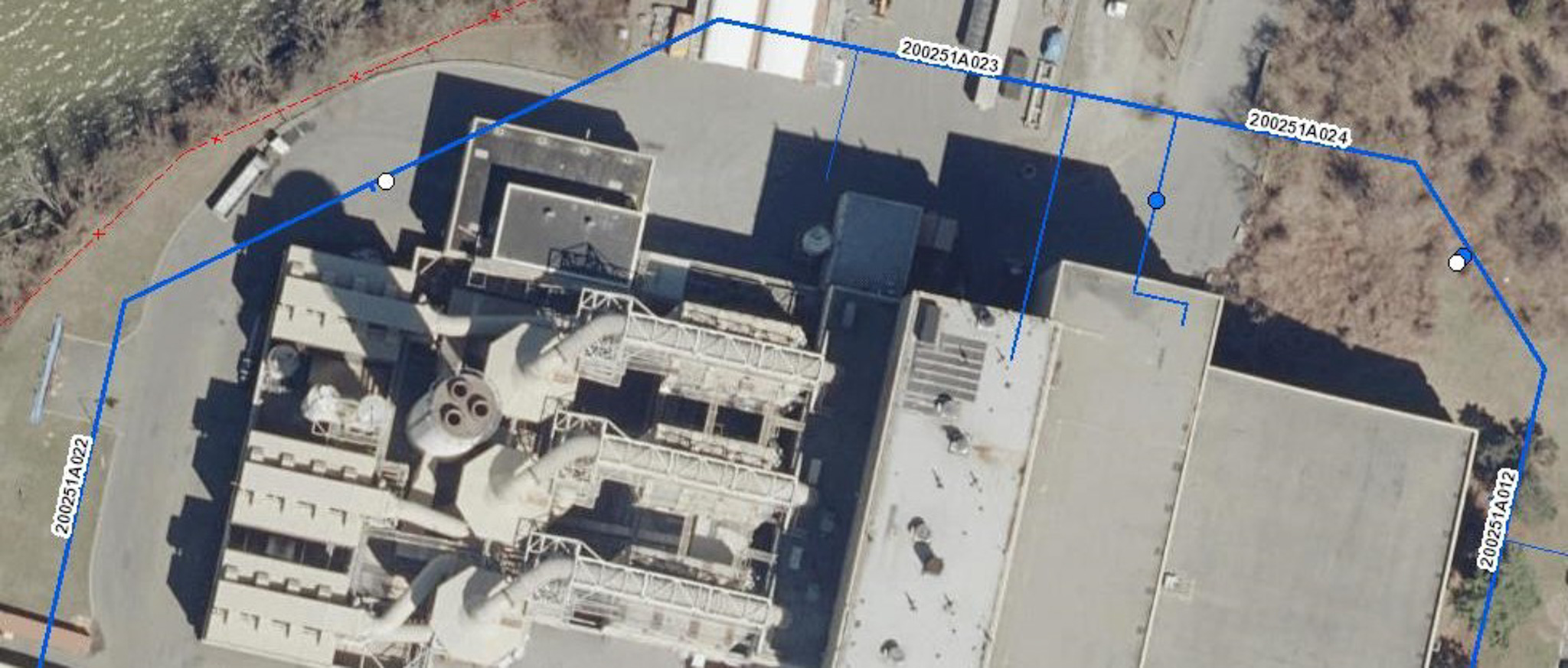
    Aerial site map overlay showing subsurface utility and pipeline routes, crucial for mapping contamination pathways and monitoring points.

    Real-Time Data: The New Standard for Environmental Monitoring

    The shift toward tech-enabled monitoring is about moving from "snapshots" to "streams." Instead of a technician taking a reading every 15 minutes, we deploy integrated sensor arrays that collect data every second.

    1. Automated Perimeter Monitoring

    Modern solutions, like those provided by Specto Technology or BettAir, allow us to set up rugged, weather-proof stations around the site. these stations track:

    • Particulate Matter (PM10/PM2.5): Essential for dust control during excavation.
    • VOCs and Hazardous Gases: Vital for sites with legacy petroleum or chemical contamination.
    • Meteorological Data: Wind speed and direction are critical for determining whether a spike is coming from your site or a neighbor’s.

    When these sensors hit a pre-set "action level," the system doesn't just beep. It sends an instant SMS or email alert to the site superintendent and our project managers. This allows for immediate mitigation: wetting down the soil or adjusting the excavation pace: before it becomes a regulatory violation.

    2. Remote Noise and Vibration Oversight

    NYC is loud, but the NYC Noise Code is incredibly specific. Intelligent monitoring devices can now differentiate between the ambient hum of the BQE and the specific impact of your pile driver. Research suggests that high-quality remote audio samples and real-time data can reduce unnecessary inspections by up to 80%. If a neighbor complains, we have the timestamped data to show exactly what the decibel level was at that moment.

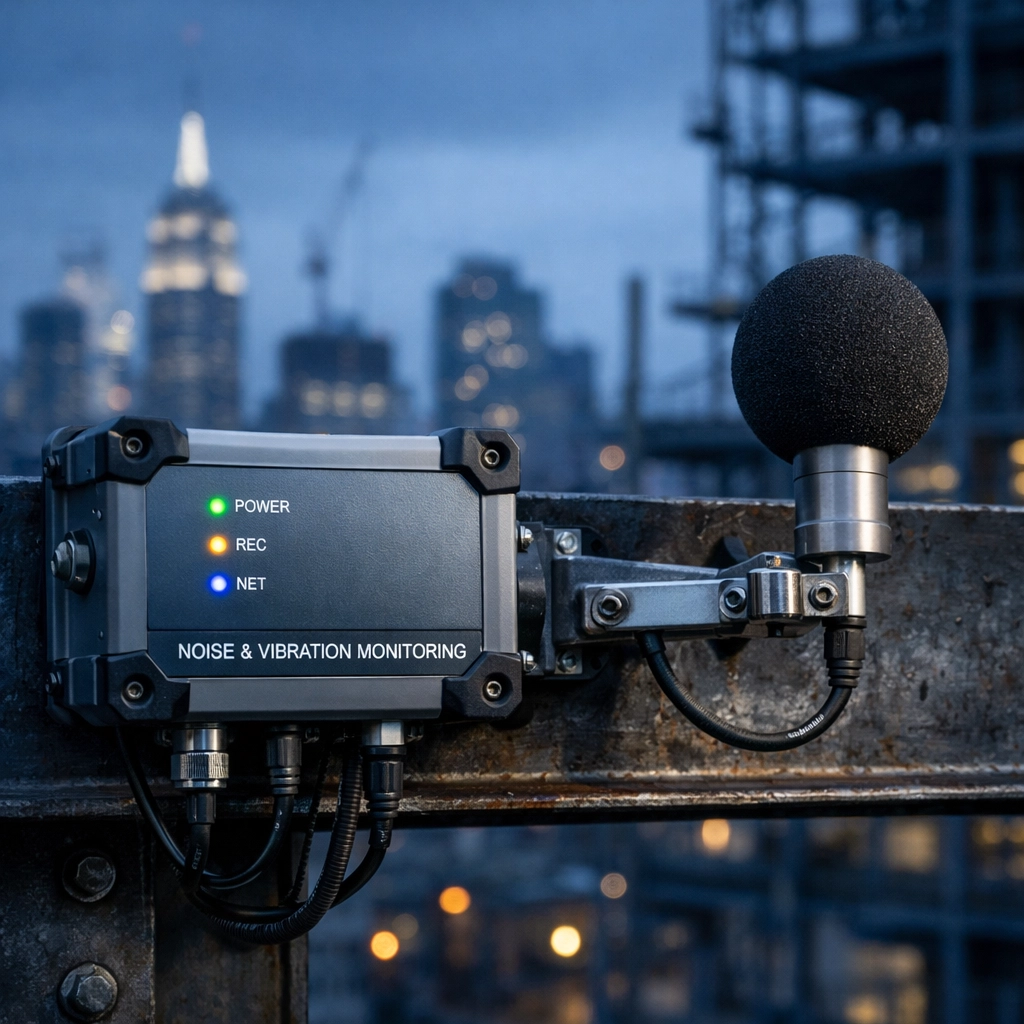
    Real-time noise and vibration monitoring station for construction oversight NYC and environmental compliance.

    Why "Big Box" Consulting Fails the Tech Test

    You’ve probably seen the pitch from the massive national firms. They have 10,000 employees and a glossy brochure, but when it comes to construction oversight in NYC, they often fall short.

    Why? Because they apply a cookie-cutter playbook to a city that demands local fluency. At a national firm, the partner you met during the RFP process is nowhere to be found once the sensors are deployed. You’re left with a junior staffer who is more focused on their billable hours than your project’s timeline.

    At Envicon, we operate differently. We are family-owned and PE-led. When we deploy a tech-enabled monitoring system, our senior leadership is looking at the dashboard alongside you. We don't just hand you a raw data dump at the end of the month; we provide actionable insights. If the data shows a recurring issue with dust at 10:00 AM every Tuesday, we don't just report it: we sit down with your site-civil team and solve it.

    The Digital Paper Trail: Peace of Mind for Developers

    One of the biggest headaches for any developer is the final closure report. Whether it’s a Remedial Closure Report (RCR) for the OER or a Final Engineering Report (FER) for the DEC, the regulators want to see every scrap of data.

    Tech-enabled monitoring automates this documentation. Every alert, every mitigation action, and every hour of "clean" air is logged in a cloud-based dashboard.

    • Instant Transparency: Access your site data from your phone anywhere in the world.
    • Automated Reporting: Reduce the time spent on manual data entry, which cuts down on human error and reporting delays.
    • Regulatory Credibility: When you submit a report backed by continuous, tamper-proof digital logs, the regulators take notice. It shows you are proactive, not just compliant.

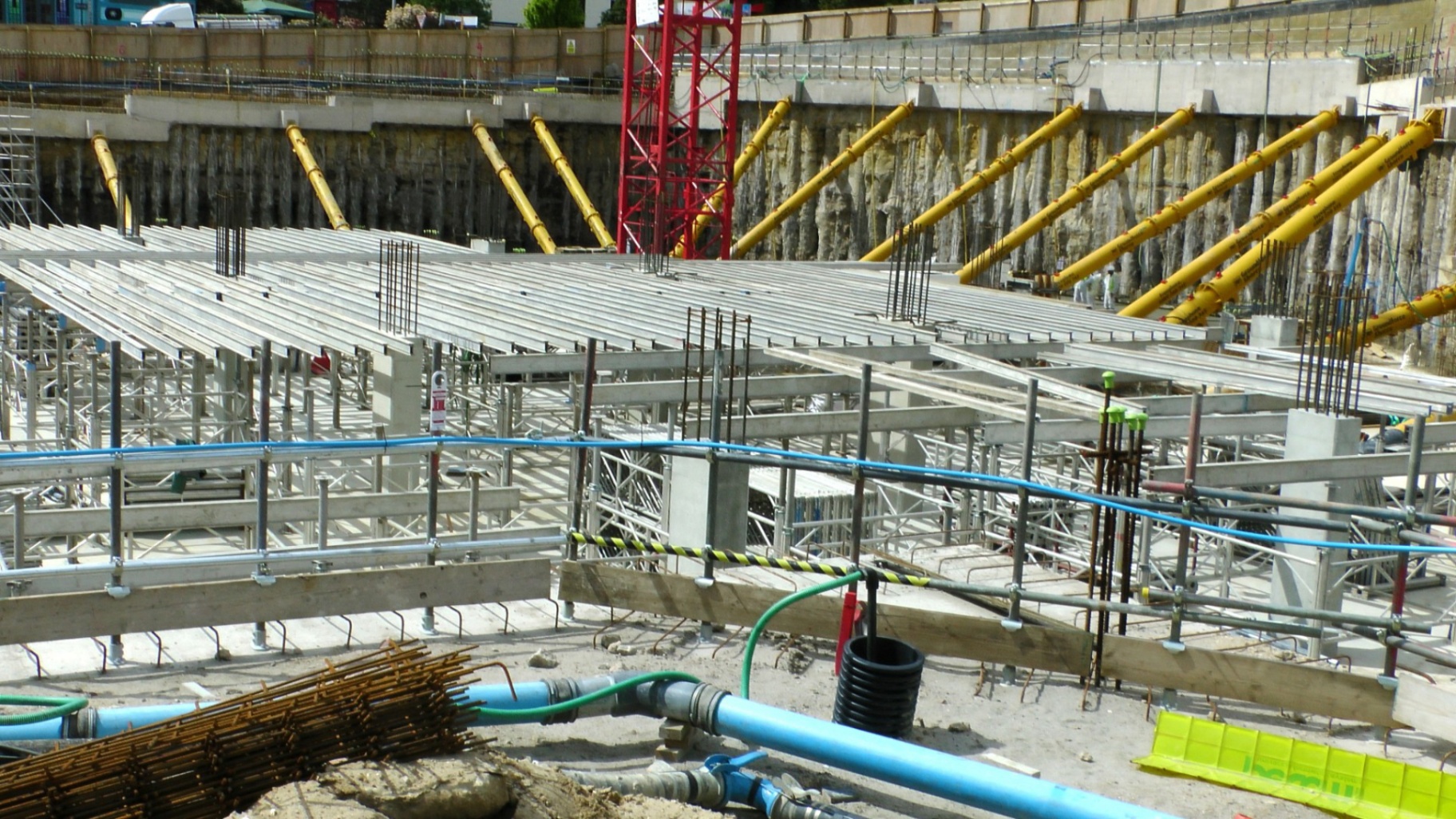
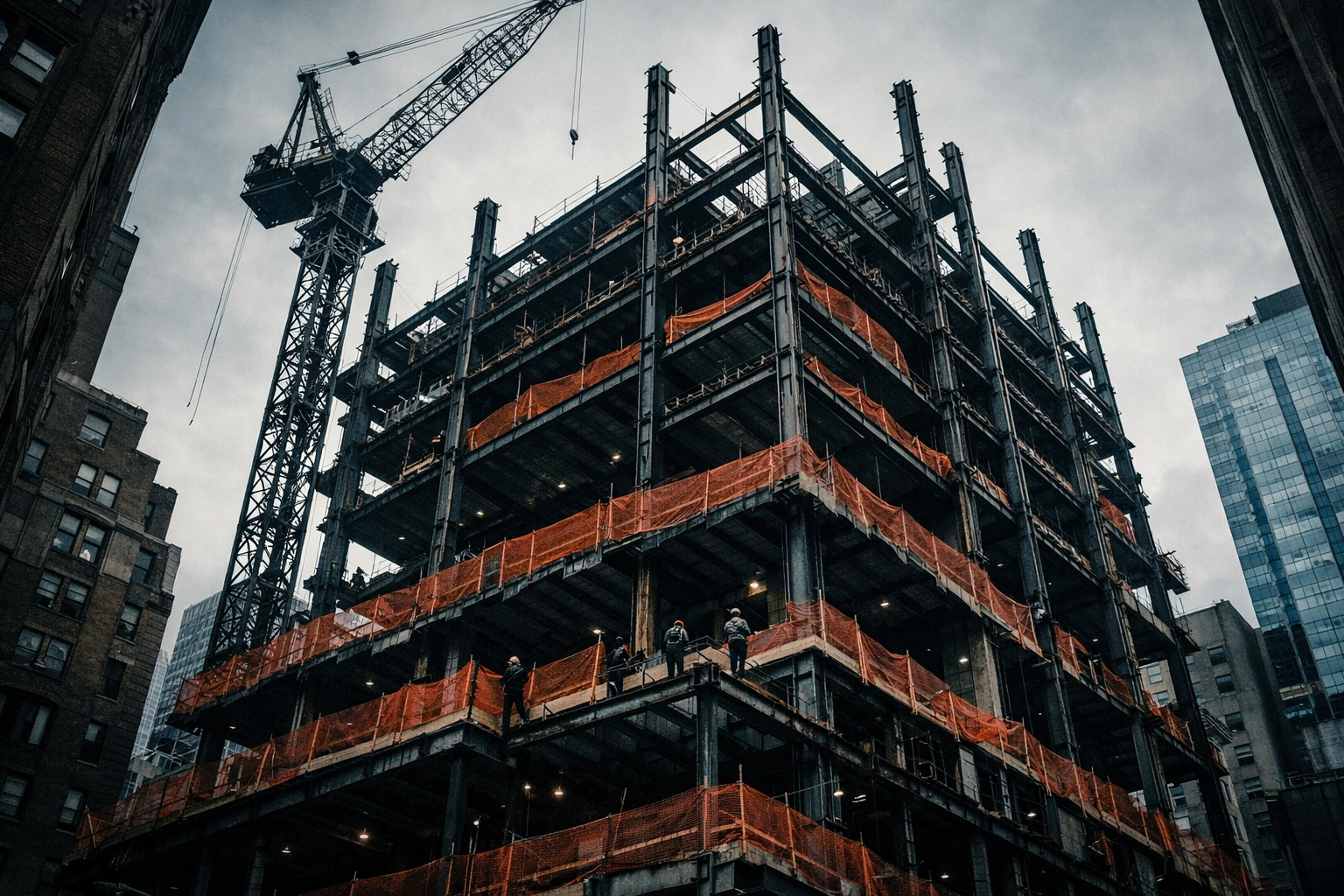
    Active construction site at dusk illustrating complex site development requiring coordinated remediation and regulatory oversight.

    Integrating AI and Computer Vision

    We are moving toward a future where AI-driven construction management, like the platforms offered by viAct, uses computer vision to track site safety and environmental hazards in real-time. By integrating these AI layers with our traditional environmental monitoring, we can spot potential issues before they even register on a sensor.

    For example, if an AI camera detects a truck leaving the site without being properly hosed down in the tracking pad, an alert can be sent immediately. This isn't just about "watching" the site; it's about using technology to enforce the high standards that keep a project moving toward completion.

    The Envicon Approach: Precision, Speed, and Trust

    We know that a project sitting in a regulatory queue is a project losing money. Our mission is to remove the obstacles between you and a buildable site. We don't just deliver services; we help transform underused and contaminated properties into thriving assets.

    We’ve spent 20 years building relationships with the reviewers at the OER, NYSDEC, and NYC Parks. They know that when Envicon Group is providing the oversight, the data is accurate and the management is rigorous. That trust is something a national firm simply cannot replicate with a satellite office.

    "Collaboration is not a buzzword: it’s how we work. We sit at the table with architects, engineers, and attorneys to ensure everyone is aligned on the path to closure." : Jason Pancoast, CEO.

    A permit approval stamp on an official document, representing the crucial regulatory approval process in site engineering.

    Takeaways for Your Next Project

    If you are planning a development in NYC or NJ, consider the following when setting up your field monitoring:

    • Demand Real-Time Alerts: Do not settle for manual readings that only happen once an hour.
    • Ensure Local Fluency: Make sure your consultant knows the specific reporting formats required by NYC OER.
    • Verify Equipment Calibration: Tech is only as good as the maintenance behind it. We ensure our sensors are calibrated and field-ready every day.
    • Focus on the Path to Closure: Monitoring is a means to an end. Ensure your data is being compiled into a format that will actually get your remedial closure report approved.

    Let’s Clear the Path Together

    Your project is too important to leave to chance. Tech-enabled field monitoring provides the technical confidence you need to sleep soundly, knowing that your site is compliant and your investment is protected.

    At Envicon Group, we don’t just write reports. We solve problems. Whether you’re dealing with complex soil management, groundwater issues, or the intricacies of NYC air monitoring, we have the field-first expertise to get you to the finish line.

    Ready to see how real-time monitoring can streamline your next project? Contact us today to speak with a specialist who understands the NYC dirt as well as the NYC regulations.

    Envicon Group Logo

  • Why Rising PFAS Remediation Costs in NJ Will Change the Way You De-Risk Acquisitions

    Why Rising PFAS Remediation Costs in NJ Will Change the Way You De-Risk Acquisitions

    The landscape of New Jersey real estate and industrial acquisition changed forever between 2024 and 2025. If you are sitting at a closing table in 2026, the "standard" environmental due diligence you relied on three years ago is now dangerously obsolete.

    We are no longer talking about "potential" liabilities or "emerging" contaminants. Per- and polyfluoroalkyl substances (PFAS) have moved from the laboratory to the balance sheet. With landmark settlements like the $450 million 3M agreement and the staggering $2 billion DuPont settlement finalized, the state of New Jersey has signaled that the cost of remediation is no longer a localized issue: it is a systemic financial risk for every developer and investor in the Garden State.

    At Envicon Strategic Solutions, we’ve watched the "big box" consultants struggle to adapt. They are still running the same Phase I playbooks from 2015 while the regulatory ground shifts beneath them. If you want to protect your internal rate of return (IRR) in this new era, you need to understand why PFAS remediation costs in NJ are fundamentally changing the way we de-risk acquisitions.

    The Billion-Dollar Baseline: Why the Math Has Changed

    To understand the current risk, you have to look at the scale of the recent settlements. When the New Jersey Department of Environmental Protection (NJDEP) secured $393 million from Solvay for a single site in West Deptford, it wasn't just about one factory. It established a precedent for Natural Resource Damages (NRD) that extends far beyond the fence line.

    These settlements reveal three critical factors that should keep every acquisition officer awake at night:

    1. Extended Liability Horizons: Modern settlements now include payment and monitoring obligations spanning 25 to 50 years. When you acquire a site today, you aren't just buying the soil; you are potentially inheriting a half-century of financial exposure.
    2. Uncapped Monitoring Costs: Unlike traditional hydrocarbons, PFAS doesn't "break down" naturally in a timeframe that matters for a 10-year hold. Experts now predict that long-term monitoring and health impacts research could drive actual remediation expenses 20–30% higher than initial estimates.
    3. Complex Liability Allocation: Contamination plumes in industrial corridors like the Arthur Kill or the Passaic River often involve multiple "responsible parties." If your target site is part of a regional plume, the legal costs of sorting out "who owes what" can eclipse the actual cleanup costs.

    Aerial view of an industrial facility with detailed site boundary delineation and labeled parcels for site assessment.

    Why the Standard Phase II Environmental Site Assessment in NJ is No Longer Enough

    The traditional Phase II environmental site assessment in NJ was designed to find tanks and spills. It wasn't designed to catch "forever chemicals" that migrate in parts per trillion.

    If your consultant is simply checking the boxes of ASTM E1903-19 without a specific, high-resolution PFAS screen, you are flying blind. We are seeing cases where developers buy "clean" sites only to find out six months into construction that the groundwater contains PFOA levels that trigger mandatory, high-cost treatment systems.

    For developers working in high-density areas like Jersey City, Hoboken, or the NJ Gold Coast, the stakes are even higher. The intersection of environmental due diligence for developers in NJ and the actual construction phase is where the most money is lost. If you haven't accounted for specialized water disposal or soil management during the excavation phase, your contingency fund will evaporate before you hit the foundation level.

    Integrating Geotechnical and Environmental Data

    One of the biggest mistakes we see is the "siloing" of data. The geotechnical team does their borings, and the environmental team does their sampling. In the age of PFAS, this is a recipe for disaster.

    Understanding geotechnical investigation costs in NJ requires a holistic view. If your geotechnical borings encounter a high water table contaminated with PFAS, your dewatering costs will skyrocket. At Envicon, we integrate these disciplines from day one. By overlaying subsurface utility maps with contaminant plumes, we can predict exactly where your project will hit friction.

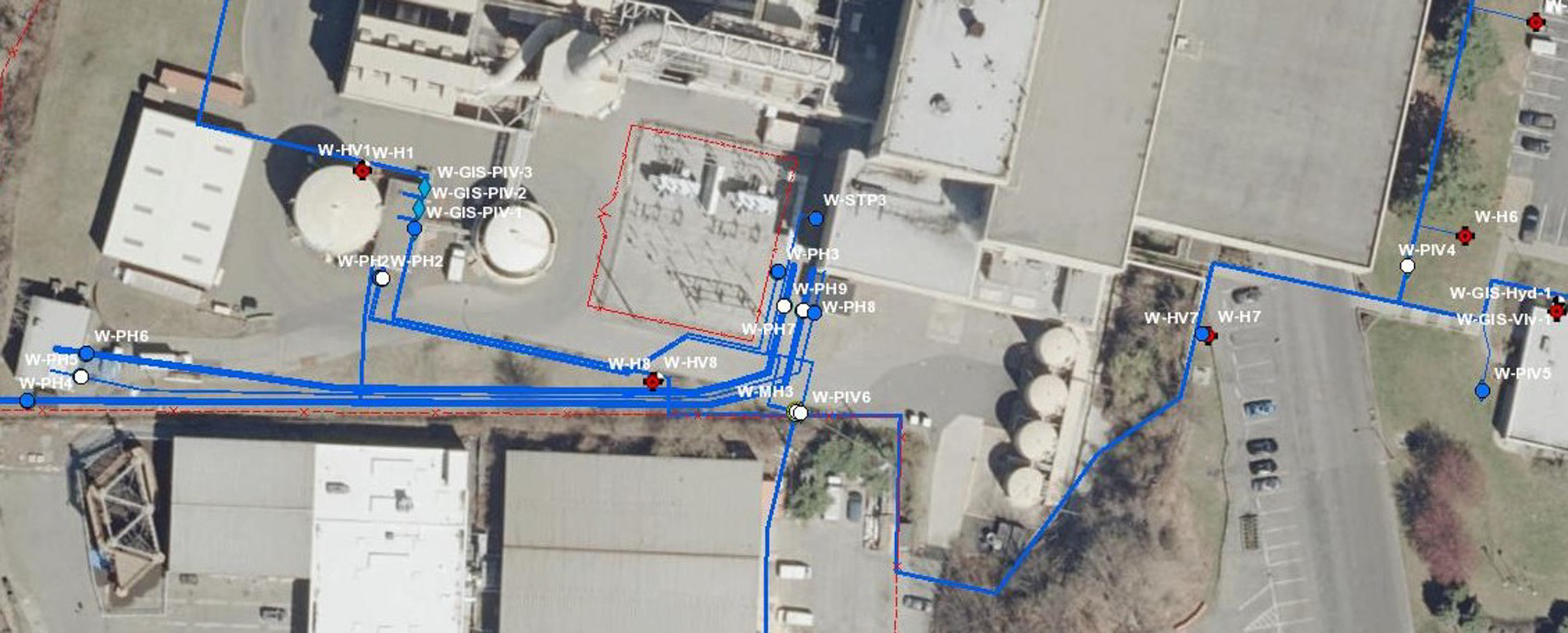
    Aerial site map showing facility buildings overlaid with a utility infrastructure plan featuring blue lines and tags.

    Mapping PFAS remediation costs and groundwater plumes in NJ for Phase II environmental site assessment and due diligence.
    (Conceptual technical schematic showing a 3D cross-section of a contaminated groundwater plume intersecting with proposed foundation pilings)

    The NYC Cross-Border Complication

    Many of our clients operate across the Hudson. While NJ has its own rigors, the NYC OER brownfield cleanup process offers a different set of challenges and incentives. Navigating the NYC Voluntary Cleanup Program (VCP) requires a level of precision that "big box" firms often lack due to their rigid corporate structures.

    Whether you are dealing with an "E-Designation" in Brooklyn or a contaminated site in Newark, the goal is the same: certainty. You cannot get certainty from a consultant who treats your project like a number. You get it from an authority that understands the local regulatory climate of Hudson County and the administrative nuances of the NJDEP.

    Why the "Big Consultants" Are Failing You (And Why Envicon is Different)

    You’ve likely hired the global engineering firms before. They have the 500-page reports and the thousands of employees. But when a PFAS issue hits the fan on a Friday afternoon before a Monday closing, who do you call?

    Most large firms are built on billable hours and risk aversion. They will give you a list of 50 "potential" problems but won't give you a single definitive solution because their legal department won't let them.

    At Envicon Strategic Solutions, we sell authority and trust, not just hours. We act as an extension of your acquisition team. Our approach is built on:

    • Agility: We don't have six layers of management to approve a work plan. We move at the speed of your deal.
    • Technical Superiority: We use high-resolution site characterization tools that the big guys think are "too expensive" for routine due diligence. We believe it's cheaper to spend $10k more on data now than to lose $2M on a bad acquisition later.
    • Business Intelligence: We don't just tell you there is PFAS in the groundwater. We tell you how much it will cost to fix, how it will impact your geotechnical investigation costs in NJ, and how it will affect your exit strategy.

    "The cost of PFAS remediation is no longer a 'down the road' problem. It is a 'right now' liability that can fundamentally devalue a property overnight." : Jason Pancoast, CEO of Envicon Strategic Solutions

    Actionable Steps to De-Risk Your 2026 Acquisitions

    If you are looking at an industrial or commercial site in New Jersey today, here is your playbook:

    1. Mandate a PFAS Screen: Regardless of the Phase I results, if the site had any industrial history (textiles, plating, firefighting foams, paper), run a targeted PFAS screen during your Phase II.
    2. Review the NRD Potential: Look beyond the property lines. Is the site part of a larger groundwater management area? Check the latest NJDEP industry resources to see if the property is in the crosshairs of upcoming state litigation.
    3. Audit Your Consultant: If your current consultant hasn't mentioned the 3M or Solvay settlements in their executive summaries, they aren't protecting you. They are just filling out forms.
    4. Integrated Budgeting: Ensure your environmental due diligence for developers in NJ includes a combined budget for geotechnical and environmental remediation. If they are budgeted separately, you are missing the overlap where the real costs live.

    A cityscape at dusk featuring high-rise buildings under construction alongside illuminated office towers.

    Summary: The New Era of Diligence

    The era of "ignorance is bliss" in environmental due diligence is over. The rising costs of PFAS remediation in New Jersey are not just an obstacle; they are a filter that will separate the successful developers from those who get crushed by legacy liabilities.

    In this environment, you don't need a consultant; you need a strategic partner. You need someone who knows that the NYC OER brownfield cleanup protocols and the NJDEP LSRP program are not just hurdles to jump, but tools to be used to create value and certainty.

    Don't let your next acquisition be a multi-decade liability. Let’s look at the data, quantify the risk, and get your project out of the ground.

    Ready to de-risk your next project? Contact our team today to schedule a consultation with an expert who understands the true cost of doing business in NJ and NY.


    Key Takeaways for Developers:

    • PFAS is a Balance Sheet Risk: Settlements in NJ are reaching into the billions, establishing long-term liability precedents.
    • Update Your Phase II: Standard assessments are often insufficient for detecting low-level PFAS that can trigger massive cleanup costs.
    • Integration is Key: Combine geotechnical and environmental data to avoid hidden construction-phase "surprises."
    • Envicon's Advantage: We provide the authority and speed that large, cumbersome consulting firms simply cannot match.
  • Removing NYC E-Designations: Insider Tips to Accelerate Your Certificate of Occupancy

    Removing NYC E-Designations: Insider Tips to Accelerate Your Certificate of Occupancy

    If you’re developing in New York City, you already know that the "E" on a zoning map is more than just a letter. It’s a gatekeeper. Whether you’re trying to remove an NYC E-Designation, close out an NYC OER cleanup, or clear the path to a final Certificate of Occupancy (C of O), the process can slow your project at the worst possible time.

    At Envicon, we spend a lot of time in the trenches with the NYC Office of Environmental Remediation (OER) and the Department of Buildings (DOB). We’ve seen developers lose months of rental income because they treated E-Designation removal and OER cleanup signoff as an afterthought.

    The truth is, removing an NYC E-Designation isn't just about soil samples. It’s about navigating the OER process with precision, coordinating documentation early, and avoiding avoidable delays at the end of the job. Here is the insider’s roadmap to de-risking your property and getting that C of O without the usual hair-pulling.

    Why the "E" Matters More Than You Think

    An E-Designation is a NYC zoning map designation that flags environmental requirements on a tax lot. It stays with the property until OER confirms the required work is complete. If you’re searching for how to remove an NYC E-Designation or how to complete an NYC OER cleanup, this is the core issue: the designation does not go away just because construction is almost done.

    The biggest point of friction? The DOB will not issue a final C of O for sites with a Hazardous Materials E-Designation until the OER issues a Notice of Satisfaction (NOS). OER’s own program materials make that workflow clear, and NYC ties E-Designation compliance directly to project closeout and occupancy milestones (NYC OER).

    If you haven’t planned for this, you’re looking at a massive bottleneck. You can have the most beautiful glass tower in Brooklyn, but if the active E-Designation is not resolved and the OER cleanup is not properly closed out, your tenants aren't moving in.

    “The projects that move fastest are usually the ones that treat OER closeout like a construction milestone, not a paperwork task.”

    NYC E-Designation zoning map excerpt with boundary highlight and utility overlays (engineering deliverable style)

    The Standard Roadmap: From Investigation to Satisfaction

    Most developers know the basic steps, but few execute them in a way that prioritizes speed. If your goal is removing an NYC E-Designation fast, the key is not skipping steps. It’s sequencing the OER cleanup process correctly from day one. Here is the path generally required by OER:

    1. Phase II Subsurface Investigation: You need a Remedial Investigation Report (RIR). This isn't just a "check the box" document; it’s the foundation of your entire remediation strategy.
    2. Remedial Action Work Plan (RAWP): This document tells the OER exactly how you plan to fix the issues found in the RIR. It includes a Construction Health and Safety Plan (CHASP).
    3. Notice to Proceed (NTP): This is the golden ticket. Once the OER issues the NTP, you can finally pull your building permits from the DOB.
    4. Remediation Execution: This happens during construction. You need a Qualified Environmental Professional (QEP) on-site to oversee soil disposal, vapor barrier installation, or whatever else the RAWP dictates.
    5. Remedial Action Report (RAR): Once the work is done, you document everything.
    6. Notice of Satisfaction (NOS): The OER reviews the RAR and, if satisfied, issues the NOS. This is what the DOB needs to release your C of O.

    Insider Tip #1: Aim for the "Highest Cleanup" Standard

    If you want the E-Designation removed permanently, not just “satisfied” for your current build, you need to target the highest practical cleanup standard early. That’s one of the most overlooked strategies for owners asking how to remove an NYC E-Designation without creating future headaches.

    Recent program guidance and rule updates allow OER to issue a final NOS that supports permanent removal of the E-Designation when the site is cleaned to a level that does not rely on ongoing engineering or institutional controls (NYC OER E-Designations).

    What does that mean for you?

    • You avoid long-term compliance drag.
    • You reduce future lender and buyer questions.
    • You make future refinancing and disposition cleaner.
    • You turn an OER cleanup into a value-add, not just a project obligation.

    It’s a heavier lift upfront, but it can be the smarter business move.

    NYC subsurface soil core samples and digital mapping for OER environmental investigation and E-designation removal.

    Insider Tip #2: Coordinate the "Air and Noise" Dance Early

    Many developers focus so hard on soil (Hazardous Materials) that they forget about the Air and Noise E-Designations. Unlike hazmat, which is often dealt with during excavation, Air and Noise requirements are built into the fabric of the building: think specific window OITC ratings or HVAC stacks.

    To remove an Air or Noise E-Designation, you have to provide installation reports proving that the building was constructed exactly as planned. If you swap out a window spec at the last minute to save a few bucks, you might accidentally disqualify yourself from an E-Designation removal, triggering a nightmare of retrofitting.

    The Secret to Acceleration: Agency Syncing

    The OER doesn't work in a vacuum. They have to notify the DOB and the Department of City Planning (DCP) at specific milestones. We’ve seen NYC OER cleanup projects stall for weeks simply because an agency didn't have the current contact info for a developer’s representative or because documentation was technically complete but not packaged the way reviewers needed.

    Once the OER issues the final NOS, the DCP technically has 10 days to administratively remove the designation from the zoning maps. We track this window closely for our clients because removing an NYC E-Designation is not just about technical cleanup. It’s also about making sure the agency handoff actually happens.

    “In NYC, approvals rarely get delayed by one big problem. They get delayed by five small handoff failures.”

    Vapor barrier installation detail with inspection tags and CHASP checklist for NYC OER E-Designation compliance

    Why Envicon is the Partner You Actually Need

    In the world of Professional Services, you’ll find plenty of big-box environmental consultants. They have thousands of employees and even more layers of red tape. When you have a crisis at the OER on a Friday afternoon, you don’t want to be "Client #4,502" waiting for a callback from a junior associate.

    At Envicon, we’ve built our reputation on being faster, more technical, and more invested in your bottom line than the "big guys." Here’s why developers are switching to us:

    • NYC Insider Knowledge: We don't just read the regulations; we know how the process works in the real world. We understand the nuances of NYC OER cleanup requirements and how to leverage them for your benefit.
    • Agile Response: Our team is built for speed. If a soil sample comes back "hot" and threatens to shut down your site, we’re there with a mitigation strategy before the sun sets.
    • Technical Precision: We use advanced GIS mapping and utility infrastructure overlays to visualize risks before the first shovel hits the dirt. We see the problems that others miss in the due diligence phase.
    • Accountability: You deal with senior experts, not recent grads. When Jason Pancoast says we’ll get your NOS, we mean it.

    "The difference between a project that's profitable and one that's a liability often comes down to how you handle the first 90 days of environmental oversight. In NYC, you can't afford to learn on the fly." : Envicon Group Leadership

    The Final 10% is the Hardest

    As you approach the end of your project, the pressure mounts. You’re dealing with punch lists, inspections, and financing deadlines. The Remedial Action Report (RAR) is often the last piece of the puzzle.

    Many consultants treat the RAR as a low-priority document. We treat it as the most important document in your file. A clean, well-documented RAR is often the difference between a fast NYC OER cleanup closeout and a two-month delay. We ensure every soil manifest, every vapor barrier photo, and every endpoint sample is meticulously organized and submitted the moment the work is complete.

    Soil disposal documentation and chain-of-custody forms with labeled sample containers (NYC E-Designation oversight workflow)

    Summary of Key Takeaways

    • The NOS is Non-Negotiable: You cannot get a final C of O without it if you have a Hazardous Materials E-Designation.
    • Aim High: Cleaning to the highest standard removes the "E" permanently, increasing property value.
    • Plan for Air/Noise: Ensure your MEP and window specs align with E-Designation requirements from Day 1.
    • Watch the Clock: Track the 10-day DCP removal window once the OER signs off.
    • Choose the Right Partner: Stop settling for slow, detached consultants. You need a team that treats your project's timeline as their own.

    If you’re staring at an E-Designation on your next project site and want to ensure a smooth path to your Certificate of Occupancy, don’t wait. The earlier we get involved, the more time and money we can save you.

    Ready to de-risk your NYC development? Contact Envicon today and let’s get that "E" removed the right way. Explore our projects to see how we’ve helped other developers cross the finish line.


    Contact Envicon Group

    Envicon Group
    Website: https://wp.envicongroup.com
    Contact: https://wp.envicongroup.com/contact
    Envicon Group logo

  • Are Your Phase II ESA Reports Lender-Ready? Here’s What NY Banks Actually Want to See

    Are Your Phase II ESA Reports Lender-Ready? Here’s What NY Banks Actually Want to See

    Your $50 million commercial real estate deal just hit a wall. The lender rejected your Phase II ESA report: again. Three weeks lost, closing date pushed back, and your client questioning whether you know what you're doing.

    This scenario plays out across New York and New Jersey more often than anyone wants to admit. We've seen perfectly competent environmental consultants deliver technically sound Phase II reports that get bounced back by lenders for failing to meet specific banking requirements. The problem isn't the science: it's understanding what financial institutions actually need to approve your loan.

    The Hidden Cost of Inadequate Reports

    Banks aren't rejecting Phase II ESAs to be difficult. They're protecting themselves from regulatory liability and ensuring compliance with federal lending guidelines. When your report doesn't meet their standards, everyone loses time and money while you scramble to fix deficiencies that should have been addressed from the start.

    The most common rejection reasons we encounter:

    • Missing reliance language that allows lender review and transfer
    • Inadequate sampling density for the property size and contamination risk
    • Vague conclusions about Recognized Environmental Conditions (RECs)
    • Insufficient regulatory pathway analysis for identified contamination
    • Poor documentation of field procedures and quality control

    What New York Lenders Actually Require

    image_1

    New York's banking institutions have evolved specific expectations beyond standard ASTM guidelines. Major commercial lenders in the NYC metro area: including regional banks handling significant real estate portfolios: consistently demand these elements:

    Professional Qualifications and Oversight

    Your Phase II must be completed by qualified environmental professionals with active New York State licenses. This typically means licensed professional geologists (P.G.) or professional engineers (P.E.) who can legally stamp reports in New York. Lenders increasingly reject reports supervised by out-of-state consultants without proper NY credentials.

    Comprehensive Site Investigation Scope

    Banks want evidence that your investigation actually addressed the contamination risks identified in the Phase I ESA. This means:

    • Soil sampling at appropriate intervals based on property size and suspected contamination sources
    • Groundwater monitoring when RECs suggest subsurface impacts
    • Vapor intrusion assessment for properties with volatile organic compound concerns
    • Waste characterization if contaminated soil requires off-site disposal

    The investigation scope should directly correlate with Phase I findings. If your Phase I identified three potential contamination sources but your Phase II only sampled one area, expect pushback.

    Laboratory Standards and Chain of Custody

    All analytical work must use NYSDOH Environmental Laboratory Approval Program (ELAP) certified laboratories. This isn't negotiable for New York properties. Out-of-state labs without ELAP certification will trigger automatic report rejection.

    Documentation requirements include:

    • Complete chain of custody records for all samples
    • Laboratory certifications and detection limit verification
    • Quality assurance/quality control (QA/QC) sample results
    • Analytical method references and holding time compliance

    Technical Elements That Make or Break Approval

    image_2

    Regulatory Standards Comparison

    Your Phase II conclusions must compare all detected contamination against relevant regulatory standards. For New York properties, this means referencing:

    • NYSDEC Soil Cleanup Objectives (SCOs) for unrestricted use
    • NYSDEC Class GA groundwater standards
    • EPA Regional Screening Levels (RSLs) for vapor intrusion assessment

    Simply stating "no contamination detected" isn't sufficient. Lenders want explicit comparison of detected concentrations against applicable cleanup standards, even for non-detect results.

    Risk Evaluation and Liability Assessment

    Banks need clear answers about environmental liability. Your report must address:

    Current Risk Level: Is contamination present at concentrations requiring immediate action?

    Regulatory Status: Are there existing orders, violations, or ongoing oversight by environmental agencies?

    Future Liability: What contamination management requirements will transfer to the new owner?

    Cost Implications: Rough order-of-magnitude costs for any necessary remediation or long-term monitoring.

    Reliance and Transferability Language

    This is where many reports fail. Your Phase II must include explicit reliance language allowing:

    • Lender review and reliance on findings
    • Transfer of reliance rights to future loan servicers
    • Assignment of consultant liability to subsequent property owners
    • Clear limitation of consultant liability scope and duration

    Standard professional services agreements often don't include adequate reliance provisions for commercial lending. Work with your legal counsel to develop lender-acceptable language that protects both your firm and enables smooth transaction closing.

    New York-Specific Regulatory Considerations

    image_3

    E-Designation and Environmental Restrictive Declarations

    Properties with New York City E-Designations require specialized Phase II approaches. Your investigation must address the specific contamination concerns identified in the E-Designation while providing data adequate for (E) Environmental Requirements compliance.

    For properties with Environmental Restrictive Declarations, your Phase II must demonstrate compliance with existing use restrictions and evaluate whether contamination levels support the intended future use.

    Brownfield Cleanup Program Integration

    If the property is enrolled in New York's Brownfield Cleanup Program (BCP), your Phase II should reference existing Remedial Investigation data and evaluate consistency with approved cleanup goals. Lenders want assurance that your findings align with state-approved remediation standards.

    Vapor Intrusion Requirements

    New York has specific vapor intrusion guidance that differs from EPA standards. Your Phase II must follow NYSDOH Guidance for Evaluating Soil Vapor Intrusion when investigating properties with volatile contamination concerns.

    Quality Control Checklist for Lender Acceptance

    Based on our experience with major New York commercial lenders, ensure your Phase II includes:

    ✓ Professional engineer or geologist stamp from NY-licensed practitioner
    ✓ ELAP-certified laboratory analysis with complete QA/QC documentation
    ✓ Explicit comparison of all results to NYSDEC standards
    ✓ Clear regulatory pathway analysis for any identified contamination
    ✓ Transferable reliance language acceptable to commercial lenders
    ✓ Cost estimates for any necessary remediation or monitoring
    ✓ Integration with existing regulatory programs (BCP, E-Designation, etc.)

    Avoiding Delays and Rejection

    The most successful Phase II projects involve lender coordination from the beginning. Before finalizing your scope of work:

    Confirm lender requirements directly. Different banks have varying standards for report format, liability language, and technical content.

    Plan adequate sampling density. Under-sampling is the fastest way to generate supplemental investigation requirements that delay closing.

    Budget for expedited analysis. Standard 10-day laboratory turnaround often isn't sufficient for deal timelines.

    Prepare contingency scopes. If initial results identify contamination, have pre-approved additional investigation scope ready to deploy immediately.

    Moving Forward with Confidence

    Lender-ready Phase II ESAs require more than technical competence: they demand understanding of financial institution requirements and New York's regulatory landscape. When your reports consistently meet banking standards, you become the consultant that deals get done with, not the bottleneck that causes delays.

    At Envicon Strategic Solutions, we've navigated hundreds of commercial real estate transactions across the New York metro area. We understand what lenders need because we work with them regularly. Our Phase II ESAs are designed from the start to meet banking requirements while protecting our clients from environmental liability.

    Your next deal doesn't have to hit the same roadblocks. When environmental due diligence is done right the first time, everyone wins: faster closings, satisfied clients, and deals that actually get to the finish line.

    Ready to ensure your next Phase II ESA meets lender standards? Contact our team to discuss your project requirements and timeline.

  • Due Diligence for Developers: How to De-Risk NJ Acquisitions in 30 Days

    Due Diligence for Developers: How to De-Risk NJ Acquisitions in 30 Days

    In the New Jersey real estate market, speed is often the enemy of certainty. You find a site in Jersey City or an industrial pocket in Woodbridge, and the clock starts ticking. You have a 30-day due diligence window to decide if you’re looking at a goldmine or a liability nightmare.

    Most developers approach this window with a "check-the-box" mentality. They hire a big-box consultancy, wait three weeks for a generic report, and then scramble in the final 72 hours to understand what the findings actually mean for their pro forma. That’s how projects die: or worse, how they survive only to bleed cash during construction.

    At Envicon, we look at due diligence differently. It’s not just a technical requirement; it’s a competitive advantage. If you can move faster, uncover risk earlier, and give lenders and partners clear answers, you put yourself in a better position to close. For NJ developers, that means a disciplined process for environmental due diligence in New Jersey, not a last-minute scramble. Here is how we break down a high-stakes NJ acquisition in exactly 30 days.

    “In this market, good due diligence doesn’t slow a deal down. It keeps a bad deal from speeding up.” — Jason Pancoast, CEO of Envicon Group

    Days 1–5: The Foundational Layer

    The first 120 hours are about momentum. If you aren't ordering your core documents by Day 2, you've already lost the window. In New Jersey, the regulatory landscape is governed by the Site Remediation Reform Act (SRRA), which means you need to know if the property is already "in the system."

    The Immediate Checklist:

    • Phase I Environmental Site Assessment (ESA): This is the bedrock. In NJ, we aren't just looking for old gas stations; we’re looking for Historic Fill, Isopropyl Ether (IPE) plumes, and Industrial Site Recovery Act (ISRA) triggers.
    • Title Commitment & 30-Year Chain of Title: NJ title issues are notorious. We look for breaks in the chain or "suspicious" transfers that could signal hidden environmental indemnifications.
    • ALTA Survey: Forget a simple boundary survey. For development, you need an ALTA survey that plots every utility easement and right-of-way.

    The goal here is to identify "Fatal Flaws" immediately. If the preliminary search shows a massive unregulated heating oil tank or a direct discharge into a sensitive waterway, you need to know by Day 5, not Day 25.

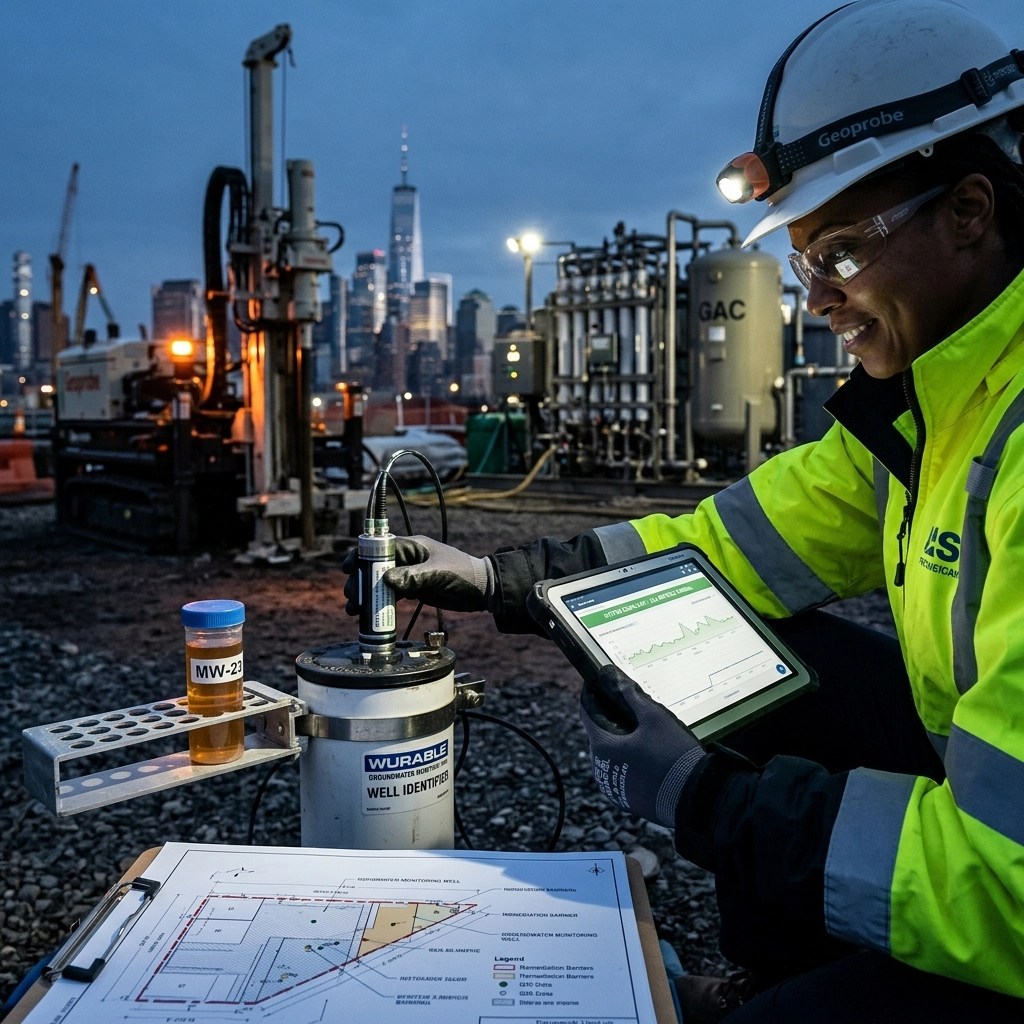
    Environmental due diligence field team inspecting a New Jersey redevelopment site with tablet-based mapping and monitoring points

    Days 6–12: Data Ingestion and Zoning Realities

    While the environmental records are being pulled, we shift focus to the "as-is" operational reality. For developers, this is where environmental due diligence for NJ developers overlaps with civil engineering.

    We scrutinize the rent rolls, but more importantly, we look at the permits. New Jersey's municipal "Home Rule" means every town has its own quirks. Does the existing use match the CO? Are there outstanding building code violations that will trigger a full-site upgrade the second you pull a renovation permit?

    This is also the stage where NJ real estate environmental due diligence needs to connect with site planning. We review public mapping, flood context, utility constraints, and prior site activity so you’re not evaluating environmental risk in a silo.

    During this week, we also perform a Geotechnical Desktop Review. We look at USDA soil maps and NJ Geological Survey data. If you’re building on the "Meadowlands muck," your foundation costs could easily double. Knowing this on Day 10 allows you to re-trade the price or walk away before you’ve spent $50k on legal fees.

    Days 13–20: The "Deep Dive" and Specialized Inspections

    By Day 14, your Phase I ESA should be in draft form. This is the pivot point. If the Phase I identifies "Recognized Environmental Conditions" (RECs), you don't have time to wait for a 45-day Phase II schedule. You need a team that can mobilize a Geoprobe immediately.

    For New Jersey buyers, we often see too much focus on report price and not enough focus on scope. The real question in Phase I ESA for NJ development sites is whether the work actually identifies the issues that can delay closing, financing, permitting, or redevelopment. While cost matters, the real expense is the omission.

    “A cheap Phase I can get expensive fast if it misses the one issue that changes your whole acquisition model.” — Envicon

    Specialized areas we target during this window:

    1. PFAS and Emerging Contaminants: NJ has some of the strictest PFAS standards in the country. If you’re near an old manufacturing site or a fire station, you need a quick screen.
    2. Vapor Intrusion (VI): If you're planning residential over an old industrial site, VI is a project-killer. We look for sub-slab soil gas risks early.
    3. Utility Conflict Mapping: We use high-resolution GIS mapping to see where the "invisible" infrastructure is. Nothing kills a 30-day window like finding a high-pressure gas main right where your foundation is supposed to go.

    GIS-based environmental due diligence mapping for a New Jersey redevelopment parcel with layered site constraints and field review

    Days 21–27: Strategy and Mitigation Costing

    The final week of the 30-day sprint isn't about data collection; it’s about valuation. A technical report that says "there is lead in the soil" is useless to a developer. You need to know: How much will it cost to get an LSRP to issue a Response Action Outcome (RAO)?

    We bridge the gap between technical findings and the pro forma. This is where environmental due diligence for commercial property in NJ has to become practical. We sit down with our clients and provide a "Probable Cost of Remediation."

    "Due diligence isn't a post-mortem of the property's past; it's a blueprint for its future. If you can't quantify the risk, you haven't done the work." : Jason Pancoast, CEO of Envicon Group.

    Days 28–30: The Go/No-Go Decision

    By Day 28, you should have a clear vision. You have the environmental liability quantified, the geotechnical foundation risks identified, and the zoning hurdles mapped out.

    At this stage, you aren't just looking at a "Pass" or "Fail." You’re looking at a strategy. If the site has issues, you go to the seller with hard data and a specific price reduction request. Because you’ve done the work in 30 days, you have the leverage.

    Environmental professionals performing site inspection and sampling review at an industrial redevelopment property in New Jersey

    Why the "Standard" Approach Fails

    Most developers use a fragmented team: an environmental guy who doesn't talk to the civil engineer, and a lawyer who doesn't understand the LSRP process. This silos the risk.

    The big-box firms operate on "billable hours," not project timelines. They are risk-averse to the point of uselessness, often hiding behind 20 pages of disclaimers rather than giving you a straight answer on whether the dirt is clean.

    The Envicon Approach is different:

    • Speed as a Priority: We understand that a 30-day window means 30 days. Our LSRPs and Engineers work in parallel, not in sequence.
    • Tech-Forward Mapping: We use GIS and 3D subsurface modeling to visualize risks that others just write about in paragraphs.
    • Accountability: We don't just identify problems; we own the solutions. If we find a REC, we’re already drafting the remediation plan while the other guys are still formatting their Phase I report.
    • Better Fit for NJ Developers: We tailor our work to acquisitions, lender expectations, and redevelopment timelines in New Jersey. That means fewer generic reports, faster answers, and clearer next steps than the typical big consultant model.

    Summary: Your 30-Day Roadmap

    1. Days 1-5: Order everything. Phase I, Title, ALTA Survey. Identify the "Fatal Flaws."
    2. Days 6-12: Review zoning and geotechnical data. Check the pro forma against the soil.
    3. Days 13-20: Mobilize for Phase II if needed. Scan for PFAS and Vapor Intrusion.
    4. Days 21-27: Quantify the remediation and infrastructure costs. Build the "Real" budget.
    5. Days 28-30: Execute the contract or renegotiate based on the data.

    Final Takeaway

    New Jersey development is a high-stakes game of information. The winner isn't the one who buys the most property; it's the one who buys the right property with the right plan. Strong environmental due diligence for NJ developers helps you spot risk early, price deals more accurately, and keep approvals moving.

    If you’re looking at an acquisition and need a team that moves at the speed of your business, let’s talk. We don't just do due diligence; we help you make smarter go/no-go decisions with confidence.

    Ready to start your 30-day sprint?
    Explore our Full Suite of Services or check out our Project Portfolio to see how we’ve cleared the path for NJ’s top developers.


    Engineering team reviewing GIS mapping and remediation planning documents for a New Jersey acquisition
    Envicon Group
    Northern NJ + NYC | Site-Civil • Geotechnical • Environmental
    Contact: https://wp.envicongroup.com/contact
    Website: https://wp.envicongroup.com

    Envicon Group logo

  • Affordable Housing & the BCP: Cracking the New Definitions

    Affordable Housing & the BCP: Cracking the New Definitions

    New York State just moved the goalposts on two critical brownfield definitions, and if you're a developer eyeing tax credits through the Brownfield Cleanup Program (BCP), you need to understand what changed, and fast.

    The recent amendments to 6 NYCRR Part 375 aren't just administrative tweaks. They fundamentally alter how "affordable housing" and "underutilized" sites are defined for BCP tax credit eligibility. These definitions are the difference between a deal that pencils out and one that sits on the shelf collecting dust.

    Here's what you need to know to make these new rules work for your next affordable housing project in NYC.

    The BCP Tax Credit Landscape: Why Definitions Matter

    The NYC brownfield cleanup program offers tangible tax credits to developers who remediate contaminated sites. But the size of those credits, and whether you qualify at all, hinges on how your project is classified.

    Properties that qualify as "affordable housing" or "underutilized" sites unlock enhanced credit structures. We're talking real money: projects can receive credits covering 24-50% of site preparation costs and up to 10% of on-site groundwater remediation, depending on classification.

    The problem? Until recently, the definitions were vague enough that borderline projects got stuck in regulatory limbo. The new amendments aim to clarify these terms, but they also create new hurdles for developers who aren't paying attention.

    NYC brownfield site transformation showing modern affordable housing development and active remediation work

    Unpacking the New "Affordable Housing" Definition

    Under the updated 6 NYCRR Part 375 framework, affordable housing now carries a specific, measurable threshold. The definition aligns with federal standards: housing where total monthly housing costs do not exceed 30% of monthly household income for households earning no more than 80% of the area median income (AMI).

    This isn't just theoretical. It's how NYSDEC will evaluate your BCP application.

    Here's what that looks like in practice for a Manhattan project in 2026:

    • 80% AMI for a family of four in Manhattan: approximately $92,000 annually
    • Maximum monthly housing cost: $2,300 (30% of $92,000/12)
    • Your project must guarantee units at or below this threshold to qualify

    The catch? You need to maintain this affordability threshold for the entire regulatory agreement period, typically 30 years. This isn't a "build it and flip it" scenario. You're committing to long-term affordability restrictions in exchange for tax credit acceleration.

    NYSDEC also requires documentation proving your project meets these thresholds before you can claim enhanced BCP credits. That means locked-in partnership agreements with affordable housing agencies, recorded deed restrictions, and regulatory compliance certificates, all before you break ground.

    What Counts as "Underutilized" Now?

    The updated "underutilized" definition is equally specific and potentially more lucrative for developers sitting on marginal urban properties.

    A site qualifies as underutilized if it meets any of these criteria:

    • Vacant for two or more years prior to BCP application
    • Occupied by structures with less than 50% utilization of allowable floor area ratio (FAR) under current zoning
    • Generating tax revenue less than 50% of what a fully developed site would produce under existing zoning

    This is where smart developers can turn overlooked properties into goldmines. That half-empty industrial warehouse in Long Island City? If it's using only 40% of its allowable FAR and has been sitting partially vacant for three years, it likely qualifies.

    But here's the critical piece: you need documentary proof of underutilization. NYSDEC isn't taking your word for it. You'll need:

    • Property tax records showing assessed value vs. potential value
    • Vacancy documentation (utility bills, lease records, inspection reports)
    • Zoning analysis demonstrating underbuilt FAR
    • Historical site usage documentation

    Urban Corridor Site Assessment

    The Tax Credit Math: How Definitions Drive Dollars

    Let's walk through a real scenario to show why these definitions matter.

    Project A: 100-unit mixed-use development on a former gas station site in Brooklyn. The developer plans 60 market-rate units and 40 affordable units (meeting the 80% AMI threshold). The site qualifies as "underutilized" because it's been vacant for four years.

    Without proper classification: Standard BCP credit of 24% of eligible site prep costs ($2M estimated) = $480,000 in tax credits.

    With affordable housing + underutilized classification: Enhanced credit of 50% of eligible costs + groundwater remediation coverage = $1M+ in tax credits plus expedited Certificate of Completion processing.

    The difference? Over $500,000 in credits simply by properly documenting and positioning the project under the new definitions.

    That's not accounting for the LIHTC (Low-Income Housing Tax Credit) boost that kicked in January 2026, which permanently increased allocations by 12% for qualifying affordable housing projects. Stack these credits correctly, and you're fundamentally changing project economics.

    Common Pitfalls Developers Are Making Right Now

    We're seeing three major mistakes in BCP applications under the new definitions:

    1. Waiting Too Long to Document Underutilization

    Sites don't automatically qualify just because they look vacant. You need contemporaneous records proving vacancy or underutilization dating back at least two years. If you're eyeing a site today for a 2027 development, start documenting now.

    2. Misunderstanding the 80% AMI Requirement

    Some developers think they can average across all units: 50% at market rate, 50% at 60% AMI, claiming it "averages out" to 80% AMI eligibility. Wrong. You need a specific percentage of units dedicated to households at or below 80% AMI, typically at least 20-40% depending on credit tier sought.

    3. Ignoring Geographic AMI Variations

    AMI in Manhattan is vastly different from AMI in Buffalo. Make sure you're using the correct HUD-published AMI figures for your specific county and household size. Using the wrong baseline can disqualify your entire application.

    Underutilized Brooklyn warehouse site with redevelopment potential surrounded by high-rise buildings

    Strategic Positioning: Making the Definitions Work for You

    Here's how to navigate these new definitions strategically:

    Start with a Pre-Application Site Assessment

    Before you commit capital, commission a professional environmental consultant to evaluate both the contamination profile and the BCP classification potential. This dual analysis determines whether enhanced credits are achievable.

    Lock in Affordable Housing Partners Early

    NYSDEC wants proof of commitment, not aspirational plans. Partner with affordable housing agencies or Community Development Financial Institutions (CDFIs) during pre-development. A signed letter of intent from a qualified affordable housing operator carries significant weight.

    Document, Document, Document

    The new definitions are specific, which means regulators will demand specific proof. Maintain meticulous records:

    • Quarterly property tax assessments
    • Utility usage logs (proving vacancy)
    • Professional surveys measuring existing FAR vs. allowable FAR
    • Historical site photographs and inspection reports

    Consider Hybrid Classification Strategies

    Some projects can qualify under multiple enhanced categories. A site that's both underutilized AND being developed as affordable housing may unlock maximum credit tiers. Map your project against all available classifications.

    Modern Multi-Family Residential Development - Brownfield Redevelopment

    How Envicon Navigates the New BCP Framework

    We're helping developers crack these new definitions by integrating regulatory strategy into site due diligence from day one.

    When a client approaches us about a potential BCP site, we're not just running Phase I and Phase II environmental assessments. We're simultaneously evaluating:

    • Whether the site meets "underutilized" thresholds under current zoning
    • What percentage of affordable units would be needed to qualify for enhanced credits
    • How historical site usage documentation stacks up against NYSDEC requirements
    • What remediation approach maximizes both cleanup efficiency and tax credit eligibility

    This integrated approach means our clients aren't discovering classification problems six months into the BCP application process. They know exactly where they stand: and what they need to adjust: before they commit to a deal.

    We've also built relationships with affordable housing agencies and financial structuring teams who understand how to layer BCP credits with LIHTC allocations, opportunity zone benefits, and local incentive programs. The new 2026 LIHTC boost creates stacking opportunities that didn't exist 12 months ago.

    The Bottom Line

    The updated affordable housing and underutilized definitions in 6 NYCRR Part 375 are tighter, more specific, and more enforceable than previous iterations. But for developers who understand the framework, they're also more predictable.

    If you can prove your site has been vacant or underbuilt for at least two years, and you're committed to maintaining affordability at 80% AMI for a substantial portion of units, you're positioned to unlock BCP tax credits that can swing project feasibility from marginal to compelling.

    The key is treating these definitions not as bureaucratic checkboxes, but as strategic opportunities. Start documenting site conditions now, structure your affordable housing commitments carefully, and bring in environmental and regulatory expertise early enough to matter.

    Because in 2026, the difference between a good brownfield deal and a great one often comes down to whether you cracked the definitions correctly: before everyone else figured it out.

    Need help positioning your next affordable housing project for maximum BCP credit eligibility? Let's talk about how we integrate environmental cleanup with strategic regulatory navigation to make deals pencil.


    Envicon Strategic Solutions

    Envicon Strategic Solutions
    Site-Civil • Geotechnical • Environmental | NY/NJ Due Diligence + Remediation Support
    Contact us • Services • envicongroup.com

  • NYC OER Brownfield Cleanup and NYC Building Code Coordination for Faster Redevelopment

    NYC OER Brownfield Cleanup and NYC Building Code Coordination for Faster Redevelopment

    If you’ve ever tried to break ground on a contaminated lot in the five boroughs, you know the drill. You’ve got the Office of Environmental Remediation (OER) on one side and the Department of Buildings (DOB) on the other. In the middle? Your project timeline, and it’s usually getting squeezed.

    At Envicon, we’ve seen too many developers treat environmental remediation and building code compliance as two separate hurdles. That’s a mistake that costs real time and real money. In NYC, if your Remedial Action Plan (RAP) doesn’t line up with your foundation design and the NYC Construction Codes, your project can stall before it gains momentum.

    The secret to moving fast in this city isn't just knowing the rules; it’s knowing how to make NYC OER brownfield cleanup requirements and building code review work together from the start.

    The E-Designation: More Than Just a Warning Label

    Most brownfield redevelopment projects in NYC start with an E-Designation. It’s a flag on a tax lot indicating potential hazardous materials, noise, or air quality issues tied to redevelopment review. NYC OER outlines the process through its E-Designation program and Voluntary Cleanup Program resources (NYC OER).

    The most common question we get is: How do you satisfy an E-Designation in NYC and keep the DOB review moving?

    The short answer: You don't just "remove" it; you satisfy it through investigation, cleanup planning, and documented closure. To get DOB approvals moving, OER needs to approve the remedial pathway first. That’s where NYC OER brownfield cleanup and building code coordination becomes critical. If your architect is designing a cellar that requires deeper excavation, but your sampling and disposal assumptions stop short, you can lose weeks before permit review is back on track.

    NYC brownfield remediation planning materials with site drawings and investigation logs at an active urban construction site

    Why OER and DOB Coordination Fails (and How We Fix It)

    The disconnect usually happens because the environmental team and the structural team are speaking different languages. The OER cares about soil vapor, heavy metals, and "clean" backfill. The DOB cares about structural stability, fire safety, and egress.

    Here is where the friction occurs:

    1. Vapor Barriers vs. Foundation Waterproofing: You need both. But if the specific vapor barrier required by your OER-approved RAP doesn’t meet the DOB’s building code for waterproofing or structural integrity, you’re back to the drawing board.
    2. Soil Disposal vs. Support of Excavation (SOE): If you have to dig deeper to reach "clean" soil for the OER, your SOE plans (which the DOB must approve) might need a total redesign to prevent the neighboring building from shifting.
    3. Ventilation Systems: Sub-slab Depressurization Systems (SSDS) are common in OER cleanups. These systems need to be integrated into the building’s mechanical and electrical plans. If they aren't in the initial DOB filing, expect a long "disapproved" notice in your future.

    At Envicon, we bridge this gap by performing a unified design review before a single document is filed. We look at your architectural plans and your remedial requirements simultaneously.

    The Remedial Action Plan (RAP): Your Project’s North Star

    Your RAP isn’t just a document for OER; it’s a construction roadmap. To maximize efficiency, the RAP needs to reflect NYC building code coordination for brownfield redevelopment from day one.

    For example, if we know your project is in a high-water-table area, which is common in parts of Brooklyn and Queens, we don’t just suggest a standard vapor barrier. We look for a system that supports the remedial goals and fits the realities of foundation waterproofing, slab design, and mechanical routing under the applicable NYC Construction Codes (NYC Buildings).

    “The fastest NYC cleanup projects are usually the ones where remediation planning and building design start as one conversation, not two.” — Jason Pancoast, CEO of Envicon Group

    NYC urban foundation excavation showing vapor barrier, sub-slab piping, and waterproofing coordination at a brownfield redevelopment site

    Navigating the NTP and NOS Milestones

    The workflow for NYC OER brownfield cleanup, E-Designation compliance, and DOB coordination follows a specific rhythm. Understanding that rhythm is the difference between a project that flows and one that stalls.

    1. Phase I & II ESA: Identify the likely environmental issues and the data gaps.
    2. Remedial Investigation Report (RIR): Submit site findings to OER.
    3. Remedial Action Plan (RAP) & CHASP: Show OER how the cleanup and site controls will work during construction.
    4. Notice to Proceed (NTP): OER confirms the project can move into the approved implementation phase tied to permit progress.
    5. Notice of Satisfaction (NOS): After the cleanup is completed and documented, OER issues the closure milestone needed for the project’s final path forward.

    If you’re trying to understand how to satisfy an E-Designation in NYC without delaying permits, the key is planning for the end at the beginning. OER’s program structure makes that clear, and DOB code compliance needs to stay aligned throughout the project (NYC OER Cleanup Programs).

    Aerial view of NYC redevelopment site showing remediation staging, utility coordination, and excavation sequencing

    The Technical Synergy: Vapor Barriers and SSDS

    Let’s talk specifics. In many NYC brownfield cleanups, the primary concern is soil vapor: volatile organic compounds, or VOCs, moving from the ground into the building.

    To satisfy OER, you may need a Sub-Slab Depressurization System (SSDS) or another approved control. To keep the project moving, that system also needs to fit the broader building design, including vent routing, power, access, and long-term operation. This is exactly where NYC OER cleanup requirements and building code coordination can either protect your schedule or wreck it.

    We’ve seen projects where the SSDS layout looked fine on paper, but later conflicted with plumbing, utilities, or slab penetrations because the disciplines were not coordinated early. By integrating geotechnical expertise with environmental oversight, we catch those clashes before concrete is poured.

    “Cleanup strategy has to fit the building you’re actually constructing. If it doesn’t, revisions show up late and cost you twice.” — Envicon

    Managed contaminated soil handling and remediation controls at an active NYC construction site with urban backdrop

    Why Envicon Beats the "Big Consultant" Approach

    If you go with a massive, multi-national consulting firm, you’re often just another file in a cabinet. They follow a template. They don't know the specific quirks of the OER project managers or the nuances of the DOB’s Hub Self-Service system.

    The Envicon Approach is Different:

    • Agility over Bureaucracy: We respond in hours, not weeks. When a DOB examiner has a question about your vapor barrier on a Tuesday afternoon, we have the answer by Tuesday evening.
    • Technical Integration: We don't just do "environmental." We understand the civil and geotechnical realities of NYC soil.
    • Strategic Vision: We don't just follow the OER’s lead; we negotiate. We find the most cost-effective remedial measures that still meet the "protection of public health" standard.
    • Accountability: We stay with the project from the first soil boring to the final Notice of Satisfaction.

    When you work with us, you’re not just hiring a consultant; you’re gaining an advocate who understands that every day your project is stuck in the OER/DOB loop is a day you’re losing money.

    Aerial site map showing boundary lines and sampling locations that inform RAP sequencing and DOB coordination

    Actionable Takeaways for Developers

    If you are planning a project with an E-Designation or participating in the NYC Voluntary Cleanup Program (VCP), keep these points in mind:

    • File Early: Get your RIR and RAP to the OER as soon as your schematic designs are ready. Don't wait for final construction documents.
    • Coordinate the Trades: Ensure your MEP (Mechanical, Electrical, Plumbing) engineer and your environmental consultant are on the same page regarding vapor barriers and venting.
    • Budget for Oversight: OER requires a Qualified Environmental Professional (QEP) to be on-site during all soil disturbance. This isn't optional.
    • Focus on the NOS: Don't just aim for the NTP to start construction. Have a plan for the final reporting (Remedial Closure Report) so you don't get stuck at the end of the project without a CO.

    Summary: Building a Visionary NYC

    NYC is a city of layers: historical, structural, and regulatory. Navigating a NYC OER brownfield cleanup requires more than just technical knowledge; it requires the ability to see the "big picture" of a project’s lifecycle.

    By coordinating OER requirements with NYC Building Codes from day one, you reduce risk, slash timelines, and ensure a smoother path to completion. We don't just clean up sites; we enable the next generation of NYC infrastructure.

    Ready to clear your E-Designation and get moving?
    Don't let regulatory friction slow your vision. Let’s talk about how Envicon can streamline your OER coordination.

    Contact Envicon Today | Explore Our Services | See Our Projects

    Envicon Strategic Solutions logo

    Envicon Strategic Solutions logo


    Envicon Group
    Site-Civil | Geotechnical | Environmental (NY/NJ)
    www.envicongroup.com | https://wp.envicongroup.com/contact